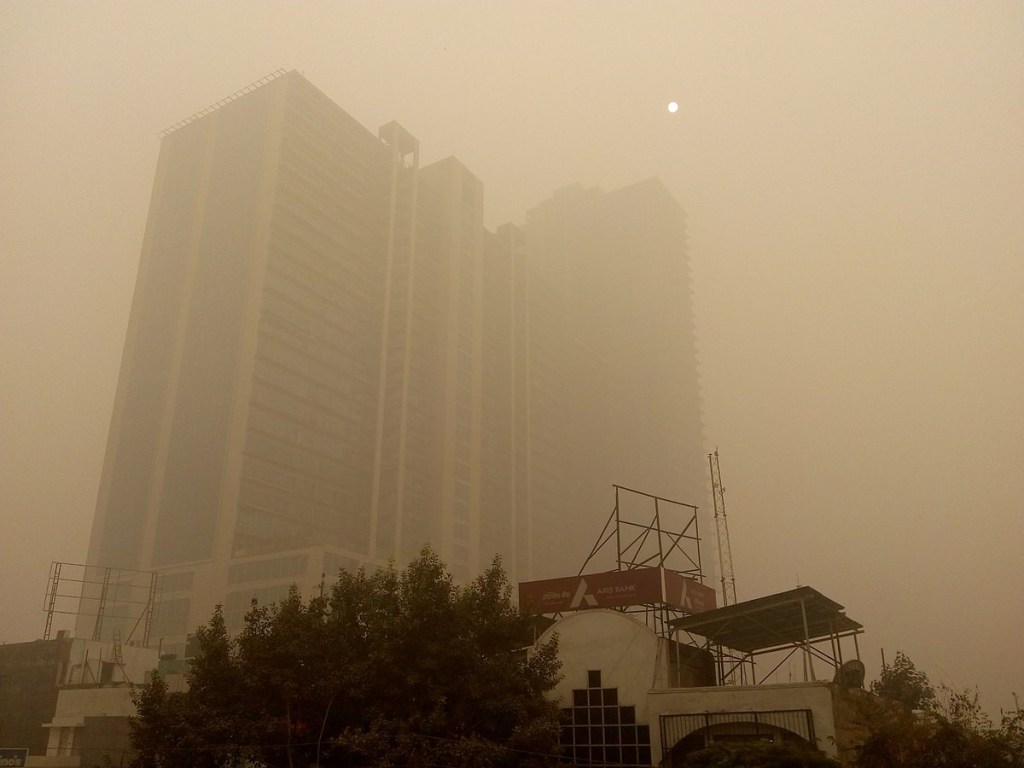
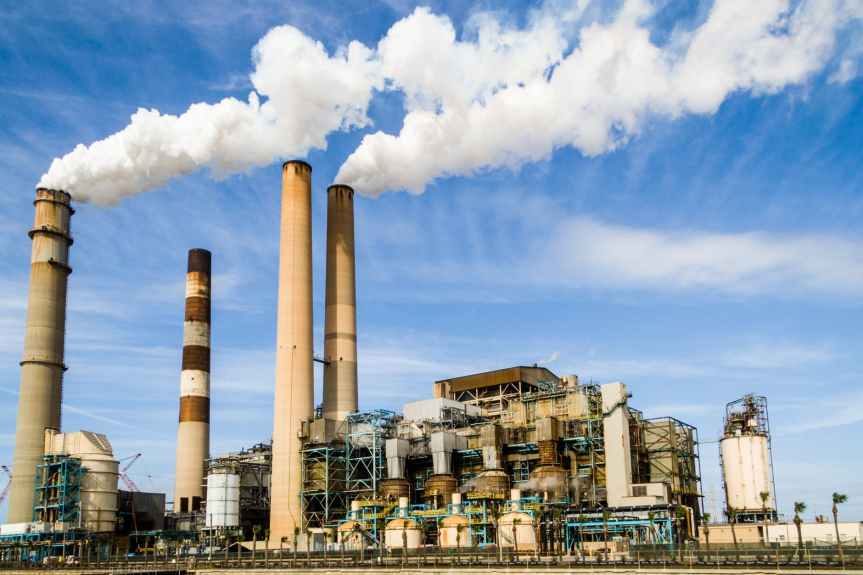
HOW DDMP: 2041 ADDRESS THE ISSUE OF POLLUTION

Master Plan is a dynamic long term planning document which kays down guidelines for regulating and guiding the future growth and development of cities. Master Plan provides actions and strategies for meeting the social and economic needs of the current and future population. It includes analysis, recommendations, economy, housing, transportation etc. depending on the social, economic and environmental conditions of the are The purpose of a Master Plan is to promote growth and guide and regulate present and future development of towns and cities with a perspective of 20-25 years. It is an instrument to work out land and infrastructure requirements for various urban and rural uses, and allocate land for various uses to result in harmonious and sustainable distribution of activities. The plan guides the physical development of the community with the help of its long-term planning visions. This provides long ranged, comprehensive strategies which consists of all functions and make the community function.

DRAFT DELHI MASTER PLAN (DDMP)

The Master Plan of Delhi is the key instrument that facilitate and regulate Delhi’s development by assessing and analyzing the present condition and will guide how sustainable and balanced development can be achieved. The apex body of the master plan is the Delhi Development Authority and the implementation of this plan is the collective responsibility of all agencies involved in the development of Delhi.

The Draft Delhi Master Plan (DDMP)- 2041. focuses to take measures for reducing the tackling the air, water and noise pollution level in the city with the help of measures, such as ‘refuge points and self-sustained isolated residential areas to deal with the challenges of pandemic. Greener environment, Yamuna cleaning, economy focusing on areas such as IT, service sector and hospitality, enhanced mobility promoting cleaner fuels, addressing housing needs of the poor, and rejuvenation of the heritage fabric of the city are among the key features of the draft Master Plan of Delhi 2041.

DDMP aim to address issues of pollution

  1. Strategies to address Vehicle Pollution: The key strategies for achieving this include:  adoption of mix-use transit-oriented development (TOD), migration to greener fuels for public transport. The main aim of mix-use and transit-oriented development (TOD) is the reduction in average trip length and bringing jobs and homes closer to transit networks. With the help of using clean fuels the plan tries to encourage clean travel and green mobility by “improving pedestrian, cycling and EV infrastructure”.
  2. Strategies for Improvement of Water Quality: The improvement of water quality in the Yamuna and various natural drains, lakes and baolis by assigning different agencies with specific tasks, such as checking the outfall of untreated wastewater from surrounding developments.
  3. Strategies for large housing requirements: The plan tries to meet the future housing requirements through large scale greenfield development using “the land pooling method”.
  4. Strategies for low density housing requirements: The DMP tries to address the development of low density and low floor area ratio (FAR) residential areas within Green Development Area. It will also focus on regeneration of existing areas through “improvement of existing stock and creation of new units”.
  5. The second volume contains “Spatial Development Strategy and Action Plan” which highlighted major strategies and provisions covering both green field and brown field development in the city.
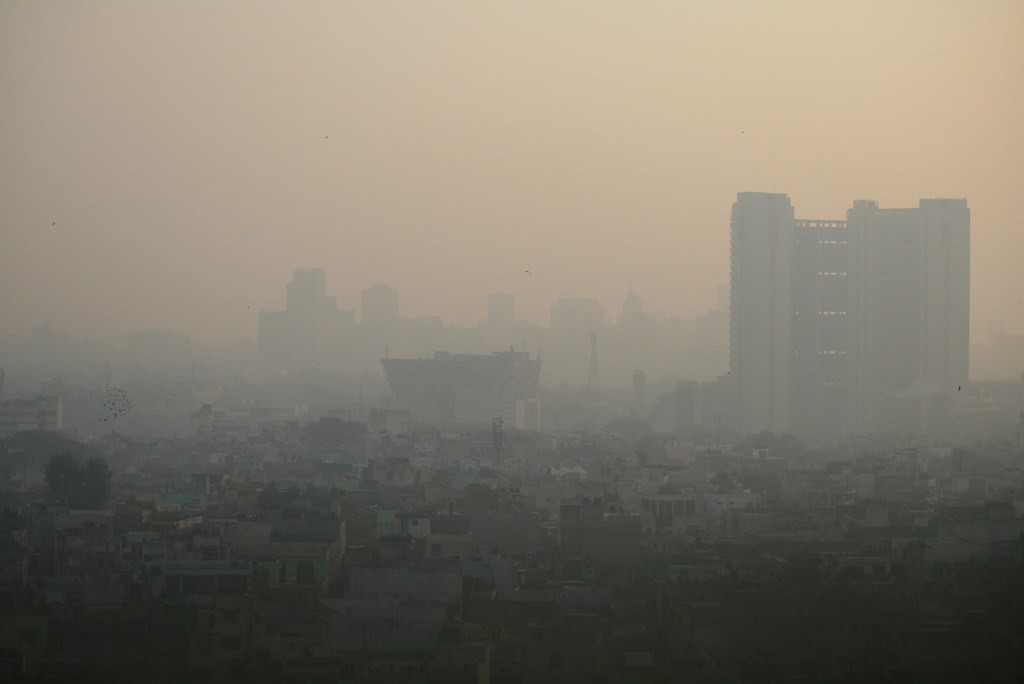
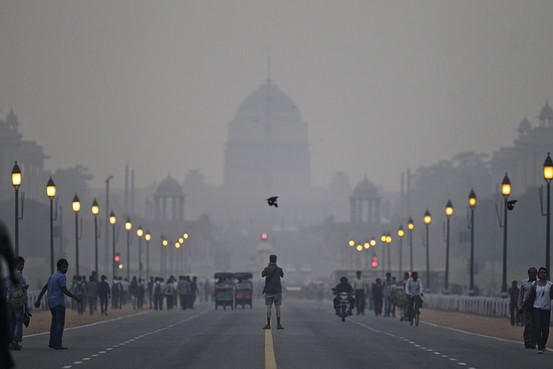
AIR POLLUTION IN INDIA

The Air (Prevention and Control of Pollution) Act was passed in the early 1980s, but due to lax regulation, it has failed to make an impact. India ranks third in the world in terms of greenhouse gas emissions, trailing only China and the United States.

India was marked the fifth most polluted country by WHO (2019) based on PM2.5 emission concentrations, with 21 of the top 30 contaminated cities being in India.

According to WHO (2016), air pollution was responsible for one out of every nine deaths in 2012, with roughly 30 lakh deaths entirely attributable to outdoor air pollution.

In India alone, air pollution was estimated to have caused approximately 11 lakh premature deaths in 2017 (HEI 2019), with 56 percent of those deaths linked to exposure to outdoor PM2.5 concentrations and 44 percent to domestic air pollution. Indians are susceptible to an average of 83.2 g/cubic meter of PM2.5 pollutants, opposed to a much lower level of merely 8 g/cubic meter in cleaner countries.

SOURCES OF POLLUTION

Over time, India’s air quality has deteriorated due to large expansions in industries, population density, human activities, and the increased usage of automobiles. Transportation, factories, agriculture, power, waste management, biomass burning, household, construction, and demolition waste are the seven key sectors that contribute to air pollution.

Industry accounts for 50% of the pollution, with cars accounting for 27%, agricultural burning for 17%, and household cooking accounting for 7%. Air pollution-related diseases claim the lives of about 2 million Indians.

 In practically every city, the transportation sector is the primary source of air pollution, although this situation is exacerbated in metropolitan areas.

 In recent decades, the country has undergone considerable industrialization. As a corollary, the air quality in most metropolitan areas has plummeted. Polluting firms were divided into 17 categories by the Central Pollution Control Board (CPCB), all of which were small and medium-sized businesses. Seven among those industries designated as “essential,” namely iron and steel, sugar, paper, cement, fertilizers, copper, and aluminum. SPM, SOX, NOX, and CO2 emissions being the principal pollutants.

The main pollutants emitted by farming activities are ammonia (NH3) and nitrous oxide (N2O). Farming methods such as ‘slash and burn’ are major contributors to photochemical smog.

Power plants constitute a substantial amount of air pollution in India. The biggest source of SO2 and TSP emissions are thermal power plants. Between 1947 and 1997, emissions of SO2, NOX, and PM grew by more than 50 times, according to The Energy and Resources Institute (TERI).

Households are a prime source of pollution in India. Although most metropolitan areas use liquefied petroleum gas (LPG) as a cooking fuel, the bulk of rural Indians rely on cow dung cakes, biomass, charcoal, or wood for cooking and other needs. These emissions have dire impacts on air quality, especially indoor air quality, and may significantly impact health.

People living in polluted cities are prone to a myriad of health concerns, ranging from mild respiratory issues to life-threatening illnesses. PM, O3, SOX, and NOX emissions have the power to damage people’s cardiovascular and pulmonary systems.  

More than 100,000 new-borns died as a result of indoor and outdoor harmful pollutants during their first month of life. The usage of charcoal, wood, and dried dung cakes for cooking and heating homes was associated with a substantial number of these deaths.

According to a study, over 30% of Delhi’s population experienced respiratory illnesses in 2016 as a result of air pollution. Another study indicated that between 1990 and 2010, the fatality rate in Delhi due to air pollution doubled. In 1995, 2800 individuals died prematurely in Mumbai as a result of air pollution; which climbed exponentially to 10,800 in 2010. In 2010, the number of premature deaths in Kolkata was projected to be around 13,500 whereas, Delhi recorded 18,600 annual fatalities.

MEASURES IMPLEMENTED TO CUT EMISSIONS

The Central and State governments have taken several steps to reduce pollution and enhance air quality. The use of compressed natural gas (CNG) as an alternative fuel, the odd-even measures enforced in Delhi, the introduction of Bharat Stage VI vehicle and fuel standards, the Pradhan Mantri Ujjwala Yojana (PMUY), and the National Clean Air Programme (NCAP) are all examples of initiatives in this direction.

Adoption of zig-zag technology for stack emissions from brick kilns, online surveillance of emissions via the Online Continuous Emission Monitoring Systems (OCEMS), and the installation of webcams in environmentally damaging factories are some of the steps taken to combat Air pollution in the industry sector.

Initiation of door-to-door collection of separated waste and various compost pits have been installed in metro areas to mitigate the issue of open burning of garbage and domestic wastes. Furthermore, varied steps have been taken over the years to limit the particulate matter (PM) and dust particle densities, such as green buffer around cities, the maintenance of a 33 % green cover around city environments, and the installation of water fountains throughout cities. On city streets, any car that is more than 15 years old or does not satisfy the BS6 emission regulations will be banned.

But it will take a lot more than this; to control pollution, all citizens of the country must work together.

POLLUTION

Pollution is described as the introduction of different wastes into the environment. These material wastes are called pollutants. Pollutants may be either natural which is thrown away by natural disasters, volcanic eruptions or man-made trashes like factory washouts, plastic wastes. Pollutants are harmful as they damage the quality of natural resources such as air, water, and land. Pollutants mixing in the air have a direct impact as they enter the body directly while breathing. Pollutants that mix in water also creates a hazardous effect on people’s life. People residing near the construction and manufacturing work areas are diagnosed with relatively higher hearing ailments. This contributes to noise pollution. Similarly, there are varieties of pollution in our surrounding world, some of which are unaware of by us. The fact is, we humans are the ones creating all this pollution without thinking about neither our life nor the future world and life. It is very difficult to construct a zero-pollution world. Still, the level and consequences of pollution could be decreased by taking some measures and being more sensible.

TYPES OF POLLUTION

AIR POLLUTION – Increasing industrialization has paved the way for poisonous gases to enter the atmosphere. This in turn creates adverse effects like respiratory and other diseases in human beings. The carbon and its oxides released by the burning of coal and fossil fuels are absorbed by the trees. But as we started cutting trees to find areas for accommodation, these carbon oxides mix the atmosphere and pollutes it. The fresh oxygen we breathe thus gets contaminated and can give rise to many skin diseases and respiratory disorders like asthma, bronchitis, etc. These impacts could be decreased by following afforestation and reforestation and adopting the use of natural gases and biogas.

WATER POLLUTION – Introduction of industrial effluents, pesticides and insecticides, domestic waste, detergents, and fertilizers contaminate the water bodies. Water pollutants are released directly to the nearby water sources without proper treatment. These pollutants in water mix up with all the water bodies and finally contaminate the ocean by the formation of algae which creates a threat to aquatic life. It also generates unfavorable effects on humans and affects the food chain. It causes communicable and non-communicable diseases like cholera, typhoid, dengue, etc. This could be prevented by conserving water, treating sewage before it is disposed and use of eco-friendly products.

SOIL POLLUTION – Soil pollution refers to the existence of chemicals, toxic compounds, salts, and radioactive elements in the layers of soil. Discharge of toxicants from industries, stagnation of polluted water, heavy metals, and other solvents stay in the soil and make it infertile for cultivation. Due to this, the texture and quality of the soil are lost damaging the growth of plants and organisms living in the soil. Percolation of dirty water, dumping of fuels and oils, dumping of pharmaceutical and other medical wastes also adds to soil pollution. These influence humans indirectly through the plants that we consume as food. Industrialists should follow the environment protection norms strictly and individuals must start practicing the 3Rs – Reduce, Reuse and Recycle the to lessen soil pollution. 

NOISE POLLUTION – This form of pollution is increasing and creating an unsafe environment. The increase in sound levels becomes dangerous for living creatures and causes several disturbances in society. An increase in industries, technology, use of vehicles, parties, bursting crackers, and loud political meetings contribute a lot to noise pollution. Unlike, other pollution, noise pollution can also bring about serious issues like hearing impairment and other troubles in the eardrums. Not only humans, but this kind of pollution also badly hits the wildlife. We must become aware of these unnoticed yields and help in building a safer and better society.

Indoor Pollution: The Silent Killer

Home sweet home. The place where we return everyday. Our safe haven. But is it as safe as we believe to be? Especially for our health. The present scientific and environmental scenario say otherwise.

Indoor pollution is the pollution caused by the presence of various particulate, chemical and biological pollutants, which can cause even serious harm to the human body. Infact, it has been ranked amongst the top five public health risk factors. There are some problems in the study of this type of pollution, due to the individuality and uniqueness of each residential ecosystem. The specific levels of various pollutants vary, based on various external and internal factors. Hence, it becomes difficult to explain the impact of indoor pollution in an uniform manner, for an individual pollutant component or even as a whole. 

The standard of measurement of this condition is indoor air quality (IAQ). In industrial countries, approximately, 1/3 rd of all the buildings tend to have IAQ problems at some point of time. Across the world, 30% of IAQ related complaints are against new or remodelled buildings. Health problems due to poor IAQ range from mild (cold and flu like symptoms) to severe (allergies, asthma, cancer, developmental disorders, or in some cases, death) symptoms.

Indoor pollutant sources includes humid spaces like in kitchen, showers etc., which are ideal thriving spot for various biological pollutants (eg. mold). Also, fuel consuming appliances, aerosol sprays (like deodorants, room freshners etc.), pesticides and so on are a n identified source of particulate as well as chemical pollutants within the residence

Some chemical pollutants have been identified and their harmful exposure levels have also been evaluated. Other pollutant types have been more difficult to evaluate about the acceptable exposure level. Some of the common pollutants are:-

  • Carbon Monoxide: Carbon monoxide (CO) is an odorless gas that is adverse for human health even at low levels. High concentrations of CO are potentially fatal and can even cause death. CO poisoning symptoms include headache, dizziness, nausea, chest pain and vomiting. It’s presence as an indoor pollutant is primarily due to fuel consumption and improper ventilation.
  • Nitrogen dioxide: Nitrogen dioxide (NO2) also happens to be a colourless, odorless gas with visible adverse effects on health even at lower levels. It primarily causes  irritation to the mucous membranes of the eyes, nose and throat. HIgh exposures lead to  respiratory irritation, shortness of breath and might also contribute to lung diseases like emphysema. It is also a product of fuel burning. Improper placing and/or maintenance of chimneys can lead to driving the pollutants back into the house. 
  • Lead: Lead (Pb) as pollutant is evaluated to be widely present in plumbing materials, gasoline and paints. LEad particulates can be both inhaled and ingested. Accumulation of lead in the body, more specifically into the soft tissue and bones can eventually affect the whole living system. Low level exposures,in children, may lead to impairment in physical and mental development, like lower IQ, shortened attention span etc. Additionally, they can also cause problems in the nervous system, kidney and blood cells. HIgh level exposure risks involve convulsions, coma or even, death.
  • Radon: Radon (Rn), a radioactive gas, is a common element present in the abiotic components of the system. They enter the house via cracks and  drains, get trapped in the living space and with time, keeps accumulating. Since it is odorless, it gets hard to detect. Exposure via inhalation leads to problems like lung cancer.
  • Formaldehyde: Formaldehyde (CH2O) is a well recognized carcinogen, but still finds us in daily household items, like fabrics, paints and furniture. The urea- formaldehyde resins are the most polluting type. Formaldehyde may be inhaled or even may get adsorbed by the skin. Even at extremely low levels, symptoms like allergies, asthma, throat and nose irritation, nausea and headache have been observed.

The most worrisome part is that these items are indispensable parts of daily life. Atleast, till other alternatives are discovered. This leaves us with a question, are all these amenities and necessities for a comfortable living worth all the adverse effects they come with?