
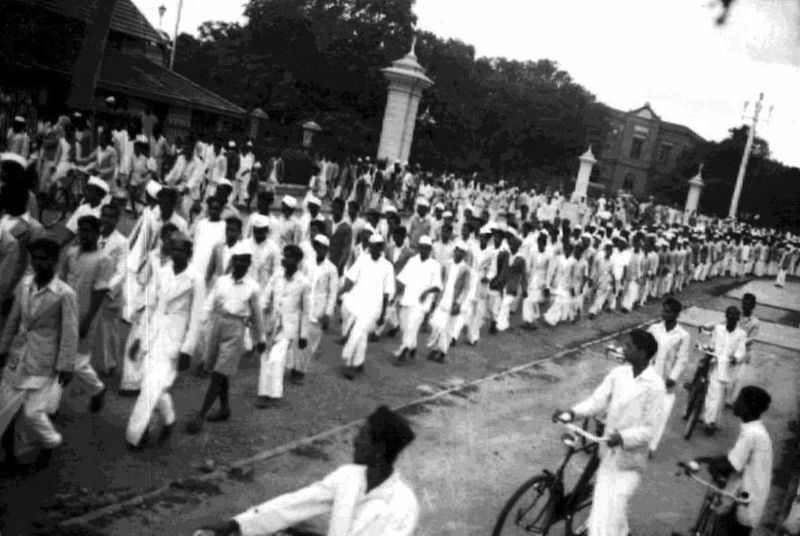
The Quit India Movement Day

August 8th marks a very iconic day in Indian history. The Indian National Congress declared its ultimatum for the British to leave India. This movement in itself had contested set of consequences – the strengthening of the Muslim League, the rise of freedom struggle motivated Subash Chandra Bose to invade the British camps in Noth East and Gandhi, for the fist time in his career was willing to go agressive even if he had his own definitions of the word – when he announced, “karo ya maro” (Do or Die).

Quit India Movement: Who gave the slogan 'Do or Die' - Oneindia News

The Quit India movement came up at the heels of the failure of the Cripps Mission that was sent by the Raj to secure Indian cooperation towards the British war efforts in the second world war. The leader of the mission, Sir S. Cripps was left wing British statesman who was sympathetic to the cause of Indian self rule but was also a member of the war cabinet of 1942.

The proposals of the mission were refused by the Congress which had seen similar proposals in the first world war where the Raj had promised more autonomy but ended up imposing harsher taxes that resulted in the Non-Cooperation movement, the Rowlatt and Jalia Walah Bagh massacres. The Indian National Congress resigned from its positions in all provincial governments and announced the Quit India Resolution that led a national movement that was difficult for the British to look after in the face of the then ongoing second world war. Virtually all of the INC leaders were jailed for the next three years and the Muslim league got enough time to build itself a support that shook the years Gandhi had spent projecting himself and his colleagues as leaders of a secular, united state of India. To add to it was the vehement opposition Hindu nationalists showed to the movement where many, including the Hindu Mahasabha and Veer Savarakar denounced the movement pointing out to the power vacuum it might cause and quite correctly predicitng the Muslim League partially filling the same.

The British soon left the subcontinent – too weak due to the war to control a population that was showing both civil disobedience and had an army of its own – a reference to the insurgency and attacks the INA had started in the Raj’s territories.

The Quit India movement – with all its pros and cons and consequences formed a very important phase in the history of modern India.
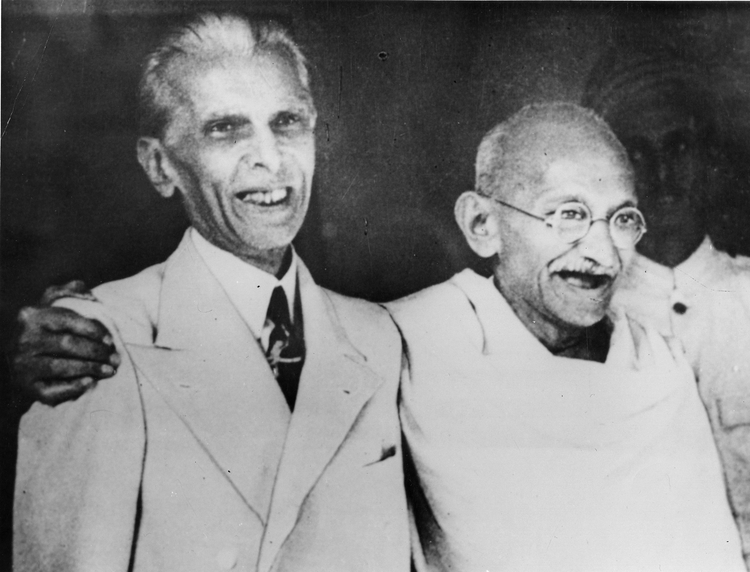
Jinnah expected India and Pakistan to be best of friends - Telegraph India
Jinnah and Gandhi had quite different outlook and faced different consequences due to the Quit India Movement – one failed in his projection of a secular and inclusive India, the other successfully used it to campaign for Pakistan

What is the Biography of Mahatma Gandhi?

I would like to ask you some questions first. What happened in the life of Mahatma Gandhi? How many struggles did he face? How did he passed away? Do you know the answer to all this? We are going to read the answers in this article. Let’s start reading the article.

In this we will see in detail about Mahatma Gandhi who was born as a human being and transformed himself into a ‘Great Man’ in accordance with the words in Tirukkural ” If man you walk the stage, appear adorned with glory’s grace. “

Gandhi’s birth and adolescence 

Gandhi was born on October 2, 1869 in Porbandar, Gujarat. His father’s name was Karamchand Gandhi and his mother’s name was Putlibai. He learned to pay divine feeling and love to his mother. He later earned his title of barrister in England. At the age of 12, he married Kasturba. But then at the age of 19 he went to study barrister.

Gandhi’s mental strength and self-awareness

Anything born as an organism has a kind of mental strength and self-awareness. Time can put it off if desired. Thus many events took place in the life of Gandhiji. He worked as a lawyer in South Africa from 1893 to 1914. He was heartbroken to see that there were racist policies against Indians in British-dominated South Africa. Gandhi was once denied that he could not be given the opportunity to get a ticket to travel in a first class compartment while traveling by train. He was not allowed to sit in the train on another trip when he was so thoughtful about it. But he struggled and eventually sat down with the driver and traveled. When the driver asked him to get off, he refused.

The struggles waged by Gandhiji


He started a “Civil disobedience movement” against the British there because of the many atrocities he witnessed while in South Africa. Gandhi returned to India after 1914 and took the field in the Indian independence struggle. After the demise of Bal Gangadhar Tilak, he assumed the responsibility of leading the Indian freedom fighters. But unlike Tilak, he did not follow extremist methods but followed a non-violent system called moderation. He also accepted Gopal Krishna Gokhale as his guru for his struggle. 

He opposed the laws of England by using the Rowlatt Act in an oral way. He spoke out against not only the British but also the atrocities such as sectarianism, untouchability and feminism that had plagued the Indians at the same time. 

He wore Khadar clothes to support the Swadeshi movement. On March 12, 1930, he launched the Non-Cooperation Movement against the British. On April 6 of the same year he staged a salt satyagraha with 2500 volunteers against the tax on salt. In 1942, he launched the ‘Quit India Movement’ movement.

Victories achieved by struggles

He started the ‘Civil Disobedience Movement’ against the South Africans. So got the rights for Indians in South Africa. August 15, 1947 was declared our Independence Day because of the determination of the British Government to liberate India as a way of fighting ‘Without a knife and without blood’. 

On January 30, 1948, one of us, ‘Godse’, shot and killed our Gandhiji, who loved the Indian nation and people very much and lived for us. Gandhiji even forgave the one who shot himself. One cannot talk about Gandhiji who lost all his body, substance and spirit for others by proving that man can become Mahatma through his activities. But we must try, that we may live in his way. This is the duty we owe him.