
Amazon Rainforest

The Amazon is a vast region that spans eight rapidly developing countries: Brazil, Bolivia, Peru, Ecuador, Colombia, Venezuela, Guyana, Suriname, and French Guiana, an overseas territory of France.
The landscape contains:

  • One in ten known species on Earth
  • 1.4 billion acres of dense forests, half of the planet’s remaining tropical forests
  • 4,100 miles of winding rivers
  • 2.6 million square miles in the Amazon basin, about 40% of South America

There is a clear link between the health of the Amazon and the health of the planet. The rain forests, which contain 90-140 billion tons of carbon, help stabilize the local and global climate. Deforestation may release significant amounts of this carbon, which could have catastrophic consequences around the world.

The Amazon contains millions of species, most of them still undescribed, and some of the world’s most unusual wildlife. It is one of Earth’s last refuges for jaguars, harpy eagles, and pink river dolphins, and home to thousands of birds and butterflies. Tree-dwelling species include southern two-toed sloths, pygmy marmosets, saddleback and emperor tamarins, and Goeldi’s monkeys.
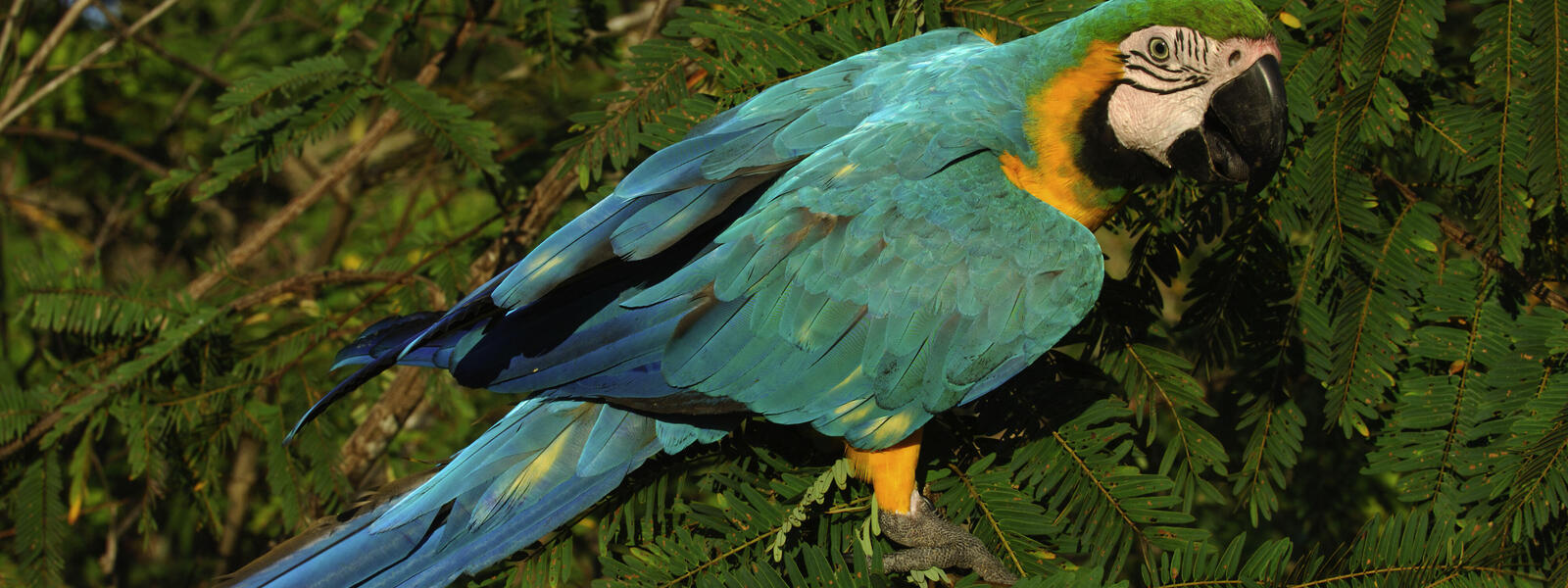
Macaw

The diversity of the region is staggering:

  • 40,000 plant species
  • 2,400 freshwater fish species
  • more than 370 types of reptiles
THREATS

Transportation and energy infrastructure are essential for national and regional development, but when they are poorly planned, negative impacts can exceed short-term benefits. For example, building new roads exposes previously inaccessible areas of forest to illegal and unsustainable logging. 

WWF works to promote best practices and decrease environmental damage from:

  • gold mining
  • oil exploration
  • illegal logging
  • overharvesting of fish and other aquatic species

There is high demand for the natural resources found in the Amazon, but weak law enforcement to safeguard them. In addition, inefficient extraction processes lead to the destruction of nature and wildlife. For example, some mining activities contribute to soil erosion and water contamination.

In recent times, warmer temperatures and less rainfall have produced droughts of historic proportions. The Amazon suffered its worst droughts of the last 100 years in 2005 and 2010. Long dry spells wither crops, decimate fisheries and lead to forest fires. This can result in significant shifts in the makeup of ecosystems and a loss of species. 
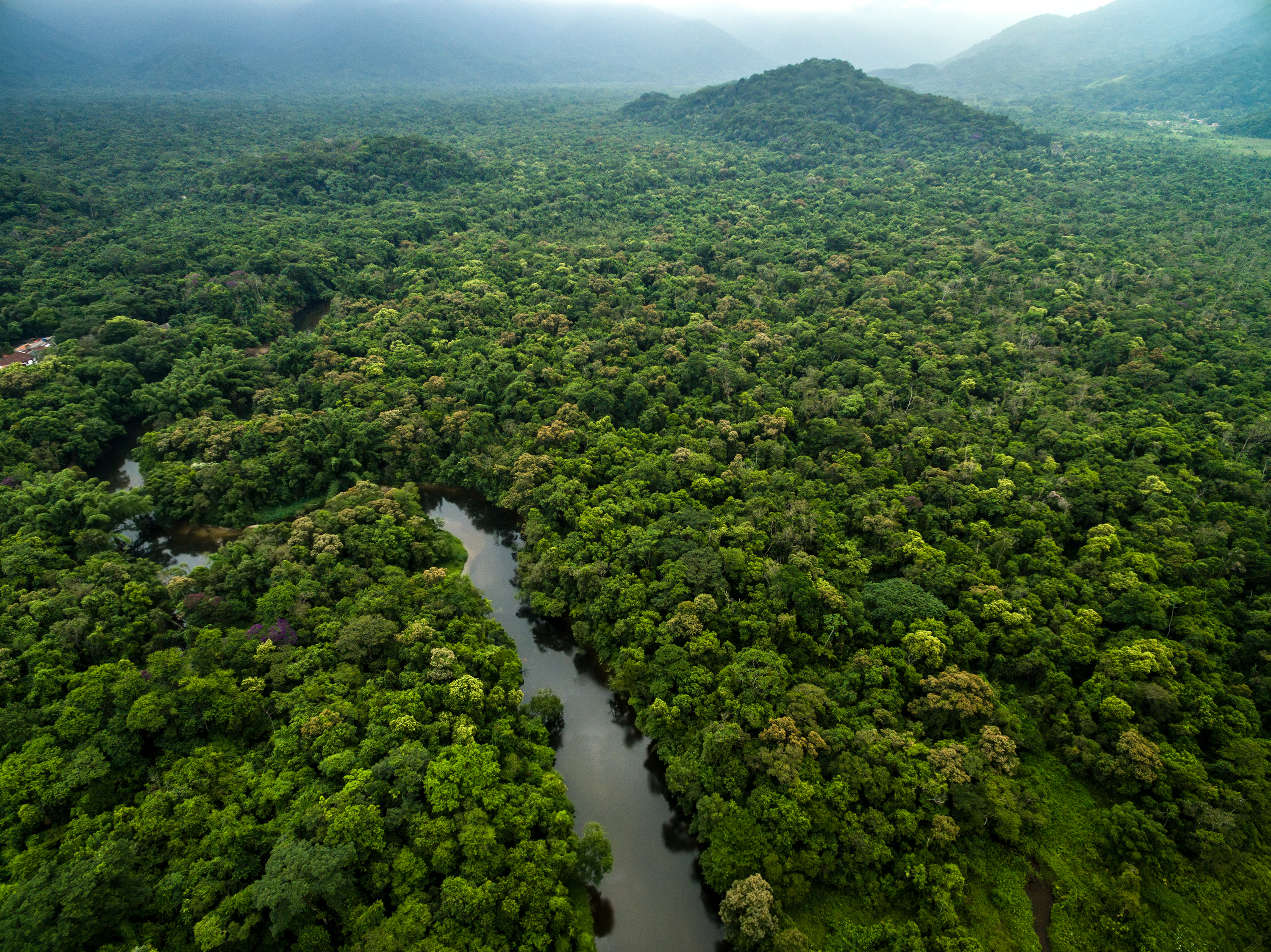
The Amazon Rainforest

See the source image

The Amazon Forest is the biggest rainforest in the world with the highest density of plant and animal species anywhere, covering nine countries with 5,500,000 kmof forest cover. Moreover, it is bigger than all the other rainforests combined. It is home to more than thousands of species of animals, plants, and trees, making it the most bio-diverse rainforest on the planet. One in ten of the world’s known species live in the Amazon. It is also known as The Amazon Jungle and is located in the South American continent and has the Amazon basin acting as the source of the magnificent Amazon River.

Ecosystem

Amazon rainforest has the biggest ecosystem in the world. This ecosystem is driven by the great Amazon River, which covers thousands of miles and is the main foundation of the ecosystem. The river basin, with an average temperature of 26C and heavy humid and rainfall levels, has a direct impact on the ecosystem.

The presence of this hot and humid climate has influenced the presence of different species of both plants and animals, making the rainforest have the largest number of species for the kingdoms Animalia and Plantae, including many endangered species. Further, it is home not only to wildlife but also to indigenous people who have been living in the forest. The ecosystem of the rainforest is so big that it helps to control the entire planet’s atmospheric carbon levels. This is attributed to the Amazon basin, which is home to over ten times the annual carbon emissions from fuel consumption.

Plants & Animals

The Amazon biome is home to as many as 80,000 plant species in the Amazon. The tropical climate of the Amazon is the biggest contributing factor for the vast types of plants. The varying climate ensures that all types of plants can grow during the different seasons. The Amazon is home to over 2,000 different animal species. There are over 427 mammal species, 1,300 bird species, 427 amphibian species, 3,000 fish species, and 378 reptile species. In addition to this, there are over 2 million insect species in the Amazon rainforest. One in five of the bird species lives only in this rainforest.

Deforestation

There has been a massive reduction of the Amazon forest area by residents in the nine regions. According to National Geographic, about 17 percent of the Amazonian rainforest has been destroyed over the past 50 years. The major reasons for this are human settlement and search for agricultural land. The land surrounding any river basin is always suitable for farming, given that it harbors suitable nutrient content and, thus, soil fertility. Similarly, the presence of forest cover translates into better soil quality in terms of humus and water retention leaving no chance of soil erosion. Although the soil in the forest is fertile, there is a deterring factor. The fertility of the soils in the Amazon is easily depleted over a short time rendering farming on a single piece of land quite difficult. This is because the sandy soils are thin, thus not suitable for farming.

Wildfire in Amazon

Fires breaking every year in the Amazon rainforest are often caused by accidents during the dry months. Every year, the dry season causes wild fires that destroy wildlife. However, many satellite photographs also show that the fires in the Brazil region of the Amazon were set deliberately to clear many acres of land.

Climate Change of the Amazon Rainforest

Over time, global climate change and more deforestation will likely lead to increased temperatures and changing rain patterns in the Amazon, which will undoubtedly affect the region’s forests, water availability, biodiversity, agriculture, and human health. Industrial farming, urban expansion, mining, petroleum extraction, dams and irresponsible timber production have also led to massive forest loss. As deforestation continues and the effects of climate change intensify, we run the risk of losing this spectacular ecosystem for future generations.