

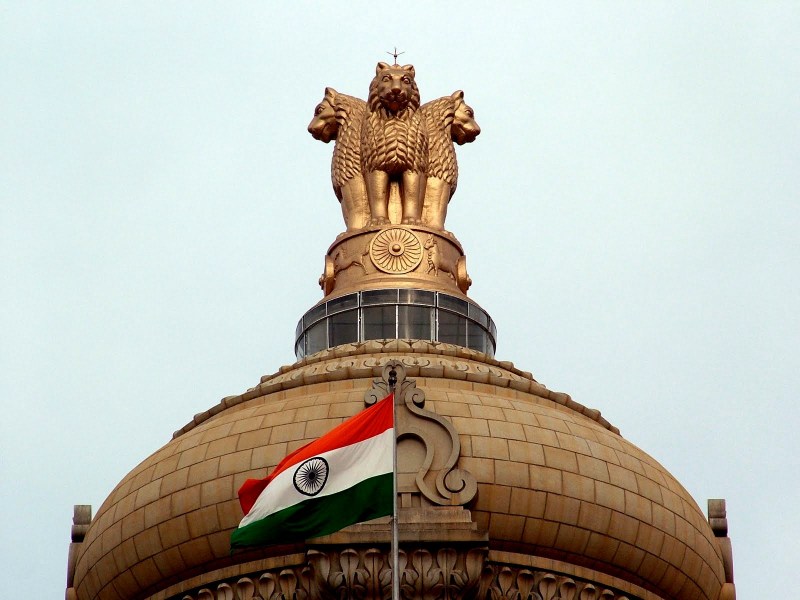
Does caste based reservation in India violates the constitutional and fundamental right of equality?
This is an obvious question that arises whenever we think of caste based reservation in India. Whether we agree or disagree, truth cannot be denied that reservations had slowed the progress of India and its people. Obviously the implementation of reservation act in the early 1950’s was to uplift the suppressed castes of India and it was indeed for a Nobel cause, in the end India’s citizens should be called as just Indians. This is what constitution refers to when it starts with ‘we the people of India’, isn’t it?
Was it just India having caste based discrimination among people of society? Actually it’s not the case. There have been so many countries facing this issue among its society, where people terribly discriminate towards a certain group of community.
Discrimination is in the genes of Humans, specifically on the grounds of superior and inferior. In today’s modernization this isn’t required when already there have been a class of rich and poor, we need no more classes of people. With distinctive efforts worldwide, many countries could stop it, close to zero. But India as nation couldn’t stop it, people tend to discriminate and when certain group or family of people are classified as lower class, the things start getting difficult. The plan India took to solve this issue, doesn’t seem to be helping. In the past seven decades of Independent India all it did was increasing the gap between general caste (termed as upper) and the reserved castes of Dalits, SC,ST and OBCs. With certain strict implementation of reservations in schools, government colleges, Jobs and promotions too and all this with no economic status consideration leads to divided society of India. The poor dalits who sincerely need these reservations would rarely get these benefits when rich and already uplifted dalits/SCs/STs get them. The Honourable supreme court of India had time to time stated and also ruled the decision to implement creamy layer concept in the reservations for the SCs and ST (acronym for Scheduled castes and scheduled tribes of India). The creamy layer in relation to reservations means if certain community who enjoys the benefit of reservations would not get these benefits, if crossed a certain limit of annual income. Reserved communities falling below that specified annual income fall into non-creamy layer. This concept is already implemented for OBC (other backward castes) reservations in India.
Discrimination in other countries
United States of America (USA)

Discrimination of race among:
- Black & White
- Native Americans (Tribal Americans) and Modern Americans (British descended)
Racism in the United States has existed since the colonial era, and involved laws, practices and action that discriminated or otherwise adversely impacted various groups based on their race or ethnicity, while most white Americans enjoyed legally or socially sanctioned privileges and rights which were denied to other races and communities of African Americans.
The recent killing of Black American namely George Floyd by the US state police is a pure example of still existing racial discrimination in USA.
Japan
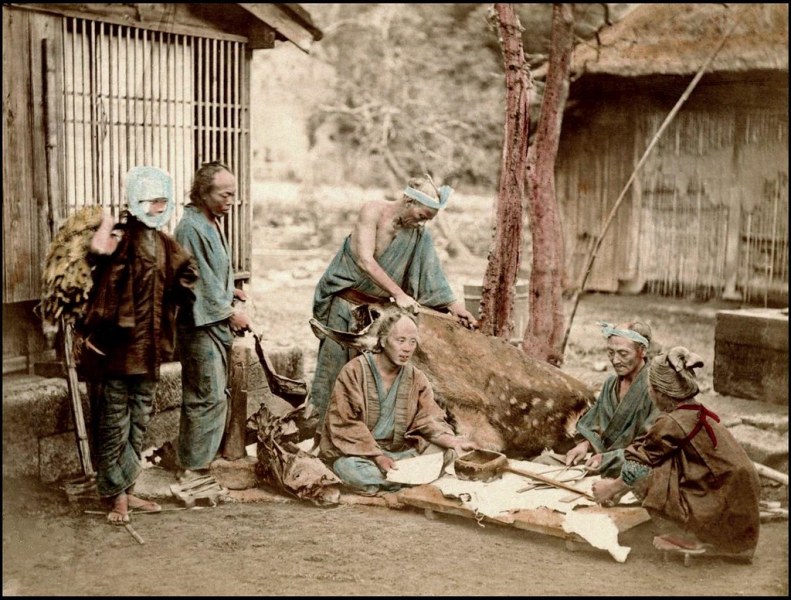
The Burakumin caste in japan faces huge amount of discrimination, even in today’s extremely modernised Japan. The Burakumin (from the words buraku, meaning community or hamlet and min, meaning people) are not an ethnic minority, but rather a caste- or descent-based group. They therefore share with other Japanese the same language, religion, customs and physical appearances.
Burakumin caste originates from a now-defunct caste system that existed in the Edo Period (1603-1867). At the bottom of the hierarchy was a cohort of outcasts consigned to jobs stigmatized by death, such as executions or animal slaughter. Hence their derogatory class categories, including eta (filthy mass) or hinin (nonhuman). The burakumin are the modern-day descendants of these feudal age pariahs.
The caste system came to an end in tandem with Japan’s breakneck shift to modernization at the outset of the Meiji Era (1868-1912), with the government ostensibly declaring the outcasts “emancipated” in 1871.
But the burakumin remained largely segregated from society and stuck in ghettos. Even today, discrimination against people from these hamlets, or buraku, runs deep, activists say, despite efforts by the government in the late 1990s to encourage their assimilation into mainstream society.
What could be the possible solution?
Providing special reservations and status above than the general segment of the society could work for uplifting the supressed communities but it’s definitely not an ideal solution. This would never help in bridging the gaps among different segments of society. This is how caste based reservation in India was initially implemented and the founder of Indian constitution B.R. Ambedkar himself said that this reservation system should be abrogated in few years. Unfortunately, this could never happen due to deeply engraved caste and religion based politics of India. Governments one after another could not dare to upset certain parts of society and used them as their vote banks. In return to continuous renewing of reservation duration (set for 10 years in the Indian constitution), governments in India formed NO effective policies which could actually solve India’s poverty crisis and kept on getting votes just by luring people of India by reservations. In reality, reservations are hollowing India’s strength and calibre, reducing technological advancements and increasing India’s dependency over rest of the world.
In many developed nations reservations were implemented in a manner that it expired on its own. One such example is by providing reservations only on the basis of financial income and if provided towards a certain community, it should be for only one generation because it is obvious and natural to understand that if one generation is uplifted then their next generation would get all the benefits of early education and other privileges to sustain an earnings or to get a job on their own.
 Eduindex
You must be logged in to post a comment.