Haryana has Achieved Target of connecting all rural households with water connections

 Today, Union Minister of State for Skill Development and Entrepreneurship, Electronics and Information Technology, and Jal Shakti, Shri Rajeev Chandrasekhar, conducted a comprehensive review of the Jal Jeevan Mission (JJM) progress in Raghunathpura and Chanduwas villages, Rewari District, Haryana.
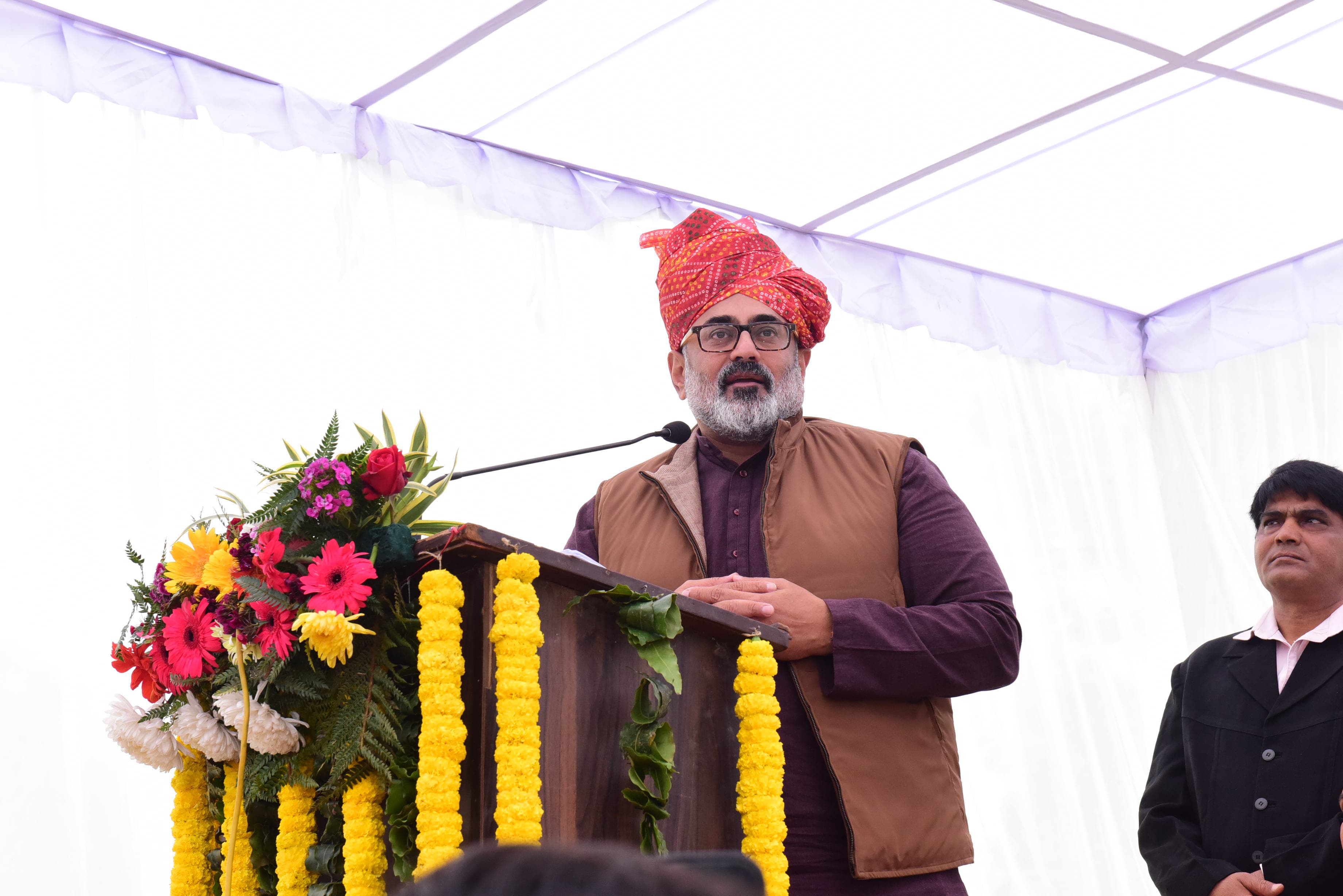
Throughout the day, Minister Rajeev Chandrasekhar engaged with authorities overseeing the District Water and Sanitation Mission, interacted with members of the Village Water & Sanitation Committee, and visited the homes of several residents. The minister emphasized the significant success of JJM in Haryana, particularly in model villages like Raghunathpura and Chanduwas, which achieved the milestone of 100% water connectivity to all households.
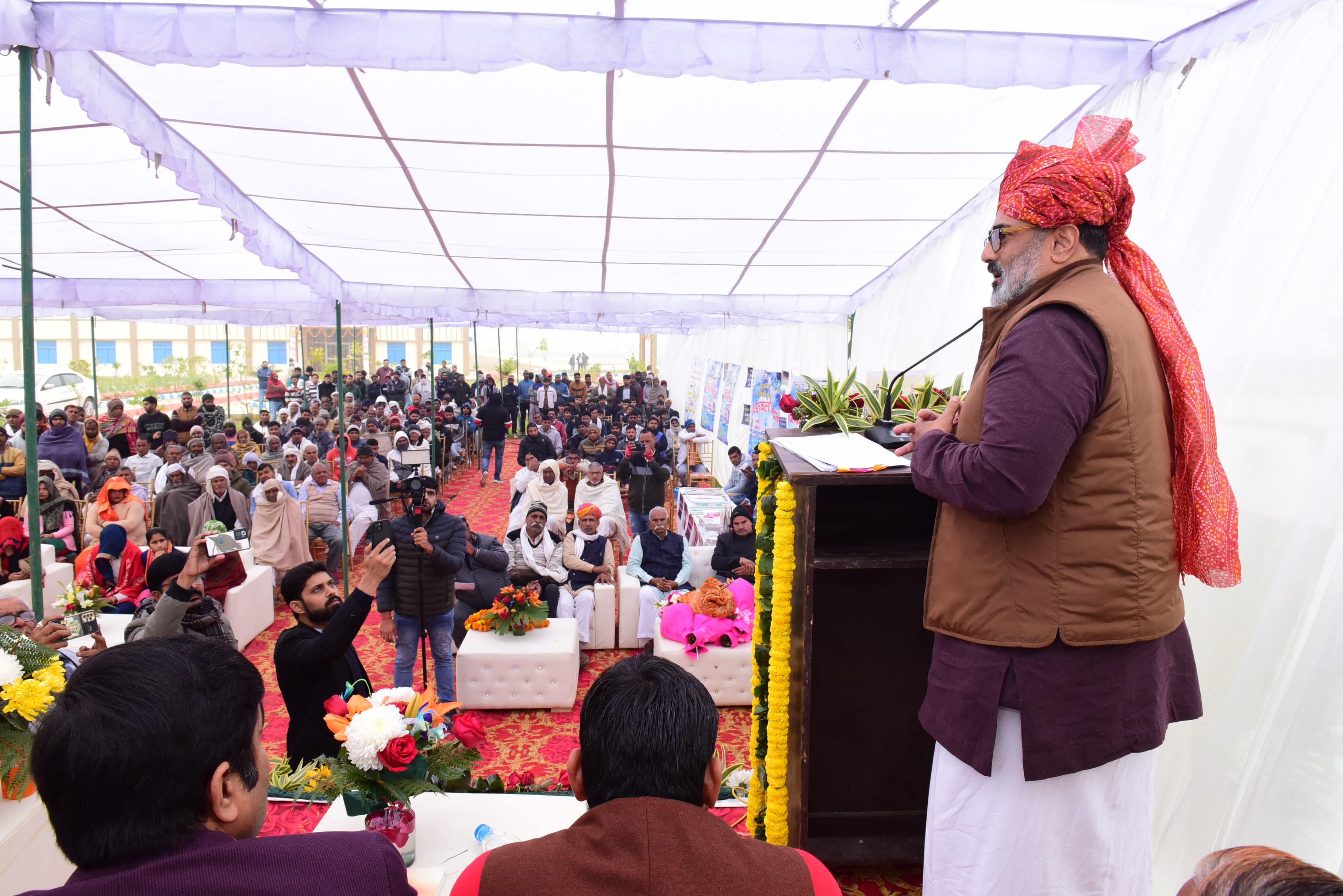
Highlighting the impactful collaboration between the Centre and State Governments, Minister Rajeev Chandrasekhar expressed how this collaboration had transformed lives. He commended the people and authorities of Haryana for setting an example of effective governance, showcasing how the Centre and State can work together as a Double Engine for the betterment of the community.

The Minister during his interactions said that, “ PM Narendra Modi ji’s vision of Har Ghar Jal is deeply impacting the lives of Indians. It was wonderful to meet with people of the villages Raghunathpur & Chanduwas in Rewari today and know about their transformation story. For 7 decades, women in these villages endured the drudgery of trekking miles to fetch water for their household needs, standing in long queues for hours every day for a mere drop of water. With Haryana achieving its targets in 2022, this longstanding hardship came to an end in just 3 years. Women now spend more time with their families as they get clean drinking water of prescribed quality.  Haryana has set an example of how the Centre and State Govt can work as Double Engine to achieve the unprecedented feat of connecting all rural households with water in just 3 years, something that couldn’t be achieved over decades.”
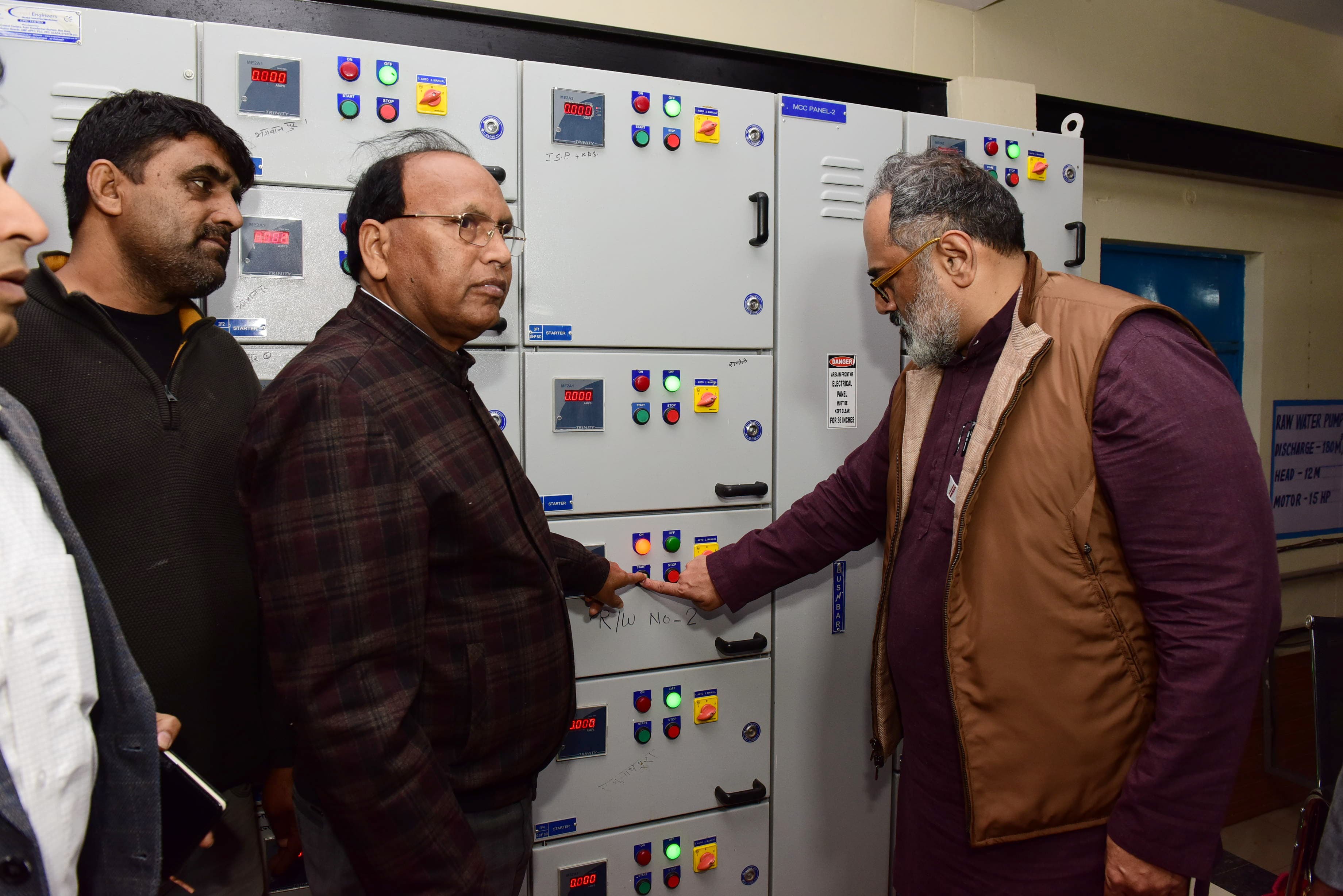
The Minister also inspected the water works management system in the villages, which efficiently facilitates water supply. Several women from these villages thanked the Narendra Modi Government for solving the persistent water problem that plagued their communities for decades.

The Jal Jeevan Mission, operating with speed and scale, has increased rural tap connection coverage from 3.23 Crore households in August 2019 to an impressive 13 crore in just four years. The relentless efforts of the Union and State governments have also resulted in ensuring tap water supply in 88.73% of schools and 84.69% of Anganwadi centers nationwide.

Embodying the motto of Sabka Saath, Sabka Vikas, Sabka Vishwas aur Sabka Prayas, the Jal Jeevan Mission is advancing towards achieving Sustainable Development Goal 6, providing safe and affordable water to all, by delivering safe water through taps to households, schools, anganwadis, and other public institutions in rural areas.

***

Indian Folk Art

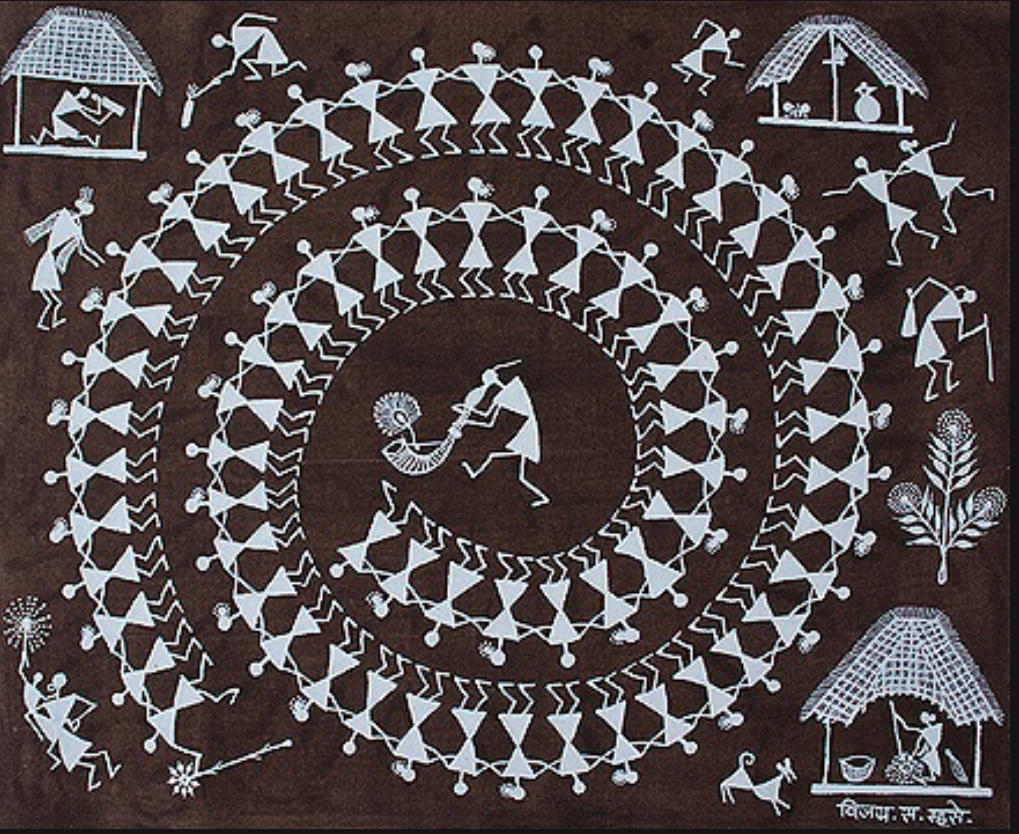
• Warli paintings

Warlis or Varlis are an indigenous tribes or adivasis living in the mountainous as well as coastal areas on the Maharastra-Gujarat border and surrounding areas. They have their own animistic beliefs, life, customs and traditions. As a result of acculturation, they have adopted many Hindu beliefs. Their extremely rudimentary Wall paintings use a very basic graphic vocabulary a circle, or triangle and a square. Their paintings were monosyllabic. The circle and the triangle come from the observation of nature, the circle representing the sun and the moon, the triangle derived from mountains and pointed trees. Only the square seems to be a different logic and seems to be a human invention, indicating a sacred enclosure or a piece of land.

The ritual paintings are usually done inside their huts. The walls are made of a mixture of branches, earth and cow dung making a red ochre background for wall paintings. Warlis use only white in their paintings. The white pigment used by them is a mixture of rice paste and water with gum as a binding. As the brush, they use a bamboo stick chewed at the end to make it as supple as a paintbrush. The wall paintings are done only on special occasions such as weddings or harvests. Warli art is the cultural intellectual property of the tribal community. Today, there is an urgent need for preserving this traditional knowledge in tribal communities across the globe. Now, Warli painting is registered with a geographical indication under the intellectual property rights act. With the use of technology and the concept of social entrepreneurship, tribals established the Warli Art Foundation, a non-profit company dedicated to Warli art and related activities.

• Cave paintings in India

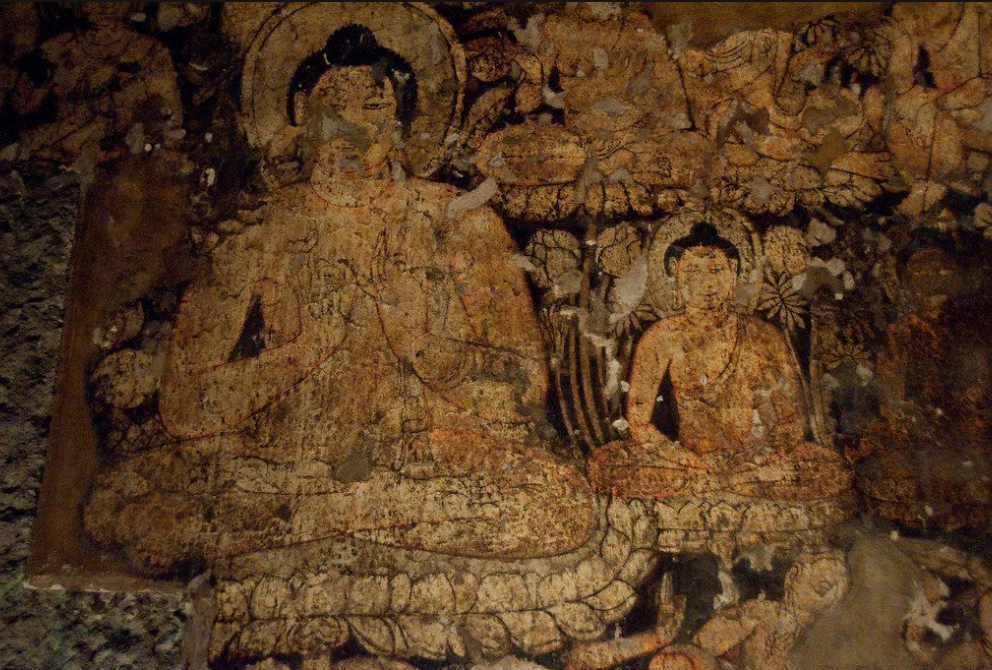
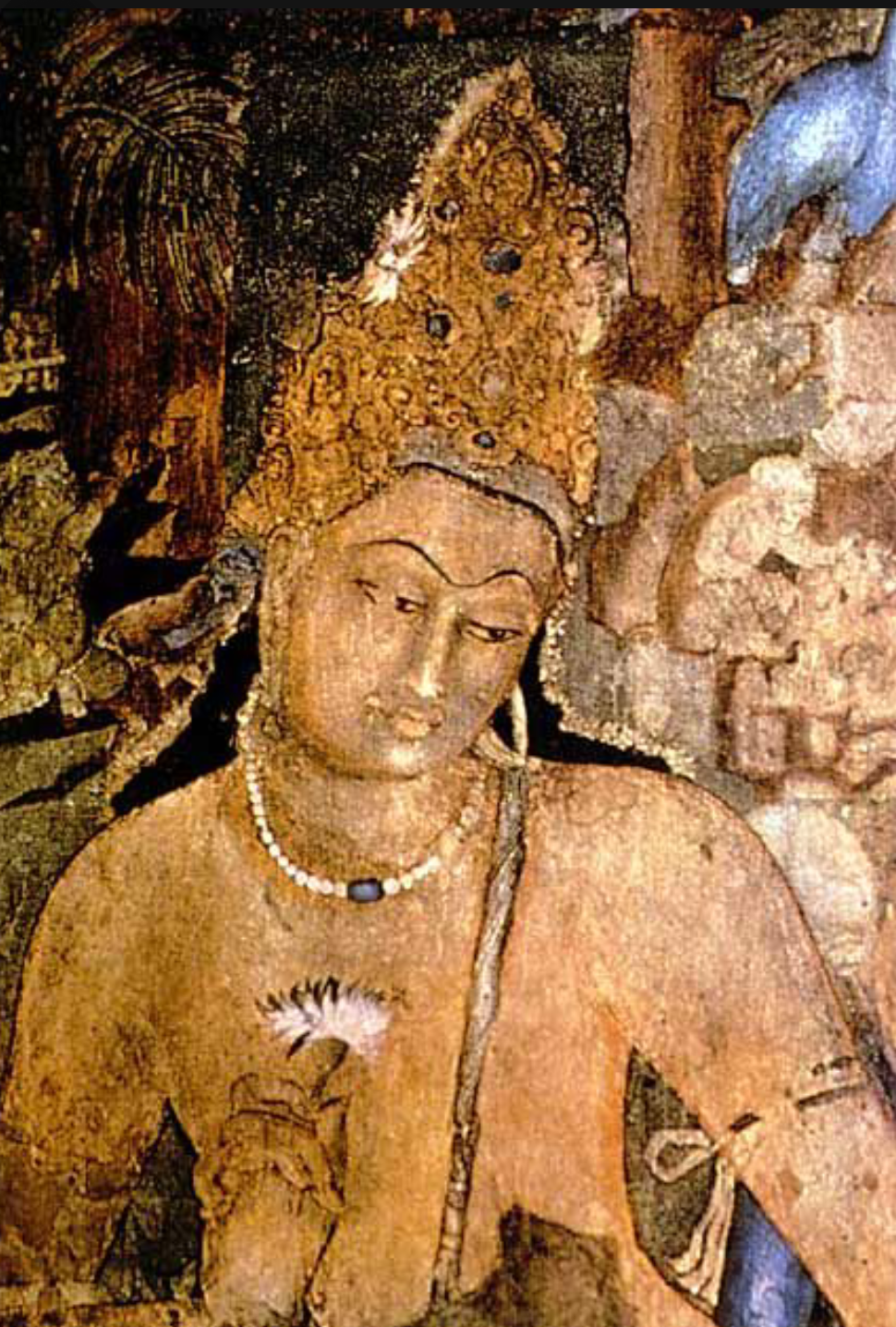
Almost all early painting in India survives in caves, as very few buildings from ancient India survive. The history of cave paintings in India or rock art range from drawings and paintings from prehistoric times – beginning around 30000 BCE in the caves of Central India, typified by those at the Bhimbetka rock shelters – to elaborate frescoes at sites such as the rock cut artificial caves at Ajanta and Ellora, prevalent as late as the 8th – 10th century CE. The frescoes of Ajanta are paintings in the Ajanta caves, which are situated near Aurangabad in Maharashtra. The caves are carved out of large rocks. Inside many of the caves are frescoes. Frescoes are paintings which are done on wet plaster in which colours become fixed on the walls and ceilings at Ajanta.

The paintings reflect different phases of Indian culture from Jain tirthankar Mahaveer’s birth to his Nirvana in the 8th century AD. The frescoes have degraded slightly due to the effect of flash photography. Photography here is not banned. The paintings depict themes of court life, feasting, processions, men and women at work, festivals and various natural scenes including animals and birds and flowers. The artists used shading to give a three-dimensional effect.

Similarly, beautiful frescoes have been found at the Bagh caves, 150 km away to the North of Ajanta. Though the themes in these paintings are both secular and religious, they do depict some aspects of Buddhist life and rituals. One of the most famous paintings show a procession of elephants. Another depicts a dancer and women musicians. These have been influenced by the Ajanta style of painting. These frescoes show a strong resemblance to the frescoes of Sigriya in Sri Lanka.

Thank you for reading. Have a nice day!🌼

Odisha under “Jal Jeevan Mission (Har Ghar Jal)

Through ‘Jal Jeevan Mission’, Government of India is making all efforts to provide every rural household in the country a Functional Household Tap Connection for water in adequate quantity of prescribed quality on regular and long-term basis. Following the true spirit of cooperative federalism, State Governments are steering this flagship programme to realise the objectives of the Mission so as to bring cheers in the lives of rural people by providing potable water at their doorstep and ensure ‘ease of living’. It is envisaged that through this life changing Mission, each household will get potable water supply of 55 lpcd of prescribed quality on regular and long-term basis.

The estimated outlay of the mission is Rs 3.60 Lakh Crore with Central and State share of Rs. 2.08 Lakh Crore and Rs.1.52 Lakh Crore respectively.

Odisha state presented their Annual Action Plan before the National Committee headed by Secretary, Drinking Water & Sanitation, Ministry of Jal Shakti for consideration and approval for 2020-21. Govt of India approved Rs 812 Crores for implementation of the Mission in the State for the financial year. This allocation is a significant jump from last year’s allocation of Rs 297 Crore. Out of 81 lakh rural households in the State, Govt of Odisha plans to provide 16.21 lakh household connections in 2020-21. The State is planning 100% household tap connections by the year 2024. Priority is being given for 100% coverage of villages under water scare areas, quality-affected areas, Sansad Adarsh Gram Yojna villages, villages in aspirational districts and SC/ ST dominated habitations.

Laying emphasis on capitalising on ‘low-hanging fruits’ i.e. in the villages/ habitations where piped water supply schemes already exist, State is making all out efforts to immediately provide household tap connections to remaining households belonging to weaker and marginalised sections on priority. A roadmap is prepared for the effective implementation of Village Action Plan (VAP) with the active participation of the rural community. Strengthening of existing drinking water sources for long-term sustainability of drinking water supply systems through convergence of various programmes like MGNREGS, SBM (G), 15th FC Grants to PRIs, District Mineral Development Fund, CAMPA, Local Area Development Fund, etc. at village level is planned for judicious use of all available resources. The State has been allocated Rs. 2,258 Crore under 15th Finance Commission Grants to PRIs during 2020-21; 50% of this amount has to be mandatorily spent on water and sanitation.

To implement the mission, institutional arrangements at various levels have been made and State’s PHE Department is to play a critical role. To instil sense of ownership among the village community, Mission strives to involve the community in planning, managing, implementing, operation and maintaining the water supply schemes meant for them for long-term sustainability. State Government will start engaging the Self Help Groups and voluntary organisations for community mobilization.

Jal Jeevan Mission encourages participation of local community in surveillance of water quality. For this, action plan carried out to incorporate the timely procurement of kits, supply of kits to the community, identification of at least five women in every village, training women for use of Field Test Kits and reporting and collating the reports with laboratory-based findings of the water sources. State also proposed taking NABL accreditation for 18 of its water testing labs. At present, it has one state-level lab and 32 district level labs. 

Odisha state reels under two extreme conditions of water scarcity and also excess of it. There is one part which is water-stressed for most of the year, while the other part is marooned in monsoon. With the mercury soaring above 40 degrees Celsius, and during the prevailing Covid–19 pandemic, it is important that people don’t crowd public stand posts/ drinking water sources to fetch drinking water. Therefore, State was advised for taking up water supply works in villages to provide household tap connections, which will help in practicing social distancing, and will additionally help local people in getting employment and boost rural economy.

In the present context, when lot of migrants are returning to the State, it has become very important to provide livelihood to them. These personnel could be utilized in water supply related works especially plumbing, fitting, water conservation works, etc. in every village to ensure sufficient ground water availability leading to water security, water availability for agriculture and most importantly will help in provision of drinking water to every rural household as per the objective of Jal Jeevan Mission.

Assam plans to provide functional tap connections to 13 lakh rural households in 2020-21

Assam presented the Annual Action Plan for consideration and approval of Ministry of Jal Shakti. Government of India approved Rs 1407 Crore for 2020-21 under Jal Jeevan Mission (JJM). In 2020-21, State plans to provide tap connections to 13 lakh households out of total 63 lakhs. Realization of the goal of Jal Jeevan Mission in Assam is not difficult taking into account the abundant water resources in the State i.e. both ground water and surface water.

The state is giving emphasis on capitalising on ‘low-hanging fruits’ i.e. in the villages/ habitations where piped water supply schemes already exist, to yield the desired results. The state plans to immediately provide household tap connections to all remaining households of belonging to weaker and marginalised sections on priority. A defined roadmap is also charted for the effective implementation of Village Action Plan (VAP) with the active participation of the rural community. Strengthening of existing drinking water sources for long-term sustainability of drinking water supply systems through convergence of various programmes like MGNREGS, SBM (G), 15th Finance Commission Grants to PRIs, District Mineral Development Fund, CAMPA, Local Area Development Fund, etc. at village level is planned for judicious use of all available resources.   

While planning, thrust is given on covering households in quality-affected habitations, aspirational districts, SC/ ST dominated villages/ habitations, Sansad Adarsh Gramin Yojana villages, etc. on priority.

Above all, local village community/ Gram Panchayats and or its sub-committee/ user groups are being involved in planning, implementation, management, operation and maintenance of water supply systems in villages to ensure long-term sustainability. Jal Jeevan Mission encourages participation of local community in surveillance of water quality. PHE department is duty bound to empower and engage with the community. For this, action plan carried out to incorporate the entire value-chain- from timely procurement of kits, supply of kits to the community, identification of at least five women in every village, training women for use of Field Test Kits and reporting and collating the reports with laboratory-based findings of the water sources.

In the wake of Covid–19 pandemic, it is important that people don’t crowd public stand posts/ public water sources to fetch drinking water. Therefore, State is taking up water supply works in villages to provide household tap connections, which will help in practicing social distancing, and will additionally help local people in getting employment and boost rural economy.

When the country is grappling with CoVid-19 pandemic, it has become very important to provide livelihood to the migrant workers who have returned to their native villages. These migrant labourers are basically skilled and semi-skilled ones, whose services could be utilized in by providing jobs related to water supply especially plumbing, fitting, water conservation works, etc. in every village to ensure sufficient ground water availability leading to water security, water availability for agriculture and most importantly will help in provision of drinking water to every rural household.

With the implementation of Jal Jeevan Mission, people in rural areas now aspire to get tap connections in their household premises, which they could not even think of till last year. With the active support of States, Ministry of Jal Shakti is steering the Mission to bring cheers in lives of rural folks by making provision of potable water in adequate quantity and of prescribed quality on regular and long-term basis.

Jal Jeevan Mission announced by the Prime Minister Shri Narendra Modi last year aims to provide tap water connections to 18 Crore rural households of the country by the year 2024.  This ambitious scheme is benefitting all the States as the States are working hard to ensure every rural household gets water tap connection to bring improvements in their lives. This transformational Mission focusses on the principle of ‘equity and inclusiveness’ to ensure universal coverage of every rural household.