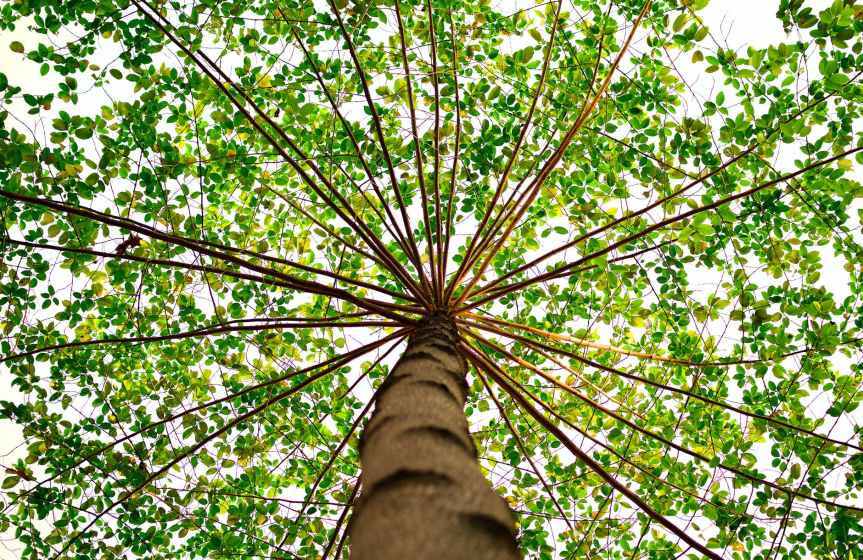
Importance of Tree plantation

“A tree is the best friend of man on earth.” When we use trees respectfully and economically, we have one of the greatest resources on earth. Trees are rightfully called the ‘lungs of the earth.’ Life on earth would cease to exist in the absence of trees. Trees are responsible for sustaining the environment in several ways.Trees release life-supporting oxygen and absorb harmful gases like carbon dioxide during the process of photosynthesis. They act as sponges by taking in toxic emissions and other pollutants, released into the atmosphere by industries and vehicles. The roots of trees bind the soil together thereby preventing erosion. The blatant and increased rate of deforestation is the primary cause of landslides. In addition to being the bearers of delicious fruits, trees are the natural habitat of several species of animals, birds, and insects. Thus, the destruction of a tree implies the destruction of an entire ecosystem.We have inherited this planet with its many resources, from our ancestors. The onus rests on us to protect the earth’s fragile ecosystem, so that future generations have a place they can call home. It is indeed ironic that despite being at the top of the food chain Homo Sapiens are intent on destroying the very things that guarantee their survival. However, there is a silver lining. The situation can be remedied by restoring the earth’s green cover and taking concrete measures to reduce carbon emissions. Let’s all take a vow to go green and save the earth from destruction.

Trees are our best friends because they clean the air we breathe. Likewise, they also clean the water and soil and ultimately make the earth a better place. It is also a fact that people who live near trees are healthier, fit, and happier than people who do not.Moreover, it is our responsibility to look after our friends who serve us in many ways. Most importantly by saving plants, we are not doing any favor to plants but to ourselves only. Because trees and plants life does not depend on us but our lives depend on them.

Importance of Trees

Trees are important to us in a lot of ways and we cannot ignore their importance. They are important because they give us fresh air to breathe, food to eat and shelter/shade from sunlight and rainfall. Besides this, there are many medicines in the market that are made up of trees extracts. Apart from this, there are plants and trees that have medicinal value.

They bring peacefulness; create a pleasing and relaxing environment. Also, they help in reflecting the harmful rays of the sun and maintaining a balanced temperature. Besides, they also help in water conservation and preventing soil erosion. They also manage the ecosystem and from ancient times several varieties of plants are worshipped.

Benefits of TreesTrees provide us many benefits some of which we can’t see but they make a huge difference. They help in fighting back the climate changes by absorbing greenhouse gases which are the main cause of climate change.Moreover, they replenish groundwater and filter the air from harmful pollutants and odors. Besides, they are a great source of food and the king of fruits ‘Mango’ also grow on trees.

Value of Trees When a seed of a plant or tree grow it makes the area around it greener. Also, it supports many life forms. Birds make their nests, many reptiles and animals live on it or near it.Besides, all these many beautiful flowers, food growing on it. Moreover, many parts of trees such as roots, leaves, stem, flower, seeds, are also edible. Most importantly they never ask anything in return for their services and the gifts they give. Trees also keep the balance in the ecosystem and ecology.To conclude, we can say that trees are very important and beneficial for every life form on earth. Without them, the survival of life on earth will become difficult and after some time every species starts to die because of lack of oxygen on the planet. So, to save our lives and to survive we have to learn the importance of trees and also have to teach our children the importance of trees.
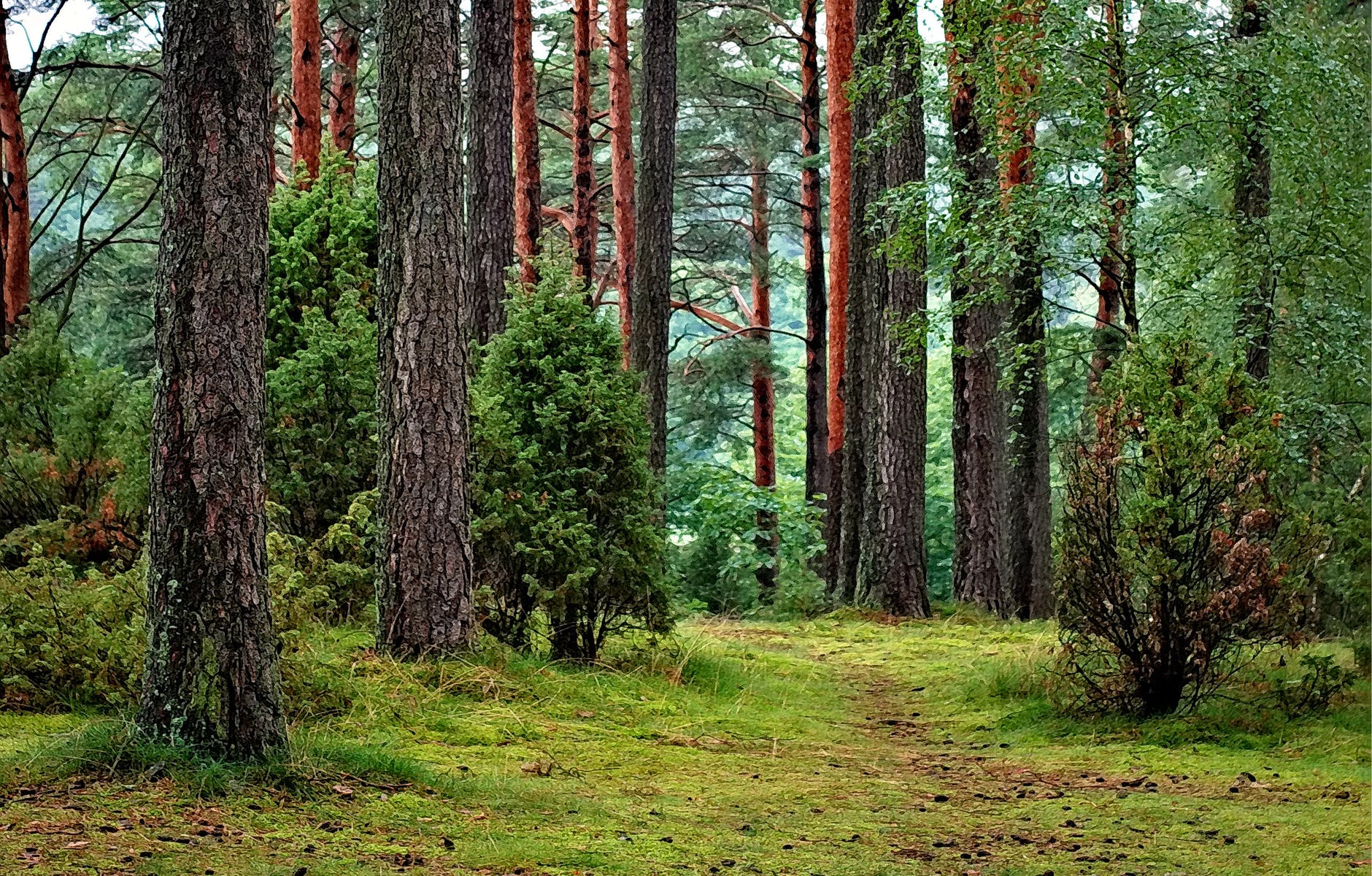
Photo by Pixabay on Pexels.com

FELLING OF BUXWAHA

Diamond mining in India dates back to ancient times. In the past, India was the only source of nearly all the world’s known diamonds, until the discovery of diamonds in South Africa in 1896. India has not been a major diamond-producing country since the 1900s, but diamond mining continues. But don’t we all know what is the price we have to pay for in order to make a mine?

Not recently have the forests of Buxwaha been in news for the wrong reasons. The diamond mine project, which is now with Aditya Birla Group’s Essel Mining & Industries Limited (EMIL), is once again facing dark clouds due to protests over ecological concerns, as it could result in the felling of over 2 lakh trees. Yes, this is the rate of a diamond mine currently!

The 55,000-crore rupees mining project spans over 300 hectares in Madhya Pradesh’s Chhatarpur district, in the drought-prone Bundelkhand region. The block is estimated to have 34 million carats of rough diamonds. The existing diamond mine, National Mineral Development Corporation’s (NMDC) is about 175 kilometres from Bunder.

The proposed Bunder diamond block in the Chhatarpur district of Madhya Pradesh has been in the news for the wrong reasons over the years. The forests of Buxwaha, located near the site, are home to tigers, leopards, Indian foxes, sloth bears and other wildlife. The area is also rich in minor forest produce such as Tendu leaves and Mahua. Over 200,000 trees are expected to be cut in the Buxwaha forest for the diamond project. Environmentalists fear that the mining project would result in loss of biodiversity as well as air and water pollution.

The Forest clearance report shows that the project would cost over 200,000 trees in the forest region and also use a lot of water. We are against the environmental destruction in our area, which is already a water distress area,” said Sankalp Jain, a local youth who is associated with one of the groups running social media campaigns such as ‘save Buxwaha forest’ and ‘India stands with Buxwaha forest’ last month.

Credits: Mongababy

 It is to be noted that the project, once operational, has the potential to become one of the largest diamond mines in the Asian region. The company targets the execution of the mining lease by the end of the financial year 2022. But what potential be praiseworthy where Mother Nature gets compromised? In addition to trees and wildlife, the amount of water needed to build the mine will dry out the already water-scarce region of Buxwaha. A dam is to be constructed to divert a seasonal nallah.

Expectedly the project is facing strong opposition, including social media campaigns. Already, a Public Interest Litigation has been filed in the Supreme Court of India, seeking a stay on the project that had been secured by the Essel Mining & Industries Limited in 2019. In 2006, the Madhya Pradesh government had granted a prospecting licence to Rio Tinto Exploration India Private Limited, an Australian mining giant, to explore diamond mining in the Buxwaha region in the Chhatarpur district. Opposition was done even then.

Effects of Mine

  • 2,00,000 trees are no joke. The ecosystem is no joke. Imagine the countless number of animal species residing in the woods, the amount of oxygen and water that is retained by these green guys.
  • The residents fear a massive loss of trees, including teak, kenbehda, banyan, jamuntenduarjuna and other medicinal trees as well as the devastation of the natural ecosystem if the project proceeds further.
  • “Despite the claims to provide jobs in mining, I feel the project will eat out the livelihood options in the area.” said a resident of Kasera village- closest village to mining site.
  • The villagers are dependent on minor forest produce and water for farming. The project involves the diversion of a nullah which is a lifeline for the area. It ensures groundwater level and water for wildlife.This project will lead to groundwater depletion as well.
  • Environmental activist Hari Krishna Dwivedi said the “whole Bundelkhand region is facing a water crisis and this forest is essential for the local ecology”.
  • The homes of people are going to be uprooted. What progress is this that uproots tribal people who have lived in the region for hundreds of years and generations, tending to the forests and taking only as much is their wont?

Why Indians ignore global issues like climate change

Climate change is a change in the climate or environment of  the planet . it is not a natural process ,but an outcome of human activities and interference with nature. Climate change is not an issue of today or yesterday. It’s been started for a very long time. Transformation or variation in nature has been started in nature since the age of industrialization. climate change is the biggest threat for humanity .It is making our earth inhabitable. . Human civilization was developing at the cost of nature. And after that we all have followed their footprints for getting luxurious lifestyle, comfort, easiness .

development is required , but should not be done at the cost of nature.

Climate change is most worriment issue of today’s world. but the point is whether all countries are equally serious about it. Solemnity about this global issue varies from country to country , because economical condition of countries, lifestyle of their people, education level, women’s condition in countries are not same . That is why it is obvious to have difference in their awareness and  actions. the more people will aware the more they will take action. Awareness relies  on the economical, political and educational level of the country . climate change is such a issue that is difficult to understand .the  . having knowledge is worthless if proper actions are not being made and implemented. All the countries are accountable for this global issue ,however  their contribution is  unlike . the hazardous impact of climate change will not be as per of countries contribution . the planet is affected by this.

Climate change increase flood risk. The global average surface temperature has increased 2 degree since the pre – industrial era . Every upcoming year is becoming warmest year ,breaking the record of previous years.  incidents of wild fires have become more apparent of become more apparent ,extinction of wild species ,demolition of ozone layer ,shrinking glaciers , increasing sea level and intensity of tornados, avalanches , new epidemics , water ,air ,soil pollution and heat waves . it more likely to face adverse effect in forthcoming days.

India is the 4th largest emitter of greenhouse gas after china , united state  and EU . For country like india , it   is not possible to pay more attention on this global issue , when they have major issue like corruption , poverty, population, unemployment, education system, basic sanitation, healthcare system, women’s safety, infrastructure, agriculture distress etc. The germanwatch institute presented the result of the global climate risk index 2020.India is also in the top 10 countries. India’s climate risk index is 18.17 and is the major victim of extreme heat ,flood and sand storm among other divesting natural events . Global disasters are making headlines everyday .for instance California wildfire ,Uttarakhand wildfires, Australian bushfires, tycoon and floods etc. Human civilization has put itself in a great hazard by its activities.

India is a developing country and is not responsible much for it as compared to other countries. Two third of people  in india are  living in poverty,: they lack a basic need. Middle class aim to have decent well paid job, hope to own a house of their own, seek to have a secure retirement  and want to secure the  healthcare and  educational need of their family. Affluent section are  busy in their luxurious life. In India citizens are tackling with more sever issue such as food security ,shelter, employment ,lack of good education and politics is concern with other things .

 In Indian politics climate change is not a major issue. Indian politics revolves more around religion , faith, party system ,temple, cast etc. Good education makes people aware and it leads the country toward new innovations  and breakthroughs ,which will ultimately help us in fight with climate change .In agriculture  sector we need new crop seed  with climate resilient feature because our land will have to face more flood ,droughts and extreme heat. We need new innovation in renewable energy sector ,people will only switch their  energy source when they find renewable energy source as cheap as traditional one. Although many major automobile companies have launched electric vehicle ,electric cycle but they are so expensive that middle class can’t  afford to buy. Research and development in this sector will help them to reduce the price while improving its  functionality .one main thing we need to ensure  that  these electric vehicles must use renewable energy for their charging.

People’s participation is crucial in any anti climate action plan proposed by government .There is lot of examples  of individual endeavours  such as Greta Thunburg, Devaki Amma from Kerela state of India who alone grew a forest and Anupam  Mishra know for the conservation of rivers and water sources. So everyone has a place in fight with climate change .

Lack of coordination  at  both national  and international level. countries have made many agreements , protocols, pacts and organization to combat the climate issue like IPCC ,UNFCC,RIO SUMMIT ,PARIS PACT,MONTIAL PROTOCOL ,COP SUMMIT but we can clearly see the lack of seriousness in world politics. Their words are more than action. Like all developing countries, India’s concern about economic development and poverty alleviation is justified. And must be fully respected in any global climate regime, As virtually stated  explicitely in the UNFCCC  (United Nations Framework Convention on Climate Change).

At world level, the largest polluter or carbon emitter –US walked out  of the global agreement. However , later US  rejoin the paris agreement United state has produced  6.6 billion matric tons of carbon dioxide in 2019,the second largest emitter in the world after china. india is  the third largest emitter of greenhouse  gases.   For  the first time The Paris Agreement has  brought  together entire countries with a common goal of limiting   global warming to below 2 degree Celsius .  To attain this long  term temperature goal, countries motive to reach global peaking of greenhouse gas emissions as soon as possible  to achieve a climate neutral world by mid century.