

Black Man Shot by Police in Wisconsin, Protests Follow

Jacob Blake, a 29-year-old Black man was shot in the back by the Wisconsin police in the city of Kenosha. The incident happened on Sunday, while he was walking towards his car and was shot several times in the back. His three young sons witnessed the shooting from the car and were screaming after seeing their father being shot. Video footage of the shooting was shared on social media, which was taken from across the street, it shows the father-of-three leaning into the car. An officer is seen grabbing his shirt after which seven shots were heard. It is unclear what had happened before the video recording begun. He survived the shooting and had a surgery. His father had told the newspapers that his son is paralyzed but the doctors do not know whether its permanent.

At night, groups of protesters defying a dusk-to-dawn curfew gathered outside the courthouse. They confronted law enforcement officers in riot gear outside the county courthouse which was blocks away from where Jacob Blake was shot. They were shouting and tossing water bottles after which they were responded with tear gas and pepper balls.

Despite the curfew, demonstrations erupted on Sunday night, which lead the authorities to close public buildings. Governor Tony Evers have ordered National Guard troops to be deployed in the city to maintain order. He has condemned the incident and “the excessive use of force” and called for a special legislative session next week in order to reconsider police reforms. Protestors marched on the streets from Monday night into Tuesday morning. Many commercial and government buildings and vehicles were set ablaze. The disturbances and protests had slowed down by early morning. According to a protestor, the police used tear gas, rubber bullets and smoke bombs to disperse the crowd. Protestors were marching peacefully but a small group suddenly got violent and started setting fires and breaking glass. The instigators who were seen were reported to be white. After the demonstrations ended, the police and demonstrators had worked together to clean the debris.

The incident occurred three months after the death of George Floyd on May 25. The Black man was pinned to the street under the knee of a white police officer in Minneapolis. The incident sparked protests, against police brutality and racism within the U.S. criminal justice system, across the country and abroad.

Black Lives Matter activists have demanded the arrest of the officers involved in it. Attorney Crump, who also has also represented Floyd’s family, said in a statement, “Blake had been trying to de-escalate a domestic incident when the officers first shot him with a stun gun. As he was walking away to check on his children, police fired their weapons several times into his back at point-blank range.”

Sunday’s shooting had been termed a “domestic incident’ which the police responded to. According to a police statement, they had immediately taken him to the hospital. Authorities have given no further explanation of the details of the incident or what had led to the shooting. The officers who were involved in the shooting have been placed on administrative leave. The Wisconsin Department of Justice said on Monday that the investigation is underway.
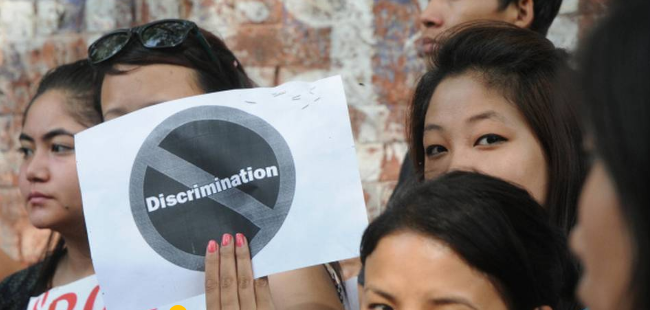
Harsh Reality of Our Society: Racism….

Racism describes virtually anything having to do with racial conflict. The declining significance of race, symbolic racism, colour blind racism, and unconscious racism missed the structural regressions brought on by the ‘Southern Strategy’ to mask indirect or covert ways to continue racial oppression. A reconsideration of the theory of Racism calls for a strategic approach to race relations research.

Racism is the belief that a particular race is superior or inferior to another, that a person’s social and moral traits are predetermined by his or her inborn biological characteristics. Racial separatism is the belief, most of the time based on racism, that different races should remain segregated and apart from one another. Racism has existed throughout human history. It may be defined as the hatred of one person by another — or the belief that another person is less than human — because of skin color, language, customs, place of birth or any factor that supposedly reveals the basic nature of that person. It has influenced wars, slavery, the formation of nations, and legal codes.

One important feature of racism, especially toward Blacks and immigrant groups, is clear in attitudes regarding slaves and slavery. Jews are usually seen by anti-Semites as subhuman but also superhuman: devilishly cunning, skilled, and powerful. Blacks and others are seen by racists as merely subhuman, more like beasts than men. If the focus of anti-Semitism is evil, the focus of racism is inferiority — directed toward those who have sometimes been considered to lack even the ability to be evil (though in the 20th century, especially, victims of racism are often considered morally degraded).

All of these arguments are based on a false understanding of race; in fact, contemporary scientists are not agreed on whether race is a valid way to classify people. What may seem to be significant “racial” differences to some people — skin color, hair, facial shape — are not of much scientific significance. In fact, genetic differences within a so-called race may be greater than those between races. One philosopher writes: “There are few genetic characteristics to be found in the population of England that are not found in similar proportions in Zaire or in China; those differences that most deeply affect us in our dealings with each other are not to any significant degree biologically determined.”

In North America and apartheid-era South Africa, racism dictated that different races (chiefly blacks and whites) should be segregated from one another; that they should have their own distinct communities and develop their own institutions such as churches, schools, and hospitals; and that it was unnatural for members of different races to marry. Historically, those who openly professed or practiced racism held that members of low-status races should be limited to low-status jobs and that members of the dominant race should have exclusive access to political power, economic resources, high-status jobs, and unrestricted civil rights. The lived experience of racism for members of low-status races includes acts of physical violence, daily insults, and frequent acts and verbal expressions of contempt and disrespect, all of which have profound effects on self-esteem and social relationships.

By the 19th century, racism had matured and spread around the world. In many countries, leaders began to think of the ethnic components of their own societies, usually religious or language groups, in racial terms and to designate “higher” and “lower” races. Those seen as the low-status races, especially in colonized areas, were exploited for their labour, and discrimination against them became a common pattern in many areas of the world. The expressions and feelings of racial superiority that accompanied colonialism generated resentment and hostility from those who were colonized and exploited, feelings that continued even after independence.

Despite constitutional and legal measures aimed at protecting the rights of racial minorities in the United States, the private beliefs and practices of many Americans remained racist, and some group of assumed lower status was often made a scapegoat. That tendency has persisted well into the 21st century.

Because, in the popular mind, “race” is linked to physical differences among peoples, and such features as dark skin colour have been seen as markers of low status, some experts believe that racism may be difficult to eradicate. Indeed, minds cannot be changed by laws, but beliefs about human differences can and do change, as do all cultural elements.

Refrences:-

http://www.britannica.com

http://www.adl.org