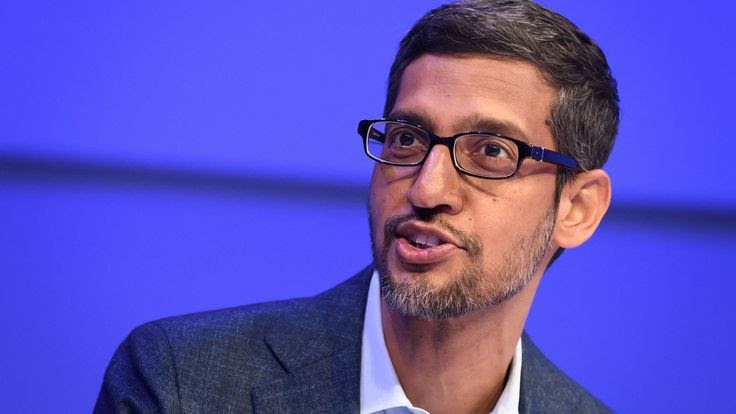
Google CEO Sundar Pichai’s view on former Amazon CEO Jeff Bezos flying into space

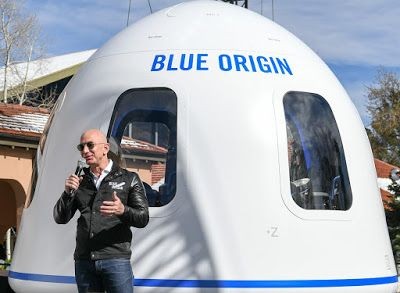
Google’s CEO Sundar Pichai admitted that he was “jealous” of the Blue Origin and Amazon founder Jeff Bezos for his July 20 space flight that would launch him, and his brother, Mark Bezos, into the edge of the space. Bezos is expected to fly approximately 100 kilometres or 328,000 feet to the Kármán Line on New Shepard on the day that marks NASA’s Apollo moon landing anniversary.


Speaking about Bezos’ 11-minute trip to space, Google’s CEO Pichai told BBC in a televised interview, “Well, I’m jealous, a bit,” adding that he would love to look at Earth from space. He then went on to describe his views on AI, saying that it is the most profound technology that humanity has developed.

the interview, Pichai talked about a varied range of things. When asked when was the last time he cried, he said: “Seeing the morgue trucks parked around the world during COVID. And seeing what’s happened in India over the past month.”

Meanwhile, British billionaire Richard Branson on last Sunday soared more than 50 miles above the New Mexico desert aboard his Virgin Galactic rocket plane and safely returned in the vehicle’s first fully crewed test flight to space, a symbolic milestone for a venture he started 17 years ago.
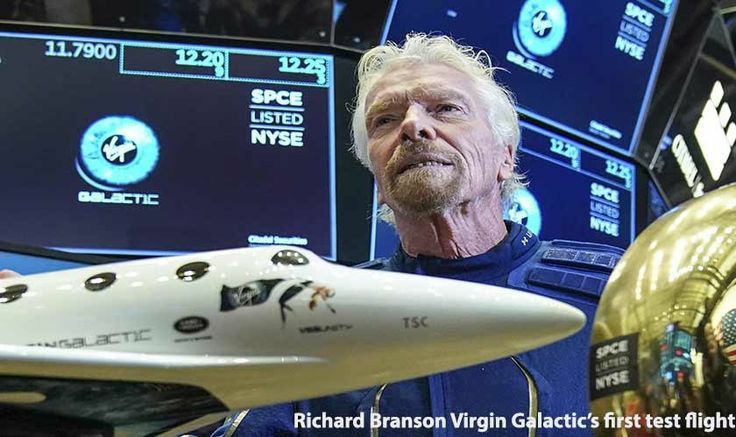
launch of the VSS Unity passenger rocket plane marked the company’s 22nd test flight of its SpaceShipTwo system, and its fourth crewed mission beyond Earth’s atmosphere. It was also the first to carry a full complement of space travelers – two pilots and four “mission specialists,” Branson among them.Heralding a new space tourism era, Branson reached space with three employees, including one of Indian-origin, leaving Jeff Bezos to follow his route on July 20. Bezos has been planning to fly aboard his own suborbital rocketship, the New Shepard, later this month.
MISSION MARS BY INDIA

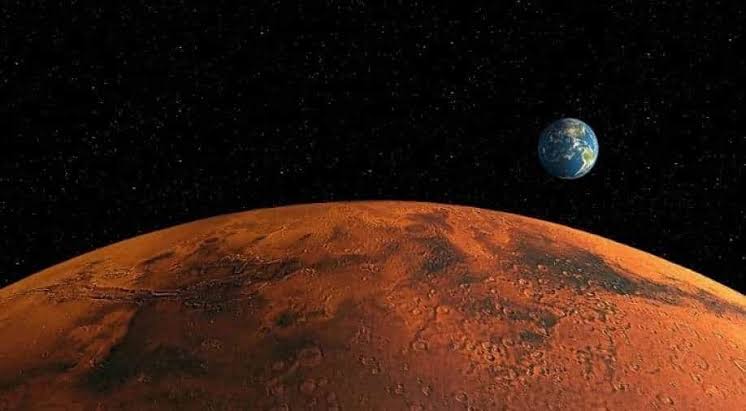
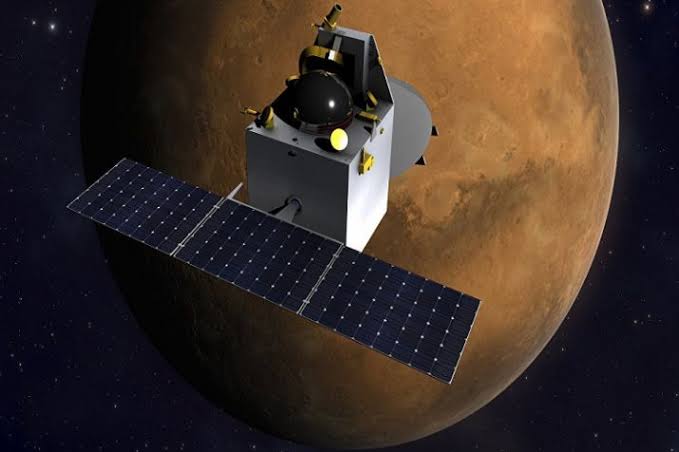
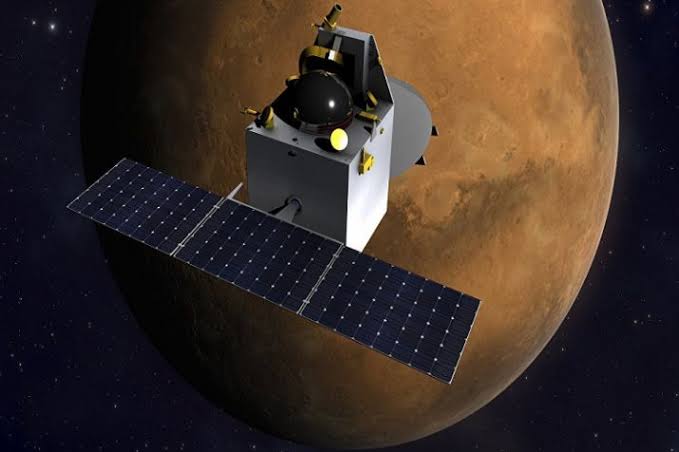
The Mars Orbiter Mission (MOM), also called Mangalyaan is a space probe orbiting Mars since 24 September 2014. It was launched on 5 November 2013 by the Indian Space Research Organisation (ISRO).It is India’s first interplanetary mission and it made it the fourth space agency to achieve Mars orbit, after Roscosmos, NASA, and the European Space Agency. It made India the first Asian nation to reach Martian orbit and the first nation in the world to do so on its maiden attempt.

Names
Mangalyaan
Mission type
Mars orbiter
Operator
ISRO
COSPAR ID
2013-060A
SATCAT no.
39370
Website
http://www.isro.gov.in/pslv-c25-mars-orbiter-mission
Mission duration
Planned: 6 months
Elapsed: 6 years, 9 months, 19 days

Start of mission

Start of mission
Launch date
5 November 2013, 09:08 UTC
Rocket
PSLV-XL C25
Launch site
Satish Dhawan FLP
Contractor
ISRO

Orbital Parameter

Apoareon altitude
76,993.6 km (47,841.6 mi)
Inclination
150.0°. pariareon altitude : 421.7km(262miles)

Timeline of Operations
Phase Date Event Detail Result References
Geocentric phase 5 November 2013 09:08 UTC Launch Burn time: 15:35 min in 5 stages Apogee: 23,550 km (14,630 mi)
6 November 2013 19:47 UTC Orbit raising manoeuvre Burn time: 416 sec Apogee: 28,825 km (17,911 mi)
7 November 2013 20:48 UTC Orbit raising manoeuvre Burn time: 570.6 sec Apogee: 40,186 km (24,970 mi)
8 November 2013 20:40 UTC Orbit raising manoeuvre Burn time: 707 sec Apogee: 71,636 km (44,513 mi)
10 November 2013 20:36 UTC Orbit raising manoeuvre Incomplete burn Apogee: 78,276 km (48,638 mi)
11 November 2013 23:33 UTC Orbit raising manoeuvre (supplementary) Burn time: 303.8 sec Apogee: 118,642 km (73,721 mi)
15 November 2013 19:57 UTC Orbit raising manoeuvre Burn time: 243.5 sec Apogee: 192,874 km (119,846 mi)
30 November 2013 19:19 UTC Trans-Mars injection Burn time: 1328.89 sec Heliocentric insertion
Heliocentric phase December 2013 – September 2014 En route to Mars – The probe travelled a distance of 780,000,000 kilometres (480,000,000 mi) in a Hohmann transfer orbit around the Sun to reach Mars. This phase plan included up to four trajectory corrections if needed.
11 December 2013 01:00 UTC 1st Trajectory correction Burn time: 40.5 sec Success
9 April 2014 2nd Trajectory correction (planned) Not required Rescheduled for 11 June 2014
11 June 2014 11:00 UTC 2nd Trajectory correction Burn time: 16 sec Success
August 2014 3rd Trajectory correction (planned) Not required
22 September 2014 3rd Trajectory correction Burn time: 4 sec Success
Areocentric phase 24 September 2014 Mars orbit insertion

Recognition

In 2014, China referred to India’s successful Mars Orbiter Mission as the “Pride of Asia”. The Mars Orbiter Mission team won US-based National Space Society’s 2015 Space Pioneer Award in the science and engineering category. NSS said the award was given as the Indian agency successfully executed a Mars mission in its first attempt; and the spacecraft is in an elliptical orbit with a high apoapsis where, with its high resolution camera, it is taking full-disk colour imagery of Mars. Very few full disk images have ever been taken in the past, mostly on approach to the planet, as most imaging is done looking straight down in mapping mode.

APJ ABDUL KALAM

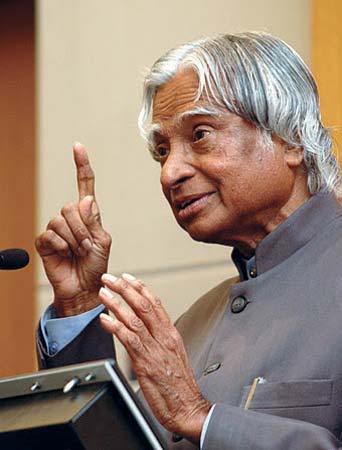
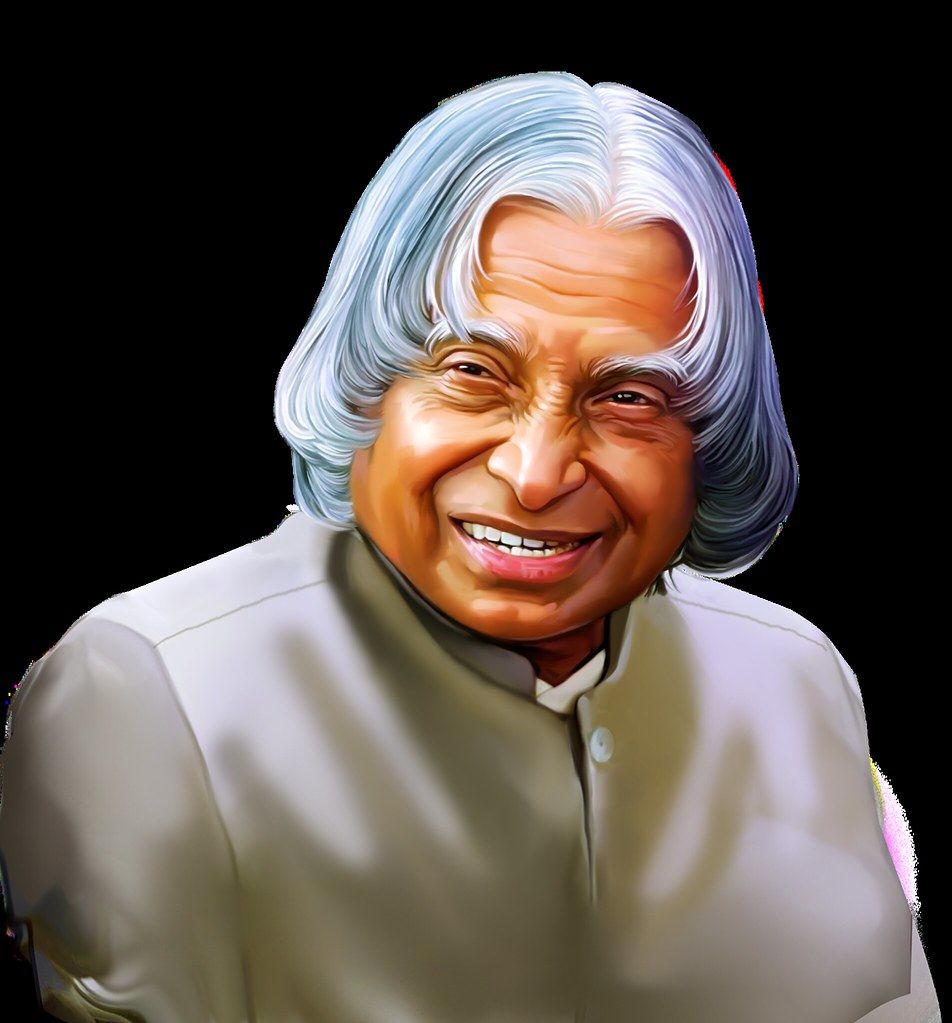
Dr APJ Abdul Kalam was a scientist who later became the 11th President of India and served the country from 2002 to 2007.

He was the most respected person in the country, as he contributed a lot to the country as a scientist and a president.

His contribution to the Indian Space Research Organization is unforgettable.

There were many projects under his leadership such as Rohini-1, Project Devil and the launch of Project Valent, missiles (under Mission Agni and Prithvi), etc.

For his great contribution in increasing India’s nuclear power, he is popularly known as “Missile Man of India”. He has been awarded the highest civilian awards for his dedicated work.

After completing his service to the Government of India as President, he served the country as a visiting professor at various valuable institutions and universities.

HIS CAREER AND CONTRIBUTION:

He was born on 15 October 1931 to Zainuldeben and Aashiyamma. His family’s financial situation was a bit bad, so he started supporting his family financially at an early age.

He started earning money to support his family but never gave up his education.

He completed his graduation from Madras Institute of Technology in 1954 from St. Joseph’s College, Tiruchirapalli and Aerospace Engineering.

After completing his graduation, he joined the Aeronautical Development Foundation of the Defense Research and Development Organization (DRDO) as a leading scientist.

Soon he moved to the Indian Space Research Organization as the Project Director of India’s first indigenous satellite launch vehicle.

He also served as the Chief Executive of the Integrated Guided Missile Development Program, which is involved in the simultaneous development of missiles.

He had also become the Chief Scientific Adviser of the Prime Minister and Secretary of the Defense Research and Development Organization from the year 1992 to 1999.

He was called the “Missile Man of India” after his successful contribution as the Chief Project Coordinator for Pokhran II nuclear tests.