IMPORTANCE OF SELF LOVE

Self love, which is the “consideration of one’s own happiness or advantage” is a basic human necessity. It is a kind of appreciation for oneself that results in the well being of one’s physical, psychological and spiritual self. It includes actions and thoughts which is for one’s own needs and not sacrificing one’s well being to please others. The habit of self love and self appreciation is considered as compulsory for the psyche of human. Because people who love themselves are less likely to suffer from anxiety, depression and such similar psychological conditions. It also lessens procrastination and increases the focus to work.

Loving oneself is a different task, but to develop the habit is easy. One of the practice to develop self love is to stop comparing oneself with others. This comparison is natural, but if it sometime leads to danger. There is no need for comparison because every individual is unique m Apart from this one needs to focus on his or her self energy and spirit. Neglecting other’s opinion is also an important habits with regard to self love. Constructive criticism is important for one’s personality development. But worrying about other’ opinion and thinking what the society thinks before doing anything is a bad practice. It is human to make mistakes. Nobody is perfect. With each mistakes one learn each lessons. So the freedom to do mistakes is an important factor in self love. Good decision making, forbidding how one’s body look, avoidance of toxic people, understanding and rejecting fears and finding beauty in simple things are some steps to develop the habit of self love.

Another important factor is the freedom to feel pain and happiness equally. Limitations in feelings like happiness, pain and fear are dangerous. It is human to experience every emotion in its fullest form. These experiences will make one to realize oneself. Giving priority to oneself is a good practice. Even though it is in every one, women is more accustomed to putting other’s first.

When a person practices self love, others will also start feeling love with himself or herself. As a result of this one’s confidence increases and it leads to success in professional and personal life. It helps to understand one’s passion and this habit attracts others. Thus self love is a necessary habit in one’s physical psychological and spiritual well being.


The Do’s and Don’ts of a Group Discussion (GD)

What is a GD?

Group Discussion (GD) refers to a methodology generally used in selection processes, such as those of companies and colleges, wherein a group of individuals are brought together to interact and communicate with one another. On the basis of such interaction, many personality traits and behavioral characteristic are determined by the examiner or conductor of the GD. An individual’s interpersonal skills, leadership qualities, social traits, public speaking skills, etc. can all be judged through their performance in a group discussion. Generally, in a group discussion, a topic or problem is given to the group, and all the members are allowed to interact with one another, sharing their own knowledge, ideas and solutions to the problem. Some people might be assertive and open about their ideas, while others might be more reserved and unwilling in the sharing of theirs. All these qualities are identified and recorded, to be later used in the selection of capable individuals.

Organizations are able to determine whether particular applicants have the qualities they are seeking in prospective employees or recruits. The topics given in a group discussion vary depending on the type of GD being conducted. These include; ‘Topical’ group discussion (based on current affairs or current trends), ‘Case Studies’ (a complex situation to be interpreted is given to the group) or ‘Abstract’ group discussions (based on abstract topics without any set direction or flow). The specific qualities that might be tested in a GD include; confidence, flexibility, reasoning skills, leadership qualities, creativity, knowledge, patience, communications skills, etc.

There are certain essentials to be followed, as well as certain essentials to be avoided when taking part in a group discussion. These can be enumerated as the ‘Do’s’ and ‘Don’ts’ of a GD;

Do’s

  • Be an active listener. This involves intently listening to what other people have to say. Proper listening is arguably more important than constantly talking in a GD.
  • Be as natural as possible. There is no need to be overly formal or address everyone formally. One must speak as if he would normally speak in such a setting.
  • Be coherent and reasonable when talking. The points made should be easy for the others to understand and should also be logical such that they contribute to the topic at hand.
  • Be brief and precise. Talk on a point for a reasonable amount of time and deliver the point briefly. This retains the attention of others and makes the point simple and accurate.
  • Be polite and respect the contributions of other members. Even if there is a disagreement, this should be done in a polite manner without pointless quarrels.
  • Be as positive as possible and do not try to dominate others. Positivity implies being warm and kind with others, since it is a discussion and not a debate.
  • Be an active speaker in case knowledge of the subject is vast. This could involve initiating the discussion, providing facts and figures, or even being slightly assertive.
  • Be conscious of body language. Although it is necessary to be natural, one must also keep in mind to follow appropriate body language (making eye contact while talking, etc.) and dress appropriately.

Don’ts

  • Get angry or become too aggressive. One must keep their emotions in check while participating in a GD as anger can cloud analytical skills and rational thinking.
  • Interrupt others while they are talking. This is a sign of poor manners and will reveal certain deficiencies in character, which people will scorn at.
  • Try to initiate the discussion or be assertive while lacking knowledge of the topic at hand. The lack of knowledge and impulsiveness will become evident from the points made.
  • Make points which are irrelevant or random and do not contribute to an understanding of the topic. Such points disrupt the logical flow of the conversation.
  • Shout and argue with someone if they try to counter your point. It is not a debate, and neither is it a competition. Some mutual disagreements may occur.
  • Speak with lack of confidence or uncertainty about the point being made. When one is speaking, he should do so with confidence and surety in himself
  • Try to dominate the discussion or get personal with somebody. Maintain a calm demeanour and ensure that a sense of respect is prevalent throughout.
  • Be restless and display poor/negative body language. This will portray a lack of social etiquette, poor manners, and a sense of disrespect to all the other members in the GD.

Hence, these are some of the main do’s and don’ts of a group discussion. Following these will allow individuals to gain all the necessary skills and benefits from a GD.

How to choose a book to read for growth

In today’s time, everyone has free and easy access to social media. On some days we keep scrolling all through the day without even realising what are we doing. We say, “I’m bored”. So, what are we doing to get rid of the boredom?

Those in their teens, especially late teens and early 20s are about to go to college. Some are serious about their future. Some are still thinking. Some know what to do. Some are worried about what do to. Some know they want to do something, just don’t know what. Some probably, don’t even think much. For everyone, books are the solution. How?

Well, agreed, there are many courses that one can do. Many podcasts one can listen to. What’s the need for books?! Dead weights! Well, these ‘dead weights’ are what great minds write once they’ve achieved what they wanted to achieve. These weights helped them on their path. Some write to explain their journey and what they learnt so the younger gen can learn and grow. Some help those who know what they want to do, some help the others, who don’t know what they want to do. Some books help you make a path while some help you find your path. Some even help you during your path. But, we can just listen to podcasts of those books!

Well, not every book has been made into a podcast. Also, we listen to podcasts on our phones. And, let’s be honest. One ping is all it takes for our entire focus and concentration to go, poof! So, I guess I’ve made my point.

Moving on, what books should we read to help us grow? And how to develop an interest in boring non-fiction? How do we find out what books to read?

For starters, some people enjoy reading non-fiction. So, let’s rule out the thought that they are all boring and try to keep an open mind.

To know what book to read, try finding out what your goal is. If, for example, you wish to know your superpowers, read books on the subconscious mind, like The Power of your Subconscious Mind by Dr Joseph Murphy. Our subconscious mind is supreme, once you know how to utilise its strengths. If you are lazy and wish to break it and make a healthy habit, you can read The Power of Habit by Charles Duhigg.

Similarly, if you know what you want to do, look up books on Google, find out what you like best, which book suits your needs the best and read it. 

Every book is a gem and there are many gems for each person out there. All one has to do is know what do they wish to learn/know and look for a book which suits their needs. 

Here’s a list of books that I would recommend.

  1. The Power of Habit
  2. The Power of your Subconscious Mind
  3. How to Talk to Anyone
  4. Think and Grow Rich
  5. The 80/20 principle
  6. The Power of Now
  7. Don’t Overthink it
  8. The Subtle Art of Not Giving a F*ck
  9. Everything is F*cked
  10. The Rudest Book Ever

BIPOLAR DISORDER!

Extreme highs to extreme lows.

Mental health is being understood as one of the primary areas in health protocols around the world and has also been included in the Sustainable Development Goals. Mental Disorders are among the leading causes of nonfatal disease burden in India, but the States lack a systematic understanding like the risk factors, disease burden. In 2017, 197·3 million (95% UI 178·4–216·4) people had mental disorders in India, including 45·7 million (42·4–49·8) with depressive disorders and 44·9 million (41·2–48·9) with anxiety disorders. One in seven Indians were affected by mental disorders of varying severity in 2017. In the same year, India launched the Mental Health Care Act which focused on delivering
proper, inexpensive, and widespread permits to mental health care. The proportional contribution of mental disorders to the total disease burden in India has almost doubled since 1990. The World Health Organization (WHO) reported in 2001 that about 450 million people worldwide suffer from some form of mental disorder or brain condition and that one in four people meet criteria at some point in their life. More than 2 million adults in the U.S. are coping
with bipolar disorder right now. https://www.webmd.com/bipolar-disorder/understanding-bipolar-disorder

Depression and bipolar disorder!
Depression and BPD have similarities but they aren’t the same. Depression deals with deep thoughts, emptiness, feeling low, not loving things that you probably used to cherish, extreme sleep problems. Bipolar disorder deals with both ups and downs in moods. One may feel irresistible, energetic in extreme highs, and depressed, awful in extreme lows.
What is bipolar disorder?
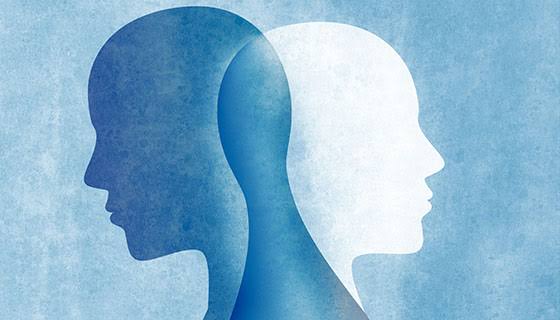
Earlier people used to consider bipolar as mood swing but research showed that a disorder named as ‘Bipolar Disorder’ causes tremendous shifts in moods from extreme low to extreme high. Bi means two and polar refers to the two polarities in the mood. Bipolar disorder is basically a serious mental illness of the brain. An individual can go for periods of depression and boosted moods(extreme low and extreme high). If severely boosted moods then it is known as mania, whereas if not so severe then these are called hypomania.
Causes.
The exact cause is unknown but there are unavoidable facets that contribute to this epic disorder. The causes can be genetic as well as due to surrounding. Environmental causes include long term stress, childhood abuse, psychological trauma. Genetic facets constitute about 70–90% of the risk of developing bipolar disorder.
Symptoms.
In this disorder, the individual may go through highs and lows in mood and personality. When they are extremely high they feel on top of the world, can’t sleep, unbeatable, easily distracted with low focus, a lot of energy, showing risky and impulsive behavior. In their major lows, they feel depressed, hopeless, guilty, do not sleep or sometimes may sleep a lot, loss of appetite, loss or gain in weight. While these symptoms go on, they also come up with suicidal thoughts. In severe conditions, they can outdo committing suicide too.

Treatment.
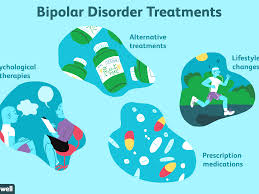
Psychotherapy, antidepressant, Antipsychotics, mood stabilizers, talk therapies.

What if not treated?
If not treated in due course of time, an individual may indulge in alcohol and drugs. In less serious cases, they may end up losing a job, dissatisfaction with themselves. If a student suffers from BPD, he may face grades declining or may even fail. If the treatment not delivered in proper time, they end up giving on life and commit suicide.


If you are suffering from one such, then go visit a doctor and take proper medication. Do not ignore such conditions, talk to your beloved one!