

From past three months our country is facing a series pandemic i.e. coronavirus that resulted to lockdown in India from 24 March,2020 declared by our prime minister Narendra Modi. COVID-19 is the greatest challenge of our age that has taken life of many people till date. Till now there are 3, 80,532 cases in india, total deaths due to this increased to 12,573. Coronavirus pandemic should serve as a wake up call for India in many situations like health infrastructure, self reliant India, digital India, unemployment rate , poverty.
Coronavirus highlights the problem of migrant labour in India which is not able to reach their homes and is left jobless in this harsh conditions. But however, govt supported them and managed to provide basic requirements of food and money for their survival.
The coronavirus is a wake up call to strengthen health infrastructure in India. The capital of India , New Delhi has the second largest number of cases in india where there are no beds left in govt hospitals . The poor people are not able to get public healthcare with the shortcoming. The public as well as private healthcare system needs fixing. India not even spend 2% of their gdp in heath that strongly needs to be improved . But good side is that everyone is cooperating in this harsh time . The Indian railways are converted into isolation wards, gurudwara committee had also decided to convert their areas of gurudwara in Delhi into isolation wards and provide them basic healthcare facilities.
COVID-19 is an opportunity for India to be self reliant. We should reduce our dependence on imports. From this state will get better revenue and rate of employment will be increased in our country. There will be positive impact on every stratum of the society. Hence we should strengthen our infrastructure for basics hygiene.
Tag: self-reliant
Personal Development

Personal development can include any skill that you build to improve yourself—your emotions, thoughts, or behaviors. It doesn’t really matter which skills you want to improve; the key to personal development is taking the right steps — steps that help ensure that you reach whatever goal you are pursuing.
What are the most important personal development skills? It really depends on what you’re trying to achieve. But here are 9 that I have found to be important to successful personal development.
1. Start by figuring out which personal development skills you need to build. The first step in any personal development strategy is to figure out how to best use your time. It makes little sense to learn how to code if you don’t plan to be a coder or to bench press 400 pounds if you don’t plan to be a weight lifter. These can be hobbies, but personal development is more about building skills to reach your goals. So it’s good to take some time to self-reflect. (If well-being is a goal of yours, take this well-being quiz to see which skills you need to build.)
2. Develop entrepreneurial thinking. Everyone can benefit from learning how to think like an entrepreneur, regardless of whether or not you are one. Why? Because entrepreneurs are innovative, good at planning for all possible outcomes, and skilled at getting others to buy into their vision or dream. And perhaps more importantly for personal development, they tend to be adaptable to all sorts of situations.
By developing entrepreneurial thinking, you better adapt to whatever your circumstances are so you can more easily achieve your goals, whether those goals are to start a business that makes a positive impact in the world, to set yourself up for an early retirement, or climb Mount Everest.
3. Develop a growth mindset. If we have a “fixed mindset,” we may shy away from challenges that could help us grow. But this can be problematic because our fear of making mistakes can lead us to avoid challenges and new experiences—experiences which would help us grow, improve ourselves in important ways, and create the life we desire.
If we have a “growth mindset” we seek out challenges because we value learning and growth more than we value feeling smart or knowing what we’re doing. That’s why those with a growth mindset often build new skills more easily: They believe they can and so they really work at it.
4. Develop your self-soothing mechanism. High levels of stress are not only bad for our health and well-being, they can prevent us from effectively pursuing and achieving our self-development goals. By learning effective, long-lasting stress-reducing strategies, your body and mind will be more equipped to handle the inevitable challenges that arise when you’re trying to develop yourself.
5. Develop resilience. Resilience is that super-important skill that helps you bounce back quickly after being knocked down. This is one of the most important skills for success because none of us will achieve anything if we don’t keep trying when we fail. We can build resilience by improving skills like emotion-regulation, mindfulness, and positivity.
6. Develop your value compass. It’s not always easy to live by our core values. But when we go through life without following our personal values, we can easily get lost. We may suddenly “wake up” and realize that we are not who we want to be or where we want to be. This is why it’s so important to stay in alignment with our personal values.
What are your values? Perhaps: kindness, curiosity, creativity, hard work, or personal relationships. Define your personal values so you know which actions are in alignment with those values.
7. Create a personal development plan. A good personal development plan takes all these factors into consideration — the WHAT, the HOW, the WHY, and the WHEN. So ask yourself:
What skills will you build?
How will you build them?
Why will you build them?
And when will you build them?
8. Record your progress towards personal development. Keeping track of our progress as we move toward our personal development goals is key to making sure we’re on the right track. Then we can pause and take a different direction if we’ve gone off course. By maintaining self-awareness and frequently checking in with ourselves, we can identify things that we need to devote more attention to. As a result, we can make better progress toward our personal development.
9. Keep developing yourself in new ways. The science is clear: The more ways we develop ourselves, the broader our skill set, and the more success we tend to have. So try learning some new emotional skills or do some activities to build new skills. You just might learn something that changes your life.
PEER PRESSURE
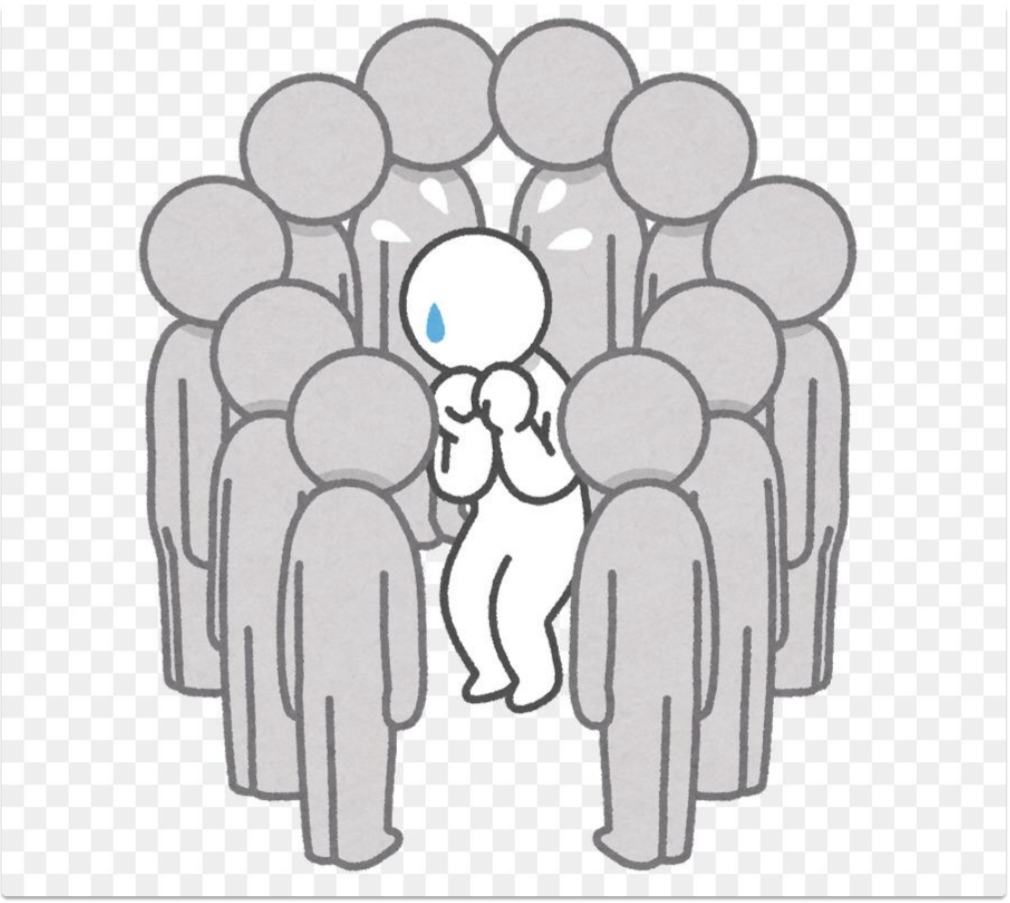
A term often read and heard about but very little pondered upon. The Cambridge dictionary defines peer pressure as ‘the strong influence of a group, especially of children, on members of that group to behave as everyone else does’. A simple definition but an impactful cycle. It plays an extremely important role in the social and emotional development of children as well as adolescents .So what exactly is a peer group? A peer group is made up of individuals who socialize together. It generally increases through childhood and reaches its intensity in the preteen and teen years. Maslow’s theory of hierarchy of needs defines social acceptance and acknowledgement as one of the primary needs for survival of human being in a society. This urge of social acceptance gives rise to a constant need for validation. As long as this urge is in alignment with one’s will and control, it creates a positive peer influence and the moment this urge takes over one’s ability to distinguish between the right and the wrong, it starts to create a psychological pressure. This psychological pressure exists in various forms amongst us and becomes a means to gauge what one ought to do.
Broadly classified as positive and negative, peer pressure can be spoken or unspoken and direct or indirect. While positive peer pressure leads to outcomes that are healthy, negative peer pressure leads to catastrophes. For example, if your friend constantly pushes you to eat healthy, its a positive peer influence. While a peer pressure to participate in a bike race without a driving license is a negative peer pressure. Positive peer pressure is beneficial and is also an important way to create and retain social bonds. It’s the negative peer pressure what needs attention today. You remember the last time you went for a movie with your friend despite detesting it? Or the latest college fashion wear that you had to pretend to like because it was the ‘new cool’? You might wonder what harm did it do and is it even that bad to switch priorities and likings in order to have a healthy peer group? Well, taking the above examples it actually isn’t but this is the initiation point of negative peer pressure. In most cases it starts off with incidents too minute to be reacted upon which is why the ‘initiation points’ goes completely unnoticed and neglected. What follows later leads to a devastating impinge like consumption of alcohol, drugs, cigarettes and one’s indulgence in unethical and illegal activities. The vicious cycle of peer pressure is sometimes attributed to ‘Social Stockholm Syndrome’. It is a psychological response where over the course of time, the victim starts to develop a sense of commonality with their victimizer. This sense of commonality later becomes toxic.
It isn’t always a cakewalk to shield yourself from negative peer pressure. But it isn’t a herculean task either. An individual’s environment at home greatly impacts one’s reaction when exposed to negative peer pressure. When children and adolescents have parents whom they can confide in, their psychological response towards this social infliction is more positive and less hampering in comparison to those who find it difficult to express themselves and are subjected to some or the other form of abuse at a very early age. As a parent one needs to gain their progeny’s confidence and trust. It requires small initiatives like a before bed talk every night and spending quality time with them at least on the weekends. Teens have to be taught to trust their instincts when in doubt and to say the magical word ‘NO’ when subjected to circumstances their morals don’t approve of instead of blindly following someone else’s path. Schools on the other hand, should hold more seminars on peer pressure to enable teens to identify the red flags which often come across as subtle signals. If prepared at a tender age to hold onto one’s own belief irrespective of the pressure around, negative peer pressure is one such social stigma that wouldn’t take much to eradicate.
FM Nirmala Sitharaman stresses the need to make country self reliant
Finance Minister Nirmala Sitharaman has stressed the need to make the country self-reliant. In an exclusive interview to Doordarshan News, Ms Sitharaman said, the country still has to import goods which help produce both for the country itself and also for exports.
The FInance MInister said, the way the govenrment has designed the package, it would give immediate help to all those who need additional capital in order to kick-start the economy. She said, it will benefit both demand and the supply side.
On the call of restarting the economy during the epidemic, Ms Sitharaman said that she has kept open all options with reassurance that government is ready to help. Finance Minister reiterated that economic package announced by govt will enhance the ease of doing business.
Talking about RBI’s recent decisions, Ms Sitharaman said, they have been very timely and made a lot of difference to the sentiments which prevails and also immediately make available affordable liquidity. Ms Sitharaman also thanked Prime Minister Narendra Modi for taking bold decisions to free farmers off historical shackles. She said, farmers can now choose to whom they want to sell their produce.
 Eduindex
You must be logged in to post a comment.