Personal Development

Personal development can include any skill that you build to improve yourself—your emotions, thoughts, or behaviors. It doesn’t really matter which skills you want to improve; the key to personal development is taking the right steps — steps that help ensure that you reach whatever goal you are pursuing.

What are the most important personal development skills? It really depends on what you’re trying to achieve. But here are 9 that I have found to be important to successful personal development.

1. Start by figuring out which personal development skills you need to build. The first step in any personal development strategy is to figure out how to best use your time. It makes little sense to learn how to code if you don’t plan to be a coder or to bench press 400 pounds if you don’t plan to be a weight lifter. These can be hobbies, but personal development is more about building skills to reach your goals. So it’s good to take some time to self-reflect. (If well-being is a goal of yours, take this well-being quiz to see which skills you need to build.)

2. Develop entrepreneurial thinking. Everyone can benefit from learning how to think like an entrepreneur, regardless of whether or not you are one. Why? Because entrepreneurs are innovative, good at planning for all possible outcomes, and skilled at getting others to buy into their vision or dream. And perhaps more importantly for personal development, they tend to be adaptable to all sorts of situations.

By developing entrepreneurial thinking, you better adapt to whatever your circumstances are so you can more easily achieve your goals, whether those goals are to start a business that makes a positive impact in the world, to set yourself up for an early retirement, or climb Mount Everest.

3. Develop a growth mindset. If we have a “fixed mindset,” we may shy away from challenges that could help us grow. But this can be problematic because our fear of making mistakes can lead us to avoid challenges and new experiences—experiences which would help us grow, improve ourselves in important ways, and create the life we desire.

If we have a “growth mindset” we seek out challenges because we value learning and growth more than we value feeling smart or knowing what we’re doing. That’s why those with a growth mindset often build new skills more easily: They believe they can and so they really work at it.

4. Develop your self-soothing mechanism. High levels of stress are not only bad for our health and well-being, they can prevent us from effectively pursuing and achieving our self-development goals. By learning effective, long-lasting stress-reducing strategies, your body and mind will be more equipped to handle the inevitable challenges that arise when you’re trying to develop yourself.

5. Develop resilience. Resilience is that super-important skill that helps you bounce back quickly after being knocked down. This is one of the most important skills for success because none of us will achieve anything if we don’t keep trying when we fail. We can build resilience by improving skills like emotion-regulation, mindfulness, and positivity.

6. Develop your value compass. It’s not always easy to live by our core values. But when we go through life without following our personal values, we can easily get lost. We may suddenly “wake up” and realize that we are not who we want to be or where we want to be. This is why it’s so important to stay in alignment with our personal values.

What are your values? Perhaps: kindness, curiosity, creativity, hard work, or personal relationships. Define your personal values so you know which actions are in alignment with those values.

7. Create a personal development plan. A good personal development plan takes all these factors into consideration — the WHAT, the HOW, the WHY, and the WHEN. So ask yourself:

What skills will you build?

How will you build them?

Why will you build them?

And when will you build them?

8. Record your progress towards personal development. Keeping track of our progress as we move toward our personal development goals is key to making sure we’re on the right track. Then we can pause and take a different direction if we’ve gone off course. By maintaining self-awareness and frequently checking in with ourselves, we can identify things that we need to devote more attention to. As a result, we can make better progress toward our personal development.

9. Keep developing yourself in new ways. The science is clear: The more ways we develop ourselves, the broader our skill set, and the more success we tend to have. So try learning some new emotional skills or do some activities to build new skills. You just might learn something that changes your life.
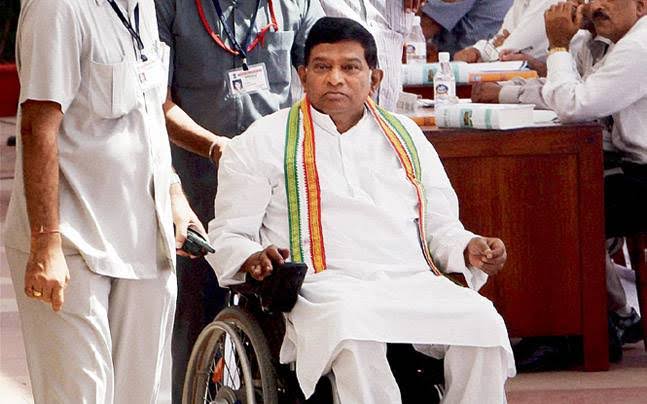
Jogi Ji- The first CM of Chhattisgarh.

Ajit Promod Kumar Jogi (April 29, 1947- May 29, 2020) was the first Chief Minister of the state of Chhattisgarh India, soon after the new state of Chhattisgarh was carved out( 1 Nov 2000) from Madhya Pradesh. As a CM he served from 1 November 2000 to 7 December 2003, a total duration of 3 years and 34 days. He has been a part of the Indian National Congress till 6 June 2016. He gave a boosting start as a CM of the state. He was known as one of the most intellectual politicians due to his education as well as amazing communication skills in Hindi, English, Chhattisgarhi.


From a graduate to a political leader.

https://www.indiatoday.in/amp/magazine/states/story/20170717-chattisgarh-government-ajit-jogi
-tribal-st-certificate-caste-politics-1023027-2017-07-08


In 1968 he achieved a gold medal in Mechanical Engineering from Maulana Azad College of Technology, Bhopal. (NIT Bhopal ). Simultaneously, he worked as a lecturer for one year (1967-68) at Government Engineering College Raipur, Chhattisgarh. He later got a degree of law from Delhi University and cleared Civil Services and became an IPS. He didn’t stop till then, after a span of one and a half years he was chosen as an IAS officer. Jogi administered and set a record of the longest-serving Collector/District Magistrate for over 12 years at Sidhi, Shahdol, Raipur and Indore districts of Madhya Pradesh from 1974 to 1986. While serving as a DM of Indore, he got a call from the Prime Minister of that time ie Rajiv Gandhi, and offered him to join politics(not confirmed, some reports also say it was Arjun Singh’s proposal to join politics ) and then his journey as a political leader began.

Political career.
1986-Jogi started up his political career in 1986 when he came to be a member of the All India Congress Committee (AICC) on the interest of scheduled castes and scheduled tribes.
1987-He was elected as General Secretary, Pradesh Congress Committee, Madhya Pradesh.
1998-Elected as a Member of Parliament (MP) to the 12th Lok Sabha for the Raigarh community in Chhattisgarh.
1998–2000-Spokesman, AICC, Whip, Congress Parliamentary Party, Working President, Madhya Pradesh Congress Committee.
2000–2003-Chief Minister of Chhattisgarh. After 2003 congress was defeated by the BJP and led to the end of his journey as a CM.
2004-He was elected as MP in the 14th Lok Sabha for Mahasamund, Chhattisgarh.
2008-Elected as a Member of the Legislative Assembly of Chhattisgarh, symbolizing the Marwahi constituency.
2009-Jogi confirmed as a Lok Sabha member Chhattisgarh’s Mahasamund constituency after getting chosen in 2009 Lok Sabha Elections. Jogi, however, failed to retain his seat in the 2014 LS polls and lost to BJP’s Chandu Lal Sahu by 133 votes.
https://www.oneindia.com/politicians/ajit-jogi-58161.html
2016- He established a new political outfit Chhattisgarh Janata Congress.
What led to the formation of a new party in 2016? In 2016, Ajit Jogi and his son Amit Jogi were expelled from Indian National Congress for anti-party activities and destroying by-polls in Antagarh, Chhattisgarh. His son Amit was eliminated from the Congress party for 6 years. This is considered as the main reason for shifting his assistance to a newly formed party.

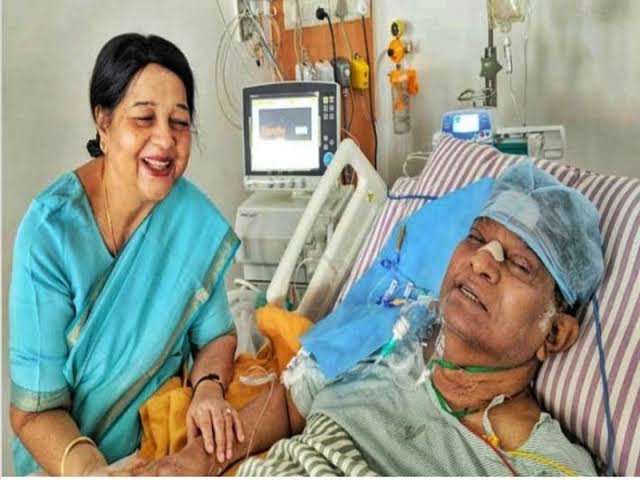
Health and death. In 2004, a year after his defeat from BJP, he met with a terrible accident which resulted in leaving him partially disabled, though he never gave up! On May 9, 2020, he suffered a cardiac arrest and hurried to Sri Narayana Hospital in Raipur, Chhattisgarh. He was in a coma and put on a ventilator. After battling for 20 days, he expired to multiple heart attacks and breathed his last on 29 May 2020.

He is truly an inspiration from achieving a gold medal then serving as an IAS, and thereafter
performing his duties as the first Chief Minister of Chattisgarh!

Netaji Subhas Chandra Bose: A Born Patriot and Selfless Leader

Dr. Shankar Chatterjee

Former Professor& Head (CPME)

NIRD &PR (Govt. of India),

Hyderabad-500 030

Telangana, India

Email <shankarjagu@gmail.com>


On 23 January 1897, a legendary figure, a great patriot and a selfless leader of undivided India was born in Cuttack of present Odisha who is popularly known as Netaji with full name Subhas Chandra Bose.  Netaji   Subhas Chandra Bose is still respected not only in India but also in Bangladesh and Pakistan for his immense contribution in freedom movement. While I was in abroad as faculty many Pakistani and Bangladeshi academicians told me in this regard.   

netaji-subhas-chandra-bose-jayanti

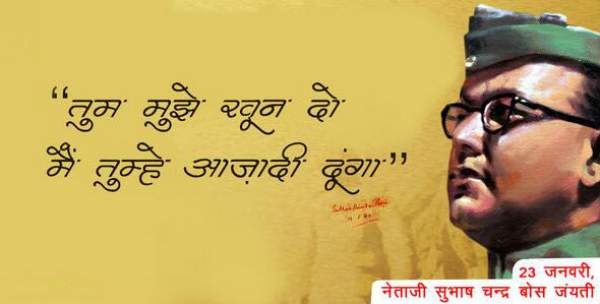
     Netaji’s patriotic feelings can be understood by this quotation, ‘You give me your blood and I will give you Independence!’ He stated if ‘you are willing to die for a cause without regard to your own wants or desires that is as close as you can get to invincibility. Even if your physical body is killed, your efforts and ideas will live on’. He had the opinion that ‘Independence is rarely obtained through peaceful means. Conflict is often the only way to gain freedom or revolution’.

Netaji Subhas with heart and soul was Indian and never tolerated any foreigner talking against Indians. In this context, an incident may be cited. He thrashed a British Professor E.F. Otten in the Presidency College of Calcutta in 1916 for Prof Otten’s racist remark against Indians and for this Subhas Chandra had to suffer also, however with the intervention of Indian scholars and other stalwarts the matter was resolved.

   During freedom struggle many persons participated –some were in the forefronts and some were in behind, many lost their lives and many were crippled, many were mentally disturbed and finally we became independent nation so we are grateful to all of them. Also Indian National Army/Azad Hind Fouz’s contribution under the leadership of Netaji Subhas was massive.  The Congress Government after independence always highlighted few leaders’ contribution towards freedom movement but not much about Netaji’s contribution. On the other hand, the British acknowledged Subhas Bose’s contribution.  Clement Richard Attlee, who was the Prime Minister of the United Kingdom from 1945 to 1951 and the Leader of the Labour Party from 1935 to 1955 agreed Netaji was the toughest challenge to the British Empire faced.  In 1956, Clement Attlee came to India and stayed in Calcutta (now Kolkata) as a guest of then Governor, P.B. Chakraborty who was at that time Chief Justice of Calcutta High court and acting Governor of West Bengal. He asked Sir Attlee “… since Gandhi’s Quit India movement had tapered off quite some time ago and in 1947 no such new compelling situation had arisen that would necessitate a hasty British departure, why did they had to leave?” As stated by Chakraborty “In his reply Attlee cited several reasons, the main among them being the erosion of loyalty to the British crown among the Indian Army and Navy personnel as a result of the military activities of Subhas Chandra Bose”.

Lt General S.K. Sinha, former Governor of Assam and J & K, one of the only three Indian officers posted in the Directorate of Military Operations in New Delhi in 1946, made his observation in 1976. “There was considerable sympathy for the INA within the Army… It is true that fears of another 1857 had begun to haunt the British in 1946.” In this regard Dr. Ambedkar-saheb may also be referred “two things led the Labour party to take this decision” (to free India). According to Dr Ambedkar saheb, “The national army that was raised by Subhas Chandra Bose. The British had been ruling the country in the firm belief that whatever may happen in the country or whatever the politicians do, they will never be able to change the loyalty of soldiers. That was one prop on which they were carrying on the administration. And that was completely dashed to pieces. They found that soldiers could be seduced to form a party- a battalion to blow off the British.”

Subhas Chandra Bose was a great human being also and had never had ill feelings towards any leader of then Congress party. In this context, Ashis Ray’s article published on 12 November 2019 may be quoted. “Jawaharlal Nehru and Subhas Chandra Bose, charismatic stalwarts of the Congress and the Indian struggle for Independence, were comrades, not adversaries. In June 1935, when the former (Nehru) was imprisoned in India, his wife Kamala needed to go to Europe for treatment of tuberculosis. Bose, who had been exiled to Europe by the British, unsurprisingly took charge by accompanying her from Vienna to Prague where she was to receive initial medical care. With Kamala’s condition deteriorating, the British permitted Nehru to join her. She was moved to Badenweiler, a Black Forest resort in Germany. Bose messaged Nehru: “If I can be of any service in your present trouble, I hope you will not hesitate to send for me.” Eventually Kamala was shifted to Lausanne in Switzerland, where she prematurely passed away in 1936 in the presence of her husband, daughter Indira and Bose” (www.nationalheraldindia.com/opinion/jawaharlal-nehru-and-subhas-chandra-bose-politics-never-affected-their-personal-ties).

On the auspicious occasion of Netaji Subhas Chandra Bose’s birthday, Pronam to this great soul.