Petra

Petra and as the Nabateans used to call it “Raqmu” is one of the most famous cities in Jordan due to its archaeological and architectural history. The city is also known as the Rose City due to its pink rocks formations.

Petra was established in 312 AC, and it became the capital of the Nabateans people, who were referred to in the Bible. They inhabited the region of Petra between the IV AC and II DC. Petra was also a very important commercial center between the Arabic peninsula and Damascus in Syria, and today Petra is the most visited tourist attraction in Jordan.
The Romans conquered Petra in 106 A.C, and they turned the territory into a roman province. During the second and third centuries, Petra continued to grow and in the seventh century, the Romans lost the power of Petra to Islam.

In the 12th century, Petra was once again taken by different leaders and for a while, Petra was hidden until it was found by Swiss explores Johann Ludwig Burckhardt, who was responsible to announce the city into the world with his poem “a rose-red city half as old as time.”

Where is Petra located?

Petra is located in the territory between the Dead Sea and the Gulf of Aqaba, in the mountains of the east side of the Wadi Araba. In the city of Petra, many ancient monuments can be found such as the Roman Theater, the Royal Tombs, and others.

Places to visit in Petra

Bab el Siq
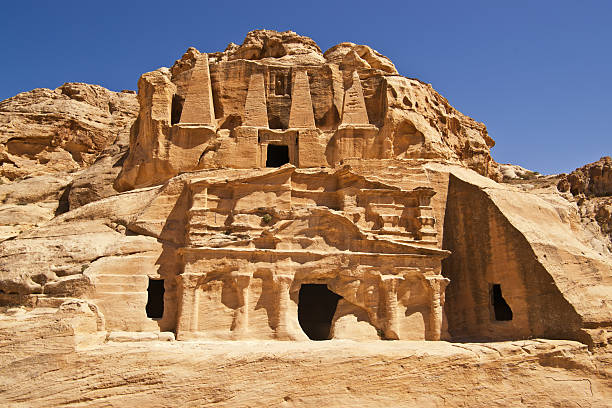
Bab el Siq is the gate of Siq, the main entrance to the city. As you arrive, you will see three square blocks carved into the rock, then you will see the tomb of the 1st century A.D. The bottom is where you can find the Triclinium, a banquet room. On the opposite side of the cliff, you will see a double inscription in Nabataean and Greek.

Al Khazneh (The Treasury)

The entrance to the city of the Nabataeans is made through the Siq, a strait measuring around one km long, flanked by rocks that reach up to 80 meters high. A walk through the Siq is a unique experience. The colors and rock formations you will see are impressive.

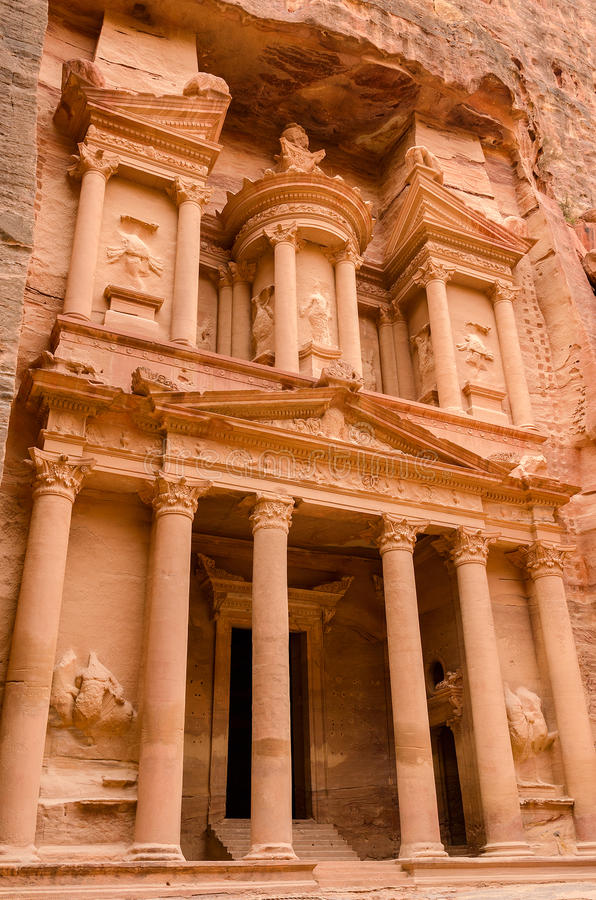
During the walk as you reach the end of the Siq, the great treasure begins to emerge, the postcard Al-Khazneh, one of the ruins of Petra, the most famous among them. The natural beauty and the remarkable architectural features of this place will blow your mind.

The Treasury is one of the wonders you can find in the ruins of Petra. There are several, or rather, hundreds of tombs made in the rock, Roman theater, obelisks, temples, altars for offering sacrifices and colonnaded streets, and, high up in the valley, there is the sumptuous Ad-Deir Monastery.

Petra Royal Tombs
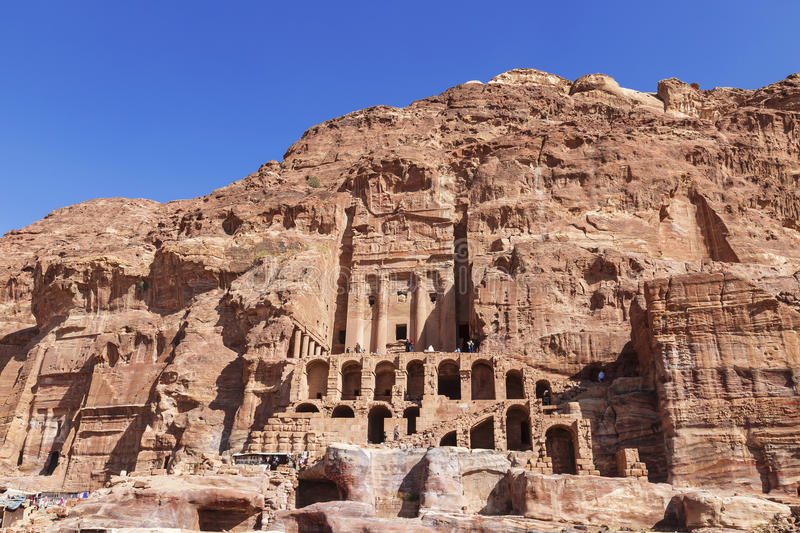
Downhill from the Theatre is a larger thoroughfare. Within its west-facing cliffs, there are some of the most impressive burial places in Petra, known collectively as the ‘Royal Tombs’. They look particularly stunning bathed in the golden light of sunset; there are four of them one next to the other. However, they suffered flood damage over the centuries which lead to some of their facades no being as well kept, possibly part of the reason they are not as famous as the Treasury. There are steps that lead up to them and you can actually visit the inside of these tombs.

Petra Today

After the eighth century, when Petra was largely abandoned as a trading center, its stone structures were used for shelter by nomadic shepherds for several centuries.

When Petra was named a UNESCO World Heritage Site in 1985, Petra Bedouin tribespeople who had made homes for themselves within the city’s remaining ruins were forcibly relocated by the Jordanian government.

In the early 2000s, the site was named one of the “Seven New Wonders of the World,” leading to a spike in tourism. Since then, efforts have been made to protect the ruins of Petra from heavy tourism, as well as damage from floods, rain and other environmental factors.

7 WONDERS OF THE WORLD

A campaign launched by Swiss Foundation in the year 2000 to determine New 7 wonders of world, selecting them out of 200 existing monuments around the world. Bernard Weber, a Canadian-Swiss and the New 7 Wonders Foundation (N7W) based in Zurich, Switzerland organized a poll via free Web-based voting and small amounts of telephone voting too. Around 100 million votes were recorded on internet or text message, and people around the world agreed with that. The closing decision was declared in the year 2007, appreciated with cheers as well as received some taunts too. But after all this we finally got our 7 wonders i.e., Great wall of China, Chichen Itza, Petra, Machu Picchu, Christ the Redeemer, Colosseum and Taj Mahal.

GREAT WALL OF CHINA

Must be thinking, what is there to talk about a wall? Great is just a small word for this wall build in China. One of the tremendous projects which gave us the longest building ever constructed. It is claimed that The Great Wall of China is 5,500 miles (8850 kms) long in length. The project began in 7th century and continued for 2000 years. Thought the wall was constructed parallelly to prevent raid and incursion but the wall couldn’t succeed to provide the security.

CHICHEN ITZA

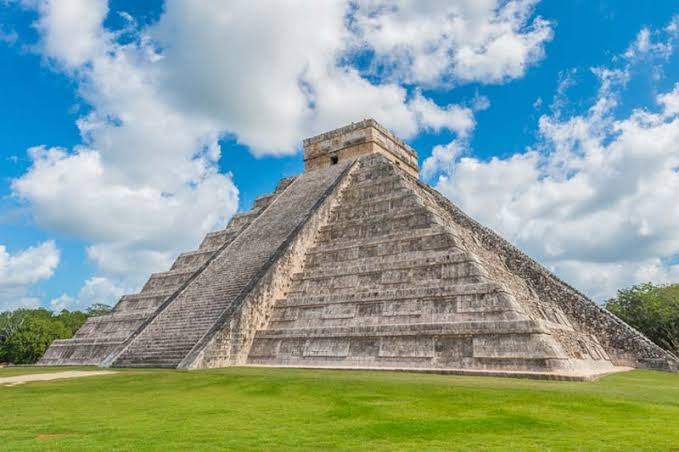
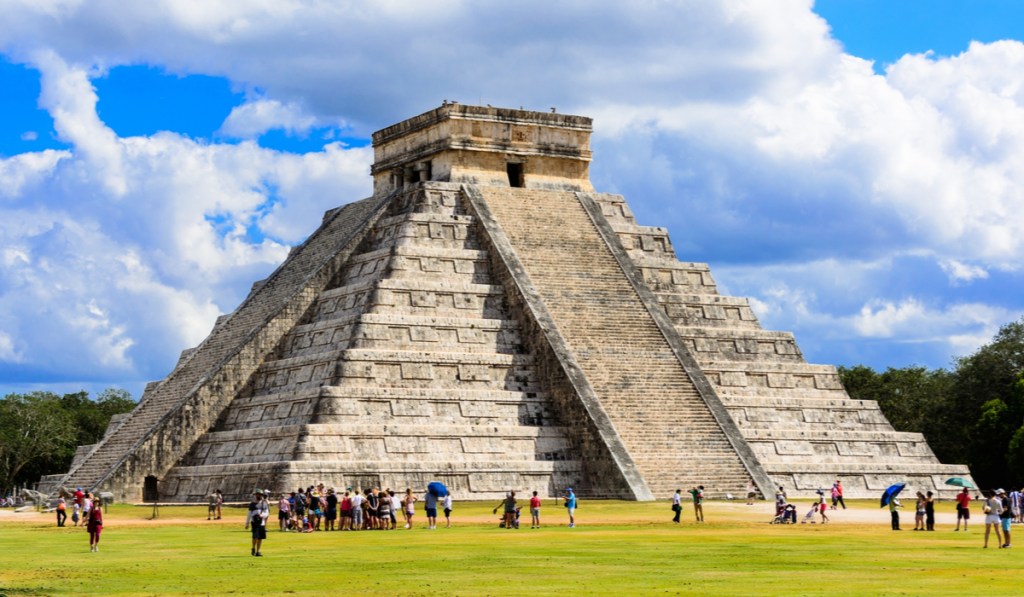
Chichen Itza is situated in Mexico on Yucatan Peninsula in Mayan city. Developed in the 9th and 10th centuries CE. The steps of pyramid EI Castillo (the castle) which is 24 meters above the plaza. The total 365 steps feature the numbers of days in a year. During the spring and autumn season the setting sun throws the shadow on the pyramid gives the illusion of snake moving smoothly.

PETRA

Petra, the ancient city is in remote valley settle in the middle of the sandstone mountains and cliffs. In addition, there is a water system constructed only for gardening and farming. City began to turn down when trade direction shifted, it was also hit by an earthquake in 363 CE and Petra was slowly abandoned.

MACHU PICCHU

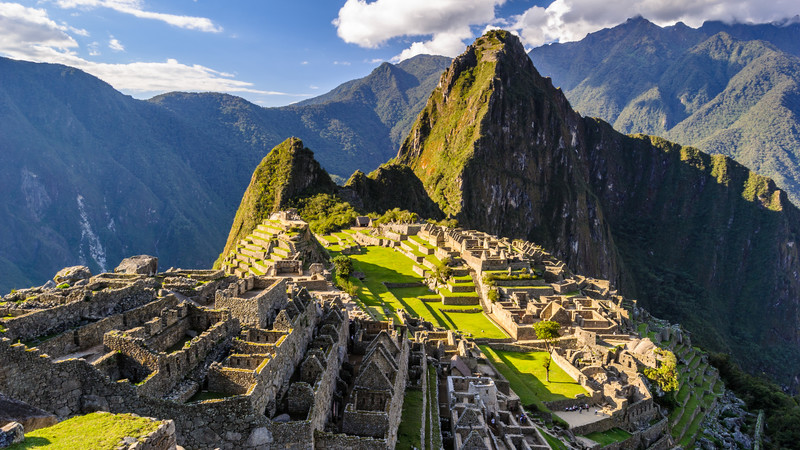
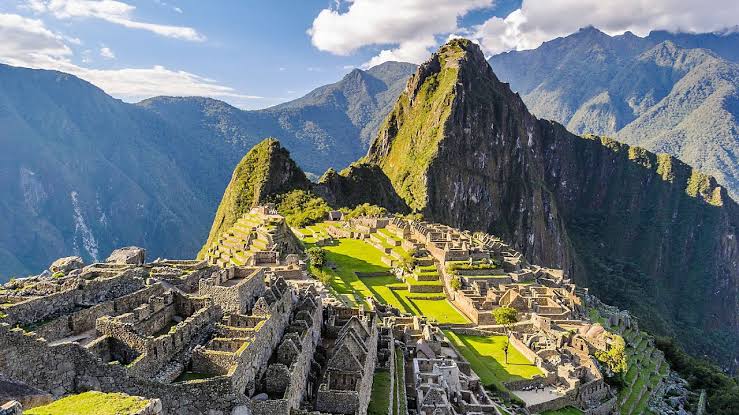
It is in Peru near Cuzco. Machu Picchu was discovered in the year 1911 by Hiram Bingham. He believed that it is a shelter to “virgins of the sun” women who gives their lives to God, and helps in preprint ritual food, weaving the garment use for rituals etc. Nearly in the year 2000 a crane was use for ad fell and left the monument cracked.

CHRIST THE REDEEMER

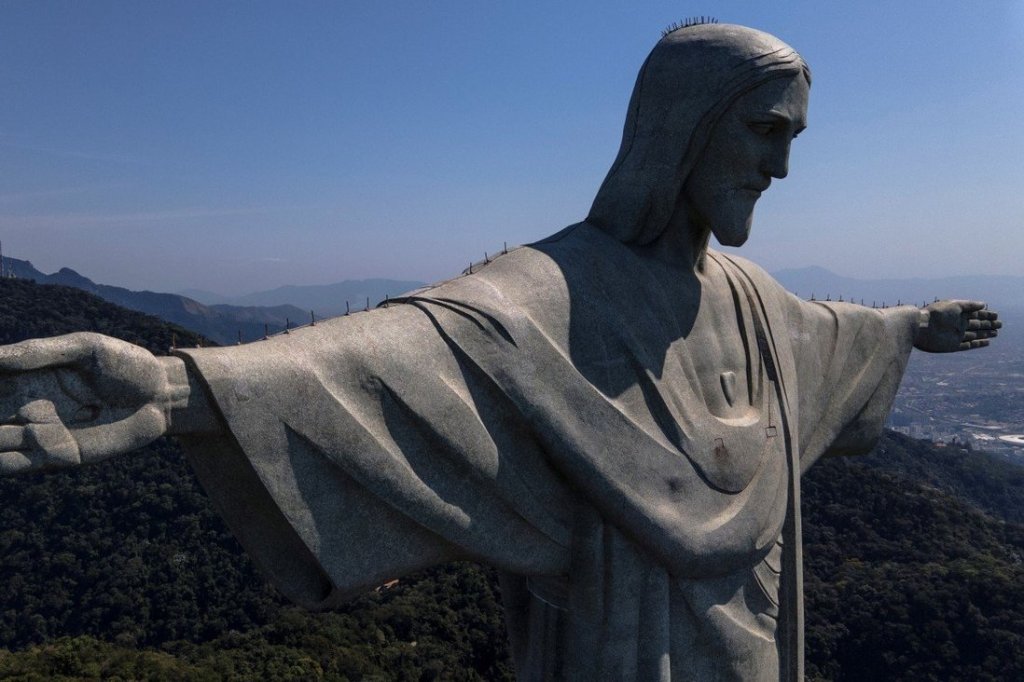
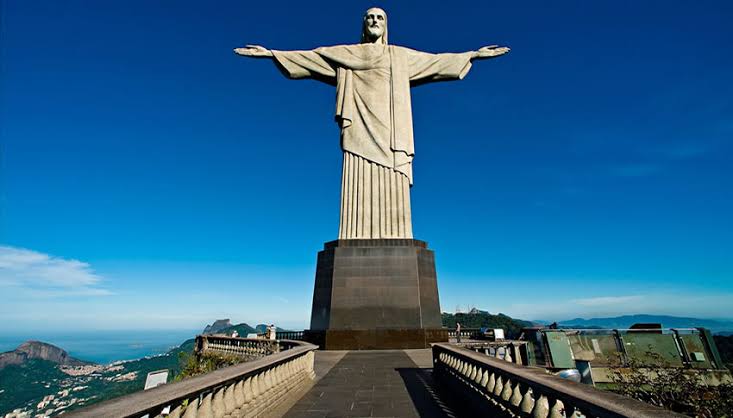
Christ the redeemer 98 feet tall, excluding the base which is about 26 feet high, and it’s expanded arms spreads about 92 feet. It is counted in world’s largest art sculpture. Redeemer is build-up of reinforced concrete and approx. six million tiles are used to cover it. In the year 2014 during the storm Redeemer’s right thumb got damaged.

COLOSSEUM

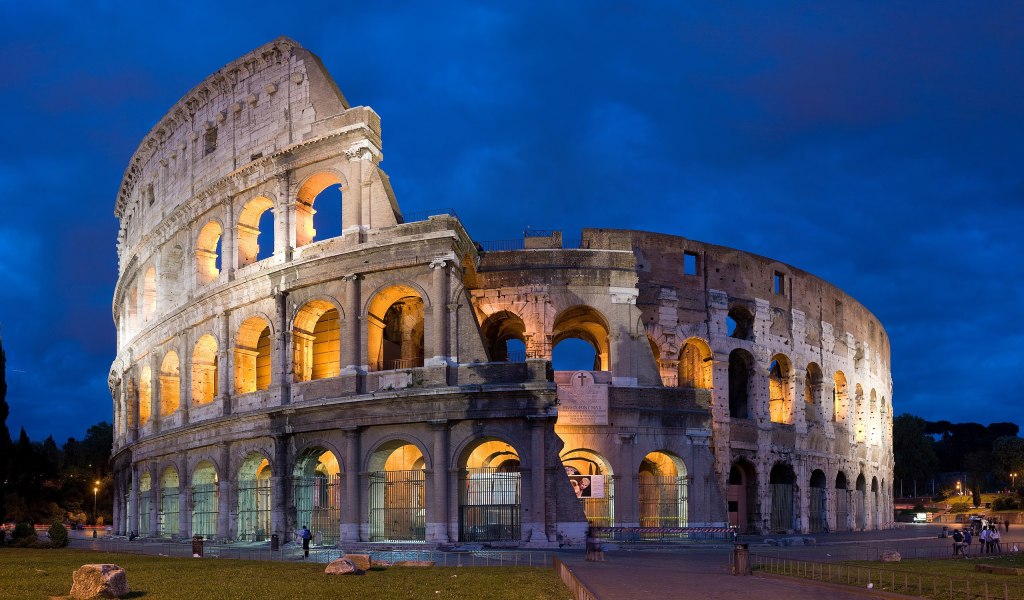
Vespasian order to build the Colosseum in Rome by a feat of engineering. The amphitheatre measures 620 by 513 feet with the capability of holding 50000 people, who can watch variety of events. Over 5,00,000 people died in Colosseum. Some of the animal species became extinct.

TAJ MAHAL

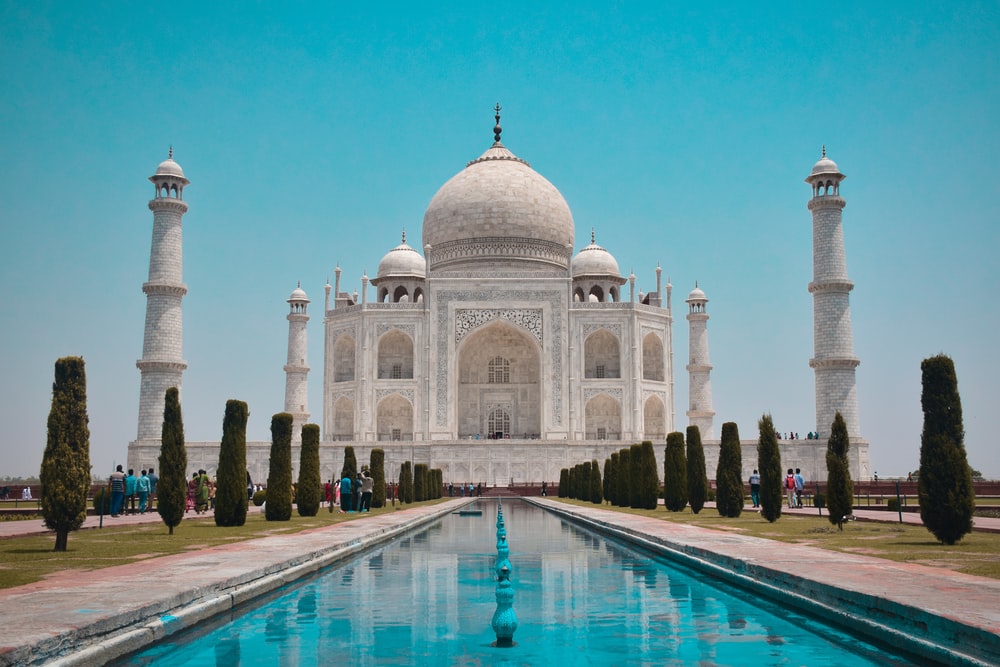
Taj Mahal is considered as one of the iconic monuments in the history. It was built by Emperor Shah Jahan in the memory of his wife Mumtaz Mahal. It took 20,000 workers and 22 years to construct this magnificent mahal. This mahal is made of white marble with floral pattern.

The Wonders Of The World

Seven wonders of the world are identified because of their breathtaking design and monument. The true wonder we can say is artistic, mysterious, magnificent, stunning or in other words, it is a masterpiece, and due to these qualities, it attracts everyone towards itself. The most remarkable creations by mankind are included in the list of Seven Wonders of the World.

The Taj Mahal, a symbol of love is well known across the world for its historical value and its stunning beauty. Located in the historic Indian city of Agra, the Taj Mahal houses the tomb of Mumtaz Mahal, the wife of the Mughal Emperor Shah Jahan. It is believed that the Emperor’s immense love for his dear wife who died in 1631 giving birth to their 14th child prompted him to build the Taj Mahal as a testament of his love.

The construction which took approx 22 years was completed by 1632. Its construction cost is equivalent to US$827 million today. In 1983, the Taj Mahal has declared a World Heritage Site by UNESCO. Today, it attracts around 7 to 8 million visitors each year.

The Colosseum in Italy is one of the world’s new seven wonders of the world. The oval-shaped Colosseum, also known as the Flavian Amphitheatre is the largest amphitheater in the world located in the center of the city. It is constructed out of concrete and sand.

It can host around 80,000 spectators. Some of the public spectacles held at the Colosseum are mock sea battles, animal hunts, famous battle re-enactments, executions, and mythological dramas. Today, it is a popular tourist attraction and serves as the iconic symbol of Imperial Rome.

Chichen Itza is an archaeological site in Mexico’s Yucatán State. It is a pre-Columbian city built during the Terminal Classic period by the Maya people. The historical value contributes to its status as the modern wonders of the world. Chichen Itza is one of the major cities of the ancient Mayan world and constructions in the city exhibit a variety of architectural styles.

Machu Picchu is the dream destination of millions of people around the world. It is located in the Cusco of Peru’s Machupicchu District. Archaeologists believe that emperor Pachacuti of Inca built Machu Picchu as an estate in the year 1450. Developed as a city, it was abandoned a century later during the Spanish Conquest. Machu Picchu remained unknown to the rest of the world until it was discovered by the American explorer Hiram Bingham. Machu Picchu is a unique representation of the Incan era.

Brazil’s most iconic symbols statue of Jesus Christ in Rio de Janeiro is one of the new seven wonders of the world. The French sculptor, Paul Landowski build the statue. . The structure is 98 feet tall and has a 26-feet tall pedestal. Its arms stretch 92 feet wide. Located on Corcovado mountain, the 2,300 feet tall statue weighs 635 metric tons and is made up of soapstone and concrete

Petra, a Jordanian wonder and UNESCO World Heritage Site, is also listed as one of the “28 Places to See Before You Die” by the Smithsonian magazine. Apart from that, it’s immense archaeological, historical, and architectural value makes it a jaw-dropping tourist attraction. The most important features of the ancient city are its water conduit system and rock-cut architecture. The stone color from which it has been carved helped to get its nickname the “Rose City”.

The Great Wall of China is long associated with Chinese history. At the beginning of the 7th century, over a period of years, series of walls were initially built by Chinese empires of different states. Later, these walls were joined together resulting in today what we see like the Great Wall of China. It was declared as a UNESCO World Heritage site in 1987.