
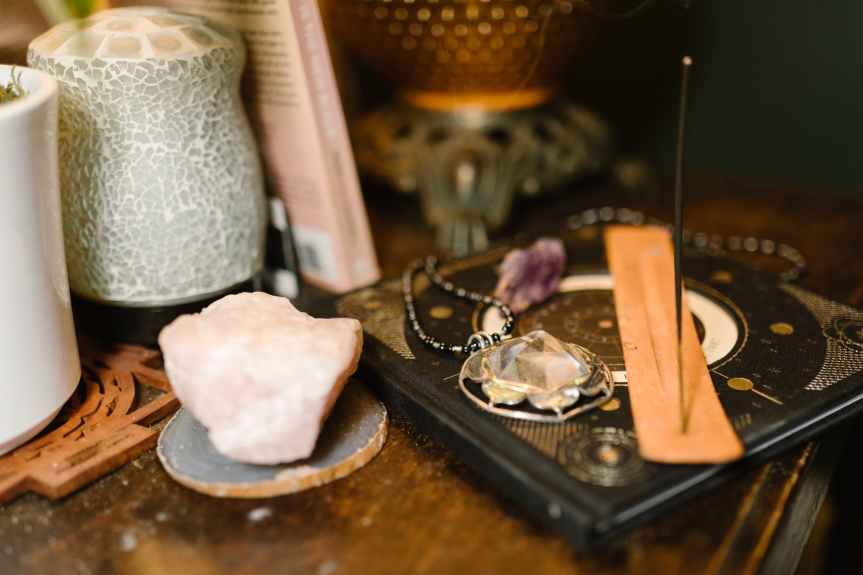
All about Horoscope

A horoscope (also known as a natal chart, astrological chart, astro-chart, celestial map, sky-map, star-chart, cosmogram, vitasphere, radical chart, radix, chart wheel, or simply chart) is an astrological chart or diagram that depicts the positions of the Sun, Moon, planets, astrological aspects, and sensitive angles at the time of an event, such as a birth.
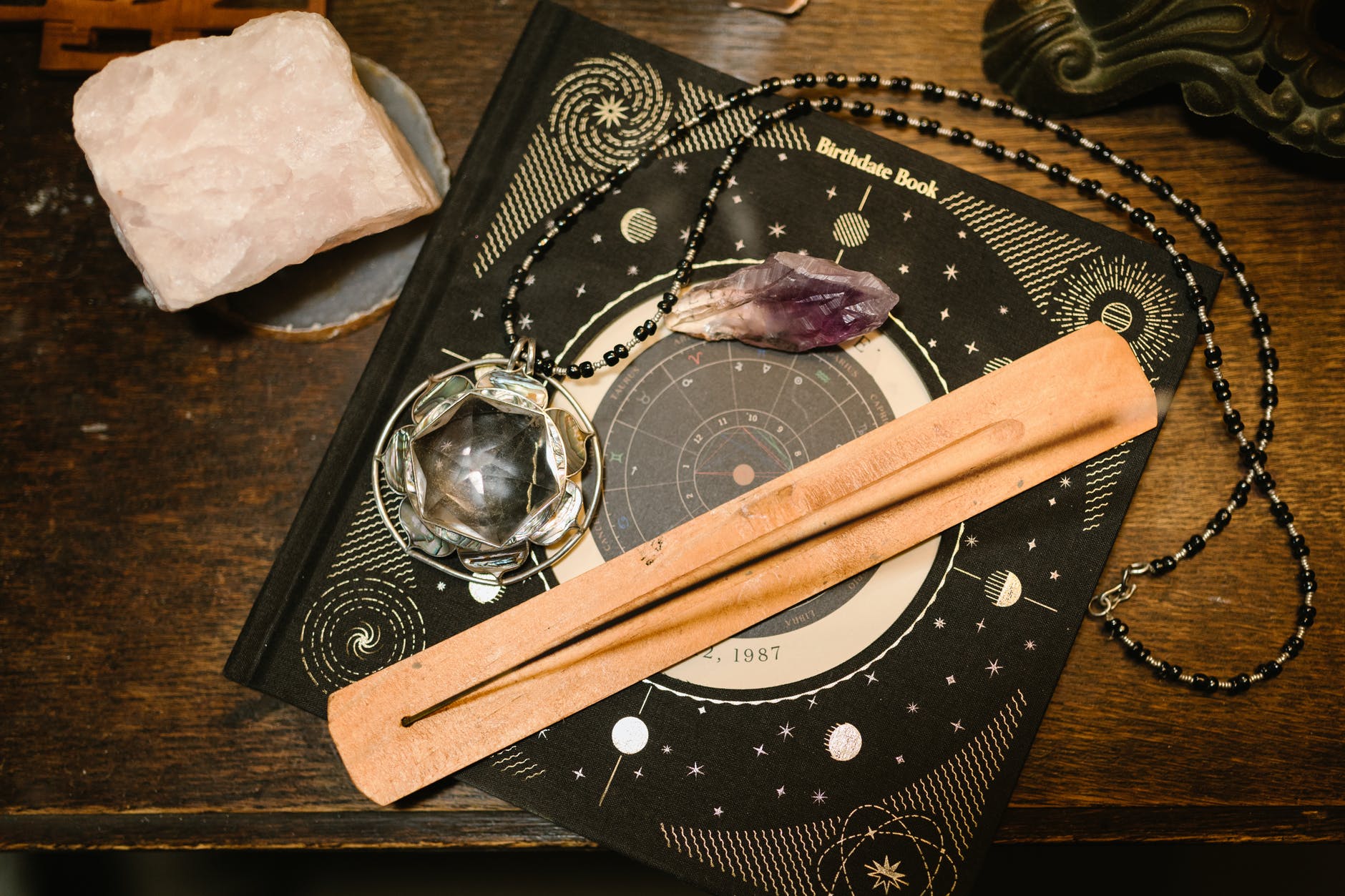
Photo by RODNAE Productions on Pexels.com

Horoscope comes from the Greek words ra and scopos, which mean “time” and “observer” (horoskopos, pl. horoskopoi, or “hour marker(s)”). It is utilised as a means of divination for occurrences related to the time period it symbolises, and it is the foundation of astrology’s horoscopic traditions.

The horoscope depicts the skies as a stylised map over a certain area at a specific time. In most cases, the viewpoint is geocentric (heliocentric astrology being one exception).

The chart includes the positions of the actual planets (including the Sun and Moon), as well as entirely calculated features such the lunar nodes, house cusps (including the midheaven and ascendant), zodiac signs, fixed stars, and the lots.

Aspects are angular relationships between planets and other points that are commonly determined. 

The vernal point (the first day of spring in the northern hemisphere) is defined by the tropical zodiac as the first degree of Aries, although the sidereal zodiac permits it to process.

Many individuals are perplexed by the distinction between the sidereal and tropical zodiac signs.

t is worth pointing out that the sidereal signs and the tropical signs are both geometrical conventions of 30° each, whereas the zodiacal constellations are pictorial representations of mythological figures projected onto the celestial sphere based on patterns of visible star groupings, none of which occupy precisely 30° of the ecliptic.

So constellations and signs are not the same, although for historical reasons they might have the same names

An astrologer must first determine the exact time and location of the subject’s birth, or the start of an event, in order to generate a horoscope.

At the same time, the local standard time (adjusted for daylight saving time or wartime) is transformed into Greenwich Mean Time or Universal Time. To be able to calculate, the astrologer must translate this to the local sidereal time at birth.
Photo by RODNAE Productions on Pexels.com

The astrologer will then examine an ephemeris, a set of tables that displays the positions of the Sun, Moon, and planets for a given year, date, and sidereal time in relation to the northern hemisphere vernal equinox or fixed stars for a given year, date, and sidereal time (depending on which astrological system is being used).

The horoscope is divided into 12 sectors that circle the ecliptic, beginning with the ascendant or rising sign on the eastern horizon.

The houses are the 12 sectors, and there are several techniques for computing these divisions. Since the 19th century, tables of dwellings have been issued to make this otherwise difficult work easier.

Horoscopes and the zodiac sign have always been popular, and they continue to be so today. From celebrities to the ordinary population, there are a large number of devoted fans.

It can be tough to accept that astrology is not based on scientific facts and is a pseudoscience when there are so many believers and perhaps a personal connection to the horoscope or the zodiac.

Reference

http://www.wikipedia.com

http://www.timesofindia.com

http://www.elle.com

TOXIC RELATIONSHIPS

BY: VAIBHAVI MENON

A toxic relationship as “any relationship [between people who] don’t support each other, where there’s conflict and one seeks to undermine the other, where there’s competition, where there’s disrespect and a lack of cohesiveness.” While every relationship goes through ups and downs, a toxic relationship is consistently unpleasant and draining for the people in it, to the point that negative moments outweigh and outnumber the positive ones. Toxic relationships are mentally, emotionally and possibly even physically damaging to one or both participants. And these relationships don’t have to be romantic, friendly, familial and professional relationships can all be toxic as well. people who consistently undermine or cause harm to a partner — whether intentionally or not — often have a reason for their behavior, even if it’s subconscious. “Maybe they were in a toxic relationship, either romantically or as a child. Maybe they didn’t have the most supportive, loving upbringing.” “They could have been bullied in school. They could be suffering from an undiagnosed mental health disorder, such as depression or anxiety or bipolar disorder, an eating disorder, any form of trauma.”

Even good relationships take work. After all, our significant other, our close friends, and even our parents aren’t perfect (and, oddly enough, they may not see us as perfect either). We have to learn how to accommodate and adapt to their idiosyncrasies, their faults, their moods, etc., just as they must learn how to do the same with us. And it’s worth it. Some relationships, however, are more difficult and require proportionately more work. We are not clones but individuals, and some individuals in relationships are going to have more difficulties, more disagreements. But because we value these relationships we’re willing to make the effort it takes to keep them. And then there are toxic relationships. These relationships have mutated themselves into something that has the potential, if not corrected, to be extremely harmful to our well being. These relationships are not necessarily hopeless, but they require substantial and difficult work if they are to be changed into something healthy. The paradox is that in order to have a reasonable chance to turn a toxic relationship into a healthy relationship, we have to be prepared to leave it (more about this later). The importance of understanding what defines a toxic relationship is elevated in a global pandemic.

Pandemic precautions have us spending more time at home. Many of us have lost the outlets that bring balance to our social, physical, and mental health–work, friends, the gym, school. Isolation at home can shed new light on the indicators that a relationship is toxic, meaning recent months have been key in identifying unhealthy patterns in our relationships. In April 2020, the Journal of Clinical Nursing reported that “home can be a place where dynamics of power can be distorted and subverted. Often without scrutiny from anyone ‘outside’ the couple or the family unit. In the COVID‐19 crisis, the exhortation to ‘stay at home’ therefore has major implications for those adults and children already living with someone who is abusive or controlling.”

ZODIAC SHAMING

BY: VAIBHAVI MENON

If you’re the type of person who thinks astrology is garbage, this entire line of thinking is your personal hell. It’s bad enough that people believe their personalities are based on the planetary alignment at the time of their birth. Now they’re casting off whole groups of people based on that same deranged paradigm? If you’re the type of person who thinks astrology is garbage, this entire line of thinking is your personal hell. It’s bad enough that people believe their personalities are based on the planetary alignment at the time of their birth. Now they’re casting off whole groups of people based on that same deranged paradigm? In China, zodiac discrimination is a well-documented problem. A 2017 study found that 4.3 percent of college students surveyed reported suffering employment-based discrimination because of their astrological sign (Western and/or Chinese). Constellation-based recruitment has its own entry in Baidu Baiku, otherwise known as Chinese Wikipedia. Close to 30 percent of Americans now believe in astrology, a number that’s been rising steadily. Who knows how long it’ll take before zodiac discrimination becomes an institutionalized problem here?

Not all forms of labelling or grouping are bad. You can still use the zodiac to make judgements about people, R but they should be holistic, non-prescriptive observations — ones that take people’s whole selves into account. Instead of writing people off because they’re Scorpios or Geminis. People are their sign, but they’re also far more than their sign. Behavior exists on a spectrum. Just because Virgos are thought of as anal doesn’t mean they all want a vacuum cleaner for Christmas. Writing anyone off without taking time to know them isn’t just unethical, it’s a boring way to live. Obviously discrimination based on, say, racial lines, is far more pronounced in society, not to mention negative. Most astrology signs don’t outright call people stupid or lazy, though they do imply weaknesses and temperent as well as strengths. But both are arbitrary categorizations for personality that utterly lack evidence or rationale. If you believe in astrology, and truly believe that the month someone was born in determines their personality, you are prejudging people based on when their birthday is. And as ridiculous as that sounds, there are still people who pay money to see their horoscopes and make life decisions based on them, including having their perspective and behavior toward others adjust based on each person’s signs. The basic premise of astrology is that people who were born at certain times and places share distinguishing personality characteristics. Libras, for example, are said to be diplomatic, refined, idealistic, and sociable; Capricorns are responsible, disciplined, hard-working, demanding, and so on. Tens of millions of people know something about their sun signs and read their daily horoscopes. There are some interesting parallels between racism and astrology. For one thing, in both cases a person is being judged by factors beyond their control. Just as a person has no control over his or her race or skin color, they also have no control over when and where they were born. In both cases, there is a framework of belief that says, “Without even meeting or knowing you, I believe something about you:   I can expect this particular sort of behavior or traits (sneakiness, laziness, arrogance, etc.) from members of this particular group of people (Jews, blacks, Aries, etc.)” When an astrologer meets a person and finds out that person’s astrological sign, she will bring to that experience a pre-existing list of assumptions (prejudices) about that person’s behavior, personality, and character. In both cases, the prejudices will cause people to seek out and confirm their expectations. Racists will look for examples of anti-social behaviors in the groups they dislike, and astrologers will look for the personality traits that they believe the person will exhibit. Since people have complex personalities (all of us are lazy some of the time, caring at other times, etc.), both racists and astrologers will find evidence to confirm their beliefs.

What is trying to be conveyed here is that zodiac signs or anything else that can be used as a form of discrimination should be avoided. No one deserves to be treated in this manner for these reasons. It definitely shouldn’t be acceptable.