

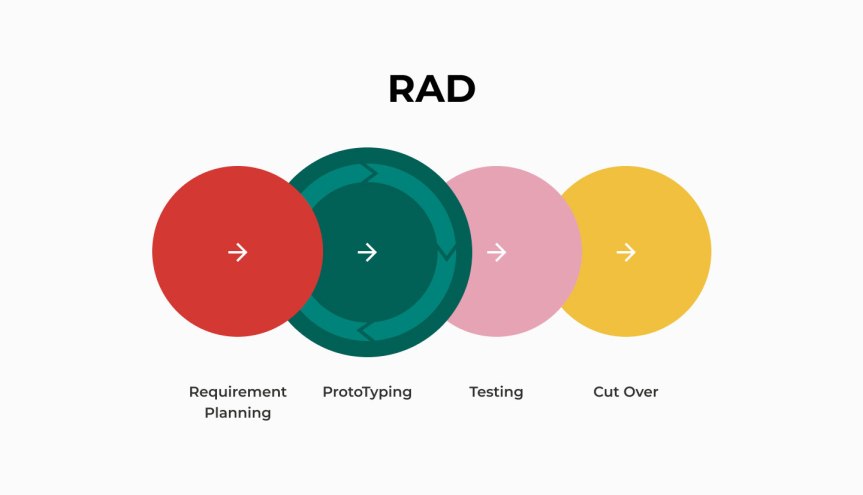
What is RAD Model ?
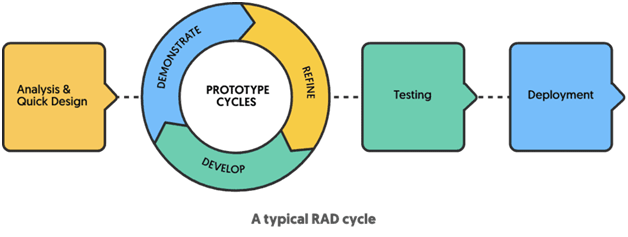
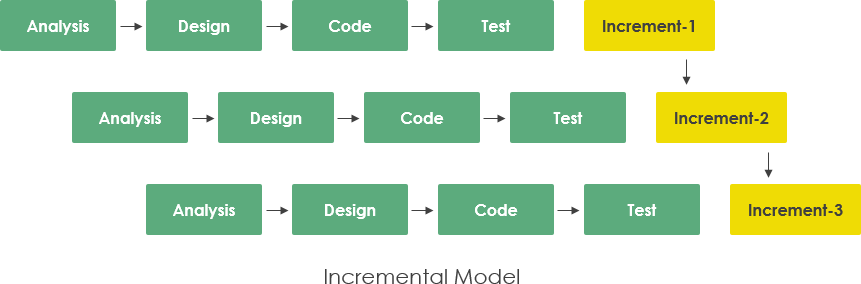
Rapid application development (RAD) is an incremental software development process model that emphasizes an extremely short development cycle.
The RAD model is a ―high-speed adaptation of the linear sequential model in which rapid development is achieved by using component-based construction.
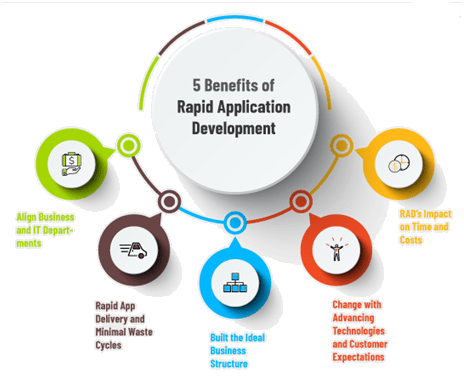
Situation When RAD Model is Useful:
RAD should be used when there is a need to create a system that can be required in 2-3 months of time.
It should be used if there‟s high availability of designers for modeling and the budget is high enough to afford their cost
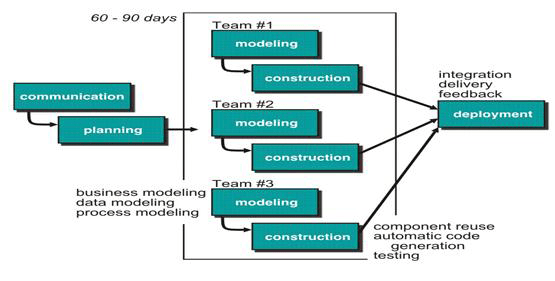
enables a development team to create a ―fully functional system within very short time periods (e.g., 60 to 90 days).
Phases
1. Communication:
Communication phase is used to understand the requirements of the project.
2. Planning:
Planning is very essential because multiple project teams are working parallel in RAD model
3. Modeling:
a) Business modeling:
The information flow among business functions is represented.
b) Data modeling:
The information flow defined as part of the business modeling phase is refined into a set of data objects that are needed to support the business.
c) Process modeling:
The data objects defined in the data modeling phase are transformed to achieve the information flow necessary to implement a business function.
4. Construction:
RAD process model reuses the existing program components (when possible) or create reusable components (when necessary).
5. Deployment:
Modules developed by different RAD teams are integrated to develop final complete product.
Advantages
Faster implementation of Project
Parallel implementation
Increases re usability of components
Encourages customer feedback
Projects divided into small teams results into better implementation
Disadvantage
•Limited Time for system implementation results into inadequate analysis of project.
•Less time for testing.
•If user is unclear with the system project may fail.
•If developers and customers are not committed to the rapid model, the RAD project fails.
•Time is the major constraint in RAD.
•RAD has to be modularized in a proper way otherwise creates a lots of confusions and problems.
•In case of high performance requirement, RAD cannot be ideal model.
Conclusion
RAD Model is fast and is also based on Component Based Construction so, there is faster implementation of the project and increases re usability of the components. But also, if the user is unclear with the system the project may fail, this may lead to loss of time and cost.

 Eduindex
You must be logged in to post a comment.