MARWAD : HEART OF HINDUSTAN

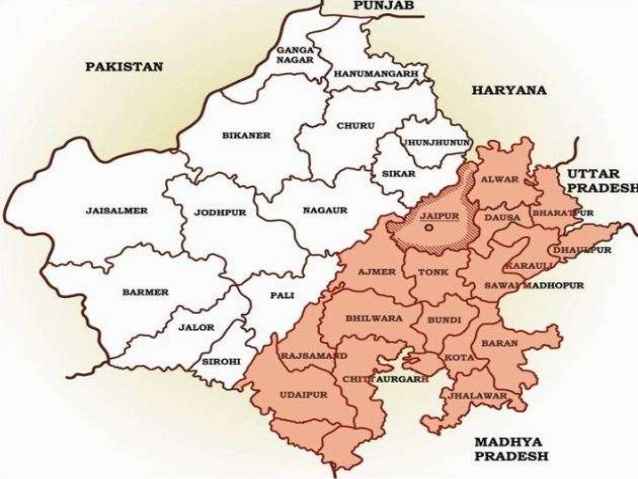
The Marwari or Marwadi are an Indian ethnic group that originate from the Rajasthan region of India. Their language, also called Marwari, comes under the umbrella of Rajasthani languages, which is part of the Western Zone of Indo-Aryan languages.
Marwari’ is an umbrella term to classify both Hindus and Jains. The Marwaris originate from Eastern Rajasthan and the term was used as an ethnographic classification in the 1901 census. It described a trader from Rajputana and included primary groups like Agarwals, Maheswaris, Oswals, and Seraogis. It later included other Rajasthani trading castes like Khandelwals and Porwals. Most Marwaris do not come from the district of Marwar but the generic use of Marwar could be a reference to the older Marwar kingdom.

It was during the colonial period that the heterogeneous Marwaris came to form a community under the colonial state. Anne Hardgrove’s study, Community and Public Culture, credits their rise as a trading class as facilitated by the changing nature of the colonial economy, commercialisation of agriculture, changing land policies, and the payment of regular tax. The Marwaris as a caste group were able to build a credit and trading network across a large part of colonial India through marriage and kinship ties.
But the history of migration of this trading community from Rajasthan is dated back to the end of the 17th century and Marwaris served as bankers and financiers to the Mughals. The name of Jagat Seth, infamous for his role in the British victory over Siraj-ud-dawla at the Battle of Plassey in 1757, was actually a Mughal title which meant banker of the world.

‘Marwari’, the ethnic label is subjective and often used as a slur that defines the businessmen as the ‘outsider’, the ‘other’ who is swindling you, as they do not share community ties of language and local identity. Many Marwaris themselves consider the term a pejorative and instead, choose to identify themselves by their sub-caste. The criticisms of Marwaris and their economic activities are comparable to what minority trading groups historically have faced elsewhere in the world.

We all have our own experience of ‘knowing’ Marwaris. The essential/stereotypical features are their association with commerce, a network of relatives and cousins on all important trading routes to the metropolis, fluently speaking the local language as well as their native tongue, despite the ‘exile’ from home and regular visits to the home. The Marwaris do not integrate and are perceived to have maintained their distinctiveness and links to ‘home’ despite living in different parts of India for a long period.
Marwari traders have historically been migratory in habit. The possible causes of this trait include the proximity of their homeland to the major Ganges – Yamuna trade route; movement to escape famine; and the encouragement given to them by various rulers of northern India who saw advantages in having their skills in banking and finance.

The pattern of Marwari migration became increasingly divergent following the decline in wars between Rajput kingdoms, which the Marwaris had helped to finance, and the decreasing influence of the community over the North Indian caravan trading routes that resulted from the British establishing themselves in the region. The changed focus of migration was also encouraged by the British establishment of new trading routes and centres, as well as by the declining political significance of the Rajput courts whose famed conspicuous consumption had been supported by Marwari money.
The community welcomed the relative safety that the British presence offered, as well as the commercial and legal frameworks that they provided and which were more favourable to Marwari activities than the systems prevalent during the earlier period of Mughal and Rajput rule.
In 1956, the All-India Marwari Federation opposed a linguistic organisation of states whilst buying up regional language newspapers in Maharashtra, Tamil Nadu and Andhra Pradesh.Today, they control many of the country’s largest media groups.

The community’s control of the Indian economy declined following the country’s 1991 economic reforms. From a peak of controlling 24 per cent in 1990, it had fallen to less than 2 per cent in 2000. This reflects the growth of new industries outside of commodities trading and primary production. The figure for year “2000” is considered to be lower than the position in 1939, when the community first began its resurgence.

LANGUAGE:
Marwari, or Marrubhasha, as it is referred to by Marwaris, is the traditional, historical, language of the Marwari ethnicity. The Marwari language is closely related to the Rajasthani language. The latter evolved from the Old Gujarati (also called Old Western Rajasthani, Gujjar Bhakha or Maru-Gurjar), language spoken by the people in Gujarat and Rajasthan.

CULTURE:
Marwaris have been known for a tightly-knit social solidarity, described by Selig Harrison in 1960 as “indissoluble under the impact of the strongest regional solvents”.The perception held of their culture by other communities is ambivalent at best. Hardgrove notes that they are “known across India for their success in business and industry , and often despised and severely criticised by other Indians for their alleged corruption and social conservatism”.
UNEXPLORED INDIA – 5 must places to visit in India

India is full of awe-inspiring places to enthral and inspire visitors. And, given the vast expanse and sheer diversity of this South Asian country, there are plenty of untouched and unexplored places. From the great Himalayan range in the north to the shimmering coastline of Indian Ocean in the south, and from the Gulf of Kutch in the west to the shores of the Bay of Bengal in the east, India is home to countless destinations.

Here I bring some of the unexplored and must visit destinations all over India

  1. JAWAI, Rajasthan

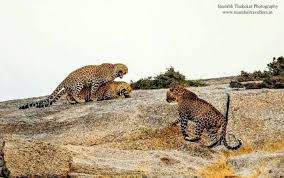
An unmissable place for wildlife enthusiasts is Jawai, located in the Pali district of Rajasthan. This is one of the best places in the country to spot a leopard in the daytime, so it is called the ‘Leopard Hills of India’. Several migratory birds and wild animals are found in the area, including cranes, flamingos, sloth bears, antelopes, and Indian wolves. Considered among one of the lesser known tourist destinations, this place deserves much more attention than it gets. It’s a perfect destination providing solitude and natural beauty in a place away from the artificial and busy lifestyle of cities.

Activities to do

  • Leopard safari
  • Bird watching from jawai dam as a lot of migrating birds are spotted here

Best Time to Visit

Although Jawai is open from early September to mid of May, the best time to come here is from October to early April as the weather is less humid while the nights could be chilly. 

How to Reach

Jawai Bandh is 392 kms away from Jaipur. For air travelers, there is no direct flight but the nearest airport is Udaipur from where you can get a cab to Jawai Bandh. Besides, there are 3 direct trains plying from Jaipur to Jawai Bandh but if you are traveling by bus, the only option is to reach Sirohi and then take a taxi up to Jawai Bandh.

2. TARKALI,  Maharashtra

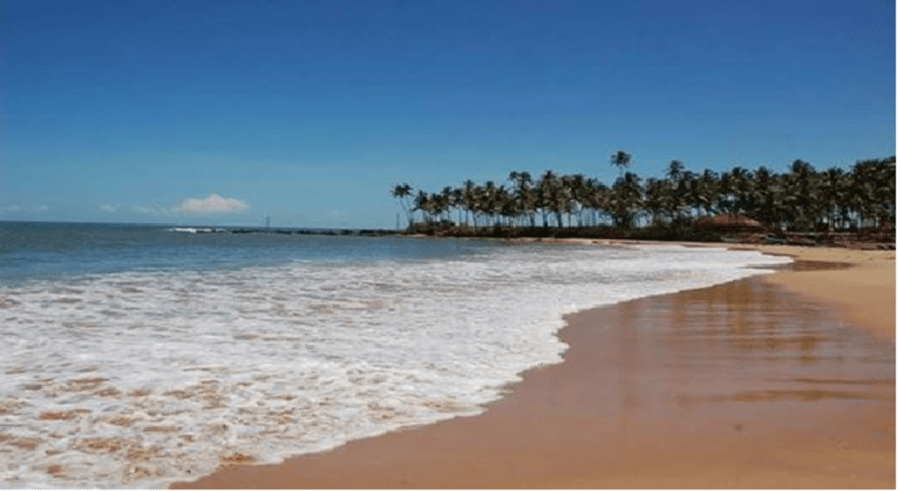
In the Sindhudurg district of Maharashtra, Tarkali is a seaside destination with numerous pristine white sand beaches, calm waters full of marine life and lush greenery. Few years ago, Tarkarli beach is declared as a Queen Beach of Konkan region. Monthly, Thousands of tourists are visiting this place to rejuvenate and enjoy thrill of water sports activities. Besides chilling out by the beach, you can go scuba diving and get up close with colourful tropical fish, turtles and other marine creatures, or indulge in water sports like kayaking, jet-skiing, parasailing, speed boat rides or banana boat rides. If you visit between February and October you can spot dolphins also, don’t forget to treat your taste buds with local Malvani cuisine.

Activities to do

  • Scuba diving
  • Snorkling
  • Parasailing
  • bison national park
  • dolphin spotting

Best time to visit

Winter is the best season for visiting Tarkarli. The months from October to March is when Tarkarli becomes an ideal holiday destination. Monsoons can also be a favourable time for planning a trip, although the heavy rainfall might ruin your plans. The summers, though, are the least advisable time to visit Tarkarli, owing to the scorching heat and the unbearable humidity.

How to reach

The nearest airport is Dabolim Airport in Goa. By rail, Tarkarli can be accessed from Sindhudurg and also from Kudal and Kankavli by the Konkan Railway. Tarkarli is easily accessible by road from Malvan by bus and rickshaw. Tarkarli is 475 km (Panvel Kochi Road, NH 17) and 576 km (Mumbai Kohlapur Road NH 4) away from Mumbai. Daily private, luxury and State Transport bus service available from various parts of Goa, Mumbai, Pune to Malvan.

 3. BHALUKPONG, Arunachal Pradesh

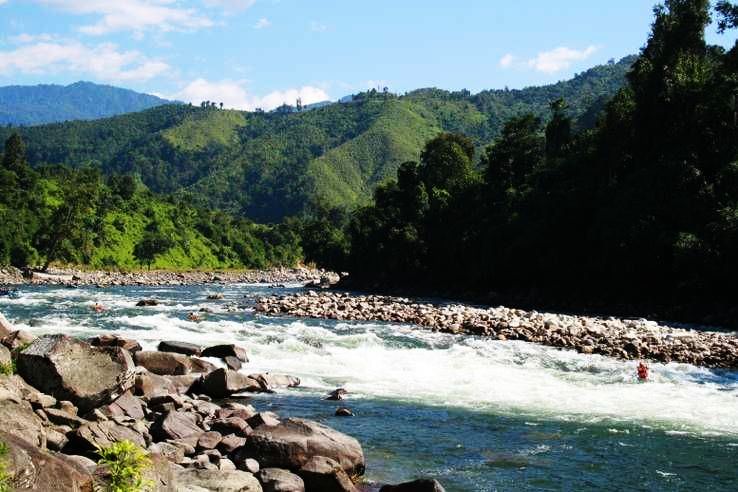
Bhalukpung is a small town located along the southern reaches of the Himalayas in West Kameng district of Arunachal Pradesh in India. Apart from being the nature lover’s paradise, Bhalukpong can provide you a complete experience with wildlife and a host of activities complimenting its natural beauty and the environment of a place lesser known.

The Kameng River running in the forest surrounding it makes the town even more attractive. In Bhalukpong you’ll find yourself making the most of hiking, trekking, camping and fishing.

Activities to do

  • Sesaa orchid sanctuary
  • Fish angling and river rafting
  • Pakhui Game Sanctuary

Best time to visit

October-March is the best period to visit. The Aka tribal festival takes place in March and is a major attraction for tourists.

How to reach

The nearest airport, as well as railway station, are at Tezpur. Cabs and busses ply periodically up and down to Bhalukpong. However, many prefer to drive down to the charming city. The road goes via NH 37 which is in excellent condition. The drive is an exciting one by itself as the road passes by the famous Kaziranga National Park.

4.SKANDAGIRI HILLS

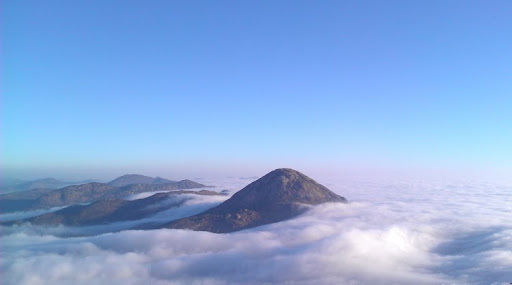
The picturesque Skandagiri Hills are much much-loved for the view of a golden sunrise and fluffy beds of clouds. Located about 70 km from Bangaluru city, the peak is at an altitude of about 1350 meters. With beautiful scenery, these hills have the potential to allure trekkers around the world. site makes for a perfect holiday spot for the adventurer and naturalist.

Activities to do

  • You can go trekking along the ridges and pass through the valley and take in the stunning view of the Deccan Plateau.
  • Get a perfect sight of the gorgeous sunrise accompanied by a wall of mist in the morning
  • Gazing at the star-studded skies

How to reach

The nearest railway station and airport to Skandagiri Hills lies in Bangalore. Hence, one can reach bangalore by means of flight or train and then take up the roadways for covering the additional distance. The distance of Skandagiri Hills from Bangalore is approximately 62 Kms.

5. SPITI VALLEY, Himachal Pradesh

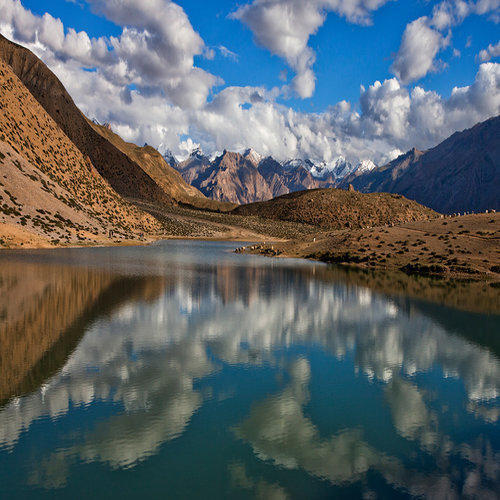
Spiti Valley is a cold desert mountain valley located high in the Himalayas in the north-eastern part of the northern Indian state of Himachal Pradesh. It is a very unconventional tourist destinations of this list. The Spiti Valley is the blood of the attraction providing mind-soothing views, picnic spots, trekking routes, camping regions and so on. Lahaul and Spiti district is surrounded by high mountain ranges. The Rohtang Pass, at 13,054 feet (3,979 m), separates Lahul and Spiti from the Kullu Valley. Lahul and Spiti are cut off from each other by the higher Kunzum Pass, at 15,059 feet .To add more beauty to this place, you can find monasteries  that allow tourists to stay in the dorms, explore the buildings, join the rituals and live like a hermit.

If desired, you could trek up to the top to spot the glaciers of the region. If you looking for some serenity in your vacation? It is time to add Spiti to your bucket list.

Activities to do

  • Visit ancient Buddhist monasteries
  • Camp at Chandra Taal Lake
  • Bike and trek in nature
  • Visit a mummy in the village of Giu

Best time to visit

The best time to visit Spiti is from March to June. The ones who are into a relaxing vacation should visit Spiti during this season when the temperature ranges from 0 – 15-degree Celcius, which starts from March and lasts until June. Winters in Spiti are for the daring.

HISTORY OF JAIPUR- WHY IS IT PINK?

The capital city of Rajasthan, known for its unique architecture and tradition. One among the largest and the most visited places by the tourists. It has royalty in every facet and has two UNESCO World Heritage sites.

The reason behind it’s naming.
The main reason behind it’s naming is because of its founder, as it was founded by the ruler of Amer, Jai Singh II on 18 September,1727. Yes, it is one of the oldest cities in the country and the most populated too with a population of more than 30 lakh i.e. 10th in India.

Why is it known as the pink city?
The eldest son of Queen Victoria and Prince Albert of Saxe-Coburg and Gotha was Albert Edward who was welcomed in the city during the rule of Sawai Ram Singh 1st. In the year 1876 in the honor of HRH Albert Edward, Prince of Wales it was painted pink as pink denotes hospitality, since then some of the buildings remained pink quoting it as the ‘pink city’. There are certainly other reasons like The devotion of Maharaja towards Lord Shiva whose favorite color was Terra Cotta.

Why did the Maharaja change the capital from Amber to Jaipur?
● Amer (Amber)was not able to expand due to its geography.
● Jaipur had the potential to develop into a city with proper drinking water.
● As Jaipur is situated near Aravali hills, it could be easy to provide some building materials.

Contribution to Architecture. The major contribution to the architecture of the city was by Bengali architect Vidyadhar Bhattacharya. The architecture of Jaipur is worldwide famous due to its specialized detailing and beauty based on Indian Vastu Shastra. As Maharaja Sawai Jai Singh II was an incredible astronomer and a town planner, he intended to design a town according to the principles of the Hindu architectural concept with the Vidyadhar and it took shape as Pink City Jaipur. It was divided into 9 blocks, two containing state-building, and palaces, while the rest seven were assigned to the public. Jaipur, which is deemed by many urbanists to be one of the best planned cities. While the city was under construction, it’s architecture was incredibly advanced and the best in the Indian subcontinent.
Famous for. Havelies, forts, museums, shopping markets, textiles, lac bangles, Teej festival, camel rides, city gates, and of course it’s traditional food including Ghevar, Kachori, Laal maas,paintings and certain accessories like jewelry, carpets.

Some famous sites-

Hawa Mahal. Made with pink and red sandstone, built in the year 1799 by Maharaja Sawai Pratap Singh, the grandson of Maharaja Sawai Jai Singh, the sole founder of the city Jaipur. Commonly known as the Palace of wind. The main thing which makes Hawa Mahal unique is it has about 953 windows, these windows were designed so that royal ladies we’re able to glance at the daily lifestyle, market, and festivals which were celebrated in the streets.
Jantar Mantar, a scientific architecture. An astronomical piece of artwork built-in the early 18th century, known for its cosmological concepts and by far India’s most preserved historic observation. The Jantar Mantar is protected under the Rajasthan Monuments Archaeological Site and Antiquities Act, 1961, under Sections 3 and 4. It was designated a monument of national importance in 1968. https://whc.unesco.org/en/list/1338/

TOURISTS AND TRAVELLERS SHOW A GREAT INTEREST IN THIS CITY AS IT HAS VARIOUS OTHER SIGHTSEEING PLACES, SO IF YOU ARE A TRAVELLER THIS PLACE IS A MUST TO INCLUDE IN YOUR TRAVEL DIARY.

Intoxication Not A Mitigating Factor

It has been most rightly remarked by the Supreme Court most recently on December 13, 2019 in a latest, landmark and extremely laudable judgment titled Suraj Jagannath Jadhav vs State of Maharashtra in Criminal Appeal No. 1885 of 2019 that, “Mere intoxication is not a mitigating factor factor when accused was not in a highly inebriated condition”. This was held so while clearly rejecting the contention of the accused that he was under the influence of liquor and threw matchstick on his deceased wife and set her ablaze  and therefore his condition was such that he could not understand what he was doing! There can be no reason to justify an unlawful act and that too of such a horrifying nature as burning one’s own wife!

Apex Court Bench
Apex Court Bench

To start with, this noteworthy judgment authored by Justice MR Shah for himself and Justice Ashok Bhushan set the ball rolling in para 1 wherein it was observed that, “Feeling aggrieved and dissatisfied with the impugned judgment and order dated 09.10.2018 passed by the High Court of Judicature at Bombay in Criminal Appeal No. 723 of 2013, by which the High Court has dismissed the said appeal preferred by the appellant herein-original accused and has confirmed the judgment and order of conviction passed by the learned Trial Court convicting the accused for the offence punishable under Section 302 of the IPC, the original accused has preferred the present appeal.

As it turned out, para 2 then states that, “At the outset, it is required to be noted that the only submission made by the learned counsel appearing on behalf of the appellant-original accused is that the death of the deceased can be said to be a culpable homicide not amounting to murder and the case would fall under Exception 4 to Section 300 IPC and therefore the case would be under Section 304 Part II IPC. Even this Court has issued the notice in the present appeal limited to the nature of offence.”

While elaborating further on this pale defence, para 3 then states that, “Shri Sushil Karanjkar, learned counsel appearing on behalf of the appellant-original accused has vehemently submitted that, as such, there was no intention on the part of the accused to kill his wife. It is submitted that at the time when the unfortunate incident had taken place, the accused was under the influence of liquor and therefore his condition was such that he could not understand what he was doing. It is further submitted by the learned counsel appearing on behalf of the appellant-original accused that even thereafter the appellant tried to save the deceased and poured water to save her and, while doing so, even the appellant-original accused also sustained the injuries. Therefore, relying upon the decision of this Court in the case of Kalu Ram v. State of Rajasthan (2000) 10 SCC 324, it is prayed to alter the conviction from Section 302 IPC to Section 304 Part II IPC.”

For the sake of brevity, let us now have a glimpse of the key findings of the Apex Court Bench. To start with, it is observed in para 5 that, “Heard the learned counsel appearing on behalf of the respective parties at length. As observed hereinabove, in the present appeal, the sole question which is posed for consideration of this Court is, whether, in the facts and circumstances of the case, the case would fall under Exception 4 to Section 300 IPC or Section 300 fourthly and, therefore, whether Section 302 IPC shall be attracted or the case may fall under Section 304 Part II IPC?”

More significantly, it is then disclosed in para 5.1 that, “It is the case on behalf of the appellant-original accused that as at the time when the incident took place, the accused was drunk and under the influence of liquor and he had no intention to cause death of the deceased-wife and that even subsequently the accused tried to save the deceased and poured the water on her and therefore the case would fall under Exception 4 to Section 300 IPC and, therefore the conviction is to be altered from Section 302 of the IPC to Section 304 Part II IPC, having relied upon the decision of this Court in the case of Kalu Ram (supra). However, it is required to be noted that, in the present case, the appellant-accused poured the kerosene on the deceased when she was trying to run out of the house to save herself and was trying to open the latch of the door of the house, the accused threw the match stick on her person and set her ablaze. Nothing is on record that the accused was in a highly inebriated stage. Even looking to the conversation which took place between the deceased and the accused, so stated in the dying declaration given by the deceased, it can safely be said that the accused was in very much conscious condition when the incident took place. He was very much in the senses and was conscious about what he was doing. Therefore, the accused was fully conscious of the fact that if kerosene is poured and matchstick is lit and put on the body, a person might die due to burns. Therefore, the case would fall under Section 300 fourthly and Exception 4 to Section 300 IPC shall not be applicable.”

Finally and most importantly, it is then held in para 7 that, “Applying the law laid down by this Court in the cases of Bhagwan (supra) and Santosh (supra) to the facts of the case on hand and the manner in which the accused poured the kerosene on the deceased and thereafter when she was trying to run away from the room to save her, the accused came from behind and threw a match-stick and set her ablaze, we are of the opinion that the death of the deceased was a culpable homicide amounting to murder and Section 300 fourthly shall be applicable and not Exception 4 to Section 300 IPC as submitted on behalf of the accused. We are in complete agreement with the view taken by the learned Trial Court as well as the High Court convicting the accused for the offence punishable under Section 302 of the IPC.” Lastly, it is then held in the last para 8 that, “In view of the above and for the reasons stated above, the present appeal fails and the same deserves to be dismissed and is accordingly dismissed.” Very rightly so!

In conclusion, the Apex Court Bench has very rightly convicted the accused as he was fully conscious of what he was doing while he threw a  match-stick and set her wife ablaze. The intoxication was not so much that he could not understand what he was doing. So he was not given the benefit of doubt. Very rightly so!

Sanjeev Sirohi, Advocate,

s/o Col BPS Sirohi,

A 82, Defence Enclave,

Sardhana Road, Kankerkhera, UP