DREAM ON…..

N kavya

Dream is a succession of images, ideas, emotions, and sensations that usually occur involuntarily in the mind during certain stages of sleep.

The content and function of dreams have been topics of scientific, philosophical, and religious interest throughout recorded history. Dream interpretation was practiced by the Babylonians in the third millennium BCE and even earlier by the ancient Sumerians. .Dreams figure prominently in major world religions. The dream experience for early humans, according to one interpretation, gave rise to the notion of a human ‘soul’ as a central element in much religious thought.

Psychologist Calvin S. Hall considered dreams part of the cognition process or a type of thinking that happens as you sleep. Hall believed dreams could offer important insight into how you view yourself and others, your problems and conflicts, and the world in general. Many psychologists believed dreams played an important role in cognitive processes including memory and emotion regulation. Domhoff also noted that, although dreams may shed some light on heavy concerns, they might not have any real purpose, because he stated normally human beings forget most of their dreams. William Dement, who helped found the field of sleep medicine, suggested that, while dreams may lack a clear purpose, they can still convey meaningful messages.

Many experts do not believe dreams have much meaning but believe they still serve a purpose. The existing theories outline a few of these purposes.

1. Threat simulation theory
2. Activation-Synthesis theory
3. Dreams as emotional regulation
4. Continual-activation theory

Psychotherapist, Eliza Boquin, states “For vivid dreamers, our body can often experience what is happening in the dream.”
Certified dream analyst and speaker Lauri Loewenberg says while you are sleeping your brain is conjuring up around five dreams per night. That is a lot of subconscious thoughts to unpack. And although every dream is unique, they do tend to follow certain symbolic patterns.

How to examine your own dreams -:


1. Make sure you are getting proper sleep –: Research says that if we get enough sleep (7 to 9 hours) each night. This may, in turn, boost dream recall.


2. Review the dream –: when you wake up from the dream, lie calmly and analyze the visions, emotions, people, and places and mainly pay attention to small details because it would play a significant role in examining the dream.


3. Write it down –: Have a journal and start writing what all you saw the colors and visions, also your moods and feelings.


4. Make connections to your own life -: connecting these facts to your everyday life, would connect to your past life experiences and in some cases might even show some glimpses of your future. There are also many dreams interpretation books that you can interpret and gain more insights into.

Dreaming and sleep are intertwined. Dreams occur mainly in the rapid-eye movement (REM) stage of sleep when brain activity is high and resembles that of being awake. No one knows for certain what purposes dream serve. But at the end of the day, their true function might not really matter. It depends on each individual If you find them meaningful, then they add value to you or do not concern you.

Image credits- Google

why Vocational Studies is the right choice for present generation

What Is Vocational Education? 


Theoretical knowledge is not everything in today’s world,
rather skills are becoming more valuable. This term skill is what is talked
about these days, but how to acquire them?  

While traditional colleges/universities provide students
with theoretical knowledge which can be applied to certain fields, vocational
education provides the students with hands-on training. Vocational education is
a great opportunity for students who are looking to acquire specific skills to
get a job that better aligns with their career goals and dreams, as they learn
the fundamentals of a specific occupation under the supervision of an
experienced professional.


Skills offered by vocational training courses


Vocational training focuses on developing technical
skills which make you instantly job-ready for example electrician, artisan,
emergency medical technician, plumber, woodworking and carpentry, automobile
technician, welding training, etc.

Differences between vocational education and university
education


The differences between traditional education and
vocational education are:-


Program
focus


Programs offering vocational education focus on teaching
the students specific skills which can directly be applied to a specific job.
These programs offer technical skills for a job like plumbers, electricians,
etc. on the other hand university education programs are focused on providing
theoretical knowledge to the students and focus less on applicable skills.
These students gain more academic knowledge compared to a vocational education
program.


Time to complete


As vocational courses focus less on theoretical-based
learning, the students gain the desired amount of qualifications in a much
shorter period. On the other hand, traditional university students usually need
to spend around two to four years completing their education before they are
qualified enough to apply for a job 


Costs

Because vocational courses can be completed in a much
shorter duration they are more cost-effective when compared to traditional
education programs. These courses are the perfect opportunity for people with a
limited budget. Universities on the other hand can be a lot more expensive as
they have a longer duration and the universities with better education and
access to competent job opportunities usually charge more.

Types of job opportunities

Vocational education programs prepare their students for
blue-collar and physical labor jobs. Gaining expertise in the respective field
will enable you to move up to a better role like a supervisor or a manager.
Contemporary university programs prepare their students for white-collar and
desk jobs, which do not require physical labor rather, they involve more mental
work and internet-based technologies.

Different types of vocational education

There are a lot of different sources which provide
vocational training programmes, some of these are-

High school CTE programs

The CTE program is for high school students who want to
gain work experience in different professions and go on to college. This type
of vocational training is usually part of the high school curriculum, but
students can also attend separate vocational centers. These career training
programs allow students to explore different career options and prepare them
for industry or graduate school-specific work. In most vocational training
programs at this level, students continue their intermediate education while
completing their training. 

Tech Prep education

Tech Prep programs serve as a bridge between general and
post-secondary vocational training to prepare students to pursue careers in the
high-tech sector. Thanks to a partnership between the two institutions, Tech
Prep programs combine at least two years of high school and two years of
post-secondary. The program usually culminates in a certificate or associate’s
degree in a particular field of study.


Apprenticeship
programs

Apprenticeship programs are specific to the trade and can
last up to four or five years. In these types of programs, apprentices or
students work under the supervision of an expert in their trade and get paid
for their work. This type of vocational training is most common in highly
skilled and practical occupations. Apprenticeships often combine on-the-job
training with classroom instruction. Since some apprenticeships include
classroom courses, they can lead to a certificate or diploma. A major advantage
of this type of training is that it is an educational program in which the
student also receives remuneration for his or her work.


Distance
learning programs

Another great option to learn or develop a skill set is
to enroll in a distance learning program. Many distance learning courses allow
students to work on materials and lesson plans at their own pace, making it
perfect for working professionals. However, some programs may require students
to log in at specific times or according to the class schedule. Before
enrolling in a distance learning program, be sure to thoroughly research the
training institution, making sure it is legitimate and accredited.


jobs you can get with a vocational education


Here are four examples of jobs you can pursue with this
type of education:


1. Auto mechanic: 

Automotive Mechanic service and repair vehicles with
minor problems or complex mechanical problems. They help customers determine
the cause of a problem, such as a leaking gas tank or a blown headlight. In
addition to performing repairs, they may also recommend additional repairs to
the customer to improve vehicle performance. 

2. Electrician Primary:

 Electricians use specialized equipment to repair
and maintain electrical equipment in many buildings, such as corporate offices
and homes. They also work on power lines and other electrical systems to ensure
they function as expected. Electricians must follow strict safety procedures to
avoid injury to themselves, colleagues, or civilians. 

3. First aid instructor:

 First Aid Instructor educates teenagers and adults
on how to give someone emergency first aid in a critical situation. Students
can also learn how to respond appropriately to emergencies and heal superficial
injuries. 

4. Web Designer: 

Web designers use their creativity and software expertise
to design and create websites that meet the needs of their clients. They
develop the overall look and feel of the website and how it works. A good
website should be easy for customers to navigate.


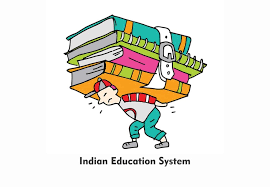
Indian Education System

Education plays an important role in the development of an individual and making him a knowledgeable citizen. It is the education that makes an individual self-reliant, helps to suppress the social evils and contribute towards the development of the society and nation as a whole. Education helps in unravelling the mystery of nature. It enables us to understand and improve the working of our society. It creates conditions for a better life. Education brings out the capabilities to fight injustice happening in society. Every individual has the right to education. 

Indian Education is one of the largest and complex education systems in the world along with China. India is committed to providing basic education to its citizens, the framework of which is defined in the National Policy of Education. Elementary education is now compulsory in India. At the time of Independence, only 14% of India’s population was literate. Now after so many decades since Independence, the number of literates has increased by fivefold.

History of Education System

The history of Indian education system comes from the times of Ramayana and Mahabharata. The historic Indian education system is also called the Gurukula system. There were gurus then who are now known as teachers and shishyas who are called students now. The gurus and the shishyas lived together under one roof in Gurukula until the completion of their education. The shishyas were expected to help the guru in all the daily chores as part of their learning. The children belonging to higher strata of the society were taught all the subjects from Sanskrit to Holy Scriptures and mathematics to metaphysics by the gurus. The Gurukulas during those times focused on the practical aspects of life. The students were taught in the open classroom in the surrounding area of nature. This early system of education in India continued for many years until the modern education system came into the picture in the nineteenth century.

In the early 19th century, during the British period, the modern education system was brought into our country by Lord Thomas Babington Macaulay. The basic strength of this modernized education system was the examinations and a well-defined curriculum, which gave importance to subjects like science and mathematics and subjects like philosophy, metaphysics were given a back seat. The brick and mortar classrooms replaced the open classrooms in the Gurukulas. The essence of the guru shishya bond was taken over by a more formal relationship between the teacher and the student. To understand the progress of any student, examinations were conducted at frequent intervals. The focus of the education system shifted from learning to memorizing of the concepts to score good marks in the examinations.

Problems of Indian Education System

Over a period of time, it has been observed that there are many loopholes in the system of education in India. Instead of understanding the concepts, students started cramming and memorizing the lessons. Knowledge is given a backseat and scoring in high rankings takes importance. The modern parents have tuned their mindsets accordingly and their goal is to ensure that their children score good marks instead of acquiring knowledge right from the primary level. 

Private schools and colleges have been rapidly increasing in the country but the results produced by them are far beyond satisfactory. It has also been observed that the quality of teachers deteriorated with the passing of time. Our examination system is responsible for the wide skill gap. India is producing lakhs of engineers and professionals every year but only a fraction of this number is actually getting employed. This is because the Indian examination system focuses more on scoring good percentages rather than the actual continuous comprehensive evaluation. 

Research and development, which should be the cornerstone of our system, are given the least importance. The private schools and colleges focus on the admission of more students and are least interested in the quality of their education. This is the major reason why the faculties and the teachers lack skills and specialization. This is quite evident from the fact that a single professor is assigned to teach multiple subjects. 

How Can We Improve the Indian Education System?

First and most importantly we should improve the grading system. Rote learning should be discouraged completely. Teachers and faculties should focus more on the analytical skills of the students and grade them accordingly. There should be more focus on comprehensive evaluation instead of scoring only good marks. Workshops must be organized for teachers on a regular basis to keep them updated about the latest developments in the sector of education. At the same time, the curriculum should be reframed according to the present needs of education in India. 

The payroll structure of the teachers and the faculties especially in the government institutions should be improved. This step will help in motivating the teachers to develop their skills and they will take a keen interest in grooming or shaping up a student’s life and career. The government and other entities who are associated with the education sector, need to understand the importance of quality of education. Education should be a holistic process that must focus on the overall development of the physical, emotional, social and cognitive skills of a child. It needs to be a slow and cyclic process and must take place gradually to help the child develop into an autonomous, independent and knowledgeable individual.

Conclusion

An educated individual is an individual who should be able to contribute towards the betterment of the economic and social development of the society as well as the country. The true goal of education must exceed awarding the degrees and certificates to the students. Education is not a tool to earn livelihood but it is a way to liberate the mind and soul of an individual. 

Studies and Exams during Pandemic

Being a student is never easy. Living up to the parents expectations, constantly being compared to others with better grades and competing with fellow students and friends may sound easy but is really very difficult. Competition has been increasing day by day along with our population. Fees of schools and colleges have been increasing, seats for prestigious universities are decreasing and the number of people fighting for those seats are growing drastically.

Adding to that, this pandemic situation has taken a toll on students and teachers equally. But students being on the receiving end from each and every side. Teachers and parents used to scold children for spending time in front of TV’s, computers and mobile phones. They used to tell us that it is not good for our eyes and we may get headache, weak eyesight, etc. But now, the very same teachers and parents are asking us to spend hours in front of those small screens daily.

Photo by Ksenia Chernaya on Pexels.com

An average student has to spend a minimum of 6 hours a day in front of his mobile or computer screens to attend his online lectures. He then has to finish boatload of assignments and homework which have to be submitted the following day. Keeping all those aside, he even has to attend to exams physically, all the way to his examination hall. Now, a student has to risk his life to write an exam.

Being prepared mentally and physically for all those exams is not a cake walk for any student. He has to bear his headaches caused due to online classes, manage his workload of assignments and studies simultaneously. Preparing the notes on his own or studying again from his mobile will one day weaken his eyes and damage his nerves. Leading such a stressful lives and yet being scolded for bad results can only be possible by a student.

Take regular breaks from classes and try to lighten your workload. Ask anyone for help if you are feeling stressed or depressed. It is okay to take a temporary break from your life and enjoy everything. Update everything about yourself to any close friend to make him know if you are facing any difficulties. This is your life and no one will scold you for being you.

All About Bachelor of Journalism & Mass Communication

Mainstream courses are chosen by a majority of people. But if you want to do something creative and different from the usual courses, then a Bachelor of Journalism & Mass Communication (BJMC) is a great option.

It is an undergraduate program for the students who aspire to work in the media industry such as print (newspaper, magazines, books), radio, television, and films. This program is best for inquisitive students, have a good command of the language, have the interest and confidence to report the happenings around the world, and have a grip on writing. Students with an interest in editing software and technical knowledge can also opt for this program.

Bachelors of Journalism & Mass Communication is a degree program for 3 years, which is divided into 6 semesters.

Eligibility Criteria

The students willing to get admission in the BJMC course need a minimum qualification of 10+2 in any stream, with at least a 50% score (varies according to the college requirement).

Admission Process

The admission process varies in different colleges. Some take admissions based on merit lists and some have entrance exams for it. If the admission is based on a merit list, then the result of class 12th is into account. This is also known as direct admission. If the admission is based on the entrance exam, then it is conducted in stages or rounds. The first round includes a written exam, after which the qualified students need to qualify for the personal interview (PI) round and group discussion round. 

If any student has prior work experience or has worked on any project, then on that basis also some colleges select the students for admission.

Some of the common subjects consisted in BJMC course

  • Advertising
  • Film Theory & Practice
  • Media Laws & Ethics
  • Public Relations
  • Basics of Research
  • Basics of Photography
  • Writing for Media
  • Animation Theory & Practice

Career Options in Bachelors of Journalism & Mass Communication

BJMC is a vast field and has a variety of options to pursue your career. It has an opportunity in both government and private sectors. Students willing to get into jobs after completion of their bachelors can do so. Students willing to pursue their higher studies can complete their masters and have better job opportunities and salary packages as they have a much broad perspective in the field.

Students willing to work in the government sector, especially in civil services can give Civil Service Exam conducted by the Union Public Service Commission (UPSC) and become IIS Officers. IIS stands for Indian Information Services. The job of the IIS officer is o communicate the information on behalf of the government. 

List of Job Opportunities for Journalism & Mass Communication Students:

  • Journalist
  • Radio Jockey (RJ)
  • Columnist
  • Animator
  • Public Relations Officer
  • Photo Journalist
  • Video Editor
  • Copy Writer
  • News Analyst
  • Television Anchor
  • News Anchor
  • Film Maker
  • Illustrator
  • Advertisement Agency
  • Fashion Photographer
  • Wildlife Photographer

The list does not end here. The job opportunities are enormous.

Salary Package

A student can earn a handsome amount after the successful completion of his or her course. The salary varies according to job responsibility and the organization. For a fresher, the salary varies from between Rs. 1 lakh to Rs. 4 lakhs. However, the amount tends to rise with time and experience.