6 Amazing Indian Model Villages

These Indian villages are more liveable and happier than any other Indian cities, villages and towns. They are model villages of India resulting from individual initiatives and NPO initiatives often using the Indian government schemes.

Piplantri

Piplantri village of Rajasthan is a hope for Indian development and prosperity as many families still mourn the birth of a female in the community.  Whenever a girl is born in the village, her family and all villagers come together to celebrate this occasion by planting 111 trees. Both are raised with equal respect. To provide financial security, a sum of Rs. 21,000 is contributed by the villagers and Rs. 10,000 is given by the family for every girl and kept as a fixed deposit which can be liquidated once she turns 20. In return, the parents are asked to sign a legal affidavit, which makes it mandatory for them to educate her, and prohibits them to make her marry before the age of 18. This move also tries to demolish the notion of girls being a burden on their parents. To save the plants from termite, villagers plant aloe vera around them. More than 3 million trees and aloe vera plants have been planted till now which is generating livelihood for many families. The trees planted include Neem, Sheesham, Mango, and Amla. This unique initiative was started by former village sarpanch Shyam Sundar Paliwal as ‘The Kiran Nidhi Yojana’ after he lost his daughter named Kiran in 2006. On Raksha Bandhan, girls tie Rakhi to tress. The villagers claim that this tradition has brought immense harmony in the village, and not a single police case has been registered in the last 7-8 years. Several villages nearby have started to adopt similar practice. The village today has eco-friendly gas stoves, toilets, solar lights, anganwaadi, healthcare centres, air-conditioned panchayat hall and modern schools.
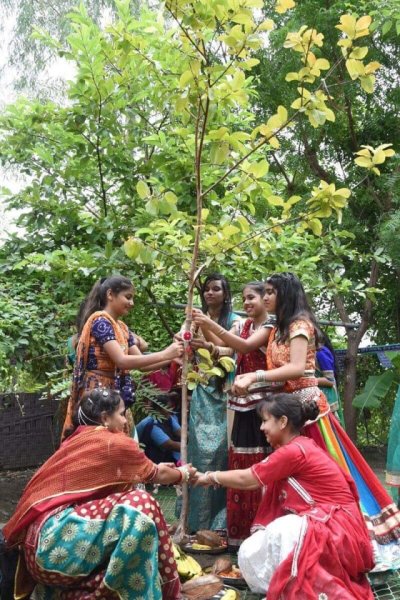
Piplantri village
picture source: speakzeasy.wordpress.com

Punsari village

Punsari village of Gujarat is regarded as India’s smartest village. It is rurban village. The word ‘rurban’ (rural+urban) refers to an area which has the economic characteristics and lifestyles of an urban area while retaining its essential rural area features. The village has clean and proper roads, schools and education system, 24-hour electricity supply in every household, school bus and public transport system, proper water supply and RO treated drinking water with minimum charges. The classrooms are air-conditioned. There is a good communication system between the panchayat office and the whole village to keep people well-informed and be available for help anytime they need. A public address system which covers the entire population with the help of about 140 loudspeakers installed all over the village. The village has good healthcare services and employment opportunities. It is a model village of India where there is WIFI, all chowk monitoring by CCTV cameras, solar street lights, with literacy rate of 100%. There is a bio metric system for Gram Panchayat Employees. The transformation of this village is achieved by the efforts of the village sarpanch (headman) Himanshu Patel through effective planning and utilization of central and state government funds. Mr Patel leads an 11-member committee which runs the village affairs including five are female members. Mr Patel says the village council has spent 140m rupees ($2.28m; £1.43m) on development schemes between 2006 and 2012. The state chief minister at that time was Narendra Modi, current Prime minister of India who envisioned to stop migration out of the village. It has been a partial success , as 15-20 families have returned to the village from the cities like Mumbai in recent years.

Punsari village documented

Mendha Lekha village

To enter this Maharashtrian village, we have to walk through a bamboo entrance, which points to the rich growth of bamboo in this village. The villagers living here are mostly the Gond tribe of Madhya Pradesh. There is a notice board at the entrance which says “At the centre, there is Delhi government. At the state, there is Mumbai government, but here we are our own government.” This shows the pride the 450 people take in the way they have used an unexpected opportunity that came their way to reap a fortune. Mendha Lekha became the first village in India to secure community forest rights (CFR). The village is famous for the bio-diversity of its deciduous forest and the struggle of its tribal community towards self-rule. Nearly 80% of the village area is forested and under the legally-recognised control of the villagers represented by the village general assembly (gram sabha). This whole land can be inherited and used but cannot be not sold. Mendha Lekha has proved that legal security of their rights to control, use, manage and protect their own resources and lives, through processes of self-powering, can make people end poverty, maintain food and water supply, and protect local biodiversity.  And all this takes place much more effectively than capitalism and development programs created by central government.

Mendhe Lekha village and its story

Dharnai village

This village in Bihar has never seen electricity until 2014. The village is now fully solar powered. With the help of Greenpeace, the village installed a solar-powered micro-grid, which provides 24×7 electricity to more than 450 households and 50 commercial establishments. The entire project cost them 3 crores. Earlier, were forced to struggle with kerosene lamps and expensive diesel generators. This changed the lives of the villagers in many socio-economic and personal aspects. It created opportunities for female residents to access the public and personal spaces and move after sunset. Children can now study after sunset. People no longer needed to finish cooking before the sunset.

Dharnai village documented

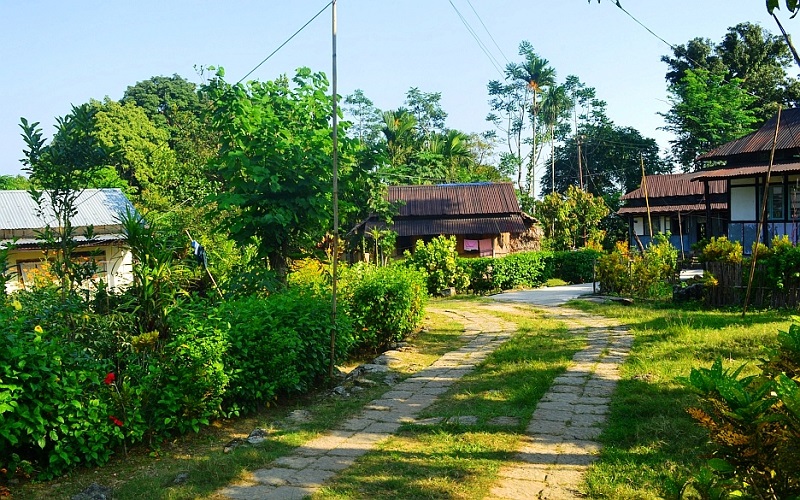
Mawlynnong

This north-eastern village of India is considered as Asia’s cleanest village. Located in Meghalaya, the village has many beautiful and interesting places which include a strange sight of a big rock balancing on another rock. The main occupation of the villagers is agriculture and also offer community based eco-tourism opportunities. A dustbin made from bamboo plant is found throughout the village. All the waste from the dustbins is collected and stored in a pit, which is later used as manure. The villagers plant trees to ensure that the virgin forest is kept intact and also replenished and are currently working towards plastic ban. The village has a literacy rate of 90%.

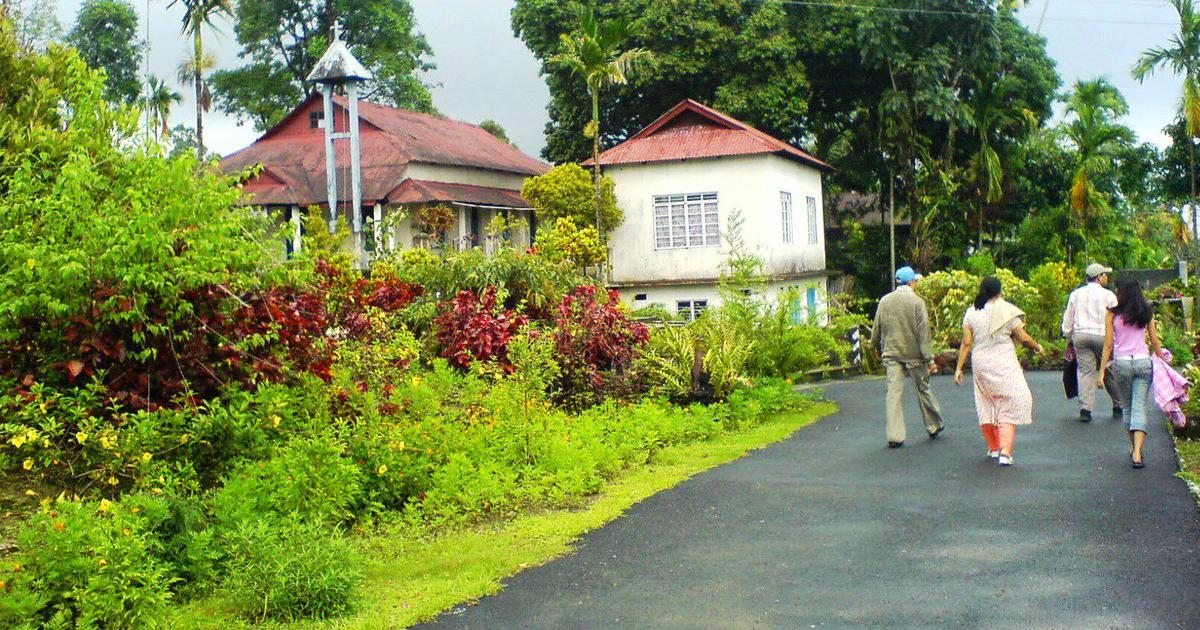
picture source: http://www.northeasttourism.gov.in

Kedia village

This Bihari village is an ecological village which practices organic farming and have prospered since then. Apart from that, the village has proper water conservation systems and cleanliness is maintained throughout the village. No one in the village is suffering from any kind of serious illness. Every house in the village has electricity supply and uses biogas to save electricity and fuel. All the farmers of Kedia village, followed the ‘Living Soils’ approach under ‘Food for life’ campaign’ run by Greenpeace. This approach is targeted to restore the ruined agricultural practices, by reducing chemical dependency and improve soil health through nourishment of the soil with biomass-based organic practices and materials. By applying scientific methods, existing knowledge and experiences the farmers successfully restored the soil of their village by coordination and collaboration with government for machinery. The villagers till date use only groundwater and lake water for irrigation. The unique toilets of the village households have no underground tanks so that the human waste can be used as a natural manure later on. The results have brought prosperity and happiness to the villagers by ending the dependence on commercial chemical-based materials and enjoying healthier yields with a up to 80% reduce in cost of inputs. The village organizes and celebrates a festival of organic farming called ‘Jashn-e-jaivik’. Greenpeace mentioned that they were able to make organic farming easier and successful in this village “With the help of many governmental schemes like ‘Swachh Bharat Mission’ and ‘Jaivik Krishi Yojana’ besides MNGREGA. Inspired by this, other villages around Kedia have also started adopting similar methods.

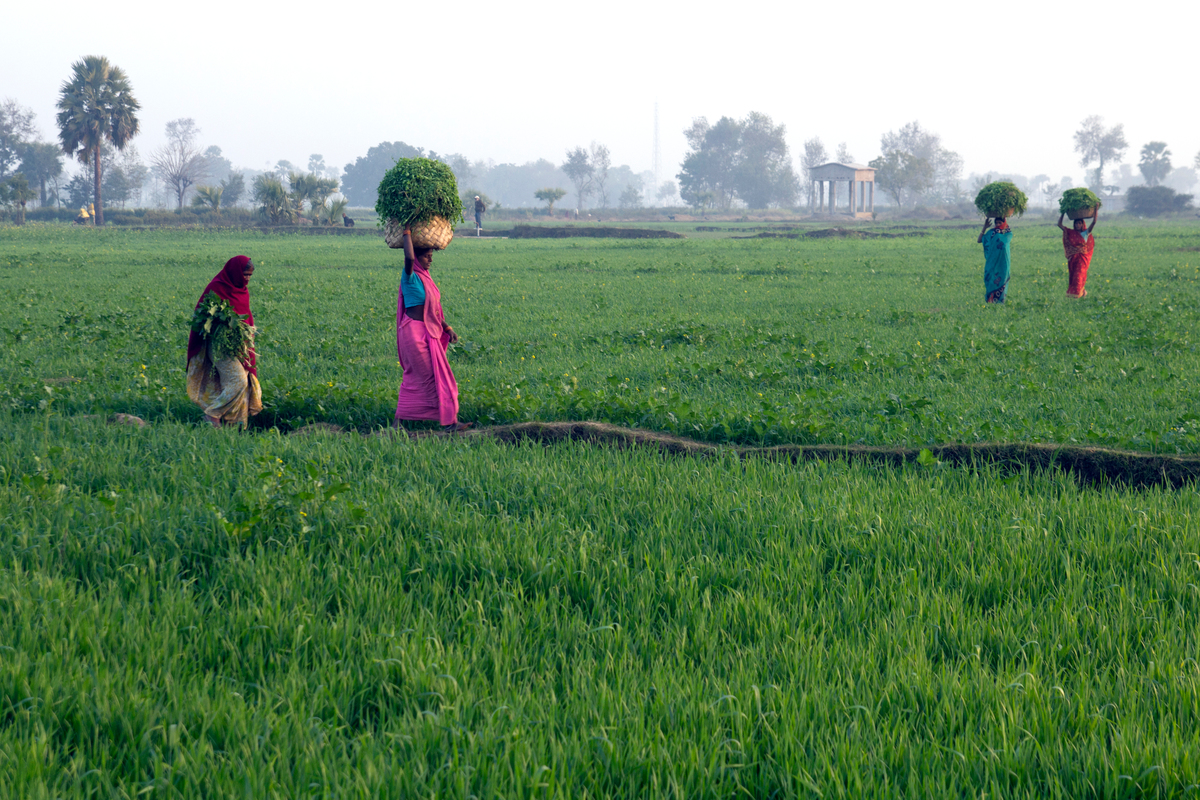
Picture sources: 1. India times, 2. Gaon connection and 3. Greenpeace.

The Author

Raising an ECO-FRIENDLY Generation

We as a generation were born with resources available to us at a switch of a button. But would that be the same considering our irresponsible usage?

Let’s make a few lifestyle changes and teach our kids to become eco-friendly and live in a sustainable environment and household.

  • WATER CONSERVATION:
Cropped image of woman putting toothbrush under water - Stock ...

Do not encorage your kids to take long showers. Teach them to take a bucket water bath and advice them on keeping the taps shut. If they brush their teeth with running tap water, show them how water is needed only while rinsing the mouth. Tell them the importance of water in our lives and how it is essential to survive.

  • PAPER WASTAGE:
Using Technology To Reduce Paper Waste - Food & Nutrition Magazine

Encourage your children to use both sides of the paper. Tell them how papers are made from trees and the importance of trees in our lives. Adopt paper savvy techniques like using of eco-friendly notebooks and e-newspapers instead of hardback papers.

  • PLANT TREES, INHALE FRESH:
How to start your own tree planting project — TreeSisters

Plant trees in your backyard with them. You can teach them the art of gardening and also tell them about compost pits. It is a good hobby for your kids to row up nurturing a living organism and to be compasssionate towards others.

  • BEST OUT OF WASTE:
Best Out Of Waste Ideas : Best Things Made From Car Tyres

Making interesting and useful objects at home from waste will be a good bonding activity. One can make creative items like newspaper wall hangings, old plastic bottles can be made into show pieces or pen stands,etc.Show them how to reusee than discarding and hence creating less wastage.

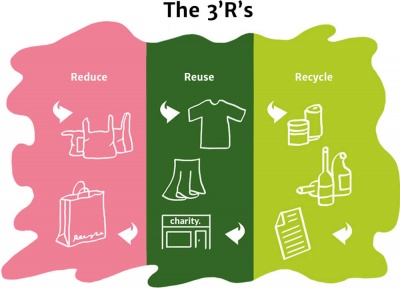
  • REUSE- REDUCE -RECYCLE:
Reduce, Reuse, Recycle - Knowledge Bank - Solar Schools

Use tote bags or bins when shopping, say no to the plastic shopping bag. Select packaging that does not have a lot of excess waste. Use dinnerware that can be washed instead of paper plates and plastic ware. Only buy things that you will use in the immediate future.

Give your discards a chance at a second life by holding a yard sale or donating items to Goodwill, the Salvation Army, Habitat for Humanity, or other charitable outlets.  Contact schools and nursery schools to find out different types of items they reuse for art projects.  Donate used books to the Library.  Several organizations take used cars and even boats. 

Organic Farming

Organic farming is an alternative agricultural system which originated early in the 20th century in reaction to rapidly changing farming practices. Organic agriculture is a production system that sustains the health of soils, ecosystems and people. It relies on ecological processes, biodiversity and cycles adapted to local conditions, rather than the use of inputs with adverse effects. Organic agriculture combines tradition, innovation and science to benefit the shared environment and promote fair relationships and a good quality of life for all involved. It is defined by the use of fertilizers of organic origin such as compost manuregreen manure, and bone meal and places emphasis on techniques such as crop rotation and companion plantingBiological pest control, mixed cropping and the fostering of insect predators are encouraged. Organic standards are designed to allow the use of naturally occurring substances while prohibiting or strictly limiting synthetic substances. 

Advantages of organic farming

  Reasons for advocation of organic farming include advantages in sustainability, openness, self-sufficiency, autonomy/independence, health, food security, and food safety. Organic methods can increase farm productivity, repair decades of environmental damage and knit small farm families into more sustainable distribution networks leading to improved food security if they organize themselves in production, certification and marketing. During last few years an increasing number of farmers have shown lack of interest in farming and the people who used to cultivate are migrating to other areas. Organic farming is one way to promote either self-sufficiency or food security. Use of massive inputs of chemical fertilizers and toxic pesticides poisons the land and water heavily. The after-effects of this are severe environmental consequences, including loss of topsoil, decrease in soil fertility, surface and ground water contamination and loss of genetic diversity..                                                                                              

How is organic farming different from conventional farming?

 While conventional agriculture uses synthetic pesticides and water-soluble synthetically purified fertilizers, organic farmers are restricted by regulations to using natural pesticides and fertilizers. An example of a natural pesticide is pyrethrin, which is found naturally in the Chrysanthemum flower. The principal methods of organic farming include crop rotationgreen manures and compostbiological pest control, and mechanical cultivation. These measures use the natural environment to enhance agricultural productivity: legumes are planted to fix nitrogen into the soil, natural insect predators are encouraged, crops are rotated to confuse pests and renew soil, and natural materials such as potassium bicarbonate and mulches are used to control disease and weedsGenetically modified seeds and animals are excluded.

While organic is fundamentally different from conventional because of the use of carbon based fertilizers compared with highly soluble synthetic based fertilizers and biological pest control instead of synthetic pesticides, organic farming and large-scale conventional farming are not entirely mutually exclusive. Many of the methods developed for organic agriculture have been borrowed by more conventional agriculture. For example, Integrated Pest Management is a multifaceted strategy that uses various organic methods of pest control whenever possible, but in conventional farming could include synthetic pesticides only as a last resort.

Nutrient management in organic farming

In organic farming, it is important to constantly work to build a healthy soil that is rich in organic matter and has all the nutrients that the plants need. Several methods viz. green manuring, addition of manures and biofertilizers etc can be used to build up soil fertility. These organic sources not only add different nutrients to the soil but also help to prevent weeds and increase soil organic matter to feed soil microorganisms. Soil with high organic matter resists soil erosion, holds water better and thus requires less irrigation. Some natural minerals that are needed by the plants to grow and to improve the soil’s consistency can also be added. Soil amendments like lime are added to adjust the soil’s pH balance. However soil amendment and water should contain minimum heavy metals. Most of the organic fertilizers used are recycled by-products from other industries that would otherwise go to waste. Farmers also make compost from animal manures and mushroom compost. Before compost can be applied to the fields, it is heated and aged for at least two months, reaching and maintaining an internal temperature of 130°-140°F to kill unwanted bacteria and weed seeds. A number of organic fertilizers / amendments and bacterial and fungal biofertilizers can be used in organic farming depending upon availability and their suitability to crop. 

Limitations of organic farming

  • Proponents of organic farming have claimed that organic agriculture emphasizes closed nutrient cycles, biodiversity, and effective soil management providing the capacity to mitigate and even reverse the effects of climate change and that organic agriculture can decrease fossil fuel emissions
  • Nitrogen leaching, nitrous oxide emissions, ammonia emissions, eutrophication potential and acidification potential were higher for organic products. Excess nutrients in lakes, rivers, and groundwater can cause algal bloomseutrophication, and subsequent dead zones. In addition, nitrates are harmful to aquatic organisms by themselves.
  • Organic farming requires 84% more land for an equivalent amount of harvest, mainly due to lack of nutrients but sometimes due to weeds, diseases or pests, lower yielding animals and land required for fertility building crops.While organic farming does not necessarily save land for wildlife habitats and forestry in all cases.
  • The variable nature of food production and handling makes it difficult to generalize results, and there is insufficient evidence to make claims that organic food is safer.

Planning Tank

Eduindex News tries to bring in focus organisations working for the betterment of the society and institutions providing quality contents and services to scholars.

We found that Planning Tank has a mission to create Happy, Healthy & Sustainable Human Settlements by means of education & awareness. They are active and providing quality educational resources for students, academicians & professionals covering their diverse needs. Scholars who are looking for articles to read on different topics of Urban Planning and the following sub aspects:

  1. Resources for Urban, Rural & Regional Planners
  2. Data Sources, analysis & presentation
  3. Geographic Information System (GIS)
  4. Academic Writing information
  5. Environment & sustainable development

Scholars can visit the site of the Planning Tank at https://planningtank.com/.

They keep on updating the latest information to the website and improving the existing information. The information provided is meant to cater to the needs of students, professionals, the general public, planning enthusiast alike. Apart from Urban Planning we frequently cover information related to:

  • Real Estate
  • Latest happening affecting human settlements
  • Job opportunity
  • Urban & Land Economics
  • Memes
  • Organizations & agencies dealing with Planning

Hope readers will be enrich themselves by visiting such resourceful forum. If you thing your organisation is working for the benefits of the scholars and community at large then let us know so that we can highlight their resource to our thousands of readers worldwide. For writing guest post and for informing about new and useful resources, write a mail to news@eduindex.org

We will try to give space in our News Portal free of charge. Keep reading and keep enriching yourself and keep helping others in getting good resources like Planning Tank.

Go back

Your message has been sent

Warning
Warning
Warning
Warning.

Impact of Climate Change on International Business Strategies…..

A recent KPMG report, highlights ten “sustainability megaforces” that will shape markets in the decades to come. The list includes population growth, energy and fuel, ecosystems decline, and material resource scarcity, among others. These interconnected trends will create risks and opportunities for business. In response, companies need new strategies, particularly for market impacts relating to what KPMG calls the “megaforce” influencing all others: climate change. Forward-thinking companies are starting to draw links between climate change and other major trends that impact business.

It is the demand of the era that businesses have to do their part in response to the threat of the climate change. Most of the large companies these days see to the managing of the greenhouse gas emissions. They also help in minimizing the level of energy consumption as an integral part of the environment based management practices. Many people have set the targets for the reduction of the greenhouse gas emission. One can work with the suppliers and the consumers for causing a reduction in the rate of emission.

One can consider climate change as the strategic issue. It is the logical conclusion that companies should seriously think about the risks related to the change in climate. This can cause possible danger to the various business opportunities. One should be able to predict in advance that how a change in climate can cause difference in business. Based on the thoughts and the predictions one can decide how to protect the business strategies from the possible climatic risks. This way, one can reduce the downside risks, and there can be augmentation in the upside opportunities.

2019 may be remembered as the year when climate change activism went mainstream. At the end of September, in a series of rallies timed to coincide with the United Nations climate summit, an estimated six million people in more than 180 countries took to the streets to demand far more action to cut greenhouse emissions. This was probably the biggest climate protest in history.  Protests in the form of school walkouts had taken place throughout the world for a whole year. The ‘Extinction Rebellion’ initiative has added a further edge by seeking to demonstrate the potentially catastrophic consequences of inaction.

Central banks and other supervisory authorities are now considering climate change as a risk to financial stability. This has led to the establishment of the Task Force on Climate-related Financial Disclosures (TCFD) in 2015, and the Network for Greening the Financial System (NGFS) in 2017. Both are concerned with enhancing the quality of climate-related awareness, risk management and transparency.

It is important for the companies to develop the sort of corporate data expertise and knowledge based on climate change. There are companies to go furthest in causing integration in the change in climate as part of the various business strategies. This however, can emphasize the amount of time and effort being invested in the testing of the new technicalities and the set of the inventive approaches. However, before making an investment, the companies should understand the several implications made in business.

Hence, the conclusion for the above lines would simply be that of cutting down greenhouse emissions, going green and using resources by means of sustainable development.

Refrences:-

arabessay.com

http://www.wri.org