Blast at mosque in Afghan city of Kandahar, atleast seven dead

A large explosion tore through a Shi’ite mosque in the southern Afghan city of Kandahar during Friday prayers, killing at least seven people and wounding 13, officials and provincial leaders said.

Qari Saeed Khosti said authorities were collecting details of the explosion, which took place days after a suicide bomb attack claimed by Islamic State on a Shi’ite mosque in the northern city of Kunduz that killed scores of people.

Photographs posted by journalists on social media showed many people apparently dead or seriously wounded on the floor of the mosque.

Nematullah Wafa, a former member of the provincial council, said the blast occurred at the Imam Bargah mosque and caused heavy casualties but there were no immediate confirmation of the number of dead and wounded.

The blast, coming so soon after the Kunduz attack underlined the increasingly uncertain security in Afghanistan as Islamic State has stepped up operations following the Taliban victory over the Western-backed government in Kabul in August.

Written by : Ananya Kaushal

Terrorism, Extremism, Radicalization

When a decision is made that fear, terror and violence are justified to achieve ideological, political
or social change, radicalization to violent extremism occurs’
Terrorism, radicalization and extremism are subjective concepts that have different meanings for
different people. Furthermore, their meanings are constantly evolving as they manifest
themselves in different ways in different parts of the world, exploiting new vulnerabilities,
technologies and approaches.
1.1. Terrorism
‘Terrorism is a complex and contested issue, as are the associated labels of extremism, violent
extremism and radicalization’
There is no single universally accepted definition for terrorism because the concept is invariably
political and cannot be framed in a manner that excludes the state. Most acceptable words to
understand terrorism are ‘acts committed with the objective of seriously intimidating a
population, destabilizing or destroying structures of a country or international organization or
making a government abstain from performing actions’.
1.2. Extremism
‘Violent extremist ideologies have found fertile ground in fragile communities characterized by
little access to development’
Extremism is generally understood as constituting views that are far from those of the majority
of the population. Accordingly, one definition describes extremism as ‘activities (beliefs,
attitudes, feelings, actions, strategies) of a character far removed from the ordinary’. Though this
is clearly a relative term which invites disagreement regarding benchmarks, it is broadly agreed
that extremist views are not necessarily illegal and do not automatically lead to violence or harm.
Indeed those with extremist views, who may also choose to observe extreme practices with no
impact on the civil liberties of fellow citizens, are rightly protected under fundamental freedoms
and human rights norms.
Extremism becomes a concern when those views threaten democratic and tolerant societal ideas,
or promote the use of violence to coerce their followers or to achieve their objectives. This form
of extremism is described as violent extremism, a term which remains contested, but which
generally refers to the creation of ideologically motivated or justified violence, as well as support
for such acts.
1.3. Radicalization
‘Radicalizer’s work by pointing to social, political and economic injustice around their followers.’
Like terrorism and violent extremism, radicalization is a contested term with various definitions.
It is commonly understood, however, as the social and psychological process of incrementally
experienced commitment to extremist political and religious ideologies. It does not necessarily
mean that those affected will become violent. However, when a decision is made that fear, terror
and violence are justified to achieve ideological, political or social change, radicalization to violent
extremism occurs.

Crisis in AFGHANISTAN

Photo by Pixabay on Pexels.com

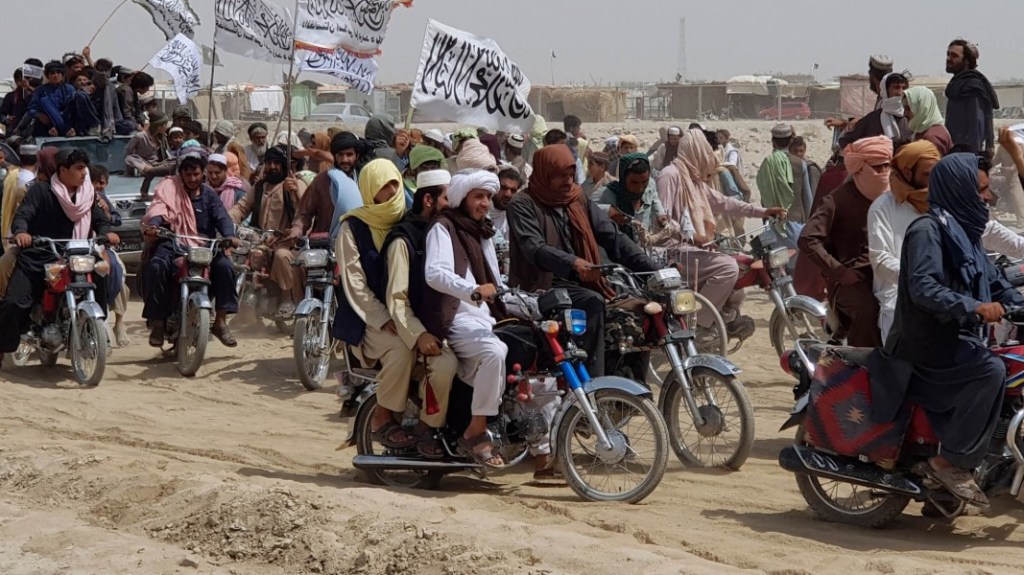
Now that the US army has pulled out from Afghanistan after spending 20 years there, the Taliban has taken control of almost whole of the country. HISTORY REPEATS ITSELF, and here history is repeating itself for the worst. Politicians have fled from the country leaving their countrymen to die and the civilians are in a state of panic. As Taliban has taken control from all the borders leaving no exit point.

What is Taliban

Taliban is the word for ‘student’ in pashto language. Ironically they have nothing to do with knowledge, at least on humanitarian basis. They emerged from the northern part of Pakistan in the early 1990s, they basically promised peace to the peope an to impose Sharia or islamic law, once in power. In September 1995, they started their rule by capturing Herat and then all the major cities one by one and by 1998, they had captured about 90% of Afghanistan.

They became popular as they finished corruption and lawlessness. They also introduced roads. But at the same time they implemented the Sharia law and gave punishments according to it, like public execution for murderers and adultration, amputating those, who were found guilty of theft. Girls were not allowed to go to school after the age of 10, women had to wear chaadri (burqa, covering whole body) when going out and they had to be accompanied by a man all the time, men too had to grow beard. Cinema, music and television were banned. women were not allowed to work even when their husbands died. Basically all their rights were taken away.

Read more about Afghanistan: https://edupub.org/2021/07/19/afghanistan-through-khaled-hosseinis-a-thousand-spendid-suns/

Major terrorist activities by Taliban

On 11 September, 2001 the world trade center was attacked and Taliban was accused of providing safety to Al Qaeda.

Malala Yousafzai was shot by the talibani terrorists as she refused to leave school and continued to study.

pic courtesy: shutterstock

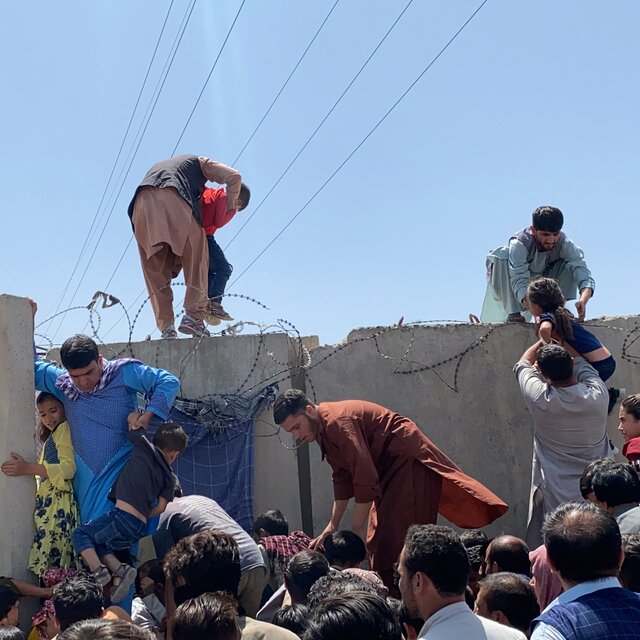
Disturbing images have been coming in from airport where people were rushing as their last hope of fleeing from there. It’s very saddening to see politicians leaving their people to die on the streets. Even though talibanis have said that the people need not be scared of anything but can we trust them?? Not really. Several videos have been surfacing on the net of dead bodies littered on roads. People are being dragged out of their houses, specifically those who have in any way helped American forces.
Residents are trying any possible way to get out of there but unfortunately the only exit left at last, the airport in kabul, has been shut off, shutting their last hope for now.

Photo by Disha Sheta on Pexels.com

Well, I hope for now at least the citizens will be safe and peace will be restored soon. The Afghanistan of 1960s-70s, where women enjoyed freedom and the country was progressing will be back. Children will play with toys and not guns, knowledge will be used as weapon and not violence.

TERRORISM

The term “terrorism” refers to deliberate acts of violence that result in the harm and death of innocent individuals while also instilling fear in society. The ultimate goal is to use force to bring about political change. Terrorism, on the other hand, has nothing to do with religion. A terrorist is a terrorist, regardless of whether he or she is Hindu or Muslim.

The term “terrorism” has approximately 10,000 definitions. Supporters may refer to a group as “freedom warriors,” while opponents may refer to it as “terrorists.” States frequently use the term “terrorism” to attack political opponents. The use of violence against noncombatants to garner notoriety for a group, cause, or individual is one type of terrorism. 

Types of Terrorism:

Terrorism can be classified into two types: political terrorism, which causes widespread alarm, and criminal terrorism, which involves kidnapping for ransom. Because it is carried out by well-trained individuals, political terrorism is far more dangerous than criminal terrorism. As a result, law enforcement officials will have a tough time apprehending them in a timely manner. Terrorism has expanded both domestically and internationally. The most dangerous form of terrorism is regional terrorism. Terrorists believe that dying as a terrorist is sacred and holy, and they are willing to go to any length to achieve this goal. These terrorist organizations were formed for various reasons. 

Impact of Terrorism in India:

Terrorism, as previously stated, has a significant influence on any country. It is much the more dangerous when we consider a developing country like India. First and foremost, it instils fear in the populace. People’s mental health is affected by bomb blasts or gunfire. As a result, a number of citizens die prematurely or become crippled. The anxiety and fear that one must live with severely restricts one’s ability to live. 

Terrorism also has a significant influence on tourism. The tourism industry will suffer a setback as travellers avoid regions that are prone to terrorist attacks. Tourism provides a significant portion of India’s earnings. When such incidents occur, tourists are also terrified. Those who intended to travel cancel their plans. Those who are currently there cut their trip short and depart. 

Terrorist attacks also cause international investors to be hesitant about investing in India. Who wants to invest in a country where terrorism is a threat? They choose safer alternatives rather than taking the risk. This is a major setback for India’s economy, which relies on them. As a result, the economy suffers as a result of this. As a result of the loss of life and property caused by terrorist attacks, the cost of replacement is significant. It also leads to people fleeing the country in search of a safer environment outside of the country. India will lose a large number of prospective physicians, engineers, artists, and other professionals as a result of this.

Major Terror Attacks in India:

Over the years, India has been subjected to a number of terrorist strikes. The deadliest of them all was undoubtedly the Mumbai terror strike on November 26th, 2001. Terrorists took control of well-known locations such as Nariman House, Hotel Oberoi Trident, and Hotel Taj. They killed about 170 people and injured more than 300 more. All of the victims were either cops, security guards, or tourists. The Mumbai Train Bombings killed a lot of people. They occurred on Mumbai’s local trains and at seven different railway stations. It killed 210 people and injured 715 others.

The attack on the Indian Parliament was likewise a shock. The parliament is one of the most secure structures in the world. Three members of the parliament and six police officers were killed by the terrorist. It’s still astonishing to think that such a secure location could be targeted. To summarise, terrorism must be removed in India in order for the country to be safe and prosperous.

Pakistan once again violated ceasefire. 2 soldiers martyrs.

In Jammu and Kashmir, elections to the District Development Council (DDC) are held in a few hours. But again Pakistan violated the ceasefire. In which 2 soldiers were martyred. The attack took place in Sunderbani sector of Rajouri. In which Prem Bahadur Khatri and Sukhbir Singh have been martyred.

Although this is not the first time. yesterday, terrorists attacked the patrolling troop of Srinagar’s security force from Pakistan. Due to which 2 soldiers were martyred. Three militants fired indiscriminately on the Baramulla highway in Srinagar. resulting in injuries to two soldiers. He was then admitted to the hospital and after that he martyred within a few hours. However, the entire area has been sealed. And the Indian Army has given a befitting reply to the terrorists. On November 28, the elections to the DDC of Jammu and Kashmir.

Terrorism In India : An Overview

The unlawful use of force or violence against persons or property to indimate or coerce a government, the civilian population, or any segment thereof, in furtherance of political or social objectives.

India has already been ranked among the top ten terrorism affected countries including states such as Jammu and Kashmir, Punjab, Tripura, Assam, Nagaland and Manipur. • There are other states also which have been victims of Naxalite terrorism.

 CAUSES OF TERRORISM IN INDIA

 • In India ,terrorism can be classified in 3 distinct parts: . Cross border terrorism in Jammu and Kashmir. . Terrorism in the hinterland. . Extreme violence and terrorism as an integral part of the ongoing insurgencies.

 • In a richly diverse society, politics of communalism and criminalisation, fanatic religious movements and irresponsible statements by political leaders, marginalised minority communities, high levels of youth unemployment, poverty, illiteracy etc. Provide an ideal fertile ground for terrorism to take root and thrive in India. India also remains highly vulnerable to terrorism by foreign terrorists, due to porous borders with all its neighbours and a long coast line.

 • As a result, the terrorists and insurgents continue to receive material support and funds from a number of sources.

 • India has experienced all kinds of terrorist attacks like hijacking and blowing up of aircrafts, the assassination of 2 of its prime ministers etc.

• Political cause: primary source of terrorism in India. For example, this ia primarily seen in Tripura and Assam. The political factors that resulted in terrorism included the failure of the government to control and manage large scale immigrants from Bangladesh.

 • Economic cause: Madhya Pradesh, Bihar, Orissa and Andhra Pradesh are prime examples. The economic factors include rural unemployment, exploitation of landless labourers by those who own land. These economic perceptions and grievances of gross social injustice have led to the rise of ideological groups of terrorists.

 • Religious causes: these are also primary sources of terrorism. In Punjab, some elements of Sikh belonging to different organisations shifted to terrorism to the development of an independent state known as Khalistan for Sikhs.

• State-sponsored terrorism: which consists of terrorist acts on a state or government by a state or a government.

 • Dissent-terrorism: which are terrorist groups that dissent against their government.

• Terrorists and the left and the right: which are the groups rooted in political ideologies.

 • Religious terrorism: terrorists groups that are extremely religiously motivated.

• Criminal terrorism: terrorists acts used to aid in crime and criminal profit.

Terrorism can undermine political moderation in a democracy, paving the way for more extreme elements to gain footholds. The death toll of a terrorist attack ,often inflicted in a spectacular way that draws media attention and leads to political criticism, can undermine faith in government.  The secular, pluralistic, ethnically diverse, and vibrant democracy that India has nurtured ever since its independence on 1947 has become the envy of many radical and extremist ideologies.

IMPACT OF TERRORISM

Firstly, it creates a state of panic amongst the citizens. The bomb blasts or firing impacts the mental health of the people.  Terrorist attacks create a sense of doubt in the foreign investors of India. This causes a huge blow to the business of India depending upon them. Thus, it damages the economy. As terrorist attacks cause loss of life and property, the replenishment takes up a lot of capital. There are political effects of terrorism in India. The killing of ex prime ministers of India, Mrs. Indira Gandhi and Mr. Rajiv Gandhi, by terrorists ,effected Indian politics and economy at large. Due to 26/11 Mumbai attack , Home minister Mr. Shivraj Patil, chief minister Vilasrao Deshmukh had to resign. This unstabilized the Indian industry.  The financial markets have been directly and indirectly the victims of terrorist attacks. In the aftermath of attacks, the financial markets were not only confronted with major activity disruptions caused by the massive damage to property and communication systems, but also with rising levels of uncertainty and market volatility.

STRATEGIES ADOPTED BY INDIAN AGENCIES FIGHTING TERROR.

NIA : A central government investigative agency to probe terror attacks in the country ,created by an act of the parliament of India on December 31,2008, following the Mumbai terror attack of November 2008. Full form is National Investigation Agency.

 • Intelligence agencies: There are a set of agencies responsible for fighting terrorism in India. A major agency utilized for gathering cross border information is the Research and Analysis wing(RAW)- the external intelligence agency. The Intelligence Bureau(IB), a division of the home affairs ministry is responsible for collecting intelligence information inside India

. • NATGRID: National Intelligence Grid is an intelligence grid interconnecting certain agencies of the government of India to collect and share intelligence that could be used by the intelligence agencies of various departments.

 • CAPF: Centre Armed Police Forces are used extensively in Maoist areas , Kashmir and North-east.

Terrorism in India poses a significant threat to the people of India. Ideologies and brain drain are among one of the important thing to keep in mind as causes of this crime. Terrorist attacks leave deterrent effects on society, political instability for the government and loss to the economy, in form of national and international business. Terrorism is very dangerous as it not only kills the human life but also the infrastructure, industry, ultimately damages its overall growth