

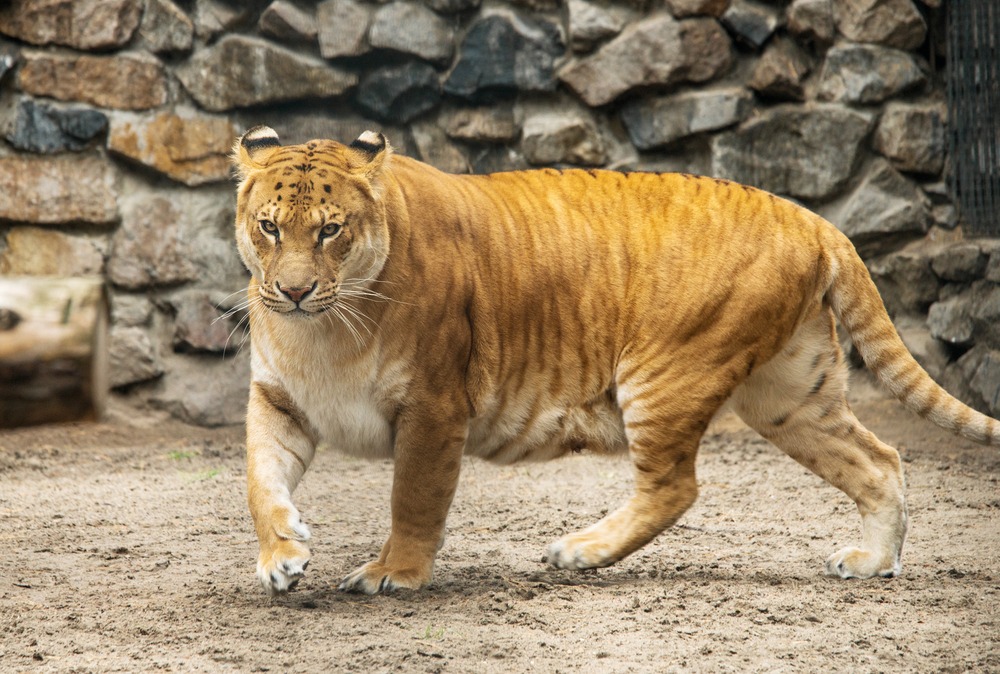
A hybrid is an offspring produced from the mating of parents from different species or sub-species. Albeit it is rarer, animals from distinct but closely linked species do mate in nature. The result, a genetic amalgam, an offspring with characteristics from both parents. Certain hybrids occur because of human interference, typically created to combine the finest qualities of both creatures, although they might have dire repercussions. Mentioned below are some of the most unique hybrids that exist on the planet.
Mule

Mules are the offspring of a crossbreeding between male donkeys and female horses. A mule’s size and look vary greatly from one to the next and is mostly dictated by their horse mother’s size and ancestry. Mules exist in a variety of sizes and shapes, including miniatures, smaller pony-types, tall and lightweight physiques, and even heavyweights. Mules have donkey-like limbs, narrower hooves, and short manes, but they are horse-like in height, neck length, tail appearance, and hindquarters, as well as color.
Female mules are 99.9% infertile, whereas male mules are all sterile. They can’t procreate, thus their existence is solely dependent on human assistance. Mules are sterile due to their odd number of chromosomes. Because a horse has 64 chromosomes and a donkey has 62, the mule inherits 32 horse chromosomes from the mother and 31 donkey chromosomes from the father, totaling 63 chromosomes. This inhibits the mules from producing gametes, which are required for male and female mules to produce offspring. Because their chromosomes do not match up properly, they have problems producing sperm or eggs.
Mules enjoy the best of both worlds as crossbreeding eliminates undesirable hereditary traits while passing on beneficial ones. They are tougher, eat less food, have a better immune system, live longer, and have greater stamina than horses of comparable size and height. Vulnerable to the same illnesses as horses and donkeys, they tend to get sick less often. Mules are clever and less obstinate than their fathers, donkeys. They are more vigilant and mindful of the danger, making them safer to ride through treacherous terrain. Mules have an average lifespan of 35 to 40 years.
Cama
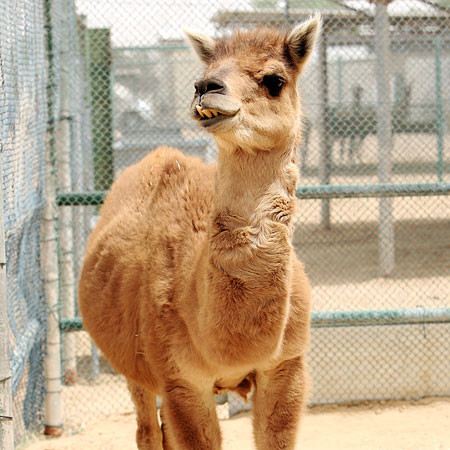
Cama is a cross between a dromedary camel from Asia and a llama from South America. Camels and llamas are distant relatives despite their variations in size, anatomy, and geographic distribution. They share a common ancestor, a camelid species that existed 30 million years ago in the Rocky Mountain region of North America. On January 14, 1998, the first cama was born. The goal with lama was to produce an animal that could yield more wool than a llama while still possessing the size, power, and cooperative attitude of a camel.
Because a mature dromedary camel can weigh up to six times that of a llama, the hybrid must be created by artificial insemination. Inseminating a female camel with llama sperm has not generated healthy offspring. The only successful combination is inseminating a female llama with dromedary camel sperm. Cama stands between 49 and 57 inches tall (at the shoulder) and has no hump on the back. They possess soft fur that is slightly shorter than llama fleece, small ears, a long tail, and cloven hooves. Just like camel, Cama is a herbivore, and can drink vast amounts of water at once, and survive without it for lengthy periods.
Liger
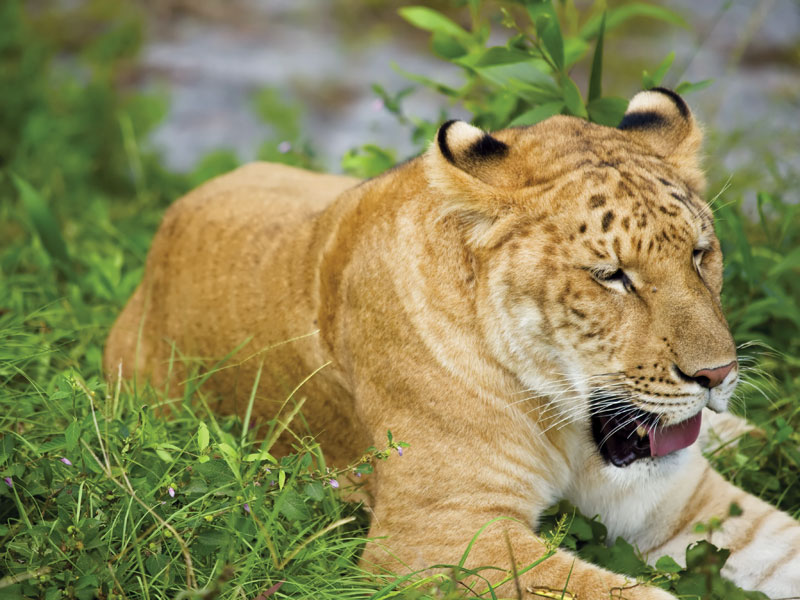
The liger is a cross between a male lion and a tigress, both of which belong to the genus Panthera but, are of the species Leo and Tigris. The liger is the world’s largest feline, reaching up to 12 feet tall while standing on its hind legs. Ligers are generally larger and heavier than their parents. The absence of specific growth-limiting genes, according to biologists, is the explanation of the liger’s enormous size.
Because ligers are often bigger than either parent, carrying the baby puts the tigress at risk, necessitating C-section deliveries or even killing her. These cats are genetically unfit and suffer from a life of neglect and isolation. Ligers are prone to obesity and aberrant growth, which puts stress on their internal organs and are prone to birth abnormalities that result in premature death.
Zonkey
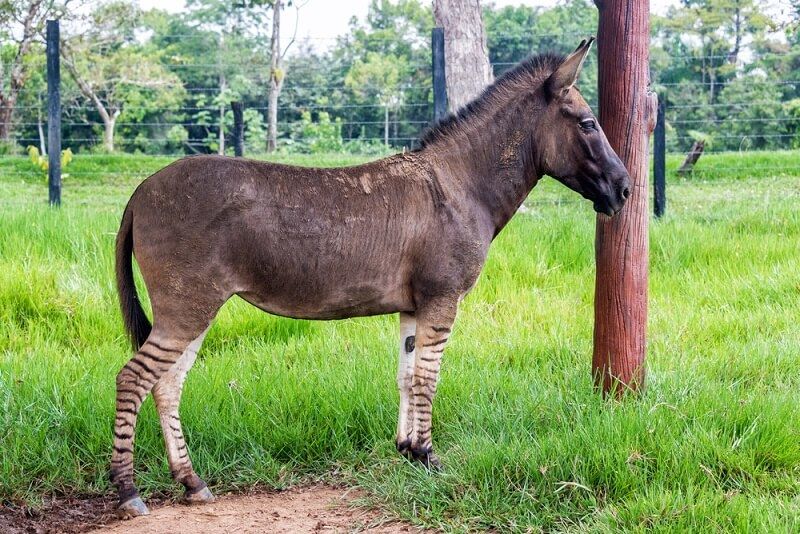
A “zonkey” is a male zebra crossed with a female donkey. Due to their power and stamina, zonkeys are bred for riding and as labor animals for transporting and carrying heavier things. They have the appearance of a little equine & their overall hue is tan, brown, or grey, with a lighter underside. The darker stripes of the zonkey are particularly visible on the lighter regions of the body and their legs. They have a black mane that runs the length of their back ridge to the tip of their tail, which is usually black as well. Their head and ears are both enormous, giving them the look of a donkey rather than a zebra.
Male zonkeys are sterile & cannot procreate, whereas female zonkeys are mostly infertile. The explanation for sterile hybrids is straightforward: It inherits an odd number of chromosomes. A zonkey is a hybrid between a zebra (44 chromosomes) and a donkey (62 chromosomes). As a result, the child’s chromosomal count is 53. Zonkeys are herbivores, Grass & plants that grow on the ground make up a great portion of their diet. For grazing and grinding down the fibrous grass, they have flat, broad teeth.
Wholphin

A wholphin is a rare hybrid born when a female bottlenose dolphin and a male false killer whale mate. On May 15, 1985, the first captive wholphin was born in a pool, which a female bottlenose dolphin and a male false killer whale shared. The wholphin is a blend of the parent species in terms of size, color, and shape. The bottlenose dolphin has 88 teeth, the fake killer whale has 44 teeth, and the wholphin, their hybrid, has 66 teeth, the average number of teeth of its parents.
Wholphin is a carnivorous creature. Its diet consists of fish like herring and capelin. They grow quickly, and only a few months after birth, they are the size of a one-year-old dolphin. Female wholphins are fertile and can create new offspring of wholphins after mating with dolphins. Wholphins have a 40-year average lifespan.

 Eduindex
You must be logged in to post a comment.