

In ancient times India was ruled by hindu kings, earlier the entire society was divided into four categories starting from higher to lower.
Brhaman were superior and were considered as gurus and mentors of the entire society. Second class was of Shatriya people; they were mainly sepoys and kings who ruled the kingdom, and their main work was fighting wars. Third class was of Vaishya people, they were Business men and were engaged in trade. The last class was considered the most inferior class, they were considered left out people and were not involved in any activity of the state, they were discriminated in many ways.
Later Mughals ruled over India and established their hegemony, rights of Indians were infringed by them, Mughals dominated over Indians, they established their political power and have influenced the Indian political history such that till today we study their rulers in the academics. They burnt all the evidences of Indian rulers, so that people could only come to know about them in future.
As the time of Mughal rulers ended. Britishers started coming to India; they ruled almost one century over the Indian subcontinent and had robbed the golden sparrow so brutally. They broke down the unity of the nation, used it as a weapon to establish their hegemony in India.
After the 1800s Indian people started realizing the need for freedom from the Britishers, and in 1857 a revolt took place which is known as the first struggle by the Indians for freedom. Later after the arrival of Gandhiji and various other social reformers. Finally after hard struggle on 15th August 1947 India got Independence from Britishers.
Though after getting independence from the Britishers it was not easy to make India as a whole, as independence resulted as a partition of Indian subcontinent into two- India and Pakistan as Muslim community demanded for the separate nation.
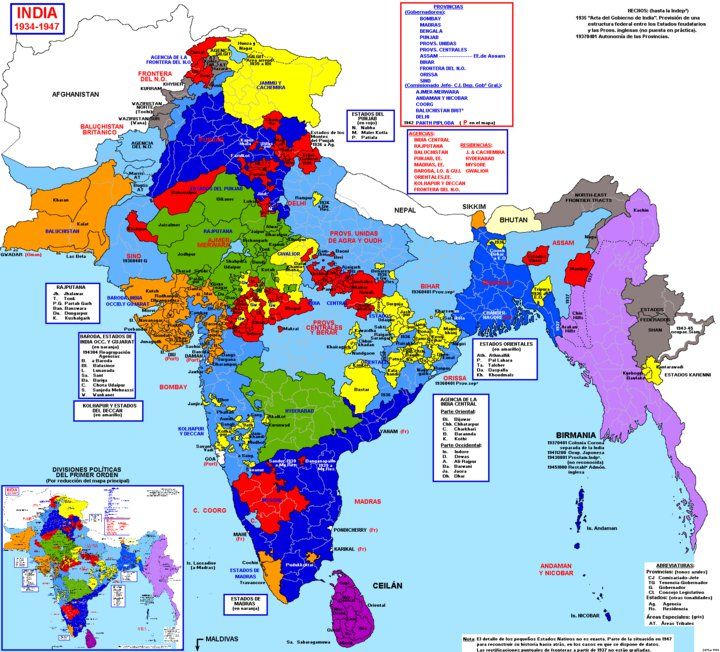
India consisted of 565 princely states before independence which worked separately. The task was to unite all these princely states of different culture, religion and tradition. Sardar Vallabh Bhai Patel emerged as a savior for India. He convinced all the Maharajas of princely state, still Maharaja of Kashmir and Nizam of Hyderabad want to make separate nation, they neither want to join India nor Pakistan.
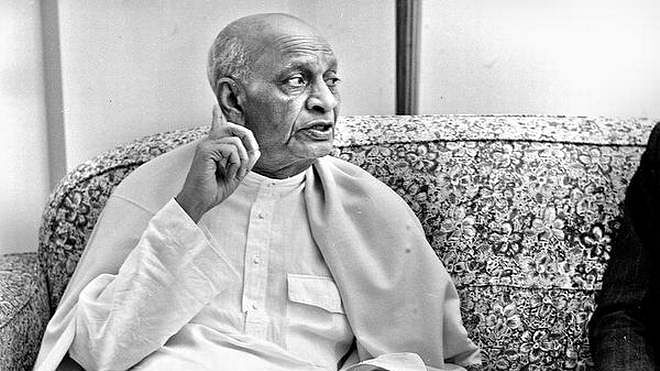
Finally Sardar Patel convinced both the princely state's Maharaja and Nizam and New India was formed. Sardar Patel is known as Iron Man of India, if he would have not interfered, the structure of India we can see today would be different.
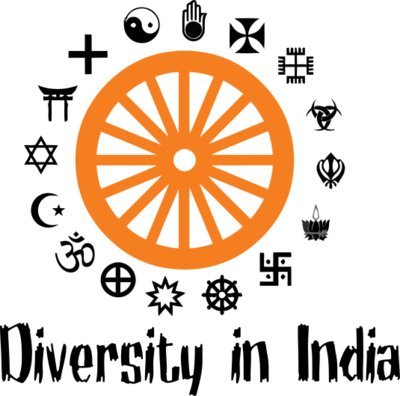
Today, India is the largest democracy of the world, with diverse culture and traditions. From North to South and East to West India is full of different colors of tradition, culture, living style, food, dance, dressing, festivals and many more.
Each corner of the country is unique within itself. In the whole world one will not find anywhere this much diversity at one place. India is famous for its diversity and culture.
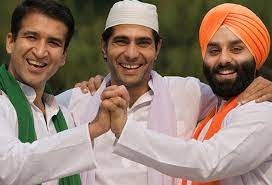
In India people of almost all religions are found, four major religions of the world were founded in India i.e Hinduism, Sikhism, Jainism and Buddhism.
In India since ancient times the majority of people were of the Hindu religion, others either migrated or converted themselves. Christianity was brought along with Britishers in India.
After Independence India adopted its own written Constitution on 26 January 1950 which today we celebrate as our Republic Day.
Under the Constitution India provides all rights to all religions equally without discriminating over any particular religion, culture and caste. All people of India follow one citizenship and identity of being Indian.
Therefore, India is well known globally for its title of 'unity in diversity'. All people of diverse cultures live under the shed of one Constitution and with one citizenship.
As earlier mentioned that Indian society was divided among four divisions and were discriminated on the basis of work of each caste, in order to uplift the economically and socially backward classes Indian Constitution provides some special privileges and rights to them. They are given reservation in all aspects, special laws were made for protection of their rights.
Earlier women in society were considered as inferior and were stopped from enjoying their basic rights and hence to improve the condition of women Indian Constitution provides special rights and reservation to them.
Among Indian population the majority of people follow Hinduism, hence one religion could not dominate over the entire society, special privileges are given to minor religion followers and are given equal rights in all the aspects.
Imagine what would have happened if we hadn't got independence? Even if we would get it, what if the framing members of Indian Constitution would have not given such privileges which are mentioned above to the socially backward classes, poor and to minorities, what if any of the religion would have dominated over the entire society? What if after independence the nation builders would have chosen any other form of government rather than democratic one?
India would have missed the title of 'unity of diversity' and such a respected identity in the world. As India is known for unity in diversity, thinking about oneness is like a nightmare.
If we see from bird's eye view India is still a democratic country, united where every section of society is enjoying all the constitutional, social and democratic rights, but deep inside at the ground reality people are not ready to accept these forms of administration.
The reality is people are still fighting and rioting on the name of religion, and the main tussle is among Muslims and Hindus, from partition this conflict began and still after 75 years it is continuing, not only the India and Pakistan, the Hindu and the Muslims of within country are fighting for establishing their power and hegemony.
Hindus want to make India as a nation of Hindus, they don't want any other religion to live here, Muslims want to make India as a Islamic nation, and same is with other religion followers. At the ground level both the religion followers have hatred in their hearts and minds towards each other.
Discrimination has not been ended yet, still people discriminate against each other on the basis of caste.
Politics is always like a mirage, what we see is something that never exists and so is with India, it may seem everything is going constitutionally and equally, but reality and truth can be experienced by observing the situation at ground level.
Let's hope that this nightmare of oneness in United and diversed India never becomes real. Even if it's seeming to be.
 Eduindex
You must be logged in to post a comment.