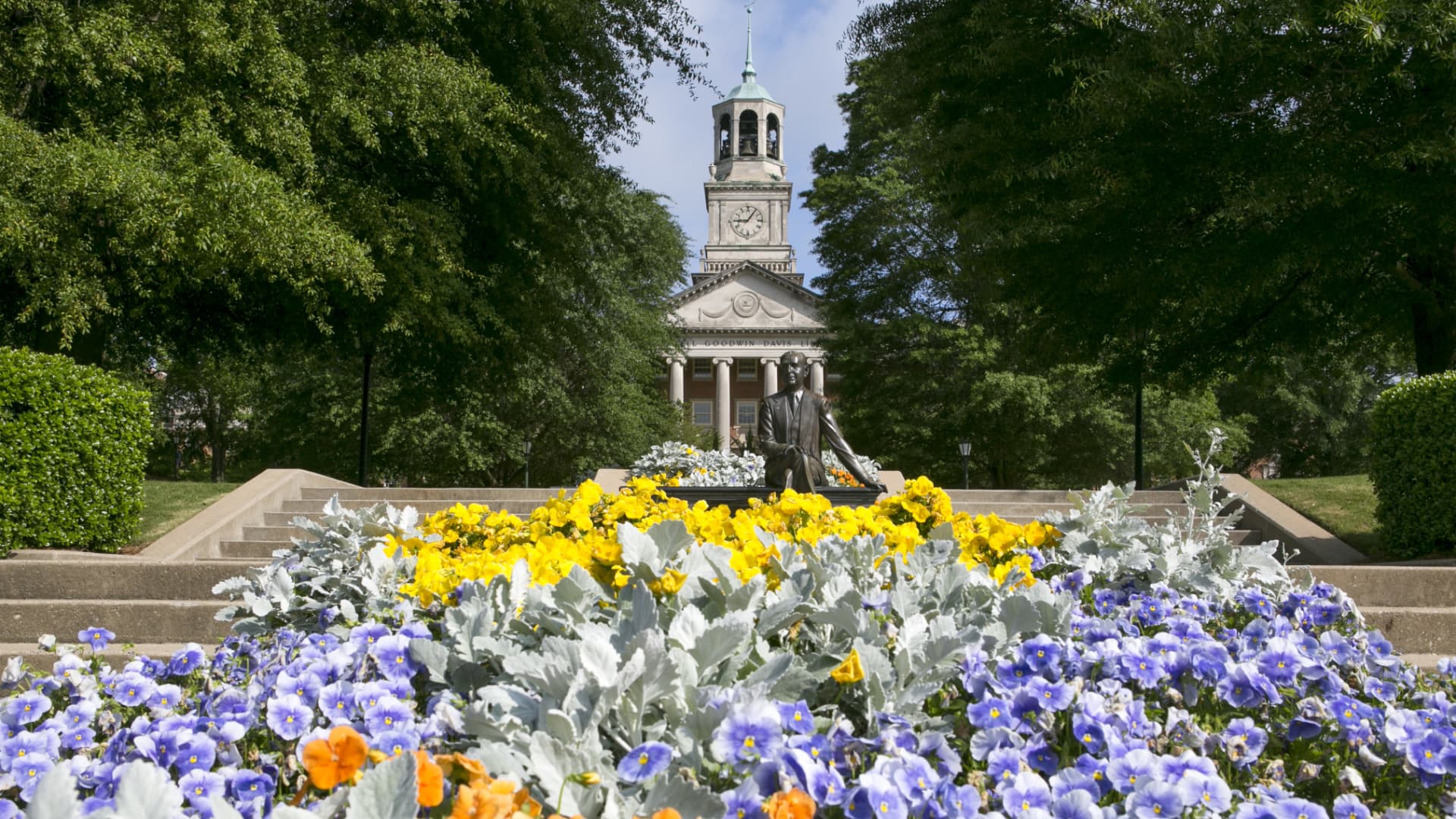
Tuskegee University


WHERE TO GIVE

Areas of Greatest Need

Your gift to Tuskegee University’s Annual Fund allows you to partner with the university’s senior leadership in addressing its most pressing and critical needs. As these needs arise, our leadership — guided by the priorities outlined in the university’s strategic plan — considers how best to apply your gifts in our academic and student life programs to ensure we can continue to offer our students a quality educational experience.

Your contribution to the Annual Fund in support of the areas of greatest university need can —and have, in the past — helped:

  • support non-capital student living and learning programs by funding classroom and lab activities
  • enhance learning and study programs offered through our tutoring programs, libraries and computer labs
  • underwrite faculty instructional needs and initiatives
  • expand academic programming, especially in support of STEM programs
  • develop and execute strategic student recruitment and retention programs by funding outreach by our recruiters, as well as on-campus recruitment programs like open houses and tours
  • increase our fundraising success by expanding our outreach to cultivate and steward new and existing donors

Capital Improvement

The university’s capital improvement program is guided by a 10-year comprehensive capital master plan — but made possible in large part by our donors who invest in our facilities.

Our 10-year capital master plan identifies and prioritizes the current repair and renovation needs of the 300-plus facilities the university owns and occupies. The plan also provides a framework for a phased strategy to address immediate and critical needs, such as expanding the availability of dormitory space, enhancing classroom and laboratory amenities, and renovating our athletic facilities.

Scholarships help turn the dream of a college education into a reality for our students. Scholarships can underwrite educational expenses ranging from f tuition, room and board, student fees, books and other required classroom materials.

Endowed Scholarships

When establishing scholarships, donors can specify the criteria they wish donors to satisfy to be eligible for the scholarship they create. This can include financial need-based requirements, academic merit-based scholarships, or scholarships that are awarded based on residency, high school or college activities, academic major and/or career aspiration.  

Endowments are vitally important to Tuskegee University because they provide permanent, self-sustaining funds that create stability, flexibility and opportunity for years to come. Endowments are created with a minimal philanthropic investment of $25,000 — either as an outright gift paid over time or through a planned or estate gift. Once established, your endowment is held permanently and invested along with other endowed charitable gifts. Its principal continues to grow and produce income in perpetuity for a designated purpose. 

Special Appeals

From time to time, the university will initiate a special fundraising appeal, which may align with an area of greatest need or around a special event like Homecoming or Founder\’s Day. 

Ways to Give — Make your gift today 

Recognizing our Generous Donors — Become an Eminent Associate

Office of Advancement and Development Staff

Office of Alumni Affairs Staff


University of Alabama


About the University

As the state’s flagship university, The University of Alabama family has always focused on being the best. This is where legends are made.

Founded in 1831 as the state’s first public college, The University of Alabama is dedicated to excellence in teaching, research and service. We provide a creative, nurturing campus environment where our students can become the best individuals possible, learn from the best and brightest faculty, and make a positive difference in the community, the state and the world. You’ll like what you find here. Become part of The University of Alabama family.

Administration

The University\’s leadership and structure.

History

Key events in the University\’s history.

Mission & Objectives

Teaching, research and service.

Policies

Ensuring UA best serves its community at large.

Strategic Plan

Energizing Alabama’s flagship by investing in its continued success and propelling it to new heights.

Traditions

Beloved places, symbols and songs.

Facts & Figures

The numbers tell the story – The University of Alabama is truly the Capstone when it comes to academics, athletics, service and research.

Doctoral Universities – Very High Research Activity status, Carnegie Classification

UA has achieved Doctoral Universities – Very High Research Activity status in the Carnegie Classification of Institutions of Higher Education.

News & Events

Find out what our students, faculty, staff and alumni are doing to make a positive difference on our campus, in our community and state, and around the world.

UA News Center

The latest campus news and announcements.

Events

Campuswide events calendar.

Troy University


Troy University

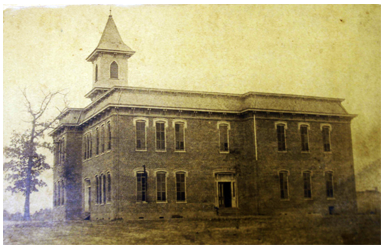
 Troy University’s tradition of teaching excellence dates to its founding on February 26, 1887, when an act of the Alabama Legislature established Troy State Normal School as an institution to train teachers for Alabama’s schools. Joseph Macon Dill was the institution’s first president. In 1893, the school was renamed Troy State Normal College.

First Building Downtown Troy, AL

The Normal College offered extension courses for teachers and granted teaching certificates until 1929, when the State Board of Education changed the charter of the institution and renamed it Troy State Teacher’s College. That same year, the college moved to its present site and the first two buildings were dedicated: Shackelford Hall, named for Edward Madison Shackelford, president of the school from 1899-1936, and Bibb Graves Hall, named for David Bibb Graves, Alabama’s “education governor.” Governor Bibb Graves is also remembered for commissioning the Olmsted Brothers architectural firm of Brookline, Massachusetts, to design the campus landscape plan.

Like many American universities, Troy State Teacher’s College enjoyed one of its most prosperous periods of growth in the years following World War II when returning veterans took advantage of the GI Bill. The enrollment of the College more than doubled and this growth led to the introduction of degree programs in disciplines other than education, most notably in business. In 1957, the State Board of Education recognized this expanded role and dropped “Teacher’s” from Troy State College’s name.

The decade of the 1950s also marked the University’s long relationship with the United States Military, as extension courses were offered on nearby bases, first at Fort Rucker, near Dothan, and later at Maxwell Air Force Base in Montgomery. A separate Troy State College teaching center was established at Fort Rucker in 1961, which evolved into the present-day Dothan Campus. A similar center, begun at Maxwell Air Force Base in 1965, led to the creation of the present-day Montgomery Campus. These programs were the forerunners of the modern TROY Service Centers division of Troy University, which operates all TROY teaching sites outside Alabama. In 1973, the University opened sites at military bases in Florida. Today, TROY Service Centers operate some 20 sites in seven U.S. states, at locations in Japan and South Korea, and partnerships with universities in Vietnam and Malaysia.

In 1967, Gov. Lurleen B. Wallace appointed eight members to the newly established Troy State College Board of Trustees, removing the institution from the control of the State Board of Education. One of the first acts of the new board was to recommend the change of the name to Troy State University. The new name became official on Dec. 14, 1967.

In 1975, the Phenix City Campus was opened as a branch of the main campus.

In 1982, the Troy State University System was formed, as the campuses in Dothan and Montgomery were granted independent accreditation status. In April of 2004 the Board of Trustees voted to drop \”State\” from the University\’s name to better reflect the institution\’s worldwide mission. Starting August 2005, all TROY campuses were again unified under one accreditation.

 VIEW HISTORICAL TIMELINE

University of South Alabama

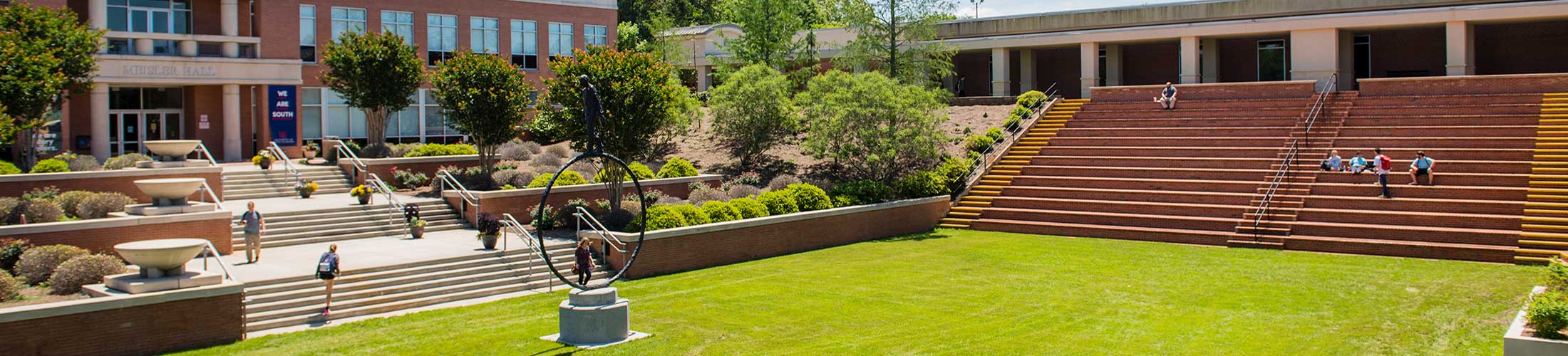
 We’re the University of South Alabama. South, for short. Home to more than 14,000 students and more than 100 academic programs, South is a dynamic community of leaders and learners who support and challenge one another to be actively engaged citizens who advance the Gulf Coast region and the world. Founded in 1963, South’s vision is to foster an environment that couples engaging learning experiences with high-level research, enabling our faculty and students to be leaders in their disciplines.

The unique and beautiful Gulf Coast region is a catalyst for discovery and innovation, and South’s 1,200-acre campus has been transformed over the past decade with new facilities and resources for teaching, housing and recreation, health sciences, the arts, engineering, computer science and athletics.

Jaguar athletes compete in 17 NCAA Division I sports, including baseball, basketball, cross country, football, golf, soccer, softball, tennis, track and field, and volleyball.

The coastal region is healthier because of the USA Health system. Through its five components — Children’s & Women’s Hospital, University Hospital, Mitchell Cancer Institute, USA Health Physicians Group and the College of Medicine — and supported by the College of Nursing and the Pat Capps Covey College of Allied Health Professions — USA Health provides care to hundreds of thousands of people, and is a training ground for future physicians and healthcare professionals.

The University has implemented a strategic plan that is organized around five major priorities: Student Access and Success, Enhancement of Research and Graduate Education, Global Engagement, Excellence in Health Care, and University-Community Engagement. These priorities are the guiding influence in developing a strong, consistent vision for the future of the University.

USA is a place where students discover and strengthen their career passions, and form connections that result in lifelong relationships. At South, we look at the world and see things that we have the power to change, affect and shape — together. So that’s exactly what we do, every single day.

We are South!


Samford University

 Samford University is a premier nationally ranked Christian university. Founded in 1841, Samford is the 87th-oldest institution of higher learning in the United States. Located in the Birmingham, Alabama suburb of Homewood, the university’s campus covers approximately 247 acres and is renowned for its beauty and Georgian-Colonial style architecture. The university currently enrolls 5,692 students from 47 states and 28 countries.

Samford is the top-ranked university in Alabama in national rankings published by The Wall Street Journal. Additionally, The Wall Street Journal ranks Samford third in the nation for student engagement. U.S. News & World Report ranks Samford 40th in the nation for best undergraduate teaching and 100th for best value. Kiplinger’s Personal Financeranks Samford 34th among U.S. private universities for value and affordability. The student-to-faculty ratio is 13:1.

Samford offers undergraduate programs grounded in the liberal arts and a distinct blend of graduate and professional schools through 10 academic schools: arts, arts and sciences, business, divinity, education, health professions, law, nursing, pharmacy, and public health. The university has one of three accredited law schools and one of only two accredited pharmacy schools in Alabama. Samford’s Beeson Divinity School is the only fully accredited graduate divinity school based in Alabama. The university is classified by the Carnegie Commission on Higher Education as a doctoral/professional institution.

Samford’s mission to nurture student development intellectually, ethically and spiritually is fostered through an array of opportunities, including 166 student organizations, global engagement in more than 19 different countries and more than 180 courses that incorporate community service. Additionally, undergraduate students complete Samford’s core curriculum, providing a well-rounded foundation in the liberal arts. The result is a highly-tailored educational experience that results in 97% of undergraduate alumni employed or in further study within six months of graduation.

Samford’s strategic plan expresses four focus areas: emphasize student success, enhance our community, extend our reach and ensure financial strength. To support the continued advancement of this strategic plan, the university launched in the fall of 2016 a capital campaign titled Forever Samford. The six-year, $300 million campaign is intended to provide new financial resources to support student scholarship, academic programs and capital projects. Samford maintains a strong endowment with investments totaling $301 million (June 2019), which helps support scholarships, study abroad opportunities, general operations and other programs. In addition to the main campus in Homewood, the university owns a house in Marion, Alabama used for cultural study and service, and the Daniel House, a study center located in the heart of London, England near Kensington Park.

Samford’s 52,838 alumni have included more than 60 members of the U.S. Congress, eight state governors, two U.S. Supreme Court justices, one U.S. Secretary of State, four Rhodes Scholars, multiple Emmy and Grammy award-winning artists, two national championship football coaches, and recipients of the Pulitzer and Nobel Peace prizes.

The university fields 17 intercollegiate sports—eight men’s and nine women’s—that participate at the NCAA Division I level. The Samford Bulldogs have won 40 conference championships since joining the Southern Conference in 2008. Samford’s athletic teams in the 2018-2019 academic year enjoyed a 97% Graduation Success Rate (GSR) as calculated and published by the NCAA. For that academic year, Samford was ranked first in Alabama and 18th in the nation for GSR among all colleges and universities in the NCAA Division I level.

Oakwood University

At Oakwood University we are dedicated to teaching with RESPECT and COMPASSION. We are dedicated to ensuring that our graduates enter the work force with strong commitment to INTEGRITY and a focus on EXCELLENCE. We are dedicated to instilling a sense ofcommunity in our graduates through numerous opportunities for Christ-centered SERVICE learning. We are dedicated to INNOVATION and COLLABORATION with our students through groundbreaking research and the latest technology. We are dedicated to you.

RESPECT

COMPASSION

INTEGRITY

EXCELLENCE

SERVICE

INNOVATION

COLLABORATION

God First! It’s not just our institutional aim, it’s the very core around which our identity, ethics, values, relationships, and curricula orbits. Whether it’s in the classrooms, dorms, the dining hall, on the campus green, or everywhere in between, we strive to put God first in everything we do. Simply put, it’s a way of life. So many ministries and mission opportunities to choose from, such as choirs, drama clubs, outreach and mission groups—you can be an active partner in ministry here. Use your talents and discover new ones as together, we seek to serve God and our fellow man.


For years, Oakwood University has consistently been ranked by the U.S. News & World Report as one of the best regional colleges and universities to attend. With over 58 different majors, divided across five different schools from which to choose, our students are equipped with the tools they need to become leaders of industry in their fields. Our students receive an education that is further augmented by strategic partnerships that have produced internships and other opportunities with numerous leading corporations, nationwide. Our passionate faculty not only make learning a rewarding experience but also maintain supportive relationships for years after students have graduated. Come and experience an academic learning environment that is unlike any you could have imagined.

Oakwood is regionally accredited by the Southern Association of Colleges and Schools Commission on Colleges to award associate, baccalaureate, and master’s degrees. In addition, the following programs are further accredited through national and professional associations: Business, Dietetics, Social Work, Education, and Nursing.next traffic light after Jordan Lane, which is Adventist Blvd. Proceed to campus entrance on the right.

Auburn University at Montgomery


About Auburn University at Montgomery

Founded in 1967 and located in Alabama’s capital city, Auburn University at Montgomery has distinguished itself as the college of choice for students in Alabama’s River Region and beyond.

In 2019, Auburn University at Montgomery earned a No. 33 ranking among regional public universities in the South from U.S. News & World Report. AUM was also recognized by U.S. News as the most ethnically diverse campus in Alabama and the 13thmost diverse in the South region with more than 40 nationalities represented. AUM also earned recognition from The Princeton Review as one of the best colleges in the Southeast and is the only River Region university to be designated a “Military Friendly School” by Victory Media.

It’s no wonder that Auburn University at Montgomery emerged from a crowded field of competitors to earn the Montgomery Advertiser Reader’s Choice Award in 2019 as the top university in the region for the second consecutive year.

Accredited by the Commission on Colleges of the Southern Association of Colleges and Schools, AUM offers more than 90 undergraduate and graduate degree programs and certifications. Students can join us on our verdant, 500-acre campus, learn at their convenience in an online setting or experience a blend of both through hybrid course delivery.

If it inspires you or defines who you want to be, you’ll find it in one of our five colleges – College of Business, College of Education, College of Liberal Arts and Social Sciences, College of Nursing and Health Sciences, and the College of Sciences. We offer programs that are unique among our regional peers, including Geographic Information Systems, Hospitality and Tourism, Homeland Security and Emergency Management, and Cybersystems and Information Security.

Our students receive in-depth knowledge and practical experience from award-winning faculty members whose academic expertise is often enriched by industry experience. Best of all, with a student-to-faculty ratio of 17:1, your professors will know your name. Nearly 50 percent of our classes include 20 or fewer students, which feeds into a personalized and engaging learning experience.

We also pride ourselves on making a high quality education more affordable. Nearly 40 percent of AUM students earn scholarship assistance of some type, including scholarships designated for incoming freshmen, transfer students, international students, graduate students, and active duty military, veterans and their dependents.

We offer a diverse, close-knit and active campus community with more than 70 student clubs and organizations, and an athletic program that is flourishing as a new member of NCAA Division II membership and the Gulf South Conference.

If you’re ready to soar to new heights, join the Warhawk Nation today!

AUM – Just the Facts

Founded

1967

Our Mission

The mission of Auburn University at Montgomery is to provide quality and diverse educational opportunities at the undergraduate and graduate levels through use of traditional and electronic delivery systems, and to foster and support an environment conducive to teaching, research, scholarship, and collaboration with government agencies, our community, and other educational institutions.

Our Vision

Auburn University at Montgomery strives to be a university that …

  • Is known for its commitment to developing dynamic and applied academic and research programs.
  • Is a student’s first choice in a variety of programs of distinction.
  • Embraces and builds an international presence at home and abroad, increasingly known for its ability to prepare students to thrive in a global community.
  • Graduates students who become engaged alumni with a life-long interest in and personal connection to AUM.
  • Is recognized as an integral community partner and a resource for the enrichment and economic development of the Southeast region and beyond.

Our Values

What do we believe in? Auburn University at Montgomery values and promotes the following:

  • A student-centered experience
  • Citizenship and community engagement
  • Excellence as our standard
  • A commitment to constant improvement
  • Diversity of people and perspective with a culture of inclusiveness
  • Lifelong learning
  • An environment of collaboration

University Leadership


Auburn University

 Auburn University has developed into one of the largest universities in the South, remaining in the educational forefront with its traditional blend of arts and applied science and changing with the needs of today while living with a respect for the traditions and spirit that are Auburn.

Auburn History

Chartered in 1856, Auburn University opened in 1859 and has had four official names.
The university started out as the East Alabama Male College, a Methodist institution. Classes were first held for 80 students with a faculty of six in 1859 at the East Alabama Male College, a Methodist institution. In 1872, the college became a state-owned, land-grant institution and was renamed the Agricultural and Mechanical College of Alabama, changing from a private liberal arts school to a state-supported college with emphasis on new scientific and agricultural programs. As expansion continued, the Alabama Legislature decided in 1899 that a new name was needed to reflect the institution’s growth, and the college became the Alabama Polytechnic Institute. As Charles Thach, the university’s sixth president, stated, “The Alabama Polytechnic Institute, a high sounding phrase, is fit for legal documents and grave legislation, but not to conjure with and not to yell and not to dream with as is fair.” The Legislature agreed, and in 1960 the Alabama Polytechnic Institute became Auburn University.

Auburn Family Traditions

Auburn University\’s core traditions are passion and spirit. These are the hallmarks of the Auburn Family, and you would be hard-pressed to find a program more steeped in tradition. It\’s great to be an Auburn Tiger. War Eagle!

Vision and Mission Statement

Auburn University will emerge as one of the nation\’s preeminent comprehensive land-grant universities in the 21st century. Central to all its functions will be the University\’s historic commitment of service to all Alabamians as the State becomes a part of a global society with all of its challenges and opportunities.

Doing Business with Auburn

Auburn University makes significant contributions to the Alabama economy. Graduates provide knowledge and leadership for state industries and researchers develop new products and discover new ways to improve productivity. Through outreach, faculty work directly with clients to provide information and to solve problems.

Athens State University

 Friendly, affordable, and convenient – three hallmarks that make Athens State University a great place to continue your education.

At Athens State, we understand that career opportunities rest on your college education. Over 3,000 students each semester select Athens State because of this neighborly environment where over 50 different degree programs are taught by understanding and quality faculty.

Whether you work full or part-time or whether you are a full-time student, Athens State offers a course schedule to meet your needs whether it be day, night, weekend or distance courses. Because nearly every student is from North Alabama or Southern Tennessee, you will literally attend class with people you know. Don’t find yourself being just another student number. Consider Athens State University!

Campus Buildings

Beaty-Mason House

Beaty-Mason House photo | Beaty-Mason House – 1882 photo


Built in 1826 by the founder of Athens, Robert Beaty, the Beaty-Mason House is listed on the National Register of Historic Places. The house, a few blocks south of the main campus, served as the home for four generations of the Beaty-Mason family before being purchased and renovated by the University in 1958 to serve as the President’s residence. It is currently undergoing extensive renovations.

Back to top

Brown Hall

Brown Hall photo | Brown Hall – 1909 photo


Completed in 1912, Brown Hall formerly housed the offices of the Provost/Vice President for Academic Affairs, the Associate and Assistant Vice Presidents for Academic Affairs, and Institutional Research. Brown Hall is named for Florence Brown, a teacher who cared for those affected by a 1909 campus typhoid epidemic. Miss Brown lost her life as a result of her efforts, and her parents donated funds in her memory for the building of Brown Hall as a new women’s dormitory. The building is listed on the National Register of Historic Places.

Back to top

Bullington House (President’s Home)

Bullington House photo


Currently serving as the President’s Home, the Bullington House was built in 1910 on the corner of Bryan and Beaty Streets on what was originally a portion of the estate of the McConnell family. The house, an example of the Free Classic architectural style, was purchased by the University in 2006 and was originally used for administrative offices before becoming the President’s Home in 2010.

Back to top

Carter Physical Education Center

Carter Physical Education Center photo


Built in 1965 and originally serving as the hub for the University’s athletic programs (which were discontinued in 2004), the Center is named for former Alabama State Representative Tommy Carter and his wife JoAnn in recognition of their support to the institution. The Center houses classrooms, the Athletic Museum, and the Delmore Brothers Collection. In addition to its use for physical education activities, the Center gymnasium is used for graduation exercises and for a variety of meetings and community events.

Back to top

Chasteen Hall


Chasteen Hall, just off the main campus on the corner of Clinton and Hobbs Streets, currently houses the offices for the Adult Degree Program and the Testing Center, as well as various classrooms and computer labs. The building is named for Dr. James R. Chasteen, President of Athens State (1981-1990), and his wife Melba. Originally owned by then Athens College, the building was sold and served as both a grocery store and a hardware store for many years before being repurchased by the University.

Back to top

Classroom Building

Classroom Building photo


The Classroom Building, housing a student lounge, and interactive and multi-purpose classrooms, was completed in the fall of 1998. In 2019, the Building also became the home for Academic Technology Services, the Technology Helpdesk, and lounges for faculty & students.

Back to top

Founders Hall

Founders Hall photo | Founders Hall – 1923 photo | Founders Hall – 1902 photo | Founders Hall – 1898 photo | Founders Hall – Chapel Carvings


Founders Hall currently houses the Office of the President, offices for Financial Affairs, and faculty and staff offices for the College of Arts and Sciences. The iconic building of the University, Founders was built in 1842 by the Tennessee Conference of the Methodist Church on five acres of land donated by the Maclin/Hobbs family. This era of the institution represents the transition of the institution’s control to the Conference from the private female academy first established in 1822. A variety of additions completed over the years have tripled the dimensions of the original building. In addition to the various offices, Founders also houses a parlor and chapel, and is listed on the National Register of Historic Places.

Back to top

Freehauf House


At 415 Hargrove Street on the northeast corner of the campus, the Freehauf House contains the offices for the Director of Physical Plant and the Coordinator for Physical Plant Support. Built in 1920, the Freehauf House was purchased by the University in 2005.

Back to top

Kares Library

Library photo


The Athens State University Library opened in 1996, with the majority of the funds for its construction coming from private donations. In addition to the Library collection and offices, the building houses the University Writing Center, a Learning Commons area, and the Dr. Elva Bell McLin Archives Room.

Back to top

Maintenance Building


Completed in 1986, the Maintenance Building is located just off Hobbs Street on the east side of the campus. The building houses offices for physical plant staff, shipping and receiving areas, and equipment storage areas.

Back to top

McCain Hall

McCain Hall photo | McCain Hall – 1962 photo


Currently home to offices for faculty and staff in the College of Education, McCain Hall was completed in 1962. McCain Hall underwent a complete renovation and was rededicated in 2011. Originally serving as a women’s dormitory, the building is named for Dr. Virgil B. McCain, President of the institution from 1959 until 1965.

Back to top

McCandless Hall

McCandless Hall photo | McCandless Hall – 1915 photo


Housing the University Auditorium and serving as a facility for concerts, plays, and lectures for the campus and community, McCandless Hall was built in 1912 and is listed on the National Register of Historic Places. The Hall underwent a complete renovation in 2013 to both restore original features and add modern facilities to ensure equal access for patrons. The Auditorium features a tracker-action pipe organ dating back to 1892.

Back to top

Patton House

Patton House photo


Currently on loan to the Athens-Limestone Children’s Advocacy Center, the Patton House at 413 Hargrove Street was purchased by the University in 2006.

Back to top

Sanders Hall

Sanders Hall photo | Sanders Hall – 1945 photo


Currently home to offices for faculty and staff in the College of Business, Sanders Hall was built in 1921; a total renovation was completed in 2010. Originally a women’s dormitory, the Hall is named for Col. W. T. Sanders, who presided over the institution’s Board of Trustees from 1896 to 1921.

Back to top

Sandridge Student Center

Sandridge Student Center photo | Sandridge Student Center – 1924 photo


Serving as the primary center for students and student support services, the Sandridge Student Center was built in 1967 on the foundation of the 1918 gymnasium and swimming pool. The Center was named for Dr. Sidney E. Sandridge, President of the institution (1970-1981), upon his retirement. In addition to a student lounge area, coffee shop, and cafeteria, the Student Center houses the Offices of Admissions, Student Records, Student Financial Aid, the Transfer Advising and Career Development Centers, Disability Services, and the University Bookstore.

Back to top

Security Office

Security Office photo


Once known as the “Little White House”, this small cottage just south of Founders Hall now houses the offices of Campus Security. The structure has served many purposes through its history, including use as a Greek house and for faculty housing.

Back to top

Smith House

Smith House photo


Located at 433 East Pryor Street, the Smith House is home to the offices for the Vice President of University Advancement, the Director of Development, and Alumni Affairs. The Smith House was purchased by the University in 2005.

Back to top

Waters Hall

Waters Hall photo | Waters Hall – 1991 photo


Currently housing classrooms, science labs, and offices for College of Arts and Sciences faculty and staff, Waters Hall was completed in 1957; an expansion and total renovation was completed in 2010. The building is named in honor of Mr. N. H. Waters, who was President of the institution’s Board of Trustees in 1957, and a loyal supporter of the institution.

University of Arkansas


About UAFS

The University of Arkansas – Fort Smith offers a rich, vibrant learning environment for nearly 7,000 students each semester. Small class sizes allow students the opportunity to collaborate with their professors and peers and develop life-long professional connections with faculty who are experts in their fields. 


With more than 60% of students arriving at UAFS from Sebastian and Crawford counties, the university is uniquely involved in the development of the region and exceptionally dedicated to advancing its quality of place.


UAFS aims to build its reputation as a regional destination for high-quality, affordable education, where diverse groups of aspirational students and faculty thrive and excel. 


UAFS offers 51 bachelor’s and associate degrees, two master’s degrees, and 36 certificate programs, all aimed at preparing students to explore, innovate, and compete in the global workforce. An intentional focus on increasing evening, weekend, and online course options has afforded more access to adult learners, full time working students, and military and veteran students. 


With state-of-the-art on-campus and digital-learning facilities, industry-standard training instrumentation, and cutting-edge research technology, UAFS offers students up-to-date, hands-on education focused on the future.


From application to commencement, UAFS also offers unrivaled support for students through comprehensive, one-on-one academic advising, innovative preemptive student support analysis, and a student-centered philosophy that has defined the institution since its founding in 1928.


UAFS students can participate in more than 100 student organizations, including dynamic Greek life, intramural sports, academic societies, and cultural groups. For students who want to live in the heart of campus life, UAFS offers two residence halls with a full-service dining hall, as well as an apartment complex for upper-level students. The Lions and Lady Lions compete in NCAA Division II baseball, women’s volleyball, and men’s and women’s basketball, tennis, cross country, and golf.


UAFS is one of 21 academic institutions and affiliates governed by the University of Arkansas System board of trustees and administered by the president of the system. System offices are located in Little Rock. As a public university, UAFS is overseen by the

Arkansas Department of Higher Education.


Quick Facts About UAFS

Name: University of Arkansas – Fort Smith


Founded: 1928


Location: Fort Smith, second-largest city in Arkansas, population 86,209 (Ref: Census 2010)


Chancellor: Dr. Terisa C. Riley


History: Fort Smith Junior College (1928) / Westark Junior College (1966) / Westark Community College (1972) / Westark College (1998) / University of Arkansas – Fort Smith (2002)


School colors: Navy, white and burgundy


Mascot: Numa the Lion


Campus: 170 acres / 77 campus buildings and facilities / 1.16 million building square feet maintained


2019 fall enrollment: 6,229


Student-to-faculty ratio: 18-to-1


Academic programs:  51 bachelor’s and associate degrees, 36 certificates, and two master’s program


Student activities: More than 100 registered student organizations such as Greek life, intramural sports, academic societies, and cultural groups


Athletics:  NCAA Division II, Lonestar Conference

University of Alaska


About UAF

Inspiring discovery. Inspiring greatness. Inspiring, 

naturally.

There are places in this world where you are destined to discover who you truly are. Here at the University of Alaska Fairbanks, as wisdom passes from one generation to the next, revolutionary ideas are thriving and a new academic culture is taking shape. Smarter questions. Better answers.

With undergraduates making up 89 percent of the total student body, UAF is a hotbed of diversity and fresh thinking. Whether you\’re returning to school to start a new phase of your life or coming in as a recent high school graduate, you\’ll quickly make new friends with a similar drive to achieve. And, because our backyard is the vast environmental laboratory of Alaska, UAF attracts exceptional individuals — academic superstars and adventure-seekers alike.

With seven campuses across the state, we are home to more than 8,500 students from all over the world — each in pursuit of something extraordinary. Whether you\’re looking for a greater sense of purpose or a true sense of belonging, the UAF community lives authentically, believing that life is what you make of it, that knowledge is indeed power, and that a natural curiosity about the world around you will always be your best GPS.

Welcome to the University of Alaska Fairbanks — it may feel like you\’ve journeyed far, but in fact, this is where it all begins.


University of Alaska

How to apply

Going to college in Alaska is only a few steps away

APPLY FOR ADMISSION
Apply to your university of choice. Each institution has an admissions application to complete and submit online. You will need to setup a new user account if you don’t already have one. There is usually an application fee, so be ready to make payment when you apply. Applications, information and contacts for help can be accessed through the admissions links below.

GET ACADEMIC ADVISING
An academic advisor is your guide to college, connecting you with a program and helping you find the tools you need to succeed. You should meet with an advisor as soon as possible after acceptance to the university to help plan your academic journey.

INVESTIGATE FINANCIAL AID
Unless you’re a millionaire you probably need help paying for classes, books and fees. Your college costs will depend on what school you select, how many classes you want to take, and for how much aid you qualify. The Free Application for Federal Student Aid, or FAFSA, is required for federal, state and privately funded student loans and scholarships in Alaska. Fill it out at fafsa.gov early to take advantage of the most funding opportunities. There are hundreds of scholarship opportunities for University of Alaska students. Explore them online viaAcademicWorks.

REGISTER FOR CLASSES
Class registration begins in early April for the the fall semester, early November for the spring semester and early February for summer semester.

JUST WANT TO TAKE A CLASS?
If you are not intending to seek a degree you can register for a class through UAOnline.

MORE APPLICATION/TRANSFER ASSISTANCE:
The new My Future Alaska gateway provides prospective students transfer checks, guided transfer pathways and campus profiles (which include information on general education requirements, admission guidelines, and more) and a cost calculator for financial planning.
Admission Requirements

Admission requirements vary depending upon the course of study and university of choice. There may not be any requirements to just take a class, but admission into certificate, bachelor, or graduate programs does require meeting institutional requirements.

For the best information and to submit an application, please visit the admissions websites for the university you wish to attend.

For the best information and to submit an application, please visit the admissions websites for the university you wish to attend.


Academy of Art University

About Us

Since 1929, artists and designers have called Academy of Art University their home. Founded in San Francisco and family owned, it is one of the largest private, accredited art and design schools in the nation.

We are first and foremost a professional school—a specialized place that helps you master your craft as you prepare for professional roles as artists and designers. Our hands-on, no-nonsense curriculum is taught by some of the finest minds working in today’s creative and innovative industries. They will help you develop your talent and acquire skills sought by the creative marketplace.

All are welcome here. Our inclusive admissions policy is rare among art schools. We’ve found that our students’ potential doesn’t depend on their past elsewhere, but on their future with us. Find your place and your purpose at Academy of Art University, as you prepare for your professional career.


Student Life at the Academy

Academy of Art University is an absolutely amazing place to be a college student. One of the world’s great creative capitals, San Francisco has been our home since 1929. Our neighbors include giants in everything from advertising, animation, and architecture to communications, game development, and web design.

Our Vision and Mission

Our Vision: To be the first choice for students seeking a world-class education in the arts and the first choice for those seeking to employ artists globally. Our Mission: Academy of Art University prepares aspiring professionals in the fields of design, communication, and the arts by delivering excellent undergraduate and graduate degrees and certificate and portfolio programs.

Mission Statement

Academy of Art University Institutional Learning Outcomes

We Value Your Time and Schedule

When it comes to working your education into your schedule, flexibility is key. That’s why we offer various modes of learning that allow you to take the courses you want without disconnecting from your work or family. Academy of Art students can earn accredited degrees onsite, online, or by taking both online and onsite. Study on your own time, at your own pace.

Our Core Values

While a lot has changed since 1929, there are certain foundational values that will never change at Academy of Art. They were there in the beginning, and are a part who we are today.

We Value Inclusion

Our students are from all over the world. They are different in countless ways—in race, religion, political leaning, gender, and more. We embrace these differences. Each individual is welcome here. This no-barriers approach makes Academy of Art University one of the most diverse artistic communities in the world. The diversity gives students a place to truly be themselves. It gives them the confidence to express themselves, and to go for everything they’ve ever wanted.

We Value a Faculty of Industry Professionals

We believe the best teachers are professional artists and designers. Our faculty is comprised of art and design professionals who maintain the leading edge of industry standards.

We Value the Benefits of Collaboration

When art and design students from different cultures and backgrounds collaborate—their diverse experiences, ideas, and passions are reflected in the beautiful work they produce. We encourage students to work together because it mimics the collaborative work they’ll do in their professional careers.

We Value the Planet

Today’s designers want to leave their mark on the art and design world; but only if that mark is made with sustainable practices, using 100% natural materials. We applaud our students for their future-looking, environmentally conscious, zero-waste efforts. They truly are the future of art and design.

We Value our Urban Campus

Informed by our home in San Francisco, we aim to give back to the culture in the spirit of generosity and compassion. We challenge our students to reach their full creative potential in an atmosphere of support and collaboration.

We Value Your Time and Schedule

When it comes to working your education into your schedule, flexibility is key. That’s why we offer various modes of learning that allow you to take the courses you want without disconnecting from your work or family. Academy of Art students can earn accredited degrees onsite, online, or by taking both online and onsite. Study on your own time, at your own pace.

Our Core Values

While a lot has changed since 1929, there are certain foundational values that will never change at Academy of Art. They were there in the beginning, and are a part who we are today.

We Value Inclusion

Our students are from all over the world. They are different in countless ways—in race, religion, political leaning, gender, and more. We embrace these differences. Each individual is welcome here. This no-barriers approach makes Academy of Art University one of the most diverse artistic communities in the world. The diversity gives students a place to truly be themselves. It gives them the confidence to express themselves, and to go for everything they’ve ever wanted.

We Value a Faculty of Industry Professionals

We believe the best teachers are professional artists and designers. Our faculty is comprised of art and design professionals who maintain the leading edge of industry standards.

We Value the Benefits of Collaboration

When art and design students from different cultures and backgrounds collaborate—their diverse experiences, ideas, and passions are reflected in the beautiful work they produce. We encourage students to work together because it mimics the collaborative work they’ll do in their professional careers.

We Value the Planet

Today’s designers want to leave their mark on the art and design world; but only if that mark is made with sustainable practices, using 100% natural materials. We applaud our students for their future-looking, environmentally conscious, zero-waste efforts. They truly are the future of art and design.

We Value our Urban Campus

Informed by our home in San Francisco, we aim to give back to the culture in the spirit of generosity and compassion. We challenge our students to reach their full creative potential in an atmosphere of support and collaboration.

We Value Your Time and Schedule

When it comes to working your education into your schedule, flexibility is key. That’s why we offer various modes of learning that allow you to take the courses you want without disconnecting from your work or family. Academy of Art students can earn accredited degrees onsite, online, or by taking both online and onsite. Study on your own time, at your own pace.

Our Leadership

The Academy of Art College was established in San Francisco in 1929 by Richard S. Stephens, a fine art painter and Creative Director for Sunset Magazine. Assisted by his wife, Mrs. Clara Stephens, he opened the new school in a rented loft at 215 Kearny St. to teach advertising art.LEARN MORE

Accreditation

Academy of Art University prepares aspiring professionals in the fields of design, communication and the arts by delivering excellent undergraduate and graduate degrees and certificate and portfolio development programs.GET THE DETAILS

Our Alumni
1/5

Andy Wood
BFA Animation & Visual Effects
Project Manager,
Unity Technologies
As soon as I walked into the studio I knew what to do. I love producing content and telling the stories, and I learned how to do that at the Academy.

Samantha Buckley
B.Arch Architecture
Associate,
Gensler
My classmates and I have felt that our education has proven to be invaluable as we step into the profession. The program prepared us for a seamless transition between my education and career. I am so thankful for the support from my faculty in and outside the classroom.

Alyssa Watson
BFA Fashion Design
Assistant Designer,
Adidas Innovation Team
I met a senior design recruiter from Adidas after my first Academy of Art University runway show in San Francisco. A year later, he got back in contact and I forwarded him my latest portfolio. Within a couple of days I was offered a six-month internship at the North American headquarters in Portland.

Fei F. Ou
BFA Game Design
Freelance Illustrator,
Fantasy Flight Games
What really drew me in was the work of the student body. When I saw what students get to do here, I knew that this was the place for me—that the energy here would be electric.

Kristina Varaksina
MFA, Photography
Independent Contractor
Studying at the Academy has been a life changing experience to me. I’ve established myself as an artist. I’ve opened my mind to a lot of great new things, from the amazing work of different photographers to the way I approach my photo shoots and interact with people.

Discover Academy of Art University

Experience our urban campus in the heart of San Francisco with a guided tour.

University of Alaska Fairbanks

About UAF

Inspiring discovery. Inspiring greatness. Inspiring, naturally.

There are places in this world where you are destined to discover who you truly are. Here at the University of Alaska Fairbanks, as wisdom passes from one generation to the next, revolutionary ideas are thriving and a new academic culture is taking shape. Smarter questions. Better answers.

With undergraduates making up 89 percent of the total student body, UAF is a hotbed of diversity and fresh thinking. Whether you\’re returning to school to start a new phase of your life or coming in as a recent high school graduate, you\’ll quickly make new friends with a similar drive to achieve. And, because our backyard is the vast environmental laboratory of Alaska, UAF attracts exceptional individuals — academic superstars and adventure-seekers alike.

With seven campuses across the state, we are home to more than 8,500 students from all over the world — each in pursuit of something extraordinary. Whether you\’re looking for a greater sense of purpose or a true sense of belonging, the UAF community lives authentically, believing that life is what you make of it, that knowledge is indeed power, and that a natural curiosity about the world around you will always be your best GPS.

Welcome to the University of Alaska Fairbanks — it may feel like you\’ve journeyed far, but in fact, this is where it all begins.


A journey of a thousand miles begins with a single click.


Apply

Apply for admission.


Find out more

Get some specifics or request more information.


Discover UAF

Schedule a campus visit or take a virtual tour.

UAF gets it done

We\’re a top university

UAF is the only national university in Alaska, according to U.S. News and World Report\’s 2020 rankings. In fact, Times Higher Education ranked UAF the #1 U.S. school for quality education in their 2020 impact rankings, and among the world\’s best small universities in 2019.PreviousNext
See more rankings

More options, more opportunities

Launch a rocket. Monitor muskoxen. Study in Spain. It\’s your life. Make it off the charts or off the grid.

Whether Alaska is home or a new beginning, a UAF degree offers the ultimate opportunity: a chance to make a living doing what you love. So choose the path that intrigues you — you never know where it might lead.
See our list of majors
More about academics at UAF

University of Alaska

Going to college in Alaska is only a few steps away.  Ready to get started?

  • APPLY FOR ADMISSION 
    Apply to your university of choice. Each institution has an admissions application to complete and submit online. You will need to setup a new user account if you don’t already have one. There is usually an application fee, so be ready to make payment when you apply. Applications, information and contacts for help can be accessed through the admissions links below.

  • GET ACADEMIC ADVISING 
    An academic advisor is your guide to college, connecting you with a program and helping you find the tools you need to succeed. You should meet with an advisor as soon as possible after acceptance to the university to help plan your academic journey.

  • INVESTIGATE FINANCIAL AID 
    Unless you’re a millionaire you probably need help paying for classes, books and fees. Your college costs will depend on what school you select, how many classes you want to take, and for how much aid you qualify. The Free Application for Federal Student Aid, or FAFSA, is required for federal, state and privately funded student loans and scholarships in Alaska. Fill it out at fafsa.gov early to take advantage of the most funding opportunities. There are hundreds of scholarship opportunities for University of Alaska students. Explore them online viaAcademicWorks.

  • REGISTER FOR CLASSES 
    Class registration begins in early April for the the fall semester, early November for the spring semester and early February for summer semester.

  • JUST WANT TO TAKE A CLASS? 
    If you are not intending to seek a degree you can register for a class through UAOnline

  • MORE APPLICATION/TRANSFER ASSISTANCE:
    The new My Future Alaska gateway provides prospective students transfer checks, guided transfer pathways and campus profiles (which include information on general education requirements, admission guidelines, and more) and a cost calculator for financial planning.

Admission Requirements

Admission requirements vary depending upon the course of study and university of choice. There may not be any requirements to just take a class, but admission into certificate, bachelor, or graduate programs does require meeting institutional requirements.

For the best information and to submit an application, please visit the admissions websites for the university you wish to attend.