Web Marketing using the Website Design and Development


What Is Web Marketing?

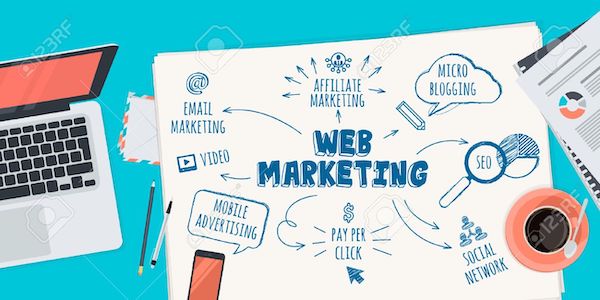
Marketing that done via the internet (online), is often called as web marketing or online marketing. More people prefer to do web marketing now because it’s less expensive. Some kind of web marketing even free to do. For example, you can start a blog or upload your video on Youtube for free. 

Web marketing is the process of using the Internet to market your business. It includes the use of social media, search engines, blogging, videos, and email. 

Promoting a business takes effort. There are a variety of ways to do it. Designing and developing a website can be one of the methods to promote it. It has been successfully done by https://designlab.net.au/

Traditional advertising in newspapers, on the radio and television, direct mail, and billboards has been around for decades.

It takes your message to the big wide web. You can order website development from us or any online company. 

With tons of people using the internet every day, there are huge opportunities to get your product or service in front of people who need or want it.

Drilling down into it, web marketing takes many forms. 

Banner ads, email promotions, and social media posting are three of the ones you have probably heard about. They, and more, live under the “web marketing” umbrella.


What Are The Benefits Of Web Marketing?

Now that we’ve answered what is web marketing, let’s discuss the benefits. 

Marketing on the web gives you unique benefits that other advertising and promotion avenues don’t.

  1. Cost-effective
  2. Focused
  3. Builds relationships
  4. Easy to adapt and edit
  5. Measurable and easy to determine ROI

What Are The Different Examples Of Web Marketing?

The most common examples of web marketing are SEO, social media, email, PPC, and content but those are not the only ones.

Using the internet to connect with and engage buyers is a smart move. But where do you begin? 

The options are overwhelming, and few companies jump into all of them at once. Here’s a brief overview of your possibilities.

  1. Email Marketing
  2. Social Media Marketing
  3. Content Marketing
  4. Search Engine Optimization
  5. Google Ads or PPC Advertising
  6. Display Ads
  7. Retargeting
Website design and development can play a good role in content marketing and a base for your social media marketing. You cannot take good benefits of PPC and display ads if you don’t have a good website site with good website design and state of the art web hosting services from a good web hosting companies. 

Key Elements of Good Web Design

Web design is at the center of providing a satisfactory online experience. Modern web design has come a long way. Websites cannot afford to look like the Classified section of a newspaper. No site stands a chance if it cannot look sophisticated and function flawlessly.

Effective web design does not just create visual appeal but also implements favorable SEO optimization techniques to help the site rank higher on Google searches. While there are hundreds of design elements to choose from, a few of them are indispensable.

Key Elements of Good Web Design

This article will narrow down these elements to seven essentials, the elements that must be fixtures in every web design blueprint.

1. Mobile-Friendly Layout

This trend is only set to increase as more people take to their phones as their primary source of online access. Consequently, a mobile-friendly layout lies at the core of modern web design.

Primarily, a mobile-friendly layout refers to the usage of responsive website design. Responsive web design refers to a design strategy that lets websites ‘adapt’ to different screen sizes without compromising usability and user experience. Text, UI elements, and images rescale and resize depending on the viewport.

85% of adults think that a company’s website, when viewed on a mobile device, should be as good or better than its desktop website. That means any website not incorporating responsive design will offer an unsatisfactory user experience, leading to loss of traffic, revenue, and credibility. You can see the example of Website design Charleston SC.

2. Clean and Bold Typography

Modern website design must feature safe, clean, and bold typography – a pillar of minimalist design.

Clean typography must include the following:
Appropriately sized text, which is usually larger than 16px
Black/gray typography, in accordance with the background hues or images
Web-standard fonts
Adequate space between lines to facilitate easy reading

Most organizations use a particular font or typography as part of their brand identity. For example, The New Yorker uses Adobe Caslon to create its highly recognizable typeset. Consider adopting a font for your website that will remain consistent across pages and other online resources you may provide.
3. Hamburger Menus

Most websites offer a long menu of options and features for users to choose from. While this may make for more straightforward navigation (since the user can go directly to whatever option they want from the home page), it also takes up a lot of screen space – especially on mobile devices.

Solve this quickly with a hamburger menu – a button that opens up to a broader menu or navigation drawer. This saves space, keeps the interface clean and uncluttered without removing navigational ease for website visitors.

4. Optimization for Speed

Web pages that load within five seconds experience a bounce rate of 38%. A 100-millisecond delay in load time can cause conversion rates to drop by 7%. Numbers like these should depict the significance of speed in modern web design – both on desktop and mobile devices.

In the age of instant gratification, websites are expected to load immediately, or they will be abandoned. Fortunately, building website design aligned with high page load speed is not a difficult task. A few simple steps to achieve this would be:
Optimize all images, regardless of size.
Choose a robust hosting environment, be it VPS hosting, shared hosting, or even a server dedicated to your site.
Use compression to keep files smaller.
Minimize HTTP requests in Chrome’s Developer Tools.

5. White Space

As an element of minimalist design, white space is essential for modern homepage design. Since the internet subjects every user to an infinite barrage of information, they can quickly reach a point of intellectual exhaustion. Using a balance of white space and content ensures that the site looks clean, organized, readable, and easy to navigate. Let your website breathe.
6. SEO Optimization

Modern website design elements can go a long way in improving a site’s SEO-based ranking. Quite a few of them are invisible, such as meta tags, heading tags, and other HTML coding hacks that belong to the website’s back-end code. Insert, tweak, and optimize these elements so that the website can reap the full benefits of Google’s SEO algorithm.

7. Cross-browser and device compatibility

Every design element being coded into a site needs to be displayed and function perfectly on every device and browser that the site is viewed with. The only way to achieve this level of consistency is iterative testing on real browsers and devices. That means every batch of design pushed into staging must be verified on real browser-device-OS combinations.

Look through a few modern website design examples, and notice how the pointers outlined above play a role in making them highly functional and appealing. Since every website must compete with thousands, sometimes millions of options online, it cannot afford to release anything but the most effective and aesthetically pleasing design. When discussing design plans, use these guidelines as a set of best practices, and continue to build creatively without excluding these stipulations.

Website Design and Development Services

10 things to keep in mind while designing and developing a website


Within five seconds of landing on your website, can your visitors determine what your company does? Could users easily navigate to the blog if they need to? Is the layout of your pricing easy to understand? Does your website have a low bounce rate?


If you’re finding yourself answering ‘no’ to these questions, it might be time to take a hard look at the way you’ve been designing and optimizing your website.

A website truly excels when it has a design that feeds into your website’s user experience, functionality, and appropriately complements your content.

It can be super easy to neglect these things, thinking these updates are the lowest thing to worry about on your totem pole of website priorities, but a successful website has both high performing content and an exceptional user experience needs to have balance.

But the umbrella of website user experience has a lot under it, and it can be challenging to understand all that’s under it while figuring out the most important things to tackle.

To answer that, here are 12 website tips to ensure that you’re going in the right direction in your redesign and are assuring you aren’t turning visitors away.


1. Have a plan for your website design

Now that you’ve acknowledged that your site likely needs some improvements, it’s time to work your way backward and create a plan detailing how you’ll tackle them.

Start by mapping out your customer journey from the first time someone visits your website to the moment they become a customer. When doing this, think about which pages are they going to view, what content are they going to read, and what offers are they going to convert on. Understanding this will help you design a site that actually helps nurture leads through the sales funnel.

Certain elements on your website are going to detract from the value and message you’re trying to convey. Complicated animations, content that’s too long, and “stocky” website images are just a few examples.

With an audience that only has an attention span of eight seconds, you need to make it abundantly clear what your user will learn on the page they’re viewing and your design must not detract from this.

This starts with making sure you have consistent brand guidelines you can work off of.

This should detail your font styles, colors, imagery, iconography, and logo usage. Without this, it’s easy for brands to struggle when designing pages. You’ll likely start to see arbitrary colors and varying font styles and sizes used, which in turn, can distract from your message or create visual confusion for people trying to convert. It’s also important to avoid too many on-page animations or interactions. If you’re scrolling through a page and see every button pulsing or a section of icons each with its own animation, it can feel overwhelming and distract them from reading what’s on the page.

Let’s take a look at the website below as an example. Note, since I’m treating this as more of a critique, I’m removing the brand’s logo from the image so they can remain more anonymous. When looking at this site, the first thing I noticed was the colors


2. SEO Optimisation 

Second, there are some areas of inconsistent spacing. The hanger in the hello bar (‘you!’) creates a second line that could easily be fixed if the width of the container around the text was increased. The H1 also isn’t exactly vertically centered in the white area, drawing your eye to “issue” rather than the bulk of the message.

In the grey section below the header, they lead with a button (which doesn’t have much context) and feels sandwiched on top of an image. As a user, I’m left to wonder if it’s supposed to have space below, or, if it’s supposed to directly relate to the image. Did the site just load incorrectly? This internal debate creates friction and confusion Details like this really help make or break your overall website experience and help your users better understand what you want them to do, leaving less room for confusion 


3. Add social proof

If you shop like most people when you’re on Amazon, chances are you gravitate towards products that contain mostly four to five-star reviews from people who wrote out their experiences with a product. 

In looking at these reviews, we gain trust in the product that it will do what it promises and we need it to do, which in turn, pushes us to purchase it.

The same effect is applied to your product or service and website. If users see impactful testimonials from real people, studies show your prospects are 58% more likely to buy your product

But how should your testimonials visually look so they effectively create that trust with your users when they see them?

Well, there are a few strategies you can take. But first, you need to think about what format of testimonial you want, text or video. Historically, video testimonials have been found to be the best. This is because the medium naturally keeps your user’s attention for longer and also builds a stronger human connection being able to hear voices and see faces of real people.

You also have the option of text testimonials, however, which, when designed and incorporated properly, will still help build trust with your users. Upland Adestra is an enterprise email and marketing automation software company in the United Kingdom. They have four videos on their  testimonial page that each are contained in their own sections. Rather than arbitrarily place all the videos next to each other, Upland separated them and accompanied them with a header and sentence detailing the result or benefit the client had working with them. Now, users have context to what they will hear about in the videos. I also like how a few of the videos show thumbnails of someone talking, which visually reassures the user that they will likely be hearing from the client themselves, as opposed to watching a text-based video.

Zenefits has done a great job of this on their website  Each card is designed with an image that showcases members of that company, which is way more trustworthy than if they were to use stock photos, or just a picture of their logo. And because they have five pages of testimonials, they’ve added a filter at the top of the page that allows users to segment what types of industries or solutions to look for. Now, users can find the types of case studies they want faster.  Finally, if your site only has text testimonials without case studies, there are aspects you need to be mindful about when designing them out. For instance, you can’t just put a set of text testimonials and a name alone. It’s less likely these will be taken as truth since it will leave users wondering what company they work for, what their job title is, and visibly what this person looks like (for visual confirmation that this person is likely real). In their case, they use tweeted reviews, but you can easily supplement this layout with something not using a Twitter feed   Regardless of them coming from Twitter, this section gets a bunch of things right. One, there’s a large number of reviews that can be seen at once thanks to the interest-styled layout. Secondly, the testimonials include photos and people/company names, making the reviews are that much more legitimate. When it comes to places to include testimonials on your website, I always recommend your homepage, service pages, and/or on a dedicated testimonial page that you include in your navigation. Each of these pages is the best touchpoint for people who are either learning about your company and considering buying. So long as they are genuine, testimonials will better your website’s experience and build trust with your prospects before they become clients 


4. Implement calls-to-action

Once your visitors land on your site (likely through the blog or home page), you need to guide them to places on your website that will help nurture them to conversion. People are lazy, so make this easy for them. Point them in the right direction so they don’t have to struggle to find what they are looking for. One of the best ways to improve your web design with this in mind to use strategically placed call-to-actions in areas such as the top right of your navigation, below sections that require action, and at the bottom of your website pages.  


5. Use the right stock images

We always recommend using original photography on your website, but if that’s not an option, there are techniques you can use to help pick out the right type of stock photo. While stock photos save you the time of producing your own imagery, many websites have imagery that falls into cliche. You’ll also find a lot of other websites may be showcasing the same imagery, which certainly doesn’t help for your credibility. So, when choosing stock photos, try to stay away from these cheesy images. These are the photos of people high-fiving with over-exaggerated smiles, groups looking at the camera, executives in superhero costumes, groups of suited people jumping in the air   When was the last time you saw people in these scenarios in real life? Look instead for photos that depict realistic scenes in well-lit environments. This could be people in an office talking over a meeting table in business casual clothing, over-the-shoulder shots of people typing on a laptop, people drawing on a whiteboard in an open room. These are the types of scenes others will start to recognize as legitimate. Look for candid images and ones in real-life settings rather than studios. This will aid in bringing more realism to your brand and making sure the images match who you are and what your content is explaining   You can also check out this article for some awesome stock photo website suggestions if you find yourself struggling with getting more realistic photography on your website. Being more mindful with your photography will help better represent your brand and how you want others to perceive it.  


6. Organized navigation

When designing your website, navigation is key. It’s essentially the map that displays the core places users can visit. It’s how users can easily dive deeper into areas such as your services, products, blog, etc. There’s nothing worse than a site with a disorganized or confusing navigation interface. Poor design practices such as overstuffing your navigation, using vague or confusing hypertext, and lack or organization can make it hard for your visitors to find where they want to go   If users cannot find what they’re looking for, they have no reason to stay on your site. Instead, they will certainly bounce and find a competitor that offers a better user experience.   In some cases, like in the image above, the menu item will even have a descriptive line to provide more context to the purpose of that page. The hover effect also makes it clear to the user that these are links that will result in them going to another page. With one click, users can get to these places with ease, so make sure you’re enacting a similar strategy (without overloading your navigation)   Clean and specifically organized navigations like this let the user know that you want them to have an easy time moving around your website and that there’s nothing to hide. As a result, your users are more likely to visit higher numbers of pages during their session, increasing their time spent on your website.  


7. Let your visitors scroll on your homepage

There was a time where we were wary about making our website pages too long, especially your homepage. This was out of fear of users not scrolling, so it forced folks to try and cram what they could into the most common screen size people view their website with. But those days are long gone. In a  2018 study by the Nielsen Norman Group, 74% of the viewing time on a website page was spent in the first two screenfuls, up to 2160px horizontally. So there’s no need to be afraid of creating a more robust below-the-fold experience. Use your homepage real estate to your advantage. For example, see the  Website hosting company.   

A good rule-of-thumb is to include three to five sections that help direct new and recurring users to the key areas of your site   What should these sections be? This list could go on forever, but a quick hit-list of some of the more crucial elements includes:  Value proposition Intro video Overview of services Product features About your company Testimonials Case studies/Success stories Content 


8. Don’t be afraid of white space

Whitespace is an essential design element that helps you break up the page and increase readability. Also called “negative space,” white space refers to the areas around elements on a page that are empty and lacking content or visual items   Whitespace also plays an important role in the design process and positioning of website elements. While more whitespace can dictate what sections are separate and guide the eye, less whitespace can dictate which elements are supposed to be related to one another due to their proximity.   This enables users to focus on each part of a website page piece by piece and instantly lets them know where each section begins and ends. This can do wonders for helping guide your user’s eye to important information such as a call-to-action or value proposition.


9. Mobile optimization is a must

But it’s more than just being responsive visually. It’s a necessity to tailor your site to fit the needs and wants of your visitors. Ask yourself, why would someone access my site on mobile? What things would they look for? Does my experience currently allow them to do those things easily?   Using Chili’s website as an example, you can visibly see how the desktop and mobile websites are extremely similar. So when users go back and forth between the two for orders over time, there are similarities between the two that make using the website familiar   They also make it easy to do the core thing on their website, ordering food. The button needed for this is always on-screen on the mobile website, so you can order whenever you’re ready without having to go to an entirely different page. 


10. Make pricing easy to find

Tell me if this situation sounds familiar to you   You’re currently looking for a new SaaS product online to solve an issue you’re having. For this story, let’s say a project management tool   You’ve spent the past hour vetting a couple of pieces of software, and think you’ve finally found one that looks promising. With that in mind, you now try to find pricing   So you click on the pricing page only to arrive at a page that looks something like this:   At this point, you’re likely a little frustrated. You might even be wondering if this means it’s too expensive. What are they trying to hide anyway? Why bother calling and asking? So now you decide to leave the site and look at the competitors. If your site follows a similar pattern, or worse, lacks a pricing page at all, you’re going to find your users following this same mindset   With this in mind, let’s look at a website that does make pricing stand out on their website. Trello makes it extremely easy for users to figure out what pricing tier they best fit into and what it will cost the user. The pricing table has the features included below each tier, so comparing each is as simple as reading left to right. The green buttons utilized in the last to tiers also help draw the eye to those being more desirable options. To get started on a great pricing strategy, take a look at these sure-fire tips to help guide you.

<

p class=”MsoNormal” style=”font-family: Calibri, sans-serif;margin: 0cm;text-align: justify”> 

How to Buy a Domain Name: Domain Registration Guide

If you want to start a blog or a new online business, you’ll need to register a domain name, the name for your website. Getting the right domain for your needs might sound technical at first, but the process is pretty simple.

This domain registration guide will tell you what you need to know about domain name extensions, how to choose the right one for your needs, and the steps you’ll need to take to check if a domain name is available and to register your domain.

What Is a Domain Name?

Every website on the internet has an IP address. These addresses point to a website’s location — think of them like GPS coordinates. The IP address, which is generally a set of numbers, usually resembles something like this:

Unfortunately, trying to remember all of those numbers in order to navigate to a website can be challenging. That’s where domain names step in and lend a hand.

A structure called the Domain Name System (DNS) translates those IP addresses into names that are (hopefully) simple to remember. Those names are called domain names.

Your website’s domain is what people enter into the address bar on their browsers to point it toward your website. In the simplest terms, if an IP address is your website’s GPS coordinates, the domain is its street address. Some examples are mailchimp.com and google.com.

When someone types a domain into a browser, it gets routed through a DNS server. That server translates the name to figure out which IP address it points to. Then it grabs the data for that website and delivers it to the browser. This process happens in a matter of seconds, letting you find and view a website fast.

Types of Domains

According to Verisign, there were over 360 million registered domains in 2019. The types you can buy vary greatly. To make the best choice, you need to first understand the anatomy of a domain, which is made of two main parts — a second-level domain (SLD) and a top-level domain (TLD).
Second-Level Domains (SLDs)

A second-level domain is what most people think of when they think of the name of a website. It’s the unique name that you choose to represent your brand because it’s the part that people will remember the most.

In a web address, an SLD appears just to the left of the extension, or top-level domain. It can contain as many letters, numbers, and special characters as you want, but it’s best to keep them short and easy.
Top-Level Domains (TLDs)

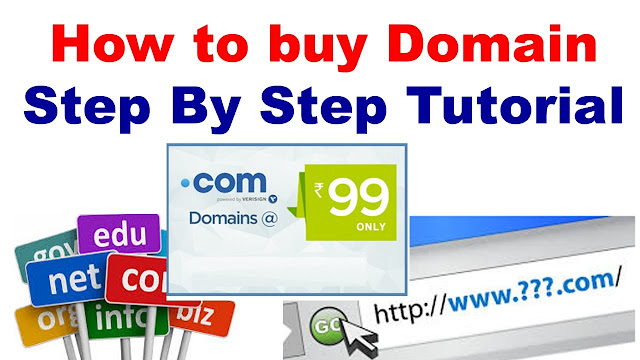
Top-level domains (TLDs) are also referred to as domain extensions. They’re the series of letters that appear at the right of your SLD, after the dot. The most popular ones include:
.com: Short for “commercial,” this was the first TLD launched, initially meant for business and commercial use. It’s still the most popular.
.net: Short for “network,” this was created for technology organizations, but it has become another common option for business website owners of all types.
.edu: Short for “education,” this TLD was created for universities, colleges, and other educational institutions. Today, it’s mostly associated with U.S. schools.
.org: Short for “organization,” this was developed for non-profit organizations but soon became popular among schools, communities, and for-profit enterprises.
.gov: Short for “government,” this was created strictly for U.S. government agency use.
.mil: Short for “military,” this TLD was developed solely for use by branches of the U.S. military.

There are also TLDs for different countries (.ca for Canada, for example) as well as niche domains like .coffee, .cheap, and .ninja. In all, there are more than 1,500 different TLDs to choose from, and the list continues to grow. But the cost for different TLDs vary. Some carry more “weight” than others, which should impact your decision when buying a domain.

How Much Does a Domain Name Cost?

When you buy a domain name through domain registrars, you register it for one year with the option of a multi-year registration. You will be able to renew your domain name registration when the initial period finishes, and will usually be alerted by the registrar to do so. Domain names are also sometimes included in your web hosting plan and if not, usually offered by your hosting company.

A domain name with a common top-level domain, such as .com, can be had for as low as $12.99 per year, and promotions are often available. Internet domains purchased through Mailchimp also come with free WHOIS privacy protection and a Secure Sockets Layer (SSL) certificate to provide your website with free verification and encryption.

You do need to have a web hosting plan to put your site online, but you don’t need to have hosting to purchase a domain. Assuming you have a business or blog name in mind, it’s possible to reserve your brand’s name for the future by purchasing and registering your domain name now. Then you’ll have plenty of time to consider how to build your website.

How to Choose a Domain Name

Since your domain name can have a major impact on your online presence, what you choose is a vital first step in building your brand. Finding the perfect domain name, however, can be challenging.

While it’s true that there are millions of domain names available, many of the popular domain names that are easy to remember are taken. Fortunately, you can still get what you need if you go through a simple process and use a bit of imagination.
Make It Brandable, Not Generic

Creative, memorable domain names are always better than generic ones. After all, your domain name is how people will find, remember, and spread the word about your business on the internet. It’s much better to have something that aligns with your brand instead of a domain name that’s made up of a bunch of general keywords.

For example, can you tell the difference between cheapcarinsurance.com and affordableautoinsurance.com? Which one would you trust when it comes to buying insurance? Probably neither. Both sound a little spammy, and they’re terribly generic.

On the other hand, you’ll probably know where the domain names progressive.com or geico.com are going to point you to. Those companies have invested in their brands, and they’ve used them in their domain names. You can trust that these sites are legitimate.

Even if you haven’t built up trust and loyalty yet, you can start by choosing a strong domain name that fits your brand.

Choose the Right Domain Extension

When picking the extension or TLD for your domain name, “.com” is still the best choice unless you have a reason to choose something else. Roughly 43% of all domains have a .com extension, making it what people expect to see the most.

While Google confirms that your choice of TLD will not impact rankings, it does affect consumer perception. Many people view other TLDs as less trustworthy.

That said, .net or .org extensions are not uncommon, so they can be good secondary options if you find the perfect name and the coveted .com isn’t available.

But if you do decide to go with an extension other than a .com, make sure you take a look at what type of website is currently on the .com extension. Someone is bound to go there accidentally while looking for your brand. If the site holds fishy or offensive content, you might want to steer clear of that name altogether.

Finally, avoid those niche domain name extensions like .space, .club, .pizza, unless you really think they’ll enhance your brand.

Watch Domain Length

When it comes to domain name length, shorter is better. Search engines — Google in particular — give preference to easy-to-understand and simple domain names that deliver what they promise. URLs that are filled with numbers and special characters can hurt search engine rankings.

Your domain name should be as short as possible while still capturing the concept of your website. Short domains are easier to read, take up less room on marketing materials, and have a better chance at sticking in visitors’ memories.

The downside to short domain names is that there are fewer of them available. But, if your brand name is 100% unique or has some other creative element to it, you might be able to find something to fit the bill.

So, what is an acceptable length? Aim for 6 to 14 characters with a focus on the shorter end of that range.

Make It Memorable

Whatever domain you choose should also be memorable. It should be simple enough for anyone to spell and type.

Not sure if your domain name is memorable? Tell it to 10 friends and ask them if they can spell it. If more than a few struggle, you need to pick something else.

Provided your chosen domain name passes that first test, make sure it’s also easy to pronounce for the sake of word-of-mouth promotion. Use that same “10 friends” test as a guide. Write the domain name down and ask your friends to pronounce it. If no one struggles, you have a winner.

Think about some popular websites like Yahoo, Amazon, Reddit, and Twitter. Each is short and easy to spell. If you choose poorly, there’s a good chance that many of your visitors are going to end up on someone else’s website.

Avoid Numbers and Hyphens

Imagine asking your 10 friends to spell or pronounce a domain name filled with numbers and dashes. It won’t work.

If you choose a domain name with these elements, you’re likely going to lose traffic to people who can’t remember your domain or effectively tell someone else how to find it. We probably wouldn’t have Facebook today if you had to go to Face-Book.com to reach the site.
Check for Trademark Infringement

Both major and minor brands alike take issue with others using their trademarked names. Even if you’ve just made an innocent mistake, the legal hassle involved in a lawsuit and having to rearrange your web presence could be costly.

You can avoid these situations by using a trademark lookup tool before you finalize your choice.
Future-Proof Your Domain Name

Domains and websites are long-term investments. That means you should avoid choosing a domain name that includes a year or the latest trendy catchphrase.

Think about where your business or brand might be in five or ten years. If you provide basic SEO services now, you might end up expanding your offerings as your business grows. So, using the words “marketing” or “digital marketing” might be better descriptors than “SEO services.”
Use a Domain Name Generator

If you’re not the creative type, you can use a domain name generator to help spark some ideas. Simply enter in some words or phrases that describe your brand or website, and these tools will give you a list of ideas that you can then check for availability.

Steps to Buying a Domain Name

Let’s assume you have a list of catchy, memorable, branded, and short domain names, and you’re ready to buy. Here are the steps for buying and registering your domain name.
1. Choose a Reliable Domain Registrar

To get a domain name, you should first find a registrar that is accredited with the Internet Corporation for Assigned Names and Numbers (ICANN), which is the nonprofit organization responsible for coordinating all of the numerical spaces on the internet. Mailchimp offers domains governed by ICANN.
2. Find a Domain Availability Checker Tool

The next step in your journey is a domain name search and should involve a domain availability checking tool. This will tell you if the domain you want, such as tinysgarage.com, is available or not.

3. Choose the Best Domain Name Option

When you’re checking for available domain names, you’ll often find that your first, second, and tenth choices are already taken. Some of the different approaches you can take when this happens are:
Keep searching. Let your creative juices flow, and continue to search until you find something you love — or at least like.
Choose another extension. If the .com isn’t available and you’re set on a certain name, consider the .net or .org if you think it will work.
Reach out to the owner. Maybe the domain is already owned, but it’s not being put to much use. You could reach out to the owner with an offer.

4. Purchase Your Domain Name and Complete Its Registration

During the checkout process, you’ll be required to enter your contact information, including an email address, to register the domain.

5. Verify Ownership of Your New Domain

Paying for your domain might seem like the last step in the process, but you also need to verify your ownership. This step lets you send email using the domain (myname@topnotchsales.com, for instance) and keeps other people from using it without your permission.

If you purchase your domain through marketplace, this process is simple. You’ll receive a verification email after you complete your purchase. Simply click on the Verify Domain button in the email and follow the instructions on the next page, and you can start using your domain to build your brand. You’ll only ever have to complete this step once.

Buying a Domain from Another Person

If the domain name you want is already owned, it might still be available. Assuming you find a name that you simply must have, here are the steps to complete a purchase:
1. Find the Owner’s Contact Information

Locate the owner of the domain by looking up their contact information through the WHOIS directory. If it isn’t listed, you may be able to contact them from information you find on the domain’s website.
2. Negotiate a Fair Price

Once you make contact, offer a fair price for the domain. If you aren’t sure about a price, do some research. You can even hire a broker to facilitate the deal on your behalf if you want the domain badly enough.
3. Complete the Sale Using Escrow

Avoid wiring money to a stranger on the internet. It’s just a bad idea. Instead, use an escrow service to ensure that both parties are satisfied and your sale is as low risk as possible.