


INTRODUCTION
Legal concepts of animal cruelty reflect the morality of our society regarding the rights of animals. These concepts especially expose dominant behaviour towards animal exploitation. Omissions in the law which permit abusive animal treatment without legal penalty or threat to prosecution indicate the unquestioning support of such abuse by society. However though our society has acknowledged the need for laws on animal protection, animal welfare is usually not the main focus of these laws. Too often the underlying reason for such legislation is a public interest in shielding property or in avoiding malicious and suspicious activities.
The terminology of anti-cruelty statutes, the implementation of such laws in court, and particular regulatory provisions resulting in the absence of legal prerequisites for practices such as animal laboratory experiments all lead to an obvious conclusion: animals may cherish some levels of immunity, but they do not have rights under the constitution. Unless the legislation acknowledges more than the human interests in avoiding animal cruelty, animals would have no right to be safe from human inhibited pain and suffering.
HISTORY
The very first scriptures of Hinduism, The Vedas (originating in the second millennium BCE), teach all living beings ahimsa or nonviolence. Killing an animal in Hinduism is considered a breach of the ahimsa and cause for bad karma, his prompted many Hindus to adopt vegetarianism. However, Hindu principles do not require vegetarianism and allow the sacrificing of animals in sacred rituals and ceremonies.
India’s first National Animal Welfare Act, the Prevention of Cruelty to Animal Act or the PCA Act (1960), forbids animal cruelty, with exceptions to animal treatment for medicinal or experimental purposes. Consequent legislation has imposed controls and limitations on the use of domestic animals, livestock transport, animal slaughter, animal experimentation and employment of performing animals. General requirements for breeding and usage of animals for research have been set by The Breeding of and Experiments on Animals (Control and Supervision) Rules, 1998. According to the amendment of 2006, animals “lowest on the phylogenetic scale” must be used for experiments. 95% statistical assurance in using the minimum number of animal species and justification should be given for not using non-animal substitutes. Use of living animals in medical education experiments is banned by amendment of 2013. In 2014, ban was imposed on all cosmetic testing done on animals and the import of animal-tested cosmetics products, with this India became the 1st country in Asia to bring out such change.
HOW THE LEGAL RIGHTS OF ANIMALS AGAINST CRUELTY ARE PROPOUNDED?
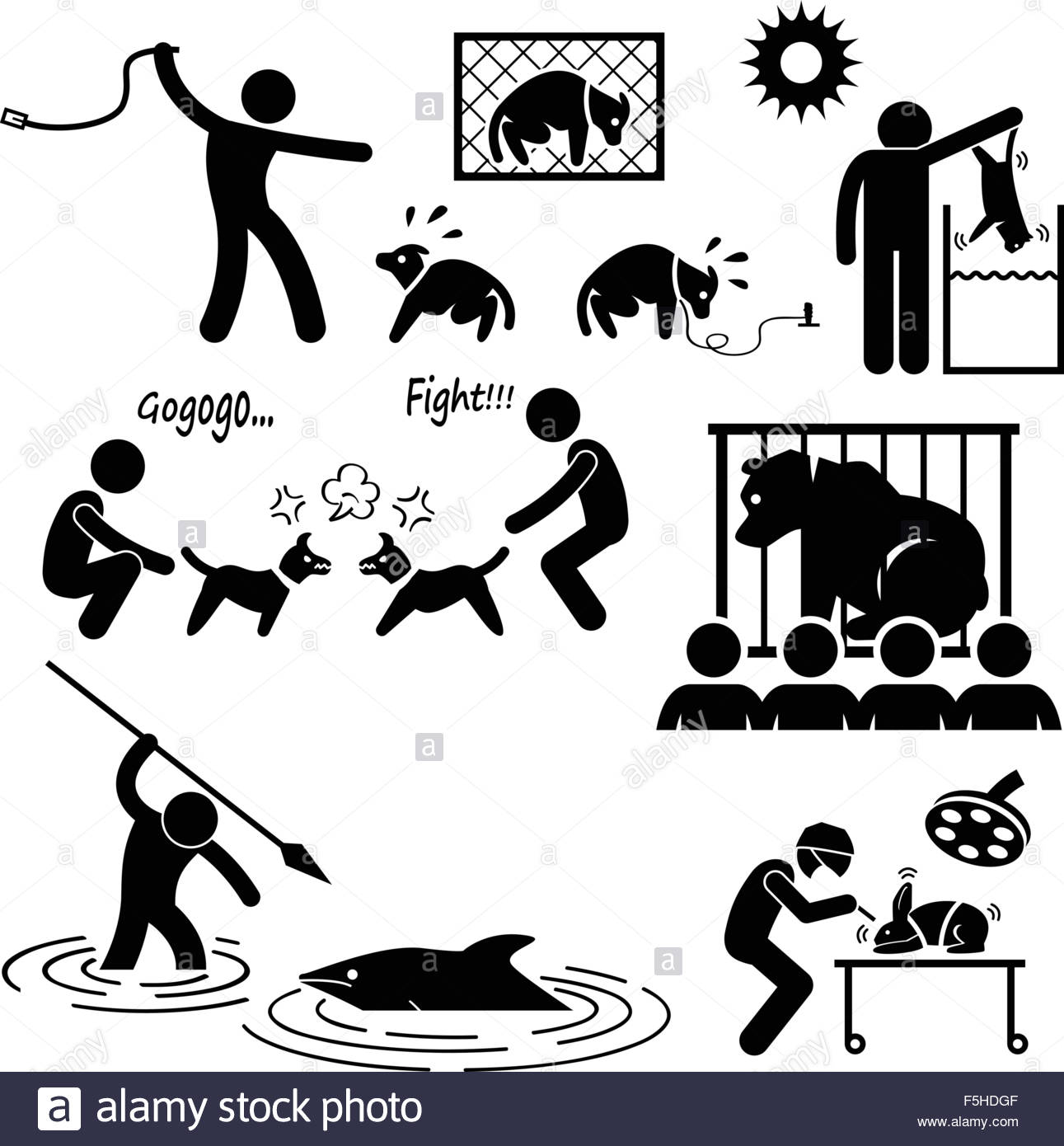
Animal cruelty is wilful harming, abusing and neglecting of an animal. It is subjecting any animal to cruel mistreatment. Some forms of animal cruelty consist of deliberately placing animals in conditions that harm them, frighten them, and terrorize them.
A precedent was released in 2014 by the Supreme Court of India. It extended the shield of Article 21 of the constitution of India, which safeguards human life and liberty, to all animals. The court said, “Having an inalienable right to live in a safe and clean environment, not to be battered, kicked, bitten, tortured, pried by humans with alcohol or forced to stand in small enclosures amid bellows and crowd groans.”[1]
SOME LEGAL RIGHTS
- Article 51A (g) of Constitution of India: It is the fundamental duty of every citizen of India to have compassion for all living creatures.
- IPC Sections 428 and 429: To kill or maim any animal, including stray animals, is a punishable offence.
3. Section 11(1) (i) and Section 11(1) (j), PCA Act, 1960: Abandoning any animal for any reason can land you in prison for up to three months.
4. Rule 3, of PCA Act (slaughterhouse rules) 2001 and Ch.4 Food Safety and Standards Regulations, 2011: No animal (including chickens) can be slaughtered in any place other than a slaughterhouse. Sick or pregnant animals shall not be slaughtered.
5. ABC Rules, 2001: Stray dogs that have been operated for birth control cannot be captured or relocated by anybody including any authority.
6. Section 11(1) (h), PCA Act, 1960: Neglecting an animal by denying her sufficient food, water, shelter and exercise or by keeping him chained/confined for long hours is punishable by a fine or imprisonment of up to 3 months or both.
7. Wildlife (Protection) Act, 1972: Monkeys are protected and cannot be displayed or owned.
8. Section 22(ii), PCA Act, 1960: Bears, monkeys, tigers, panthers, lions and bulls are prohibited from being trained and used for entertainment purposes, either in circuses or streets.
9. Rule 3, Slaughterhouse Rules, 2001: Animal sacrifice is illegal in every part of the country.
10. Section 11(1) (m) (ii) and Section 11(1) (n), PCA Act, 1960: Organizing of or participating in or inciting any animal fight is a cognizable offence.
11. Rules 148-C and 135-B of Drugs & Cosmetics Rules, 1945: Cosmetics tested on animals and the import of cosmetics tested on animals is banned.
12. Section 38(J), Wildlife (Protection) Act, 1972:Teasing, feeding or disturbing the animals in a zoo and littering the zoo premises is an offence punishable by a fine of Rs. 25000 or imprisonment of up to three years or both.
13. Section 9, Wildlife (Protection) Act, 1972: Capturing, trapping, poisoning or baiting of any wild animal or even attempting to do and disturbing or destroying eggs or nests of birds and reptiles or chopping a tree having nests of such birds and reptiles or even attempting to do so constitutes to hunting so is punishable by law, with a fine of up to Rs. 25000 or imprisonment of up to seven years or both.
14. Section 11(1) (d) Prevention of Cruelty to Animals, (Transport of Animal) Rules, 2001 and Motor Vehicles Act 1978: Displaying or carrying animals, either in or on a vehicle, in any manner or position that causes discomfort, pain or distress, is a punishable offense under the two Central Government Acts.
CONCLUSION
The claim that animals are not supposed to be mistreated rely upon the same moral values, which offer human beings several fundamental rights. There are not simply a utilitarian criterion for respecting those rights. For example, we don’t accept slavery, even though slaves as oppressed persons are not able to confront people holding rights. It would be safer, at least economically, to hold slaves in the field according to a utilitarian viewpoint. This gross inequality is reprehensible, and the law acknowledges it. Animals, however, are not humans. There are also absurd associations between the exploited people and animals. Today, the notion that animals should have civil rights seems progressive and radical. Therefore, law in all fields importantly take an active part in encouraging animal rights.
REFERENCES
https://www.strawindia.org/laws-that-protect-animals-in-india.aspx
https://en.wikipedia.org/wiki/Animal_welfare_and_rights_in_India
[1] https://www.macleans.ca/society/why-animals-should-be-given-the-same-legal-rights-as-humans/
 Eduindex
You must be logged in to post a comment.