

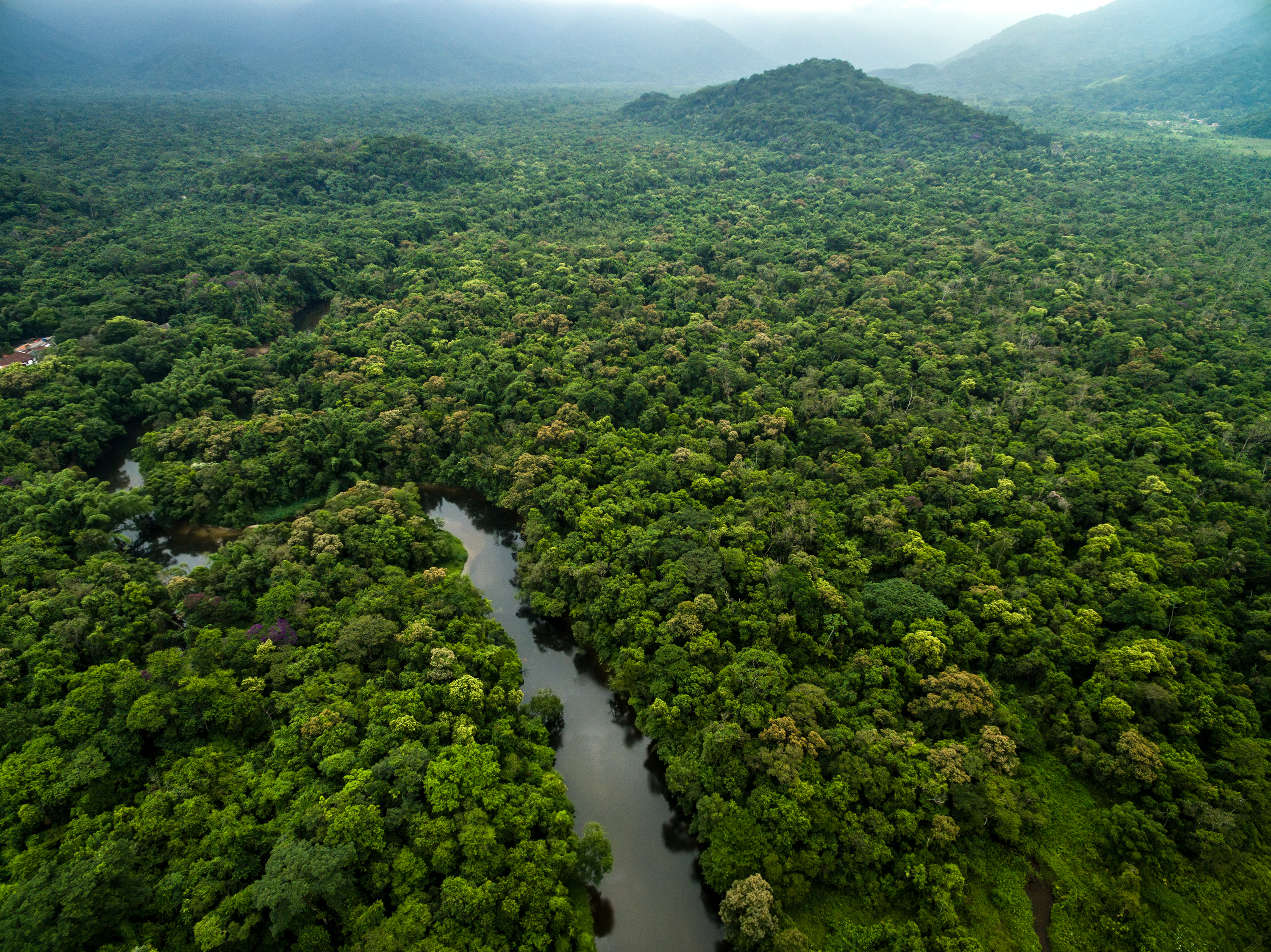
The Amazon Forest is the biggest rainforest in the world with the highest density of plant and animal species anywhere, covering nine countries with 5,500,000 km2 of forest cover. Moreover, it is bigger than all the other rainforests combined. It is home to more than thousands of species of animals, plants, and trees, making it the most bio-diverse rainforest on the planet. One in ten of the world’s known species live in the Amazon. It is also known as The Amazon Jungle and is located in the South American continent and has the Amazon basin acting as the source of the magnificent Amazon River.
Ecosystem
Amazon rainforest has the biggest ecosystem in the world. This ecosystem is driven by the great Amazon River, which covers thousands of miles and is the main foundation of the ecosystem. The river basin, with an average temperature of 26o C and heavy humid and rainfall levels, has a direct impact on the ecosystem.
The presence of this hot and humid climate has influenced the presence of different species of both plants and animals, making the rainforest have the largest number of species for the kingdoms Animalia and Plantae, including many endangered species. Further, it is home not only to wildlife but also to indigenous people who have been living in the forest. The ecosystem of the rainforest is so big that it helps to control the entire planet’s atmospheric carbon levels. This is attributed to the Amazon basin, which is home to over ten times the annual carbon emissions from fuel consumption.
Plants & Animals
The Amazon biome is home to as many as 80,000 plant species in the Amazon. The tropical climate of the Amazon is the biggest contributing factor for the vast types of plants. The varying climate ensures that all types of plants can grow during the different seasons. The Amazon is home to over 2,000 different animal species. There are over 427 mammal species, 1,300 bird species, 427 amphibian species, 3,000 fish species, and 378 reptile species. In addition to this, there are over 2 million insect species in the Amazon rainforest. One in five of the bird species lives only in this rainforest.
Deforestation
There has been a massive reduction of the Amazon forest area by residents in the nine regions. According to National Geographic, about 17 percent of the Amazonian rainforest has been destroyed over the past 50 years. The major reasons for this are human settlement and search for agricultural land. The land surrounding any river basin is always suitable for farming, given that it harbors suitable nutrient content and, thus, soil fertility. Similarly, the presence of forest cover translates into better soil quality in terms of humus and water retention leaving no chance of soil erosion. Although the soil in the forest is fertile, there is a deterring factor. The fertility of the soils in the Amazon is easily depleted over a short time rendering farming on a single piece of land quite difficult. This is because the sandy soils are thin, thus not suitable for farming.
Wildfire in Amazon
Fires breaking every year in the Amazon rainforest are often caused by accidents during the dry months. Every year, the dry season causes wild fires that destroy wildlife. However, many satellite photographs also show that the fires in the Brazil region of the Amazon were set deliberately to clear many acres of land.
Climate Change of the Amazon Rainforest
Over time, global climate change and more deforestation will likely lead to increased temperatures and changing rain patterns in the Amazon, which will undoubtedly affect the region’s forests, water availability, biodiversity, agriculture, and human health. Industrial farming, urban expansion, mining, petroleum extraction, dams and irresponsible timber production have also led to massive forest loss. As deforestation continues and the effects of climate change intensify, we run the risk of losing this spectacular ecosystem for future generations.


 Eduindex
You must be logged in to post a comment.