Important Constitutional Rights granted exclusively for women

These are some important rules that EVERY INDIAN must know!

Human’s rights are Woman’s rights and Woman’s rights are Human’s rights

Hillary Clinton

Legal provisions for women that everyone should know

We live in a world where gods and goddesses are worshipped and women are harassed, tortured, abused and abducted every single day. The Government of India confers important rights to Indian women, investigating cases related to many women. Unfortunately, many women in India are not aware of their rights which are provided in different Indian laws.
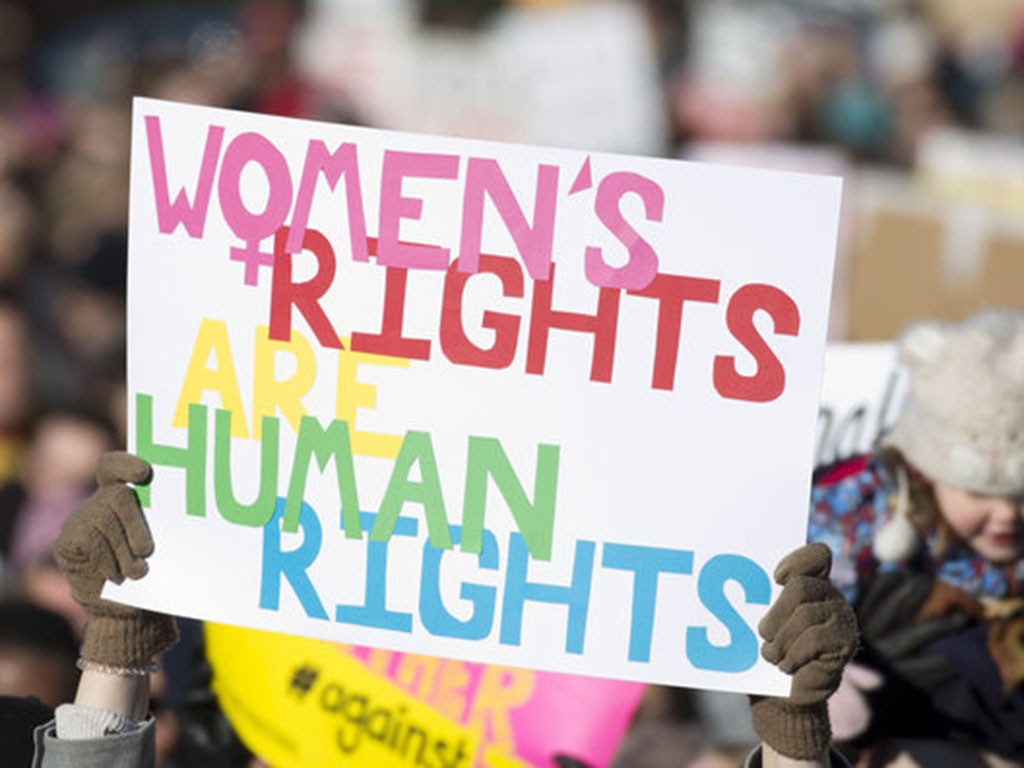
On the basis of gender equality, an Indian woman has 11 rights in India.

1. Women have a right to Zero FIR

A FIR that can be filed at any police station irrespective of the location where the incident occurred or a specific jurisdiction it comes under, the Zero FIR can later be transfered to the Police Station in whose jurisdiction the case falls under. This ruling was passed by the Supreme Court to save the victim’s time and prevent an offender from getting away scot-free.

2. Women have the right against being stalked

Section 354D of the IPC makes way for legal action to be taken against an offender if he/she follows a woman, tries to contact her to foster personal interaction repeatedly despite a clear indication of disinterest; or monitor the use by a woman of the internet, email or any other form of electronic communication.

3. Female sexual assault victims have the right to keep their identity anonymous

To ensure the protection of privacy of a woman, a woman who has been sexually assaulted may record her statement alone before the district magistrate when the case is under trial, or in the presence of a female police officer.
4. Women have the right against workplace harassment

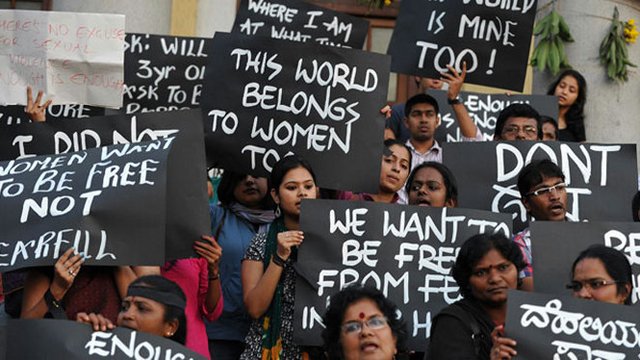
The Sexual Harassment of Women at Workplace Act gives a female the right to file a complaint against any kind of sexual harassment at her place of work. Under this act, she can submit a written complaint to an Internal Complaints Committee (ICC) at a branch office within a period of 3 months.

5. Women have right not to be arrested at night

Unless there is an exceptional case on the orders of a first class magistrate, a woman cannot be arrested after sunset and before sunrise. In addition, the law also states that the police can interrogate a woman at her residence only in the presence of a woman constable and family members or friends.

6. Women have a right against domestic violence

Section 498 of the Indian Constitution looks to protect a wife, female live-in partner or a woman living in a household like a mother or a sister from domestic violence (including verbal, economic, emotional and sexual) by the hands of a husband, male live-in partner or relatives. The accused shall be punished with a non-bailable imprisonment for a term which may extend to three years and shall also be liable to fine.
7. Women have the right to get free legal aid

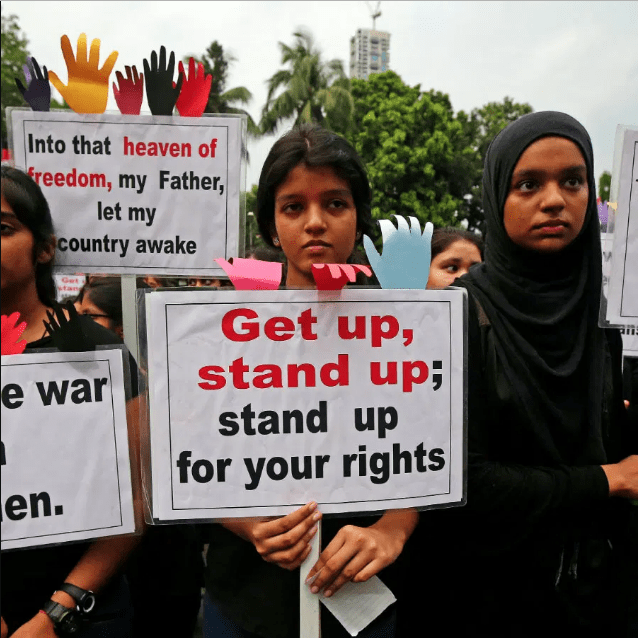
Under the Legal Services Authorities Act, female rape victims have the right to get free legal aid or help from the Legal Services Authority who has to arrange a lawyer for her.

8. Women have the right to equal pay

According to the provisions listed under the Equal Remuneration Act, one cannot be discriminated on the basis of sex when it comes to salary, pay or wages. Working women have the right to draw an equal salary, as compared to men.
9. Women have the right to dignity and decency

In an event of accused being a woman, any medical examination procedure on her must be performed by — or in the presence of another woman.

10. Women have the right against indecent representation

Depiction of a woman’s figure (her form or any body part) in any manner that is indecent, derogatory, or is likely to deprave, corrupt or injure the public morality or morals, is a punishable offence.

11. Women have the right to register virtual complaints

The law gives women the provision for filing virtual complaints via e-mail, or writing her complaint and sending it to a police station from a registered postal address. Further, the SHO (Station House Officer) has to a police constable to her place to record her complaint. This is in case a woman is not in a position to physically go to a police station and file a complaint.

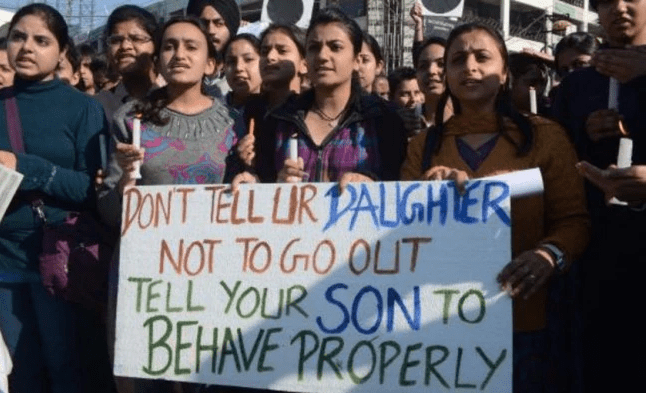
It is high time Women become aware of their rights and Stand up strong! Rise up together against the injustices happening against Women!!
References: India Today

I am Malala

By- Malala Yousafzai with Christina Lamb

“We realize the importance of our voices only when we are silenced. Malala Yousafzai, a teenager known throughout Pakistan for her advocacy on women’s education and women’s rights. Standing up for women’s progress can be a risky business in countries like Afghanistan and Pakistan where vicious Islamic extremists have a strong foothold. She has publicly spoken for women education was shot in the head by the Taliban, in an attempt to silence her. She survived.

This near to death experience gave her a voice which could not be supressed and that progressed to her earning the Noble Prize when she was just 17, she has been continuing to fight for female education and her global scale has been increasing ever since. In Malala’s gripping book she tells a story of faith, hope and bravery.

Circumstances which brought her to the front of an international scene on female education are heart-wrenching and tragic, that involved Taliban taking over Pakistan, being forbidden to attend school because of her being a girl and was asked to stay at home and being shot in the head by the deadliest terrorist group in the world back in 2012. These are the situations which many would not be able to sail through, most would abandon and drown will fighting for what is right. But she did not budge. She kept a fierce front and continued to advocate for education for girl’s and women. After going through hell, her voice is stronger than ever and is also supported globally.

Overview

In the first half of the book, she describes the history of Pakistan, her family’s ancestors and Swat, which is the northern region of Pakistan where she used to live as a kid. She shares anecdotes about her childhood, her family. She gives the reader a glimpse of Pakistan through a women’s approach. Malala’s father founded the local school which she attended growing up, from a young age, she demonstrated strong character and soon began to ask her father why were women being treated so poorly in Pakistan. In response, he told Malala about Afghanistan, where the Taliban burned schools for young girls and forced them to wear full burkas. Her father’s goal was to make her understand that the poor treatment of women in Pakistan was actually not that bad, when he compared to the way women were treated in Afghanistan. This book is almost about her father, Ziauddin, who is a teacher, headmaster and a local activist. He is the dominant influence in Malala’s life and has been consecutively criticized for encouraging his intelligent child to be outspoken in a dangerous environment. According to Malala’s perspective, her father feels guilt and felt responsible for what had happened to her, but also is proud of her bravery and accomplishments. Ziauddin is a very progressive man in Western terms and considering where he belongs from. Her father is the leader of the local environmental movement, champion of girls’ education, woman’s rights advocate He has challenged the Taliban repeatedly at many public events. In one of the most memorable scenes from the book, Taliban mullah who was a local who was accompanied by village leaders, pay an evening call on the Yousafzai home to demand that Ziauddin needs to stop educating girls. Her dad not only pushes them back, but he also he kicks them out of the house. Malala carefully sees that her father speaks out in support of his ideals. she is heavily influenced by the conduct of her parents. She learns her father’s ideals and develops with her own impressive smartness, talent, bravery and determination. Malala’s fierce advocacy on behalf of girls’ education and women’s right is clear and forthright as her father’s. When the Taliban threats finally had shut down her school, she tells the journalists that: “They cannot stop me. I will get my education if it’s at home, school or some other place.” She has a mind of her own. She has her own voice as well. She conveys with humour, that her father is a romantic and idealistic man and her mother, is an illiterate Pashtun woman, who keeps the family grounded. It will be very interesting to see how, as she grows older, Malala will inculcate the strong and different models presented by her parents.  This book has raised many questions, In the year 2012, one of her impactful speeches led to a group of Taliban militants stopping her school bus on the way back home and shooting her in the head. Thankfully, Malala survived although she had to flee from her country her home and now lives in the United Kingdom continuing her fight for women’s right to education and their rights.

Final Thoughts:

this book should be used around the world to teach the importance of education and what impact it can make.  It is an extremely powerful book. Malala is someone we can all get inspired from. When you are reading this book, you will easily forget that she was just a child when most of these unfortunate events happened. This book is a fast read. It is suitable for people who are specialists in the region and ordinary people who are seeking to improve their knowledge of Pakistan, but will be especially engaging for those who are interested in the story of this inspiring young woman, whose life goals and contributions to the global community are just beginning. She used her misery and her tragic past to build a cause that matters and helps to solve the problems she sees as pressing. The fight is still going on and its needs our undivided attention.

A Tale of An Indomitable Woman

Laxmi Agarwal, was only 15 when her jilted lover had thrown acid on her and she had to bear the brunt of a monstrous attack. The motive of the attacker was vengeance for her refusal to marry him. She was burning alive on the road in excruciating pain and was screaming for help on the road. When the accident took place, she was in a state of shock. The only question that kept arising in her mind was “why me?” For two and a half months she refused to look at herself in the mirror, she failed to have the spirit to face what she had been through. Her heart and mind were filled with feelings of self -hatred and shame.

People around her especially women would call her names and taunted her. They faulted her for this heinous crime and questioned her upbringing which would leave her and her family tormented. She was scarred for her entire life and was traumatized that she had contemplated suicide. But thinking of the pain that she would cause to her parents, she decided to end such thoughts. Her attacker assumed that he would leave her trapped within the four walls of her house but little did he know that he had ruined her face not her dreams.

Change was afoot for Laxmi, she refused to be enslaved by the injustice caused to her, with her family’s support she bounced back powerfully. She had filed a Public interest litigation in the supreme court that dealt with acid attack crimes and also petitioned for the ban of the sale of acid which led to the court ordering central and state governments to curb the regulation of acid. After four years of trial her attacker was put behind the bars. Laxmi Agarwal was presented with the International Women of courage award by Michelle Obama, she was also given the International Women Empowerment Award from the Ministry of Women and Child Development, she has challenged the stereotypes and prejudices of the beauty community and has helped over 400 acid attack survivors with her NGO.

Putting myself in her shoes, at such a young age seeing your life colliding and having no control over is horrifying. Face is the first part of the body which is directly associated to your identity. It would have felt like someone has taken away my identity for the rest of my life. The look on my face would change how people would perceive me and that would have impacted me mentally as the psychological pain cannot be measured. Women like Laxmi are an epitome of courage and resilience going through a life changing event still led her to having a strong ground beneath her. She did not let anyone else decide what her life could be and took charge over it herself. Laxmi encourages people to fight against wrongful acts and stand up for themselves. She is undoubtedly an inspiration for not only acid attack survivors but also for every person who has faced injustice in their lives.