Raising Legal Age of Marriage in India

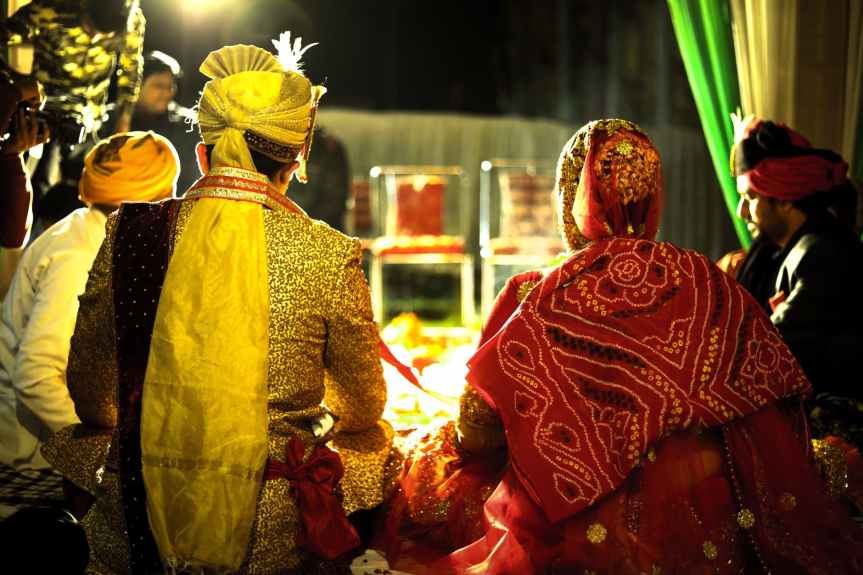
In order to formulate policies for a better equality in gender, the Union Cabinet of India proposed to raise the age of marriage of both men and women. This proposal seemed to be a progressive step. As a result on December 15, the Union Cabinet made the decision to raise the legal marriage age of women to 21 years from 18 years and for men it is 21 years. Thus, making the marriageable age of both men and women equal.

The government is asked to establish and implement the minimum marriage age for women and child marriage is strictly forbidden under Article 16 of the Indian Constitution. The minimum age for marriage is mainly prescribed by the law so as to avert abuse of children and prohibit child marriage. Marriage is dealt by different religions according to their own standards. In Hinduism, under the Hindu Marriage Act, 1955, the minimum age of women is 18 years and men is 21 years for marriage. In the Muslim religion, a minor’s marriage is considered valid if he/she has attained puberty. The minimum marriage age for men and women is also specified as 21 and 18 years under the Prohibition of Child Marriage Act, 2006 and The Special Marriage Act, 1954.

It was decided by the Narendra Modi government to reappraise the marriage age of women for a great number of reasons with gender parity being one among them. Marriage at an early age often leads to instances of early pregnancies which may further effect the level of nutrition in both children and mothers. Thus, effecting the overall mental and physical health. It was also taken into consideration that if the voting age and consensual age to enter into a contract is same for both men and women, then the marriage age should also be made equal. Such changes in the age is believed to bring perceptional changes in the developing society. Such provision would also facilitate women empowerment specially encouraging them to enroll for higher education.

There might be some negative aspects to the law but these are just possibilities. As mentioned by the activists of women’s rights that the laws can be misused by the parents in order to punish the daughters who would have married either by eloping or against their will or domestic abuse. The authority of the parents would consequently increase over the young adults.

However, the law has a long way ahead. The law would ensure objective equality. There should be increased awareness among the women like the young girls should be counseled on pregnancies at an early age and network to enhance their health should be provided. The main focus should on creating awareness in relation to reproductive health and sexual rights of the women and it should be made sure that the girls are not drop out of colleges or school. The issues of equity should be addressed by the government and the unfortunate or disadvantaged women should be encouraged to complete their higher education, good job placement and opportunities should also be provided along with career counselling. It can be observed that the government is making great efforts to prevent any sort of discrimination towards women and trying to maintain equality between genders in every aspect.

Women Empowerment

The 2020 Gender Equality and Women’s Empowerment Policy affirms USAID’s vision of a prosperous and peaceful world where women, girls, men, and boys enjoy equal economic, social, cultural, civil, and political rights and have equal opportunities to secure a better life for themselves. , their families, their communities, and their countries.

The GEM is calculated by plotting “the proportion of parliamentary seats held by women, legislators, senior officials and managers, and technical occupations and workers, and gender inequality in earned income, reflecting economic independence.” Political emancipation supports the creation of policies that best support gender equality and action for women in both the public and private spheres. Some criticisms of the GEM are that it does not take into account social factors such as gender, religion, cultural context, legal context, and violations of women’s rights. In the social context of racial, gender, and class politics, the empowerment of African American women in the workplace “may be seen as resistance to attempts to fixate appropriate meanings of identity and behavior, where such meanings are interpreted as control, exploitation, etc., wisely oppressive for African American women.”

The principles, subtitled “Corporate Equity,” highlight the business case for companies to take action to advance gender equality and empower women. When women have the right to participate fully in society, work and create their own businesses through access to finance, education and employment opportunities, the quality of life for families improves. Empowering women and achieving gender equality helps societies ensure sustainable national development. Economic emancipation increases women’s freedom, access to formal government programs, mobility outside the home, economic independence, and purchasing power.

Developing Impact Strategies We work with global companies to provide a comprehensive overview of their women’s empowerment activities, prioritize, develop and implement a strategy that promotes business success and women’s progress, including through the implementation of the Women’s Emancipation Principles. Find out why the signing of the Women’s Empowerment Principles is central to the Adjara Group’s sustainability strategy to address gender equality and promote women as leaders in business. Women’s empowerment or women’s empowerment is the process by which women gain influence and equal opportunity to exercise personal, social and economic endeavors, participating in all areas of society on the same basis as men. Over the years, UNITAR has built a wealth of experience in supporting governments and civil society organizations in their work to empower women and girls, which gives it a unique opportunity to build and develop relevant skills and abilities at the individual, collective and institutional levels.

FINCA is working with its global staff to find leadership opportunities in countries such as Pakistan, Haiti, and the Democratic Republic of Congo, which traditionally does not have female licenses. While the disproportionate impact of gender inequality on women and girls is clear, it is also clear that CARE and its partners must learn from and support diverse women and girls to combat injustice and fight for equality. Empowering women is one of FINCA’s core commitments and part of our vision for the future.

Anything that forces society to change these laws and regulations can also empower women. It also helps our global workforce deliver our services to reach more women. It is vital that women’s voices are heard and their work locally recognized, valued, and supported.

Women are also more affected by the economic impact of COVID-19 as they work disproportionately in unstable labor markets. Unpaid care work for women has increased significantly due to school closures and the increased needs of the elderly. Worldwide, one in three women have experienced physical and/or sexual violence, most often by an intimate partner.

“Women of color should be more representative of our society than any other group. Nearly 60 percent of women work in the informal economy, putting them at greater risk of poverty.” Get up, take the lead, and take control of your own destiny In our own hands, inspiring us all.

Read on to be inspired by the words of the pioneer women who said it best. Follow this link to go to the WEP donation page at UN Women. Women, if you want to save the soul of a nation, I believe you must become its soul. “That man over there says the women need help getting into the carriage, getting them up to the ditch, and getting the best seat anywhere.

However, the path to true gender equality (together with all the important intermediate nuances that intersect with the power dynamics of race, class, sexuality, etc.) is long and ever-changing. This includes formal and informal laws, legal frameworks, and rules governing behavior.

Fairness means that being polite is not the same as being silent. I raise my voice, not to cry out, but to be heard by those who have no voice. Besides, you not only speak English, so it’s useless to talk about it; no one but a man can do it. This content is created and maintained by a third party and imported into this page to help users provide their email addresses.

Lockdown:Still a Horror Show For Minor Girls

 While living within four walls in our house due to lockdown,everyone is having hard time adapting to the new normal of 2020. Everything has changed since the spread of a pandemic. India is  managing to revive the economy by following Online trend. Schools and Colleges have shifted to Online platform to complete work from home and attending online meetings, we have seen a huge change in our lifestyle due to lockdown. We have seen people indulging in their hobbies as well as people struggling to reach their home.

While world is glorifying the technological achievements as well as trying to mitigate the crisis, ironically women are still struggling to be recognized as human beings. Even in the situation of pandemic, the phase of increasing acceptability of human rights, the crime of rape is an accute and persistent problem in India.

Despite the national and international focus on women’s rights, women are still victimized largely in the Indian society. Cases of Rape and sexual violence/assault cases are still being reported in the time of lockdown. This article will be focusing on cases that have been reported recently.

The Odisha Tribal girl case

A 13 year old girl in odisha’s biramitrapur was reportedly gang-raped over 4 months at the local police station. The inspector in charge of the station was allegedly one of the perpetrators, and also forced her to terminate a pregnancy.

This is the second such case in Odisha over the span of 2 months. In may, A tribal woman was raped inside a police canteen in malkangiri district. She later died from her injuries.

Both cases are shocking reminders of the crimes against people belonging to Tribal communities and lower castes in our country.

In 2018, The NCRB recorded over 42,700 crimes against members of scheduled castes or Tribes. Women and children are the most vulnerable to these crimes.

Jayapriya Case

A 7 year old girl was brutally raped and killed by three unidentified men in Tamilnadu. The minor’s body was found in a shrub at the Anbal Village in the pudukottai district.

As per the prima facie evidence, she was last accompained by a neighbour who said that he was taking her to a nearby temple. Investigation is still going on. Neighbour is arrested on suspicion as he did not correctly answer in the police questions. Further investigation is under way.

The social media started trending #justiceforjayapriya to adress the concern of child rape and to seek justice.

Father-daughter Case

In the last three months, may cases have been reported of fathers raping their daughters across India. A 14-year-old girl was allegedly raped by her father in Tamil Nadu last week. A cab driver, the accused hails from Nagapattinam district, and was arrested by the area’s all-women police force . He raped and impregnated his minor daughter repeatedly until the mother discovered the horror and took action.

He has two daughters and according to the police, the entire family shares one room to sleep. A Times Now report said the survivor complained of stomach ache and vomiting to her mother and that’s when she was taken to the hospital for check up. She was discovered pregnant and later the mother found out that her father had been reportedly raping the girl for three months.

The accused has been arrested under the POCSO Act and is in judicial custody. As per reports the girl will be admitted to one of the government homes and after that she will be sent to the child welfare committee (CWC) for counselling.

EFFECTS OF SEXUAL VIOLENCE/ASSAULT ON  SURVIVORS

The sexual violence leaves a multipled effect especially when it leads to pregnancy or when the violence is passed from one generation to the other. Only few survivors or victim actually report the offence and seek medical and legal support making  it difficult to determine the prevalence of child sexual assaults. It requires an empowered victim, a supporting  reporting environment and a responsive legal system to report such offences.

The most heinous of all crimes against women is rape. Rape is not merely an offence, but it creates a scar in the marrows of the mind of the victim. In fact, an act of rape is an attack on her individuality and creates a permanent dent causing irreparable loss to her life. In spite of the legislative measures adopted for protection of women, the intensity of rape offences has not been reduced in any country. Numerous factors are considered to be responsible for this deplorable prevailing scenario, such as, poverty, widespread illiteracy, lack of awareness, extensive economic dependence and unbridled cultural male domination, etc.        

LEGAL SYSTEM AND PEOPLE

Many are hoping for a thorough reform of India’s judicial system, police procedures, social norms, and laws relating to violence against women. These hopes suggest that government intervention and the creation of new institutions is necessary to protect women. The truth is that India’s laws and stated policies are actually adequate to safeguarding the rights of its citizens. The gap lies in their implementation.

If the protests do not lead to any legal changes in the short run, we should not consider them to have failed. The social norms that are being created right now as a result of this national and international dialogue will be the true legacy of the victim and her supporters. The protests are two steps forward for women, to hope for change in the environment, to seek acceptance in the society.

India announced that more than 50 helplines have been started across India to help women facing domestic violence during the ongoing lockdown. The helplines are run by police, women welfare departments and NGOs working for the rights of women, the official said. The domestic abuse national helpline number is 181 while women police helpline numbers are 1091 and 1291.

NEED FOR SOCIAL TRANSFORMATION

Humans by nature are not violent. They are social animals. It is the society that shapes their attitudes and beliefs that give rise to their aspirations. Centuries of patriarchy have conditioned men to believe in their superiority and to look down upon women as inferior beings. The cosmetic industry, media, entertainment even sports thrive on the objectification of women. We have songs comparing women to ‘Tandoori Murgi’, ‘coca-cola’ or ‘gud Ki dali’ beckoning men to consume them. The caste system is another slur on our culture and needs to be abolished. Lower caste women are raped with impunity by men belonging to higher castes. Pornography is the leading industry. Presenting women as saleable commodities, consumer culture is encouraged. Since women are reduced to mere bodies so they can be violated and ravished sans any guilt.

CONCLUSION

Laws alone cannot provide a solution for this problem. In the last decade, reporting has increased, FIR registration has been made mandatory in rape cases. We have gender-sensitive protocols for medical examination and recording of statement of the victim. Law provides for speedy investigations and fast track of trials in rape cases. What we need is better policing, making public spaces safer for women, ensuring round the clock surveillance of isolated areas and deployment of police at all strategic points. It is not harsher punishments that will deter. It is the fear of being caught and not being spared. A system that ensures that no accused can manipulate or manage to wriggle out of the clutches of law. A system that deals with rape cases expeditiously from arrest till the execution of sentence and no one is spared. The message should go out loud and clear that ‘no one is above the law’.  We need to prevent rapes from happening. Prevention and not punishment is the solution and that requires concerted efforts on part of all the stakeholders.

Every Individual must respect the value of social binding,social morals and social responsibility to secure social justice.

sources:

1.timesnews

2.thehindu

3.shethepeople

WOMEN EMPOWERMENT IN CORPORATE SECTOR

If a woman can bring me into this Earth, if a woman can bear the labour of raising and guiding me, then certainly a woman can be my boss at work.

Times have indeed changed, and myths have been effaced where other than the ‘exotic’ not much came to mind when thought about Indian women. Indian women are becoming increasingly visible and thriving in the professional and public sphere.

Whether it is Barkha Dutt, who has become an idol for several journalists, Arundhati Roy, a Booker prize winner and a social activist, the industry bigwig and a magnate Indra Nooyi, or Kiran Mazumdar Shaw, who become the wealthiest Indian women after the initial public offering of her company Biocon, worth over $1.1 billion. All herald the advent of Indian professional woman.

During 1987-93, the role of women worldwide underwent a dramatic change. Women today share the podium with men in almost all fields, be it kitchen or office. They have now entrenched themselves as an integral part of the workforce.

After 1991, the increased role of the private sector and spurt in the number of MNCs facilitated a slow but definite rise in the number of women managers and entrepreneurs as against some abysmal figures two decades ago.

MNCs in the previous decade has witnessed quite a volatile environment with numerous challenges calling for the multitalented and experts. Many executives have emerged and are recognised by their expertise, organisational contribution and leadership despite these corporate vicissitudes. India has not by serendipity but by destiny witnessed the proliferation of women who have spurred and fostered growth in the economy and marked themselves as stellar performers. Women have time and again contrived to leave a good mark here.

I will not call it unfortunate rather consequential that we see only a handful of companies headed by women or women at the helm of strategic departments. Till the corner of the new century, women have not been welcomed to hold and glorify the top positions of a slew of corporate houses. Society had its stereotypes and biases against women in management where the male trains had higher perceived value than female traits. Innumerable myths had clouded this society and deemed women in control as anachronistic. Stymied with the straightjacket of envy and as a result male chauvinism, female employees confronted barriers while climbing up the corporate ladder. The perceived notion was that women are ruled by the heart and not head; they are more personal than professional/ the fallacious idea was deduced from their parallel profession, as an employee and as a mother.

Following are some of the myths perceived by society-

  1. Women switch jobs more frequently than men.
  2. They are not willing to travel extensively for the organisation.
  3. They fall apart in a crisis.
  4. They only work because their economic reasons force them to do so.
  5. They are too concerned with the social aspects of the jobs and cannot be entrusted with important matters

Furthermore, women have to deal with the complexities of a dual role as working women and mother. Unfortunately, they were thought of as less committed and tenacious. Lastly, they have inner battles as well likely mainly getting scupper by their apathy, which they need to fight and overcome by developing confidence, appropriate skills and attitude.

Male chauvinists, in particular, have denounced them with such shoddy treatment in mentoring, training and development at work, there was bound to be resentment. Fortuitously, our genial women didn’t resort to vandalism but charted their way into the corporate turf, competing for head to head with males. Today globally, women are the 10% senior managers in fortune 500 companies. Having said this, aspirations will never foil, and women are here to stay.

Today the beautiful part of women manager is that she is very good at juggling around tasks. One of their most persuasive skills is her ability at multitasking. Researchers have developed reports which state that women managers see things laterally, intuitively and differently. They can handle more contradictions, can tolerate more and can deliver much more than men. The reality is that women have a different value system, which they bring to the organisation. Management studies on gender initiatives have three findings:

  1. Some companies like female workers to be ‘boys’, wanting them to play golf, do things like men; they even commend them but sarcastically complement after doing a task efficiently- ‘She is the man’, citing male chauvinism again.
  2. Some companies recognise that females do the same work but require different incentives.
  3. Others recognise that women bring them a different approach and attitude to the workplace.

This doesn’t revamp the gender equality inherent in the system, which requires a paradigm shift in its perspective. A qualification of being a male and not a female doesn’t guarantee organisational excellence. Therefore, women in corporate India are aware of the various constraints they work under and are trying to make the best of the bargain. And when they do reach the managerial level, they bring with them the silver lining. For instance, employers today exhibit a preference to employ more women in Human Resources as compared to men and also in the retail and service sector. Hence, they are no longer damsels in distress.

The statistics say that 1/3rd of employees at Indian software companies today is a woman; which were stereotyped as abstract, obsessive and unsuitable for them. NASSCOM puts this figure at 38% higher than their western counterparts. Let me now give you a glimpse of the Indian corporate divas- Vidya Mahan Chhabria, the chairperson of the $2billion Jumbo Group and Naina Lal Kidwai, vice-chairperson and MD of HSBC securities and capital markets, are the two Indian women to feature of the list of the 50 most powerful women in International business by The Fortune magazine. There are several others like Sullaija Firozi Motwani heading Kinetic Group and Mallika Srinivasan leading Chennai- based Tractor Making Co. name TAFE, who are prominent figures in the burgeoning automotive sector and other who successfully manage family-run businesses. Shahnaz Hussain of Shahnaz Group, Renu Karnad of HDFC. Schuana, Alisha and Nadia Chouhan managing Parle Argo are the epitomai of the phenomenal works done by the Indian corporate women. In a country where sex ration is on the decline, where the representation of women in the Parliament has remained at an abysmal low of less than 7% since independence, the emergence of leading ladies, even if it just a few, In India’s corporate sector is hopefully only a precursor for more. In India, women can achieve greatness if their path is clear.

To trounce men in this sector is afar away but not inconceivable for it took men millenniums to dominate this society and now having witnessed women shake this supercilious pillar in the last two decades, it won’t be long before these emerging flairs vociferously exorcise this notion as they are getting empowered.