Women and workplace- how far have we come?

Women working from home are facing many challenges. Working women in India are fighting a hard fight for work and salary. They are underestimated a lot in their capabilities. Along with having a full-time job they are burdened with most of the domestic responsibilities. This was revealed in the LinkedIn Opportunity Index, 2021 survey report. According to the report, 22 percent of women in Asia-Pacific countries are not given the expected importance compared to men.

By the 18th century women were able to engage only in occupations related to the textile industry, where they had to work in low wages and in dreadful conditions. The situation changed when all the healthy men enlisted in the army in the First World War. Then women were included in transportation, hospitals and even arms factories.

By the end of the First World War came, women were pressurized to give up their jobs automatically, so that the soldiers who returned from war again can take that job. In her book Feminine Mystique, the American writer Betty Freedom wrote that after the Second World War, women were tried to convince them that their lives were only in the boundary wall

NITI Aayog’s agenda for 2017-20 stated that women are paid less wages and get less productive employment and they get less paid than non-paid jobs. The devaluation of women in the market is because their experience, education and skills are underestimated. Over the decades, there has been an attempt to establish the myth that women themselves do not want employment, but this is not true.

In the year 2018, a study said that India’s eight crore adolescent girls have a lot of expectations about their careers, but their expectations will be fulfilled, it is difficult to say. What is more is that during the calamities and pandemics, all efforts are made to connect women with the labor force and this goal can be achieved if we all work together.

Women are capable of doing all kinds of jobs just like men if not more. This has been proved by women over and over again that they can succeed in all fields if given the opportunity. Women don’t want to oppress anyone but to grow together and make the world better. They are making some great contributions in various fields such as science, literature, medicine and defence.

In India, on Women’s Day a big step was taken in the direction of gender equality. The Navy deployed four women officers on its warships after 24 years, the Navy spokesman said that two women officers have been deployed on INS Vikramaditya and two other INS Shakti. One of the women officers on board the tanker vessel INS Shakti is a doctor.
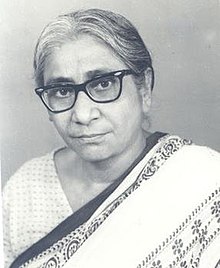
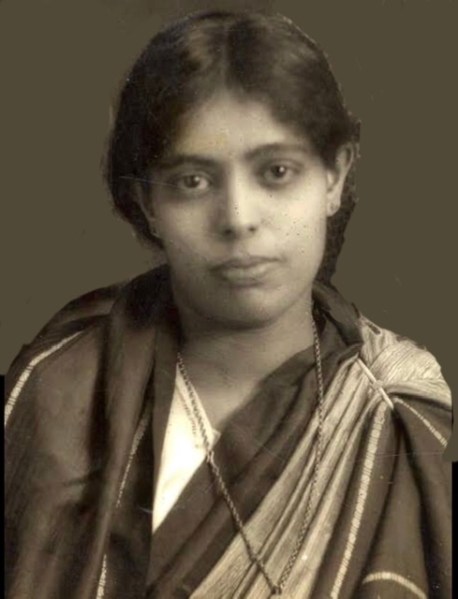
Celebrating Indian Women Scientists on International Women Scientist’s Day

The United Nations celebrates International Women’s Scientific Day on 11 February every year. The aim is to encourage women and girls to take up the field of STEM i.e. Science, Technology, Engineering and Mathematics.

This time the theme is laid out by leading lady scientist in the struggle against Covid-19.

According to the Ministry of Science and Technology, approximately 20% percent of women in 2019-20 are directly involved in research and development (R&D) in the country.

Females in technology education

According to the United Nations, 43% of students in STEM are studying in India. India ranks first on the list of 17 countries in this case. Russia ranks second in this list, while America is ninth with 34%. Among 2.80 lakh scientists, engineers and technologists working in India only 14% of them are women.

Women had significant involvement in the fight against Corona. From treatment and testing, women were ahead in drug discovery and patient care. Dr. Soumya Swaminathan of the country is working as a Chief Scientist in the World Health Organization to carry out the fight against the epidemic.

According to UNESCO, there are only 33% of women researchers worldwide. The percentage of women taking admission to Bachelors or Masters under STEM is 45 and 55 percent. Approximately 70% of women are in the field of health and social work but they are given 11 percent less salary than men. Hopefully as we advance into the future we will see more women achieving greater heights in Science and Technology.

Here are some of the female scientists of India who inspire us with their achievements in the field of STEM-

  • Asima Chatterjee

First Indian women to earn a doctorate in science, her research concentrated on natural products chemistry and resulted in anti-convulsive, anti-malarial, and chemotherapy drugs. She also discovered anti-epileptic activity which led to the development of an epilepsy drug called Ayush-56 and several anti-malarial drugs.

She won the C.V Ramen award, P.C Ray Award, and the S.S Bhatnagar award.

  • Janaki Ammal

an Indian botanist who worked on plant breeding, cytogenetics and phytogeography. Her most notable work involved studies on sugarcane and the eggplant and co-authored the Chromosome Atlas of Cultivated Plants (1945) with C.D. Darlington. She was awarded a Padma Shri by the Indian government in 1977. The University of Michigan conferred an honorary LL.D. on her in 1956 in recognition of her contributions to botany and cytogenetics.

  • Rohini Godbole

Prof. Godbole is part of the International Detector Advisory Group (IDAG) for the International Linear Collider in the European research lab, CERN. She is the Chair of the Panel for Women in Science initiative of the Indian Academy of Sciences.

She received Padma Shri for her contributions in science and technology (2019).

  • Tessy Thomas

Tessy Thomas joined DRDO in 1988, where she worked on the design and development of the new generation ballistic missile, Agni. She was appointed by Dr. APJ Abdul Kalam for the Agni Project. In addition, Tessy was the associate project director of the 3,000 km range Agni-III missile project. She was the project director for mission Agni IV which was successfully tested in 2011. Later, Tessy was appointed as the project director of the 5,000 km range Agni-V in 2009, which was successfully tested on 19 April 2012.

In 2018, she became the Director-General, Aeronautical Systems of DRDO

Thomas received the Lal Bahadur Shastri National Award for her contribution for making India self-reliant in the field of missile technology.

  • Ritu Karidhal

Dr. Ritu Karidhal Srivastava is an aerospace engineer, working with the Indian Space Research Organisation (ISRO). She was a Deputy Operations Director to India’s Mars orbital mission, Mangalyaan. She has been referred to as a “Rocket Woman” of India.

Karidhal received the ISRO Young Scientist Award in 2007 from A. P. J. Abdul Kalam, then president of India

  • Anna Mani

The only woman scientist to work with C.V. Raman, is well known for her work in atmospheric physics and instrumentation. She contributed to the study of radiation, ozone and atmospheric electricity, both on the surface and in the upper air using special sounding techniques. Joining the India Meteorological Department in 1948 she rose to become the Deputy Director General of Observatories in Delhi.

  • Soumya Swaminathan

Soumya Swaminathan is an Indian pediatrician and clinical scientist known for her research on tuberculosis and HIV Since March 2019, Swaminathan has served as the Chief Scientist at the WHO. Previously, from October 2017 to March 2019, she was the Deputy Director General of Programmes (DDP) at the WHO. In March 2019, Swaminathan became Chief Scientist of the World Health Organization, where she participated in regular bi-weekly press briefings on the COVID-19 Pandemic.

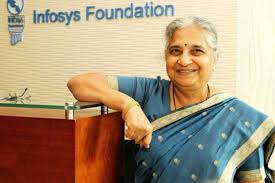
  • Sudha Murty

Sudha Murthy became the first female engineer hired at India’s largest auto manufacturer TATA Engineering and Locomotive Company (TELCO). She joined the company as a Development Engineer in Pune.

In 1996, she started Infosys Foundation & till date has been the Trustee of Infosys Foundation and a Visiting Professor at the PG Center of Bangalore University. She has written and published many books.

She won India’s fourth highest civilian award Padma Shri.

Women in Politics

Compared to the past, we now witness that there has been strengthening of women’s participation in all spheres of life as a major discourse of economic and social development in the last few decades. Many international and bilateral development agencies have proclaimed policies to integrate women better into social and economic processes. However, in spite of this, we see that they share a low presence in elected political bodies. This points to the fact that the universal adult franchise is inadequate to overcome the overwhelming structural constraints that impede female presence in political office. Some reasons for this include the traditional recruiting practices of political parties, the differential time budget of women, furthermore, in developing countries women have lower educational achievements due to social norms that restrict their freedom of movement.

A range of thinkers have opined that quotas for women have proved to be viable to overcome such structural obstacles. Countries that managed to enlarge the number of female representatives is because of the reservation of seats either through self-imposed party regulations or through legal action by the state. But there are critics who say that quotas are discriminatory in nature and it is also criticized by those who don’t view women as the political category in themselves.

India has a women’s quota of 33% at the local level. This happened via the 73rd Amendment to the Indian Constitution. It laid down new rules for the establishment and design of rural local government i.e. Panchayati Raj. This stipulates that at least 33% of seats and positions have to be filled by women. The proponents believe this quota will lead to their empowerment but critics claim that women will act merely as proxies for influential men and they also say that women in rural India lack basic qualifications that are required for such positions of power. What becomes important in this regard is that power defines politics and power is needed for the empowerment of women who have been marginalized historically and hence, proponents assume that through quotas women would transform politics by introducing new issues and different ways of doing politics.

Political Scientist Evelin Hust conducted a field research in Balipatna Block of Khordha district and Block Gania in Nayagarh district in Odisha where she identified a couple of problems. One such issue that she identified was that the female legislators may or may not work for the benefit of women. Therefore, quotas can be an enabling condition for women empowerment but it is not sufficient by itself. Another issue being that by and large women lacked knowledge about politics due to being less educated. Moreover, the dominant discourse is still opposed to women’s political role in rural politics. Women also lacked actual political presence of the representatives as it was noted that women signed up for the panchayat records at home while it was their husbands who participated in such meetings. 

However, there are also many positive gains in regard to the process of empowerment of the female representatives. They gained new knowledge about politics and local issues. Women have achieved higher visibility in village community which is a very important development for rural India. But women empowerment cannot be guaranteed by quotas alone, we need additional strategies in place to promote self-reliance of women as well as remove the structural obstacles.

WOMEN EMPOWERMENT IN CORPORATE SECTOR

If a woman can bring me into this Earth, if a woman can bear the labour of raising and guiding me, then certainly a woman can be my boss at work.

Times have indeed changed, and myths have been effaced where other than the ‘exotic’ not much came to mind when thought about Indian women. Indian women are becoming increasingly visible and thriving in the professional and public sphere.

Whether it is Barkha Dutt, who has become an idol for several journalists, Arundhati Roy, a Booker prize winner and a social activist, the industry bigwig and a magnate Indra Nooyi, or Kiran Mazumdar Shaw, who become the wealthiest Indian women after the initial public offering of her company Biocon, worth over $1.1 billion. All herald the advent of Indian professional woman.

During 1987-93, the role of women worldwide underwent a dramatic change. Women today share the podium with men in almost all fields, be it kitchen or office. They have now entrenched themselves as an integral part of the workforce.

After 1991, the increased role of the private sector and spurt in the number of MNCs facilitated a slow but definite rise in the number of women managers and entrepreneurs as against some abysmal figures two decades ago.

MNCs in the previous decade has witnessed quite a volatile environment with numerous challenges calling for the multitalented and experts. Many executives have emerged and are recognised by their expertise, organisational contribution and leadership despite these corporate vicissitudes. India has not by serendipity but by destiny witnessed the proliferation of women who have spurred and fostered growth in the economy and marked themselves as stellar performers. Women have time and again contrived to leave a good mark here.

I will not call it unfortunate rather consequential that we see only a handful of companies headed by women or women at the helm of strategic departments. Till the corner of the new century, women have not been welcomed to hold and glorify the top positions of a slew of corporate houses. Society had its stereotypes and biases against women in management where the male trains had higher perceived value than female traits. Innumerable myths had clouded this society and deemed women in control as anachronistic. Stymied with the straightjacket of envy and as a result male chauvinism, female employees confronted barriers while climbing up the corporate ladder. The perceived notion was that women are ruled by the heart and not head; they are more personal than professional/ the fallacious idea was deduced from their parallel profession, as an employee and as a mother.

Following are some of the myths perceived by society-

  1. Women switch jobs more frequently than men.
  2. They are not willing to travel extensively for the organisation.
  3. They fall apart in a crisis.
  4. They only work because their economic reasons force them to do so.
  5. They are too concerned with the social aspects of the jobs and cannot be entrusted with important matters

Furthermore, women have to deal with the complexities of a dual role as working women and mother. Unfortunately, they were thought of as less committed and tenacious. Lastly, they have inner battles as well likely mainly getting scupper by their apathy, which they need to fight and overcome by developing confidence, appropriate skills and attitude.

Male chauvinists, in particular, have denounced them with such shoddy treatment in mentoring, training and development at work, there was bound to be resentment. Fortuitously, our genial women didn’t resort to vandalism but charted their way into the corporate turf, competing for head to head with males. Today globally, women are the 10% senior managers in fortune 500 companies. Having said this, aspirations will never foil, and women are here to stay.

Today the beautiful part of women manager is that she is very good at juggling around tasks. One of their most persuasive skills is her ability at multitasking. Researchers have developed reports which state that women managers see things laterally, intuitively and differently. They can handle more contradictions, can tolerate more and can deliver much more than men. The reality is that women have a different value system, which they bring to the organisation. Management studies on gender initiatives have three findings:

  1. Some companies like female workers to be ‘boys’, wanting them to play golf, do things like men; they even commend them but sarcastically complement after doing a task efficiently- ‘She is the man’, citing male chauvinism again.
  2. Some companies recognise that females do the same work but require different incentives.
  3. Others recognise that women bring them a different approach and attitude to the workplace.

This doesn’t revamp the gender equality inherent in the system, which requires a paradigm shift in its perspective. A qualification of being a male and not a female doesn’t guarantee organisational excellence. Therefore, women in corporate India are aware of the various constraints they work under and are trying to make the best of the bargain. And when they do reach the managerial level, they bring with them the silver lining. For instance, employers today exhibit a preference to employ more women in Human Resources as compared to men and also in the retail and service sector. Hence, they are no longer damsels in distress.

The statistics say that 1/3rd of employees at Indian software companies today is a woman; which were stereotyped as abstract, obsessive and unsuitable for them. NASSCOM puts this figure at 38% higher than their western counterparts. Let me now give you a glimpse of the Indian corporate divas- Vidya Mahan Chhabria, the chairperson of the $2billion Jumbo Group and Naina Lal Kidwai, vice-chairperson and MD of HSBC securities and capital markets, are the two Indian women to feature of the list of the 50 most powerful women in International business by The Fortune magazine. There are several others like Sullaija Firozi Motwani heading Kinetic Group and Mallika Srinivasan leading Chennai- based Tractor Making Co. name TAFE, who are prominent figures in the burgeoning automotive sector and other who successfully manage family-run businesses. Shahnaz Hussain of Shahnaz Group, Renu Karnad of HDFC. Schuana, Alisha and Nadia Chouhan managing Parle Argo are the epitomai of the phenomenal works done by the Indian corporate women. In a country where sex ration is on the decline, where the representation of women in the Parliament has remained at an abysmal low of less than 7% since independence, the emergence of leading ladies, even if it just a few, In India’s corporate sector is hopefully only a precursor for more. In India, women can achieve greatness if their path is clear.

To trounce men in this sector is afar away but not inconceivable for it took men millenniums to dominate this society and now having witnessed women shake this supercilious pillar in the last two decades, it won’t be long before these emerging flairs vociferously exorcise this notion as they are getting empowered.