

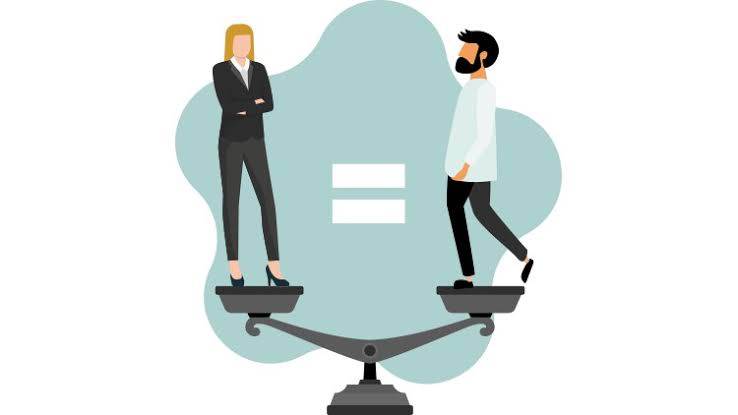
What is Sexism?
Sexism is defined as discrimination against a person solely on the basis of their sex or gender. This may lead to constraints on a certain gender in social, economic, cultural and political spheres. People tend to be prejudiced against women because they perceive them as inferior to men or believe that they should be prevented or oppressed from occupying the position they deserve in society. A product of society and its culture is gender roles which means assigning certain tasks or roles to genders which they are expected to fulfil. For instance, a widely popular gender role is that women belong inside households and the outer world is only for men.
History of Sexism in India
For centuries, gender bias has been prevalent in India. From the earliest times, the Indian society has followed patriarchy, a system in which men are seen as superior and as authority figures whereas women are forced to take a backseat. In the Vedic period, any political rights that they earlier had were taken away and practices such as child marriage became popular. This started a long history of gendered bias against women marked by dislike towards the birth of daughters to such an extent that female infanticide and foeticide were and are in practice even today. The social structure developed in such a way that women came to be seen as assets that men had to protect. Men were taught that their duty was to protect their two possessions- ‘zan and zamin’, women and land. Moreover, Brahmanical texts which laid down the laws did not give women equal rights. Women were expected to devote their lives to their husband and children, whereas polygamy among men was not uncommon. Women did not possess the right to property or inheritance, the only wealth they could own was ‘stridhan’, the money they received as a gift at their wedding. Moreover, Manusmriti advised women to not be greedy and use this money after their husband’s permission. During the British rule as well, the social customs did not change. However, there was a rise in demand for women empowerment. It was in the post Independence era that positive changes were observed but equality has not yet been achieved.
There remain many sexist issues that women have to overcome. Many female students still do not have access to education as reflected by the high elementary drop out rate and the low rate of women pursuing higher education. Apart from this, women are restricted by their families or taunted by society for wearing clothes that are not ‘acceptable’ whereas men feel free to urinate on the street or walk around in their underpants.
The minimum age of marriage is not gender-neutral in our country. When women get married, they are burdened with the responsibility of taking care of a new family along with giving up their identity by changing their surname.
Growing up in a society which places them on a pedestal, men often develop a feeling of entitlement over women. The bias towards men is clearly visible and we have to work till women are given equal status in the society.
Let’s shatter the patriarchy together.
 Eduindex
You must be logged in to post a comment.