
HYMENOPTERA

Classification

Kingdom: Animalia 

  Phylum : Arthropoda 

    Class: Insecta (Endopterygota) 

      Sub-class : Pterygota 

         Order:Hymnoptera 
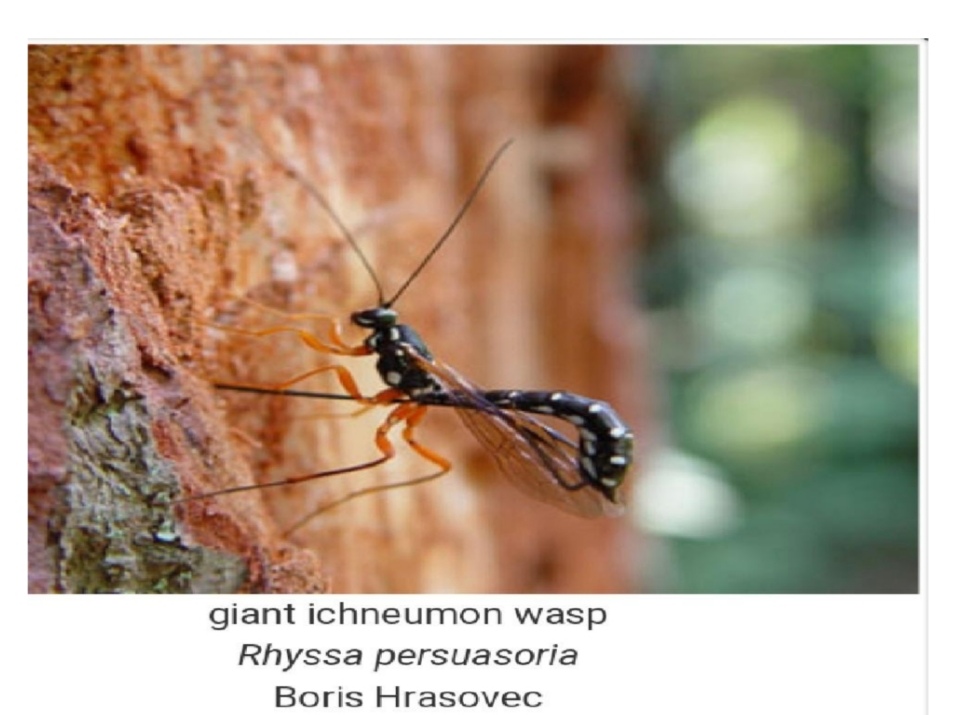
Hymenoptera

Hymenoptera means membrane wings. 

One of the largest insect order. 

Size range – 0.21nm(0.008inch)-5cm(2inch) in length. 

Usually 4 membranous wings

  • Forewing and hindwing are held together by small hook. 
  • Hind pair smaller than front pair

Complete metamorphosis (Holometabolous).

Mouthparts modified for chewing and sucking

In some form especially bees, certain Mouthparts (labium and maxillae) form a structure for sucking liquid food. 

Antennae usually with 10 or more segment. 

Larvae usually maggot like(i.e. Leg less) 

Large compound eyes, usually 3 simple eyes(ocelli) present. 

Females typically have a special ovipositor for inserting eggs into host or places that are otherwise inaccessible.

Most have constriction between the first 2 segment of the abdomen which is known as a wasp waist. 

Worldwide there are over 100,000 species included in the Hymenoptera. 

In Australia, there are about 1275 ant, 10,000 wasp, 2000 bee and 176 sawfly species.

Habitat

Found in all terrestrial habitat throughout Australia. 

May occur in soil, leaf litter and range of vegetation types especially flowers. 

Life Cycle

Some female produce young one without mating, while other can store sperms and spread out their egg laying to coincide with available food. 

Most species lay their egg to the host plant or paralysed food sources they have gathered into specially constructed nest. 

The Larvae will moult several times before they pupate.

Development may range from a few weeks for some parasitoid to much longer in social species. 

Feeding Habit

Feed on a wide range of foods depending on the species. 

Adult wasp mostly feed on nectar and honeydew. 

Some species are predator or parasites and spend their time searching out invertebrate hosts to lay their eggs on. 

Some are predator, scavenger, omnivores, seedeaters, fungus feeders or honeydew feeders

Suborder of hymenoptera :

1)  Symphyta(sawflies and horntails) 

2)Apocrita(ants, bees and wasps) 

Symphyta :(sawflies)

Most primitive Hymenoptera 

Have a broad junction between thorax and abdomen. 

Body has no waist. 

Paraphyletic group 

Females have a saw-like egg laying device for cutting slits in plants into which eggs are laid. 

Larvae are caterpillar-like and feed on outside and inside of plant tissue.

There are one or two parasitic families

lack of constriction at the base of the abdomen

 fly-like appearance and more extensive wing venation. 

They are often confused with lepidopteron larvae but it include–six or more pair of abdominal prolegs(which lack chrochet ), one lateral ocellus on each side of head. 

Apocrita :(wasps,bees,ants)

The body has a distinct waist. 

The first segment of the abdomen is incorporated into the thorax. A narrow region called the petiole joins this to the rest of the abdomen, called the gaster.

Characterized by Larvae that feed on other Arthropods. 

The larvae are maggotlike.

Have narrow junction between thorax and abdomen. 

Contain largest no. of species. 

Node is usually present. 

Further divided into:- Terebrantia(parasitica) which use their ovipositor for egg laying and the Aculeata, which have the ovipositor modified as a sting. 

Reference

australian.museum

ento.csiro.au

Projects.ncsu.edu

tolweb.org

britannica.com 

Human Physiology

Human physiology is the study of how the human body functions. This includes the mechanical, physical, bioelectrical, and biochemical functions of humans in good health, from organs to the cells of which they are composed. It serves as the foundation of modern medicine. The human body consists of many interacting systems of organs. These interact to maintain homeostasis, keeping the body in a stable state with safe levels of substances such as sugar and oxygen in the blood. Each system contributes to homeostasis, of itself, other systems, and the entire body. Some combined systems are referred to by joint names. For example, the nervous system and the endocrine system operate together as the neuroendocrine system

As a discipline, it connects science, medicine, and health, and creates a framework for understanding how the human body adapts to stresses, physical activity, and disease. Human physiology is closely related to anatomy, in that anatomy is the study of form, physiology is the study of function, and there is an intrinsic link between form and function. The study of human physiology integrates knowledge across many levels, including biochemistry, cell physiology, organ systems, and the body as a whole.

History of Human Physiology

The study of human physiology began with Hippocrates in Ancient Greece, around 420 BCE, and with Aristotle (384–322 BCE) who applied critical thinking and emphasis on the relationship between structure and function. Galen (ca. 126–199) was the first to use experiments to probe the body’s functions. The term physiology was introduced by the French physician Jean Fernel (1497–1558).In the 17th century, William Harvey (1578–1657) described the circulatory system, pioneering the combination of close observation with careful experiment. In the 19th century, physiological knowledge began to accumulate at a rapid rate with the cell theory of Matthias Schleiden and Theodor Schwann in 1838, that organisms are made up of cells. Claude Bernard (1813–1878) created the concept of the milieu interieur (internal environment), which Walter Cannon (1871–1945) later said was regulated to a steady state in homeostasis.

Study of human physiology

The major systems covered in the study of human physiology are as follows:

  • Circulatory system – including the heart, the blood vessels, properties of the blood, and how circulation works in sickness and health.
  • Digestive/excretory system – charting the movement of solids from the mouth to the anus; this includes study of the spleen, liver, and pancreas, the conversion of food into fuel and its final exit from the body.
  • Endocrine system – the study of endocrine hormones that carry signals throughout the organism, helping it to respond in concert. The principal endocrine glands – the pituitary, thyroid, adrenals, pancreas, parathyroids, and gonads – are a major focus, but nearly all organs release endocrine hormones.
  • Immune system – the body’s natural defense system is comprised of white blood cells, the thymus, and lymph systems. A complex array of receptors and molecules combine to protect the host from attacks by pathogens. Molecules such as antibodies and cytokines feature heavily.
  • Integumentary system – the skin, hair, nails, sweat glands, and sebaceous glands (secreting an oily or waxy substance).
  • Musculoskeletal system – the skeleton and muscles, tendons, ligaments, and cartilage. Bone marrow – where red blood cells are made – and how bones store calcium and phosphate are included.
  • Nervous system – the central nervous system (brain and spinal cord) and the peripheral nervous system. Study of the nervous system includes research into the senses, memory, emotion, movement, and thought.
  • Renal/urinary system – including the kidneys, ureters, bladder, and urethra, this system removes water from the blood, produces urine, and carries away waste.
  • Reproductive system – consisting of the gonads and the sex organs. Study of this system also includes investigating the way a fetus is created and nurtured for 9 months.
  • Respiratory system – consisting of the nose, nasopharynx, trachea, and lungs. This system brings in oxygen and expels carbon dioxide and water.