How to Help Your Teen Prepare for College Admissions Interviews

College and university interviews allow admissions officers to gain a more personal perspective on all applicants and what they can offer if they are accepted in the institution. Because of this, the interview is an important element of the whole college application process and one that all incoming freshmen should successfully pass.
How to Help Your Teen Prepare for College Admissions Interviews

Although your teen will be the only who will be interviewed, and thus, the outcome will depend on him or her alone, there are ways for you to help your child prepare for his or her college admissions interviews. Here are some tips for doing so:

1.    Enroll your teen in a college interview prep program

If acing interviews has never been your teen’s forte because he or she tends to get easily overwhelmed by his or her anxieties, you can help your child overcome this by signing him or her for some interview preparation courses.
Under this program, qualified instructors will conduct mock interviews with your teen to help him or her have an idea of how the whole process goes. The instructors will ask questions that are normally asked during formal admissions interviews and will assess your teen’s responses.
If the interviewers are not satisfied with your child’s answers or feel that they are lacking, and he or she doesn’t appear confident throughout the interview, they will give your teen pointers on how to come up with better, more suitable responses.
The instructors will give your child tips on how to boost his or her confidence and deal with his or her anxieties as well.

2.    Conduct mock interviews with your child

Allow your child to practice whatever he or she learned from the prep course at home by conducting mock interviews with him or her.
Aside from pointing out other weaknesses your teen may not be aware of, you can also give him or her other tips on how to improve. Make sure you tell your child the good points of the mock interview and compliment your child whenever you see him or her improving or making an effort. All these will help build up your teen’s self-confidence.

3.    Visit the college or university with your teen

Help your child feel more comfortable for an upcoming admissions interview by bringing him or her to the campus before the actual interview.
With a campus visit, your teen won’t have to go through feelings of unfamiliarity during the interview which can affect his or her concentration. Going for a visit will also help your child make a more informed decision about choosing this particular school or selecting another.
After the visit, encourage your teen to think about and reflect on the visit. Ask him or her questions that will make him or her finalize or reconsider his or her decision.  If your teen really likes the college or university, help him or her recognize why he or she would be a good fit for the school.

4.    Research about the school

Another great way you can assist your teen in preparing for the interview is to read about his or her potential college or university.
Compile some interesting facts about the school by visiting their website and reading their online newspaper. Give the information to your child and help him or her connect his or her academic passions, achievements, and extracurricular interests to distinct features of his or her course and the school.
By doing this additional research, you will allow your kids to skip this extra step and focus more on preparing their responses, and for the whole interview process.

5.    Help your teen prepare questions to ask during the interview

Since you already did some additional research about your teen’s potential school, work with him or her to come up with a list of questions to ask during the interview.
College admissions officers also encourage applicants to ask questions after the interview. You will enable your child to impress the interviewers by coming up with relevant, well-thought-out questions he or she can ask.
Make sure these questions are not generic or ones that can be answered by reading the school’s brochure. Try to think of questions that are specific such as what the college or university’s plans are of giving students more modern learning experiences, or how they will implement new technologies in your child’s chosen course.
Lastly, don’t forget to share other typical tips that will help your child ace his or her interview. These can include tips on:
       What to wear
       How much makeup to put on
       What accessories to wear
       What time to arrive for the interview
       How to shake hands professionally
Always remind your child that smiling and being confident and conversational will go a long way in enabling him or her to have a successful interview and be admitted by the college or university.
AUTHOR BIO
Maloy Burman is the Chief Executive Officer and Managing Director of Premier Genie FZ LLC. He is responsible for driving Premier Genie into a leadership position in STEM (Science, Technology, Engineering and Mathematics) Education space in Asia, Middle East and Africa and building a solid brand value. Premier Genie is currently running 5 centers in Dubai and 5 centers in India with a goal to multiply that over the next 5 years.

Bombay HC Quashes Government Resolution Making It Mandatory For Assistant Public Prosecutors To Secure 25% Conviction For A Promotion

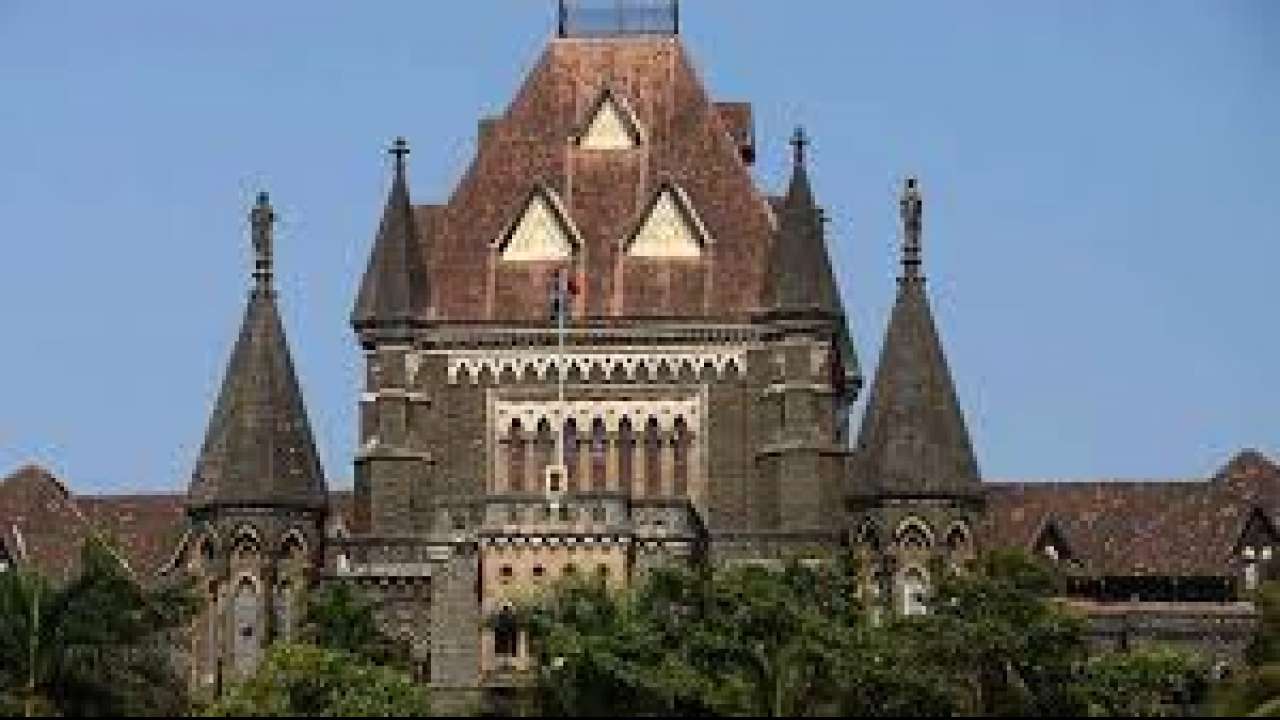
It must be noted first and foremost that in a landmark judgment with far reaching consequences for Assistant Public Prosecutors, the Aurangabad Bench of Bombay High Court in Maharashtra State Public Prosecutors Association Through its President Sanjay Purushottam Deshmukh versus 1. The State of Maharashtra Through its Secretary, Home Department, Mantralaya, Mumbai. 2. The Director of Prosecution, State of Maharashtra, Church Gate, Mumbai in Writ Petition No. 8117 of 2017 which was  reserved on 10th July 2018 and pronounced on 24th August 2018, has quashed resoundingly a government resolution dated May 12, 2015 imposing a condition that the Assistant Public Prosecutor, whose rate of conviction is less than 25% of the cases handled by him, is not entitled to promotion and thus accepted the contention of the petitioners as valid. A Division Bench of Justice SV Gangapurwala and Justice SK Kotwal at Aurangabad held that the said notification was irrational, unreasonable and against the law of the land. So it had to be quashed and naturally so! The Court was hearing a writ petition filed by Maharashtra State Public Prosecutors Association and the respondents were State of Maharashtra and the Director of Prosecution in the State. PR Katneshwarkar was advocate for the petitioner and NT Bhagat, A.G.P. for the State/respondent No. 1.Image result for bombay high court
            Submissions
                                 As it turned out, para 5 brings out that, “Learned Counsel for the petitioner submits that the impugned Government Resolution, specially Clause Nos. 4 and 7, mandating the Assistant Public Prosecutors in Maharashtra State to secure minimum 25% conviction in criminal cases for getting promotion, is unreasonable, contrary to the provisions of Criminal Procedure Code and decision of Supreme Court as well as decision of the High Court.”
                            To be sure, para 6 then points out that, “Learned Counsel for the petitioner submits that the Public Prosecutor, who represents the State in the criminal trial, is not expected to assure the State that in any case he would secure the conviction. On the other hand, being officer of the Court it is the duty of Public Prosecutor to place before the Court every material collected by the Investigating Officer fairly, irrespective of the fact whether it supports the prosecution case or not.”
                                         Bluntly put: Who can deny or dispute this? How can the Investigating Officer be biased and always disposed towards securing the conviction of the accused under any circumstances? Will this not make an open mockery of justice which always demands neutrality from not just Judges but also the Investigating Officers?  
                       It also cannot be lost on us that it is rightly contended in para 7 that, “Learned Counsel for the petitioner submits that the result of criminal trial depends on quality and quantity of evidence collected by the Investigating Officer and not on the performance of the Public Prosecutor. There is no nexus between the performance of Public Prosecutor and conviction or acquittal.” Absolutely right! To link the performance of Public Prosecutor with conviction or acquittal would be downright absurd!
                                   No wonder, it is then rightly stated in para 8 that, “His last submission is that the impugned Government Resolution being irrational and against the law of the land, deserves to be quashed. He placed reliance on the case of “S.B. Shahane and others Vs. State of Maharashtra and another”, [1995 Supp (3) Supreme Court Cases 37] and “Sushil Hiralal Chokhani Vs. State of Maharashtra”, [(2005) All M.R. (Cri.) 2673].” Can any sane person call such a Government Resolution rational? Speaking for myself, it has been rightly quashed by the Aurangabad Bench of the Bombay High Court!
                                    It would be apposite to now mention what has been contended by the Respondents. To begin with, it is pointed out in para 9 that, “Learned Counsels for the respondents submit that in the Maharashtra the rate of conviction in criminal case is less which compelled the Government to take policy decision and to pass the impugned Government Resolution for improvement in conviction rates, which is neither bias nor malafide, and therefore, the Court cannot interfere with the same. They submit that the conviction rate in Maharashtra State has dropped drastically as compared to the other States, which affects the public at large and sends a wrong signal to the society. The impugned Government Resolution was passed as a policy decision for achieving greater conviction rate and such sincere act of the State cannot be interfered by the Court.”
                                 Continuing in the same vein, it is then brought out in para 10 that, “Learned Counsels for the respondents submit that the respondents conduct seminars and workshops for the Public Prosecutors with sole object to help them to become competent and achieve higher conviction rate.” Para 11 then states that, “Respondents placed reliance on the case of “Delhi Science Forum Vs Union of India”, [1996 (2) SCC 405] wherein it is held that, “The Courts have their limitation as these issues rest with the policy makers of the nation. No directions can be given or is expected from the Courts while implementing such policies, unless there is a violation of infringement of any of the provisions” and “Tamil Nadu Education Department Vs State of Tamil Nadu”, (1980 Vol 3 SCC 97) wherein it is held that, “What was regarded as administratively impractical might, on later thought and activist reconsideration, turn out to be feasible and fair. The Court cannot strike down a Government Order or a Policy merely because there is a variation or contradiction. Life is sometimes a contradiction and even consistency is not always a virtue. What is important to know whether mala fide vitiates or irrational and extraneous factors foul”.”   
                                    Needless to say, para 12 then states that, “In fact, after going through the affidavit filed by respondent No. 2, it reveals that the respondent No. 2 has not played any role for passing the impugned Government Resolution and it was the policy decision of Government of Maharashtra. Our attention was drawn to the case of “Brij Mohanlal Vs Union of India and others”, [(2012) 6 SCC 502] wherein while considering when the Court should or should not interfere in the policy decision of the State, the following parameters are laid down:
(I)                         If the policy fails to satisfy the test of reasonableness, it would be unconstitutional.
(II)                     The change in policy must be made fairly and should give the impression that it was done so arbitrarily on any ulterior intention.
(III)                  The policy can be faulted on grounds of mala fides, unreasonableness, arbitration or unfairness, etc.
(IV)                 If the policy is found to be against any statute or the Constitution or runs counter to the philosophy behind these provisions.
(V)                     It is dehors the provisions of the Act or legislations.
(VI)                 If the delegate has acted beyond its power or delegation.”
                            After perusal of all the facts before it by the respondent, the Bench notes in para 13 that, “No doubt, after going through the data placed on record by the respondents, it is clear that conviction rate in Maharashtra State is dropping down. Now the question arises whether to enhance the conviction rate the Public Prosecutor, who represent the State in the criminal trial, can be compelled to get conviction at least in 25% cases handled by them.”
                           Going forward, it is then pointed out in para 14 that, “In the case of “S.B. Shahane and others Vs State of Maharashtra” (supra), while giving directions to the Government to separate Prosecution Department from Police Department, the Apex Court considered 14th Law Commission Report. The relevant paragraphs of that report are reproduced as under:-
“Para 12 – Police Prosecutors and their functioning –
                 It is obvious that by the very fact of their being members of the Police Force and the nature of the duties they have to discharge in bringing a case in court, it is not possible for them to exhibit that degree of detachment which is necessary in a prosecutor. It is to be remembered that a belief prevails amongst the Police Officers that their promotion in the Department depends upon the number of convictions they are able to obtain as prosecuting officers. Finally, they only control supervision of the work of these prosecuting officers that is exercised by the Department Officials.”
“Para 15. – Suggested remedial measure –
We therefore suggest that as a first step towards improvement, the prosecuting agency should be completely separated from the Police Department. In every district a separate prosecution department may be constituted and placed in charge of an official who may be called a ‘Director of Public Prosecutions’. The entire prosecution machinery in the District should be under his control. In order to ensure that he is not regarded as a part of the Police Department he should be independent official directly responsible to the State Government. The departments of the machinery of the Criminal Justice, namely, the Investigation Department and the prosecuting department should thus be completely separated from each other.”   
                                            It would be of immense significance to note here that para 15 explicitly states that, “After considering the above observations of the Law Commission, the Apex Court found that the Police Prosecutors who were functioning under the administrative and disciplinary control of the superior officers of the police force, were not able to exhibit needed degree of detachment expected of Prosecutors because their promotions to higher post in Department depended on the number of conviction they were able to obtain from the Court in the prosecutions conducted by them. Therefore, it was felt that the Prosecution Department should be beyond the control of police administration.”
                             Moving on, it is then observed in para 16 that, “The Apex Court in the case “State of Bihar Vs Ramnaresh Pandey and another” reported in (AIR 1957 SC 389) observed that the Public Prosecutor is an officer of the Court and he is bound to assist the Court with his fairly considered view and Court is entitled to have the benefit of the fair exercise of his function. Following this view the Division Bench of this Court in the case of “Sushil Chokhani” (supra) also held that the duty of Public Prosecutor is not merely to secure the conviction of and imposition of punishment to the accused. It is his primary duty to place before the Court all the evidence collected by investigating agency whether it be in favour or against accused for consideration thereof by the Court. Utmost fair and impartial attitude is expected in that regard from the Public Prosecutor.”
                                        Having said this, we now need to turn our attention to para 17 which while underscoring the need for Public Prosecutors to perform their duty impartially and drawing red lines for the State observes clearly and convincingly that, “Thus, it is clear that Public Prosecutors being an officer of the Court, is not expected to only grab the conviction, but is expected to act fairly before the Court and his performance should be only in the form of assistance to the Court for arriving at proper conclusion regarding conviction or acquittal of the accused. Considering such impartial duty to be performed by the Public Prosecutor, the State cannot set target before the Public Prosecutors to get conviction at least in 25% criminal cases handled by them. What is expected by the State of Maharashtra from the Public Prosecutor is totally against law as discussed above. In other words, by passing the impugned Government Resolution, the State Government cannot fix bench-mark for the Public Prosecutors to secure at least 25% conviction in the criminal cases handed by them, to get promotion.”
                             While underscoring the critical role played by the Investigating Officer, it is then pointed out in para 18 that, “The conviction or acquittal in criminal trial depends on various factors and mainly on the quality of material collected by the Investigating Officer. If the Investigating Officer has collected good quality of material as evidence against the accused and if he has taken necessary precaution while sealing and forwarding the important Muddemal articles to Chemical Analyst, certainly such case may result into conviction, provided that material witnesses stand constant at the stage of evidence. For conviction, the credit goes to Investigating Officer and witnesses. The conviction in criminal trial is not merely related with performance of the Public Prosecutor but as discussed supra depends upon various factors.”
                                  While punching holes in the impugned Government Resolution mandating 25% conviction in criminal trial, para 19 then goes on to add that, “Therefore, issuance of the impugned Government Resolution mandating achievement of 25% conviction in criminal trial is only as a result of above-said misconception. If any negligence has been committed by the Public Prosecutor while conducting the case, that cannot be ascertained only from conviction or acquittal, but it can be ascertained only on examination of the record of that particular case. Therefore, we hold that the condition of particular conviction rate to be achieved by Public Prosecutors, embodied in the impugned Government Resolution is definitely unreasonable.”
                                 Now coming to the concluding paras 20 to 22. Para 20 minces no words in concluding that, “Thus, the impugned Government Resolution is irrational, unreasonable and against the law of the land. Therefore, in view of the parameters laid down by the Apex Court in the case of Brij Mohan Lal” (supra), this Court can definitely quash the impugned Government Resolution. It follows that this Writ Petition deserves to be allowed.” Para 21 states that, “The Writ Petition is allowed. The impugned Government Resolution dated 12.05.2015 is quashed.” Finally, the judgment is concluded in para 22 by observing that, “Rule is made absolute in the above-said terms. Parties to bear their respective costs.”
                                       In the ultimate analysis, it is an exemplary and elegantly written landmark and laudable judgment which certainly deserves to be applauded! It is worth emulating by all the courts in all parts of India! This will ensure that Public Prosecutors can impartially render their job without getting biased with pre-determined notion to ensure conviction of accused at any cost to fulfil the criteria of ensuring the set 25% conviction rate to be eligible for promotions and other benefits which is downright absurd and can never serve the true purpose of justice in the real sense! No doubt, the Aurangabad Bench of Bombay High Court which has dared to deliver this landmark judgment deserves unqualified appreciation for it! It is the biggest warning to all States that they should desist from setting such ridiculous criteria and those who have already done so must immediately make suitable amendments to comply unconditionally with what the Aurangabad Bench of Bombay High Court has laid down so emphatically in this landmark case!
Sanjeev Sirohi, Advocate,
s/o Col BPS Sirohi,
A 82, Defence Enclave,
Sardhana Road, Kankerkhera,
Meerut – 250001, Uttar Pradesh.

Men Too Have Right Not To Be Defamed And Denounced

“You do me favors, I do you favors 30 years later
lets call it “me too”Image result for metoo
A strong woman does not wait 30, 20, 10 years to speak up, she slaps him on the first “bad touch” and knocks him out
Don’t hide your weakness, the favors in returns that you enjoyed and the work you got by “I was too scared” cry now
You were scared to say NO then because its hard to stand up for what is right and you were scared to loose your status and position in the work place, so YOU CHOOSE to accept the molestation and went back for more …Its very easy to play the abla nari card later and gain sympathy
The Shakti does not wait later to speak up, she silences the evil on spot…
My thoughts on this nonsense of me too
I don’t have me too stories …anyone who tried got a tight slap then and there and I was never afraid to walk out with my head held high ..be it a Job or relationship!
“strong women don’t have me too sob
Stories, they have I gave him thappad
(slap) back short essays”.”
        Geetanjali Arora in Sunday Times of India dated October 21, 2018
                                              First and foremost, I must laud, laud and laud Geetanjali Arora for what she has written so courageously on 9 October at 5.35 pm which got published on October 21 in one of the most reputed newspapers of India – The Times Of India! Why should women be treated always as victims? Why should women keep quiet for many decades and then speak up if she herself has nothing to hide from the world?
                                                  Even as this “#MeToo” campaign is being celebrated all over the world after American actress and activist Alyssa Milano kickstarted it by sending out a tweet asking anyone who’s faced sexual harassment or violence to write ‘me too’ as a reply which elicited a huge response in 85 countries, let me not shy away from saying that I very strongly feel that even men too have right not to be defamed and denounced before being tried in court of law in accordance with due procedure! This media trial even before the court trial has begun can never be justified under any circumstances! When women has nothing to hide from the world then why should there not be court trial instead of media trial?
                                                It cannot be ignored that even BJP lawmaker Udit Raj has termed the “#MeToo” movement as “wrong practice” and questioned the relevance of making sexual harassment allegations against anybody after 10 years. He has rightly questioned that, “What if complaints outing men for allegedly sexually harassing women proved wrong and the prestige of a man was destroyed? Taking action or seeking resignation of an accused merely on a complaint merely on a complaint of sexual exploitation means there is no need of police or the judicial system! Considering oral or written complaint of the victim of sexual exploitation as a judgement and taking action or seeking resignation means there is no need of police or judicial system. What if the matter proves wrong? Can the soiled prestige of a man be restored? The movement has intensified in the country with more women recounting their experiences of sexual harassment in the entertainment and media industry. There are several instances where women did this after taking money and then moved on to the next target.”
                                         Does men have no right? Should only women have all the right to speak up whenever she likes? Very few know that a woman had levelled serious allegations against eminent film actor Jitender about an act allegedly done by him 47 years ago when she was very young but the Himachal Pradesh High Court didn’t accept it and rejected the petition as it said that the time limit of lodging the complaint within the limitation period of 3 years was not complied with! Similarly MJ Akbar was left with no option but to resign as Union Minister of State for External Affairs even before the charges have been proved against him in any court and he too became a victim of “MeToo Media Trial”! Hang him if he is guilty but condemning him even before charges have been framed against him in any court and tarnishing his “impeccable reputation” which he has earned in his entire life in just few seconds cannot be justified under any circumstances!
                                           Is he not entitled to the benefit of the due process of law and legal defence? Should he not be given a chance to prove his innocence? There are many senior women journalists like Tavleen Singh who have always appreciated him and have said that they have never experienced any such “alleged misconduct” from him but this is never highlighted in the media! Only the numbers are highlighted that 16 or 17 women have levelled most serious charges against him but I want to ask: Why they never dared to lodge FIR against him in any police station of India till now? Why they kept quiet for so many years? Why inspite of being professional they chose to keep quiet? Were they not aware of their legal rights? Why did they not immediately complaint? Why they didn’t spill the beans earlier? Why was there a consensual conspiracy of silence? Why were they lured to keep quiet? Why they compromised themselves just for getting some material benefit? Are they not guilty just like an adulterous women?   
                                   Union Minister Pon Radhakrishnan asked: “If someone makes an allegation that such a thing happened when the incident happened we were playing together while in class 5. Would it be fair? The ‘MeToo’ movement had sullied the image of the country. Will it be right for men to start making similar accusations like them.” Even Union Minister for Tourism K Alphons has cautioned against frivolous complaints by “insincere” people with an agenda. He said that, “People should be extremely careful when they raise an allegation. Yes, if something inappropriate has taken place, it should be in public domain. There should not be any doubt about it, but I hope frivolous complaints are not raised by insincere people to fix people whom they do not like.” Just recently KWAN founder Anirban Das attempted suicide after sexual misconduct allegations but was saved by an alert police team patrolling the Navi Mumbai bridge! There are very few who care for what “mental trauma” a man undergoes when false allegations are levelled against him and he is defamed by “media trial” to the fullest even before charges are framed against him in any court! This must stop once and for all as it mutilates and maims to pieces a men’s integral right to reputation and right not to be defamed and denounced even before any court takes cognizance of the charges levelled against him!   
                                                It is rightly pointed in ‘The Times Of India’ editorial dated October 23, 2018 that, “The biggest threat to #Me Too is not fears of a male backlash over public shaming but anonymous complaints with sole intent to defame. Anonymous complaints have dangerous repercussions for personal lives, families and companies. Something as real and pervasive as corporate or professional rivalry and personal animosity can set the ball rolling. This then becomes less about and more about settling scores, hurting companies financially, or even gaming and subverting . Social media platforms also have a responsibility in such cases to remove the defamatory, anonymous material before it does more damage to reputations.”
                                                What has really shaken me most is the enlightening editorial written by Ramesh Thakur who is Professor of Public Policy, Australian National University in ‘The Times Of India’ dated November 9, 2018 titled “Believe Evidence Over Gender” which begins by coming straight to the point saying that, “The campaign began as a long overdue effort to call out men abusing positions of power and authority to exploit vulnerable women sexually, but then morphed into some settling of scores for dates gone wrong. In the age of social media, swarms of screaming mobs, and bird-dogging, the wildest accusations are amplified instantaneously across the whole world. This makes the charge themselves a powerful political weapon.” He rightly suggests the following to check mud slinging matches: “First, ensure anonymity for both or neither. Name only the guilty party after the trial. If the verdict is inconclusive, keep all names confidential. Second, treat both accuser and accused with sympathy, respect and courtesy. Evaluate the testimony of both with equal skepticism, ask questions accordingly, and weigh their statements against the facts. Everyone deserves a fair hearing: no one deserves to be believed in the absence of evidence; and shifting evidence and timeline to suit the narrative warrants over suspicion. Third, match the prosecution and penalty for false accusations to those of conviction. This will put in place a powerful deterrent. Without consequences, the political weaponisation of false charges will continue. Above all, believe evidence over gender. Senator Susan Collins was branded a rape apologist for doing so.”
                                                   Just recently we saw how in a landmark judgment titled ‘Joseph Shine v Union of India’, the Supreme Court very rightly decriminalized adultery as it felt that sex with consent cannot be crime! Law has to change with time. Even the definition of rape needs change and sex with consent should not be termed rape. A woman after having consensual sex with a men for many years cannot and should not be allowed suddenly to scream rape and play the victim card by weeping!  The moot question that arises here is: Why the women promptly didn’t lodge complaint if she was forced to enter into sexual relationship? Also, why always men alone be condemned? What if it was women who lured men into sex? Why always women version is to be believed? Why should women not be punished and sent to jail for at least an year if she levels false allegations against a men solely for denigrating, damaging and destroying his untarnished reputation in front of the world? Why should she not be made to pay compensation to him for tarnishing his reputation in front of the world? Why can’t the laws be suitably amended in this regard? Why should only women have right to reputation and right not to be defamed and denounced? Why do we ignore that our laws and Constitution treats men and women as alike? Why should men be deprived of the basic fundamental tenet of law that everyone is innocent until proven guilty?          
                           It cannot be lightly dismissed that in a criminal case, where the accused will forfeit his liberty if convicted, the standard of proof required to convict him not just is higher but also needs to be proved “beyond all reasonable doubt”. It is high time and all news channels and media groups should refrain from just glamourising “#MeToo” movement and should instead always convince so called “female victims” to approach the court at the earliest and not after 10 or 20 or 30 or 40 or 50 years and fight the legal battle which would seek evidence for both prosecution and proving innocence instead of just levelling the most damning allegations after many decades which only exposes her to “defamation suits” to get real justice for herself! Also, it must be ensured that the identity of both the women levelling the allegations and the men against whom allegations are levelled are not revealed in public until the case is decided at least in the lower court! Such cases too must be decided at the earliest and not after many years as the reputation of both the women and the men suffers enormously which only robs them of their right to privacy which just recently in KS Puttaswamy case has been declared to be a fundamental right!
                                                 We all have seen just recently how Italian actress Asia Argento who became a leading figure in the movement after accusing powerhouse producer Harvey Weinstein of rape, paid hush money to a man who claimed she sexually assaulted him when he was 17! The $380,000 payment was made to Jimmy Bennett who is an actor and rock musician who claimed Argento assaulted him in a California hotel room in 2013, according to the Times, which cited documents sent to the paper by an unidentified party. This was reported in Hindustan Times dated August 21.
                                            I am certainly not against women getting justice who have suffered at the hands of men but I also simultaneously favour the reasoned and logical stand that, “Men too have right not to be defamed and denounced without facing strictest legal scrutiny in accordance with due procedure of law”. Every Indian women must always abide by what Geetanjali Arora who is herself a female has said which I have quoted right at the beginning! Women are beating men in studies and outsmarting them in every field then why should they take things lying down when it comes to sexual offences?
                                           Why not lodge complaint at the first place instead of just indulging in character assassination after many years as part of “#MeToo” campaign and getting defamed yourself also and making a huge public spectacle of yourself? Now it is for women to decide for themselves which course of action they would like to adopt but now they must stop laying the victim card and abide in totality by what Geetanjali has said and never tolerate any sort of any misconduct from any men under any circumstances whatsoever! It is high time and now women must be actually treated at par with men by not always allowing women to play the victim card and encouraging her to always take men head on whenever any men dares to violate her physical or mental integrity in any manner!     
Sanjeev Sirohi, Advocate,     
s/o Col BPS Sirohi,
A 82, Defence Enclave,
Sardhana Road, Kankerkhera,
Meerut – 250001, Uttar Pradesh. 

Make Your Insurance Premium Payment Online

  There are many risks and uncertainties involved in our day-to-day lives and having insurance provides a support system in unforeseen circumstances. Whether it be life insurance, health insurance, vehicle insurance or any other, paying your premiums on time is a must for the insurance buyers. To keep your insurance policy in force, you need to pay your insurance premiums before the grace period.

There were days when paying your insurance premium was a hectic task, but that is not the case anymore, as now, you can pay your premiums online instantly. Many payment platforms enable you to make these payments online. This guide will help with the complete procedure as well as the benefits of making insurance premium payments online.

How to Pay Insurance Premiums Online?

Among many reasons as to why you would like to pay your insurance premiums online is because it is very easy to do so. Plus, it comes with many additional benefits such as cashback and a lot more. To pay your insurance premium online, follow these steps:

On Paytm mobile application

  • Open the Paytm mobile application on your phone
  • Click on ‘Recharge & Pay Bills’
  • Then click on ‘LIC / Insurance’
  • Select your Insurer
  • Enter your details such as Policy Number, Date of Birth, Mobile Number etc.
  • Click on ‘Get Premium’ to check your premium amount
  • Select your preferred mode of payment and complete the payment

On Paytm’s official website

  • Go to the ‘Insurance Premium Payment’ page on Paytm
  • Select your Insurer
  • Enter your details such as Policy Number, Date of Birth, Mobile Number etc.
  • Click on ‘Get Premium’ to check your premium amount
  • Select your preferred mode of payment and complete the payment

As soon as you complete your insurance payment on Paytm, you will be notified about the same on your registered mobile number and email address.

Benefits of Paying Insurance Premium on Paytm

Whether you need your premiums for life insurance, car insurance, health insurance or any other, you get a fast online payment service on Paytm. On top of that, there are many benefits explained as follows:

  • Your payments are safe and secure with Paytm
  • You can save money on your insurance premium with the help of cashbacks and vouchers
  • Paytm also sends you reminders for your insurance payment every month so that you don’t forget to pay them on time
  • Paytm saves your details such as policy number, etc.

Conclusion

Paying your insurance premiums on time ensures that your insurance policy remains in force and that you get the maximum benefit when there is a need for it. You can pay your insurance premiums instantly on the payment portals like Paytm and can also get additional benefits such as cashback.

Courts Have To Adequately Consider Defence Of The Accused U/s 313 CrPC; Non-Consideration Can Vitiate Conviction: SC

It must be observed right at the outset that in a remarkable and landmark judgment delivered on October 31, 2018 in Reena Hazarika v State of Assam in Criminal Appeal No. 1330 of 2018 (arising out of SLP(Crl.) No. 2440 of 2018) authored by Justice Navin Sinha for himself and Justice RF Nariman, the two Judge Bench of Apex Court observed quite clearly and convincingly that a solemn duty is cast on the court in the dispensation of justice to adequately consider the defence of the accused taken under Section 313 CrPC and to either accept or reject the same for reasons specified in writing. It was also held that, “Section 313, Cr.P.C. cannot be seen simply as a part of audi alteram partem, rather it confers a valuable right upon an accused to establish his innocence”. It also made it explicitly clear that if there has been no consideration at all of the defence taken by the accused under Section 313 of the Code of Criminal Procedure, the conviction can stand vitiated.   Image result for legal
                              In retrospect, it must be pointed out that a woman, who was convicted for the murder of her husband, had approached the Apex Court assailing concurrent verdicts of the trial court and the high court. In her 313 CrPC statement, she had stated that she was falsely implicated by one Manoj. She also said that she suspects some other persons are behind the murder of her husband.
                                   To put things in perspective, it is pointed out in para 2 that, “The appellant is the wife of the deceased convicted under Section 302 IPC and sentenced to life imprisonment with fine of Rs. 1000/- and in default, imprisonment for one month.” It is then pointed in para 3 that, “The deceased resided along with the appellant and his minor daughter CW-1, Miss Puja Hazarika, aged about 9 years, in the tenanted premises belonging to PW-1 Manoj Kumar Deka, PW-2 Dipen Deka and PW-3 Bhrigumoni Deka, who are brothers. The appellant is stated to have assaulted the deceased in the intervening night of 10.05.2013/11.05.2013. PWs. 1, 2 and 3 are stated to have heard noises and on going there, found the deceased with head injury attributed to a fall, but that the deceased was otherwise alright. They were unable to take him to the hospital because of rains and the unavailability of an ambulance. According to the post-mortem report proved by PW-6, Dr. Ritu Raj Chaliha the deceased had the following injuries on his person:-
(i)                         Chop wound of size 11cm x 2cm x muscle deep present on left side of cheek 6 cm medial tragus and 1 cm above angle of mandible.
(ii)                      Chop wound of size 9cm x 2cm x muscle deep present back of occipital region.
(iii)                   Chop wound of size 4cm x 2cm x muscle deep present on left side of forearm.
(iv)                   Laceration of size (5 x 4) cm present over left wrist joint on posterior aspect.
(v)                      Chop wound of size (4 x 1) cm x muscle deep, present over temporal region on right side.
(vi)                   Chop wound of size (6 x 2) cm of muscle deep present over back of scapula.
(vii)                Fracture of temporal bone on both sides.
 All injuries were ante mortem and caused by moderately heavy sharp cutting weapon and homicidal in nature.
                                     Simply put, it is then pointed out in para 4 that, “The Trial Court and the High Court held that the present was a case of circumstantial evidence. The last seen theory establishes the presence of the appellant with the deceased at night. Her unnatural conduct because she was not crying, she was the assailant of the deceased.” It is then rightly elaborated upon in para 5 that, “Mr. Singh, learned counsel for the appellant submitted that the courts below have erred in holding that the links in the chain of circumstances stood established leading to the only inescapable conclusion of the appellant being the assailant and no other hypothesis of innocence being possible. PW-6 has deposed that the injuries were caused by a moderately heavy sharp cutting weapon such as a dao, and that the fracture of the temporal bone may have been caused by a moderate heavy weapon. The recovery from the place of occurrence, as proved by PW-7 S.I. Nilomani Malakar, is of an ordinary knife used for cutting betel nut, one feet long with a bent sharp point. Chop injuries were not possible with the same. The alleged knife was not even shown to PW-6 for eliciting opinion if the injuries could have been caused by the same.”  
                                   Going forward, para 6 then states that, “Miss Diksha Rai, learned counsel for the appellant submitted that the appellant was last seen with the deceased in the room, confirmed by CW-1. The appellant has failed to offer any explanation of the circumstances as to how the death occurred at night. Her unnatural conduct in not even weeping was also noticed by PW-7. The knife used for assault , and blood soaked clothes of the deceased have also been recovered.”
                                Striking a note of caution, it is then observed in para 7 that, “We have considered the respective submissions, the orders of the courts below, as also the evidence available on record. Normally this court under Article 136 of the Constitution, would be reluctant in appeal to interfere with the concurrent findings of two courts by reappreciating the facts and evidence. But in an appropriate case, if this court finds that there has been erroneous consideration and appreciation of facts and evidence, leading to miscarriage of justice, this court is duty bound to ensure that ultimately justice prevails. It is a well established principle of criminal jurisprudence that several accused may go free, but an innocent person should not be punished. In Anant Chintaman Lagu v. State of Bombay, (1960) 2 SCR 460 this court observed as follows:-
“16. Ordinarily, it is not the practice of this Court to re-examine the findings of fact reached by the High Court particularly in a case where there is concurrence of opinion between the two Courts below. But the case against the appellant is entirely based on circumstantial evidence, and there is no direct evidence that he administered a poison, and no poison has, in fact been detected by the doctor, who performed the post-mortem examination, or by the Chemical Analyser. The inference of guilt having been drawn on an examination of a mass of evidence during which subsidiary findings were given by the two Courts below, we have felt it necessary, in view of the extraordinary nature of this case, to satisfy ourselves whether each conclusion on the separate aspects of the case, is supported by evidence and is just and proper. Ordinarily, this Court is not required to enter into an elaborate examination of the evidence, but we have departed from this rule in this particular case, in view of the variety of arguments that were addressed to us and the evidence of conduct which the appellant has sought to explain away on hypotheses suggesting innocence. These arguments, as we have stated in brief, covered both the factual as well as the medical aspects of the case, and have necessitated a close examination of the evidence once again, so that we may be in a position to say what are the facts found, on which our decision is rested”.”  
                                  While reiterating that benefit of doubt must be given to the accused, it is then stated in para 8 that, “The essentials of circumstantial evidence stand well established by precedents and we do not consider it necessary to reiterate the same and burden the order unnecessarily. Suffice it to observe that in a case of circumstantial evidence the prosecution is required to establish the continuity in the links of the chain of circumstances, so as to lead to the only and inescapable conclusion of the accused being the assailant, inconsistent or incompatible with the possibility of any other hypothesis compatible with the innocence of the accused. Mere invocation of the last seen theory, sans the facts and evidence in a case, will not suffice to shift the onus upon the accused under Section 106 of the Evidence Act, 1872 unless the prosecution first establishes a prima facie case. If the links in the chain of circumstances itself are not complete, and the prosecution is unable to establish a prima facie case, leaving open the possibility that the occurrence may have taken place in some other manner, the onus will not shift to the accused, and the benefit of doubt will have to be given.”
                                 Needless to say, para 9 then brings out that, “Before proceeding with the discussion further, we deem it proper to notice that the appellant did not have the benefit of a lawyer of her choice, both before the trial court and the High Court, naturally because of some handicap. She had to be provided legal assistance by the Legal Services Authority. This is not to make any comment or observation on the nature of the defence made available with the appellant but only to notice her handicap in establishing her innocence.”
                                        As it turned out, para 10 then observes that, “Pw-1 deposed that he was told by the deceased at about 11:00 p.m. on 10.05.2013 that he had suffered a head injury because of a fall, and that the witness did not provide any first aid to the deceased though he along with his brother PW-2, did try to call an ambulance at about 12:00 am. Additionally, that he did not see any other injuries on the deceased. On the contrary, CW-1 deposed that PW-1 had applied Dettol to the wounds of the deceased.” What follows next is para 11 which envisages that, “Contrary to the statement of PW-1, his brother, PW-2 deposed that he was woken up at about 2-3 a.m. by the appellant who was crying and told him that her husband had suffered head injury. The deceased is then stated to have himself told the witness that the injury was not serious. The contradiction in the evidence of PW-1 and PW-2 is further compounded by the third brother PW-3, deposing that PW-2 informed him of the injury to the deceased at 12:00 am. All the three witnesses have deposed that the deceased was of heavy built, because of which they were unable to take him to the hospital on the motor-cycle, for the treatment. The post mortem however recites that the deceased was of average built. If the deceased had merely suffered a head injury by fall and was otherwise fit to talk to the witnesses, we see no reason why he could not have been taken to the hospital on a motorcycle. While PW-3 states that the deceased was wearing clothes, the post-mortem report shows that the deceased was brought in an underwear only. The clothes of the deceased were found near the well in a gunny bag. But PW-7 did not consider it necessary to have the blood group examined by the FSL, which in our opinion in the facts of the case is a major lapse.”  
                       While pooh-poohing the serious charges levelled against the appellant, it is then observed in para 12 that, “The post-mortem report makes it evident that the chop wounds could not have been caused by the small knife alleged to have been recovered. Fracture of the temporal bone with the knife was an impossibility. PW-6 in the deposition ruled out that the injury could be caused by a fall. The post mortem did not find any alcohol in the body of the deceased. The witness also opined that injury no. 4 could have been caused while the deceased may have attempted to save himself from assault. The multiple injuries could certainly not have been caused by one person and tells an entirely different story by itself that the assailants may have been more than one. The chop injuries were possible by a modertae and heavy weapon like a dao. In our opinion also, if the deceased was of average built, it is difficult to accept, according to normal prudence and human behaviour and capacity, that the appellant being a woman, could have made such severe and repeated assault on the deceased, who was her husband, with a small knife, without any resistance and suffered no injury herself.”
                                     Punching further into the holes of the prosecution version, it is then observed in para 13 that, “PW-7 claimed to have found a knife with the smell of Dettol. Even if the knife had been wiped to erase traces of blood the wooden handle could have revealed much if it had been sent to the FSL. The witness again offers no explanation why he did not do so. No bottle of Dettol has been recovered. There is absolutely no evidence that the deceased would often assault the appellant and the minor child in a drunken condition. The fact that PW-7 did not notice tears in the eyes of the appellant, deemed an unnatural conduct by the courts below, cannot be sufficient to draw an adverse inference of guilt against the appellant. The appellant being in a helpless situation may have been stunned into a shock of disbelief by the death of her husband. It is not uncommon human behaviour that on the death of a near relative, or upon witnessing a murderous assault, a person goes into complete silence and stupor showing no reaction or sensibility. We also find it difficult to believe and rely upon the evidence of CW-1 primarily because of her minority. If the deceased had been assaulted by the appellant in the room at night, it would certainly have led to noise and shouts and the witness could not have possibly slept throughout without waking up.”
                                    It also cannot be lost on us that the very basis of the prosecution case against the appellant stands eroded when we go through para 14. It is pointed out in para 14 that, “PW-1 deposed that he informed the police the next morning at about 8:00 a.m. But PW-7 has deposed that information was given to the police station by PW-1 at about 12:00 p.m. on 11.05.2013 and the General Diary entry no. 452 made in the police station at 12.20 p.m., and the F.I.R. registered at 7:45 p.m. These are suspicious circumstances which leaves enough time for planning after thinking for the manner in which allegations were to be made for deflecting that the occurrence took place in a manner other than what may have happened actually.”
                         To be sure, it is then brought out in para 15 that, “In the background of the aforesaid discussion regarding the nature of evidence and the manner of its appreciation, we deem it proper to set out the English translation in the paper book of defence taken by the appellant under Section 313 Cr.P.C. as follows:-
“Ans: On the date of occurrence at about 8-8:30 while I have returend from my work at Satgaon, I saw that my husband was lying in the room with bleeding injury. On my cry, Manoj Deka and his brothers come there with drink in the hand of one brother. Thereafter I saw Manoj Deka was putting Dettol on the wound of my husband. I also rang to 108 ambulance. When, I wanted to call police Manoj Deka, snatched the phone from me. On my crying neighbouring peoples arrived there. I tred to take my husband to medical but due to non co-operation by Manoj Deka and others, I failed to take him to Medical. On that night at about 9.30 my husband expired and Manoj Deka and other neighbours were sitting. Subsequently, Manoj Deka has falsely implicated me. I have the suspicion that my husband was physically assaulted earlier at some place by Mintu Nath, Dipak Das and Jeetu Deka while taking liquor and brought my husband on injured condition and laid in the room. I also saw the lock of my room in broken condition, when I arrived here. I have not killed my husband. I am innocent.”
In this same para, it is then pointed out that, “PW-2 has acknowledged in his evidence that he would have drinks with the deceased. According to the post-mortem report, the stomach of the deceased was found empty, suggesting that the assault had taken place earlier in the evening contrary to the evidence of PWs. 1, 2 and 3 suggesting the assault in the late hours of the night by which time the deceased would undoubtedly have had his dinner.”
                      While underscoring the rights conferred by Section 313 of the Cr.P.C on the accused, para 16 then points out that, “Section 313, Cr.P.C. cannot be seen simply as a part of audi alteram partem. It confers a valuable right upon an accused to establish his innocence and can well be considered beyond a statutory right as a constitutional right to a fair trial under Article 21 of the Constitution, even if it is not to be considered as a piece of substantive evidence, not being on oath under Section 313(2), Cr.P.C. The importance of this right has been considered time and again by this court, but it yet remains to be applied in practice as we shall see presently in the discussion to follow. If the accused takes a defence after the prosecution evidence is closed, under Section 313(1)(b) Cr.P.C. the Court is duty bound under Section 313(4) Cr.P.C. to consider the same. The mere use of the word ‘may’ cannot be held to confer a discretionary power on the court to consider or not to consider such defence, since it constitutes a valubale right of an accused for access to justice, and the likelihood of the prejudice that may be caused thereby.Whether the defence is acceptable or not and whether it is compatible or incompatible with the evidence available is an entirely different matter. If there has been no consideration at all of the defence taken under Section 313 Cr.P.C., in the given facts of a case, the conviction may well stand vitiated. To our mind, a solemn duty is cast on the court in dispensation of justice to adequately consider the defence of the accused taken under Section 313 Cr.P.C. and to either accept or reject the same for reasons specified in writing.”  
                        It is then lamented in para 17 that, “Unfortunately neither Trial Court nor the High Court considered it necessary to take notice of much less discuss or observe with regard to the aforesaid defence by the appellant under Section 313 Cr. P.C. to either accept or reject it. The defence taken cannot be said to be irrelevant, illogical or fanciful in the entirety of the facts and the nature of other evidence available as discussed hereinbefore. The complete non-consideration thereof has clearly caused prejudice to the appellant. Unlike the prosecution, the accused is not required to establish the defence beyond all reasonable doubt. The accused has only to raise doubts on a preponderance of probability as observed in Hate Singh Bhagat Singh vs State of Madhya Bharat AIR 1953 SC 468. A similar view is expressed in M. Abbas vs. State of Kerala, (2001) 10 SCC 103 as follows:-
“10….On the other hand, the explanation given by the appellant both during the cross-examination of prosecution witnesses and in his own statement recorded under Section 313 CrPC is quite plausible. Where an accused sets up a defence or offers an explanation, it is well settled that he is not required to prove his defence beyond a reasonable doubt but only by preponderance of probabilities….”
                           While allowing the appeal in para 19, it is then finally and perhaps most importantly held in para 18 that, “The entirety of the discussion, in the facts and circumstances of the case, the nature of evidence available coupled with the manner of its consideration, leaves us satisfied that the links in the chain of circumstances in a case of circumstantial evidence, cannot be said to have been established leading to the inescapable conclusion that the appellant was the assailant of the deceased, incompatible with any possibility of innocence of the appellant. The possibility that the occurrence may have taken place in some other manner cannot be completely ruled out. The appellant is therefore held entitled to acquittal on the benefit of doubt. We accordingly order the acquittal and release of the appellant from custody forthwith, unless wanted in any other case.” Rightly said!
Sanjeev Sirohi, Advocate,
s/o Col BPS Sirohi,
A 82, Defence Enclave,
Sardhana Road, Kankerkhera,
Meerut – 250001, Uttar Pradesh.  

CJI Ranjan Gogoi Demonstrates His Firm Resolve And Firm Commitment To Expeditiously Fill Up Judicial Vacancies In Lower Courts

It is most reassuring, refreshing and reconsoling to note that for the first time in at least my memory have I ever noticed a Chief Justice of India who even before assuming office outlined his priorities very clearly and courageously – to fill up judicial vacancies especially in lower courts which are at an all time high and also in the high courts and even the Supreme Court and to ensure that justice is accessible to the poor, needy and deprived! We have seen for ourselves how many decades are consumed in deciding a very small petty case what to talk about complex cases like the one of Ayodhya which has been lingering since last more than 65 years! This must now come to an end and CJI Ranjan Gogoi appears fully committed to ensure this!

                                 To be sure, the Supreme Court on November 1 cautioned the States and the High Courts that it will resort to a “centralised selection mechanism” if they do not act promptly to fill the over 5,000 judicial posts lying vacant in the lower judiciary. The Apex Court did not pull back punches in reprimanding the States and also the High Courts for their inefficiency in filling the vacancies in the subordinate judiciary which is staggering at an all time high! It is a national shame that it takes many decades for cases to be decided even in lower courts and despite all this, the judicial vacancies are not filled up and it takes many months for the results of Preliminary exams to come and when it does come then another few months are consumed in conducting Mains and then months in interview and then again a lot of time in declaring the final merit list! Even after the final merit list is declared, it still takes a lot of time for successful candidates to ultimately join! This is especially true in big states like UP which has maximum pending cases and where maximum judges vacancies arise every year!  
                         Not just this, what is noticed is that some High Courts even attach minimum marks with interview for qualifying even though Supreme Court in Himani Malhotra v NCT (State of Delhi) and in other cases also clearly held that there would be no minimum marks for interview as it is whimsical, arbitrary and subject to the whhims and fancies of a single individual! Even vacancies are not notified for many years as we saw in Delhi where no vacancy was notified for HJS from 2010-2013 and in some other states like Haryana, Rajasthan etc the situation was much worse! Worst of all, arbitrary conditions are attached like candidate desiring to appear in exam must have minimum salary of few lakhs in a year as we saw in Haryana from 2014 onwards which deprives those bright lawyers from appearing in exam just because they don’t earn in few lakhs which under no circumstances can ever be justified because money can be no criteria for appearing in an exam for judge! Even eminent lawyers like KTS Tulsi did not get cases for initital few years in Supreme Court so was he not treated as lawyer and how can this be a handicap for barring him to appear in an exam for becoming Judge? By the way, money minded lawyers never want to become judge with few exceptions because for them money is first and top priority and as a Judge their salary is very miniscule when compared to their salary as a lawyer where they can mint money as much as they like by dint of their expertise and skills! This must all end and this is exactly what the CJI wants and very rightly so!
                                      Bluntly put, a Bench led by Chief Justice of India Ranjan Gogoi and also comprising Justice UU Lalit and Justice KM Joseph lambasted the High Courts and the States for not doing enough to fill up judicial vacancies in the lower judiciary both in the PCS and HJS! They held that, “We are telling all high courts and states that we are keeping you under constant gaze. If you cannot fill vacancies, then we will take over and have a centralised exam. We want our judges to be in place.”
                     As it turned out, the Chief Justice of India (CJI) Ranjan Gogoi rebuked the states and high courts for not filling up vacancies. The CJI minced no words in putting across his firm and blunt message by observing that, “Our gaze is on all states. If the vacancies cannot be filled by you, we will take over and do what is needed….There are hordes of applications by candidates who are deserving and what are you doing? Nothing was initiated to address the issue till we began monitoring! Our recurring queries have also not yielded any definite replies!”   
                                What is even more disquieting to note is that even Centre itself is not happy with all this! The Centre has proposed a centralised examination to fill them up, pointing to a staggering 2,76,74,499 cases pending in subordinate courts! Statistics reveal that there are 5,223 vacancies in trial courts! Why still have states and high courts miserably failed in filling up vacancies in time and in ensuring that results are declared in time and soon fresh vacancies are notified? Why was there no sense of urgency? With what face will now they accuse Centre of meddling in their domain when they have just not ensured the filling up of judicial vacancies in time? What is the point in now opposing the suggestion?
                                        As things stand, the situation in Delhi and Haryana was discussed as an example. It was pointed out by the Bench that Delhi had taken at least a year to fill up just 200 vacancies! Pulling up the Delhi High Court, the CJI said that, “It is taking over a year to complete the selection and recruitment when the number of posts is only 200. This casual attitude is not justified!” 
                                  As if this was not enough, in Haryana, the Bench revealed that the examination held in 2015 for filling up 60 posts of Judges was announced and 19,000 law graduates applied but it was cancelled and the fresh advertisement issued in 2018 attracted a huge rush with 13,000 more candidates applying which understandably led to collapse of the official website on the last date of application. No wonder, CJI Ranjan Gogoi was constrained to remark that, “All high courts and public service commissions (agency that holds exams) have been very casual.” All High Courts and Public Service Commissisons which is the agency that holds exams must seriously do a lot of self-introspection because it is none other than the CJI and 2 Judges of the Apex Court also along with him who have come to this unpalatable conclusion which is a stark reality and cannot be bruhed away lightly!
                                             Not stopping here, CJI added that nothing was initiated to address the issue till the Supreme Court began monitoring it on the administartive side. Even then, he rued, recurring queries have not yielded any definite replies! Both States and high Courts have a lot of explaining to do on this count!
                                         It may be recalled that it was on October 22 that the Bench headed by CJI Ranjan Gogoi took up the matter on its own volition under Article 142 of the Constitution and ordered all state governments and High Courts to update it on the status of recruitment of lower court Judges and whether the timeline for selection as laid down by the top court in a 2006 verdict by a Bench headed by the then CJI YK Sabharwal in April 2006 in the Malik Mazhar Sultan case was being followed. As per the order, appointment of new Judges to subordinate courts has to be completed in nine months. The vacancies must be notified by March 31 and they must be filled up by October 31!
                                   Be it noted, passing a suo motu order in the wake of the alarming number of vacancies for the post of Judges in the subordinate judiciary across the country, CJI Gogoi had required all the High Courts to relay to the registry of the Apex Court the following information by October 31 –
·      The dates on which the recruitment processes for lower and higher judicial services have been initiated and are expected to be completed;
·       Whether the time taken or likely to be taken is beyond the schedule prescribed by this court in Malik Mazhar Sultan v. UP Public Service Commission (2006). If yes, the reasons be furnished by the concerned registries;
·      Whether time expected to be taken to complete the ongoing process can be shortened to comply with the guidelines in Malik Mazhar which the court undertstands to be prescribing the outer time limit and not the minimum period;
·      The number of vacancies which have occurred in respect of the civil judge and the higher judicial services cadre since the date of issuance of advertisement of vacancies till the date on which the processes are expected to be completed;
·      Whether the infrastructure and manpower in different states are adequate if all posts which are borne in a cadre are to be filled up.
                              It would be imperative to mention here that deciding to examine the status in batches, the Bench summoned in person the Registrar General and authorized representatives of the Chief Secretaries of Uttar Pradesh, Maharashtra, West Bengal, Chhattisgarh, Delhi and the North-Eastern states on November 15 to be present for fast forwarding recruitment process. It would certainly not be an exaggeration to conclude that  this is the most historic and commendable step taken by the CJI for which the whole nation must stand indebted to him instead of targeting him for not focusing on issues which in his opinion are not as important as this! The Bench of Apex Court headed by CJI has also asked the Registrars General of the concerned High Courts, the Secretaries of the State Public Service Commissions as well as the Authorized Officer(s) of the States concerned to interact with senior and eminent lawyer Shri Shyam Divan who is Amicus Curiae in this vital case to present the result/position before the Court in as precise a manner as possible!
                                         Needless to say, if what has been commendably and courageously undertaken by CJI to fill up  all judicial vacancies in the lower courts in next nine months is undertaken expeditiously, it would be the biggest revolution in judiciary ever witnessed till now and it will certainly witness the huge pending cases coming down considerably! Who will not like this to happen? Only those who place vested interests above national interets! Not even a single Judge post should ever be vacant under any circumstances just like the post of MP and MLAs are never kept vacant and immediately bye elections are held whenever the seat becomes vacant due to any reason like death of sitting MP or MLA etc! With CJI Ranjan Gogoi at the helm of affairs we all have every reason to be pretty confident that the filling up of all vacancies in lower courts will no longer be a mirage or utopia and will certainly translate into palatable reality by expeditiously filling up the vacancies for which the CJI undoubtedly deserves full credit as it is his firm resolve and firm commitment that he right from the day he assumed office has demonstrated that he means action  and will not tolerate status quo of any kind as long as he is the CJI! Very rightly so!
Sanjeev Sirohi, Advocate,
s/o Col BPS Sirohi,
A 82, Defence Enclave,
Sardhana Road, Kankerkhera,
Meerut – 250001, Uttar Pradesh.

Aadhaar Held Mandatory For Government Subsidies And PAN After ApexCourt Upholds Its Validity By 4:1 Majority

                                        It must be stated first and foremost that in a landmark judgment with far reaching consequences directly affecting the common person, the Apex Court in Justice KS Puttaswamy (Retd) and another v Union of India and others in Writ Petition (Civil) No. 494 of 2012 and connected matters has upheld the validity of Aadhaar for availing government subsidies and benefits and for filing income tax returns! The lone dissenting Judge in this landmark case is Justice Dr DY Chandrachud. He differed entirely from the majority and struck down Section 139AA.Image result for aadhar card
                                         Before proceeding ahead, let us discuss the entire chronological events that led to this landmark and laudable judgment by the Apex Court. They are as follows: –
January 2009: Planning Commission notification on UIDAI.
2010-2011: National Identification Authority of India Bill, 2010 introduced.
November 2012: Retired Justice KS Puttaswamy and others file PILs in Supreme Court challenging validity of Aadhaar.
November 2013: Supreme Court orders all states and Union Territories be impleaded as respondents.
March 3, 2016: Aadhaar Bill, 2016 introduced in the Lok Sabha; later passed as money bill.
May 2017: Former Union Minister and Congress leader Jairam Ramesh moves Apex Court challenging the Centre’s decision to treat Aadhaar Bill as a money bill.
August 24, 2017: Supreme Court nine-Judge Bench rules that right to privacy is a fundamental right.
December 15, 2017: Supreme Court extends deadline for mandatory linking of Aadhaar with various services and welfare schemes till March 31, 2018.
January 17, 2018: Supreme Court five-Judge Bench begins hearing Aadhaar case.
January 25, 2018: Apex Court asks Chhattisgarh High Court to modify in 10 days its order directing all trial courts in the state to mandatorily accept copies of Aadhaar card for releasing an accused on bail.
February 19, 2018: Delhi BJP leader Ashwini Kumar Upadhyay seeks direction to Election Commission to take appropriate steps to implement an ‘Aadhaar based election voting system’.
February 21, 2018: Supreme Court says the alleged defect that citizens biometric details under the Aadhaar scheme were being collected without any law, could be cured by subsequently bringing a statute.
March 7, 2018: Supreme Court says Aadhaar number not mandatory for enrolment of students in all India exams.
March 13, 2018: Supreme Court extends March 31 deadline of Aadhaar linking till it gives its order.
March 22, 2018: UIDAI CEO says breaking the Aadhaar encryption may take “more than the age of the universe for the fastest computer on earth”.
March 28, 2018: Social activist Reshma Prasad seeks direction to the Centre to create a separate third gender category option on PAN cards for transgenders.
April 3, 2018: Centre tells Apex Court that Aadhaar law is just, fair and reasonable.
April 17, 2018: Apex Court raises concerns that there is a threat of Aadhaar data misuse.
April 25, 2018: Supreme Court questions Centre on mandatory seeding of Aadhaar with mobile.
May 10, 2018: Supreme Court reserves verdict.
September 26: Supreme Court upholds constitutional validity of Aadhaar. It also strikes down provisions including its linking with bank accounts, mobile phones and admissions.  
                                            To be sure, Justice AK Sikri while authoring the majority judgment for himself, CJI Dipak Misra and Justice AM Khanwilkar set the ball rolling by opening the judgment with the famous time-tested adage which says that, “It is better to be unique than the best. Because, being the best makes you the number one but being unique makes you the only one.” Para 2 then adds that, “ ‘Unique makes you the only one’ is the central message of Aadhaar, which is on the altar facing constitutional challenge in these petitions. ‘Aadhaar’ which means, in English, ‘foundation’ or ‘base’, has become the most talked about expression in recent years, not only in India but in many other countries and international bodies. A word from Hindi dictionary has assumed secondary significance. Today, mention of the word ‘Aadhaar’ would not lead a listener to the dictionary meaning of this word. Instead, every person on the very mentioning of this word ‘Aadhaar’ would associate it with the card that is issued to a person from where he/she can be identified. It is described as an “Unique Identity’ and the authority which enrolls a person and at whose behest the Aadhaar Card is issued is known as Unique Identification Authority of India (hereinafter referred to as ‘UIDAI’ or ‘Authority’). It is described as unique for various reasons. UIDAI claims that not only it is a foolproof method of identifying a person, it is also an instrument whereby a person can enter into any transaction without needing any other document in support. It has become a symbol of digital economy and has enabled multiple avenues for a common man. Aadhaar scheme, which was conceptualised in the year 2006 and launched in the year 2009 with the creation of UIDAI, has secured the enrolment of almost 1.1 billion people in this country. Its use is spreading like wildfire, which is the result of robust and aggressive campaigning done by the Government, governmental agencies and other such bodies. In this way it has virtually become a household symbol. The Government boasts of multiple benefits of Aadhaar.”
                                     Going forward, para 3 then goes on to say that, “At the same time, the very scheme of Aadhaar and the architecture built thereupon has received scathing criticism from a section of the society. According to them, Aadhaar is a serious invasion into the right to privacy of persons and it has the tendency to lead to a surveillance state where each individual can be kept under surveillance by creating his/her life profile and movement as well on his/her use of Aadhaar. There has been no other subject matter in recent past which has evoked the kind of intensive and heated debate wherein both sides, for and against, argue so passionately in support of their respective conviction. The petitioners in these petitions belonging to the latter category who apprehend the totalitarian state if Aadhaar project is allowed to continue. They are demanding scrapping and demolition of the entire Aadhaar structure which, according to them, is anathema to the democratic principles and rule of law, which is the bedrock of the Indian Constitution. The petitioners have challenged the Aadhaar project which took off by way of administrative action in the year 2009. Even after Aadhaar got a shield of statutory cover, challenge persists as the very enactment known as Aadhaar (Targeted Delivery of Financial and Other Subsidies, Benefits and Services) Act, 2016 (hereinafter referred to as the ‘Aadhaar Act’) is challenged as constitutionally impermissible. The wide range of issues involved in this case is evident from the fact that it took almost four months for the parties to finish their arguments in these cases, and the Court witnessed highly skilled, suave, brilliant and intellectual advocacy, with the traces of passions as well.”
                                     As things stand, para 4 then points out that, “The issue has generated heated public debate as well. Even outside the Court, there are groups advocating in favour of the Aadhaar scheme and those who are stoutly opposing the same. Interestingly, it is not only the commoners who belong to either of the two groups but intelligentsia is also equally divided. There have been number of articles, interviews for discourses in favour of or against Aadhaar. Those in favour see Aadhaar project as ushering the nation into a regime of good governance, advancing socio-economic rights, economic prosperity etc. and in the process they claim that it may make the nation a world leader. Mr. K.K. Venugopal, learned Attorney General for India, referred in the commendations by certain international bodies, including the World Bank. We clarify that we have not been influenced by such views expressed either in favour of or against. Those opposing Aadhaar are apprehensive that it may excessively intrude into the privacy of citizenry and has the tendency to create a totalitarian state, which would impinge upon the democratic and constitutional values. Some such opinions of various persons/bodies were referred to during the arguments. Notwithstanding the passions, emotions, annoyance, despair, ecstasy, euphoria, coupled with rhetoric, exhibited by both sides in equal measure during the arguments, this Court while giving its judgment on the issues involved is required to have a posture of calmness coupled with objective examination of the issues on the touchstone of the constitutional provisions.”
                                    More importantly, it is then revealed in para 5 that, “Initiative in spearheading the attack on the Aadhaar structure was taken by the petitioners, namely, Justice K.S. Puttaswamy (Retd.) and Mr. Pravesh Khanna, by filing Writ Petition (Civil) No. 494 of 2012. At that time, Aadhaar scheme was not under legislative umbrella. In the writ petition the scheme has primarily been challenged on the ground that it violates fundamental rights of the innumerable citizens of India, namely, right to privacy falling under Article 21 of the Constitution of India. Few others joined the race by filing connected petitions. Series of orders were passed in this petition from time to time, some of which would be referred to by us at the appropriate stage. In 2016, with the passing of the Aadhaar Act, these very petitioners filed another writ petition challenging the vires of the Act. Here again, some more writ petitions have been filed with the same objective. All these writ petitions were clubbed together. There are number of interventions as well by various individuals, groups, NGOs, etc., some opposing the petitions and some supporting the Aadhaar scheme.”
               Summary and Conclusions
                                Now it is time to dwell on summary and conclusions. This has been enunciated in para 446, 447 and 448. First of all, let us see what para 446 stipulates. It states that –
“446 (a) The architecture and structure of the Aadhaar Act reveals that the UIDAI is established as a statutory body which is given the task of developing the policy, procedure and system for issuing Aadhaar numbers to individuals and also to perform authentication thereof as per the provisions of the Act. For the purpose of enrolment and assigning Aadhaar numbers, enrolling agencies are recruited by the Authority. All the residents in India are eligible to obtain an Aadhaar number. To enable a resident to get Aadhaar number, he is required to submit demographic as well as biometric information i.e. apart from giving information relating to name, date of birth and address, biometric information in the form of photograph, fingerprint, iris scan is also to be provided. Aadhaar number given to a particular person is treated as unique number as it cannot be reassigned to any other individual.
(b) Insofar as subsidies, benefits or services to be given by the Central Government or the State Government, as the case may be, is concerned, these Governments can mandate that receipt of these subsidies, benefits and services would be given only on furnishing proof of possession of Aadhaar number (or proof of making an application for enrolment, where Aadhaar number is not assigned). An added requirement is that such individual would undergo authentication at the time of receiving such benefits etc. A particular institution/body from which the aforesaid subsidy, benefit or service is to be claimed by such an individual, the intended recipient would submit his Aadhaar number and is also required to give her biometric information to that agency. On receiving this information and for the purpose of its authentication, the said agency, known as Requesting Entity (RE), would send the request to the Authority which shall perform the job of authentication of Aadhaar number. On confirming the identity of a person, the individual is entitled to receive subsidy, benefit or service. Aadhaar number is permitted to be used by the holder for other purposes as well.
(c) In this whole process, any resident seeking to obtain an Aadhaar number is, in the first instance, required to submit her demographic information and biometric information at the time of enrolment. She, thus, parts with her photograph, fingerprint and iris scan at that stage by giving the same to the enrolling agency, which may be a private body/person. Likewise, every time when such Aadhaar holder intends to receive a subsidy, benefit or service and goes to specific/designated agency or person for that purpose, she would be giving her biometric information to that RE, which, in turn, shall get the same authenticated from the Authority before providing a subsidy, benefit or service.
(d) Attack of the petitioners to the Aadhaar programme and its formation/structure under the Aadhaar Act is founded on the arguments that it is a grave risk to the rights and liberties of the citizens of this country which are secured by the Constitution of India. It militates against the constitutional abiding values and its foundational morality and has the potential to enable an intrusive state to become a surveillance state on the basis of information that is collected in respect of each individual by creation of a joint electronic mesh. In this manner, the Act strikes at the very privacy of each individual thereby offending the right to privacy which is elevated and given the status of fundamental right by tracing it to Articles 14, 19 and 21 of the Constitution of India by a nine Judge Bench judgment of this Court in K.S. Puttaswamy.
(e) The respondents, on the other hand, have attempted to shake the very foundation of the aforesaid structure of the petitioners’ case. They argue that in the first instance, minimal biometric information of the applicant, who intends to have Aadhaar number, is obtained which is also stored in CIDR for the purpose of authentication. Secondly, no other information is stored. It is emphasised that there is no data collection in respect of religion, caste, tribe, language records of entitlement, income or medical history of the applicant at the time of Aadhaar enrolment. Thirdly, the Authority also claimed that the entire Aadhaar enrolment is foolproof inasmuch as within few seconds of the biometrics having been collected by the enrolling agency, the said information gets transmitted from the Authorities/CIDR, that too in an encrypted form, and goes out of the reach of the enrolling agency. Same is the situation at the time of authentication as biometric information does not remain with the requesting agency. Fourthly, while undertaking the authentication process, the Authority simply matches the biometrics and no other information is received or stored in respect of purpose, location or nature or transaction etc. Therefore, the question of profiling does not arise at all.
(f) In the aforesaid scenario, it is necessary, in the first instance, to find out the extent of core information, biometric as well as demographic, that is collected and stored by the Authority at the time of enrolment as well as at the time of authentication. This exercise becomes necessary in order to consider the argument of the petitioners about the profiling of the Aadhaar holders. On going through this aspect, on the basis of the powerpoint presentation given by Dr. Ajay Bhushan Pandey, CEO of UIDAI, and the arguments of both the sides, including the questions which were put by the petitioners to Dr. Pandey and the answers thereupon, the Court has come to the conclusion that minimal possible data, demographic and biometric, is obtained from the Aadhaar holders.
(g) The Court also noticed that the whole architecture of Aadhaar is devised to give unique identity to the citizens of this country. No doubt, a person can have various documents on the basis of which that individual can establish her identity. It may be in the form of a passport, PAN card, ration card and so on. For the purpose of enrolment itself number of documents are prescribed which an individual can produce on the basis of which Aadhaar card can be issued. Thus, such documents, in a way, are also proof of identity. However, there is a fundamental difference between the Aadhaar card as a mean of identity and other documents through which identity can be established. Enrolment for Aadhaar card also requires giving of demographic information as well as biometric information which is in the form of iris and fingerprints. This process eliminates any chance of duplication. It is emphasised that an individual can manipulate the system by having more than one or even number of PAN cards, passports, ration cards etc. When it comes to obtaining Aadhaar card, there is no possibility of obtaining duplicate card. Once the biometric information is stored and on that basis Aadhaar card is issued, it remains in the system with the Authority. Wherever there would be a second attempt for enrolling for Aadhaar and for this purpose same person gives his biometric information, it would be immediately get matched with the same biometric information already in the system and the second request would stand rejected. It is for this reason the Aadhaar card is known as Unique Identification (UID). Such an identity is unparalleled.
(h) There is, then, another purpose for having such a system of issuing unique identification cards in the form of Aadhaar card. A glimpse thereof is captured under the heading ‘Introduction’ above, while mentioning how and under what circumstances the whole project was conceptualised. To put it tersely, in addition to enabling any resident to obtain such unique identification proof, it is also to empower marginalised section of the society, particulary those who are illiterate and living in abject poverty or without any shelter etc. It gives identity to such persons also. Moreover, with the aid of Aadhaar card, they can claim various privileges and benefits etc. which are actually meant for these people.
(i) Identity of a person has a significance for every individual in his/her life. In a civilised society every individual, on taking birth is given a name. Her place of birth and parentage also becomes important as she is known in the society and these demographic particulars also become important attribute of her personality. Throughout their lives, individuals are supposed to provide such information: be it admission in a school or college or at the time of taking job or engaging in any profession or business activity, etc. When all this information is available in one place, in the form of Aadhaar card, it not only becomes unique, it would also qualify as a document of empowerment. Added with this feature, when an individual knows that no other person can clone her, it assumes greater significance.
(j) Thus, the scheme by itself can be treated as laudable when it comes to enabling an individual to seek Aadhaar number, more so, when it is voluntary in nature. Howsoever benevolent the scheme may be, it has to pass the muster of constitutionality. According to the petitioners, the very architecture of Aadhaar is unconstitutional on various grounds.
(k) The Court has taken note of the heads of challenge of the Act, Scheme and certain Rules etc. and clarified that the matter is examined with objective examination of the issues on the touchstone of the constitutional provisions, keeping in mind the ethos of constitutional democracy, rule of law, human rights and other basic features of the Constitution.
                       Discussing the scope of judicial review, the Court has accepted that apart from two grounds noticed in Binoy Viswam, on which legislative Act can be invalidated [(a) the Legislature does not have competence to make the law; and b) law made is in violation of fundamental rights or any other constitutional provision], another ground, namely, manifest arbitrariness, can also be the basis on which an Act can be invalidated. The issues are examined having regard to the aforesaid scope of judicial review.
(l) From the arguments raised by the petitioners and the grounds of challenge, it becomes clear that the main plank of challenge is that the Aadhaar project and the Aadhaar Act infringes right to privacy. Inbuilt in this right to privacy is the right to live with dignity, which is a postuate of right to privacy. In the process, discussion leads to the issue of proportionality, viz. whether measures taken under the Aadhaar Act satisfy the doctrine of proportionality.
(m) In view of the above, the Court discussed the contours of right to privacy, as laid down in K.S. Puttaswamy, principle of human dignity and doctrine of proportionality. After taking note of the discussion contained in different opinions of six Hon’ble Judges, it stands established, without any pale of doubt, that privacy has now been treated as part of fundamental right. The Court has held in no uncertain terms that privacy has always been a natural right which gives an individual freedom to exercise control over his or her personality. The judgment further affirms three aspects of the fundamental right to privacy, namely:
(i) intrusion with an individual’s physical body,
(ii) informational privacy and
(iii) privacy of choice.
(n) As succinctly put by Nariman, J., first aspect involves the person himself/herself and guards a person’s rights relatable to his physical body thereby controlling the uncalled invasion by the State. Insofar as second aspect, namely, informational privacy is concerned, it does not deal with a person’s body but deals with a person’s mind. In this manner, it protects a person by giving her control over the dissemination of material that is personal to her and disallowing unauthorised use of such information by the State. Third aspect of privacy relates to individual’s autonomy by protecting her fundamental personal choices. These aspects have functional connection and relationship with dignity. In this sense, privacy is a postulate of human dignity itself. Human dignity has a constitutional value and its significance is acknowledged by the Preamble. Further, by catena of judgments, human dignity is treated as fundamental right as a facet not only of Article 21, but that of right to equality (Article 14) and also part of bouquet of freedoms stipulated in Article 19. Therefore, privacy as a right is intrinsic of freedom, liberty and dignity. Viewed in this manner, one can trace positive and negative contents of privacy. The negative content restricts the State from committing an intrusion upon the life and personal liberty of a citizen. Its positive content imposes an obligation on the State to take all necessary measures to protect the privacy of the individual.
(o) In developing the aforesaid concepts, the Court has been receptive to the principles in international law and international instruments. It is a recognition of the fact that certain human rights cannot be confined within the bounds of geographical location of a nation but have universal application. In the process, the Court accepts the concept of universalisation of human rights, including the right to privacy as a human right and the good practices in developing and understanding such rights in other countries have been welcomed. In this hue, it can also be remarked that comparative law has played a very significant role in shaping the aforesaid judgment on privacy in Indian context, notwithstanding the fact that such comparative law has only persuasive value. The whole process of reasoning contained in different opinions of the Hon’ble Judges would, thus, reflect that the argument that it is difficult to precisely define the common denominator of privacy, was rejected. While doing so, the Court referred to various approaches to formulating privacy.
(p) We have also remarked above, the taxonomy of privacy, namely, on the basis of ‘harms’, ‘interest’ and ‘aggregation of rights’. We have also discussed the scope of right to privacy with reference to the cases at hand and the circumstances in which such a right can be limited. In the process, we have also taken note of the passage from the judgment rendered by Nariman, J. in K.S. Puttaswamy stating the manner in which law has to be tested when it is challenged on the ground that it violates the fundamental right to privacy.
 (q) One important comment which needs to be made at this stage relates to the standard of judicial review while examining the validity of a particular law that allegedly infringes right to privacy. The question is as to whether the Court, is to apply ‘strict scrutiny’ standard or the ‘just, fair and reasonableness’ standard. In the privacy judgment, different observations are made by the different Hon’ble Judges and the aforesaid aspect is not determined authoritatively , may be for the reason that the Bench was deciding the reference on the issue as to whether right to privacy is a fundamental right or not and, in the process, it was called upon to decide the specific questions referred to it. This Court preferred to adopt a ‘just, fair and reasonableness’ standard which is in tune with the view expressed by majority of Judges in their opinion. Even otherwise, this is in consonance with the judicial approach adopted by this Court while construing ‘reasonable restrictions’ that the State can impose in public interest, as provided in Article 19 of the Constitution. Insofar as principles of human dignity are concerned, the Court, after taking note of various judgments where this principle is adopted and elaborated, summed up the essential ingredients of dignity jurisprudence by noticing that the basic principle of dignity and freedom of the individual is an attribute of natural law which becomes the right of all individuals in a constitutional democracy. Dignity has a central normative role as well as constitutional value. This normative role is performed in three ways:
          First, it becomes basis for constitutional rights;
          Second, it serves as an interpretative principle for determining the scope of constitutional rights; and,
          Third, it determines the proportionality of a statute limiting a constitutional right. Thus, if an enactment puts limitation on a constitutional right and such limitation is disproportionate, such a statute can be held to be unconstitutional by applying the doctrine of proportionality.
(r) As per Dworkin, there are two principles about the concept of human dignity. First principle regards an ‘intrinsic value’ of every person, namely, every person has a special objective value which value is not only important to that person alone but success or failure of the lives of every person is important to all of us. It can also be described as self respect which represents the free will of the person, her capacity to think for herself and to control her own life. The second principle is that of ‘personal responsibility’, which means every person has the responsibility for success in her own life and, therefore, she must use her discretion regarding the way of life that will be successful from her point of view.
(s) Sum total of this exposition can be defined by explaining that as per the aforesaid view dignity is to be treated as ‘empowerment’ which makes a triple demand in the name of ‘respect’ for human dignity, namely:
     (i) respect for one’s capacity as an agent to make one’s own free choices;
     (ii) respect for the choices so made; and
    (iii) respect for one’s need to have a context and conditions in which one can operate as a source of free and informed choice.
(t) In the entire formulation of dignity right, ‘respect’ for an individual is the fulcrum, which is based on the principle of freedom and capacity to make choices and a good or just social order is one which respects dignity via assuring ‘contexts’ and ‘conditions’ as the ‘source of free and informed choice’. The aforesaid discourse on the concept of human dignity is from an individual point of view. That is the emphasis of the petitioners as well. That would be one side of the coin. A very important feature which the present case has brought into focus is another dimension of human dignity, namely, in the form of ‘common good’ or ‘public good’. Thus, our endeavour here is to give richer and more nuanced understanding to the concept of human dignity.
(u) We, therefore, have to keep in mind humanistic concept of Human Dignity which is to be accorded to a particular segment of the society and, in fact, a large segment. Their human dignity is based on the socio-economic rights that are read in to the Fundamental Rights as already discussed above.
          When we read socio-economic rights into human dignity, the community approach also assumes importance along with individualistic approach to human dignity. It has now been well recognised that at its core, human dignity contains three elements namely, Intrinsic Value, Autonomy and Community Value. These are known as core values of human dignity. These three elements can assist in structuring legal reasoning and justifying judicial choices in ‘hard cases’.
(v) When it comes to dignity as a community value, it emphasises the role of the community in establishing collective goals and restrictions on individual freedoms and rights on behalf of a certain idea of good life. The relevant question here is in what circumstances and to what degree should these actions be regarded as legitimate in a constitutional democracy? The liberal predicament that the State must be neutral with regard to different conceptions of the good in a plural society is not incompatible, of course, with limitation resulting from the necessary coexistence of different views and potentially conflicting rights. Such interferences, however, must be justified on grounds of a legitimate idea of justice, an “overlapping consensus” (“Overlapping consensus” is a term coined by John Rawls that identifies basic ideas of justice that can be shared by supporters of different religious, political and moral comprehensive doctrines) that can be shared by most individuals and groups. Whenever such tension arises, the task of balancing is to be achieved by the Courts.
               We would like to highlight one more significant feature which the issues involved in the present case bring about. It is the balancing of two facets of dignity of the same individual. Whereas, on the one hand, right of personal autonomy is a part of dignity (and right to privacy), another part of dignity of the same individual is to lead a dignified life as well (which is again a facet of Article 21 of the Constitution). Therefore, in a scenario where the State is coming out with welfare schemes, which strive at giving dignified life in harmony with human dignity and in the process some aspect of autonomy is sacrificed, the balancing of the two becomes an important task which is to be achieved by the Courts. For, there cannot be undue intrusion into the autonomy on the pretext of conferment of economic benefits.  
(w) In this way, the concept of human dignity has been widened to deal with the issues at hand. As far as doctrine of proportionality is concerned, after discussing the approaches that are adopted by the German Supreme Court and the Canadian Supreme Court, which are somewhat different from each other, this Court has applied the tests as laid down in Modern Dental College & Research Centre, which are approved in K.S. Puttaswamy as well. However, at the same time, a modification is done by focusing on the parameters set down of Bilchitz which are aimed at achieving a more ideal approach.
                                  To put things in perspective, para 447 then states explicitly that, “After stating the aforesaid manner in which different issues that arose are specified and discussed, these questions and conclusions thereupon are summarised below:
(1)         Whether the Aadhaar Project creates or has tendency to create surveillance state and is, thus, unconstitutional on this ground?
      Incidental Issues:
(a)          What is the magnitude of protection that need to be accorded to collection, storage and usage of biometric data?
(b)         Whether the Aadhaar Act and Rules provide such protection, including in respect of data minimisation, purpose limitation, time period for data retention and data protection and security?
Answer
(a)          The architecture of Aadhaar as well as the provisions of the Aadhaar Act do not tend to create a surveillance state. This is ensured by the manner in which the Aadhaar project operates.
(b)         We have recorded in detail the powerpoint presentation that was given by Dr. Ajay Bhushan Pandey, CEO of the Authority, which brings out the following salient features:
(i) During the enrolment process, minimal biometric data in the form of iris and fingerprints is collected. The Authority does not collect purpose, location or details of transaction. Thus, it is purpose blind. The information collected, as aforesaid, remains in silos. Merging of silos is prohibited. The requesting agency is provided answer only in ‘Yes’ or ‘No’ about the authentication of the person concerned. The authentication process is not exposed to the internet world. Security measures, as per the provisions of Section 29(3) read with Section 38(g) as well as Regulation 17(1)(d) of the Authentication Regulations, are strictly followed and adhered to.
(ii)  There are sufficient authentication security measures taken as well, as demonstrated in Slides 14, 28 and 29 of the presentation.
(iii)  The Authority has sufficient defence mechanism, as explained in Slide 30. It has even taken appropriate protection measures as demonstrated in Slide 31.
(iv)    There is an oversight by Technology and Architecture Review Board (TARB) and Security Review Committee.
(v) During authentication no information about the nature of transaction etc is obtained.
(vi) The Authority has mandated use of Registered Devices (RD) for all authentication requests. With these, biometric data is signed within the device/RD service using the provider key to ensure it is indeed captured live. The device provider RD service encrypts the PID block before returning to the host application. This RD service encapsulates the biometric capture, signing and encryption of biometrics all within it. Therefore, introduction of RD in Aadhaar authentication system rules out any possibility of use of stored biometric and replay of biometrics captured from other source. Requesting entities are not legally allowed to store biometrics captured for Aadhaar authentication under Regulation 17(1)(a) of the Authentication Regulations.
(vii) The Authority gets the AUA code, ASA code, unique device code, registered device code used for authentication. It does not get any information related to the IP address or the GPS location from where authentication is performed as these parameters are not part of authentication (v2.0) and e-KYC (v2.1) API. The Authority would only know from which device the authentication has happened, through which AUA/ASA etc. It does not receive any information about at what location the authentication device is deployed, its IP address and its operator and the purpose of authentication. Further, the authority or any entity under its control is statutorily barred from collecting, keeping or maintaining any information about the purpose of authentication under Section 32(3) of the Aadhaar Act.
(c) After going through the Aadhaar structure, as demonstrated by the respondents in the powerpoint presentation from the provisions of the Aadhaar Act and the machinery which the Authority has created for data protection, we are of the view that it is very difficult to create profile of a person simply on the basis of biometric and demographic information stored in CIDR. Insofar as authentication is concerned, the respondents rightly pointed out that there are sufficient safeguard mechanisms. To recapitulate, it was specifically submitted that there was security technologies in place (slide 28 of Dr Pandey’s presentation), 24/7 security monitoring, data leak prevention, vulnerability management programme and independent audits (slide 29) as well as the Authority’s defence mechanism (slide 30). It was further pointed out that the Authority has taken appropriate pro-active protection measures, which included disaster recovery plan, data backup and availability and media response plan (slide 31). The respondents also pointed out that all security principles are followed inasmuch as: (a) there is PK1-2048 encryption from the time of capture, meaning thereby, as soon as data is given at the time of enrolment, there is an end to end encryption thereof and it is transmitted to the Authority in encrypted form. The said encryption is almost foolproof and it is virtually impossible to decipher the same; (b) adoption of best-in-class security standards and practices; and (c) strong audit and traceability as well as fraud detection. Above all, there is an oversight of Technology and Architecture Review Board (TARB) and Security Review Committee. This Board and Committee consists of very high profiled officers. Therefore, the Act has endeavoured to provide safeguards.
(d) Insofar as use and protection of data is concerned, having regard to the principles enshrined in various cases, Indian and foreign, the matter is examined from the stand point of data minimization, purpose limitation, time period for data retention, data protection and security (qua CIDR, requisite entities, enrolment agencies and Registrars, authentication service agency, hacking, biometric solution providers, substantive procedural or judicial safeguards). After discussing the aforesaid aspect with reference to certain provisions of the Aadhaar Act, we are of the view that apprehensions of the petitioners stand assuaged with the striking down or reading down or clarification of some of the provisions, namely:
(i) Authentication records are not to be kept beyond a period of six months, as stipulated in Regulation 27(1) of the Authentication Regulations. This provision which permits records to be archived for a period of five years is held to be bad in law.
(ii) Metabase relating to transaction, as provided in Regulation 26 of the aforesaid Regulations in the present form, is held to be impermissible, which needs suitable amendment.
(iii) Section 33(1) of the Aadhaar Act is read down by clarifying that an individual, whose information is sought to be released, shall be afforded an opportunity of hearing.
(iv) Insofar as Section 33(2) of the Act in the present form is concerned, the same is struck down.
(v) That portion of Section 57 of the Aadhaar Act which enables body corporate and individual to seek authentication is held to be unconstitutional.
(vi) We have also impressed upon the respondents, to bring out a robust data protection regime in the form of an enactment on the basis of Justice B.N. Srikrishna (Retd.) Committee Report with necessary modification thereto as may be deemed appropriate.
(2) Whether the Aadhaar Act violates right to privacy and is unconstitutional on this ground? 
Answer:   
(a)          After detailed discussion, it is held that all matters pertaining to an individual do not qualify as being an inherent part of right to privacy. Only those matters over which there would be a reasonable expectation of privacy are protected by Article 21. This can be discerned from the reading of Paras 297 to 307 of the judgment.
(b)         The Court is also of the opinion that the triple test laid down in order to adjudge the reasonableness of the invasion to privacy has been made. The Aadhaar scheme is backed by the statute, i.e. the Aadhaar Act. It also serves legitimate State aim, which can be discerned from the introduction to the Act as well as the Statement of Object and Reasons which reflect that the aim in passing the Act was to ensure that social benefit to ensure that social benefit schemes reach the deserving community. The Court noted that the failure to establish identity of an individual has proved to be a major hindrance for successful implementation of those programmes as it was becoming difficult to ensure that subsidies, benefits and services reach the unintended beneficiaries in the absence of a credible system to authenticate identity of beneficiaries. The Statement of Objects and Reasons also discloses that over a period of time, the use of Aadhaar number has been increased manifold and, therefore, it is also necessary to take measures relating to ensuring security of the information provided by the individuals while enrolling for Aadhaar card.
(c)           It may be highlighted that the petitioners are making their claim on the basis of dignity as a facet of right to privacy. On the other hand, Section 7 of the Aadhaar Act is aimed at offering subsidies, benefits or services to the marginalised section of the society for whom such welfare schemes have been formulated from time to time. That also becomes an aspect of social justice, which is the obligation of the State stipulated in para IV of the Constitution. The rationale behind Section 7 lies in ensuring targeted delivery of services, benefits and subsidies which are funded from the Consolidated Fund of India. In discharge of its solemn Constitutional obligation to enliven the Fundamental Rights of life and personal liberty (Article 21) to ensure Justice, Social, Political and Economic and to eliminate inequality (Article 14) with a view to ameliorate the lot of the poor and the Dalits, the Central Government has launched several welfare schemes. Some such schemes are PDS, scholarships, mid day meals, LPG subsidies, etc. These schemes involve 3% percentage of the GDP and involve a huge amount of public money. Right to receive these benefits, from the point of view of those who deserve the same, has now attained the status of fundamental right based on the same concept of human dignity, which the petitioners seek to bank upon. The Constitution does not exist for a few or minority of the people of India, but “We the people”. The goals set out in the Preamble of the Constitution do not contemplate statism do not seek to preserve justice, liberty, equality and fraternity for those who have the means and opportunity to ensure the exercise of inalienable rights for themselves. These goals are predominantly or at least equally geared to “secure to all its citizens”, especially, to the downtrodden, poor and exploited, justice, liberty, equality and “to promote” fraternity assuring dignity. Interestingly, the State has come forward in recognising the rights of deprived section of the society to receive such benefits on the premise that it is their fundamental right to claim such benefits. It is acknowledged by the respondents that there is a paradigm shift in addressing the problem of security and eradicating extreme poverty and hunger. The shift is from the welfare approach to a right based approach. As a consequence, right of everyone to adequate food no more remains based on Directive Principles of State Policy (Art 47), though the said principles remain a source of inspiration . This entitlement has turned into a Constitutional fundamental right. This Constitutional obligation is reinforced by obligations under International Convention.
(d)         Even the petitioners did not seriously question the purpose and bona fides of the Legislature enacting the law.
(e)          The Court also finds that the Aadhaar Act meets the test of proportionality as the following components of proportionality stand satisfied:
(i)                         A measure restricting a right must have a legitimate goal (legitimate goal stage).
(ii)                      It must be a suitable means of furthering this goal (suitability or rationale connection stage)
(iii)                   There must not be any less restrictive but equally effective alternative (necessary stage).
(iv)                   The measure must not have a disproportionate impact on the right holder (balancing stage).
(f)            In the process, the Court has taken note of serious judgments pronounced by this Court pertaining to right to food, issuance of BPL Cards, LPG connections and LPG cylinders at minimal cost, old age and other kind of pensions to deserving persons, scholarships and implementation of MGNREGA scheme.
(g)          The purpose behind these orders was to ensure that the deserving beneficiaries of the scheme are correctly identified and are able to receive the benefits under the said scheme, which is their entitlement. The orders also aimed at ensuring ‘good governance’ by bringing accountability and transparency in the distribution system with the pious aim in mind, namely, benefits actually reached those who are rural, poor and starving.
(h)         All this satisfies the necessity stage test, particularly in the absence of any less restrictive but equally effective alternative.
(i)             Insofar as balancing is concerned, the matter is examined at two levels:
i)                 Whether ‘legitimate state interest’ ensures ‘reasonable tailoring’? There is a minimal intrusion into the privacy and the law is narrowly framed to achieve the objective. Here the Act is to be tested on the ground that whether it is found on a balancing test that the social or public interest and the reasonableness of the restrictions outweigh the particular aspect of privacy, as claimed by the petitioners. This is the test we have applied in the instant case.
ii)              There needs to be balancing of two competing fundamental rights, right to privacy on the one hand and right to food, shelter and employment on the other hand. Axiomatically both the rights are founded on human dignity. At the same time, in the given context, two facets are in conflict with each other. The question here would be, when a person seeks to get the benefits of welfare schemes to which she is entitled to as a part of right to live life with dignity, whether her sacrifice to the right to privacy, is so invasive that it creates imbalance?
(j)             In the process, sanctity of privacy in its functional relationship with dignity is kept in mind where it says that legitimate expectation of privacy may vary from intimate zone to the private zone and from the private to public arena. Reasonable expectation of privacy is also taken into consideration. The Court finds that as the information collected at the time of enrolment as well as authentication is minimal, balancing at the first level is met. Insofar as second level, namely, balancing of two competing fundamental rights is concerned, namely, dignity in the form of autonomy (informational privacy) and dignity in the form of assuring better living standards of the same individual, the Court has arrived at the conclusion that balancing at the second level is also met. The detailed discussion in this behalf amply demonstrates that enrolment in Aadhaar of the unprivileged and marginalised section of the society, in order to avail the fruits of welfare schemes of the Government, actually amounts to empowering these persons. On the one hand, it gives such individuals their unique identity and, on the other hand, it also enables such individuals to avail the fruits of welfare schemes of the Government which are floated as socio-economic welfare measures to uplift such classes. In that sense, the scheme ensures dignity to such individuals. This facet of dignity cannot be lost sight of and needs to be acknowledged. We are, by no means, accepting that when dignity in the form of economic welfare is given, the State is entitled to rob that person of his liberty. That can never be allowed. We are concerned with the balancing of the two facets of dignity. Here we find that the inroads into the privacy rights where these individuals are made to part with their biometric information, is minimal. It is coupled with the fact that there is no data collection on the movements of such individuals, when they avail benefits under Section 7 of the Act thereby ruling out the possibility of creating their profiles. In fact, this technology becomes a vital tool of ensuring good governance in a social welfare state. We, therefore, are of the opinion that the Aadhaar Act meets the test of balancing as well.
(k)          Insofar as the argument based on probabilistic system of Aadhaar leading to ‘exclusion’ is concerned, the Authority has claimed that biometric accuracy is 99.76% and the petitioners have also proceeded on that basis. In this scenario, if the Aadhaar project is shelved, 99.76% beneficiaries are going to suffer. Would it not lead to their exclusion? It will amount to throwing the baby out of hot water along with the water. In the name of 0.232% failure (which can in any case be remedied) should be revert to the pre-Aadhaar stage with a system of leakages, pilferages and corruption in the implementation of welfare schemes meant for marginalised section of the society, the full fruits thereof were not reaching to such people?
(l)             The entire aim behind launching this programme is the ‘inclusion’ of the deserving persons who need to get such benefits. When it is serving much larger purpose by reaching hundreds of millions of deserving persons, it cannot be crucified on the unproven plea of exclusion of some. It is clarified that the Court is not trivialising the problem of exclusion if it is there. However, what we are emphasising is that remedy is to plug the loopholes rather than axe a project, aimed for the welfare of large section of the society. Obviously, in order to address the failures of authentication, the remedy is to adopt alternate methods for identifying such persons, after finding the causes of failure in their cases. We have chosen this path which leads to better equilibrium and have given necessary directions also in this behalf, viz:
i)                 We have taken on record the statement of the learned Attorney General that no deserving person would be denied the benefit of a scheme on the failure of authentication.
ii)              We are also conscious of the situation where the formation of fingerprints may undergo change for various reasons. It may happen in the case of a child after she grows up; it may happen in the case of an individual who gets old; it may also happen because of damage to the fingers as a result of accident or some disease etc. or because of suffering of some kind of disability for whatever reason. Even iris test can fail due to certain reasons including blindness of a person. We again emphasise that no person rightfully entitled to the benefits shall be denied the same on such grounds. It would be appropriate if a suitable provision be made in the concerned regulations for establishing an identity by alternate means in such situations.
(m)     As far as subsidies, services and benefits are concerned, their scope is not to be unduly expanded thereby widening the net of Aadhaar, where it is not permitted otherwise. In this respect, it is held as under:
i)                 ‘Benefits’ and ‘services’ as mentioned in Section 7 should be those which have the colour of some kind of subsidies etc., namely welfare schemes of the Government whereby Government is doling out such benefits which are targeted at a particular deprived class.
ii)              It would cover only those ‘benefits’ etc. the expenditure thereof has to be drawn from the Consolidated Fund of India.
iii)           On that basis, CBSE, NEET, JEE, UGC etc. cannot make the requirement of Aadhaar mandatory as they are outside the purview of Section 7 and are not backed by any law.
(3)    Whether children can be brought within the sweep of Sections 7 and 8 of the Aadhaar Act?
Answer
a)  For the enrolment of children under the Aadhaar Act, it would be essential to have the consent of their parents/guardian.
b) On attaining the age of majority, such children who are enrolled under Aadhaar with the consent of their parents, shall be given the option to exit from the Aadhaar project if they so choose in case they do not intend to avail the benefits of the scheme.
c) Insofar as the school admission of children is concerned, requirement of Aadhaar would not be compulsory as it is neither a service nor subsidy. Further, having regard to the fact that a child between the age of 6 to 14 years has the fundamental right to education under Article 21A of the Constitution, school admission cannot be treated as ‘benefit’ as well.
d) Benefits to children between 6 to 14 years under Sarv Shiksha Abhiyan, likewise, shall not require mandatory Aadhaar enrolment.
e) For availing the benefits of other welfare schemes which are covered by Section 7 of the Aadhaar Act, though enrolment number can be insisted, it would be subject to the consent of the parents, as mentioned in (a) above.
f) We also clarify that no child shall be denied benefit of any of these schemes if, for some reasons, she is not able to produce the Aadhaar number and the benefit shall be given by verifying the identity on the basis of any other documents. This we say having regard to the statement which was made by Mr. K.K. Venugopal, learned Attorney General for India, at the Bar.
(4) Whether the following provisions of the Aadhaar Act and Regulations suffer from the vice of unconstitutionality:
       (i) Sections 2(c) and 2(d) read with Section 32
       (ii) Section 2(h) read with Section 10 of CIDR
       (iii) Section 2(l) read with Regulation 23
      (iv) Section 2(v)
       (v) Section 3
       (vi) Section 5
       (vii) Section 6
      (viii) Section 8
       (ix) Section 9
       (x) Sections 11 to 23
        (xi) Sections 23 and 54
        (xii) Section 23(2)(g) read with Chapter VI & VII – Regulations 27 to 32      
        (xiii) Section 29
        (xiv) Section 33
        (xv) Section 47
        (xvi) Section 48
        (xvii) Section 57
        (xviii) Section 59   
     Answer          
(a)          Section 2(d) which pertains to authentication records, such records would not include metadata as mentioned in Regulation 26(c) of the Aadhaar (Authentication) Regulations, 2016. Therefore, this provision in the present form is struck down. Liberty, however, is given to reframe the regulation, keeping in view the parameters stated by the Court.
(b) Insofar as Section 2(b) is concerned, which defines ‘resident’, the apprehension expressed by the petitioners was that it should not lead to giving Aadhaar card to illegal immigrants. We direct the respondent to take suitable measures to ensure that illegal immigrants are not able to take such benefits. 
(c) Retention of data beyond the period of six months is impermissible. Therefore, Regulation 27 of Aadhaar (Authentication) Regulations, 2016 which provides archiving data for a period of five years is struck down.
(d) Section 29 in fact imposes a restriction on sharing information and is, therefore, valid as it protects the interests of Aadhaar number holders. However, apprehension of the petitioners is that this provision entitles Government to share the information ‘for the purposes of, as may be specified by regulations’. The Aadhaar (Sharing of Information) Regulations, 2016, as of now, do not contain any such provision. If a provision is made in the regulations which impinges upon the privacy rights of the Aadhaar card holders that can always be challenged.
(e) Section 33(1) of the Act prohibits disclosure of information, including identity information or authentication records, except when it is by an order of a court not inferior to that of a District Judge. We have held that this provision is to be read down with the clarification that an individual, whose information is sought to be released, shall be afforded an opportunity of hearing. If such an order is passed, in that eventuality, he shall also have right to challenge such an order passed by approaching the higher court. During the hearing before the concerned court, the said individual can always object to the disclosure of information on accepted grounds in law, including Article 20(3) of the Constitution or the privacy rights etc.
(f) Insofar as Section 33(2) is concerned, it is held that disclosure of information in the interest of national security cannot be faulted with. However, for determination of such an eventuality, an officer higher than the rank of a Joint Secretary should be given such a power. Further, in order to avoid any possible misuse, a Judicial Officer (preferably a sitting High Court Judge) should also be associated with. We may point out that such provisions of application of judicial mind for arriving at the conclusion that disclosure of information is in the interest of national security, are prevalent in some jurisdictions. In view thereof, Section 33(2) of the Act in the present form is struck down with liberty to enact a suitable provision on the lines suggested above.
(g) Insofar as Section 47 of the Act which provides for the cognizance of offence only on a complaint made by the Authority or any officer or person authorised by it is concerned, it needs a suitable amendment to include the provision for filing of such a complaint by any individual/victim as well whose right is violated.
(h) Insofar as Section 57 in the present form is concerned, it is susceptible to misuse inasmuch as: (a) It can be used for establishing the identity of n individual ‘for any purpose’. We read down this provision to mean that such a purpose has to be backed by law. Further, whenever any such “law” is made, it would be subject to judicial scrutiny. (b) Such purpose is not limited pursuant to any law alone but can be done pursuant to ‘any contract to this effect’ as well. This is clearly impermissible as a contractual provision is not backed by a law and, therefore, first requirement of proportionality is not met. (c) Apart from authorising the State, even ‘any body corporate or person’ is authorised to avail authentication services which can be on the basis of purported agreement between an individual and such body corporate or person. Even if we presume that legislature did not intend so, the impact of the aforesaid features would be to enable commercial exploitation of an individual biometric and demographic information by the private entities. Thus, this part of the provision which enables body corporate and individuals also to seek authentication, that too on the basis of a contract between the individual and such body corporate or person, would impinge upon the right to privacy of such individuals. This part of the section, thus, is declared unconstitutional.
(i) Other provisions of Aadhaar Act are held to be valid, including Section 59 of the Act which, according to us, saves the pre-enactment period of Aadhaar project, i.e. from 2009-2016.
(5) Whether the Aadhaar Act  defies the concept of Limited Government, Good Governance and Constitutional Trust?
Answer:
     Aadhaar Act meets the concept of Limited Government, Good Governance and Constitutional Trust.
(6) Whether the Aadhaar Act could be passed as ‘Money Bill’ within the meaning of Article 110 of the Constitution?
Answer:
(a)          We do recognise the importance of Rajya Sabha (Upper House) in a bicameral system of the Parliament. The significance and relevance of the Upper House has been succinctly exemplified by this Court in Kuldip Nayar’s case. The Rajya Sabha, therefore, becomes an important institution signifying constitutional federalism. It is precisely for this reason that to enact any statute, the Bill has to be passed by both the Houses, namely, Lok Sabha as well as Rajya Sabha. It is the constitutional mandate. The only exception to the aforesaid Parliamentary norm is Article 110 of the Constitution of India. Having regard to this overall scheme of bicameralism enshrined in our Constitution, strict interpretation has to be accorded to Article 110. Keeping in view these principles, we have considered the arguments advanced by both the sides.
(b)         The petitioners accept that Section 7 of the Aadhaar Act has the elements of ‘Money Bill’. The attack is on the premise that some other provisions, namely, clause 23(2)(h), 54(2)(m) and 57 of the Bill (which corresponds to Sections 23(2)(h), 54(2)(m) and 57 of the Aadhaar Act) do not fall under any of the clauses of Article 110 of the Constitution and, therefore, Bill was not limited to only those subjects mentioned in Article 110. Insofar as Section 7 is concerned, it makes receipt of subsidy, benefit or service subject to establishing identity by the process of authentication under Aadhaar or furnish proof of Aadhaar etc. It is also very clearly declared in this provision that the expenditure incurred in respect of such a subsidy, benefit or service would be from the Consolidated Fund of India. It is also accepted by the petitioners that Section 7 is the main provision of the Act. In fact, introduction to the Act as well as Statement of Objects and Reasons very categorically record that the main purpose of Aadhaar Act is to ensure that such subsidies, benefits and services reach those categories of persons, for whom they are actually meant.
(c)           As all these three kinds of welfare measures are sought to be extended to the marginalised section of society, a collective reading thereof would show that the purpose is to expand the coverage of all kinds of aid, support, grant, advantage, relief provisions, facility, utility or assistance which may be extended with the support of the Consolidated Fund of India with the objective of targeted delivery. It is also clear that various schemes which can be contemplated by the aforesaid provisions, relate to vulnerable and weaker section of the society. Whether the social justice scheme would involve a subsidy or a benefit or a service is merely a matter of the nature and extent of assistance and would depend upon the economic capacity of the State. Even where the state subsidizes in part, whether in cash or kind, the objective of emancipation of the poor remains the goal.
(d)         The respondents are right in their submission that the expression subsidy, benefit or service ought to be understood in the context of targeted delivery to poorer and weaker sections of society. Its connotation ought not to be determined in the abstract. For as an abstraction one can visualize a subsidy being extended by Parliament to the King; by Government to the Corporations or Banks; etc. The nature of subsidy or benefit would not be the same when extended to the poor and downtrodden for producing those conditions without which they cannot live a life with dignity. That is the main function behind the Aadhaar Act and for this purpose, enrolment for Aadhaar number is prescribed in Chapter II which covers Sections 3 to 6. Residents are, thus, held entitled to obtain Aadhaar number. We may record here that such an enrolment is of voluntary nature. However, it becomes compulsory for those who seeks to receive any subsidy, benefit or service under the welfare scheme of the Government expenditure whereof is to be met from the Consolidated Fund of India. It follows that authentication under Section 7 would be required as a condition for receipt of a subsidy, benefit or service only when such a subsidy, benefit or service is taken care of by Consolidated Fund of India. Therefore, Section 7 is the core provision of the Aadhaar Act and this provision satisfies the conditions of Article 110 of the Constitution. Upto this stage, there is no quarrel between the parties.
(e)           On examining of the other provisions pointed out by the petitioners in an attempt to take it out of the purview of Money Bill, we are of the view that those provisions are incidental in nature which have been made in the proper working of the Act. In any case, a part of Section 57 has already been declared unconstitutional. We, thus, hold that the Aadhaar Act is validly passed as a ‘Money Bill’.
(7) Whether Section 139AA of the Income Tax, 1961 is violative of right to privacy and is, therefore, unconstitutional?
Answer:
      Validity of this provision was upheld in the case of Binoy Viswam by repelling the contentions based on Articles 14 and 19 of the Constitution. The question of privacy which, at that time, was traced to Article 21, was left open. The matter is reexamined on the touchstone of principles laid down in K.S. Puttaswamy. The matter has also been examined keeping in view that manifest arbitrariness is also a ground of challenge to the legislative enactment. Even after judging the matter in the context of permissible limits for invasion of privacy, namely (i) the existence of a law; (ii) a ‘legitimate State interest’; and (iii) such law should pass the ‘test of proportionality’, we come to the conclusion that all these tests are satisfied. In fact, there is specific discussion on these aspects in Binoy Viswam’s case as well.
(8) Whether Rule 9 of the Prevention of Money Laundering (Maintenance of Records) Rules, 2005 and the notifications issued thereunder which mandates linking of Aadhaar with bank accounts is unconstitutional?
Answer:  
(a) We hold that the provision in the present form does not meet the test of proportionality and, therefore, violates the right to privacy of a person which extends to banking details.
(b) This linking is made compulsory not only for opening a new bank account but even for existing bank accounts with a stipulation that if the same is not done then the account would be deactivated, with the result that the holder of the account would not be entitled to operate the bank account till the time sending of the bank account with Aadhaar is done. This amounts to depriving a person of his property. We find that this move of mandatory linking of Aadhaar with bank account does not satisfy the test of proportionality. To recapitulate, the test of proportionality requires that a limitation of the fundamental rights must satisfy the following to be proportionate: (i) it is designated for a proper purpose; (ii) measures are undertaken to effectuate the limitation are rationally connected to the fulfillment of the purpose; (iii) there are no alternative less invasive measures; and (iv) there is a proper relation between the importance of achieving the aim and the importance of limiting the right.
(c) The Rules are held to be disproportionate for the reasons stated in the main body of this Judgment.
(9) Whether Circular dated March 23, 2017 issued by the Department of Telecommunications mandating linking of mobile number with Aadhaar is illegal and unconstitutional?
Answer:
Circular dated March 23, 2019 mandating linking of mobile number with Aadhaar is held to be illegal and unconstitutional as it is not backed by any law and is hereby quashed.
(10) Whether certain actions of the respondents are in contravention of the interim orders passed by the Court, if so the effect thereof?
Answer:          
This question is answered in the negative.
                                   Having dwelt in detail on this landmark judgment, it must be revealed here that all major political parties have welcomed this landmark judgment including BJP and Congress! The Supreme Court has declared the Centre’s flagship Aadhaar scheme constitutionally valid but has also simultaneously struck down Section 57 of the Aadhaar Act, which allows not only the state, but also any “body, corporate or person” or private entity to demand an Aadhaar. Congress said that, “We welcome the Supreme Court’s decision to strike down Section 57 of the Aadhaar Act. Private entities are no longer allowed to use Aadhaar for verification purposes.” Supreme Court advocate Prashant Bhushan said that, “The apex court in its verdict struck down a few portions and read down others in the Aadhaar Act. It did not call it unconstitutional, but said it is needed for getting subsidies in government schemes.” We have thus seen how the Apex Court has declared the Centre’s flagship Aadhaar scheme as constitutionally valid but struck down some of its provisions including its linking with bank accounts, mobile phones and school admissions. Rahul Rai, Director of Delhi-based NGO, Indian Institute of Human Rights, said that it was a balanced judgment. He said that, “The controversy over the Aadhaar has been going for a long time, and it had to be laid to rest some day. So, I am glad it has been in the apex court verdict. Also, it is heartening to learn that in the judgment, it has been spelt out that private companies cannot insist on having an Aadhaar, be it banking or telecom services.” Justices DY Chandrachud and Ashok Bhushan who were also part of the Bench that delivered this landmark judgment wrote their individual opinions. While Justice Bhushan by and large agreed with the majority opinion but Justice Chandrachud differed strongly and said the Aadhaar Act could not have been passed as Money Bill as it amounted to a fraud on the Constitution. He said that bypassing the Rajya Sabha to pass the Act amounted to subterfuge and is liable to be struck down as violative of Article 110 of the Constitution. Noting that mobile has beome an important feature of life and its seeding with Aadhaar posed a grave threat to privacy, liberty, autonomy, Justice Chandrachud favoured deletion of consumers Aadhaar data by the mobile service providers. Activist Ranjana Kumari claimed that after this judgment, people will be “less suspicious” about getting their privacy violated! UIDAI  while welcoming ‘the historical and landmark majority judgment’ said that, “It has been established by the judgment that Aadhaar is not for the state surveillance as profiling is not possible using the minimal data that Aadhaar has. There are sufficient safeguards to disallow any abuse. Aadhaar Act has withstood the judicial scrutiny and the purpose of the Act is legitimate.” Finance Minister Arun Jaitley while hailing this landmark verdict as “historic” said that the opposition Congress has cut a very sorry figure after the Apex Court upheld the core of national biometric ID programme, which has helped save Rs 90,000 crore every year by plugging leakages in welfare schemes. Very rightly said!
Sanjeev Sirohi, Advocate,
s/o Col BPS Sirohi,
A 82, Defence Enclave,
Sardhana Road, Kankerkehra,
Meerut – 250001, Uttar Pradesh.