Top 25 University of Arts And Humanities in world – EduINDEX Ranking 2019

List of Top 25 University of Arts And Humanities in world – EduINDEX Ranking 2019

1. University of Oxford
2. Harvard University
3. University of Cambridge
4. University of California, Berkeley (UCB)
5. Stanford University
6. Yale University
7. Princeton University
8. Columbia University
9. University of California, Los Angeles (UCLA)
10. New York University (NYU)
11. University of Chicago
12. The University of Tokyo
13. The University of Edinburgh
14. National University of Singapore (NUS)
15. UCL (University College London)
16. The Australian National University
17. Massachusetts Institute of Technology (MIT)
18. The University of Hong Kong
19. University of Toronto
20. The University of Melbourne
21. Humboldt-Universität zu Berlin
22. London School of Economics and Political Science (LSE)
23. The University of Sydney
24. Freie Universitaet Berlin
25. University of British Columbia

Top 25 University of Arts And Humanities in world – EduINDEX Ranking 2019

List of Top 25 University of Arts And Humanities in world – EduINDEX Ranking 2019

1. University of Oxford
2. Harvard University
3. University of Cambridge
4. University of California, Berkeley (UCB)
5. Stanford University
6. Yale University
7. Princeton University
8. Columbia University
9. University of California, Los Angeles (UCLA)
10. New York University (NYU)
11. University of Chicago
12. The University of Tokyo
13. The University of Edinburgh
14. National University of Singapore (NUS)
15. UCL (University College London)
16. The Australian National University
17. Massachusetts Institute of Technology (MIT)
18. The University of Hong Kong
19. University of Toronto
20. The University of Melbourne
21. Humboldt-Universität zu Berlin
22. London School of Economics and Political Science (LSE)
23. The University of Sydney
24. Freie Universitaet Berlin
25. University of British Columbia

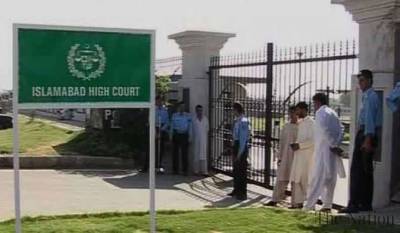
Islamabad High Court Rejects Plea Against Release Of Abhinandan

Can you tell me the name of one good Indian or even one good human being who is not proud of the release of Indian Air Force Wing Commander WC Abhinandan Varthaman from Pakistani custody? Each and every person who is humane whether he/she is Indian or Pakistani or anyone else is overjoyed on learning the news of the release of Abhinandan! Our whole nation drowned in joy the moment news started pouring in that Islamabad High Court rejects plea against release of Abhinandan and thus decks were cleared for his early release!
                                      Needless to say, Abhinandan has undoubtedly emerged as a great national icon after he was successful in making sure that even with the old Mig 21 Bison fighter jet of the 1960s,  Pakistan’s advanced F-16 fighter jet which had intruded into India was hit hard! Abhinandan  shot down the plane before his own went down, forcing him to eject and he fell into Pakistani territory and captured by Pakistani Army! Abhinandan’s family has served the Indian Air Force for generations, since the Second World War. Air Marshal S Varthaman who is a recipient of several honours, including a Param Vishisht Seva Medal said in a message that, “Abhi is alive, not injured, sound in mind, just look at the way he talked so bravely… a true soldier… we are so proud of him.” India stands one in celebrating his release!
                                Of course, even the film industry too expressed its happiness over his release. Bollywood superstar Shah Rukh Khan too cheered the moment and took to Twitter to express his happiness. He wrote on Twitter that, “There is no better feeling than Coming back Home, for home is the place for love, hope & dreams. Ur bravery makes us stronger. Eternally grateful. #WelcomeBack Abhinandan.” It is not just film industry alone but each and every citizen of India as also all good human beings in every part of the world who celebrated his release. Ram Nath Koind who is President, Narendra Modi who is PM and Rahul Gandhi who is leader of Congress which is the main Opposition party among others all were equally delighted on seeing him getting released!
                           Be it noted, the Islamabad High Court in Muhammad Shoaib Razzaq Versus Federation of Pakistan through the President & 5 others in W.P. No. 786/2019 dated March 1, 2019 has clearly and convincingly dismissed a plea by Barrister Shoaib Razzaq in person seeking to stop the release of IAF pilot Wing Commander Abhinandan Varthaman. Razzaq vehemently contended that Abhinandan had committed a crime against the country and should be put on trial there. But all his arguments fell flat as Islamabad high Court refused to buy them and gave valid reasons for doing so!
                                  First and foremost, this latest, landmark and laudable judgment delivered by Athar Minallah who is Chief Justice of High Court of Islamabad sets the ball rolling in para 1 wherein it is observed that, “The petitioner has invoked the jurisdiction of this Court under Article 199 of the Constitution of the Islamic Republic of Pakistan, 1973 (hereinafter referred to as the ‘Constitution’) aggrieved from the decision taken by the Government of Pakistan to release and handover Wing Commander V Abhinandan to India.”
                                 As it turned out, it is then pointed out in para 2 that, “The petitioner has appeared in person and has been heard at length. It is his case that the Prime Minister of Pakistan was not competent to take a decision regarding release of the pilot of the Indian Air Force, namely, Wing Commander V Abhinandan who was detained after his aircraft was shot down. He has argued that the latter had violated the sovereignty of Pakistan by unauthorizedly entering into its territory and that it was an act of war; the Parliament was not taken into confidence; the decision has been taken by ignoring the aspirations of the people of Pakistan; the detained pilot of the Indian Air Force is liable to be proceeded against and court martialled in Pakistan.
                                     To be sure, it is then stated in para 3 that, “The learned Counsel was asked as on what basis does he assert that the Parliament was not taken into confidence because the announcement was made by the Prime Minister of Pakistan on the floor of the House and that too during a joint session of the Majlis-e-Shoora (Parliament).”
                            More importantly, it is then clearly and convincingly held in para 5 that, “It is an admitted fact that the Prime Minister of Pakistan had announced the release of the detained pilot of the Indian Air Force, namely, Wing Commander V. Abhinandan on the floor of the House and that too during the joint session of the Majlis-e-Shoora (Parliament). It is also not denied that not a single Member of the National Assembly or the Senate had raised any objection when the announcement was made. The joint session of the Majlis-e-Shoora (Parliament) was held to deliberate upon the current tense situation at the borders. It was during the said joint session of the Majlis-e-Shoora (Parliament) that the announcement was made by the Prime Minister and affirmed by other Members. The petitioner’s argument that the Prime Minister of Pakistan was not competent or that the Majlis-e-Shoora (Parliament) was not taken into confidence is, therefore, misconceived. The Majlis-e-Shoora (Parliament) represents every citizen of the Islamic Republic of Pakistan. Moreover, the patriotism of the Members of the Majlis-e-Shoora (Parliament) is beyond doubt and, therefore, apprehensions of the petitioner in this regard are misplaced and not warranted.”
                     What’s more, it is then elegantly exemplified in para 6 stipulating that, “It is noted that the decision which was taken by the Prime Minister of Pakistan and announced on the floor of the House during the joint session of the Majlis-e-Shoora (Parliament) pertains to matters of foreign policy, defence and security of Pakistan. It is settled law that such issues are neither justiciable nor fall within the domain of a High Court for interference under Article 199 of the Constitution. It has been unambiguously held by the august Supreme Court that any such interference by the Courts would be violative of one of the foundational principles of the Constitution, which envisages trichotomy of powers between the three branches, namely, Legislature, Executive and Judiciary. Reliance is placed on the cases of ‘Wukala Mahaz Barai Tahafaz Dastoor v. Federation of Pakistan and another’ [2014 SCMR 111] and ‘Syed Yousaf Raza Gillani, Prime Minister of Pakistan v. Assistant Registrar, Supreme Court of Pakistan and another’ [PLD 2012 SC 466]. Moreover, it has been held that the Constitution is based on the principles of trichotomy of powers between Legislature, Executive and Judiciary. Framing of a policy is within the exclusive domain of the Executive because the latter is in a better position in this regard because of the mandate, experience, wisdom and sagacity. The Legislature represents the people of Pakistan and primarily promulgates laws which are enforced in Pakistan. The Judiciary is entrusted with the task of interpreting the law and to play the role of an arbiter in case of disputes between individuals and between individuals and the State. It is on the basis of this rationale that Courts exercise judicial restraint in policy matters except in cases where it can be explicitly demonstrated that because of the policy, fundamental rights are being violated. Reliance is placed on the cases of ‘OGRA through Secretary v. Messrs Midway II, CNG Station and others’ [2014 SCMR 720], ‘Mesrs Power Construction Corporation of China Ltd. Through Authorized Representative v. Pakistan Water and Power Development Authority through Chairman WAPDA and 2 others’ [PLD 2017 SC 83] and ‘Mehmood Khan Achakzai and others v. Federation of Pakistan and others’ [          PLD 1997 SC 426].”
                                 Above all, the Islamabad High Court then in para 7 observes that, “The petitioner was asked whether any of his fundamental rights would be violated if the decision taken by the Prime Minister and announced on the floor of the House is implemented. The petitioner, despite his able assistance, could not satisfy this Court that his fundamental rights would be violated if the detained pilot of the Indian Air Force is handed over to the authorities of his State. The decisions which are taken by the Majlis-e-Shoora (Parliament), particularly during challenging times, are inevitably required to be respected and upheld. Even otherwise Majlis-e-Shoora (Parliament) is competent to affirm policies of the Government and after such affirmation, they cannot be subjected to judicial review. It is the Majlis-e-Shoora (Parliament) alone which represents the will of the people of Pakistan and the other organs of the State are expected to respect and bow to its decisions. In the instant case the announcement made by the Prime Minister of Pakistan was affirmed by the Majlis-e-Shoora (Parliament) in its joint session. Moreover, the decision pertains to policy matters in the context of foreign policy, defence and security of Pakistan and thus outside the realm of judicial review.”
                                    Lastly, para 8 then concludes this classic, courageous and commendable judgment by holding that, “For what has been discussed above, the instant petition is not judiciable under Article 199 of the Constitution and is, therefore, accordingly dismissed in limine.”   
                                        All said and done, we thus see that the Islamabad high Court has clearly and very rightly refused flatly to stop the IAF pilot Wing Commander Abhinandan Varthaman from being released as approved by the Pakistan’s PM Imran Khan and Parliament of Pakistan! The petitioner miserably failed in satisfying the court that his fundamental rights would be violated if the detained pilot Abhinandan is handed over to the authorities of the State! So the decks for Abhinandan’s release were cleared further and he was freed finally after 3 days of captivity! Also, Pakistan was bound by the Geneva Conventions to release him and until released treat him properly!      
Sanjeev Sirohi, Advocate,
s/o Col BPS Sirohi,
A 82, Defence Enclave,
Sardhana Road, Kankerkhera,
Meerut – 250001, Uttar Pradesh. 

Choosing the right school for your child

Choosing the perfect school for your child is not an easy task. There is always a thought bothering you whether you should study in a private or public school. There could be endless reasons because of which you might be sending your child to a private school. But still the fact is that choosing that one perfect school for you child can become a daunting task.
Choosing the right school for your child

If you have already made up your mind to send your child to a private school, then there must
Begin with identifying your needs then surveying the private schools. Once you have narrowed down the school you need to visit them personally and take a few things in consideration like:
Practical requirements
·         Find a place close to your workplace, the other thing that you need to do is look for the desired element that you need to find the perfect private school.
·         Travelling facilities provided by the school
·         If your child has any emotional, physical, linguistic or learning needs that you need to pay attention to
·         How much does the school cost and the budget of the private school?
Desired Requirements
·         Is preparing for school a priority?
·         Are modern school facilities important to you?
·         Is your child looking for a small school environment or a large school with s large strength?
·         How will the school authorities communicate with the parents when in need?
·         Some parents desire to send their child to a catholic school that instills and imparts faith based catholic values to their children which will be considered as a desired requirement. Monsignor Slade Catholic School in is a co-educational religious institution that fosters Christian values in the children. Therefore, majority of parents who will seek to admit their child in this particular school or any other catholic school would do so because of their specific desire to send their child to a catholic school. So, choices could be desire based.
Extracurricular requirements for your private school
After when you have completely analyzed the practical requirements and it fits your requirements then it is time to dress the cake with icing. Extracurricular activities are very crucial for your child and that can lead to the overall development of the child. Therefore, you need to check if the school is giving the child a push to participate in the extracurricular activities or not.
·         Before getting admission for your child see are their any sports facilities available in the college and if yes which all are?
·         What are the clubs that your child needs to attend?
·         Check what are the music and art programs are important to you?
Survey Schools
Don’t just take admission in the first school that you visit. Make sure that you shortlist so many schools that after that you can choose the best one out. Make sure that you collect all the numbers and facts of each school on the list:
·         Read the philosophy of the school, ask about the school’s program and the different approaches of teaching.
·         See if all the services that are available at the school such as on-site nurse, counsellors, secretary, librarian.
·         Check the school’s structure. Does it follow a year-round school or follows a traditional school calendar?
·         What is the qualification and background of the teacher?
·         Examine the policy of the school discipline to check if the rules are fair.
·         Find the school curriculum and look for the grading and the homework policies
·         Check for the school’s policy for students on carrying knives, guns, hazardous items etc.
·         Is the school accredited and if yes then how?
Check for the school policies regarding the students
·         What is the basis for grading the students?
·         What is the class size in the school? Class size matters a lot and especially in the primary grades.
·         Is the library well equipped?
·         The teaching methodology and if the teachers are working in groups or do they work in groups?
·         How does the school monitor the students and the academic standards?
·         What does the school do to support the students with the academics, emotional and social difficulties?
·         School’s policy for English speaking children.
The achievements of the school
According to a website Pen2Print– The accomplishments of a school explain how far it has gone and what are its future plans to go further. Therefore, you must always conduct a thorough research on the accomplishments of the school. After all it is about your child’s future.

Delivering a Poster Presentation

Poster presentations can be an excellent way to share research findings and the format of poster sessions has several advantages.  Presenters are able to engage with the audience in an interactive setting that allows them to get feedback and network with other scholars.  Poster sessions also have the potential to reach a larger number of people.  An appealling poster that is done correctly is the first step in drawing in the audience.  However, while the poster serves as a visual aid or illustration of the work, the poster session is really an opportunity for the researcher to personally educate others about the research findings.
Tips on Delivering the Presentation
  • Prepare and practice a 2-3 minute oral explanation of your poster and your work.
  • Do not read the poster to the audience!  The poster is there as a visual aid and illustration of the research.  The presenter should be making eye contact and engaging with the audience.
  • The presentation should explain the big picture and why the project is important.  It should provide a \”take home\” message.  Too much detail will lose the audience.
  • Refer to graphics/charts/data on the poster to illustrate and support findings and conclusions.
  • Do give the audience some time to absorb the information on your poster.  Do not stand directly in front of the poster so that they a full opportunity to view it. 
  • Prepare a summary handout so that people will remember the highlights of your work.  Be sure to include full contact information in the handout.
  • Know your poster well so you can refer to any section if questions arise.
  • Expect questions!  Questions may be very broad asking about the overall project or they may be specific, such as asking about the type of statistical analysis used.  Be prepared!
  • Admit when you do not know the answer to a question or when it is beyond the scope of the project.
  • Have business cards, summary handouts, or contact information ready for those who may want to contact you to discuss it further at a later date.
Tips on Professional Behavior
  • Dress professionally.  It lends credibility to your work. Wear comfortable shoes as you will be standing for long periods of time.
  • Wear your nametag, smile and make eye contact with potential viewers.
  • Be on time for the poster session and stay until the session is over.
  • Stay next to your poster so that you are available for discussion.
  • Do not get too in depth with any one viewers or others will not have an opportunity to learn about your research and ask questions.
  • Do not take criticism personally. The ability to get feedback is an advantage of a poster session.  This may be especially helpful if you plan to submit a manuscript for publication.
  • Focus on the viewers.  Do not get involved in social conversations with other presenters and colleagues at the expense of the audience.
  • Do not force handouts on those that do not seem interested.
The poster presentation is an excellent way to disseminate your research findings. A well-designed poster, a polished presentation and professional behavior will give you the opportunity to educate others and share your work.

Workshop/Interactive Presentation

Workshops are interactive sessions that can vary in length from approximately an hour to a full day. 

These sessions usually begin with explanatory or introductory information and then move on to involve the audience in some type of interactive, participatory activity.  Workshops and interactive presentations are particularly well suited for demonstrations, learning new skills or procedures, debates, exhibitions and so forth.

Symposium

A symposium is a type of conference or session that focuses on one particular topic. 

It is often a collection of papers from a number of contributors.  Each contributor will have an opportunity to present and a time for discussion.  This type of session is valuable when multiple perspectives on a particular subject may be of interest to the audience and can be put together in one session.  A symposium is also a time for networking and collaboration with peers and colleagues since these sessions are often comprised of experts in the field who have come together to share ideas.

Colloquium

This type of conference session is longer (often 90 minutes) and entails 5 or more presenters who are proposing papers on the same topic or theme. 

All presenters will speak individually (15 minutes approximately) and there will be additional time for discussion and questions.  These sessions have a more narrow focus and therefore attract attendees with a genuine interest in the topic. However, while the audience is well-educated, they are usually not specialists or experts on the topic. 

Poster Presentations

Poster presentations are opportunities for a larger number of researchers to present their research in the form a visual poster presentation. The posters are large (often 3\’ x 4\’) and provide the researcher with enough space to fully summarize their research in an attractive and professional way. 

The presenter typically prepares a short oral summary that can be given to those who are interested.  Attendees are free to move about the room and examine posters and talk individually to the presenters.  This format does allow the opportunity for a research target those that are genuinely interested and engage them in discussion that often allows for more detail.  Another advantage of this type of format is that researcher can receive valuable feedback from the attendees.  

Oral Presentations

Oral presentations are short talks that may be given individually or as part of a panel or group discussion.  Researchers often prefer oral presentations over poster sessions and other formats because many view them to the prestigious option.  There are several types of oral presentations:
  • Individual Presentations – These may be contributed or invited talks that are often 15-30 minutes in length and leave just a short time, if any, for questions from the audience.  The presenter will prepare a conference paper that will be presented and is typically a more focused, narrower version of their overall project. Paper presentations are assigned to the appropriate session and the most common formats include:    
    • Themed Session – These sessions at conference primarily include completed research or scholarly work.  The presentations will be grouped by topic or theme into sessions that include several related presentations.  This facilitates audience attendance and organizes topics at the conference.
    •  Roundtable Session – Roundtable sessions allow the presenter the opportunity to interact and converse more with the audience.  Presenters are assigned to a table in a conference room for the duration of the session and interested attendees may join them at their table. These sessions are typically best for position papers, policy analyses, and other types of topics that benefit from extended discussion time.
  • Panel Discussions – In panel discussions, two or more speakers will present different aspects, perspectives or thoughts on a particular topic, research problem, or question.  Each speaker will have an opportunity to present their information and when all the speakers are finished, there is typically time for discussion.

CONFERENCE THEME

We aim to explore the leading edge in terms of approaches and methods, but also of technology, professionalization, influence, and culture. 
We want to hear about the times when you have been at the edge; where you have pushed the boundaries, but also where you have hit walls and the lessons you’ve learned. 

We want to empower practitioners on the periphery to access content and capacity building opportunities by maximizing technology advance. 

1) Reflections from the edge: Sharing lessons learned from our practice. Exploring challenges as well as opportunities and ways to move forward.
2) Building on our edge: Sharing tools for building evaluation skills that transcend boundaries. Reaching more practitioners.
3) Re-thinking our edge: Breaking the mold through innovation and experimentation. Sharing new and radical approaches and methods for evaluation.
4) Perspectives from beyond the edge: Hearing how non-evaluators are using evaluative thinking to advance their organizations.

Debate

Two or three debaters should hold clearly differing points of view as they exchange insights on a topic of import to evaluators.

The interaction should be moderated by a chairperson with a prepared set of questions. Half of the presentation time should be devoted to response to audience questions. The main abstract should identify the topic, why the topic is of interest to evaluators, and the contrasting positions of the debaters. An alternative format would be to debate a specific proposition that would be directed towards a specific organization or institution, such as the EduINDEX.

Expert Lecture

Expert Lectures are formal presentations by an acknowledged expert in the field who will share conceptual or methodological innovations through a lecture followed by response to audience questions.

The abstract should detail both the background of the lecturer as well as the importance of the material to be presented. Please note that an expert lecture is longer in duration than are standard paper presentations. As such, the breadth and depth of the content, and the expertise of the presenter, should warrant such an extended exploration. Each presentation should be no longer than 45 minutes, with an additional 10 to 15 minutes for questions.

Roundtable Conference

Maximize your networking in these exciting, parallel sessions, where you get to exchange with other evaluators on your topic. Each presenter delivers their content to a table of approximately 10 participants in 15 minutes or less, followed by a 10 minute interactive discussion. Participants will then move to another table. Presenters will deliver their content 3 times with different sets of participants, benefiting from the ideas and practical experiences of all.

A Roundtable is a 60-minute group discussion on a precise theme among up to 15 participants seated around a table. Roundtable presentations typically include a 5 to 10 minute presentation by the organizer to introduce the topic, followed by discussion and feedback from participants. Roundtable presenters should bring targeted questions to pose to participants at the table in order to learn from and with those attending. The presenter is also asked to summarize and conclude on the subject at the end of the session (5 minutes). Roundtables are excellent venues for getting targeted feedback, engaging in in-depth discussions, and meeting colleagues with similar interests. Note that roundtable is addressed to a limited number of participants. The abstract should detail the focus of the presentation and the way(s) in which it contributes to the body of knowledge in the field of evaluation. Each presenter is in charge of his or her discussion group, but most will include a short introductory presentation (5 to 10 minutes), a discussion (around 45 to 50 minutes) and a conclusion (5 minutes).