Cruelty Not Related To Dowry Cannot Be Basis For Conviction Under Section 304B IPC: SC

It is quite remarkable to note that in a latest and significant decision titled Girish Singh Vs The State Of Uttarakhand in Criminal Appeal No. 1475 of 2009 with Criminal Appeal No. 1476 of 2009 delivered on July 23, 2019, the Supreme Court has observed that the conviction under Section 304B of the Indian Penal Code can be made only if the woman was subjected to cruelty or harassment by her husband or his relatives which must be for or in connection with any demand for dowry, soon before her death. This noteworthy judgment of the Supreme Court which was authored by Justice KM Joseph for himself and also Justice SK Kaul makes it amply clear that it is not any cruelty that becomes the subject matter of the provision but it is the cruelty or harassment for or in connection with demand for dowry. While setting aside the concurrent conviction, the Bench also very rightly observed that the appellate court was duty bound in the case of an appeal by the accused to reappraise the evidence. There can be no denying it!

To start with, the ball is set rolling first and foremost in para 1 wherein it is pointed out that, “The appellant in Criminal Appeal No. 1475 of 2009 is the first accused and the appellant in Criminal Appeal No. 1476 of 2009 is the second accused. They were charged under Sections 306 read with Section 34 and Section 304B read with Section 34 of the Indian Penal Code, 1860 (hereinafter referred to as ‘the IPC’ for short). The first accused is the son of the second accused.”

To recapitulate, it is then laid bare in para 2 that, “It is the case of the prosecution in brief that the first accused used to treat his wife with cruelty on account of dowry demand. The same allegation was made against his father-second accused. It is also alleged that his father wanted to fulfil his lust with his daughter-in-law. She did not agree. The accused tortured her and gave her beating. The daughter-in-law committed suicide by burning herself on 05.06.1991. After complying with the formalities, the charge-sheet was filed against the accused. Prosecution examined nine witnesses and produced 17 documents. The Trial Court came to the conclusion that the prosecution failed to prove the case against both the accused. They were accordingly acquitted. Reliance is in particular placed on certain letters.”

As it turned out, para 3 then elucidates that, “The appeal carried against their acquittal by the State was allowed by the High Court by the impugned order. The appellants were convicted under Section 304B read with Section 34 of the IPC. It was, however, found that offence under Section 306 read with Section 34 of the IPC was not made out against the appellants. The appellants were sentenced to seven years rigorous imprisonment.”

Be it noted, para 24 rightly observes that, “It is relevant to remember that the father of the deceased has admitted that the letters were written dated 28.02.1991 and 20.03.1991 in reply to letters written by the deceased. The letters do not disclose about any harassment or cruelty or the dowry demand. In his deposition, PW4-father of the deceased would say that he is unable to say why any fact of dowry harassment has not been written in these letters. The letters written by the deceased have been misplaced according to PW4-father of the deceased.”

As things stand, para 25 then illustrates that, “The significance of the letters, admittedly written by PW4 to her deceased daughter and the absence of any complaint about dowry harassment, lies in the following categoric statement made by PW4-father of deceased, as follows:

‘Accused behaved normally with the deceased for five months and thereafter, they started misbehaving. My daughter could read and write a little and she had written two letters to me in this regard’.”

(Emphasis supplied)

It cannot be lost on us that it is then observed in para 26 that, “The aforesaid letters written by the deceased are not made available on the ground that they had been misplaced. Certainly, if these letters, which are admittedly written by PW4-father of the deceased are in response to the letters written by his deceased daughter, the contents of letters written by the father do not bear out the case of conduct by the accused as is sought to be made out.”

To put things in perspective, it is then noted in para 27 that, “We have referred to the entire evidence. The Trial Court acquitted the accused. The jurisdiction of the Appellate Court, when it deals with such an order, is no longer res integra and is subject matter of catena of decisions of this Court.”

Having said this, let us now refer to the catena of decisions of Apex Court pertaining to this subject. First of all, it is pointed out in para 28 that, “In Upendra Pradhan v. State of Orissa (2015) 11 SCC 124, this Court took the view that if there is benefit of doubt, it must go to the accused, and in case of two views, the view that favours the accused, should be taken, which was more so where the Trial Court’s decision was not manifestly illegal, perverse and did not cause miscarriage of justice.” Para 29 then reveals that, “In Dilawar Singh and others v. State of Haryana (2015) 1 SCC 737, this Court took the view that court will not interfere with the verdict of acquittal merely because on evaluation of evidence, a different plausible view may arise. Very substantial and compelling reasons must exist with the Appellate Court to interfere with an acquittal.”

Furthermore, para 30 then discloses that, “In Gamini Bala Koteswara Rao and others v. State of Andhra Pradesh Through Secretary AIR 2010 SC 589, this Court accepted the contention of the appellant that interference in an appeal against acquittal should be rare and in exceptional circumstance. It was further held that it is open to the High Court to reappraise the evidence and conclusions arrived at by the Trial Court. However, it is limited to those cases where the judgment of Trial Court was perverse. This Court went on to declare that the word “perverse”, as understood to mean, “against the weight of evidence”. If there are two views and the Trial Court has taken one of the views merely because another view is plausible, the Appellate Court will not be justified in interfering with the verdict of acquittal (See K. Prakashan v. P.K. Surenderan (2008) 1 SCC 258).”

What’s more, para 33 then illustrates that, “Thus, it can be seen that the offence created by Section 304B requires the following elements to be present in order that it may apply:

I. Within 7 years of the marriage, there must happen the death of a woman (the wife).

II. The death must be caused by any burns or bodily injury.

OR

The death must occur otherwise than under normal circumstances.

III. It must be established that soon before her death, she was subjected to cruelty or harassment.

IV. The cruelty or harassment may be by her husband or any relative of her husband.

V. The cruelty or harassment by the husband or relative of the husband must be for, or in connection with, any demand for dowry.”

To put this in perspective, it is then enunciated in para 34 that, “Section 304B treats this as a dowry death. Therefore, in such circumstances, it further provides that husband or relative shall be deemed to have caused her death. Section 113B of The Indian Evidence Act, 1872 provides for presumption as to dowry death. It provides that when the question is whether the dowry death, namely, the death contemplated under Section 304B of the IPC, has been committed by a person, if it is shown that soon before her death, the woman was subjected by such person to cruelty or harassment, for or in connection with, any demand for dowry, the Court shall presume that such person had caused the dowry death. It is no doubt a rebuttable presumption and it is open to the husband and his relatives to show the absence of the elements of Section 304B.”

To be sure, it is then observed in para 35 that, “The foremost aspect to be established by the prosecution is that there was reliable evidence to show that the woman was subjected to cruelty or harassment by her husband or his relatives which must be for or in connection with any demand for dowry, soon before her death. Before the presumption is raised, it must be established that the woman was subjected by such person to cruelty or harassment and it is not any cruelty that becomes the subject matter of the provision but it is the cruelty or harassment for or in connection with demand for dowry.”

While elaborating in detail the factual position, it is then pointed out in para 36 that, “Admittedly, the deceased was influenced by spirit (devta). Religious ceremony/prayers were held. The deceased became normal after doing it. Still further, there is evidence that whatever madness the deceased used to do, it was taken care of by her in-law’s house. The above facts emerge from the testimony of PW1-sister of the deceased herself. It is relevant to remember that it is a case of suicide. In the statement under Section 313 of the Code, the 1st accused in fact states as follows:

“The deceased was under influence of evil spirit. We conducted prayers two times but she could not be cured. Her mind was restless and she committed suicide and her family falsely implicated us”.”

Of course, while dwelling further more in detail the factual position, para 37 then goes on to state that, “PW4-father of the deceased completely contradicts himself, when in cross-examination, he states that 5-6 days after marriage, the first accused and the deceased came, he was on duty. There is evidence when PW4 was working in Bombay (See the evidence of PW2/wife of PW4, who has deposed that her husband was working in Bombay). Earlier in cross-examination, PW4 has deposed that when he was going back after 5-6 days of marriage, the first accused came to take the deceased and then the first accused has said that television and VCR has not been given. PW4 says in chief examination that he had told the first accused that he has given according to his ability and if everything goes fine, it will also be done. PW4 further stated that on this, the first accused said that deceased was having flat nose. Thereafter, he states that he went back to Bombay on his duty.”

More significantly, the Apex Court then minces no words to observe in para 38 that, “We noticed that this aspect has not been considered at all by the High Court. This contradiction in evidence goes to the root of the matter. This proves that the prosecution case sought to be proved through PW4, is unacceptable.”

While going into the nitty gritty, para 39 then observes that, “PW2 would say that the deceased was an illiterate. She did not know how to read and write. On the other hand, PW4 would depose that the deceased could read and write letters. In fact, PW2 herself stated that her husband-PW4 reached home after hearing about the death of the deceased and told PW2 that he has received two letters of the deceased regarding harassment by the accused about dowry and one letter of Jodh Singh-the second accused. It is here that two letters which have been written admittedly by PW4-father of the deceased assumes critical significance.”

To say the least, para 40 then envisages that, “PW2-wife of the PW4, as we have noticed, has deposed that PW4 has told her that he received two letters from the deceased where there is reference to harassment about dowry by the accused.” Para 41 then further reveals that, “PW4, when questioned about the letters, admits having sent the letters by way of reply to such letters written by the deceased.”

It is striking to note that it is then elaborated upon in para 42 stating that, “We have already extracted the letters. It is amply clear that there is no reference about any harassment or cruelty on account of dowry in those letters. PW4, in fact, deposes that he cannot tell the reason that why any fact of dowry harassment has not been written in those letters. He admits that those letters were written in reply to the letters written by the deceased. Significantly, the two letters written by the deceased are not produced by the prosecution. The reason for non-production is, they were misplaced during shifting of the house. Even, accepting that those letters were misplaced, the question whether they contained allegation of harassment due to dowry, should have been resolved with reference to the letters admittedly sent by PW4 to the deceased within a few days of the receipt of the letters. In other words, a reasonable view would be that as reference to any harassment regarding dowry is conspicuous by its absence in the letters written by the PW4 to the deceased. There were no allegations of harassment on account of dowry in the letters written by the deceased to her father-PW4. In this regard, the High Court, in the impugned judgment, has proceeded to ignore this vital aspect and proceeded on the basis that the averments made by the deceased of the cruelty caused by the appellants were mentioned in the letters sent by the deceased and letters written by PW4, are not helpful to resolve this issue. The last of the two letters written by PW4-father of the deceased is dated 20.03.1991. The death took place on 05.06.1991. Even, in the letter written by PW4, letter dated 28.05.1991, in an envelope addressed to his son, there is no mention about any harassment or cruelty on account of dowry demand. He only says to ask the deceased not to worry and not to send her even if anybody comes to call her. The High Court, however, still takes the view that dowry related harassment was mentioned in letters sent by the deceased which are not even produced.”

It is a no-brainer that the stand taken by the High Court here is quite inexplicable. So no wonder that in para 43 while disagreeing with the High Court stand, it is then observed by the Apex Court that, “We are of the view that this approach, particularly, in an appeal against acquittal is clearly unacceptable and cannot be proved.”

Moving on, it is then held in para 44 that, “Still further, through the Officer, statements actually made by the prosecution witnesses, have been proved. PW1-sister of the deceased, in her statement, stated as follows:

“The deceased had never complained about the first accused and she was happy always with him and brother-in-law also held her good.” This statement made by her to the Officer was also put to her. She merely says that she does not know how this fact was written in her statement. She says she has not given such a statement. She is unable to give the reason.”

We cannot just gloss over what has been held in para 45 which holds that, “The High Court, in regard to the said statement, gets over previous statement proved though Officer by stating that the statement was not given by the witness and that she was a girl of 13 years and further stated that her deposition in court inspires confidence.”

Needless to say, we also cannot just gloss over what is then held in para 46 that, “Likewise, PW2-mother of the deceased, has given her statement that deceased has never complained about him regarding harassment or beatings or fact of giving less dowry. Still further, she is also proved to have given the statement that she had no suspicion of killing or getting killed by the accused or any harassment by him. Similar findings are rendered by the High Court in regard to the said statements.”

Not stopping here, it is then observed in para 47 that, “We would think that particularly in an appeal from acquittal, the High Court has exceeded its jurisdiction in the appreciation of evidence as well as its approach to how the reliability of the witness is to be evaluated.”

What the Apex Court also found troubling is underscored in para 48 which states that, “We are troubled with another aspect highlighted by the facts of this case. A right of appeal is the creature of statute. Unless appellate power is expressly limited by additional conditionalities, the Appellate Court has power or rather is duty bound in the case of an appeal by the accused to reappraise the evidence. Even in an appeal against acquittal, the appellate court has power of reappraisal of evidence though subject to the limitation that interference would be in a case where the Trial Court’s verdict is against the weight of evidence which is the same thing as a perverse verdict. We need not catalogue the circumstances which are well-settled.”

Interestingly enough, para 49 then stipulates that, “In this case, we notice that the High Court has referred to the contents of the chief examination of the witnesses. Thereafter, it has been stated that the witnesses have been cross-examined at length but nothing has come out in evidence which would create any doubt in his evidence. The witnesses are declared as being found reliable and believable. We have noted the facts in this case.”

More importantly, it is then held in para 50 that, “Truth in a criminal trial is discovered by not merely going through the cross-examination of the witnesses. There must be an analysis of the chief examination of the witnesses in conjunction with the cross examination and the re-examination, if any. The effect of what other witnesses have deposed must also enter into consideration of the matter. On the one hand, the laudable object underlying Section 304B of the IPC is not to be lost sight of. On the other hand, it is equally important that the Appellate Court must not be oblivious to the fact what it is duty bound to find is whether an offence is committed or not and such a pursuit also would embrace the duty of the court to apply its mind to the evidence as a whole and arrive at conclusions as to facts and inferences therefrom as well. After all, at stake for the accused are, priceless rights to liberty, reputation and the right to life, not only of himself but also his family members. The Law Giver, has contemplated that the High Court will be the final arbiter of facts and even of law. The jurisdiction of the Apex Court was deliberately limited to the extra ordinary powers it enjoys under Article 136 of the Constitution of India unless it be exercised under other provisions. What we wish to emphasise is that the cause of justice and the interest of litigants would be better subserved if the Appellate Court takes a closer look, in particular of the cross-examination of the witnesses and analyse the same.”

Importantly, it is then made amply clear in para 51 that, “There is yet another important aspect in this matter. It is true that the deceased died on 05.06.1991 which was within seven years of marriage. It is equally true that her death was due to burning and she committed suicide. It is not a case where the accused stood charged under any provision except Section 304B read with Section 34 of the IPC and Section 306 read with Section 34 of the IPC. The case of abetting suicide under Section 306 read with Section 34 of the IPC has been found unacceptable both by the Trial Court and the High Court and the appellants stand acquitted.”

Suffice it to say, para 52 then adds that, “A perusal of the impugned judgment of the High Court would show, that accepting the version of the prosecution witnesses, the High Court has been persuaded to hold inter alia that the second accused also harassed her by asking her to provide liquor in the glass, and after taking liquor, in the state of intoxication, he used to ask her to sleep with him. On her refusal, it was found that she was subjected to mental cruelty. Reference was made to evidence of PW4-father of the deceased that after he came back from Mumbai, he came to know that the second accused was taking liquor and trying to commit rape and also used to harass her for television and VCR due to which she committed suicide.”

Without mincing any words, the Apex Court then while rapping the High Court on its knuckles makes it absolutely clear in para 53 that, “The High Court was in clear error in taking into consideration the evidence relating to harassment by the second accused on the basis that he, in the state of intoxication, asked her to sleep with him, and on that basis, she was subjected to mental cruelty. The said evidence is totally irrelevant and foreign to the scope of a trial for the offence under Section 304B of the IPC. It does not relate, at all, to the demand for dowry.”

While continuing in the same vein, it is then held in para 54 that, “As regards the demand for dowry, having regard to the state of the evidence, which we have elaborated, we would think that there was no occasion for the High Court to even raise a presumption that the deceased in this case has been subjected to cruelty or harassment in connection with any demand for dowry. It may be true and it is not disputed by appellants that as found by the High Court, the deceased died in the house of the accused. The fact that the High Court proceeded to arrive at finding of guilt in an appeal against acquittal by the Trial Court in the state of the evidence, which we have referred to, does not commend itself to us for acceptance.”

Finally and most importantly, let us now discuss the last two concluding paras. It is held in para 55 that, “In such circumstances, we would think that the High Court overstepped its limits in dealing with an appeal against acquittal and the view taken by the Trial Court appears to have arrived at, having regard to the state of evidence, to be a possible one, which did not merit interference by the Appellate Court.”

Lastly, it is then held in para 56 that, “The upshot of the above discussion is that the appeals arte only to be allowed and we allow the appeals and set aside the judgment of the High Court to the extent it convicts the appellants for the offence under Section 304B read with Section 34 of the IPC and the judgment of the Trial Court is restored. Since, during the course of the appeals, the appellants have been released on bail, the appellants need not surrender and their bail bonds stand discharged.”

All in all, the Apex Court Bench comprising of Justice KM Joseph and Justice Sanjay Kishan Kaul have overruled the High Court judgment which convicted the appellants and clearly held in no uncertain terms as pointed above that, “Cruelty not related to dowry cannot be basis for conviction under Section 304B IPC. It is not any cruelty that becomes the subject matter of the provision but it is the cruelty or harassment for or in connection with, demand for dowry.” It also clarified that the demand for dowry should be made soon before her death! The Trial Court judgment thus clearly stand restored by this landmark and laudable judgment of the Apex Court! There can be no denying or disputing it!

Sanjeev Sirohi, Advocate,

s/o Col BPS Sirohi,

A 82, Defence Enclave,

Sardhana Road, Kankerkhera,

Meerut – 250001, Uttar Pradesh.
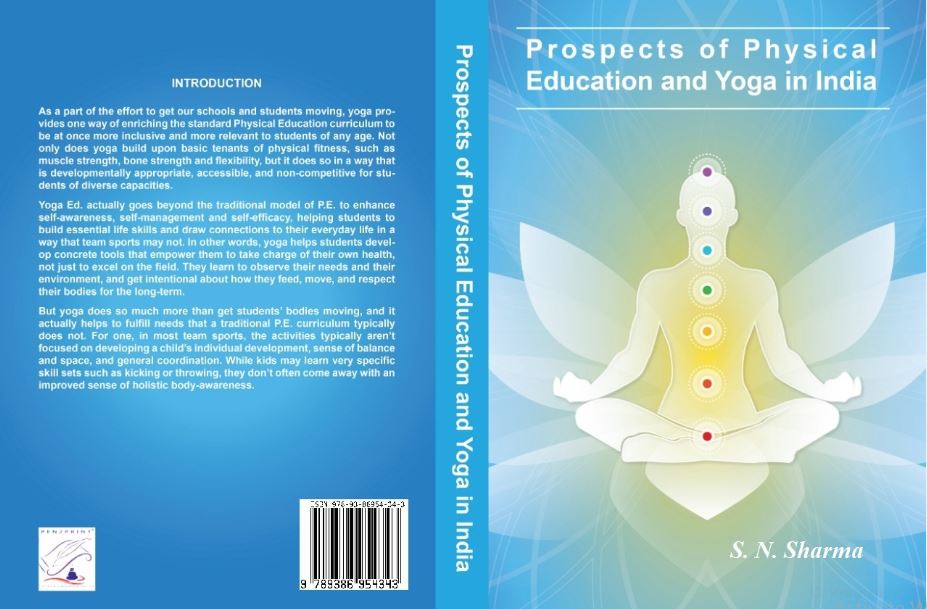
Call for Book Chapters- Prospects of Physical Education and Yoga in India

Edupedia Publications Pvt Ltd is proud to announce Call for Book Chapters for our upcoming book titled \’ Prospects of Physical Education and Yoga in India\’ with ISBN no.

978-93-86954-34-3
Our readers and scholars can contribute book chapters in this book. To contribute book chapters in this book, send mail to 
editor@pen2print.org 

As a part of the effort to get our schools and students moving, yoga provides one way of enriching the standard Physical Education curriculum to be at once more inclusive and more relevant to students of any age. Not only does yoga build upon basic tenants of physical fitness, such as muscle strength, bone strength and flexibility, but it does so in a way that is developmentally appropriate, accessible, and non-competitive for students of diverse capacities. 
Call for Book Chapters- Prospects of Physical Education and Yoga

Yoga Ed. actually goes beyond the traditional model of P.E. to enhance self-awareness, self-management and self-efficacy, helping students to build essential life skills and draw connections to their everyday life in a way that team sports may not. In other words, yoga helps students develop concrete tools that empower them to take charge of their own health, not just to excel on the field. They learn to observe their needs and their environment, and get intentional about how they feed, move, and respect their bodies for the long-term.
But yoga does so much more than get students’ bodies moving, and it actually helps to fulfill needs that a traditional P.E. curriculum typically does not. For one, in most team sports, the activities typically aren’t focused on developing a child’s individual development, sense of balance and space, and general coordination. While kids may learn very specific skill sets such as kicking or throwing, they don’t often come away with an improved sense of holistic body-awareness.

Top Tips on How to Exercise in Order to Increase Your Work Productivity

Top Tips on How to Exercise in Order to Increase Your Work Productivity
Working day in day out, nine ‘til five, five days a week for the vast majority of the year can be exhausting – particularly if you work in a high-pressure or creative environment where you’re required to think innovatively on your feet at all times. Sometimes it feels like you’re so tired out from work that you don’t have time for anything else, whether that be socialising, exercising or taking up a new hobby. But did you know that exercising can actually help you to increase your work productivity? Yep, that’s right. Here are some top tips on how you can exercise well in order to increase your productivity at work.

Is it a Direct Science?
Before we get started on how to go about it, you’ll probably be wondering what the direct correlation between exercise and work productivityactually is. Well you’ll be glad to hear that there are studies that actually have proven that exercising regularly made people not only more productive at work, but they actually achieved more too. In one particular study it was found out that on days when an employee would have worked out, their concentration was twenty one percent higher, they were twenty two percent more likely to finish all of their work on time, they were twenty five percent more likely to work through without taking unscheduled breaks, and they felt more motivated to work by a whopping forty one percent. With statistics like that, who could argue that being fitter doesn’t make you better at your job? Now, where to get started?
Top Tips on How to Exercise in Order to Increase Your Work Productivity

Start with the Mindset that Less is More
Knowing the benefits of exercise, chances are you’ll fancy yourself as lacing up your running trainers, and going out to run a 10k straight away. Unfortunately however, when it comes to exercising, this isn’t the case.
If you’re starting from a high point of fitness, then yes, fair enough push yourself to the maximum level you can go to. However if you’re starting from a low point of fitness, the best way of getting into it is by starting off small and building up over time as your fitness progresses – remember that any change, no matter how small, is good change. The last thing you want to do is do too much in the early days and either injure yourself or put yourself off exercise altogether! Sometimes, slow and steady really does win the race.
Enjoy It
Try and find a form of exercise that you actually enjoy doing. Although you’ll want to enjoy it, also remember that it’s inevitable that you’ll probably sweat a lot, get a stitch and have to catch your breath – but it’s worth it for that feel good feeling afterwards when the endorphins are rushing around your system! Try out a few different classes, and see what’s right for you. Whether you like the tranquil strengthening of yoga, the intensity of a bootcamp work out or you find your enjoyment in lifting weights, the more you enjoy it, the more likely you are to make it a regular occurrence.
Don’t Put Barriers Up
Remember that you are capable of anything you put your mind to – so don’t put barriers up! Do you think your yoga teacher started off as flexible as they are now, or that the weight lifter in the gym was born being able to lift the heaviest weights available? The answer is, no. A lot of the time it’s a mindset, and if you continuously tell yourself “I can’t”, then it’ll stay that way.
Of course it takes hard work, and as previously mentioned you’ll want to ease your way into things, but if you never try then you’ll never know what you’re capable of. Even if your running career starts with you doing a couple of laps around the garden, it’s enough! Don’t limit yourself by telling yourself you can’t do it, or it’s not for you – get out there and give it a go!
Schedule it in
Last, but certainly not least, try and schedule your exercise in. Working zaps so much of our time and energy, that if we don’t literally pencil in times that we’re going to do exercise, chances are we will never get around to doing it. If you make a fitness schedule and stick to it, you’ll see the benefits a lot quicker and be less likely to procrastinate. All the while, don’t forget the health and productivity benefits that exercise induces – it’s all for the greater good!

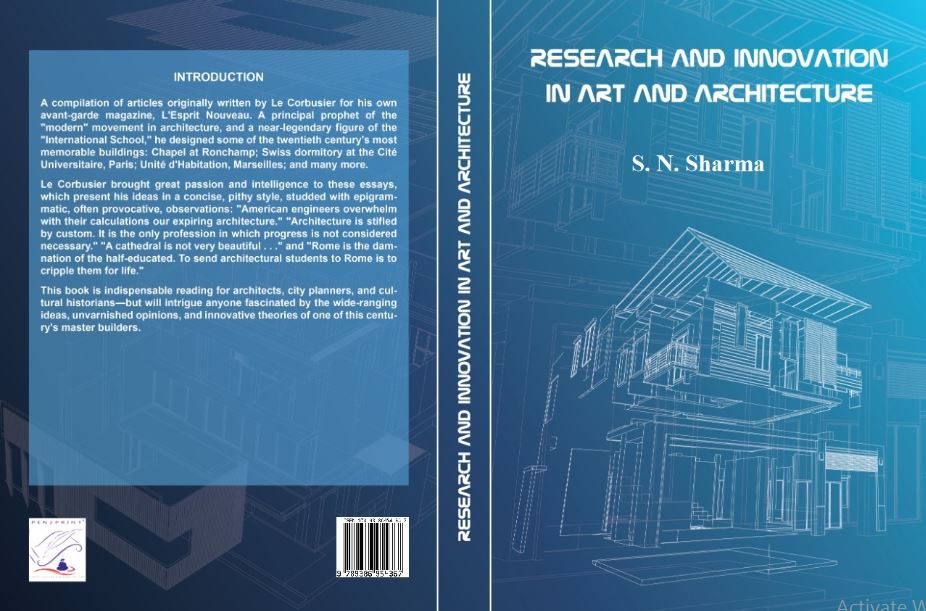
Call for Book Chapters- Research and Innovation in Art and Architecture

Edupedia Publications Pvt Ltd is happy to announce the Call for Book Chapters for our upcoming book \’Research and Innovation in Art and Architecture\’ with ISBN no.

978-93-86954-36-7

. A compilation of articles written by different authors. Authors from field of art and architecture have expressed their current design innovations and design concepts in the book. The book will be of great help to understand the current scenario of art and architecture.

Call for Book Chapters- Research and Innovation in Art and Architecture

 Architecture is both the process and the product of planning, designing, and constructing buildings or any other structures. Architectural works, in the material form of buildings, are often perceived as cultural symbols and as works of art. Historical civilizations are often identified with their surviving architectural achievements.
This book is indispensable reading for architects, city planners, and cultural historians―but will intrigue anyone fascinated by the wide-ranging ideas, unvarnished opinions, and innovative theories of one of this century\’s master builders.

How to Contribute Book Chapters

Send book chapters to editor@pen2print.org 

Call for Book Chapters – Recent Research in Business and Management Studies

We at Edupedia Publications Pvt Ltd is proud to announce the Call for Book Chapters for our Upcoming book titled \’Recent Research in Business and Management Studies\’. This book is also suitable for all readers interested in the field of managerial economics.

Introduction to Book

Economics for Managers presents the fundamental ideas of microeconomics and macroeconomics and integrates them from a managerial decision-making perspective in a framework that can be used in a single-semester course.
To be competitive in today’s business environment, managers must understand how economic forces affect their business and the factors that must be considered when making business decisions.¿ This is the only book that provides business students and MBAs with a thorough and applied understanding of both micro- and macroeconomic concepts in a way non-economics majors can understand.
The third edition retains all the same core concepts and straightforward material on micro- and macroeconomics while incorporating new case material and real-world examples that relate to today’s managerial student.
This is a new approach of putting together material that covers all the major disciplines in business management in one book but in two volumes. It is aimed at both the students and the practitioners in the fields of business studies and economics who require a quick guide book. This book highlights the distinction between leadership and management; discusses the key aspects of financial management such as management of cash, credit management, management of working capital, and financial ratios; and covers the key aspects in economics – divided into micro and macroeconomics. It covers the basics of marketing and international business, logistics management, procurement and disposal management and law.

How to Submit Book Chapters in this Book

Send your book chapter related to management and business to editor@pen2print.org 

Deadline for Submission of Book Chapter

Deadline for Submission of Book Chapter is August 15th 2019.
Authors are requested to send book chapter through mail in ms word file format. 
For more details regarding book chapters submission refer to our guidelines at https://www.pen2print.org/p/publish-book-chapter.html

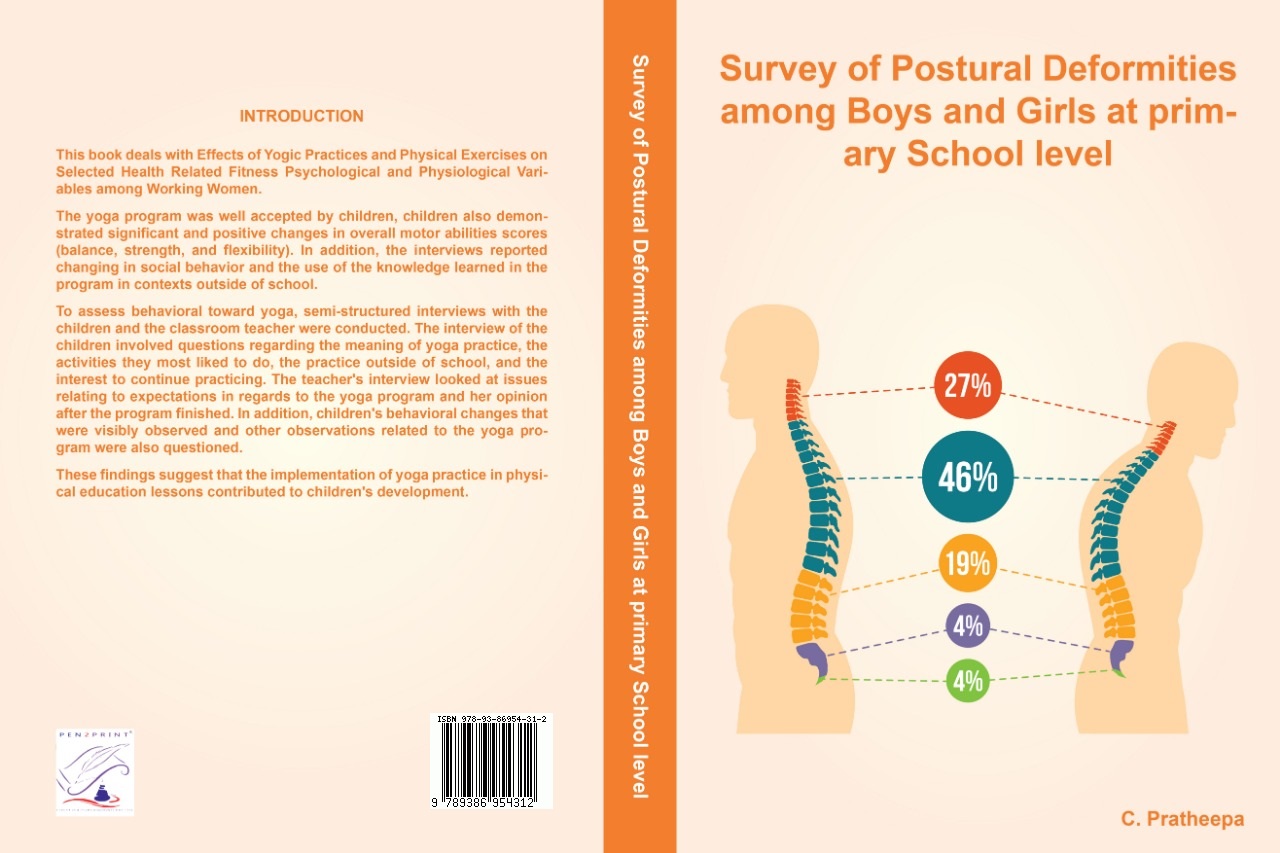
Survey of Postural Deformities among Boys and Girls at Primary School Level

The aim of the study was to identify the spine deformities and postural disorder in the monitored children and to point out the importance of children’s backbone and posture screening. Early identification of disorders, correct diagnosis, and determination of the cause of these diseases play an important role in preventing further progression 
Postural deformities are a commonly encountered problem among children. Most of the aches and pains of adults are the result, not of injuries, but of the long-term effects of distortions in posture or alignment that have their origins in childhood or adolescence. Television, video entertainment, motorized transportation, fast food and lack of regular physical activity contribute to the poor physical condition of children. Childhood obesity has increased dramatically in the past decade. Countries in economic transition from underdeveloped to developed, such as India, are particularly affected and have an increasing prevalence of obesity across all economic levels and age groups. In a developing country like India, where overweight/obesity co-exists with undernutrition, there is an urgent need to prevent unhealthy trends in diet and physical activity. 
This means that scoliosis is as prevalent as hypertension or diabetes mellitus. Identification of postural deformities at an early stage makes early treatment possible, which may, in future, prevent serious postural abnormalities. The aim of this review article is to define the concept of good posture, analyze normal postural development and postural deformities, and discuss some of the developmental factors affecting posture.

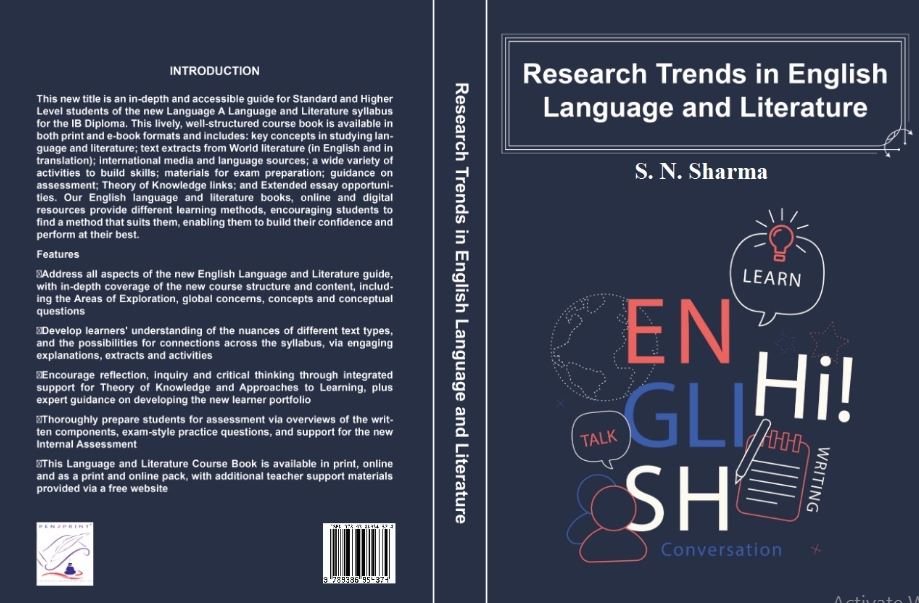
Call for Book Chapters- Research Trends in English Language and Literature

Edupedia Publications Pvt Ltd is proud to announce Call for Book Chapters for our forthcoming book titled Research Trends in English Language and Literature with ISBN no.
978-93-86954-37-4

This new title is an in-depth and accessible guide for Standard and Higher Level students of the new Language and Literature syllabus for the high schools. This lively, well-structured course book is available in both print and e-book formats and includes: key concepts in studying language and literature; text extracts from World literature (in English and in translation); international media and language sources; a wide variety of activities to build skills; materials for exam preparation; guidance on assessment; Theory of Knowledge links; and Extended essay opportunities.

Call for Book Chapters- Research Trends in English Language and Literature
Our English language and literature books, online and digital resources provide different learning methods, encouraging students to find a method that suits them, enabling them to build their confidence and perform at their best.

Features of Book

  • Address all aspects of the new English Language and Literature guide, with in-depth coverage of the new course structure and content, including the Areas of Exploration, global concerns, concepts and conceptual questions
  • Develop learners\’ understanding of the nuances of different text types, and the possibilities for connections across the syllabus, via engaging explanations, extracts and activities
  • Encourage reflection, inquiry and critical thinking through integrated support for Theory of Knowledge and Approaches to Learning, plus expert guidance on developing the new learner portfolio
  • Thoroughly prepare students for assessment via overviews of the written components, exam-style practice questions, and support for the new Internal Assessment
  • This Language and Literature Course Book is available in print, online and as a print and online pack, with additional teacher support materials provided via a free website 
  •  
  • How to Contribute Book Chapters  

    Send book chapters for this book to editor@pen2print.org 

Subsidy under the Amended Technology Upgradation Fund Scheme (A-TUFS)

The
Office of Textile Commissioner has been providing subsidy under the
Amended Technology Upgradation Fund Scheme (A-TUFS) to the investors
(including the State of Assam) and is also processing new proposals for
availing subsidy for upgradation of machines from the investors.
In
the Mega Handloom Cluster at Sivasagar in the State of Assam, private
investments are encouraged in projects which are sanctioned in the PPP
mode in 80:20 ratio, wherein Government provides 80% funding and 20%
funding is done by the investor, i.e. Special Purpose Vehicle (SPV),
which also provides the land for the project. Since 2017, Govt. of India
has released Rs. 6.91 crores for such projects in Assam with the
investor participation at Rs. 1.91 Crores. The
Office of Development Commissioner (Handicrafts) has taken up 39
clusters under AmbedkarHastshilpVikasYojna (AHVY) for the overall
development of artisans in Assam which has benefitted 4970 artisans
during the last two years.
Following two composite jute mills are enlisted in the State of Assam:
S. No.
Name of the Jute Mill
Address of the Mill
1
Assam Co-operative Jute Mills Ltd.
P.O. Silighat-782143, District- Nagaon, Assam
2
Atlanta Modular Pvt. Ltd.
NH-37, BihandNezone Tubes, West Boragaon, Guwahati, Assam.
                       
Under
North East Region Textile Promotion Scheme (NERTPS), a proposal to
establish two Eri Spun Silk Mills in Assam and Bodoland Territorial
Council (BTC) under Government Sector has been approved during 2018-19.
The Government has set up a Board for Industrial & Financial
Reconstruction (BIFR) under Sick Industrial Companies (Special
Provisions) Act with a view to timely detect sick and potentially sick
companies and for taking remedial measures.
Under
NERTPS Govt. of India, through Central Silk Board have taken measures
to increase silk production in Assam by implementing sericulture
projects in four categories viz., Integrated Sericulture Development
Project (ISDP) and Intensive Bivoltine Sericulture Development Project
(IBSDP), Eri Spun Silk Mills (ESSM) and Aspirational District (AD).  The
details of funds sectioned and released is given below:
[Rs. in crore]
Project Name
Project Cost
GoI share
Funds released Till June-19
ISDP
186.99
153.17
113.06
IBSDP
59.61
53.03
50.37
ESSP
43.06
38.18
AD
41.31
38.19
Total
330.96
282.56
163.43
A
Regional office at Guwahati is functioning to monitor the Central
Sector schemes and to address the issues related to development of
sericulture in NE region in association with the all NE States.
As
on date, no proposal to grant special packages to the Assam Cooperative
Jute Mills Ltd., Silghat, Nagaon (Assam) is under consideration.
However, preferential treatment is given in allocation of Production cum
Supply Orders (PCSOs) as per its capacity under the Jute Packaging
Materials (Compulsory Use in Packing Commodities) [JPM Act], 1987
because of its disadvantageous geographical location and limited options
for local markets.

Mega handloom cluster under Comprehensive Handloom Development Scheme

Mega
handloom cluster is taken up under Comprehensive Handloom Development
Scheme as announced by the Union Finance Minister in the respective
budget with  the financial provision. At present, there is no proposal
for inclusion of Balaramapuram in Thiruvananthapuram district of Kerala
under Comprehensive Handloom Development Scheme.


Details
of assistance provided to the weavers in Thiruvananthapuram   under
various schemes implemented by Government of India since 2014-15 are as
under:
  1. 22 Mudra loans with amount of Rs 9.00 lakh sanctioned and disbursed to the Handloom weavers.
  1. Under
    National Handloom Development Programme, one Block Level Cluster with
    total cost of Rs 185.169 lakh consisting Government of India share of Rs
    179.599 lakh sanctioned in Kollaylin covering 500 weavers.
  1. 6.736 lakh kg of yarn worth Rs 21.52 crore has been supplied to the handloom weavers of Balaramapuram at Mill gate price.
  1. Balaramapuram Saree has been registered under Geographical Indication Act.
  1. Balaramapuram
    Saree and Balaramapur Dhoti have been registered under product list of
    India Handloom Brand (IHB).  28 agencies for Balaramapuram Sarees and 30
    agencies for Balaramapuram Dhoti have been registered for production
    under IHB.
Three Block Level Clusters have been sanctioned in Gujarat under National Handloom Development Programme:
(Rs. in lakh)
Sl. No
Name of the Block/District
Total Project cost
Government of India share
Beneficiaries covered
1
Bhachau, Kutch
133.640
131.740
65
2
Wadhwan, Surendranagar
170.550
165.685
206
3
Lakhtar, Surendranagar
143.410
140.961
86
Total
447.600
438.386
357
This information was given by the Union Minister of Textiles, Smriti Zubin Irani, in a written reply in the Lok Sabha today.

Sericulture Farmers in Kolar

An
exclusive Cluster Development Project covering around 3500 farmers is
under implementation in Kolar Districtfor the development of Bivoltine
sericulture.Besides,Central Silk Board (CSB) is implementinga Central
Sector Scheme (CSS) viz. Silk Samagra “Integrated Scheme for Development
of Silk Industry (ISDSI)” for development of silk industry in the
country including Karnataka with a total outlay of Rs. 2161.68 crore for
the period of three years (2017-20).

Under
the scheme, assistance is extended to sericulture farmers for raising
of Kissan Nursery, plantation with improved incubation facility,
construction of rearing houses, rearing equipment, door to door service
agents for disinfection and input supply, support for improved reeling
units like automatic reeling units, multi-end reeling machines, improved
twisting machines and support for post yarn facilities for qualify silk
and fabric production. The State Governmentcan avail the support under
Silk Samagrafor development of sericulture in Karnataka including Kolar
district.
This information was given by the Union Minister of Textiles, Smriti Zubin Irani, in a written reply in the Lok Sabha today.

Ministry of mines organises a workshop on Effective utilization of Red Mud

In a step towards productive utilisation of bauxite residue, commonly known as the ‘Red Mud’, an interactive workshopcalled ‘Waste To Wealth’
was organized by Ministry of Mines in the capital today. The present
status regarding the generation of Red Mud and its safe disposal and
utilization were discussed. The workshop, which was presided over by Dr
K. Rajeswara Rao, Additional Secretary, Ministry of Mines,was organised
in association with theJawaharlal Nehru Aluminium Research Development
and Design Centre (JNARDDC) Nagpur.
Red
Mud is a solid waste generated during the aluminium production process.
This is an environmental concern due to presence of impurities such as
caustic soda and others minerals. Global generation of red mud is more
than 150 million tons and there exists a global inventory of more than 3
billion tons. Red mud generation in India is around 9 million tons per
year.
The
meet was widely attended by representatives from organisations like
Ministry of Environment and Climate Change, CPCB, Odisha state Pollution
Control Board, BARC, Indian Bureau of Mines, Ministry of Road
Transport, NHAI and BIS, Engineer-in-Chief of Army, top executives from
all three primary aluminium producing companies viz- NALCO, VEDANTA
& HINDALCO as well as from user industries like cement and ceramic
industry. Interacting with the stakeholders, Mr. Anil Mukim, Secretary,
Ministry of Mines asked all the stake holders to work in synergy to find
a lasting solution for productive utilisation of red mud.
The
day long deliberations were held to focus all efforts for effective
bulk utilization of red mud with necessary government support, which
will be a win-win situation for all the stakeholders. Based on the
deliberations, a roadmap will be prepared for the productive utilization
of red mud.

Integrated Scheme for Development of Silk Industry

Under
the Central Sector Scheme Silk Samagra an Integrated Scheme for
Development of Silk Industry (ISDSI) implemented by Government of India
through Central Silk Board (CSB) with a total outlay of Rs. 2161.68
crore for three years (2017-18 to 2019-20) for the overall development
of silk industry in the Country with an objective to scale up production
by improving the quality and productivity.  The scheme comprises four
major components viz. (i) Research & Development, Training, Transfer
of Technology and Information Technology Initiatives, (ii) Seed
Organizations, (iii) Coordination and Market Development and (iv)
Quality Certification Systems (QCS) / Export Brand Promotion and
Technology Up-gradation.
Features of the Scheme  
All
the four major components of Silk Samagra are interlinked with each
other and aimed at a common goal. The main objective of the scheme is to
maintain Breeders stock, Breed improvement through R&D Projects,
Development of mechanized practices, Technology translation through
Sericulture Information Linkages and Knowledge System (SILKS) Portal,
Mobile Application for Stakeholders and for seed quality monitoring,
develop technology packages, impart training on improved technology
programmes to Stakeholders, and transfer technology to the field through
front line demonstration, produce Basic & Commercial Seed of the
improved Silkworm breeds developed by the Research Institutes, encourage
Private Partnership  in Seed sector, and Maintain & Certify the
quality standards set by the R&D units for Silkworm Seed, Cocoon,
Raw Silk and Silk products covering the entire Silk value chain.
Major Interventions:
1.
Research & Development: Race improvement through development of
improved host plant varieties and improved disease resistant Silkworm
breeds through collaborative research with reputed National Research
organizations like IITs, CSIR, IISc and International research
institutes on Sericulture.
     
2.
Seed organisation: Seed production units will be strengthened to bring
in quality standards in production network, besides increasing the
production capacity to cater to the increased silk production target,
promote adopted seed rearers to generate quality seed cocoons, Private
Graineurs to produce quality seed and Chawki Rearing Centres (CRCs) with
Incubation facilities to produce and supply chawki worms,     
3.
Quality Certification /Brand Promotion: Promote Indian silk through
quality certification by Silk Mark not only in the domestic market but
also in the Export market. Besides, emphasis has been given for use of
Silkworm by-products (pupa) for Poultry feed, Sericin for Cosmetic
Applications and Product Diversification into non-woven fabrics, Silk
Denim, Silk Knit etc. for value addition.
                          
The
scheme also comprises of various beneficiary oriented components to
support Mulberry, Vanya and Post Cocoon Sectors. These interventions
cover the major areas viz. (a) Development and expansion of host plant,
(b) Strengthening and creation of Silkworm seed Multiplication
infrastructure, (c) Development of farm and post-cocoon infrastructure,
(d) Up-gradation of reeling and processing technologies in Silk, and (e)
Capacity Building through Skill development / Enterprise Development
Programme. 
The
above scheme interventions are expected to increase /improve the
production and productivity of silk. The details of expected outcome of
the scheme are as under:
      • Increase the Silk production from the level of 30,348 MTs (Metric Tonne) during 2016-    17 to 38,500 MTs by end of 2019-20,

      • Increase the production of Bivoltine Import Substitute Silk to 8500 MTs from 5266          MTs in 2016-17

      • Increasing Vanya Raw Silk production to 11,500 MTs from 9075 in 2016-17 MTs.

      • To produce International Grade Silk of 4A and above to minimize the import to bare  minimum.

      • To
        generate additional employment to about 15 lakh person by reaching 100
        lakh persons by end of March,2020 from the level of 85.10 lakh persons
        in 2016-17.

Ecological Association of Languages

Introduction

 It
says once upon a time everyone on earth spoke the same language. There was
harmony and peace. As they were settling down in a city, they decided to build
a tower which could reach the heavens. God saw man’s city and the tower and
decided to interrupt. He mixed the language of men and scattered them around
the world so they could no longer understand each other.
Though, Tower of Babel may be a
mythological story it has puzzled humans for long. When we acquired language
and when we started to write this- we all used similar sign languages. Today
there are thousands of languages and hundreds of script for those languages. So
a question naturally arises, were these languages same at some point of time?


Today many languages share few words from
each other like Trigonometry and Geometry are borrowed from Indian languages.
Scientific and technical words like Computer and Mobile are used across
languages. But these minor overlaps here and there are relatively new and can
be attributed to the interaction among humans.

Lingo and its origin

A common observation that one can make is how similar
languages in same geographical area are. For example, North Indian languages
like Bengali, Gujarati, Punjabi are very similar to Hindi. Even South Indian
languages are very similar to Hindi in terms of grammar, alphabets,
pronunciations. One may therefore infer that these languages would have a
common ancestor. Most Indian languages seem to have descended from Sanskrit.
Similar observation can be made in case of European languages as well where
most of the languages seem to have descended from Latin.


Another source of language spread has been colonization.
Most European countries were very aggressive in expanding their hold on the
world- and they pushed for their products, forced colonies to work for them. In
this process they also carried their language with them.  


Relationship of Languages beyond Geography

To see a relationship between languages
which are geographically distant, takes more work than the similar common
sense. Similarities that provide solid evidence of common ancestry may not even
look like similarities at all at first glance. However, a closer look at the
phonetics, structure and usage of words reveal the secret. For example, compare
the English words father, foot, far, and five with the Ancient Greek words
meaning the same thing: pater, podos, per (“forward”), and pente
. Notice a pattern here? The English replaced “p” in Greek with and
“f”. Determination of common ancestry is based on such careful observations and
analysis.

 With
careful analysis, it has been established that both these group of language has
same ancestor. This group of languages is called Indo-European languages.
The common ancestor of Indo-European
languages like- English, Latin, Greek, Russian, Hindi, and many others spoken
in India and Europe is known as Proto-Indo-European, whereas the more recent
common ancestor of just English, German, Dutch, Norwegian and the other
Germanic languages is known as Proto-Germanic . 
We can compare the base-level of languages
including words, grammar and pronunciations to establish a relationship between
the languages. However, lack of written evidences again kicks when we try to
go back further to determine  the
original language.


National Retail Trading e-Commerce System

The
‘National Retail Trade Policy’ is under formulation in the Department
for Promotion of Industry and Internal Trade (DPIIT). Comprehensive
stakeholder consultation in all the States through FICCI, CII, ASSOCHAM,
PHDCCI and other trade and commerce associations are being conducted to
get feedback on the needs and demand of small traders.
A
Video Conference of Minister of Commerce and Industry with
representatives of Industry Associations, Export Organizations and
Traders Organizations was held on 18.02.2019, which was attended by more
than 10,000 participants from 42 NIC Centers and 29 other locations
across the country.

Stakeholder
consultations were also held under the Chairmanship of Secretary,
Department for Promotion of Industry & Internal Trade, on 25.06.2019
to consider issues facing the retail sector and possible solutions for
resolving them.
           
As
regards e-Commerce, the Government of India in the Department of
Commerce established a Think Tank on “Framework for National Policy on
E-commerce” and a Task Force under it, which deliberated on the
challenges confronting India in the arena of the digital economy and
e-commerce. The Think Tank was further divided into various sub-groups,
comprising representation from technical experts in the Government and
from industry members with domain knowledge.
A
draft National e-Commerce policy has been prepared and placed in public
domain. Comments from various stakeholders (companies, Industry
associations, think tanks, foreign governments) have been received.
Meetings have been held under the chairmanship of Minister for Commerce
& Industry with industry stakeholders, e-Commerce companies,
associations of kirana stores, traders and retailers to discuss matters
relating to e-commerce.
This information was given by the Minister of Commerce and Industry, Piyush Goyal, in a written reply in the Rajya Sabha today.

ICJ Has Rightly Called Pakistan’s Bluff In Jadhav’s Case

It is most heartening to learn that the International Court of Justice (ICJ) has in a latest, landmark and extremely laudable judgment titled Jadhav Case (India v. Pakistan) in General List No. 168 delivered on July 17, 2019 has rightly called Pakistan’s bluff in Mr Kulbhushan Sudhir Jadhav’s case and minced no words in holding that Pakistan violated Vienna Convention on Consular Relations 1963 by not informing Kulbhushan Jadhav without delay of his rights under Article 36(1)(b) to have consular access. Mr Jadhav was accused of involvement in espionage and terrorism activities. Criminal proceedings were initiated against Mr Jadhav and was sentenced to death by a military court in Pakistan.

Be it noted, the President of the ICJ – Justice Abdulqawi Ahmed Yusuf read out the order. 16 Public hearings were held from 18 to 21 February 2019, at which the Court heard the oral arguments and replies of eminent lead lawyer and former Solicitor General of India – Mr Harish Salve and Mr Deepak Mittal who is Joint Secretary in Union Ministry of External Affairs for India and Mr Anwar Mansoor Khan and Mr Khawar Qureshi for Pakistan. To start with, para 1 discloses that it was on 8 May 2017 that India filed in the Registry of the Court an Application instituting proceedings against the Islamic Republic of Pakistan (hereinafter “Pakistan”) alleging violations of the Vienna Convention on Consular Relations of 24 April 1963 (hereinafter the “Vienna Convention”) “in the matter of the detention and trial of an Indian national, Mr Kulbhushan Sudhir Jadhav”, sentenced to death by a military court in Pakistan.

Of course, it is then pointed out in para 2 that, “In its Application, India seeks to found the jurisdiction of the Court on Article 36, paragraph 1, of the Statute, of the Court and Article 1 of the Optional Protocol to the Vienna Convention on Consular Relations concerning the Compulsory Settlement of Disputes (hereinafter the “Optional Protocol”).” Para 3 then states that, “On 8 May 2017, India also submitted a Request for the indication of provisional measures, referring to Article 41 of the Statute and to Articles 73, 74 and 75 of the Rules of Court.” It is then further stated in para 4 that, “The Registrar immediately communicated to the Government of Pakistan the Application, in accordance with Article 40, paragraph 2, of the Statute of the Court, and the Request for the indication of provisional measures, pursuant to Article 73, paragraph 2, of the Rules of Court. He also notified the Secretary-General of the United Nations of the filing of the Application and the Request by India.”

While elaborating further, it is then illustrated in para 5 that, “By a letter dated 9 May 2017 addressed to the Prime Minister of Pakistan, the President of the Court, exercising the powers conferred upon him under Article 74, paragraph 4, of the Rules of Court, called upon the Pakistani Government, pending the Court’s decision on the Request for the indication of provisional measures, “to act in such a way as will enable any order the Court may make on this Request to have its appropriate effects”. A copy of that letter was transmitted to the Agent of India.”

More significantly, it is then very rightly held in para 8 that, “By an Order of 18 May 2017, the Court indicated the following provisional measures:

“Pakistan shall take all measures at its disposal to ensure that Mr. Jadhav is not executed pending the final decision in these proceedings and shall inform the Court of all the measures taken in implementation of the present Order”.

It further decided that, “until the Court has given its final decision, it shall remain seized of the matters which form the subject-matter of this Order”.”

Furthermore, para 9 then envisages that, “By a letter of 8 June 2017, the Co-Agent of Pakistan informed the Court that “the Government of the Islamic Republic of Pakistan ha[d] instructed the relevant departments of the government to give effect to the Order of the Court dated 18 May 2017”.” It is then enunciated in para 10 that, “By an Order dated 13 June 2017, the President of the Court fixed 13 September 2017 and 13 December 2017 as the respective time-limits for the filing of a Memorial by India and of a Counter-Memorial by Pakistan. Those pleadings were filed within the time-limits so fixed.”

What we then see being divulged in para 11 is this: “Since the Court included upon the Bench no judge of Pakistani nationality, Pakistan proceeded to exercise the right conferred upon it by Article 31, paragraph 2, of the Statute to choose a judge ad hoc to sit in the case, it chose Mr. Tassaduq Hussain Jilani.” Para 12 then further reveals that, “Pursuant to the instructions of the Court under Article 43, paragraph 1, of the Rules of Court, the Registrar addressed to State parties to the Vienna Convention and to State parties to the Optional Protocol the notification provided for in Article 63, paragraph 1, of the Statute of the Court.”

Interestingly enough, we then see that it is then pronounced in para 13 that, “By an Order dated 17 January 2018, the Court authorized the submission of a Reply by India and a Rejoinder by Pakistan and fixed 17 April 2018 and 17 July 2018 as the respective time-limits for the filing of those pleadings. The Reply and the Rejoinder were filed within the time-limits thus fixed.”

As things stand, para 17 then illustrates the key claims which India made stating that, “In the Application, the following claims were made by India:

“(1) A relief by way of immediate suspension of the sentence of death awarded to the accused.

(2) A relief by way of restitution in integrum by declaring that the sentence of the military court arrived at, in brazen defiance of the Vienna Convention rights under Article 36, particularly Article 36 paragraph 1 (b), and in defiance of elementary human rights of an accused which are also to be given effect as mandated under Article 14 of the 1966 International Covenant on Civil and Political Rights, is violative of international law and the provisions of the Vienna Convention; and

(3) Restraining Pakistan from giving effect to the sentence awarded by the military court, and directing it to take steps to annul the decision of the military court as may be available to it under the law in Pakistan.

(4) If Pakistan is unable to annul the decision, then this Court to declare the decision illegal being violative of international law and treaty rights and restrain Pakistan from acting in violation of the Vienna Convention and international law by giving effect to the sentence or the conviction in any manner, and directing it to release the convicted Indian national forthwith”.”

While dealing with the factual background, it is first and foremost pointed out in para 20 that, “The Court observes that the Parties disagree on several facts relating to the dispute before it. Their points of disagreement will be mentioned where necessary.” Para 21 then postulates that, “Since 3 March 2016, an individual named Kulbhushan Sudhir Jadhav (hereinafter “Mr Jadhav”) has been in the custody of Pakistani authorities. The circumstances of his apprehension remain in dispute between the Parties. According to India, Mr Jadhav was kidnapped from Iran, where he was residing and carrying out business activities after his retirement from the Indian Navy. He was subsequently transferred to Pakistan and detained for interrogation. Pakistan contends that Mr Jadhav, whom it accuses of performing acts of espionage and terrorism on behalf of India, was arrested in Balochistan near the border with Iran after illegally entering Pakistani territory. Pakistan explains that, at the moment of his arrest, of an Indian passport bearing the name “Hussein Mubarak Patel”. India denies these allegations.”

To be sure, para 22 then discloses that, “On 25 March 2016, Pakistan raised the issue with the High Commissioner of India in Islamabad and released a video in which Mr Jadhav appears to confess to his involvement in acts of espionage and terrorism in Pakistan at the behest of India’s foreign intelligence agency “Research and Analysis Wing” (also referred to by its acronym “RAW”).” However, it is then also mentioned in this same para ahead that, “The circumstances under which the video was recorded are unknown to the Court. On the same day, Pakistan notified the permanent members of the Security Council of the United Nations of the matter.”

As it turned out, para 23 then brings out that, “Also on the same day, by means of a Note Verbale from the High Commission of India in Islamabad to the Ministry of Foreign Affairs of Pakistan, India noted the “purported arrest of an Indian” and requested consular access “at the earliest” to “the said individual”. Subsequently, and at least until 9 October 2017, India sent more than ten Notes Vehicles in which it identified Mr Jadhav as its national and sought consular access to him.”

What is particularly disquieting to note is that Pakistan repeatedly denied consular access to India which it was duty bound to provide as a responsible country! But what it displayed was “total irresponsible attitude” which is inexplicable! It was roundly condemned everywhere.

As we see, it is then noted in para 24 that, “On 8 April 2016, Pakistani police authorities registered a “First Information Report” (hereinafter “FIR”), which is an official document recording information on the alleged commission of criminal offences. Pakistan explains that, once registered, a FIR enables police authorities to initiate an investigation. In this case, the FIR gave details of Mr Jadhav’s alleged involvement in espionage and terrorism activities and stated that he was “under interrogation” by Pakistani military authorities. A supplementary FIR was said to have been registered on 6 September 2016. On 22 July 2016, Mr Jadhav made a confessional statement, which was allegedly recorded before a Magistrate.”

While continuing in the same vein, para 25 then enumerates that, “The trial of Mr Jadhav started on 21 September 2016 and, according to Pakistan, was conducted before a Field General Court Martial. Various details of the trial were made public by means of a press release and a statement dated 10 and 14 April 2017 respectively. On the basis of this information (from the only source made available to the Court), it appears that Mr Jadhav was tried under Section 59 of the Pakistan Army Act of 1952 and Section 3 of the Official Secrets Act of 1923. According to Pakistan, after the trial had begun, he was given an additional period of three weeks in order to facilitate the preparation of his defence, for which “a law qualified field officer” was specifically appointed. All witness statements were allegedly recorded under oath in the presence of Mr Jadhav, who was allowed to put questions to the witnesses. During the trial, a law officer of Pakistan’s Judge Advocate General Branch “remained a part of the Court”.”

It goes without saying that the trial of Mr Jadhav was nothing but a “farce”, a “sham” and an “open mockery of due process of law”. Mr Jadhav neither had any consular access nor did he get any Indian lawyer to defend him. Just imagine that the accused himself was putting questions to the witnesses! Was Mr Jadhav a lawyer? Certainly not and this itself goes to show what type of trial was conducted by Pakistani military court!

Anyway, we then see that para 26 discloses that, “On 2 January 2017, the Adviser to the Prime Minister of Pakistan on Foreign Affairs sent a letter to the Secretary-General of the United Nations informing him of Mr Jadhav’s arrest and confession, which, in his view, confirmed India’s involvement in activities aimed at “destabilizing Pakistan”.” Para 27 then enumerates that, “On 23 January 2017, the Ministry of Foreign Affairs of Pakistan sent a “Letter of Assistance for a Criminal Investigation against Indian National Kulbhushan Sudhir Jadhav” to the High Commission of India in Islamabad, seeking, in particular, support in “obtaining evidence, material and record for the criminal investigation” of Mr Jadhav’s activities. The letter referred to India’s “earlier assurances of assistance, on a reciprocal basis, in criminal/terrorism matters”, as well as resolution 1373 (2001) adopted by the Security Council concerning measures to prevent and suppress threats to international peace and security caused by terrorist acts. Pakistan claims that, despite reiterated reminders, prior to the hearings before the Court, it has received no “substantive response” from India regarding this request. India, for its part, refers to two Notes Verbales dated 19 June and 11 December 2017, respectively in which it stated that Pakistan’s request had no legal basis and was not, in any event, supported by credible evidence.”

What India is saying is absolutely right! How incredible it is that a terror sponsor country like Pakistan where its PM Imran Khan himself concedes that 40,000 terrorists and 40 terror groups are active in Pakistan of which Jaish-e-Mohammed is directly funded, supported and trained by Pakistani Army and ISI has the guts to level charges of espionage and terrorism on an Indian naval officer Mr Jadhav! See the gumption and guts of Pakistan that Pakistan which itself has for long been in the “grey list” of Financial Action Task Force” and can in October be put in “black list” also is accusing India of sending terrorist to a democratic country like India whose credentials are impeccable!

Be that as it may, para 28 then goes on to add that, “On 21 March 2017, the Ministry of Foreign Affairs of Pakistan sent a Note Verbale to the High Commission of India in Islamabad indicating that India’s request for consular access would be considered “in the light of Indian side’s response to Pakistan’s request for assistance in investigation process and early dispensation of justice”. On 31 March 2017, India replied that “[c]onsular access to Mr Jadhav would be an essential pre-requisite in order to verify the facts and understand the circumstances of his presence in Pakistan”. The Parties raised similar arguments in subsequent diplomatic exchanges.”

It cannot be lost on us that it is then observed in para 29 that, “On 10 April, 2017, Pakistan announced that Mr Jadhav had been sentenced to death. This was followed by a press statement issued on 14 April 2017 by the Adviser to the Prime Minister on Foreign Affairs. In addition to the above-mentioned details of Mr Jadhav’s trial (see paragraph 25 above), the statement referred to the availability of the following means of redress: an appeal before a Military Appellate Court within 40 days of the sentence, a mercy petition addressed to the Chief of Army Staff within 60 days of the Military Appellate Court’s decision, and a similar petition addressed to the President of Pakistan within 90 days of the decision of the Chief of Army Staff.”

What’s more, para 30 then reveals that, “On 26 April 2017, the High Commission of India in Islamabad transmitted to Pakistan, on behalf of Mr Jadhav’s mother, an “appeal” under Section 133B and a petition to the Federal Government of Pakistan under Section 131 of the Pakistan Army Act. India asserts that, because Pakistan denied it access to the case file, both documents had to be prepared on the sole basis of information available in the public domain.”

It would be worthwhile to mention here that para 31 then informs us that, “On 22 June 2017, the Inter Services Public Relations of Pakistan issued a press release announcing that Mr Jadhav had made a mercy petition to the Chief of Army Staff after the rejection of his appeal by the Military Appellate Court. India claims that it has received no clear information on the circumstances of this appeal or the status of any appeal or petition concerning Mr Jadhav’s sentence. The above-mentioned press release also referred to another confessional statement by Mr Jadhav recorded on a date and in circumstances that remain unknown to the Court.”

Needless to say, it is rightly pointed out in para 133 that, “The Court has already found that Pakistan acted in breach of its obligations under Article 36 of the Vienna Convention,

(i) by not informing Mr Jadhav of his rights under Article 36, paragraph 1(b);

(ii) by not informing India, without delay, of the arrest and detention of Mr Jadhav; and

(iii) by denying access to Mr Jadhav by consular officers of India, contrary to their right, inter alia, to arrange for his legal representation (see paragraphs 99-119 above).”

More seriously, it is then observed in para 134 that, “The Court considers that the breaches by Pakistan set out in (i) and (iii) in the paragraph above constitute internationally wrongful acts of a continuing character. Accordingly, the Court is of the view that Pakistan is under an obligation to cease those acts and to comply fully with its obligations under Article 36 of the Vienna Convention. Consequently, Pakistan must inform Mr Jadhav without further delay of his rights under Article 36, paragraph 1 (b), and allow Indian consular officers to have access to him and to arrange for his legal representation, as provided by Article 36, paragraph 1 (a) and (c).”

However, it is then observed in para 135 that, “With regard to India’s submission that the Court declare that the sentence handed down by Pakistan’s military court is violative of international law and the provisions of the Vienna Convention, the Court recalls that its jurisdiction has its basis in Article I of the Optional Protocol. This jurisdiction is limited to the interpretation or application of the Vienna Convention and does not extend to India’s claims based on any other rules of international law (see paragraph 36 above). India refers to Article 14 of the International Covenant on Civil and Political Rights to support its requests for remedies. In accordance with the rule reflected in Article 31, paragraph 3 (c), of the Vienna Convention on the Law of Treaties, the Covenant may be taken into account, together with the context, for the interpretation of the Vienna Convention on Consular Relations. The Court notes, however, that the remedy to be ordered in this case has the purpose of providing reparation only for the injury caused by the internationally wrongful act of Pakistan that falls within the Court’s jurisdiction, namely its breach of obligations under Article 36 of the Vienna Convention on Consular Relations, and not of the Covenant.”

Moving on, it is then clarified in para 136 that, “As regards India’s claim based on the Vienna Convention, the Court considers that it is not the conviction and sentence of Mr Jadhav which are to be regarded as a violation of the provisions of the Vienna Convention. In the Avena case, the Court confirmed that “the case before it concerns Article 36 of the Vienna Convention and not the correctness as such of any conviction or sentencing”, and that “it is not the conviction and sentences of the Mexican nationals which are to be regarded as a violation of international law, but solely certain breaches of treaty obligations [on consular access] which preceded them” (Avena and Other Mexican Nationals (Mexico v. United States of America), Judgment, I.C.J. Reports 2004 (I), p. 60, paras 122-123).”

Not stopping here, it is then further clarified in para 137 that, “With regard to India’s contention that it is entitled to restitution in integrum and its request to annul the decision of the military court and to restrain Pakistan from giving effect to the sentence or conviction, and its further request to direct Pakistan to take steps to annul the decision of the military court, to release Mr Jadhav and to facilitate his safe passage to India, the Court reiterates that it is not the conviction and sentence of Mr Jadhav which are to be regarded as a violation of Article 36 of the Vienna Convention. The Court also recalls that “[i]t is not to be presumed…that partial or total annulment of conviction or sentence provides the necessary and sole remedy” in cases of violations of Article 36 of the Vienna Convention (ibid., p. 60, para 123). Thus, the Court finds that these submissions made by India cannot be upheld.”

It is most refreshing and heartening to read that in para 138, the ICJ while endorsing India’s stand then observes that, “The Court reaffirms that “it is a principle of international law…that any breach of an engagement involves an obligation to make reparation and that “reparation must, as far as possible, wipe out all the consequences of the illegal act” (Factory at Chorzow (Claim for Indemnity), Merits, Judgment No. 13, 1928, P.C.I.J., Series A, No. 17, pp. 29, 47). The Court considers the appropriate remedy in this case to be effective review and reconsideration of the conviction and sentence of Mr Jadhav. This is consistent with the approach that the Court has taken in cases of violations of Article 36 of the Convention (LaGrand (Germany v. United States of America), Judgment, I.C.J. Reports 2001, p. 514, para 125; Avena and other Mexican Nationals (Mexico v. United States of America), Judgment, I.C.J. Reports 2001 (I), pp. 65-66, paras 138-140 and p. 73, para 153). It is also in line with what the Applicant asks the Court to adjudge and declare in the present case. In the Court’s view, India ultimately requests effective remedies for the breaches of the Convention by Pakistan. The Court notes that Pakistan acknowledges that the appropriate remedy in the present case would be effective review and reconsideration of the conviction and sentence.”

What the ICJ clearly misses out here is that it is Pakistan which has always been opposed to effective review and reconsideration of the conviction and sentence and has just confined itself to lip service alone by giving false assurances to ICJ which it acknowledges also as we see in the last part of this above para. It is Pakistan which has denied even consular access to Mr Jadhav. It is Pakistan which did not allow even fair trial to Mr Jadhav. Again it is Pakistan which did not allow even proper legal representation by providing an Indian lawyer of his choice to him!

As it turned out, it is then underscored in para 139 that, “The Court considers that a special emphasis must be placed on the need for the review and reconsideration to be effective. The review and reconsideration of the conviction and sentence of Mr Jadhav, in order to be effective, must ensure that full weight is given to the effect of the violation of the rights set forth in Article 36, paragraph 1, of the Convention and guarantee that the violation and the possible prejudice caused by the violation are fully examined. It presupposes the existence of a procedure which is suitable for this purpose. The Court observes that it is normally the judicial process which is suited to the task of review and reconsideration (see Avena and Other Mexican Nationals (Mexico v. United States of America), Judgment, I.C.J. Reports 2004 (I) pp. 65-66, paras 138-140.”

To put things in perspective, it is then illustrated in para 140 that, “In the present case, the death sentence imposed on Mr Jadhav by the Field General Court Martial of Pakistan was confirmed by the Chief of Army Staff on 10 April 2017. The evidence suggests that Mr Jadhav appealed to the Military Appellate Court under Section 133 (B) of the Pakistan Army Act of 1952, but that the appeal was rejected. With regard to the petition procedure, the evidence suggests that Mr Jadhav has made a mercy petition to the Chief of Army Staff, and that the mother of Mr Jadhav has sought to file a petition with the Federal Government of Pakistan under Section 131 and an appeal under Section 133 (B) of the Act. There is no evidence before the Court to indicate the outcome of those petitions or that appeal.”

Going forward, the ICJ then elucidates in para 141 that, “The Court notes that, according to Pakistan, the High Courts of Pakistan can exercise review jurisdiction. The Court observes, however, that Article 199, paragraph 3, of the Constitution of Pakistan has been interpreted by the Supreme Court of Pakistan as limiting the availability of such review for a person who is subject to any law relating to the Armed Forces of Pakistan, including the Pakistan Army Act of 1952. The Supreme Court has stated that the High Courts and the Supreme Court may exercise judicial review over a decision of the Field General Court Martial on “the grounds of coram non judice, without jurisdiction or suffering from mala fides, including malice in law only” (Said Zaman Khan et al. v. Federation of Pakistan, Supreme Court of Pakistan, Civil Petition No. 842 of 2016, 29 August 2016, para 73). Article 8, paragraph 1, of the Constitution provides that any law which is inconsistent with fundamental rights guaranteed under the Constitution is void, but this provision does not apply to the Pakistan Army Act of 1952 by virtue of a constitutional amendment (ibid., para 125). Thus, it is not clear whether judicial review of a decision of a military court is available on the ground of the rights set forth in Article 36, paragraph 1, of the Vienna Convention.”

It would be instructive to mention here that the ICJ while referring to earlier decisions points out in para 142 that, “The Court takes note of the decision of the Peshawar High Court in 2018. The High Court held that it had the legal mandate positively to interfere with decisions of military courts “[i]f the case of the prosecution was based, firstly, on no evidence, secondly, insufficient evidence, thirdly, absence of jurisdiction, finally malice of facts & law” (Abdul Rashid et al v. Federation of Pakistan, High Court of Peshawar, Writ Petition 536-P of 2018, 18 October 2018, pp. 147-148). The Government of Pakistan has appealed the decision and the case was still pending at the close of the oral proceedings in the present case.”

While endorsing India’s position, the ICJ observed in para 143 that, “The Court confirms that the clemency process is not sufficient in itself to serve as an appropriate means of review and reconsideration but that

“appropriate clemency procedures can supplement judicial review and reconsideration, in particular where the judicial system has failed to take due account of the violation of the rights set forth in the Vienna Convention” (Avena and Other Mexican Nationals (Mexico v. United States of America), Judgment, I.C.J. Reports 2004 (I), p. 66, para 143).”

Briefly stated, it is also pointed out ahead in this same para 143 that, “The evidence before the Court suggests that two clemency procedures are available to Mr Jadhav: a mercy petition to the Chief of Army Staff within 60 days of the decision by the Appellate Court and a mercy petition to the President of Pakistan within 90 days of the decision of the Chief of Army Staff on the mercy petition (see paragraph 29 above). The outcome of the petition submitted by Mr Jadhav to the Chief of Army Staff (see paragraph 140 above) has not, however, been made known to the Court. No evidence has been submitted to the Court regarding the presidential clemency procedure.”

It is then again reiterated in para 144 what India consistently maintains that, “In light of these circumstances, the Court considers it imperative to re-emphasize that the review and reconsideration of the conviction and sentence of Mr Jadhav must be effective.”

To say the least, para 145 then observes that, “In this regard, the Court takes full cognizance of the representations made by Pakistan. During the oral proceedings, the Agent of Pakistan declared that the Constitution of Pakistan guarantees, as a fundamental right, the right to a fair trial; that the right to a fair trial is “absolute” and “cannot be taken away”; and that all trials are conducted accordingly and, if not, “the process of judicial review is always available”. Counsel for Pakistan assured the Court that the High Courts of Pakistan exercise “effective review jurisdiction”, giving an example of the decision of the Peshawar High Court in 2018 (see paragraph 142 above). The Court points out that respect for the principles of a fair trial is of cardinal importance in any review and reconsideration of the conviction and sentence of Mr Jadhav to be effective. The Court considers that the violation of the rights set forth in Article 36, paragraph 1, of the Vienna Convention, and its implications for the principles of a fair trial, should be fully examined and properly addressed during the review and reconsideration process. In particular, any potential prejudice and the implications for the evidence and the right of defence of the accused should receive close scrutiny during the review and reconsideration.”

What cannot be dismissed lightly is what is stated in para 146 which says categorically that, “The Court notes that the obligation to provide effective review and reconsideration can be carried out in various ways. The choice of means is left to Pakistan (cf. LaGrand (Germany v. United States of America), Judgment, I.C.J. Reports 2001, p 514, para 125). Nevertheless, freedom in the choice of means is not without qualification (Avena and other Mexican Nationals (Mexico v. United States of America), Judgment I.C.J. Reports 2004 (1), p. 62, para 131). The obligation to provide effective review and reconsideration is “an obligation of result” which “must be performed unconditionally” (Request for Interpretation of the Judgment of 31 March 2004 in the Case concerning Avena and Other Mexican Nationals (Mexico v. United States of America), Judgment, I.C.J. Reports 2009, p. 17, para 44). Consequently, Pakistan shall take all measures to provide for effective review and reconsideration, including, if necessary, by enacting appropriate legislation.”

Suffice it to say, para 147 then states that, “To conclude, the Court finds that Pakistan is under an obligation to provide, by means of its own choosing, effective review and reconsideration of the conviction and sentence of Mr Jadhav, so as to ensure that full weight is given to the effect of the violation of the rights set forth in Article 36 of the Vienna Convention, taking account of paragraphs 139, 145 and 146 of this Judgment.”

Simply put, para 148 then observes that, “The Court recalls that it indicated a provisional measure at its disposal to ensure that Mr Jadhav is not executed pending the final decision in the present proceedings (Jadhav (India v. Pakistan), Provisional Measures, Order of 18 May 2017, I.C.J. Reports 2017, p. 246, para 61 (I)). The Court considers that a continued stay of execution constitutes an indispensable condition for the effective review and reconsideration of the conviction and sentence of Mr Jadhav.”

Most importantly, it is then held in the final para 149 that, “For these reasons,

THE COURT,

(1) Unanimously,

Finds that it has jurisdiction, on the basis of Article I of the Optional Protocol concerning the Compulsory Settlement of Disputes to the Vienna Convention on Consular Relations of 24 April 1963, to entertain the Application filed by the Republic of India on 8 May 2017;

(2) By fifteen votes to one,

Rejects the objections by the Islamic Republic of Pakistan to the admissibility of the Application of the Republic of India and finds that the Application of the Republic of India is admissible;

(3) By fifteen votes to one,

Finds that, by not informing Mr Kulbhushan Sudhir Jadhav without delay of his rights under Article 36, paragraph 1 (b), of the Vienna Convention on Consular Relations, the Islamic Republic of Pakistan breached the obligations incumbent upon it under that provision;

(4) By fifteen votes to one

Finds that, by not notifying the appropriate consular post of the Republic of India in the Islamic Republic of Pakistan without delay of the detention of Mr Kulbhushan Sudhir Jadhav and thereby depriving the Republic of India of the right to render the assistance provided for by the Vienna Convention to the individual concerned, the Islamic Republic of Pakistan breached the obligations incumbent upon it under Article 36, paragraph 1 (b) of the Vienna Convention on Consular Relations;

(5) By fifteen votes to one

Finds that the Islamic Republic of Pakistan deprived the Republic of India of the right to communicate with and have access to Mr Kulbhushan Sudhir Jadhav, to visit him in detention and to arrange for his legal representation, and thereby breached the obligations incumbent upon it under Article 36, paragraph 1 (a) and (c), of the Vienna Convention on Consular Relations;

(6) By fifteen votes to one

Finds that the Islamic Republic of Pakistan is under an obligation to inform Mr Kulbhushan Sudhir Jadhav without further delay of his rights and to provide Indian consular officers access to him in accordance with Article 36 of the Vienna Convention on Consular Relations;

(7) By fifteen votes to one

Finds that the appropriate reparation in this case consists in the obligation of the Islamic Republic of Pakistan to provide, by the means of its own choosing, effective review and reconsideration of the conviction and sentence of Mr Kulbhushan Sudhir Jadhav, so as to ensure that full weight is given to the effect of the violation of the rights set forth in Article 36 of the Convention, taking account of paragraphs 139, 145 and 146 of this Judgment;

(8) By fifteen votes to one

Declares that a continued stay of execution constitutes an indispensable condition for the effective review and reconsideration of the conviction and sentence of Mr Kulbhushan Sudhir Jadhav.”

For the sake of brevity, it must be mentioned here that only one Judge of Pakistan who was the Judge ad hoc Jilani dissented and voted against but 15 Judges voted in favour and they include President Yusuf, Vice-President Xue; Judges Tomka, Abraham, Bennouna, Cancado Trindade, Bhandari, Robinson, Crawford, Gevorgian, Salam and Iwasawa.

To conclude, ICJ has rightly called Pakistan’s bluff in Kulbhushan Jadhav’s case. The military courts of Pakistan cannot be trusted. The trial has to be by a civilian court. Jadhav has to be provided consular access and legal aid. Pakistan’s bluff has been very rightly exposed especially in the last para 149 wherein it has pointed out 8 points on which Pakistan has grievously erred and where it has to mend its ways! Pakistan’s bluff thus stands truly exposed before the world much to Pakistan’s chagrin but we can’t help it as it has to blame its ownself for consistently denying what India rightfully demanded but like an irresponsible nation it kept on denying and now after being chastened by this ICJ’s latest decision vows that it would behave like a responsible nation! If it still does not behave then India has the option to again approach ICJ! Pakistan knows it all too well! So it must start behaving from now onwards and simultaneously stop bluffing the world!

Sanjeev Sirohi, Advocate,

s/o Col BPS Sirohi,

A 82, Defence Enclave,

Sardhana Road, Kankerkhera,

Meerut – 250001, Uttar Pradesh.