Most likable language in the world

Introduction
  Knowledge and grasping a language has always
been more diverse and accurate and is also attractive by nature as language learning
polishes your brain. The best we have been able to do is to narrow down the
timeline for origin of language and studying human phycology to know when we developed
mid-brain for language. Magpie is the name given to English language as it has
a mix of many languages that picks up word from all other language. Some
language has understandably widened vocabulary of English than others. Modern
English dictionaries contain more of a geographical melting pot than ever
before.
There are many languages that are spoken in many parts of
the world. The world top languages, a global list that are famous worldwide are
listed down. There are some seventy thousand languages in world that are famous
worldwide also English has borrowed language from these different
languages.  Here goes the list of six
such important languages that are spoken worldwide in large number.
CHINESE: 1197 million native speakers
 Chinese is a
linguistic that is also referred as macro language that comprises many forms to
derive a different form and dialects that together have of 1.2 billion native
speakers. So far it is the widely spoken language in the world. According to
the Oxford English Dictionary, Chinese words have been recorded in English
since the mid-16th century, with the earliest examples including the likes of
tai chi (1736), ginseng (1634), yin and yang (1671), kumquat (1699) and fang
shui (1797). One of the earliest of all is lychee (1588).
2. SPANISH: 399 million
Almost a quarter of Spanish speaker out of the total number
leaves in Mexico.  Other part of the
world where this language is spoken as a major language is Colombia (41
million) Argentina (38.8 million), and Venezuela (26.3 million). They are many
native speakers in the United States of America. In English, Spanish loanwords
like weaponry and military in termed as guerrilla, flotilla, armada,
machetealso the animals name are as follow like chinchilla, alligator,
cockroach, iguana.
3. ENGLISH: 335 million
As per Ethnologies the English language has some 335 million
native speakers, that incudes2 55 million in United States itself, 55 million
in the United Kingdom and 19 million in Canada. Few other main countries have also
15 million in Australia and 5 million in New Zealand. Though English is spoken
in almost every Asian countries of the world and is most wide spread it is
recorded to be spoken in 101 different countries and territories worldwide.
Additionally, the number of people that has opted English as
a second linguistic Franca included, the total no of speaker could rise
globally to one billion.
HINDI: 260 million
Hindi is native language of the world’s 260 million speakers
that are mainly found in India and Nepal. Although some 120 million projected
people in India uses Hindi as a second language.  Also it is spoken in many part of the world such
as in Mauritius, Fiji, Suriname, Guyana, Trinidad & Tobago and Nepal. Hindi
is declared to be official language of the union. The Indian constitution in
1950 declared the Devanagari script and made it an official one. However,
Parliament decided the use of English for an official purpose was announced
fifteen years after the constitution came into effect, i.e. on 26 January 1965.
 PORTUGUESE: 203
million
The population of Portugal is around 12 million but
Portuguese is enjoyed and spoken in large belt and it has 187 million native
speakers. Though it has its similarity with Spanish and is often tricky to
differentiate.
Conclusion
Every language has its importance and linguistic like Urdu
Italian and Arabian are also enjoyed in many region. Though, few are the
languages that have conquered many parts of the world. Many of this language are
expanded due to colonial expansion of territories.  People in many of these countries adopted these
languages mainly forcibly and many took it over their own language.  Adopting these languages made it spread too
many other communities in a country. And that is why language like English and
other are being spoken in many parts of the world and has become global
language.

NDPS: Reverse Burden Of Proof Does Not Absolve Prosecution From Establishing Prima Facie Case Against Accused: SC

It must be mentioned right at the outset that in a significant development, the Supreme Court in a latest, landmark and extremely laudable judgment titled Hanif Khan @ Annu Khan Vs Central Bureau Of Narcotics Through Inspector L.P. Ojha in Criminal Appeal No(s). 1206 of 2013 delivered on August 20, 2019 has observed clearly and convincingly in no uncertain terms that, though Narcotics Drugs and Psychotropic Substances Act carries reverse burden of proof, it does not absolve the prosecution from establishing a prima facie case against the accused. The Bench of Apex Court comprising of Justice Navin Sinha and Justice Indira Banerjee was considering an appeal challenging conviction of an accused under Sections 8 and 18(b) of the NDPS Act sentencing him to 10 years rigorous imprisonment, along with fine of Rs. 1 lakh, with a default stipulation. The accused was ultimately acquitted as he was entitled to get the benefit of doubt.

NDPS: Reverse Burden Of Proof Does Not Absolve Prosecution From Establishing Prima Facie Case Against Accused: SC

To start with, it is first and foremost pointed out in the opening para of this notable judgment that, “The appellant is aggrieved by his conviction under Sections 8 and 18(b) of the Narcotics Drugs and Psychotropic Substances Act, 1985 (“the NDPS Act”) sentencing him to 10 years rigorous imprisonment along with fine of Rs. 1 lakh with a default stipulation.”

What follows next as described in next para of this noteworthy judgment is this: “Learned counsel for the appellant submits that the allegations were with regard to illegal sale/purchase between the appellant and the acquitted co-accused. No appeal has been filed against the acquittal. If the sale/purchase was not established, the conviction of the appellant alone is improper. It is next submitted that PW-1 and PW-2, the independent witnesses to the search and seizure have turned hostile and have denied their presence during such search and seizure.”

Moving on, it is then pointed out that, “Learned counsel further submits that the search and seizure memo itself is suspicious in view of the large gap in space between the signature of the appellant and that of the independent witnesses.”

What’s more, it is then pointed out in the next para that, “Relying on Narcotics Control Bureau vs. Sukh Dev Raj Sodhi (2011) 6 SCC 392, it is submitted that there has been non-compliance with Section 50 of the NDPS Act as the appellant was not informed of his legal right to be searched before a Magistrate. The entire allegations of recovery against the appellant are suspicious as even his father’s name has been recorded incorrectly.”

Going forward, it is then stated in the next para that, “The last submission was that there was an inordinately long delay of one year in production of the seized sample before the Court. PW-6 has not furnished any satisfactory explanation with regard to the same. The Trial Court has itself recorded its satisfaction with regard to the signatures on the seizure memo having become illegible. It creates a serious doubt as to whether the sample produced in court was the same as alleged to have been recovered from the appellant. The appellant has been seriously prejudiced in the trial for that singular reason apart from the other grounds urged. Reliance is placed on Vijay Pandey vs. State of Uttar Pradesh 2019 (10) SCALE.”

On the contrary, it is then pointed out in the next para that, “Learned counsel for the respondent submitted from the seizure memo, that Section 50 of the NDPS Act stands complied. The appellant was informed of his legal right to be searched in presence of a Magistrate if he so desired. He voluntarily consented to be searched by PW-5, the Sub-Inspector. The fact that there may be any gap between the signature of the appellant on the seizure memo, and the signature of the attesting witnesses, is not very relevant in view of the search and seizure conducted in accordance with the law and the consequent recovery. The acquittal of the co-accused was premised on the only material against him being the confession of the appellant.”

While continuing in the same vein, it is then pointed out in the next para that, “The sample taken from the seized material was sent the very next day to the Forensic Science Laboratory (“FSL”). There are no allegations of the seal on the sample being tampered. The laboratory test has confirmed the seized material to be Opium. Our attention was also invited to the original Malkhana Register, to demonstrate that the seized sample was deposited on the very same day. In the circumstances, it was submitted that no prejudice has been caused to the appellant even if the signatures on the seized sample had become illegible.”

To put things in perspective, the Apex Court Bench then holds in the next para that, “We have considered the submissions on behalf of the parties. The prosecution under the NDPS Act carries a reverse burden of proof with a culpable mental state of the accused. He is presumed to be guilty consequent to recovery of contraband from him, and it is for the accused to establish the normal rule of criminal jurisprudence that an accused is presumed to be innocent unless proved guilty. But that does not absolve the prosecution from establishing a prima facie case only whereafter the burden shifts to the accused. In Noor Aga v. State of Punjab, (2008) 16 SCC 417 it was observed as follows:

58. Sections 35 and 54 of the Act, no doubt raise presumptions with regard to the culpable mental state on the part of the accused as also place the burden of proof in this behalf on the accused; but a bare perusal of the said provision would clearly show that presumption would operate in the trial of the accused only in the event the circumstances contained therein are fully satisfied. An initial burden exists upon the prosecution and only when it stands satisfied, would the legal burden shift. Even then, the standard of proof required for the accused to prove his innocence is not as high as that of the prosecution. Whereas the standard of proof required to prove the guilt of the accused on the prosecution is “beyond all reasonable doubt” but it is “preponderance of probability” on the accused. If the prosecution fails to prove the foundational facts so as to attract the rigours of Section 35 of the Act, the actus reus which is possession of contraband by the accused cannot be said to have been established.”

Needless to say, it is then clarified in the next para that, “Because there is a reverse burden of proof, the prosecution shall be put to a stricter test for compliance with statutory provisions. If at any stage, the accused is able to create a reasonable doubt, as a part of his defence, to rebut the presumption of his guilt, the benefit will naturally have to go to him.”

As it turned out, the next para states that, “The contraband is stated to have been seized from the appellant on 28 December 2001. The Malkhana Register undoubtedly shows that the seized sample was deposited the same day. There is also no dispute with regard to the sample extracted and sent to the FSL for examination confirming that the contraband was Opium and that the seal had not been tampered with in any manner.”

Be it noted, it is then observed in the next para that, “The fact that the independent witnesses may have turned hostile is also not very relevant so long as they have admitted their signatures on the seizure memo. The seizure memo is also signed by the accused. There has been compliance with section 50 of the NDPS Act also, as the appellant was duly informed of his legal rights. But, considering the nature of the present prosecution under the NDPS Act, we are satisfied that the ground urged on behalf of the appellant with regard to the large vacant place below his signature and that of the independent witnesses, is clearly abnormal and cannot be lightly wished away especially when the independent witnesses have deposed that they were not present at the time of such search and seizure. It certainly creates a doubt with regard to the veracity of the allegation made by the prosecution.”

It would be imperative to mention here that it is then pointed out in the next para that, “The delay in the production of the seized sample coupled with the signature on the seal being illegible, to our mind creates a serious doubt with regard to the prosecution case. There is no credible evidence that the FSL sample produced related to the very same contraband stated to have been seized from the appellant. PW-6 in his cross examination, did not offer any reasonable explanation why the sample seized from the appellant and deposited in the Malkhana could not be produced in the Court except after a long gap of one year. His explanation that he had several important works can hardly be considered sufficient, if not, any justification for the same.”

As things stand, it is then envisaged in the next para that, “We have also examined the Malkhana Register from the Trial Court records. While there is an entry with regard to the deposit, Column 11 dealing with the exit from the Malkhana for taking it to the Court is blank. It may not be unreasonable to presume that the delay in production of the seized sample before the Court was occasioned due to lack of identification consequent to the signatures on the seized sample being illegible. Therefore what may have been produced in court cannot be held to be conclusively the same sample as seized from the appellant.”

Furthermore, the Bench then holds in the next para that, “Learned counsel for the respondent did make an effort to convince us that there will be a difference where the sample is never produced in Court as compared to a case where a sample is produced and an argument is made that it may not be the same sample especially when an FSL report has been made available in time, which causes no prejudice to the accused. We are unable to accept the submission.”

Suffice it to say, the Bench then observes in the next para that, “There can hardly be any difference between a case of non-production of a sample and the production of a sample doubtful in its identity in being co-related to what was seized from the accused. In both the cases, it will become doubtful if the FSL Report is with regard to the very sample seized from an accused.”

While rapping the High Court on its knuckles, the Bench of Apex Court then minced no words in pointing out that, “Unfortunately, the High Court did not advert to the evidence of PW-6 or consider the prejudice that may have been or may not been caused to the appellant by the doubtful identity of the sample stated to have been seized from him.”

It cannot be lost on us that it is then stated in the next para that, “In view of the law laid down by this Court in Vijay Jain vs. State of Madhya Pradesh (2013) 14 SCC 527 and Ashok alias Dangra Jaiswal vs. State of Madhya Pradesh (2011) 5 SCC 123, on the single premise of a doubtful identity with regard to the sample seized from the appellant and that produced in Court, the FSL Report loses much of its significance and the appellant is held entitled to the benefit of doubt.”

Finally, in the concluding paras, it is then held that, “The appeal deserves to be allowed. It is ordered accordingly. The appellant is stated to be on bail. His bail bonds shall stand discharged. Pending application(s), if any, shall stand disposed of.”

In conclusion, it must be said that this noteworthy judgment leaves no room of doubt in anyone’s mind that though Narcotics and Psychotropic Substances Act carries a reverse burden of proof, it does not absolve the prosecution from establishing a prima facie case against the accused. The Bench made it clear that if there arises a reasonable doubt at any stage and the accused is able to rebut the presumption of his guilt, the benefit will naturally have to go to him! Very rightly so! There can be no denying it also!

Sanjeev Sirohi, Advocate,

s/o Col BPS Sirohi,

A 82, Defence Enclave,

Sardhana Road, Kankerkhera,

Meerut – 250001, Uttar Pradesh.

Manasi Joshi: Proved ‘where there is a will there is a way’

Manasi Joshi (born
on 11 June 1989) completed her graduation in Electronics Engineering from K. J.
Somaiya College of Engineering, University of Mumbai in 2010. Her name was not
much highlighted by different electronic and print media last couple of days albeit, along with PV Sindhu she is the
first Indian to win the gold at the Para World Badminton Championships
concluded recently (August 2019) in Basel, Switzerland.  She defeated her compatriot world champion
Parul Parmar in SL3 badminton. It is pertinent to mention that SL3 means standing/lower
limb impairment/minor. The Sports Ministry of Government of India has inspired
her by giving an amount of Rs 20 lakh. It is pertinent to mention that Indian
para-badminton players finished with 12 medals at the BWF World Championships
in 2019. Sports Minister Kiren Rijiju has handed over Rs.1.82 crore to the
medallists of the Para-Badminton World Championship immediately after reaching
to India, a great incentive for them as earlier they had to wait for cash
incentive and rules were also different. Now gold medal winners get Rs.  20 lakh, the silver medallists are given
Rs.14 lakh and to bronze winner, the amount is Rs. 8 lakh. On the other hand,
winners in the doubles events are given Rs 15 lakh each for gold, Rs. 10.5 lakh
each for silver and Rs. six lakh for bronze.
Manasi Joshi: Proved ‘where there is a will there is a way’
In 2011, she lost her
left leg in an accident when she was hit by a truck and also broke her arms and
sustained multiple other injuries. She was in the operation room for 12 hours,
and ended up with an amputated left leg due to gangrene. But all these health
issues could not prevent her from badminton playing. She believes, ‘where there
is a will there is a way’.
Today she is the great
name in the world as she has won Para World Badminton Championships.
According to her, “I used to represent my school, college and
then office in badminton championships. But I never thought of going
professional. Sport was a hobby, academics my goal.” It is pertinent to mention
that she was six years old when she started playing badminton with her father,
a retired scientist from 
Bhabha Atomic Research Centre.
 In September
2015, she won a silver medal in mixed doubles at the Para-badminton World
Championship held in Stoke Mandeville, England.
In October 2018, she won a bronze medal for
India at the Asian Para Games 2018, held in Jakarta, Indonesia. Her
achievements inter alia in nutshell
are presented here.
Ø 
2015 medal in mixed
doubles Para-Badminton World Championships
Ø 
2016 Bronze in
Para-Badminton Asian Championships women’s singles & women’s doubles
Ø 
2017 Bronze in women’s
singles Para-Badminton World Championships
Ø 
2018 Bronze medal in
women’s singles at Thailand Para-Badminton International
Ø 
2018 Bronze medal in
women’s singles in Asian Para Games 2018
Ø 
2019 Gold medal in
women’s single in Para Olympics.
Prime Minister Sri
Narendra Modi tweeted to congratulate all the medal winners, by mentioning, “130
crore Indians are extremely proud of the Indian Para Badminton contingent …
Congratulations to the entire team, whose success is extremely gladdening and
motivating. Each of these players is remarkable”.
Dr Shankar
Chatterjee
Former Professor
& Head (CPME),NIRD & PR ( Govt. of India), Hyderabad,  India
Former Associate
Professor, Eritrea
Former Assistant
Prof, Govt. Degree College, Tripura, India
Former Senior
Planning Officer, Govt of Assam, India

Biodiversity and its Conservation

Introduction
Our
civilization has witnessed many evolution happening around the world. Many
things that have developed with passing time have helped man growing even
better. One of such development is communication through roadways, waterways
and airways. Among them the very common and chief source of communication is
roadways.  Roadways are the strip of the
lands where road passes or specifically intersects with each other.  And it main purpose is to connect human of
one places to another place.  But ever
since the development and commercialization of all natural sources has taken a
toll to the environment and its surroundings.
 In recent years, as part of a move to empower the communities
many resources has either vanished or are about to extinction. There is a need
to have serious efforts to delegate resource management and that can only be
the way to conserve the society and natural things around.

Impact of
industrialization
Soon after
World War 2, many of the western countries witnessed industrialization and
economic boom.  Henceforth, new product
merchandise is all we saw all around buy soon after that these companies
started witnessing economic stagnation in the late1970s. This is due to the
fact that product manufacturing is much greater than product consumption and
that leads to unemployment with inflammation in market and around.  In emerging republics, there was a weakening
in financial growth in the 1970s and 1980s partially as a consequence of a mix
of state-led economy, patriotism, dishonesty, politics, and populism. The inflation
enforced numerous states to look for novel financial systems. The neoliberalism
and other associated frugally liberal policies arose as a answer to the problematic
and brushed all over the world.
Chronic
exposure to air pollution and loud traffic has created a chaotic condition to
loud traffic and ill effect of noise pollution in many countries are second
only to those from dull air. According to World Health Organization (WHO) that
the ill-effects of noise pollution in such countries are second only to those
from dirty air and Long-term exposure can cause hormonal imbalances as well as
mental-health problems.
Need of
Biodiversity Conservation
The main
components that are responsible for production and altercation of the
environment are mainly carbon flora and fauna, countryside aesthetics and genetic
possessions and related information, and ecosystem services.
There have
been main policy leaflets secondary this method. The economics of ecosystems
and biodiversity and towards a green economy and the main commodities for
production and exchange there which have been major policy documents supporting
this approach. These documents among others, includes the economics of
ecosystems and biodiversity and towards a green economy.
Much
ecological impairment has been produced by the people behave selfishly. And
there is greater way of changing our financial replicas from being part of
these biodiversity endanger components.
Need to
protect bio diversity
Bio
diversity is inimitable but the loss and degradation of its quality has
fast-tracked to an exceptional level in much part of the worldwide. It has been
projected that the existing international extermination rate is numerous times
higher than the ordinary rate. In some parts of the world almost 40% mammals
are endangered and together 20% of birds and 45% of butterflies and reptiles
are on verge of extinction. There are many of the species and birds that have
either lost their lives or are about to die.  The Arctic fox and the red squirrel are all
under serious threat. Dealing with biodiversity loss makes economic sense and
Nature and biodiversity are important for our health and well-being.
How can people help in protecting bio
diversity conservation?
Need to
identify locations of critical wildlife habitat that are on risk and their life
is under threat. Need to maintain cleanliness and hygiene for better and
healthy environment. Save the air quality by keeping vehicles stop while not in
use. This will help to avoid air pollution and sound pollution. Leave native
plants undisturbed, and landscape using native trees and vegetation. Say no to
plastic as much as possible. Stop using packaged water drinking and many
aerated packing. Provide Wildlife Corridors and Connections Between Green
Spaces. Use organic material that can cut urea and use of excess chemical based
fertilizers that has its adverse effect on health and environment birth. Try
planting more herbs and eco-friendly shrubs in home and kitchen garden.

IBPS ANNOUNCED CLERK RECRUITMENT 2019 EXAM SCHEDULE

The
Institute of Banking and Personnel Selection is recruiting candidates for the
clerk post in public sector banks of India. The official notification is yet to
release. But the tentative dates for the exam have been announced in the IBPS
official calendar.

·       
Preliminary exam- 7th, 8th, 14th
and 15th
of December 2019

·       
Mains exam- 19th January 2020

Your
preparation for the
IBPS clerk
exam should be in very high standards. Because every year the level of
competition and the toughness level of the exam are increasing in a rapid
manner. So only hard work can save you in this scenario.

IBPS Clerk Selection Process:

The
selection process of the IBPS clerk will be in 2 stages in the order of,

·       
Online Preliminary exam

·       
Online Mains exam

The
candidates who clear the preliminary exam will take the online mains exam. From
the mains exam, the shortlisted candidates will get the provisional allotment
order. Further there will be no other interview rounds. The final cut off marks
will be obtained from the mains exam score. The marks obtained in the
preliminary exam will not be considered for the calculation of the final score.

IBPS Clerk Preparation:

For
the preparation of the IBPS clerk exams you have to choose the best study
materials. You can also learn through the online video courses and E-books. The
study material you choose must have a good reputation among the candidates. It
should have questions of various patterns and difficulty level of low to very
high. You can choose any other resources for your preparation but finally mock
test practice is very essential. Without mock test practice your preparation
will go in vain.

So
choose the best study material that will be more comfortable for your effective
preparation. After your preparation take more mock test practice to gain
confidence for the exam.

English Language Preparation Methods:

This section is available for both IBPS clerk prelims and mains exams. In
prelims exam it covers 30 marks. And for the mains exam it covers a total of 40
marks. Most of the students find it difficult to score in the English language
section. If you are weak in the basics of grammar it is very hard to score in
this section. So develop your grammar skills. Also reading daily newspapers
will improve your knowledge in English. You can come across more new terms and
learn their meanings. If you are good at grammar and vocabulary then you can
score more marks in this section easily.

Quantitative Aptitude preparation Methods:

For
preliminary exam this section covers 35 marks. For the mains exam a total of 50
marks is allocated for this section. You have to be strong in the basics of
maths. Then you have to learn and practice more rapid calculation techniques.
It will assist you in saving your time considerably. Also you have to practice
more short cut tricks to complete the problems quickly. For prelims exam target
the easy to moderate level of questions for your practice. Then for the mains
exam practice more high level difficult problems.

Reasoning Ability Preparation Methods:

This
section gives you the marks easily in the prelims exam. But in the mains exam
you need to work hard to score descent marks in this section. So concentrate on
difficult pattern of questions in all the topics. So that you can face the exam
in a bold manner. Also practicing with the difficult questions very often will
sharpen your reasoning skills. Practice more latest version of puzzles and
seating arrangement questions. Because now a days in exams unexpected new
pattern of questions have been asked. So be prepared for such questions to
manage the huge competition.

General Awareness Preparation Methods:

This
section is only for the IBPS clerk mains exam. If you prepare well, this
section will boost your overall score very higher. You have to be in finger
tips with the current affairs (at least last 3 months), static GK and banking
awareness. Take notes regularly and use it for revision purpose. Attend more
online current affairs quizzes to check your standard of preparation. This
section will give you more marks in very less time.

Practice with IBPS Clerk Previous Year Question
Papers:

You
should practice more
IBPS
clerk previous year papers
. From this you
can analyze the level of exam and changes in the pattern of questions. So you
can prepare an exam strategy accordingly. Also you can improve your preparation
level according to the level of questions asked. The memory based previous year
question paper with solutions will guide you the route of success. The
solutions will be helpful for you to understand the concepts for the difficult
questions.

Importance of IBPS Clerk Mock Test:

Practice
more
IBPS
clerk mock test
for prelims and mains
exam. The mock test practice will boost your confidence level to take the real
exam. The mock test will be prepared according to the latest updated pattern.
So it will be an experience before you take the real exam.

·       
You must improve your
speed with clerk mock test practice regularly. Only speed can increase your
number of attempts in the exam which is very important.

·       
Along with speed you have
to maintain a good accuracy rate. If your accuracy is bad, then your overall
score will be low even if you have given more attempts. So maintain your
accuracy rate with the help of IBPS clerk mock test practice.

·       
By practicing more mock
tests you can learn the art of time management. Without time management you
cannot attempt more questions in the exam.

·       
The IBPS clerk mock test
will have more new pattern questions. By solving those questions you can gain
the ability to solve the tough papers with ease. Also your exam fear will be
completely abolished if you take mock tests at regular intervals.

So
candidates follow these preparation methods to shine in the IBPS clerk exam.
Also practice more previous year question papers to get confidence. Finally
take more IBPS clerk mock tests regularly to increase your hopes for the
success.

Career options in India


Early Career Options in India

India has been an agriculture-based economy since early days of civilization. Uniqueness of this can be understood from the fact that, while all other civilization did not mind killing and eating animals, Indians from early days insisted on ahimsa and vegetarianism (with exception of course). The reason such a choice was possible for Indians was an excellent climate and abundance of rivers which built one of the most fertile lands in the world. The harvests were bountiful, there was enough for everyone and people did not look much further.

The extraordinary products of agriculture were what attracted the Britisher and other European explorers. But over the 200 years that Britishers ruled and milked this land mercilessly, they managed to destroy what had attracted them in first place. Their preference for certain type of crops, insistence on ruthless taxation irrespective of crop yield disturbed the crop cycle and entire agriculture sector.  The fallout of this was on allied domestic sectors as well. The Britishers eventually left the country, but not before ruining it the worst they could.

Post-Independence Career options

Post-independence, India was lucky to have visionary leadership who believed it was essential to build other sectors like manufacturing, engineering etc. They built education institutions like IITs, NITs, IIMs research/manufacturing institutions like NTPC, BARC, SAIL, DRDO, ISRO, ONGC. Accordingly, the career options started growing. People went for professional courses. Some joined these organizations, some joined private sectors, and things started growing.

One of the biggest gainers from the early investments of government was Engineering colleges and industries. India was left with virtually zero industry by Britishers, so there was lot to be done. The institutions provided opportunities and young students worked their bones to give best into these. No doubt Indian Engineers were regarded as one of the best in the world.

Modern Times

The early institutions were visionary and did great to pick up low hanging fruits. The success of the premier engineering colleges inspired many students to opt for engineering. But there was only so much talent that they could absorb. This created an unemployment problem in the country. Unfortunately, the government did not do much to create newer sectors or newer opportunities. The worse thing, in the long run, was that the problem got almost resolved without much efforts of Government.

In early 1990s, Government had to open up the Indian economy to allow foreign investors to explore Indian markets. The health services had improved by a lot since Independence and consequently, infant mortality rate was down, and life expectancy was up. This led to a population boom in India. The population had almost doubled in the 40 years of Independence. This made India a very attractive market for investors. The flung in like bees. This also brought many job opportunities.
While the government could take some credit for the first sequence of events. The second revolution was more on the side of technology. The computers evolved massively in 1990s and 2000s. This was followed by boom from mobile phones. These technical developments opened up new ventures and so many new job opportunities. Engineering was the dream again.

What lies ahead?

However, the IT sector, like any other can absorb only so much talent. The rising unemployment numbers are worrying for the government as well as academicians. While the government will take its time and thoughts to do bigger changes, we can here highlight the different options that are still not as overloaded as engineering. They promise jobs with stability, good salary and good growth.

In this series of articles, we will be discussing few such sectors- how are they doing now, how is their future and what it takes to be successful in these sectors. Stay Tuned.

Allahabad HC Bans DJs And Passes Directions For Regulating Use Of Loudspeakers

It is most heartening and most refreshing to learn that in a major significant development, the Allahabad High Court has in a latest, landmark and extremely laudable judgment titled Sushil Chandra Srivastava and Another Vs State of UP and Others in Writ – C No. – 1216 of 2019 delivered on August 20, 2019 has very rightly imposed absolute prohibition on use of DJs in the state and asked the state government to issue a toll-free number, dedicated to registering complaints against illegal use of loudspeakers. It will help control noise pollution to a very large extent if implemented in totality! There can be no denying it! This extremely landmark and most laudable judgment was delivered by Allahabad High Court while hearing a public interest litigation filed by advocate Sushil Chandra Srivastava and one more person. 

To start with, this noteworthy judgment authored by Justice Pradeep Kumar Singh Baghel for himself and Justice Pankaj Bhatia first and foremost sets the ball rolling by pointing out that, “This writ proceedings has been instituted by two petitioners who are aggrieved by indiscriminate use of Loudspeaker in a residential area regardless of time.” This grievance is heard time and again from many people living in different places. Those who are weak, sensitive, vulnerable and cannot hear loud noises have to bear the maximum brunt! Why should they suffer for no fault of theirs?
While elaborating further, it is then further pointed out that, “The grievance of the petitioners is that the District administration has installed huge L.C.Ds equipped with amplifiers in the residential area. They are resident of Hashimpur Road, Prayagraj, which is a densely populated area. The L.C.D. starts from 4.00 A.M. till midnight regularly without any break with full sound. The L.C.D. creates sound problem as well as public nuisance in the residential area. It is stated that the mother of petitioner no. 1 is aged about 85 years and she is suffering from multiple age related diseases and the high noise pollution is causing serious problem in her ears and heart. It is further stated that the son of petitioner no. 2 is studying in Class 12th and due to sound pollution he is unable to prepare for the examination. It is stated that in the area there are three hospitals/nursing homes, namely, Yashlok Hospital, Alka Hospital and Astha Clinic. A large number of patients are admitted in these hospital, some of them are suffering from heart and other serious ailments. They are also affected by high noise pollution.” 
Moving on, it is then pointed out in this judgment that, “Learned counsel for the petitioners submitted that authorities have failed to enforce the law and directions issued by the Supreme Court in a series of the decisions. It is stated that similar L.C.Ds and speakers have been installed all over the city which have raised the noise pollution level to an impermissible limit under the Law. It is stated that in spite of the law laid down in the case of NOISE POLLUTION (V), IN RE, 2005 (5) SCC 733 and the statutory rules framed by the Central Government, on account of the inaction on the part of the concerned authority are feeling inconvenience and their health is affected by the noise pollution.”
Going forward, it is then further pointed out that, “It is a pity that administration is not serious in taking any action against those who breach the law and directions of the Supreme Court. In India the people generally do not consider the noise as sort of pollution, hence, most of the people are not fully conscious about the effect of the noise pollution on their health. The Central Government in exercise of its powers conferred by clause (ii) of sub-section (2) of Section 3, sub-section (1) and clause (b) of sub-section (2) of Section 6 and Section 25 of the Environment (Protection) Act, 1986 has made the Noise Pollution (Regulation and Control) Rules, 2000 (for short Noise Pollution Rules) to control of noise producing and generating source. Since noise pollution affects human health, it needs to be stopped immediately.”
Furthermore, while sparing no punches it is then held clearly and categorically that, “Having due regard to the materials on the record, we are constrained to observe that the administration either, appears to be totally oblivious of the law and directions issued by the Supreme Court or there is gross inaction on its part to enforce the statutory rules and the directions of the Supreme Court which are binding upon all the authorities under Article 141 of the Constitution. No valid reasons have been furnished by the authorities for not complying the law.” 
For the sake of brevity, let us now come directly to the crucial part of this highly commendable judgment. It is held clearly, categorically and convincingly that, “In view of the law laid down by the Supreme Court in above case, we deem it our duty to enforce the law laid down by the Supreme Court in the case of Noise pollution and other directions issued by the Court from time to time.”
Most importantly, it is then held by the Allahabad High Court in this extremely laudable judgment that, “In the ultimate analysis we are of the firm view that the law relating to Noise pollution need to be strictly complied with in larger public interest. Accordingly in addition to directions issued by the Supreme Court in NOISE POLLUTION (V), IN RE (supra), we issue the following directions:
(i) The District Magistrate shall give adequate publicity in leading newspapers regarding this direction and Rules, 2000. He shall notify the name of the authority under the Rules, 2000 and his contact number. Detailed notice shall be put up in the offices of Divisional Commissioners, District Magistrates, District Court Premises, Police Stations, Municipal Corporation Offices, Development Authorities Offices and prominent places of the city.
(ii) A toll free number shall be provided to the citizens to make the complaints. If a loudspeaker, public address system, DJ, a Musical Instrument, a sound amplifier or any sound producing instrument is used beyond the permissible limit of sound, a person can make a complaint on telephone number 100 to police or toll free number provided by the authorities. The concerned Police of the area will immediately visit the spot and shall measure the noise level by the equipment (Noise meter application) supplied to it. If it is found that there is violation of Rules, 2000 it will stop the nuisance forthwith and shall inform the appropriate authority regarding complaint and action taken by it. The authority shall take action against offender in terms of Rules 7 of Rules, 2000. The name and identity of the complainant shall not be disclosed to the wrong doer or to any person. Under Rule 7 of Rules, 2000 an oral complaint can be made. The facility shall also be made available to send the complaints by SMS, e-mail and Whatsapp. Anonymous complaint shall also be entertained. All the complaints received by the Police under Rule 7 of Rules, 2000 shall be maintained in a register and a copy thereof shall be forwarded to the competent authority. The action taken shall be recorded by the Police in the register.
(iii) Under the Rules, 2000 no permission for DJ shall be granted by the authority for the reason that noise generated by DJ is unpleasant and obnoxious level. Even if they are operated at the minimum level of the sound it is beyond permissible limits under the Schedule of the Rules, 2000. A DJ is made up of several amplifiers and joint sound emitted by them is more than thousand dB (A). They are serious threat to human health particularly children, senior citizens and patients admitted in the hospitals.
(iv) The team constituted by the District Magistrate shall make regular visit of their area particularly before commencement of any festival and apprise the organizers regarding compliance of the Rules, 2000 and the directions of Supreme Court and this Court.
(v) All places of the worship of all religion shall be bound by the provisions of the Rules, 2000 and directions issued by the Supreme Court and this Court. Any breach of the Rules, 2000 shall be treated to be violation of fundamental right of a citizen.
(vi) The District Magistrate/Senior Superintendent of Police shall convene a meeting before commencement of festivals like Dussehera/Durga Puja, Holi, Shab-e-barat, Muharram, Easter and Christmas festival with organizers and representatives of civil society, to impress upon them to observe the law strictly and in the event of failure the legal consequences that may follow. 
(vii) Whoever fails to comply with or contravenes any of the provisions of Noise Pollution Rules shall be liable for a penalty in terms of Section 15 of the Environment (Protection) Act, 1986. Non-compliance of the rules attracts the imprisonment for a term which may extend to Rs 1,00,000/-. It is the duty of the authorities of the State to ensure that the offences under Section 15 of the Environment Protection Act are duly registered.
(viii) The State Government is directed to categorize the areas in all the cities of State into industrial, commercial, residential or silence areas/zones for the purpose of implementation of the noise standard in terms of Rule 3(2) of Rules, 2000. A fresh exercise be conducted in the light of definition provide under Rule 2 (c) and (f) of Rules, 2000. We find that in Prayagraj the zones have been made in breach of the above mentioned Rules.
(ix) The competent authority under the Rules, 2000 and the SHO/Inspector of concerned Police Station are charged personally with the duty of ensuring compliance of the order of the Supreme Court, extracted above, the Rules, 2000 and this order, failing which they shall be answerable to this Court in contempt jurisdiction. We grant liberty to any aggrieved person to approach this court for appropriate order for compliance of the above order/directions.”
Finally, it is then held that, “A copy of this order be sent to the Chief Secretary, Government of Uttar Pradesh, Lucknow to issue necessary directions to the appropriate authorities accordingly. The compliance report shall be sent to the Registrar General of this Court, who shall place it on the record of this case. The writ petition is allowed in the above terms.”
In the ultimate analysis, it has to be said with a considerable degree of satisfaction that the Allahabad High Court in this landmark case has very rightly issued the requisite directions as enumerated above to contain noise pollution. There is no reason as to why they should not be complied with. Every citizen of India is entitled to lead a life free from noise pollution! This alone explains as to why the Allahabad High Court has spoken out remarkably about the directions to be implemented to ensure that noise pollution is controlled to a large extent! We all saw how just about a month back on July 22 even the Punjab and Haryana High Court in Reet Mohinder Singh Vs State of Punjab and others too passed a similar order to check the unregulated use of loud speakers. Such extremely laudable judgments deserves to be implemented in totality!
Sanjeev Sirohi, Advocate,
s/o Col BPS Sirohi,
A 82, Defence Enclave,
Sardhana Road, Kankerkhera,
Meerut – 250001, Uttar Pradesh.

A Legal Luminary And A Political Stalwart Passes Away

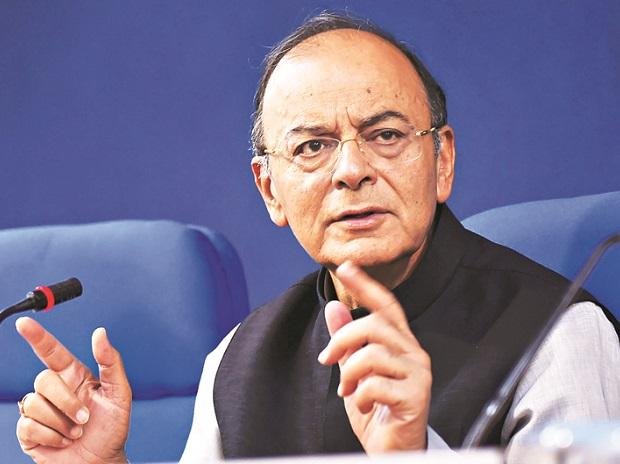
I have just no words to express my boundless dismay and dejection on first learning that a great legal luminary and a political stalwart whom we all know by the name of Arun Jaitley has finally left us and left for his heavenly abode on August 24! Earlier we saw how another legal luminary and political stalwart – Sushma Swaraj too similarly left us in this month of August itself! Their space can never be filled up! 

Let me be candid enough to confess that I have never met Arun Jaitley in person but I always enjoyed reading his enlightening and enriching articles in magazines like Uday India apart from newspapers also! It will take some time to come to terms with the stark truth that Arun Jaitley just like Sushma Swaraj too has left us and just like her, he too had expressed his utmost happiness on scrapping Article 370 and Article 35A and ensuring the full and final merger of Jammu and Kashmir with India! The Supreme Court Bar Association too has expressed its deepest condolences on the sad demise of Arun Jaitley just like Sushma Swaraj! 
As we all know, Jaitley had not been keeping good health since quite some time. He had been admitted in All India Institute of Medical Sciences (AIIMS) on August 9 after complaining of uneasiness and breathlessness and was under the care of a multi-disciplinary team of senior doctors. He had been unwell for the past two years. In 2014, he underwent a bariatric surgery to correct the weight that he had gained because of a long-standing diabetic condition. In 2018, he underwent a kidney transplant surgery at AIIMS. Earlier this year, in January, he was diagnosed with a rare form of soft tissue sarcoma which is a form of ancer.
No doubt, his exemplary conduct won him admirers not only from within his party but also across the party lines! He received his LLB degree from Delhi University in 1977. He began practicing law in the Delhi High Court and the Supreme Court in 1987. He was designated a senior lawyer by the Delhi High Court in 1990 when he was just 38 years of age.
It is rightly said that the proof of the pudding is in the eating. The same holds true for Arun Jaitley also! One can gauge his huge potential from this very irrefutable fact that he was appointed the Additional Solicitor General at the age of 37 by the then PM VP Singh even before he was designated a senior lawyer! It cannot be lightly dismissed that it was during his tenure as Additional Solicitor General that he played the key role in putting together the papers leading to the Bofors investigation in 1989. As Additional Solicitor General, Jaitley headed a high-powered team that visited Switzerland and Sweden to unravel the components of payments made to middlemen in the purchase of 158mm howitzer guns. His clients included big political stalwarts like PM Narednra Modi, present Union Home Minister Amit Shah, Sharad Yadav, late Madhavrao Scindia and LK Advani among others. He also represented large corporations like PepsiCo and Coca-Cola.
It also cannot be lightly dismissed that he was appointed Minister of State for I&B and minister of state for disinvestment which was a new ministry then in 1999 when Atal Bihari Vajpayee was the Prime Minister. There was no looking back for him since then! He was elevated to the Cabinet as Union Minister of Law, Justice and Company Affairs after another legal luminary – Ram Jethmalani resigned in 2000. He performed all his task with distinction and vindicated the huge faith posed by the then PM Atal Bihari Vajpayee in him! In 2003, he was appointed as Minister of Commerce and Industry also!
It goes without saying that he played the most instrumental role along with former Goa Chief Minister and ex-Defence Minister – late Manohar Parrikar in forwarding the name of Narendra Modi as Prime Minister at the BJP national executive meet at Goa in 2013 as he felt he was the most popular choice of party workers and asked his followers and leaders also including LK Advani to refrain from projecting him as PM. This alone explains that why PM Narendra Modi too was most upset on hearing the tragic news of his death while on foreign trip to UAE on an official tour and very rightly described him as a “valuable friend” whose insights and nuanced understanding of matters had “very few parallels”. PM Narednra Modi minced no words in candidly admitting that, “With the demise of Arun Jaitley Ji, I have lost a valued friend, whom I have had the honour of knowing for decades.” PM Modi rightly said that, “The former Finance Minister was full of life, blessed with wit, a great sense of humour and charisma.” In a series of tweets, PM Modi also said that, “Mr Jaitley was admired by people across all sections of society, adding that he was multi-faceted, had impeccable knowledge of India’s Constitution, history, public policy, governance and administration.” 
In PM Narendra Modi’s first term as PM, it was mostly Arun Jaitley who mainly handled the key portfolios like Defence and Finance! In 2009, he was chosen as Leader of Opposition in the Rajya Sabha, after which he stopped practicing law. But he continued advising leaders in his private capacity on all legal issues! Even senior and eminent lawyers from other parties like Kapil Sibal who too is a renowned legal luminary and he too has handled key portfolios of Law, Science and Technology and others just like Arun Jaitley admired the sharp legal acumen of Jaitley and made sure that he accompanied Jaitley in his funeral procession also! This speaks for itself as to how much respect and admiration he commanded cutting across party lines!
Let me say this most bluntly: Those who criticize him for not winning elections and lambast him for not being a mass leader don’t know the ground reality! It is not necessary that only those who win elections are mass leaders! We all know that former PM Manmohan Singh could not win elections due to which some leaders even took jibes at him just like others took jibes at Jaitley but can anyone deny the immense popularity they enjoyed both in the eyes of the common man? Certainly not!
Who does not know that he opposed the Emergency imposed by late Mrs Indira Gandhi tooth and nail and opted to stay in jail for 19 months instead of kowtowing in front of her as she was then the most powerful PM while he was still a student in a college and was about 25 years of age? It was Arun Jaitley who when he was just aged 33 years attracted national limelight when in a 1980 case involving the Indian Express building land on Bahadur Shah Zafar Marg in Delhi he fought the case with brilliance! In the Express case, Arun Jaitley strongly drove home the valid point before the Supreme Court that right to freedom of expression, intrinsic to publication of newspapers needed to be protected from the machination of powerful; and tyrannical forces who were wanting to harass newspapers into submission so that they don’t publish any adverse news which affected their political interests in the longer run! 
It must be also pointed out here that Jaitley won the case for The Indian Express and a portion of the building was saved from being demolished as the Supreme Court on October 7, 1985, struck down as order from the then Lt Governor Jagmohan for alleged violation of floor area ratio (FAR)! In 1998, the President had sent a reference under Article 143 raising questions about the procedure laid down by the Supreme Court for appointment of Judges to the High Courts and the Supreme Court. As we all know, it was this reference which is popularly known as the Third Judges case, which firmly entrenched the collegiums system for the appointment of constitutional court Judges and the Supreme Court opinion very rightly records gracefully the immense contributions of Jaitley which he rendered in this regard! 
One more interesting point also must be mentioned here regarding Jaitley. In the aftermath of 2002 post-Godhra ritos, the then Gujarat Chief Minister Narendra Modi had recommended the dissolution of the State Assembly and the Governor had accepted it. Since the last sitting of the Assembly was on April 3, 2002, and the Constitution did not permit a gap of more than six months between two sittings, polls were required to be held and results were declared before October 3, 2002. But the Election Commission put a spoke in the wheel and expressed its sheer inability to hold free and fair elections prior to October 3, 2002 citing law and order issues which they argued were not conducive for holding elections. The President sent a reference to the Supreme Court. Arun Jaitley argued exceptionally well for his party BJP and the Supreme Court very rightly accepted his logical contention that the Election Commission had to hold polls and ensure that not more than six months lapse between two sittings. The rest is history. The Election Commission had to hold elections and Narendra Modi romped home comfortably to once again become the Chief Minister of Gujarat.
Who does not know that it was sheer legal acumen of Arun Jaitley which saved both Pm Narendra Modi as also Union Home Minister Amit Shah when both faced the wrong end of the stick from CBI pertaining to post-Godhra riots cases and later encounter killing cases as in the case of Sohrabuddin? Who can question that as a senior advocate, Jaitley has left a long list of junior lawyers many of whom have now become senior who have learnt the art of advocacy from him and very rightly owe a lot to him? Who can deny that it was Jaitley who most bravely answered all troubling questions most cheerfully in Parliament for BJP and it is here that his legal skills as lawyer came in extremely handy for him as well as his party? Who can deny that he contributed even in sports while he was President of Delhi and District Cricket Association (DDCA) and eminent former batsmen Virender Sehwag who is also a member of DDCA said rightly while paying his rich tributes that, “He focused on ensuring the best facilities for sportspersons. It was he who initiated the upgrading of Feroz Shah Kotla stadium”? 
On a concluding note, let me say that it was Arun Jaitley who handled everyone with dexterity, calmness and skill that is unparallel! He may have left us physically but the unremitting and unrelenting work which he did just like Sushma Swaraj in various capacities both as a lawyer and as a Union Minister and as a Member of Parliament can never be forgotten by anyone! It was Jaitley who ensured that GST was rolled out and it was his unremitting focus that reshaped the Indian economy! It was in jail that he continued his studies while he as imprisoned during Emergency and still got first division in Law which speaks for itself the immense talent that he had right from the start in his life! 
His immense popularity can be gauged from this that Sonia Gandhi who is UPA Chairperson too expressed her huge grief by saying that, “I am deeply saddened. Jaitley had a long innings as a public figure, Parliamentarian and Minister and his contributions to public life will forever be remembered.” Ram Nath Kovind who is our President too rightly said that, “Shri Arun Jaitley possessed a unique ability of discharging the most onerous responsibility with poise, passion and studied understanding. His passing leaves a huge void in our public life.” May his soul rest in peace!
Sanjeev Sirohi, Advocate,
s/o Col BPS Sirohi,
A 82, Defence Enclave,
Sardhana Road, Kankerkhera,
Meerut – 250001, Uttar Pradesh.

Golden Girl PV Sindhu – An Inspiration for Girls to Learn and Lead Life

Pusarla Venkata Sindhu popularly known as PV Sindhu (born on 5 July 1995, Hyderabad) has brought name and fame for the country as she is the first Indian to win the BWF World Championships. Sindhu was in international limelight in 2012 when she was within 20 of the BWF World Ranking in September 2012 at the age of 17. It is pertinent to mention that the BWF World Championships (formerly known as IBF World Championships, also known as the World Badminton Championships) is a badminton tournament sanctioned by Badminton World Federation (BWF).

Her name will be written in the history of Indian badminton by Golden Letter as she is the first Indian to win the World Championships in Badminton. Interestingly, she has won this laurels in August (2019), which is the most auspicious month for Indians as we have got independence in this month as well as winning day (Sunday, 25/8/19) was her mother’s birthday. Both her parents are national level volleyball players. She is also one of the two Indian badminton players to ever win Olympic medal and other one is Saina Nehwal. From 2012 onwards, Sindhu’s sports carrier was in upward trend. Here few of her achievements (out of many) are presented – i) she won Malaysian open title 2013, ii) she reached semi-final in 2014 Commonwealth Games. And in the same year, she created history by becoming the first Indian to win two back-to-back bronze medals in the BWF World Badminton Championships, iii) in October 2015, at Denmark Open, she reached to her maiden final but lost. In the same year in November, P. V. Sindhu won her third successive women’s singles title at the Macau Open Grand Prix Gold, iv) In January 2016, she won the Malaysia Masters Grand Prix Gold women’s singles title, also in the same year at Rio Olympics, Sindhu clinched the silver medal and created history as she was youngest and first female individual to bag an Olympic Silver medal for India, v) now coming to 2017, in the BWF World Championships held in Scotland, she had to settle for silver after losing to Japan’s Okuhara in the finals but she defeated Okuhara in the final of 2017 Korea Open Super Series and became the first Indian to win Korea Open v) in 2018, all England Open, Sindhu made it to the top 4 and in the same year, she clinched silver medal in Asian games. 
She was endowed with many many awards inter alia of which are Padma Shri, Arjuna Award, Rajiv Gandhi Khel Ratna Award, FICCI Breakthrough Sportsperson, NDTV Indian of the Year, the CNN-News18 Indian of the Year (originally CNN-IBN Indian of the Year) etc. But I feel her greatest award is love and affection from the people of India. 
Wishing her more and more laurels.
– Writer is a famous for his writings on current affairs and social change. 
Dr Shankar Chatterjee
Former Professor & Head (CPME),NIRD & PR ( Govt. of India), Hyderabad,  India
Former Associate Professor, Eritrea

Former Assistant Prof, Govt. Degree College, Tripura, India
Former Senior Planning Officer, Govt of Assam, India 

Career options in India: Law as a career Option (Part 1)

The key reason that humans excelled compared to other species, or even managed to survive the harsh initial days on earth was their abilities to co-ordinate and stay in groups. For functioning of such groups, a set of rules must exist. Therefore, law is a field which is almost as ancient as the civilization. 
The first written instance of law came during the reigns of Hammurabi (18th century BC, Babylon). His laws were simple four lines, but it is a remarkable point in the history of civilization. For a long time the Kings usually kept the justice system under their thumb or let a council of his trusted ministers handle the affair.
Independent Judiciary
Needless to say, such a justice system was easily swayed by the ruling authorities or other influential few persons. Such a justice system can never be truly just. The concept of independent judiciary can be traced back to 18th Century England. One of the founding fathers of the United States Alexander Hamilton wrote in 1788 “The complete independence of the courts of justice is particularly essential in a limited constitution.” 
Such a judiciary can safeguard the people’s interests and rights and prevent any encroachment by the rulers of the country. Within this statement is the purpose and need of the judiciary system and this gives birth to various career options available in field of Law.
Career Options
The two main actors in a courtroom are the lawyers- who present various sides of the arguments in favor of their respective clients, previous precedence, constitution citations etc. and the judges who with or without assistance of a jury dwell into the arguments to decide upon a verdict so that the justice is provided.
Career as a Lawyer
Law as a profession is in great demand these days. With economic system and corporate world getting more and more complex, lawyers are required to a daily basis to interpret the law and it is no longer limited to traditional streams like civil or criminal. Now, lawyers can specialize in streams such as Criminal Justice, Civil Rights, Corporate Affairs, Taxation, Patent Law etc.
How to pursue a career in law?
Most popular way to pursue a career, one has to start with a good college. The tests can be taken post clearing 12th. The cut-off and other details can be obtained from the respective websites of the tests. The most popular Law entrance exams in India are-
i. CLAT- Common Law Admission Test. 21 national universities take admission through this test. (https://www.clat.ac.in/)
ii. AILET – All India Law Entrance Test is an exam conducted exclusively for National Law University (NLU) Delhi. (http://www.nludelhi.ac.in/)
iii. SLAT- For admission in Symbiosis Law School, Pune/Noida/Hyderabad (http://www.set-test.org/)
iv. LSAT – Law School Admission Test is conducted four times every year specially designed for LLB and LLM admissions.
 LSAT scores are accepted by more than 70 top institutes like Rajiv Gandhi School of Intellectual Property Law, IIT Kharagpur Law School, Galgotia University Law School, The Jindal Global Law School, UPES Dehradun, SRM University, Amity Law School and many more (http://www.pearsonvueindia.com/lsatindia/)
The top colleges as per the MHRD NIRF ranking (https://www.nirfindia.org/2019/LAWRanking.html) 2019 are-
1. National Law School of India University, Bangalore
2. National Law University, Delhi
3. Nalsar University of Law, Hyderabad
4. Indian Institute of Technology Kharagpur
5. The West Bengal National University of Juridical Sciences, Kolkata
6. National Law University, Jodhpur
7. Symbiosis Law School, Pune
8. Jamia Millia Islamia, Delhi
9. Gujarat National Law University, Gandhinagar
10. The Rajiv Gandhi National University of Law, Patiala
Job Opportunities
As discussed earlier, there are plenty of job opportunities in the area of Law and many more are being created as the world gets complicated. You may choose to practice on your own, join a law firm or join a corporate to advise them on daily matters. You may also choose to specialize for social issues like environment, labor laws, PLIs etc. If you give your heart and mind to a career in law, there is no way you will regret it.

NTA released UGC NET Examination Schedule

The National testing Agency (NTA) has released the UGC NET examination schedule for December 2019 and June 2020. Candidates can check the examination details on the official website of NTA, the link is nta.ac.in. This year the CSIR UGC NET examination will be conducted on 15th December 2019, while UGC NET examination will be held between 2nd to 6th December. The Online application process for December session will starts from 9th September. Aspirant will have one month time for registration as last date of registration is 9th October. Further, the hall ticket/admit cards will be available for download from November 9. 31st December will be the result day for both examination.

                      Source: Pexel

What is NTA
National Testing Agency (NTA) has been established as a premier, specialist, autonomous and self-sustained testing organization to conduct entrance examinations for admission/fellowship in higher educational institutions.The country`s top entrance/ competitive examinations such as Joint Entrance Examination (JEE)  mains, NEET (UG),  UGC NET etc  are conducted by the agency.
On behalf of UGC,  NTA conducts the National Eligibility Test (NET) for determining the eligibility of Indian nationals for the Eligibility for Assistant Professor only or Junior Research Fellowship & Eligibility for Assistant Professor Both in Indian Universities and Colleges. Earlier It was CBSE who conducted the NET in 84 subjects at 91 selected Cities of spread across the country.

Understanding NET and JRF
From Dec 2018, the UGC-NET (for Eligibility for Assistant Professor only or Junior Research Fellowship & Eligibility for Assistant Professor both), was conducted by the NTA. The award of JRF and Eligibility for Assistant Professor both OR Eligibility for Assistant Professor only depends on the performance of the candidate in both the papers of NET in aggregate. However, the candidates qualifying exclusively for Assistant Professor are not to be considered for award of JRF. Candidates who qualify the Test for eligibility for Assistant Professor are governed by the rules and regulations for recruitment of Assistant Professor of the concerned universities/colleges/state governments, as the case may be.


Examination Module
Mode: The Examination shall be conducted as Computer Based Test (CBT) only. 
Pattern: The test will consist of two papers. Both the papers will consist of objective type questions. There will be no break between papers. 

Paper 1
Marks- 100
Number of Questions- 50 
MCQ     — The questions will be generic in nature, intending to assess the teaching/ research aptitude of the candidate. It will primarily be designed to test reasoning ability, comprehension, divergent thinking and general awareness of the candidate.

Paper 2
Marks- 200
Number of Questions- 100
MCQ  —  This will be based on the subject selected by the candidate. 
Total duration–  03 hours without any break
Syllabi for all NET subjects can be downloaded from the UGC website: https://www.ugcnetonline.in/syllabus-new.php

What Are The Latest Advancement In Gaming Technology?

The gaming industry has seen a magnificent
development in technology over the decade. There have been some technologies in
3D and AI from the beginning and then there are others which have been
introduced in the past few years. These recent years have been really great for
the gaming industry. 
 

The video games industry has been with us from
the 1980s and some amazing advances have made the future of gaming even better.
The more you think about it, the more the people are getting crazier outside.
40 years ago, the people were playing pong but now is the time of virtual and
augmented reality. This jump is enormous for a very small amount of time. This
advancement explains how many users are interested in playing games all around
the world. 
Addicting games has led to this sudden
and fast advancement in the world of gaming. It used to be a kid thing when the
idea of gaming was introduced. But now, even the adults are showing their
interest in playing games. The difference between the graphics of the games on
the 80s and the games of today is just phenomenal. Nowadays, games are made in
a way that they feel so real and close to the real world. 
This has all been possible due to various latest
advancements in gaming technology.
Here are some of the latest advancement in
gaming technology:
Virtual reality:
If you are a dedicated gamer and looking for a
fully immersive experience, then you must allow yourself to enjoy the VR (Virtual
Reality). This technology has made gamers to experience something which was not
at all possible before. Although Virtual reality has been with us for many
years, recently it has been more collaborative. It is not one of those
experiences now as it used to be when players had no idea about it. 
It is no longer an experience of isolation. This
technology has added more fun to the actual gaming experience. You become a
part of the game and this way you experience something which had never been
experienced by you. 
Augmented Reality:
Well, what take things one step further than the
Virtual reality? The answer is Augmented reality. It allows gamers to interact
with their environment in real-time. AR makes it possible that you can play the
game in your physical environment. For example, there are car games which
allows you to play the game on roads in the real environment while overcoming
the obstacles and people in it. There are shooting games as well which allows
you to shoot the target with your smartphone. The latest example of such a game
is Wizards unite, which allows the users to throw magic spells on the wizards
using the smartphones. 
The latest advancement in this technology is the
wearable UI that can need to eliminate the need to point the objects using a
device.  
Amazing graphics:
The world of gaming has come a long way as
compared to the days of basic 8-bit graphics. The cutting-edge advancements
have made it possible for the new gamers to experience the games in the
completely restored worlds with realistic textures. This makes you feel like
you are inside the game and experience something mind-blowing. 
You are going to feel what the character is
feeling at that point of time or might even become the character itself. All
this has been possible due to amazing and real-time graphics.

High- definition displays:
The graphics of the game indeed needs to be good,
but you need to have some genuine way to show them off. Nowadays, there are
TV’s with 4K capabilities which means that it supports at 4000 pixels. The
price of this technology has dropped eventually as more and more people have
been using it. 
These televisions are providing the unbeatable
crispness and colors that there else which can come close. 8K Television sets
have also captured the markets and are changing the world of image
quality. 
Mobile gaming:
Smartphones are now what has become a necessity.
With the advent of smartphone technology, the gaming experience has been out of
the living room and arcade and has been into your hands. People commuting
through trains and buses in the morning are seen playing games in the morning
on their smartphone devices. 
People are no-more sitting in their living room
and playing console games or online games but are enjoying the digital gaming
in their hands. 
Gesture control:
Do you want to play the first-person shooter
games with real experience? Well, with the advancement in gaming technology,
this is now even possible. Just with a wave of a hand, you can play the games.
The
two
player games
of tennis and other racing games can be played with this
technology. 
The gesture control allows you to control the
natural movements being made in the game so that you can actually feel like the
part of the game and experience it closely. 
Conclusion:
The gaming is an industry which will evolve with
time and will continue to evolve in the future as well. The gaming industry is
taking big steps towards an unconquered territory, exploring and pushing the
limits. Let’s just sit back and take pleasure in experiencing the advancement
in the gaming industry. 

Why are there stones on railway tracks?

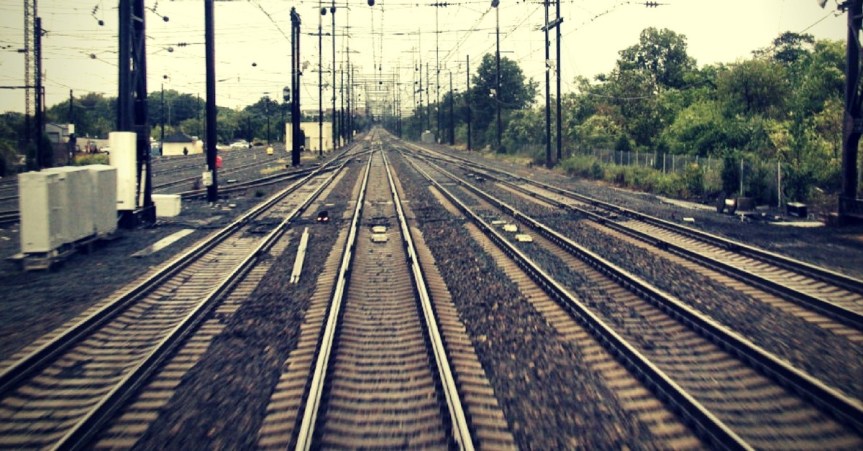
The train journey can be a very soothing and wonderful travel experience. However, most of us must have wondered at least once in our lives why there are stones on railway tracks. These crushed stones are called track ballast and they help keep the train tracks in place.

What is track ballast?

Track ballast is the collective term for the crushed stones on railway tracks. They form the trackbed and are packed around railway tracks. They form the ground for the railway sleepers which are used to keep the railway tracks upright and properly spaced.
Railway sleepers are the rectangular support piece kept perpendicular to the tracks. A railway sleeper is also called a railroad tie or a crosstie.
Sleepers used to be made of wood earlier but now they are mainly created with pre-stressed concrete.

Why is only a certain type of stone used on railway tracks?

Track ballast cannot be made with any kind of stone. If smooth, round pebbles like the ones on river beds or used for decoration were used on railway tracks, they might roll over or slide against one another when a train passed on the railway lines.
Thus, the wrong type of stone wouldn’t fulfil the main function of track ballast to provide support to the railway tracks. Only stones which wouldn’t move around much would suit the job.
That is why sharp edges stones are used on railway tracks for track ballast.

Other functions of track ballast

Apart from holding the railway lines in place and providing support for heavy trains to pass on, here are the other functions of the stones called track ballast:
1. The stones don’t allow vegetation to grow on railway tracks which could weaken the ground on which the railway lines run.
2. Track ballast also keeps water from reaching the track on a regular basis and softening the ground. It doesn’t completely seal off water from the railway tracks but it facilitates proper drainage beneath or around the tracks to ensure that the water doesn’t stay on it.

Technique used to minimise railway vibrations

The immense vibration of a passing train is a threat to nearby buildings apart from the loud noise which is a problem too.
Railways use a clamping technique to minimise vibrations consisting of EPDM or Ethylene Propylene Diene Monomer rubber which is highly resistance to heat, water and other mechanical strains. This helps noise and vibration to be reduced to a great extent.
Now that you know the crucial function of track ballast and why there are stones on railway tracks, make sure you don’t keep picking stones from the tracks to chuck them outside!

Filing Of Criminal Complaint For Settling Civil Dispute Is Abuse Of Process Of Law: SC

It must be mentioned explicitly right at the outset that in a latest, landmark and laudable judgment delivered by the Supreme Court in The Commissioner of Police & Ors Vs Devender Anand & Ors in Criminal Appeal No. 834 of 2017, a three Judge Bench of the Supreme Court comprising of Justice MR Shah, Justice Arun Mishra and Justice S Abdul Nazeer have held categorically and convincingly that filing of criminal complaint for settling a dispute of civil nature is abuse of process of law. This was held so while setting aside a High Court order issuing directions in a writ petition filed by the complainant. Very rightly so!
                               To start with, the ball is set rolling in para 1 of this noteworthy judgment authored by Justice MR Shah for himself, Justice Arun Mishra and Justice S Abdul Nazeer wherein it is observed that, “Feeling aggrieved and dissatisfied with the impugned judgment and order dated 13.01.2017 passed by the High Court of Delhi in Writ Petition (Cri.) No. 299 of 2016, the original respondents – appellants – Commissioner of Police and Others have preferred the present appeal.”
                                  While elaborating in detail, it is then pointed out in para 2 that, “That respondent No. 1 herein – original complainant entered into an agreement to sell in respect of house situated at WZ-179, Plot No. 11, Rani Bagh, Shakur Basti, Delhi with respondent Nos. 2 to 3 herein for a consideration of Rs. 54 lakhs. That the agreement to sell, general power of attorney etc. were executed and the entire amount of consideration of Rs. 54 lakhs was paid to the agreement sellers. According to respondent No. 1 – original complainant No. 1, subsequently on 31.07.2013, he learnt that the said property had been mortgaged to Andhra Bank when a notice by the said bank was affixed on the property. According to respondent No. 1 – original complainant, thereafter he was compelled to settle the claim of Andhra Bank to the tune of Rs. 16,93,059/- for release of the mortgaged documents. Respondent No. 1 – original complainant also paid the registration charges of Rs. 7,81,941/- for registration of the sale deed in his favour. That, thereafter he lodged a complaint with the Karol Bagh police station against respondent Nos. 2 and 3 herein for the offence under Section 420/34 of the Indian Penal Code alleging, inter alia, that though the property was put as a mortgage with the Andhra Bank, the same was not disclosed to him and without disclosing the same the property in question was sold. Therefore, it was the case of respondent No. 1 – original complainant that he was cheated by respondent Nos. 2 and 3 herein. That a preliminary inquiry was conducted on the said complaint by the Sub-Inspector of the Police posted at the Karol Bagh police station. According to the complainant, on 20.05.2015, the Sub-Inspector submitted his report that a prima facie offence under Section 420/34 IPC is made out. He sought permission to register a case under Section 420/34 IPC for further investigation. According to the complainant, the SHO concurred with the aforesaid conclusion in his noting dated 21.05.2015 and put up the matter before the ACP concerned. According to the complainant, the ACP also concurred with the said conclusion in his noting dated 25.05.2015. According to the complainant, despite the above, the FIR was not registered and the same Sub-Inspector Yogender Kumar of Karol Bagh police station started a fresh process of preliminary inquiry on the same set of facts. He concluded that since the complainant had given his consent to the registration of the sale deed and discharge of the liability of the bank, even though the said mortgage as revealed to him on 31.07.2013, therefore, no police action is required. The said file noting was concurred by the SHO with the diametrically opposite view taken by the Sub-Inspector Yogender Kumar earlier. The ACP also concurred with the view that only a dispute of civil nature has arisen and that a complaint be filed. It appears that thereafter the matter was placed before the Additional DCP who also concurred with the subsequent view that no case is made out against the accused, vide his noting dated 07.08.2015. That the said view was carried by the DCP/C and JCP/CR as well.”    
                                  Be it noted, it is then envisaged in para 2.1 that, “As the FIR was not registered against the accused for the offence under Section 420/34 IPC as alleged, respondent No. 1 herein approached the High Court by way of writ petition and prayed for the following reliefs:
‘1. Pass appropriate writ/order/direction thereby ordering appropriate action to be taken against the erring police officers, including but not limited to respondents No. 2 to 5, who are responsible for non-registration of the FIR in spite of a preliminary enquiry dated 20.05.2015 clearly submitting a finding that a cognizable offence under Section 420/34 of IPC was made out against respondents no. 6 and 7.
2. Pass appropriate writ/order/direction thereby quashing and declaring to be null and void the so-called second/subsequent undated report of preliminary enquiry, and the subsequent endorsements of the SHO. PS Karol Bagh dated 16 July 2015, the undated endorsement of the ACP (Karol Bagh Sub-Division) and the endorsement of DCP (Central) dated 7 August 2015 as the same are without any legal sanctity and have been created and brought into existence against the settled provisions of law and without following due process of law and in contravention of the procedure laid down by the Hon’ble Supreme Court in its judgment Lalita Kumari vs Government of U.P.
3.       xxx             xxx            xxx
4. Pass appropriate writ/order/direction thereby calling upon the office of the Commissioner of Police, New Delhi, to submit a report with respect to the relevant provisions of law under which his office has empowered the area ACP and DCP to approve registration of FIR, and upon submission of such a report, the vires and legality of the same be scrutinised as the same is in violation of the provisions of the Code of Criminal Procedure and the procedural guidelines laid down by the Hon’ble Supreme Court in the case Lalita Kumari vs. Government of U.P.
5. Pass appropriate writ/order/direction thereby directing the respondent no. 1 to hold an appropriate enquiry/investigation into the said circumstances under which the illegal and uncalled for second line of preliminary enquiry was initiated and carried out by the same officers, on the same facts and he may further be directed to submit a report of the said enquiry before this Hon’ble Court and take appropriate action by way of registration of cases, if required, and take all other necessary and proper actions in the matter against the officials found guilty in the matter.’”
                                      Do note, it is then also observed in para 2.2 that, “That the aforesaid prayers/reliefs were opposed by the appellants herein and respondent Nos. 2 and 3 herein. It was submitted that the original complainant had earlier preferred an application under Section 156(3) of the Cr.P.C. which came to be rejected by the learned Magistrate, vide order dated 27.03.2015 and that the said order was not assailed by the complainant and thereafter a fresh private complaint under Section 200 Cr.P.C. has been preferred which is pending before the learned Magistrate. It was also submitted on behalf of the original accused that the dispute is of a civil nature which is tried to be converted into criminal, which is nothing but an abuse of the process of law. It was submitted that despite having the knowledge of the mortgage of the property with the Andhra Bank, thereafter the complainant himself had paid the mortgage money to the Andhra Bank and even got the sale deed executed in his favour. It was submitted that if the complainant was aggrieved, in that case, he would not have got the sale deed executed in his favour.”    
                            Furthermore, it is then observed in para 2.3 that, “That, by the impugned judgment and order, the High Court has allowed the said writ petition and has directed that the case be placed before the Commissioner of Police for taking an action against respondent Nos. 3 to 5 therein (who are appellant Nos. 3 to 5 herein) for taking a diametrically opposite view. The High Court has also directed that the Commissioner of Police would be well advised to resort to course correction by directing that the earlier preliminary inquiry be taken to its logical conclusion and the steps in that regard be taken within two weeks. The High Court has also observed that the complainant shall also be entitled to costs quantified at Rs. 25,000/- to be paid by the State.”
                         It cannot be lost on us that it is then enunciated in para 4 that, “Having heard the learned counsel appearing on behalf of the parties at length and considering the material on record, we are of the opinion that the criminal proceedings initiated by respondent No. 1 – original complainant is nothing but an abuse of the process of law for settling a civil dispute.”
                               What’s more, it is then observed in para 4.1 that, “Even considering the nature of allegations, we are of the firm opinion that no case is made out for taking cognizance of the offence under Section 420/34 IPC. The case involves a civil dispute and for settling a civil dispute, the criminal complaint has been filed, which is nothing but an abuse of the process of law.”
                                  More importantly, para 4.2 then holds that, “It is required to be noted that after having come to know that the property was mortgaged with the Andhra Bank, the original complainant himself paid the mortgage money and got the mortgage redeemed. Not only that, thereafter, he got the sale deed executed in his name. Thereafter also, he filed the complaint with the learned Magistrate, being an application under Section 156(3) of the Cr.P.C., which came to be rejected by the learned Magistrate, vide order dated 27.03.2015. The said order was not assailed by the complainant. It appears that thereafter he filed a private complaint under Section 200 Cr.P.C. which was pending before the learned Magistrate. Despite the above, he filed a writ petition before the High Court, which is nothing but an abuse of the process of law. The criminal proceedings have been initiated by the original complainant to settle the civil dispute. Therefore, in the facts and circumstances of the case, the Investigating Officer and other police officers were justified in not registering the FIR and in coming to the conclusion that the complaint be filed. The earlier opinion on preliminary inquiry was never placed before the DCP. Thereafter, on thorough investigation/inquiry and considering the facts and circumstances of the case narrated hereinabove, when it was opined that the dispute between the parties is of a civil nature, the High Court ought to have closed the proceedings. Not only the High Court has issued further directions, but even has imposed costs and an action against the appellants 3 to 5 herein which, in the facts and circumstances of the case, is not sustainable.”  
                               Finally and perhaps most importantly, it is then held in the last para 4.3 that, “In view of the above and for the reasons stated above and as observed hereinabove, the initiation of the criminal proceedings by the original complainant is nothing but an abuse of the process of law, we not only quash and set aside the impugned judgment and order, but also quash the criminal proceedings pending before the learned Magistrate in respect of the transaction in question. Consequently, the present appeal is allowed, the impugned judgment and order dated 13.01.2017 passed by the High Court is hereby quashed and set aside. Even the criminal proceedings initiated by the original complainant pending before the learned Magistrate in respect of the transaction in question are hereby quashed and set aside.”
                                   In essence, we thus see that the three Judge Bench of the Apex Court in this latest, landmark and laudable judgment minces just no words to convey clearly that filing of criminal complaint for settling civil dispute is abuse of process of law! In doing so, it set aside the directions issued by the High Court! It held that no case was made out for taking cognizance of the offence under Section 420/34 IPC! Very rightly so! This should always be kept in mind by the litigants while they approach the courts! There can be just no denying it!
Sanjeev Sirohi, Advocate,
s/o Col BPS Sirohi,
A 82, Defence Enclave,
Sardhana Road, Kankerkhera,
Meerut – 250001, Uttar Pradesh.

Judge Can Recuse From A Case At His Own Volition, But Not At The Mere Asking Of Litigant: SC

In a significant development, it has to be mentioned right at the outset that the Supreme Court has in a latest, landmark and extremely laudable judgment titled Seema Sapra Vs Court On Its Own Motion in Criminal Appeal No(S). 1238 of 2019 (Diary No. 10342 of 2016) With (Interlocutory Application Nos. 128666/2017, 123144/2017, 122625/2017, 127773/2017, 30030/2018, 112422/2018 and 110313 of 2019) With Writ Petition (C) No. 13 of 2018 (alongwith C.M.P. No. 4015 of 2018 and Interlocutory Application Nos. 62789 of 2019, 99303 of 2019 and 61232 of 2019) & Writ Petition (C) No. 1027 of 2018 (alongwith C.M.P. Nos. 122904 of 2018 and 97450 of 2018) while rejecting a prayer seeking recusal of a Judge who is part of the Bench hearing an appeal explicitly held on August 14, 2019 that a Judge can recuse at his own volition, but need not at the mere asking of a litigating party. The concerned Judge has thus the discretion to grant or refuse the request of a litigating party seeking recusal and it is thus the prerogative of the concerned Judge on whether to heed or not to heed to such plea of recusal. Very rightly so!

To be sure, it was also clarified by the two Judge Bench of Apex Court comprising of Justice AM Khanwilkar and Justice Ajay Rastogi that recusal, at the asking of a litigating party cannot be countenanced unless it deserves due consideration and is justified. To arrive at this conclusion the Judges drew support from the exposition of the Constitution Bench in Supreme Court Advocates-On-Record Association Vs. Union of India. Very rightly so!
Be it noted, before the Supreme Court Bench hearing the appeal, a submission was made by Seema Sapra that she may not get justice from the Bench as Justice Khanwilkar is well acquainted with the Advocates who incidentally are members of the Supreme Court Bar Association against whom personal allegations have been made by her in the accompanying writ petition. It must be noted that the Bench of Justice Rastogi and Justice Khanwilkar were considering an appeal filed by Seema Sapra against the Delhi High Court judgment holding her guilty of having committed contempt of court. The Delhi High Court had imposed a punishment of imprisonment for a period of one month with a further direction restraining her to argue as an advocate or in-person, except in her defence, before any Bench of the High Court of Delhi or any Court or Tribunal subordinate to the High Court for a period of two years from the date of passing of the judgment. 
To start with, the ball is set rolling in para 1 of this noteworthy judgment wherein it is observed that, “The instant criminal appeal has been preferred under Section 19(1) of the Contempt of Courts Act, 1971 assailing the judgment of the High Court of Delhi dated 17th December, 2015 holding the appellant guilty of having committed contempt of Court and imposing punishment of imprisonment for a period of one month and a fine of Rs. 2,000/- (Rupees Two Thousand Only) to be deposited within a period of three months from the date of the order, failing which undergo a further term of imprisonment of one month with a further direction restraining the appellant to argue as an advocate or in-person, except in her defence, before any Bench of the High Court of Delhi or any Court or Tribunal subordinate to the High Court of Delhi for a period of two years from the date of passing of the impugned judgment dated 17th December, 2015.” Para 2 then states that, “The appellant had been exempted from surrendering vide order of the Chamber Judge dated 9th October, 2017. Notice was issued on the applications as well as on the appeal vide order dated 26th march, 2018, which has been duly served.”
As things stand, it is then brought out in para 3 that, “We have heard the parties. During the course of hearing, the appellant-in-person made an oral request that this Bench ought to recuse from hearing the matter which fact has been noted in our order dated 11th April, 2019 while reserving the order. The same reads thus:
“We have heard the petitioner in-person.
She is at liberty to file additional documents, which were referred to during the course of argument or any further document(s) which she intends to file.
She prays for four weeks’ time to do so.
Appropriate order will be passed after the additional document(s) are filed.
After hearing the petitioner in-person for almost two hours and this order being dictated, the petitioner submits that this Bench should not hear these matters.
Even this submission will be considered in the order that we may pass after considering the document(s).
Orders reserved.””
To put things in perspective, it is then envisaged in para 4 that, “Instead of filing additional documents in terms of the liberty given to the appellant in the aforementioned order, she moved an I.A. No. 62789 of 2019 in Writ Petition (C) No. 13 of 2018 on 12th April, 2019. We will take it up for consideration while dealing with the main writ petition in which the same has been filed. For the present, suffice to point out that one of the reliefs claimed in the said application is that the cases be listed before a Bench not comprising of one of us (A.M. Khanwilkar, J.). The appellant, however, mentioned the matter on 6th May 2019 to inform the Court about filing of the said application. Since the mentioning was done before a different Bench, the application could not be taken up for hearing and was directed to be listed on 2nd July, 2019. Again, on 2nd July, 2019, the cases were listed before a different Bench and not the same combination which had heard the matters on 11th April, 2019. It was, therefore, ordered that the cases be listed before the same Bench which had heard the matter on 11th April, 2019 and reserved order therein. Accordingly, the cases were listed on 12th July, 2019 before the specially constituted Bench. After hearing the appellant-in-person, the Court passed the following order:
“We have heard the petitioner-in-person on the applications for issue of appropriate directions/order and for modification of previous Court order, for over one hour.
After hearing the petitioner-in-person for quite some time, we asked her to confine her arguments to the issues which may require our consideration. She submitted that one of us (A.M. Khanwilkar, J.) should recuse. For that, she invited our attention to the averment made in I.A. No. 62789 of 2019 in particular. Such request cannot be accepted merely for asking by the petitioner-in-person. Reasons for not accepting that prayer will be elaborated in the order to be passed as noted in our previous order dated 11.04.2019.
It is open to the petitioner to file list of dates and/or any other relevant document(s), if she so desires. That be filed within two weeks.
We reiterate that all aspects will be considered and appropriate orders passed on the concerned proceedings, to be pronounced later.””
To say the least, it is then pointed out in para 5 that, “We must, at the outset, deal with the gravamen of the apprehension of the appellant as to why she has insisted for recusal of one of us (A.M. Khanwilkar, J.). Even on a liberal reading of the averments in the stated application, the apprehension of the appellant is founded on the allegation that she may not get justice from the Bench as Justice A.M. Khanwilkar is well acquainted with the Advocates who incidentally are members of the Supreme Court Bar Association against whom personal allegations have been made by her in the accompanying writ petition.”
What’s more, it is then pointed out in para 6 that, “We may usefully refer to Court On Its Own Motion Vs. State [MANU/DE/2758/2007] (paragraph 28), in which it has been observed as follows:
“The path of recuse is very often a convenient and soft option. This is especially so since a Judge really has no vested interest in doing a particular matter. However, the oath of office taken under Article 219 of the Constitution of India enjoins the Judge to duly and faithfully and to the best of his knowledge and judgment, perform the duties of office without fear or favor, affection or ill will while upholding the constitution and the laws. In a case, where unfounded and motivated allegations of bias are sought to be made with a view of forum hunting/Bench preference or brow-beating the Court, then, succumbing to such a pressure would tantamount to not fulfilling the oath of office.”
It is also pertinent to remind ourselves of the dictum of Lord Denning who observed in R. Vs. Metropolitan Police Commissioner ex p. Blackburn (1968) 2 All ER 319 as under:
“All we would ask is that those who criticize us will remember that, from the nature of our office, we cannot reply to their criticism. We cannot enter into public controversy. Still less into political controversy. We must rely on our conduct itself to be its own vindication. Exposed as we are to the winds of criticism, nothing which is said by this person or that nothing which is written by this pen or that, will deter us from doing what we believe is right; nor, I would add, from saying what the occasion requires provided that it is pertinent to the matter in hand. Silence is not an option when things are ill done.”” 
It cannot be lost on us that it is then pointed out in para 7 that, “Reverting to the present cases, it is noticed from the impugned judgment that around 28 Judges of the High Court of Delhi, who had heard the writ petition filed by the appellant, had to recuse by the time the writ petition was finally decided on 2nd March, 2015. Even after filing of the instant criminal appeal at least three Judges of this Court have recused themselves, for one reason or the other. Not only that, the appellant had moved a formal application being the present appeal to recall the order passed on 7th February, 2018 appointing Senior Advocate Mr. Vikas Singh as Amicus Curiae, as she had strong objection to his appointment. Similarly, the appellant had filed I.A. No. 111244 of 2017 for recall of order dated 27th October, 2017 appointing Ms. Pinky Anand, learned Additional Solicitor General to assist the Court as Amicus Curiae. That application was also allowed by this Court vide order dated 4th December, 2017.”
As it turned out, it is then unfolded in para 8 that, “Be that as it may, after the matter was assigned to this Bench during the hearing, which lasted for more than two hours on 11th April, 2019, the appellant had orally suggested that this Bench should not hear the cases as has been noted in the said order. On that day, the Court reserved its order giving liberty to the appellant to file additional documents to reinforce her arguments on the merits of the contempt proceedings, as insisted by her during the oral submission. Instead of availing of that liberty, the appellant chose to file I.A. No. 62789 of 2019 in Writ Petition (C) No. 13 of 2018 praying for recusal of one of us (A.M. Khanwilkar, J.). However, keeping in mind the totality of the situation, the Court declined her prayer as recorded in the order dated 12th July, 2019.”
More importantly, it is then very rightly pointed out in para 9 that, “Indubitably, it is always open for a Judge to recuse at his own volition from a case entrusted to him by the Chief Justice. But, that may be a matter of his own choosing. Recusal, at the asking of the litigating party, cannot be countenanced unless it deserves due consideration and is justified. We draw support from the exposition of the Constitution Bench in Supreme Court Advocates-On-Record Association and Another Vs. Union of India [(2016) 5 SCC 808]. It must never be forgotten that an impartial Judge is the quintessence for a fair trial and one should not hesitate to recuse if there are just and reasonable grounds. At the same time, one cannot be oblivious of the duty of a Judge which is to discharge his responsibility with absolute earnestness, sincerity and being true to the oath of his/her office. After perusal of the assertions made in the stated I.A.s, we have no hesitation in observing that the same are devoid of merit and without any substance. To observe sobriety, however, we say no more.” 
In essence, what is stated in para 9 is the crux of this extremely laudable and noteworthy judgment! It sends an unmistakable message to one and all that a Judge can recuse from a case at his own volition but not at the mere asking of a litigant. It also sends a loud and clear message that a Judge should not hesitate to recuse if there are just and reasonable grounds! Very rightly so! It is for the Judge and not the litigant who has to decide whether the Judge should recuse in a particular case or not!
Sanjeev Sirohi, Advocate,
s/o Col BPS Sirohi,
A 82, Defence Enclave,
Sardhana Road, Kankerkhera,
Meerut – 250001, Uttar Pradesh.