How to Get ISBN Number for Conference Proceeding

The National Agency for ISBN is responsible for registration of Indian Publishers, Authors, Universities, Institutions and Government Departments who are responsible for publishing of books. To obtain an ISBN,write mail to editor@pen2print.org 
Allotment of ISBN for conferences/ seminars proceedings Guidelines with General and Specific information with application forms provided by us. 

Benefits of ISBN number

By obtaining an ISBN you will be able to take the necessary steps to ensure that your book is widely known and to maximise its sales potential.
If you are a publisher or bookseller it is in your interest to use ISBN as it is likely to help you to sell books. Books that cannot be ordered and distributed by ISBN and that are not listed in Books in Print type listings may not sell as many copies as they could. People will assume that the books do not exist, and even if they do know they exist, they may consider it is too much bother to handle them since they will need to do so using lengthy manual ordering processes.
If you have published a book that you think can be successfully marketed in other countries as well as your own, then you should contact the respective ISBN agency in each of the countries to ask them for details about how your book can be included in their national catalogue for books in circulation (books in print). Sometimes you will have to obtain a distributor from that country or to have an address in that country before this is possible. In some circumstances there are certain other restrictions – for example, only books in the language of that country can be listed.
As well as catalogues of books in circulation, you may also want to ensure that you are listed by internet retailers such as Amazon. Again, you will need to contact each of these organisations directly (including each separate international branch) with details of your book. You can contact Amazon UK, for instance, through the publisher section of their site.
The benefits of ISBN include:
  • Correct use of the ISBN allows different product forms and editions of a book, whether printed or digital, to be clearly differentiated, ensuring that customers receive the version that they require.
  • The ISBN facilitates compilation and updating of book-trade directories and bibliographic databases, such as catalogues of books-in-print. Information on available books can be found easily.
  • Ordering and distribution of books is mainly executed by ISBN; this is a fast and efficient method.
  • The ISBN is machine-readable in the form of a 13-digit EAN-13 bar code. This is fast and avoids mistakes.
  • The ISBN is required for the running of electronic point-of-sale systems in bookshops.
  • Many publishing and supply chain systems are based on ISBN.
  • The accumulation of sales data is done by the ISBN. This enables the varying successes of different product forms and editions of publications to be monitored, as well as enabling comparisons between different subject areas and even different publishing houses.
  • The national lending right in some countries is based on the ISBN. Such schemes enable authors and illustrators to receive payments proportionate to the number of times that their books are lent out by public libraries. 

To obtain an ISBN,write mail to editor@pen2print.org  

Structural Reforms in the Agricultural sector to make Agriculture profitable and Sustainable

The
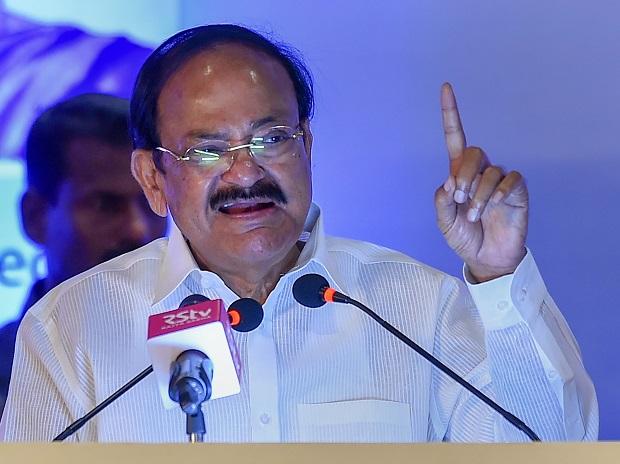
Vice President of India, Shri M. Venkaiah Naidu has called for
introducing structural reforms in the agricultural sector along with
financial assistance schemes like Direct Benefit Transfer to make
agriculture profitable and sustainable.
He
was addressing the gathering after inaugurating the Mukhya Mantri
Krishi Ashirwad Yojna of the Jharkhand Government, in Ranchi, Jharkhand
today. Lauding the Jharkhand government for coming up with the scheme,
he expressed hope that it would go a long way in addressing agricultural
distress in the state.

Under
the scheme, all the small and marginal farmers of the state, who have
arable land up to a maximum of 5 acres, will be given a grant-in-aid at
the rate of Rs. 5000 / – per acre per year, which will also reduce their
dependence on loans. This amount would be given in two installments
through Direct Benefit Transfer to the beneficiary’s bank account. This
is in addition to PM Kisan Nidhi Yojana under which each small &
marginal farmer’s family having combined landholding/ ownership of up to
two hectares is paid Rs. 6, 000 per year, said the Vice President.
Shri.
Naidu opined that Direct Benefit Transfer would eliminate middlemen and
ensure that every penny of the financial assistance given by the
government reaches the beneficiaries.
The
Vice President said that the Government of India had taken a firm
resolve to double the income of farmers by 2022. He added that the
government was continuously increasing the minimum support price of food
grains to achieve this objective.
He
asserted that our development would be meaningless until the benefits
of progress reached the rural areas and made the lives of our farmers
better.
The
Vice President also stressed the need for water conservation and said
that “Conservation of natural resources like water is essential. For
this, a massive campaign of rainwater conservation should be carried
out, which will replenish our ground water”.
He
cautioned that groundwater levels are continuously falling due to
uncontrolled exploitation of groundwater. Due to which the cost of
irrigation is increasing. The Vice President also urged the farmers to
adopt traditional techniques to support groundwater conservation.
The
Governor of Jharkhand, Smt. Draupadi Murmu, the Chief Minister of
Jharkhand, Shri Raghuvar Das, the Deputy Chairman of Rajya Sabha, Shri
Harivansh Narayan Singh, the Minister of Agriculture, Animal Husbandry
and Co-operative Department, Government of Jharkhand, Shri Randhir Kumar
Singh and others were present on the occasion.

Indian Army Intensifies Flood Relief Operations in Maharashtra, Karnataka, Kerala & Tamil Nadu

The
Indian Army has intensified its relief and rescue operations in the
states of Maharashtra, Karnataka, Kerala and Tamil Nadu. 13 X Engineer
Teams of the Indian Army have been airlifted from Rajasthan to provide a
surge to its ongoing relief and rescue operations in Kerala. Additional
Engineer teams have also been put on standby to move at short notice to
the flood affected regions. 20 X medical teams are being moved to
provide medical support to the rescued personnel in Maharashtra and
Kerala.As on date more than 3000 army personnel have been deployed for
flood relief and rescue operations in 17 districts of the four affected
states.

Lieutenant
General SK Saini, Ati Vishisht Seva Medal, Yudh Seva Medal, Vishist
Seva Meal, General Officer Commanding -in- Chief, Southern Command
visited the flood affected areas of Maharashtra and reviewed the ongoing
relief and rescue operations being carried out by the brave and
dauntless troops of Southern Command .
A
total of approximately 10,000 persons have been rescued and more than
17,500 persons have been evacuated from the marooned / flooded areas.
The rescued and evacuated persons are being provided necessary medical
aid and food while the isolated people are being distributed food
packets and water. A special helpline number 020 26357444 is functional
for assistance of the citizens of Maharashtra. Similarly a helpline
number has also been made functional at Trivandrum (0471) 2352373,
2353030 for assistance of all citizens of Kerala. 
As
on 10 August 2019, a total of 09 Relief Teams, 12 Engineer Teams are
providing assistance to the flood affected persons of Kohlapur and
Sangli in Maharashtra while 33 Relief Teams, 37 Engineer Teams continue
to provide flood relief in Bagalkot, Raichur, Belgaum, Kalburgi and
Kodagu districts of Karnataka.  In the state of Kerala, 24 Relief Teams,
21 Engineer Teams have been employed for flood relief in Allepy,
Ernakulam, Pathanamthitta, Idukki, Malappuram, Wayanad, Kannur and
Kozhikodu districts while 06 Relief Teams have been deployed in Nilgiri
district of Tamil Nadu.

Children to play a leading role in making ‘New India’

Raksha
Rajya Mantri Shri Shripad Naik today encouraged children to take
inspiration from Prime Minister Shri Narendra Modi in taking India to
newer heights. Raksha Rajya Mantri was addressing 3,500 children from 41
government schools, who will display ‘Naya Bharat’, as well as 700 NCC
cadets who will participate in the Independence Day celebrations at the
majestic Red Fort here on August 15, 2019. Shri Shripad Naik called upon
the students to imbibe the virtues which will be shared by the Prime
Minister during his Independence Day address.

Raksha
Rajya Mantri also lauded the children for their determination by
sitting for long hours for the last few days in challenging weather in
the run up to the celebrations. Therefore, it gives me immense pleasure
to give you mementos for your hard work, he added.
Later,
Raksha Rajya Mantri gave away souvenirs to one teacher & one
student from each participating school and Unit-in-Charge of the NCC
group and a cadet on behalf of all participating children/cadets.

2-day exhibition on DAE Technologies: Empowering India through Technology

The
Department of Atomic Energy (DAE), Government of India, is organizing a
two-day exhibition on DAE spin-off technologies for non-power
applications at New Moti Bagh recreation club, New Delhi. The exhibition
was inaugurated by the
Secretary,
Union Public Service Commission (UPSC) Shri Rakesh Gupta here today. The
exhibition is open to public for two days (Aug 11-12, 2019).

The
exhibition is coveringtechnologies developed by the Bhabha Atomic
Research Centre (BARC), Raja Ramanna Centre for Advance Technology,
Indore and other Units of Department of Atomic Energy (DAE), which are
useful for the common man in day-to-day life e.g. in the field of
health, agriculture, water, food security and environment.

The details of the exhibits are as follows:

Health:
In health sector there are three segments  i) Development of Radio
Pharmaceuticals ii) Production & Distribution iii) its
implementation for diagnosis and therapeutic  application. The treatment
of Cancer is managed by Tata Memorial Hospital (TMH), a fully
autonomous aided institution of DAE, provides comprehensive treatment to
cancer patients.  Medical devices for Tele-ECG, Bhabhatron- A Radiation
tele-therapy machine, screening of TB and Cancer are on display.
Agriculture:
DAE has developed 44 high yielding seed varieties by inducing
mutationto suitlocal weather conditionsacross the country. DAEhas also
developed technologies of fertilizer production frombio-sludge and
encourages organic farming. The disease resistant, low maturity period
and high yielding crops have been well accepted by the farmers. Rural
technologies are also being made available to rural youth through
‘AKRUTI’ programme.
Water:
DAE has developed technologies for clean waterto fulfill departmental
requirements and as spin-off developed many techniques which finds
applications in ultra-filtration membrane, RO membrane, multistage flash
evaporation and water hydrology based on radiotracers. Low cost water
filters for removal of all contamination from drinking water have been
displayed.
Environment:
DAE technologies are findinga lot of applications for Swatch Bharat
Mission where bio-methanization& Urban Sludge Hygienization
technologies are being deployed across the country.  “Nisargruna” plant
is a bio- Methanization plant
for digesting kitchen food waste and green vegetable wastes from
agriculture markets to Methane gas which can be used for
cooking/generating electricity or even for running biogas vehicles. 
This plant can digest animal waste from slaughter house also.
While
inaugurating the exhibition, Shri Rakesh Gupta expressed his happiness
that such exhibition is being organized in New Delhi. He said that these
technologies are helpful in day to day life for common people. He added
that Government officials act as opinion leaders, so they should visit
the exhibition and understand these technologies. Shri Gupta emphasized
that these technologies should be adopted in the whole country at a
large scale.
The
Secretary, DAE, Dr K. N. Vyas reviewed the preparations for exhibition
yesterday. The former Secretaries of DAE, Dr Anil Kakodkar, Dr M R
Srinivasan were present. The former Secretary DST and member of Atomic
Energy Commission,
Prof. P. Rama Rao, also visited exhibits, along with CMD, NPCIL, Shri S. K. Sharma.

Vice President advocates Supreme Court Benches in different regions to take judiciary closer to people

The
Vice President of India, Shri M. Venkaiah Naidu has advocated the need
to set up Supreme Court benches in different regions in the country,
including one at Chennai, to bring the judicial system closer to
people. 
Concurring
with the recommendation of the Parliamentary Standing Committee on Law
and Justice to have separate benches in different regions, the Vice
President said “I think it is high time we had more benches because in a
country as vast as India the litigants have to travel long distances
and spend a huge amount of money and energy”’.
Shri
Naidu made the observations while addressing the gathering at the
launch of a book chronicling his two years in office titled ‘Listening,
Learning and Leading” by Union Home Minister, Shri Amit Shah, in Chennai
today. 
It
was not only the legislature and the executive that should become more
responsive to people, the judicial processes must become more
people-friendly, the Vice President stressed.
Emphasising
the urgency to decide election petitions and criminal cases against
sitting MPs and MLAs in a time-bound manner, he said, it has been found
that election petitions and criminal cases were not decided even for the
entire term of the legislators defeating the very purpose of the
election laws. 
Calling
for expeditious decisions by the Chairpersons of  Legislative bodies in
cases involving disqualification of members defecting to other parties,
Shri Naidu observed that the anti-defection law was not being
implemented in letter and spirit.
The
Vice President said because of the inaction of the Speaker or Chairman
the legislators not only continue in the new party but also become
Ministers in a few cases. “This kind of travesty of justice should not
be tolerated”, he emphasized and said that delay in such cases would
erode public confidence in the judicial and legislative bodies. 
Suggesting
special judicial tribunals to decide such cases in a reasonable time of
six months or one year, the Vice President called for revisiting the 10th
Schedule of the Constitution, containing anti-defection provisions, to
ensure a time bound disposal of such cases and make it more effective by
plugging loopholes.
Shri
Naidu also referred to the figures mentioned by the Chief Justice of
India recently about heavy pendency of cases in various courts and said
“apparently, there are nearly 60,000 cases pending in the Supreme Court
and nearly 44 lakh cases in the High Courts.  We need to take action to
reduce this heavy pendency. Justice delayed, as is often said, is
justice denied”, he added.
The
Vice President said the law enforcement machinery and the justice
dispensing structures must be accessible, credible, equitable and
transparently even-handed.
Expressing
his happiness over the decision of the government to increase the
number of judges in the Supreme Court by 10 per cent, the Vice President
said that a number of civil and criminal cases have been pending for
over 25 years and wanted the Supreme Court to have two divisions– one
dealing with Constitutional matters and another with appeals.
He
said the proposal for two divisions merits serious consideration
“because it would enable the Supreme Court to devote more time to
Constitutional issues and make it more accessible to common people”.  
Shri
Naidu said the procedure for appointment of judges might also have to
be revisited and a credible, transparent process instituted which will
steer clear of avoidable controversies.
Urging
Parliamentarians to refrain from dysfunctional behaviour, the Vice
President urged political parties to adopt a code of conduct for
legislators and other elected representatives.
Stating
that media – the fourth estate, also plays an important role in shaping
public discourse, enhancing accountability of the government and
providing news and views on various events around the world, he said “a
free and vibrant media keeps democracy alive and can enrich the quality
of life of people through information, education, entertainment and
insightful analysis”.
Cautioning
against unauthentic media posts, he said there was a need for need
media literacy to identify fake news, biased analysis and material
intended to promote hatred, division and discontent.
Shri
Naidu said “the media should be a dispassionate watchdog and an honest
messenger. Media should be the catalyst of positive change and be the
voice of the voiceless. It should question and seek answers and present
even ugly truths in such a manner that social transformation occurs in
positive direction. It should also help build public awareness and
motivate people to join societal movements for cleanliness, health,
hygiene and education.
Referring
to the untapped demographic dividend and the fundamentally sound Indian
economy that was growing faster than the economies of most other
countries, he said the circumstances were excellent to transform our
country and called for focussing on five Ds – ‘Discuss, Debate, Decide,
Decentralize and Deliver. “This can transform the quality of our
polity”, he added.
The
Governor of Tamil Nadu, Shri Banwarilal Purohit, the Union Minister for
Home Affairs, Shri Amit Shah, the Union Minister for Environment,
Forest & Climate Change and Information & Broadcasting, Shri
Prakash Javadekar, the Chief Minister of Tamil Nadu, Shri Edappadi K.
Palaniswami, the Deputy Chief Minister of Tamil Nadu, Shri O.
Panneerselvam, eminent Agricultural Scientist, Prof. M.S. Swaminathan,
former ISRO Chairman, Dr. K. Kasturirangan,  veteran journalist and
Editor of Tughlak, Shri S. Gurumurthy, the Chairman, Apollo Hospitals
Group, Dr. Pratap C. Reddy, Popular Actor, Shri Rajnikanth, the
President, Education Promotion Society of India and Founder Chairman of
VIT, Dr. G. Viswanathan, All India Badminton Coach, Shri Pullela
Gopichand and other dignitaries were present on the occasion.
Following is the text of Vice President’s address:
“I
am extremely happy to be amidst all of you today, especially with Shri
Amti Shah ji, the Hon’ble Home Minister who has so graciously released
this chronicle of my engagements over the last two years as the Vice
President of India.  I am thankful to Shri Prakash Javdekar ji and his
team in the Ministry of Information and Broadcasting for bringing out
such an attractive compilation.  I am happy that Shri Banwarilal Purohit
ji, Hon’ble Governor of Tamil  Nadu,  Shri Edappadi K. Palaniswami,
Hon’ble Chief Minister of Tamil Nadu and Shri O. Panneerselvam, Hon’ble
Deputy Chief Minister of Tamil Nadu are with us for this event today.
I
feel it a privilege to have amidst us on the dais a galaxy of
luminaries, Dr. M.S. Swaminathan ji who ushered in green revolution in
our country, Dr. Kasturirangan ji, former Director of ISRO and the
Chairman of the expert committee that has drafted the New National
Policy on Education, Thiru Gurumurthy ji, editor Tughlak is a leading
journalist and one of the most reputed financial experts, Dr. Prathap C.
Reddy garu, the pioneering founder of India’s first corporate chain of
hospitals, Dr. G. Vishwanathan ji, Founder and Chancellor VIT and Shri
Pullela Gopichand garu, Chief National Coach for the Indian badminton
team. 
I have learnt a lot from each one of these doyens and continue to learn new things whenever I meet and interact with them.
In
fact, the chronicle of events that has just been released has been
aptly titled because it reflects my quest to gather new information and
gain new insights through interaction with a vast cross section of our
population. That’s the quest which has enriched me and been the driving
force behind my over 330 engagements across the country in the last two
years.  That’s the quest which has helped me grow over the years as I
kept meeting thousands of party functionaries and people from different
walks of life in the nook and corners of different States in our
country.
As
I reflect on what I have seen, heard and experienced as well as analyse
the present developments in the country, I am filled with a sense of
buoyant but cautious optimism.  I would like to share these thoughts
with the people of our country. There are so many exciting achievements,
and so many ambitious programmes that are putting our country on a new
and distinctly faster trajectory. The Prime Minister Modi ji’s mantra of
“Reform Perform and Transform” has given a new impetus to
transformational development of our country. These far reaching and path
breaking reforms must be further accelerated. 
The
country’s space programme and the rapid advances made by scientists in
the research labs across the country as well as innovations in
Information Technology are truly remarkable. I have personally seen the
cutting edge research being done by our scientists and I am deeply
impressed by their sense of dedication and professional excellence.
I
am quite confident that the youth which constitutes over two thirds of
our population will shape a new India provided we create the conditions
for their success and growth. This is a huge demographic dividend that
we can hardly ignore.
Dear Sisters and brothers,
As we step into the 73rd
year of independent India in a few days from now, my thoughts go to the
quality of our polity. I think it is a moment for us to ponder on the
current situation of our three state organs – the legislature, the
executive and the judiciary – and see how we can further strengthen
these three pillars.
The
State legislatures and the Parliament have an important policy making
role.  They are supposed to make legislations for the betterment of the
country and the people, take up and deliberate on issues of public
importance and ensure the accountability of the government of the day.
While some legislative bodies are functioning well, in many of them
there is certainly considerable room for improvement. 
There
is a general perception that the quality of debates has been declining.
Disruptions have become a more common occurrence then before. Acrimony
and emotional outbursts have tended to dominate the proceedings. 
I
have been urging the Parliamentarians to refrain from such
dysfunctional behaviour. I have constantly reminded them of their
onerous responsibility and unique opportunity to shape public discourse.
I hope that all political parties will adopt a code of conduct for
their legislators and contribute to policy making through informed
decisions. 
As
I have repeatedly emphasized in my public speeches, I would like
legislators across the country to “discuss, debate and decide” not
‘disrupt’.
We
need legislators who are well informed and well intentioned and capable
of articulating a well presented viewpoint, not those who are eager to
rush to the well of the House.
We
need legislators who realize the dreams of our Constitution makers
through enlightened debates and forward looking legislations.
Dear sisters and brothers,
Making laws is only a part of the story. Implementing them is a more crucial aspect of governance. 
Designing
programmes, funding them, monitoring their implementation and
evaluating their outcomes is the crux of good governance. 
There
should be no gap between policy intent and policy implementation.  The
intended benefits of a programme must reach the people in time.  The
quality of service delivery is an area that needs more attention than
what is being done today. 
How effectively are we able to deliver public services like water, sanitation, power, housing, transport, education, health? 
How effectively are we able to provide support to farmers, youth, traders, entrepreneurs and industrialists?
How
efficiently are we building durable, world class infrastructure like
road, rail and air connectivity and an eco-system for growth and
development? 
How swiftly and sustainably are we creating conditions for inclusive growth and empowerment of people?
We
have to constantly reflect on these questions and find answers through
honest evaluation.  We have to act promptly and make our delivery
systems work better.  While a lot of improvement has been made over the
years, service delivery remains very often the big missing link in
certain areas. 
We
must ensure that the fruits of democratic governance reach everyone,
especially the ones who are at the farthest end of the development
spectrum. 
Results based management should become the norm.
I am glad that the reforms initiated by Prime Minister Modiji are a major step in this direction.
Dear sisters and brothers,
This
focus on people and their active participation in national development
is the essential foundation of a well functioning democracy like ours. 
Programmes tend to succeed when people get enthused and participate in
the implementation of programmes.  I strongly believe that
decentralization of powers and responsibility to local bodies needs to
be more efficiently implemented as per the Constitutional provisions. 
Funds, functions and functionaries must be transferred to these
institutions.  This will bring governance closer to people and enhance
its credibility and effectiveness.
Sisters and brothers,
It
is not only the legislature and the executive that should become more
responsive to people.  The judicial processes must become more
people-friendly.  The law enforcement machinery and the justice
dispensing structures must be accessible, credible, equitable and
transparently even-handed.  There is a lot of ground we have to cover in
this regard. 
The
Chief Justice of India has recently talked about heavy pendency of
cases in various courts.  Apparently, there are nearly 60,000 cases
pending in the Supreme Court and nearly 44 lakh cases in the High
Courts.  We need to take action to reduce this heavy pendency.  Justice
delayed, as is often said, is justice denied.
Based
on my personal interaction with retired judges and senior advocates, I
would like to suggest certain measures to streamline and make justice
delivery more effective.
I
have been emphasising the urgency to decide certain category of cases
that are time bound like the election petitions and criminal cases
against sitting MPs and MLAs.
It
has been found that election petitions, criminal cases and
disqualification proceedings under anti-defection law are not decided
even for the entire term of the legislators defeating the very purpose
of these laws. 
In
cases involving disqualification of member of legislature who change
parties, the chairperson of the legislative bodies must expeditiously
take a decision. Here also, the anti-defection law is not implemented in
letter and spirit and because of the inaction of the Speaker or
Chairman, the legislators continue in the new party and, in a few cases,
even become ministers in the government. This kind of travesty of
justice should not be tolerated.
Any delays in these cases erode public confidence in the judicial and legislative bodies. 
I
would suggest that we should have special judicial tribunals which will
decide the cases within a reasonable time of, let us say six months or
at the most one year. I would also suggest we revisit the 10th
Schedule of our Constitution, containing anti-defection provisions, to
ensure a time bound disposal of such cases and make it more effective by
plugging loopholes.
We
need to bring the judicial system closer to people.  Expanding the
Supreme Court bench and having separate benches in different regions and
at least one in Chennai on trial basis has been suggested by the
Parliamentary Standing Committee on Law and Justice. I tend to agree
with this recommendation. I think it is high time we had more benches
because in a country as vast as India the litigants have to travel long
distances and spend a huge amount of money and energy. 
It
is heartening that the government has enhanced the number of judges in
the Supreme Court by 10% but I am afraid it may be still inadequate. 
A
number of civil and criminal cases have been pending for over 25
years.  This makes me think that we need to not only expand the Supreme
Court but also divide the work into Constitutional Division and a number
of legal divisions or Courts of Appeal. As the Law Commission has
suggested, I would like the Supreme Court to have two divisions’ one
dealing with Constitutional matters and another with appeals. This
suggestion merits serious consideration and decision by the Supreme
Court as well as the government because it would enable the Supreme
Court to devote more time to Constitutional issues and make it more
accessible to common people.
The
suggestions of the Chief Justice of India to raise the retirement age
of high court judges and make tenure appointments to clear the backlog
seem to be pragmatic solutions in the current context.
The
procedure for appointment of judges may also have to be revisited and a
credible, transparent process instituted which will steer clear of
avoidable controversies. While the Judiciary didn’t quite approve of the
National Judicial Commission passed by the parliament and the system of
collegium has not been without certain drawbacks, the appointment of
Judges needs to be done through a process which inspires confidence and
credibility.  The procedures must be simplified and the proceedings
should be, by and large, conducted in the language understood by common
people in a particular state.
What is required is “de-mystification” of processes.
Legal literacy and legal aid will bridge the current gap between the judicial system and people.
It
is generally noticed that an efficient, transparent, accessible and
affordable judicial system is a key touchstone of good governance which
can improve ease of business as well as ease of living.
Dear sisters and brothers,
In
addition to the three pillars of our polity, we also have the fourth
estate, the media, which plays an important role in shaping public
discourse, enhancing accountability of the government and providing news
and views on various events around the world.  A free and vibrant media
keeps democracy alive and can enrich the quality of life of people
through information, education, entertainment and insightful analysis.
The
technological advances in recent years have brought in unprecedented
changes in the media landscape. Social media along with the traditional
press and the TV are having a profound influence on our lives and
lifestyles, on our work and relationships.
Like everything else in life, this transformation has the good, bad and the ugly side to it. 
What
we need to guard against today is to take all media posts as authentic.
We need media literacy and an ability to identify the fake news, biased
analysis and material that is intended to promote hatred, division and
discontent.
The
media should be a dispassionate watchdog, an honest messenger, a
friendly adviser and a wholesome entertainer.  This is the ideal we must
aim to achieve. Media should also like other organs of governance be
more accountable for the authenticity and objectivity of the content.  
Media
should be the catalyst of positive change and be the voice of the
voiceless. It should combine information with confirmation that is
considered to be more powerful than ammunition. It should question and
seek answers and present even ugly truths in such a manner that social
transformation occurs in positive direction. It should help build public
awareness and motivate people to join societal movements for
cleanliness, health, hygiene and education.
Dear sisters and brothers,
I
have dwelt at length on the foundations of our governance system. We
are proud inheritors of an ancient civilization that had an excellent
governance system based on sound theoretical and philosophic basis. 
We
have rebuilt this edifice on new, solid foundation in 1947. We have
struggled hard through 72 years to shape India as a vibrant democracy. 
We have done reasonably well. 
But
this is not a moment to be complacent, to be smug and rest on past or
present laurels.  We must constantly strive to be better than the best.
As the ancient sages had exhorted us, charaiveti, charaiveti. We must move on and move forward. 
We should focus on the five ‘D’s I have already mentioned:
‘Discuss, Debate, Decide, Decentralize and Deliver’.  This can transform the quality of our polity.
And
we have an excellent set of circumstances to transform our country. We
are a young, aspirational India. An untapped demographic dividend, a
fundamentally sound economy that is growing faster than most of the
other countries, a pool of front ranking individuals and a strong
leadership at all levels. 
If we can combine our collective competence for common good, we can easily achieve the mission we have set for ourselves. 
We
can not only be a 5 trillion dollar economy but also a more vibrant
democracy based on our civilizational values of tolerance, inclusion and
harmony.
We should tap into our enormous resources both human and material. 
We should incorporate values and ethics into the education system.
We
should preserve the best aspects of our rich cultural heritage and
propagate it. India has a rich linguistic diversity and literary
heritage. I have been repeatedly suggesting that children should have an
opportunity to study in their mother tongue at least up to the primary
stage. This will enable Indian languages to be preserved and children
will strengthen their foundational and cognitive abilities.
As
we shape our future, we must certainly focus on making agriculture more
remunerative and sustainable. The central and state governments must
work together to provide inputs, implements, insurance, credit,
warehousing and marketing in an integrated manner. Diversification of
crops, supplementation of farmers’ incomes through activities like
dairy, poultry, agro forestry and aquaculture as well as value addition
through food processing will address the twin issues of ensuring home
grown food security and hidden hunger.
Dear sisters and brothers,
We
should keep our feet and ears to the ground, listen to different voices
and various ideas and learn from the best practices from across the
globe.
I
am happy that I have had the privilege of listening to and learning
from a number of eminent persons as well as youth and farmers,
scientists and artists, leaders from around the world. 
This book, launched today, captures some glimpses of this journey. 
I
am happy to be a co-seafarer in this voyage with all my fellow citizens
as we sail through known and unknown seas and constantly unveil a new,
resurgent, resilient, inclusive and harmonious India.
Let us all work towards a bright future that beckons us.
Jai Hind!

‘Listening, Learning and Leading’ book chronicling Vice President`s two years in office released by Union Minister for Home Affairs

Vice President Shri Venkaiah Naidu has said that abrogation of
Article 370 is in the interest of the Nation. Speaking at a function, to
release a book titled “Listening, Learning and Leading” chronicling his
two years in office as Vice President, Shri. Naidu said abrogation of
Article 370 should not be considered as a political issue but a bold
move taken in the interest of security of the nation and the future of
people of Jammu and Kashmir.
Stating that people must always learn from history and move forward,
the Vice President said it is at this juncture that we should stand by
the people of Kashmir and restore normalcy.
     The Book “Listening, Learning and Leading” was released by Union
Minister of Home Affairs Shri Amit Shah. Vice President Shri Venkaiah
Naidu received the first copy.   The event was hosted by Ministry of
Information and Broadcasting. 
Recalling the Government’s move in bringing the bill for abrogation
of the article in the Rajya Sabha, Vice President  said  after views of
the cross section of the polity in the Upper house was heard, the bill
after proper vetting was passed by the house with a two third’s
majority.
   Reminiscing his days as a student leader from a humble farmer’s
family, he said commitment, dedication, sincerity to a cause in which he
believed had helped him achieve great heights both in the BJP and in
the Government.  He praised Prime Minister Narendra Modi for his mantra
on Reform Perform and Transform which brought about a massive change in
the mindset of the people on development and had put India in  a
pedestal receiving global attention.
   Urging Parliamentarians to refrain from dysfunctional behavior and
stop acrimony and emotional outbursts which disrupted the effective
functioning of the esteemed Upper House, Vice President called on
legislators to realize the dreams of the Constitution makers.
     Appealing to the Government to bridge the gap between policy
intent and implementation, he said there is serious introspection that
is needed to improve the quality of service delivery, to benefit the
people at large. Result based management system should become the norm,
he said.
      Listing a series of measures needed to reform the Judicial
system, the Vice President said that justice dispensing structures must
be accessible, credible, equitable and transparently even- handed . He
urged the government to take steps to set up a Bench of the Supreme
Court in Chennai, besides in the East and the West.
    Referring to the shortfalls in the anti-defection law, he said
the law was not implemented in letter and spirit .  He said because of
the  inaction of the Speaker or Chairman, the defecting legislators
continue in the new party, which is a kind of travesty of justice, which
should not be tolerated.
     Union Minister for Home Affairs Shri.Amit Shah  in his address
said he strongly believes that Article 370 would bring terrorism to an
end and will take Kashmir forward in the path of development. Stating
that Article 370 should have been abrogated a long time ago, Shri. Amit
Shah said he had no confusion in his mind that it scrapping of Article
370 was in the interest of the people of Kashmir.
He said Vice President and Chairman of Upper House, acumen led to
abrogation of Article 370  after taking into consideration the views of
all parties.  The Home Minister recalled Shri.  Venkaiah Naidu’s days as
a student leader, who had led an agitation against Article 370, and it
was sheer coincidence that he presided over the Rajya Sabha when the
Article 370 was abrogated.
     Paying accolades to the self less service of Vice President to
the Nation, he said Mr Venkaiah Naidu worked his heart out to turn his
vision for urban and rural development into reality.
     Union Minister for Information & Broadcasting and
 Environment, Forests & Climate Change, Shri Prakash Javadekar said
Vice President personal rapport with Parliamentarians was above party
affiliations,   ensuring functioning of the Upper House smoothly,
resulting in passage of record number of bills in the last session.
 Vice President Venkaiah Naidu’s popular alliteration and witty remarks,
created a cordial atmosphere in the Rajya Sabha, where the opposition
has its say, even as the Government had its way, in clearing legislative
businesses.  
      Tamil Nadu Governor Shri. Banwarilal Purohit, Chief Minister
Edappadi Palaniswamy, Deputy Chief Minister O.Paneerselvam and host of
dignitaries from various walks of life participated in the function.
   Ministry of  Information and Broadcasting Secretary Shri Amit Khare proposed the vote of thanks.
As part of the book release, Regional Outreach Bureau, Chennai
organized a photo exhibition highlighting the journey of the Vice
President from a student leader. Shri.  Venkaiah Naidu’s interaction
with cross section of society, meeting with world leaders and visits to
Universities, Research institutions were also pictured.         
******

Flood Situation in Karnataka and Maharashtra by undertaking an Aerial Survey

Union
Minister for Home Affairs, Shri Amit Shah undertook an aerial survey of
flood affected areas of Belgavi district of Karnataka and Sangli &
Kolhapur of Maharashtra today.
Shri
Shah was accompanied by the CM, Karnataka, Shri B.S. Yediyurappa, Union
Minister for Parliamentary Affairs, Coal and Mines, Shri Prahlad Joshi,
Minister of State for Railways, Shri Suresh Angadi, Member of
Parliament, Shri Prabhakar Kore, Local MLA , MLC and officers of the
State Government.

Thereafter,
the Home Minister held a meeting at the Belagavi Aiport to review the
flood situation in the Karnataka State. A presentation was made by the
state government officers depicting the extent of damage and the rescue
measures taken, including the NDRF teams deployed.
Shri
Shah also enquired about the further forecast and was informed that
further rain was not expected in that area and adjoining areas of
Maharashtra in the next 2-3 days and the situation is likely to improve.

53rd Convocation of Indian Institute of Foreign Trade held in Delhi

The 53rd Convocation of Indian Institute of Foreign Trade (IIFT) was held on August 8at the Institute’s campus in New Delhi. In a ceremony, Hardeep Singh Puri, Minister of State (Independent Charge) of Ministry of Housing & Urban Affairs and Civil Aviation and Minister of State for Commerce & Industry, awarded degrees tothe graduating students of PhDs, Full Time MBA, Weekend MBA programmes, Executive Post Graduate Diploma in International Business and Certificate Programme in Export Import Management courses. Distinguished members from Board of Management of IIFT, faculty members of IIFT and other dignitaries were present during the convocation.
In his address, Hardeep Singh Purispoke about the growth that the Indian economy has witnessed since the last few decades. Considering the contribution of foreign trade to approximatelyfifty percent in this economic growth of India, he emphasized on the importance of specialised institutes like IIFT. Hardeep Singh Puri appreciated the contribution of IIFT’s research based consultancy and corporate trainings and hoped that it will contribute towards attaining thetarget of India becoming a 5 trillion USD economy in the near future.  Congratulating the graduating students, Hardeep Singh Puri exhorted them to be lifelong learners and keep abreast of the latest developments in Foreign Trade.

Commerce Secretary and Chairman, IIFT, AnupWadhawan, complimented IIFT’s placements and role of globally placed alumni in taking the Institute to global heights which has only been possible due to its rigorous teaching pedagogy and unique courses including foreign languages. Commerce Secretary further acknowledged the strong role of IIFT towards the support extended in policy making through its newly established Centre of Trade Facilitation and Logistics (CTFL) as well as Centre for WTO Studies, Centre for Research in Trade (CRT), Centre for Trade and Investment Law (CTIL) and the Centre for North East Studies (Ce-NEST) at IIFT Kolkata. He also assured continued support of the Government to the Institute for its new campus which is being built at Maidan Garhi in New Delhi.

PM’s address to the Nation on Article 370 Jammu and Kashmir

As a country and as a family, you and us, together we took a historic decision. A system which denied due rights to our brothers and sisters of Jammu, Kashmir and Ladakh; a system which was huge hurdle in their development has now been eradicated. A dream which Sardar Vallabh bhai Patel had, a dream which Babasaheb Ambedkar had, the dream shared by Shyama Prasad Mukherjee, Atalji and crores of citizens, has now been fulfilled.

A new age has begun in Jammu-Kashmir and Ladakh. Now the rights and accountabilities of all the citizens of the country are similar. I congratulate the people Jammu-Kashmir, Ladakh and each and every citizen of the country.
Friends,
Sometimes certain things of the social life get so entangled with time that they are considered to be permanent. A sentiment of complacency develops and it is thought that nothing is ever going to change. A similar sentiment prevailed for Article 370. Because of this there was no debate or talk about the damage done to our brothers and sisters, our children in Jammu-Kashmir and Ladakh. Astonishingly, nobody was able to list the benefits that Article 370 delivered to the people of Jammu-Kashmir.
Brothers and sisters,
Article 370 and 35A have given nothing but secessionism, terrorism, nepotism and widespread corruption on a large scale to Jammu-Kashmir. Both these articles were used as a weapon by Pakistan to flare up the emotions of some people. Due to this about 42,000 people lost their lives in the last three decades. The development in Jammu-Kashmir and Ladakh could not be done on levels which the region deserved. After the removal of this flaw from the system, the people of Jammu-Kashmir will not only have a better present but also a bright future ahead.
Friends,
Whichever government comes to power, it works for the betterment of the country by enacting laws in the Parliament. No matter which party or coalition is in power, this work never stops. There is a lot of debate both inside and outside the Parliament when laws are enacted and made, a lot of debate and brainstorming occurs and serious arguments are put up over its importance and effect. The laws that are enacted after undergoing this process are beneficial for the people of the nation. However, it’s unfathomable that so many laws are enacted in the Parliament but are not implemented in a particular region of the country. Even previous governments who were hailed after enacting a law couldn’t claim that the same law would be implemented in the Jammu & Kashmir region.
More than 1.5 crore people of Jammu & Kashmir were deprived of the benefits of laws that were enacted for the benefit of the people of India. Imagine children in rest of the country have a right to education while children in Jammu & Kashmir were deprived of this right. The daughters of Jammu & Kashmir were deprived of the right that our daughters had in rest of the states. In all the other states, Safai Karamchari Act was enacted for hygiene workers but the workers of Jammu & Kashmir were deprived of this. In other states, strict laws were enacted to stop atrocities on Dalits but no such laws could be implemented in Jammu & Kashmir. To protect the rights of blue-collar workforce, Minimum Wages Act was enacted and implemented in all the other states while such a law is only found on papers in the state of Jammu & Kashmir. In all other states, (our) brothers and sisters from Scheduled Tribes got reservation while contesting elections, but such a thing is unheard of in the state of Jammu & Kashmir.
Friends, I am fully confident that, following abrogation of Article 370 and 35-A, Jammu and Kashmir would soon come out of its negative effects.
Brothers and sisters, in the new system, the priority of the central government would be to keep state government employees and Jammu and Kashmir police personnel at par with the state government employees and police personnel of other states in terms of facilities.  In Union Territories, the government provides many such financial facilities like LTC, House Rent Allowance, Education Allowance for children, Health Schemes etc., most of which are not provided to the employees of Jammu and Kashmir government. Such facilities would soon be provided to the employees of Jammu and Kashmir government and state police personnel following a review.
Friends, very soon the process to fill in the vacancies of central and state government will be initiated in Jammu and Kashmir and Ladakh.This would provide adequate employment opportunities to the local youth. Besides, public sector units of the central government and big private sector companies would also be encouraged to provide new employment opportunities. Apart from the above, Army and para military forces would organize rallies to recruit local youths. The government would also expand Prime Minister’s Scholarship Scheme so that more and more students can get its benefit. Jammu and Kashmir also suffers huge revenue loss. The central government will ensure to minimize its impact.
Brothers and sisters, after abrogation of Article 370, the central government has decided to keep the state of Jammu and Kashmir under its administration after putting in a lot of thought process it. It is essential for you to understand the reasons behind the decision. Ever since the state has been under governor’s rule, the administration of Jammu and Kashmir is directly under the central government. As a result the positive effect of Good Governance and Development have been observed on the ground. The schemes which earlier remained only in files, have been implemented on ground. Projects pending from decades have been speeded up. We have tried to bring transparency and a new work culture in the Jammu and Kashmir administration. As a result, be it IIT, IIM, AIIMS, various irrigation projects or power projects or the Anti-Corruption Bureau, we have been able to expedite the work on these projects. Besides, be it the projects of connectivity, roads or new rail lines, modernization of the airport, everything is being accelerated. 
Friends,
The democracy in our country is very strong; but you will be surprised to know that there have been thousands of brother and sisters living for decades in Jammu and Kashmir who had the right to cast their vote in Lok Sabha polls but were not allowed to cast vote in assembly and local body elections. They are the ones who had come to India following partition in 1947. Should we have allowed the injustice to continue in the same way?
Friends,
I would also like to clarify another important point to my brothers and sisters of Jammu and Kashmir. Your political representative will be elected by you, He will be one of you. The MLAs would be elected just as they used to be elected earlier. The forthcoming cabinet would just be as it used to be earlier. The chief ministers would just be as they were before.
Friends, I am fully confident that, under the new system, we would collectively be able to keep the state of Jammu and Kashmir free from terrorism and secessionism. When our Jammu and Kashmir- the paradise on earth, after achieving new heights of development, attract the whole world, and when there will be greater Ease of Living in the lives of citizens; when they would ceaselessly get their rights, when all the tools of governance would speed up the work in favor of the masses, then I don’t think there would be any need to continue with the system under the union government, yes it would continue in Ladakh though.
Brothers and sisters,
we all want assembly elections in Jammu and Kashmir, that a new government is formed, that a new chief minister is elected. I assure the people of Jammu and Kashmir that you would get the opportunity to elect your representative in a fully honest and transparent atmosphere. Just as Panchayat polls were held transparently recently, assembly polls would also be held in Jammu and Kashmir. I would urge the Governor of the state that the setting up of Block Development Council, which has been pending for past two-three decades, be constituted as early as possible.
Friends,
I have personally experienced that those who got elected in Panchayat polls in Jammu and Kashmir and Ladakh four-five months back, have been working nicely. Few months back when I visited Srinagar, I had a long meeting with them. When they came to Delhi I interacted with them for long at my home. It is because of these friends in Panchayats that the work has been done promptly at village level in Jammu and Kashmir. Be it the task of electrification in every home or making the state Open Defecation Free, the representatives in Panchayats have played a crucial role. I am fully confident that following abbrogation of Artcle 370, once these Panchayat members get a chance to work in the new system, they would do wonders.
I firmly believe that the people of Jammu and Kashmir would conquer secessionism and move forward with new hope. I firmly believe that the people of Jammu and Kashmir would achieve their objectives with renewed fervor in an ecosystem of Good Governance and Transparency. Friends, Family rule has not given any opportunity of leadership to any young citizen of Jammu and Kashmir in the State.
Now, my these young people will take leadership of the development of Jammu and Kashmir and take it to a new height. I appeal to the youth, sisters and daughters of Jammu and Kashmir and Ladakh to take over command of development of their area in their own hands.
Friends,
There is every possibility of Jammu and Kashmir and Ladakh becoming one of the greatest tourist destinations. The kind of environment required for this and the change in administration that is needed, is being taken care of. But for this I need the support of all the countrymen. There was a time when Kashmir was the favourite place for shooting Bollywood films. During that time perhaps there was no film for which shooting was not done in Kashmir. Now, situations in Jammu and Kashmir will normalize. Now not only from India, people from all over the world will come for shooting there. Every Film will bring with it new opportunity of employment for the people of Kashmir. I appeal to the Hindi, Telugu and Tamil Film Industry and people associated with it to definitely think over for investment, shooting of films and establishment of theatres and other resources in Jammu and Kashmir.
I appeal to those who are associated with the technology world, administration or private sector to give priority in their policies and their decisions as to how to disseminate technology in Jammu and Kashmir. When digital communication will be strengthened there and BPO Centres, Common Service Centres will increase in numbers, there will be enhanced opportunity of earning livelihood and the life of our brothers and sisters of Jammu and Kashmir will become easier.
Friends,
The decision taken by the Govt. will benefit youth of Jammu and Kashmir and Ladakh and those who aspire to progress in the world of sports. New sport academies, new sports stadium, training in scientific environment will help them to show their talent in the world. Friends, whether it is the colour of kesar or flavour of Kahwa or sweetness of apple or juiciness of apricot whether Kashmiri shawls or artefacts; organic products of Ladakh or herbal medicine of Jammu and Kashmir, all these need to be publicised in the whole of world.
I will give you one example. There is a plant in Ladakh, named solo. Experts say that this plant is like a sanjivini for people living in high altitude and for security forces deployed in heavy icy mountains. These plants have great role in maintaining immune system of the body at where oxygen level is low. Just think over, should these extraordinary items be sold or not in the whole world? Which Indian will not like this?
Friends, I have named only one plant. There are ample plants, herbal products spread over Jammu and Kashmir and Ladakh. Those will be identified. If they are sold, it will benefit the people and the farmers of Jammu and Kashmir and Ladakh. Therefore, I appeal to the people associated with Industry, Export, Food Processing Sector to come forward to ensure that local products of Jammu and Kashmir and Ladakh reach whole of the world.
Friends, after becoming a Union territory, the development of people of Ladakh is natural responsibility of the Govt. of India. Central Govt., with the cooperation of local representatives, the Development Council of Ladakh and Kargil, will make available the benefit of all developmental schemes at a faster rate. There is possibility of Ladakh becoming one of the greatest Centers of spiritual tourism, adventure tourism and eco-tourism. Solar Power generation could become a vast centre of Ladakh.
Now, the capability of people of Ladakh will be utilized appropriately and new opportunity of development will come without any discrimination. Now the innovative spirit of youth of Ladakh will get boosted, they will get good institutes for good education, people will get good hospitals, and infrastructure will be modernized with priority.
Friends,
It is possible in democracy that some people will agree to this decision and some will oppose it. I respect their disagreement and their objections. Whatever is being argued in this connection, Central Govt. is responding to that and it is trying to resolve the same. It is our democratic responsibility.But I urge them to act keeping the national interest as paramount and help the government in giving a new direction to Jammu – Kashmir-Ladakh. Come forward to help the country.
Moving ahead from the fact that who voted in Parliament, who didn’t, who supported the bill, who didn’t, now we all  have to come together to work unitedly in the interest of Jammu – Kashmir-Ladakh. I also want to convey every countryman that the concerns of Jammu – Kashmir and Ladakh are our collective concerns. These are the concerns of 130 crore citizens. We are not indifferent to their happiness or sorrows and sufferings. The riddance from Article 370 is a reality.  But it is also true that whatever odds are being caused now because of these historic steps are being fought by them only.
Our brothers and sisters of that region are patiently replying to those handful people, who want to vitiate the atmosphere there.  We should not forget that it is the patriots of Jammu – Kashmir who are strongly opposing the conspiracies of Pakistan of instigating terrorism and separatism.
Our brothers and sisters, who believe in Indian Constitution, deserve a better life. We are proud of them.Today I assure these friends of Jammu – Kashmir that the situation will gradually return to normal and all their troubles too will reduce.
Friends, the festival of Eid is around the corner. I extend my greetings to all on Eid. The government is taking all necessary steps so that the people of Jammu – Kashmir don’t face any problem while celebrating Eid. The government is extending all possible help to those friends who live outside Jammu – Kashmir and want to return back to their homes on Eid.
Friends, today on this occasion, I also express my gratitude to our friends in security forces, who are deployed for the security of the people of Jammu – Kashmir. The way all the administrative officials, state employees and Jammu – Kashmir police personnel are handling the situation is really commendable. Your this diligence has boosted my confidence that change can happen.
Brothers and sisters, Jammu – Kashmir is the crown of our country. We are proud that many brave sons and daughters of Jammu – Kashmir have sacrificed and risked their lives for its security. Maulvi Ghulam Din of Poonch district, who had informed Indian Army about Pakistani intruders during 1965 war. He was conferred Ashok Chakra. Col. Sonam Wangchug of Ladakh district, who forced enemies to bite dust during Kargil war, was honoured with Mahavir Chakra. Kirti Chakra was conferred on Rukshana Kausar of Rajauri, who had killed a big terrorist.Martyr Aurangjeb of Poonch, who was assassinated by terrorists last year and whose two brothers are now serving the country after joining the Army. The list of such brave sons and daughters is very long. Several jawans and officials of Jammu – Kashmir Police have also laid their lives while fighting with terrorists.  We have lost thousands of people from other parts of the country as well. They all had a dream of seeing a peaceful, safe and prosperous Jammu – Kashmir. We, together, have to realize their dream. Friends! This decision will help in economic development of the entire country alongwith Jammu – Kashmir and Ladakh. When peace and prosperity prevails in this important part of the globe, the efforts for peace in entire world will be naturally strengthened. 
I call upon my brothers and sisters of Jammu – Kashmir and Ladakh to come together to show the world how much strength, courage and passion we have. Let us come together to build a new India, as well as a new Jammu – Kashmir and Ladakh.
Thank you very much!
Jai Hind!!!

Renaissance of our Education System to make it World class

The Vice President, Shri. M. Venkaiah Naidu, today said that religious harmony and unity in diversity are cherished values of our civilization and asked every citizen of the nation to strive to preserve our values of national integration.
He was addressing the Second Convocation ceremony of Shri Vaishnav Vidyapeeth Vishwavidyalaya in Indore, Madhya Pradesh today.
The Vice President commended the efforts of 135-year-old Shri Vaishnav Committee and the Group of Trusts, Indore in establishing Shri Vaishnav Vidyapeeth Vishwavidyalaya (SVVV) to impart quality education.

Stating that there was a need for rejuvenation and renaissance in our education system to make it world class, Shri. Naidu said that educational institutions must focus on academic excellence, physical fitness, mental alertness, moral uprightness and social conscience.
He urged universities to strive to overcome challenges of quality, equity and access in education through the creation of knowledge networks, research and innovation centres, skill development programs and support for faculty development.
The Vice President said that, with technology making deep inroads in our day-to-day lives, there is a greater need today to align academic curriculum in accordance with changing technological developments and to stay ahead of the curve for the country to reach greater heights.
He spoke of the need for India to upscale research facilities to produce world class publications in reputed international journals. ‘Research is an area where we are lagging behind and serious efforts are needed to bolster the culture of research and innovation in the country’, he said.
Highlighting the importance of preserving our rich culture, especially our languages, the Vice President also opined that mother tongue should be the primary medium of instruction in schools till the high school level.
Shri. Naidu also called for enhanced collaboration between academia and industry and urged the industry to earmark CSR funds for promoting collaboration with the academia and research activities.
Referring to India’s impending demographic dividend, Shri. Naidu said that India had the potential to become the human resource centre of the world. He said that quality education, skills, knowledge and creative thinking are essential to realize the demographic dividend and to make India a 21st century innovation hub.
The Vice President said that we must turn our educational institutions into centres of excellence with global standards. ‘’Our universities and educational institutional institutions must attain great heights and figure in top-ranking global academic institutions’, he added.
Observing that the majority of students who win awards for merit and excellence in universities are women, the Vice President said that women’s education and empowerment must become people’s movements.
Shri. Naidu emphasized that there is a need for inculcating the qualities of sharing and caring among youngsters. ‘They need to have empathy for others, particularly for the vulnerable and marginalized sections of the society’, he said.
He urged the students to continuously update themselves with the latest technologies, innovations and the changes in the world. He advised them to think of the nation first and to work hard with determination to realize their dreams and the aspirations of more than a billion people.
He advised students to firmly adhere to the path of righteousness and remain committed to upholding ethics and morals at all times.
The Governor of Madhya Pradesh, Shri. Lal Ji Tandon, the Minister of Public Health and Family Welfare, Government of Madhya Pradesh, Shri. Tulsiram Silawat, the Minister of Higher Education, Government of Madhya Pradesh, Shri. Jitu Patwari, former Speaker, Lok Sabha, Smt. Sumitra Mahajan and others were present at the occasion.
The following is the full text of the speech:
I am indeed delighted to address all of you on the occasion of Second Convocation of Shri Vaishnav Vidyapeeth Vishwavidyalaya.
At the outset, let me congratulate all the degree and medal recipients. I also convey my greetings to all the parents on this memorable occasion.
The efforts of 135-year-old Shri Vaishnav Committee and the Group of Trusts, Indore in establishing Shri Vaishnav Vidyapeeth Vishwavidyalaya (SVVV) to impart quality education are worthy of appreciation.
Over the years, the role of the private sector in Indian higher education has increased significantly and many outstanding private institutions across the country have contributed towards providing quality education to people.
However, higher education in the country continues to face many fundamental challenges of access, equity, affordability and quality. Although India’s higher education system is the third largest in the world in terms of enrollment, next only to China and the United States, its Gross Enrolment Ratio (GER) at 25.4% significantly lags behind other countries like China, which, currently, has an enrollment ratio of 43.39% and USA, which has 85.8%.
Also, there is a wide disparity in GERs across states, urban and rural areas and gender. We need to address this issue on a war footing. Quality of faculty and infrastructure need to be further enhanced.
I am confident that the private universities and institutions will play an instrumental role in overcoming these challenges through the creation of knowledge networks, research and innovation centres, skill development programs and support for faculty development.
With technology making deep inroads in our day-to-day lives, there is a greater need today than ever before to align academic curriculum in accordance with changing technological developments. As a matter-of-fact, we not only need to keep abreast of the latest technological trends, but strive to stay ahead of the curve for the country to reach greater heights.
To this effect, I would like to impress upon all academic establishments and the UGC, AICTE to completely revamp the curricula and teaching methods, utilize latest IT tools and promote the culture of research in a big way. We need to upscale the research facilities to produce world class publications in reputed international journals. Research is an area where we are lagging behind and serious efforts are needed to bolster the culture of research and innovation in the country.
Another area that needs a huge boost is the collaboration between academia and industry. In fact, the industry must earmark CSR funds for promoting collaboration with the academia and research activities. The students coming out of our institutions should be innovative and creative to meet the requirements of the technology-driven world. In essence, a stronger collaboration between academic institutions and industry must evolve.
India is very soon going to have the largest population of youth in the world. This is India’s demographic dividend. India can become the human resource centre of the world. We cannot any longer continue with status quo. We must turn our educational institutions into centres of excellence with global standards.
As we all are aware, India was once known as ‘Vishwaguru’ and was home to the world’s best universities. Our universities and educational institutional institutions must again attain such heights and figure in top-ranking global academic institutions. For that to happen, all stakeholders in the educational field must make relentless and dedicated efforts.
The potential of demographic dividend can be realized if every segment contributes in its capacity to the fullest. In order to benefit from the capabilities of our youth, educational institutions must also involve them in community development activities. There is a need for inculcating the qualities of sharing and caring among youngsters. They need to have empathy for others, particularly for the vulnerable and marginalized sections of the society.
My dear students, your hard work of years has today culminated into an academic degree. Don’t look at this degree as an end to your education. Rather, it should serve as a catalyst for further pursuits of knowledge. Education is the most powerful weapon to change the world. Change is the only constant.
And to keep up with this change, learning should not be seen as an end but as a means to achieve greater heights in life. You should continuously update yourself with the latest technologies, innovations and the changes in the world. Belief is one of the most powerful tools behind the success of a person—be it personal or professional.
Dear students,
My advice to all of you is to think of the nation first. No doubt, you must all be dreaming of building a great career ahead. Work hard with determination to realize your dreams and strive dedicatedly to build a New India. Let us collectively fulfill the aspirations of more than a billion people.
India today stands at the cusp of a tremendous demographic opportunity. 65% of India’s population is under 35 years of age. For this demographic dividend to be effectively realized, quality education with necessary skills, knowledge and creative thinking is essential to build India into a 21st century innovation hub.
Education is not just the accumulation of knowledge from textbooks. Albert Einstein once said that education is not the learning of facts but the training of the mind to think something that cannot be learned from text books. Sometimes, asking the right questions is more important than having the right answers.
Dear students, you must not deviate from the righteous path and remain committed to upholding ethics and morals at all times. As you step out of the portals of this institution, many of you might look for employment and many others might decide to pursue further studies. Irrespective of what you intend to do, one thing is clear—opportunities are aplenty and make yourself capable of utilizing these opportunities to the fullest possible extent.
At the same time, I must remind you that the society expects a lot from today’s young generation. The scope and opportunities are unlimited. You would find a very different sense of accomplishment and contentment, when you make a difference in someone else’s life, especially if that person is not as fortunate as you. Above all, the interest of the nation must remain uppermost in your minds.
With these words, I once again congratulate the graduates who have received medals and degrees and call upon them to serve the humanity to the best of their capabilities and strive for the growth of our nation and welfare of our countrymen.
Jai Hind!

President of India Presents Bharat Ratna Awards 2019

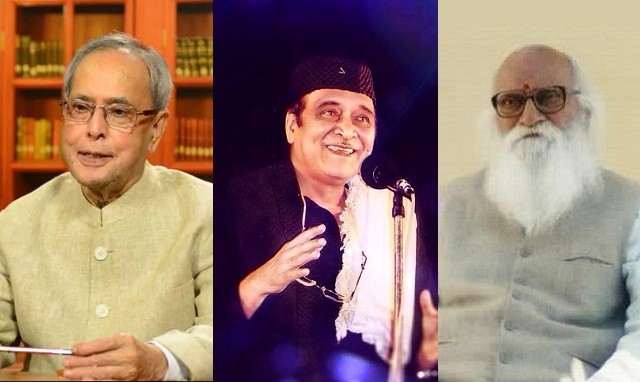
The President of India, Shri Ram Nath Kovind, presented Bharat Ratna Awards to Shri Nanaji Deshmukh (posthumously), Dr Bhupendra Kumar Hazarika (posthumously) and Shri Pranab Mukherjee at an Investiture Ceremony held at Rashtrapati Bhavan today (August 8, 2019).

‘One Nation One Ration Card’, Inter-State portability in two clusters of adjoining States of Andhra Pradesh & Telangana and Gujarat & Maharashtra

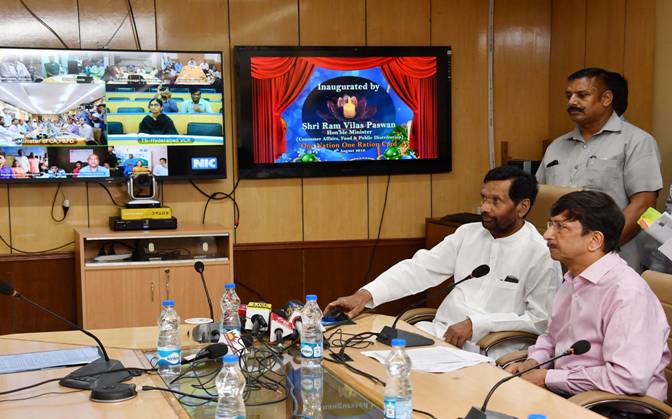
In a major step towards achieving the objective of ‘One Nation One Ration Card’, the Union Minister for Consumer Affairs, Food and Public Distribution Shri Ram Vilas Paswan today inaugurated the inter-State portability in two clusters of adjoining States of Andhra Pradesh & Telangana and Gujarat & Maharashtra. This will enable beneficiaries from either States’ cluster to avail the benefits accruing to them under the National Food Security Act from any of the two States.

Addressing the media after inaugurating the inter-State portability Shri Ram Vilas Paswan said that today marks the beginning of National level portability of Ration Cards which has begun with the two States’ clusters.Shri Paswan further stated that after leveraging the progress under Computerization scheme, 11 States/UT of Andhra Pradesh, Gujarat, Haryana, Jharkhand, Karnataka, Kerala, Maharashtra, Punjab, Rajasthan, Telangana and Tripura have implemented the intra-State portability of ration card holders to lift the entitled foodgrains from any Fair Price Shop within their State.Further, it is envisaged that the inter-State portability shall be introduced in the 11 States having already implemented intra-State portability by 1stJanuary 2020. 
Shri Paswan further added that all other States/UTs having attained requisite readiness for inter-State portability, shall be integrated in a phased manner. Thereby, enabling nation-wide portability of ration card holders to receive subsidized foodgrains under NFSA from anywhere in the country by 1st June 2020. The Union Minister said that this initiative shall be very helpful for the large migratory population of the country who migrate from one part of the country to other in search of job/employment, marriage, or any other reason and find difficulty in accessing subsidized foodgrains in the present system.
To sustain the reforms brought in by the ongoing scheme of ‘End-to-End Computerization of TPDS Operations’ and to introduce new reforms, the Department of Food & Public Distribution, is targeting implementation of nation-wide portability in distribution of subsidised foodgrains to the beneficiaries without the need of obtaining a new ration card under ‘One Nation One Ration Card’ System.
Installation of electronic Point of Sale (ePoS) devices at Fair Price Shops (FPSs) is the main enabler of portability of ration card holders, supported by the biometric/Aadhaar authentication.More than 4.1 lakh (77%) ePoS devices are already operational across the country. 25 States/UTs have either completed the installation in all FPSs or having significant progress in this area. Further, more than 85% ration cards (at least one member) in the country have been seeded with the Aadhaar numbers of the beneficiaries.        

‘Samagra Shiksha-Jal Suraksha’ Drive for School Students

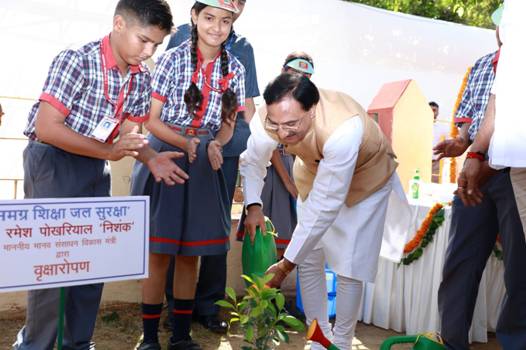
Union HRD Minister Sh. Ramesh Pokhriyal ‘Nishank’ and Union Minister for Jal Shakti Sh. Gajendra Singh Shekhawat launched ‘Samagra Shiksha-Jal Suraksha’ drive at KV no. 2 Delhi Cantt today. The dignitaries planted more than 350 saplings along with School Students and inaugurated Drip Irrigation System in the School campus. In order to create awareness about water conservation among school students, this mega drive targets to connect more than 10 crore students with this programme.
Union HRD Minister Shri Ramesh Pokhriyal ‘Nishank’ while launching the Drive asked School Students to take pledge for saving one litre water every day. 10 Crore Students together can save 10 Cr. Litres of water per day, he said. He appealed all School Students to become brand ambassador of water conservation. Students shall spread awareness about water conservation in their School, home and locality on the lines of Swachh Bharat Abhiyan.
Union Minister for Jal Shakti Shri Gajendra Singh Shekhawat expressed his deep concern on water scarcity in the Country and discussed various methods of water conservation. Quoting the example of Israel he explained how a small country with very limited sources of water generated innovative methods of water conservation and became a water exporting country. He also appreciated the efforts of Ministry of HRD and Kendriya Vidyalaya Sangathan towards water conservation.
Shri ‘Nishank’ and Shri Gajendra Singh Shekhawat also launched a booklet prepared by Department of School Education and Literacy, titled- ‘How I am going to save 1 litre water every day?’ This booklet discusses those small efforts which can save a lot of water.
Inspired by Prime Minister’s impetus on Jal Sanchay, Government of India has launched the Jal Shakti Abhiyan (JSA). It is a time bound campaign with a mission mode approach. This concept of water conservation is essential for students so that they can understand the importance of water and how it is shaping their lives meaningfully, thereby enabling them to participate in water conservation activities in their day to day lives.
The Department of School Education & Literacy, MHRD has launched the ‘Samagra Shiksha-Jal Suraksha’ drive to promote water conservation activities for School Students, so that they can become competent, conscientious and committed water citizens of our nation. The Department has prepared a detailed outline to implement this programme in all the schools of the country.
Five Major Objectives:
  1. To educate Students learn about conservation of water
  2. To sensitize Students about the impact of scarcity of water
  3. To empower Students to learn to protect the natural sources of water
  4. To help every Student to save at least one litre of water per day
  5. To encourage Students towards judicious use and minimum wastage of water at home and school level

Union Home Minister Amit Shah to release Vice President’s book on two years in office

A book chronicling two years in the office of the Vice President Shri M Venkaiah Naidu will be released at the Kalaivanar Arrangam, Chennai on August 11, 2019, by Union Home Minister Shri Amit Shah.
The function is being hosted by Shri Prakash Javadekar, Union Minister of Environment & Forests & Climate Change and Information and Broadcasting. The book titled “LISTENING, LEARNING & LEADING” captures a few glimpses of the Vice President’s 330 public engagements in all the States and Union Territories of our country during the last two years.

Crisscrossing the length and breadth of our vast country, the Vice President has delivered 61 convocation addresses, interacted with students on 35 occasions, visited 97 scientific and technological research institutions and delivered 25 special lectures.
The book contains Shri Naidu’s important diplomatic engagements including his visits to 19 countries in 4 continents. He was the first Indian Vice President to visit Panama, Guatemala, Costa Rica, and Malta.
The book will showcase his achievements as Rajya Sabha Chairman and his initiatives to enhance effectiveness, and promote the efficiency of Rajya Sabha.
Shri Banwarilal Purohit, the Governor of Tamil Nadu, Shri Edappadi K. Palaniswami Chief Minister of Tamil Nadu, Shri O. Panneerselvam, Hon’ble Deputy Chief Minister of Tamil Nadu will be attending the event.
Eminent Agriculture Scientist Prof. M.S. Swaminathan, Former Director ISRO, Dr. Krishnaswamy Kasturirangan, Former Attorney General of India Shri K. Parasaran, Editor of Tughlak Shri Swaminathan Gurumurthy, Chairman of Apollo Hospitals Group Dr Pratap C Reddy, Founder & Chancellor of VIT Dr.G.Viswanathan, Chief National Coach of Indian Badminton Team Shri Pullela Gopichand and several other dignitaries and eminent personalities will also attend the event.