ISRO and Chandrayaan-2: Proud Moment of India

In 1962, India achieved a great place in the space-history of world when Indian Space Research Organisation, popularly known as (ISRO) was established with its headquarters at Bengaluru. It was established with the vision to “harness space technology for national development while pursuing space science research and planetary exploration”. ISRO was set up under the leadership of Dr. Vikram Sarabhai who is considered as the Father of the Space Programme. The principal objective of ISRO is to use space technology for the development of the country. He once told, “There are some who question the relevance of space activities in a developing nation. To us, there is no ambiguity of purpose. We do not have the fantasy of competing with the economically advanced nations in the exploration of the Moon or the planets or manned space-flight. But we are convinced that if we are to play a meaningful role nationally, and in the community of nations, we must be second to none in the application of advanced technologies to the real problems of man and society, which we find in our country. And we should note that the application of sophisticated technologies and methods of analysis to our problems is not to be confused with embarking on grandiose schemes, whose primary impact is for show rather than for progress measured in hard economic and social terms”. 

ISRO and Chandrayaan-2: Proud Moment of India
The former President of India, A. P. J. Abdul Kalam who was also associated with the ISRO, said, “Very many individuals with myopic vision questioned the relevance of space activities in a newly independent nation which was finding it difficult to feed its population. But neither Prime Minister Nehru nor Prof. Sarabhai had any ambiguity of purpose. Their vision was very clear: if Indians were to play meaningful role in the community of nations, they must be second to none in the application of advanced technologies to their real-life problems. They had no intention of using it merely as a means of displaying our might”.
From the quotations of above two eminent persons, it is evident that few persons in those days were not in favour of India’s space programme. Anyhow today India is a great name in the space programme. Dr. Sarabhai started a project for the fabrication and launch of an Indian satellite as a result, the first Indian satellite Aryabhata, was put in orbit in 1975 from a Russian cosmodrome. In 2008, India launched as many as eleven satellites, including nine foreign and went on to become the first nation to launch ten satellites on one rocket. 
One of the greatest achievements in present days is Chandrayaan-2 which is the second lunar exploration mission developed by the Indian Space Research Organisation (ISRO) after Chandrayaan-1. Chandrayaan-2 comprises of a lunar orbiter, the Vikram lander, and the Pragyan lunar rover, all of which have been developed in India. The main scientific objective is to map the location and abundance of lunar water via Pragyan, and on-going analysis from the orbiter circling at a lunar polar orbit of 100 × 100 kilometres. However, regarding the landing of Chandrayaan-2, Indians are aware about the issue but the recent news items reveal that the health of lander Vikram of Chandrayaan-2 is yet not fully ascertained (up to 10 September 2019), although it has been accurately located. 
All Indians are proud of Dr K. Sivan, the Chairperson of the Indian Space Research Organization (ISRO) and his team members for their excellent endeavour to take Chandrayaan-2 at the pinnacle.
Dr. Shankar Chatterjee
Former Professor& Head (CPME)
NIRD &PR, 
Hyderabad-500 030
Telangana, India 
Email <shankarjagu@gmail.com>

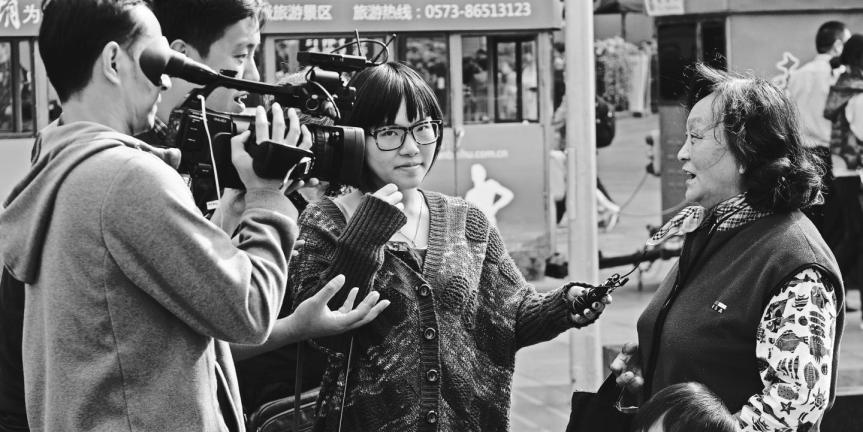
Microphone and their types

INTRO

Communication is part and partial of human and animal life
since existence.  Every living thing on
the earth has its way to communicate. But we as humans have advanced in terms
of communication with all great inventions. These technical instruments have made
our life easy enhancing communication in our day to day life. These devices are
designed for a purpose and they are serving it well. It has connected human
beings from one place to another very conveniently making the world a better
place to live.   
 One of those devices
is microphone that converts sound vibration into electronic signals inscribe to
a recording medium. It is a very useful device as it enables many types of
electronic function that is audio recording, and communications of many kinds.  Another main function of microphone is playing
music and speech recording.   They are very beneficial when it comes to
music recording from instruments like guitars, drums vocals and other acoustic
instruments in studio. It provides the best possible sound that a musician
desires when he plays his instruments. 
But to listen a great sound whether its music or an interview, all one
needs is a selection of good quality of microphone. There are many types of
microphone available in the market. One cannot use same type and quality of microphone
for multiple purposes. Different types of microphone have different functioning
to perform. Here is its brief:

Early microphones

Carbon microphones are the oldest among microphones that
were used in telephones. It was used for over one hundred years. The devices
used the electrical resistance and variable of carbon.  Metal plates translate air born sound waves
into an electrical signal under pressure. Not able to produce a clear sound,
early microphone was tough to use.
The liquid-based mechanism was used to operate these first-ever
electronic microphones.

Different types of microphones

There are many types of microphone but basis two is the
Condenser microphone and the Dynamic Microphone. These two microphones are used
by professionals in any music studio or professional recording environment.
There is a third type called a Ribbon Microphone too, but these are less common
and usually used by professionals only.

Dynamic Microphones

The unique quality of these microphones is it doesn’t need a
power supply and people can move freely from one place to another with
microphone in hand.  This instrument
helps in stage performances and live show where anchor has to move randomly in
different directions. Another is its fairly low price in comparison to another
microphone. In short, it can be called as an all-rounder microphone which
performs all task including recording and vocals.
The technology behind this microphone is a use of a moving
coil magnetic diagram tp produce the audio signal that can tackle high Sound
Pressure Levels (SPL).  The most common
example of these types of the microphone is  Shure SM57 and the Shure SM58

Condenser Microphones

These are the sensitive microphone that can even capture
subtle noise like breathing. Mostly used by musician for recording in studio to
get the surround effect of the sound. It is preferred for soft music recording
as they use a conductive diaphragm that vibrates along with the sound that
exerts pressure and uses capacitance to create the audio signal. Because of its
sensitive nature so not ideal for recording guitar amps up close.

Ribbon Microphones

These microphones are quite expensive in general and are
perfect recording device for multiple instruments in a closed room. They easily
can catch even slightest sound coming as of its extremely sensitive nature.
Considered great for capturing vocals, strings, and woodwind
A ribbon microphone is the most favorite and best suited for
the recording specialist. It is designed for recording to those who want an antiquated
sounding and feeling to their music as it beautifully records higher notes
associated with music instruments.  These
many features of these microphones make them very popular and are a favorite of
a music lover.
There are numerous different microphones available in market
and one has to choose wisely according to its need.

 Conclusion

When it comes to music then all people want it to come clear
to ear so that it can touch the soul. And this can only be possible if a
musician chooses its instrument and recording device carefully.  Well there are no tough rules when it comes
to recording but knowing about the and recording techniques can provide soulful
music to the ear.

Media Management

Media management is a region of
business organization that manages sorting out and directing groups of
media experts, different mass correspondence channels and innovations,
media and excitement creations, and the sky is the limit from there.
Media supervisors utilize association aptitudes, promoting procedures,
media financial comprehension, and the learning of various programming
apparatuses used in media preparations. Media management is viewed as a
business organization discipline that distinguishes and depicts key and
operational marvels and issues in the administration of media ventures.
Media management contains the capacities key administration, acquirement
the board, creation the board, authoritative administration and
advertising of media endeavors. A uniform meaning of the term media the
executives does not yet exist, and “the field of media the executives in
its present structure is neither unmistakably characterized nor
cohesive.
Media Management comprises
of the capacity to oversee and spur representatives and the capacity to
work offices and assets in a financially savvy manner. The center
errand of media management is to fabricate a scaffold between the
general hypothetical orders of the board and the specificity of the
media industry. Media and internet management covers all the objective
arranged exercises of arranging, association and control inside the
structure of the creation and appropriation forms for data or excitement
content in media enterprises. Media experts need solid business, vital,
and administrative aptitudes to be fruitful in an industry continually
experiencing crucial changes.

Media and Artificial Intelligence

The improvement of new Artificial Intelligence-based apparatuses has
opened the way to new media classifying, use, and adaptation potential
outcomes.  AI guarantees to change the media and stimulation business
affecting everything from substance creation to the purchaser
experience. AI will impact all pieces of the media esteem chain, helping
content makers to be progressively innovative, helping content editors
to be increasingly profitable, and helping content customers to locate
the substance that coordinates their interests and current circumstance.
AI controlled psychometric profiling is utilized to extricate
information from internet based life profiles, and utilize this data to
indicate potential voters a particular subset of focused phony news or
political promotions. 
The thought is to control data to a degree where
people can’t comprehend what’s actual and what’s not any longer. The
fundamental zones of utilization of AI are indexing and metadata
recognition, computerized because of these apparatuses. The measure of
time required for substance recording is decreased to nearly continuous
on account of AI, which connected to everyday work at an ordinary TV
station can make ground-breaking examination devices that can even be
utilized for news and live generation. Be that as it may, the advantages
of AI are not selective to the age of data straightforwardly from the
media. The exactness, speed and measure of data produced with AI
apparatuses open the way to numerous different applications in other
industry territories.

Guidelines for Recruitment of Faculty in Universities

The University Grants Commission (UGC) has asked all the
 Universities and educational  to fill up unfilled teaching posts within time
frame of  six months . According to the
new set Guidelines for recruitment of faculty in Universities, Colleges and
Institutions Deemed to be Universities that is  released by UGC on
June 4, all higher educational Universities have been asked to initiate and
complete the selection process of teachers within a time frame of 6 months.
It is aiming to
promote quality education to emphasizes excellence in research and
for the promotion and coordination of
university education. University grant commission
purposing
to promote quality to emphasize excellence in research.
It also aimed at the determination
and maintenance of standards of teaching, examination, and research in
Universities, Colleges, and Institutions. Directors of Physical Education and
Sports for maintenance of standards in higher education and revision of pay
scales.

So, these are the guidelines that need to followed to fil
the vacant seat  with appropriately
eligible and competent candidates.
Selection Procedure
·        
The higher education institute  is required to follow the selection process as
per their Acts, Statutes or constituent documents and in accordance with the
University Grants Commission with (Minimum Qualifications for Appointment of
Teachers and other Academic Staff in Universities and Colleges and other
Measures for the Maintenance of Standards in Higher Education) Regulations,
2018.
·        
The monitoring of the filling up of the posts
would be done by the MHRD and UGC through their  this portal.
·        
The higher education institute  should initiate and complete the selection
process within a period of 6 months in terms of the schedule given below.
·        
The higher education institute  should, however, ensure that all the vacant
posts, along with the reservations details, are uploaded on the online portal .
The UGC Regulations will be applicable for direct selection
of Teachers, in case the concerned Statutory Practiced Councils/Bodies have not
placed down the standards so far with the disorder that in such cases, the
norms of the Statutory Professional Councils//Bodies shall be appropriate from
the date they are notified by the worried Councils/Bodies.
  In the topics in which NET/SET/SLET is
conducted by UGC/CSIR or any other body credited by UGC, NET/SET/SLET shall be
an extra requirement for selection to the post of Assistant Professor and
equivalent positions as per the clause.

Media and Film Studies

Film studies are a scholarly control that manages different
hypothetical, authentic, and basic ways to deal with movies. It is now
and then subsumed inside media examines and is frequently contrasted
with TV contemplates. Film studies is less worried about propelling
capability in film generation than it is with investigating the account,
aesthetic, social, monetary, and political ramifications of the cinema.
In hunting down these social-ideological qualities, film ponders adopts
a progression of basic strategies for the examination of creation,
hypothetical system, setting, and creation. In this sense the film
studies exists as one in which the instructor does not generally accept
the essential teacher job; the highlighted film itself serves that work.
Likewise, in considering film, conceivable professions incorporate
faultfinder or creation. 
Film studies regularly incorporates the
investigation of contentions between the style of visual Hollywood and
the literary examination of screenplay. Generally the investigation of
film keeps on developing, as does the business on which it centers. Film
Studies urges us to move past such professes to ask how and for what
valid reason films make us feel the manner in which that they do, and
why we think a few movies are superior to other people.  Since the
cutting edge movie turned into a development and industry just in the
late nineteenth century, an age of movie makers and executives existed
fundamentally before the scholastic investigation that followed in later
ages.

Women and Media

Women who are involved in media are people who take an interest in
media. Media are the aggregate correspondence outlets or devices used to
store and convey data or data. The job of women in media develops
around media opportunity, media pluralism, media freedom, and media
safety. Women in media face indistinguishable challenges and dangers
from men, yet in addition experience sexual orientation disparities,
safety issues. Safety of journalists is the capacity for writers and
media experts to get produce and offer data without confronting physical
or moral dangers. Women journalists, face dangers of physical ambush,
inappropriate behavior, assault and considerably murder. Women
journalists are helpless against assaults not just from those
endeavoring to quietness their inclusion, yet additionally from sources,
associates and others. 
Mass media play a special and vital job in the
molding of a general public where people appreciate equivalent rights.
Raising ladies’ lawful mindfulness is imperative for the production of a
populist society.  The job of media is essential for being effective in
all the referenced circles. The media can advance and accelerate the
changes in advancement, or, unexpectedly, it can hamper their execution.
Notwithstanding common imbalance, common society keeps on being a power
for advancement. Different associations are attempting to push for more
noteworthy portrayal and key standard-setting bodies, for example, the
Gender and Internet Governance trade, started by the Association for
Progressive Communications, which means to change the hole in support by
ladies’ and sexual rights’ activists in web administration approach
forms.

Rural-urban Fringe (RUF)


The rural–urban fringe, also known as the outskirts, rurban, peri-urban or the urban hinterland, can be described as the “landscape interface between town and country” This is found at the edge of a town or city and is where town meets country.

Rural-Urban fringe is an important concept in settlement geography. The rural-urban fringe is the boundary zone outside the urban area proper where rural and urban land uses intermix. It is the area where the city meets the countryside. It is an area of transition from agricultural and other rural land uses to urban use. Located well within the urban sphere of influence, the fringe is characterized by a wide variety of land use including dormitory settlements housing middle-income commuters who work in the central urban area. Over time the characteristics of the fringe change from largely rural to largely urban. Suburbanisation takes place at the municipal boundary of rural-urban fringe.
Increasing demand for land in the rural-urban fringe area because:
  • Land is cheaper – as the accessibility of the rural–urban fringe is lower than that of the inner city areas and most of the people have to travel to the inner city for work, fewer people are willing to live in the RUF. Thus the land prices are lower.
  • There is less traffic congestion and pollution – as the area is a new development in the outskirts, and the population living in the area is lesser than the inner city, the traffic congestion and pollution levels are lesser.
  • There is easier access and a better road infrastructure – as it is a newer development with a lot of space available.
  • There is a more pleasant environment with more open space – the amount of open space decreases with time as the extent of development increases, and so does the friendly environment.
Beneficial development in the rural-urban fringe area:
The rural-urban fringe is characterized by a mixture of land uses, most of which require large areas of land.
  • Housing developments as urban sprawl continue
  • Science and business parks
  • Hypermarkets and superstores
  • Retail parks and out of town shopping centers
  • Office developments
  • Hotels and conference centers
  • Airport expansion
Problems caused by developing the rural-urban fringe:
  • Large areas of the countryside may be lost
  • Buildings may be out of character with existing rural buildings. Thus the loss of aesthetic sense
  • Villages may become suburbanized
  • Traffic is likely to increase (both cars and lorries)
  • There may be an increase in pollution (noise and air)

Uses of Rural urban Fringe and its Impacts

Uses

Positive Aspects

Negative Aspects

Agriculture

Many well-managed farms and small holdings

Farms often suffer litter, trespass, and vandalism; some land is derelict in the hope of planning permission

Development

Some well-cited, carefully landscaped developments such as business and science parks

Some developments, such as out of town shopping areas cause heavy traffic flow and pollution. Unregulated businesses such as scrap metal and caravan storage. Airport expansion

Urban Services

Some areas such as reservoirs or cemeteries, may be attractive.

Mineral workings, sewage works, landfill sites, etc. can be unattractive and polluting

Transport

New cycle ways and footpaths can improve access to countryside

Motorways destroy countryside and promote new development, particularly near junctions.

Recreation and sport

Country parks, sports fields and golf courses can lead to conservation.

Some activities such as stock car racing and scrambling to erode ecosystems and create localized litter and pollution

Landscape and nature conservation

Many SSSI (Sites of Special Scientific Interest) and AONB (Areas of Natural Beauty)

Much degraded land, Eg. land ruined by fly-tipping; many SSSIs under threat

Think India Quarterly

Think India Quarterly is the journal of ideas published by Vichar Nyas Foundation. From the outset it has received enthusiastic support and encouragement from leading intellectual, artistes, scientists and eminent personalities in public life. Commemorative and special issues of this journal have become collector’s item. It has completed 12 stimulating years of regular publication and has carved a niche for itself among discerning readers at home and abroad.

Skills to be a Good Learner

Introduction

 The ability to learn is possessed by humans,
animals, and some machines, and there is also evidence for some kind of
learning in some plants. Some learning is quick and is induced by a single
event but much skill and knowledge accumulate from repeated involvements. The
changes induced by learning often last a lifetime. It is hard to distinguish
learned material that seems to be missing from that which cannot be retrieved.

Obtaining new skills or adapting ideas and
knowledge, preference, behavior, and valuable skills are the learning process.   Learning can be of different types as it encourages
much skill and knowledge to accumulate from repeated experiences. To keep growing
intellectually is what one wishes for.


Leaving school or college doesn’t mean one
should stop learning. Limited learning means limited knowledge of things around
you as no educative process is the end. Learning is the process of inquiring
new or modifying existing knowledge, behaviors, skills, values, or preferences.


Why one need to learn a language

Strong learning skills are an asset that
will promote a lifetime of effective communication. Our language is the most
important part of our being. I think it is important to learn other languages,
other forms of communication besides our own because it helps us to learn about
other peoples and cultures
a)     
Learning helps one
develop a knowledge base and improve for the better.
b)     
Learning is
experimenting with something new which helps gets us access and to find new and
diverse chances and to try new experiences that might be the best ones.
c)     
Hypothetically it
helps rejuvenate one’s life a new and appropriate skill or by developing work
to do.
d)     
 It is essential to learn for staying up to
date in life. This is an ever-changing world where one needs to keep
self-updated and can never stop learning.
e)     
Want to earn
prestige and self-esteem that language is important to you. Learning new things
especially language can stimulate your brain and let it function well. It keeps
brain cell activity and allows people to be in confidence.


What will happen if we stop learning the language?


It’s the
nature of human soul to learn. Learning things especially language makes you go
upward and achieve new heights.  The one
who stops learning can stagnate and actually move backward.  Especially in professional world it is
important to learn. One cannot be linked with the world if learning is
stopped.  Learning across our lives is
essential for staying up to date in an ever-changing world. If we stop learning
things, we can stagnate and actually move backward, especially in our
professional lives. Learning language is beginning of your development and a
result-oriented.  What happens to you as
a result of your reaction and make a man that is base of your development. This
is also a key to your happiness as knowing more is showing what one has
achieved to more.


Road ahead

A language
programmer has a good future and can also earn good. It is becoming a career-oriented
skill as many companies give placement to these candidates. And who doesn’t
love to learn new words and language that makes you smart enough to face the
competitive and challenging world? But making a most of it is where smartness
lies. Language and learning are complementary to each other and are absolutely
central to your development. Without knowledge one cannot make sense and have
understanding of subject.  One needs to
develop language skills and is specifically most effective and central to
development. One needs to develop a specialized language and terminology that
is subjecting relevant and enhance personality. It helps in interpreting and
selecting relevant and appropriate material needed for response.  It is required to work productively with
others and helps to prepare assignments coherently. One who has good knowledge
of subjects can avoid jargon and plagiarism related mistakes in whatever
project they are assigned to.  There are
many institutes that provide a training program that helps to gain a piece of
good knowledge in writing and learning language. This is because language
learning is a skill in development. A language programmer has good future and
can also earn good. It is becoming a career-oriented skill as many companies
give placement to these candidates.


Dr. Sarvepalli Radhakrishnan: Pronam to the Legendry personality on occasion of Teacher’s Day

Since 1962, 5 September is celebrated in India as Teacher’s Day as on this day in 1888 a great scholar, philosopher, erudite person and statesman Sir Sarvepalli Radhakrishnan was born at Thiruttani, Madras Presidency of India. His many activities and assignments are too small to mention here as for this volumes are required. Even then few lines are mentioned on occasion of his birth anniversary. Among his many extensive works in the form of publications, one is Sir highlighted basic tenets and philosophy of Hinduism as well as he had copious knowledge of the Western philosophy and literatures for which many consider him a bridge-builder between India and the West.
At the very young age (33 years) in 1921, he was selected for the prestigious George V Chair in Philosophy at Calcutta University where he had proved his erudite skill. While, he was in Calcutta (now Kolkata) two volumes of Indian Philosophy were published – one in 1923 and the second was four years later. The Philosophy of Rabindranath Tagore written by Sarvepalli Radhakrishnan was also an excellent publication for which he should be applauded. 
Throughout the 1920s, Sir Radhakrishnan’s reputation as a scholar continued to grow both in India and abroad. He was invited to Oxford to give the 1926 Upton Lectures, published in 1927 as The Hindu View of Life, and in 1929 Radhakrishnan delivered the Hibbert Lectures, later published under the title An Idealist View of Life. Also he wrote commentaries on the Prasthanatraya (main primary texts of Vedanta), the Upanisads (1953), Brahma Sutra (1959) and the Bhagavadgita (1948). Dr. Radhakrishnan was awarded several top awards inter alia of which are knighthood in 1931, the Bharat Ratna, the highest civilian award in 1954 etc. He was awarded honorary membership of the British Royal Order of Merit in 1963. He was also one of the founders of Helpage India, a non-profit organisation for elderly underprivileged in India.
Dr Shankar Chatterjee
Former Professor & Head (CPME),NIRD & PR ( Govt. of India), Hyderabad,  India
Former Associate Professor, Eritrea

Former Assistant Prof, Govt. Degree College, Tripura, India
Former Senior Planning Officer, Govt of Assam, India 
PRESENT ADDRESS
Prof. Shankar Chatterjee 
Lidom Villa, No.13
Peranchuru, Bandlaguda(Jagir), Hyderabad-5000091

Government Notifies Strict Provisions Of Motor Vehicle (Amendment) Act 2019

It is most heartening to learn that as per an official release, the Government has notified 63 provisions of the Motor Vehicles Amendment Act 2019 including the ones dealing with enhanced penalties for various traffic offences. The new clauses would come into effect from September 1, 2019. The Ministry of Road Transport and Highways said in a statement that these are provisions which require no further amendments in the Central Motor Vehicles Rules 1989. The 63 clauses deal with various provisions like penalties, licences, registration and National Transport Policy among others. 
Needless to say, we earlier saw how Parliament passed the Motor Vehicles (Amendment) Bill. This Bill was introduced in Lok Sabha on July 15, 2019 by the Minister for Road Transport and Highways – Nitin Gadkari. The Lok Sabha had passed the Bill on July 23, 2019. The Rajya Sabha had passed the Bill on July 31, 2019. Earlier we saw how the legislation on this which was previously introduced in 2017 could not be passed in Rajya Sabha and lapsed with the dissolution of the 16th Lok Sabha 
As it turned out, the Bill was passed in Rajya Sabha with three key amendments and so it had to be sent back to the Lok Sabha for approval. The President gave his assent to the Bill on August 9, 2019. The Bill contains all such provisions that will ensure Indian roads are made more safer. Presently, we all know that India records maximum road accidents in the world and maximum people die in India from such accidents! Union Road Transport and Highways Minister Nitin Gadkari was candid enough to concede in Lok Sabha that more than 1.50 lakh people die and 5 lakh people injured annually in road accidents. 
Let us now briefly discuss some of the salient provisions of this Motor Vehicles (Amendment) Bill which has now become an Act after being passed by both Houses of Parliament. It will help us in understanding better what exactly the new law postulates to check road accidents. Some of the important salient provisions of this new law are as follows:- 
1. It makes Aadhaar mandatory for getting a driving licence and vehicle registration.
2. For deaths in hit-and-run cases, the government will provide an enhanced compensation under Section 161 of Rs 2 lakh or more to the victim’s family out of the scheme fund and Rs 50,000 in case of bodily injury. Presently, we see that the amount is just Rs 25,000 in case of death and Rs 12,500 in case of bodily injury. 
3. In traffic violations by juveniles, the guardians or owner of the vehicle would be held responsible unless they prove that the offence was committed without their knowledge or they tried to prevent it. A penalty of Rs 25,000 with 3 years imprisonment can be imposed under Section 199. The registration of the motor vehicle in question will be cancelled. The juvenile will be tried under the Juvenile Justice Act. The newly proposed Section 199A imposes liability on guardian or the owner of the vehicle responsible for an accident caused by the juvenile. 
4. It incorporates provisions for protection of good Samaritans. Those who come forward to help accident victims will be protected from civil or criminal liability. It will be optional to them to disclose their identity to the police or medical personnel. 
5. The minimum fine for drunk driving under Section 185 has been increased from Rs 2000 to Rs 10,000.
6. The fine for dangerous driving under Section 184 has been increased from Rs 1000 to Rs 5000.
7. Now driving without a licence under Section 181 will attract a minimum fine of Rs 5000 as against Rs 500 at present.
8. The fine for over-speeding under Section 183 will go up from Rs 400 at present to Rs1000 for LMV and Rs 2000 for Medium passenger vehicle.
9. Not wearing seatbelt would under Section 194B attract a fine of Rs 1000 as against Rs 100 at present.
10. Talking on mobile phone while driving would now attract a fine of Rs 5000 up from Rs 1000 at present.
11. A Motor Vehicle Accident Fund will provide compulsory insurance cover to all road users in India for certain types of accidents. This has been introduced under Section 164B which is to be augmented by a special tax or cess. The Fund is to be utilized for giving immediate relief to victims of motor accidents and also hit and run cases. The compensation paid out of this Fund shall be deductible from the compensation which the victim may get in future from the Tribunal.
12. It will be mandatory to alter vehicles to make them suitable for specially abled people.
13. Contractors, consultants and civic agencies will be accountable for faulty design, construction or poor maintenance of roads leading to accidents.
14. A time limit of six months has been specified for an application of compensation to the Claims Tribunal with regard to road accidents.
15. Now the cap on liability for third-party insurance has been removed. The 2016 Bill had capped the maximum liability at Rs 10 lakh in case of death and Rs 5 lakh in case of grievous injury.
16. The time limit for renewal of driving licence is increased from one month to one year before and after the expiry date.
17. The government can recall vehicles whose components or engine do not meet the required standards. Manufacturers can be fined up to Rs 500 crore in case of sub-standard components or engine.
18. The penalty for motor vehicles is proposed to be increased by 10 percent every year.
19. The new law now mandates the recall of defective motor vehicles if the defect may cause a threat to the environment, or the driver or other people on the road. In such a case, the recalled vehicle’s manufacturer will have to :
(i) Reimburse the vehicle owner the full cost of the vehicle.
(ii) Replace the defective vehicle with another vehicle of similar make. 
20. The new law now very rightly and commendably provides for the setting up of a National Road Safety Board by the Central Government as per Section 215D for advising on matters related to road safety. The National Road Safety Board will be now required to advise the Central and State Governments on all aspects of road safety and traffic management including registration and licensing of vehicles, standards of motor vehicles, standards for road safety and promotion of new vehicle technology.
21. Now the condition to undergo “driver refresher training course” for reviving license after suspension/revocation under Section 19, and also for compounding of traffic offences under Section 200 has been introduced. 
22. A provision has been suggested to regulate the licensing of cab aggregators, by amending Section 93 of the Act, and also by introducing definition of “aggregator” under Section 2(1A).
23. Through amendment to Section 200, punishment in the form of ‘Community Service’ can be imposed for traffic violations. The newly proposed Section 2(4A) defines ‘Community Service’ as unpaid work which a person is required to perform as a punishment for an offence committed under this Act. 
24. The newly proposed Section 198A imposes liability on contractor, concessionaire or designated authority when their failure to follow prescribed design and standards results in death or injury.
25. The amendment makes non-receipt of premium one of the specified conditions, which would enable the insurer to seek exoneration from the liability by virtue of new section proposed as Section 150 2(c). 
26. The newly proposed Section 88A empowers the Central Government to frame schemes for inter-state permits and make schemes for national, multi-nodal and inter-state transportation of goods or passengers. 
27. As per the present law we find that a claim for personal injury would abate on the death of the claimant, and would not survive to his estate, due to the operation of Section 306 of the Indian Succession Act. The claim would survive to the estate only if death had nexus with the injuries, and only in such cases the legal heirs would be entitled to come on record and continue with the prosecution of the claim. But the amendment cures that loophole by incorporation of a new sub-section, Section 166(5), with a non-obstante clause which stipulates that the right of a person to claim compensation for injury in an accident shall, upon the death of the person injured, survive to his legal representatives, irrespective of whether the cause of death is relatable to or had any nexus with the injury or not. 
28. The newly introduced Section 66A empowers the Central Government to develop a “National Transportation Policy”, for establishing a framework for grant of transport permits. The Section directs the Central Government to consult the State Governments before formulation of policy.
29. The penalty for violation under Section 177 was Rs 100 but now it has been raised to Rs 500.
30. The penalty for violation under new Section 177A pertaining to rules of road regulation has also been enhanced from Rs 100 to Rs 500.
31. The penalty for travelling without ticket under Section 178 has been raised from Rs 200 to Rs 500.
32. The penalty for disobedience of orders of authorities under Section 179 has been raised from Rs 500 to Rs 2000.
33. The penalty for unauthorized use of vehicles without licence under Section 180 has been raised from Rs 1000 to Rs 5000.
34. The penalty for driving despite disqualification under Section 182 has been increased from Rs 500 to Rs 10,000.
35. The penalty for oversize vehicles under Section 182B is Rs 5000.
36. Now for offences committed by enforcing authorities under Section 210B twice the penalty can be imposed under the relevant Section.
37. The power of officers to impound documents as stipulated in Section 206 provides for suspension of driving licenses under Sections 183, 184, 185, 189, 190, 194C, 194D and 194E.
38. Now the fine for driving without insurance under Section 196 has been increased from Rs 1000 to Rs 2000.
39. Now not providing way for emergency vehicles will be punished with fine of Rs 10,000 under Section 194E.
40. Now penalty for not wearing helmet has been increased from Rs 100 to Rs 1000 along with disqualification for 3 months for licence under Section 194D.
41. Now penalty for overloading of two wheelers has been raised from Rs 100 to Rs 2000 along with disqualification for 3 months for licence under Section 194C.
42. Now overloading which earlier under Section 194 was punishable with Rs 2000 and Rs 1000 per extra tonne will now be punishable with Rs 20,000 and Rs 2000 per extra tonne. 
43. Now overloading of passengers under Section 194A will be punished with Rs 1000 per extra passenger.
44. The penalty for vehicles without permit which earlier was upto Rs 5000 under Section 192A has now been enhanced upto Rs 10,000. 
45. The penalty for aggregators (violation of licencing conditions) under Section 193 will be ranging from Rs 25,000 to Rs 1,00,000.
To conclude, it is most heartening and most refreshing to learn that many new amendments have been made in the Motor Vehicles Act which was first enacted in 1988. They were necessary also as more than 31 years have flown under the bridge. We have discussed by and large all the important provisions under the new law. More stricter laws and more stricter penalties for violations of rules was the crying need of the hour. But enacting strict laws alone is just not enough. Implementing them with equal vigour is the real solution to increasing road accidents and this alone can help in containing this deadly malaise which is responsible for the maximum deaths in the whole world in our country alone! The violators must be taken to task and should not be let off lightly so that a loud and clear message goes to one and all that, “Be you ever so high, the law is above you. If you dare to violate the law, the long arms of law will catch you and you will not be able to smirk it by wielding your money power or muscle power or political power under any circumstances”! It goes without saying that only then will the people start respecting law truly in the real sense! 
Sanjeev Sirohi, Advocate,
s/o Col BPS Sirohi,
A 82, Defence Enclave,
Sardhana Road, Kankerkhera,
Meerut – 250001, Uttar Pradesh.


Judicial Service – HC Can’t Modify/Relax Instructions Issued By Public Service Commission: SC

In a noteworthy and commendable judgment titled The State of Tamil Nadu & Ors Vs G Hemalathaa & Anr in Civil Appeal No. 6669 of 2019 (Arising out of SLP (C) No. 14093 of 2019) delivered by the Supreme Court on August 28, 2019, a strict, stern and strong message has been sent to all the High Courts by reiterating that in judicial service, the High Court can’t modify/relax instructions issued by the Public Service Commission. The Apex Court has clearly, categorically and convincingly observed that instructions issued by the Public Service Commissions to the candidates are mandatory and to be strictly complied with and the High Courts cannot relax/modify these instructions. This notable judgment serves to send an unmistakable message that all candidates must strictly comply with the instructions issued by the Public Service Commissions and if they don’t comply then even High Court too can’t grant them relief!
To start with, this latest, landmark and laudable judgment authored by Justice L Nageswara Rao for himself and Justice Hemant Gupta sets the ball rolling in para 1 by first and foremost pointing out in para 1 about G Hemalathaa that, “The Respondent is an Advocate enrolled in the Bar Council of Tamil Nadu. The Tamil Nadu Public Service Commission (for short, ‘the Commission’) issued a Notification dated 09.04.2018 inviting applications from eligible candidates for filling up 320 vacancies to the posts of Civil Judges in the Tamil Nadu State Judicial Service. The Respondent was successful in the preliminary examination conducted on 09.06.2018. The written test was conducted on 11th and 12th August, 2018. Results of the written test were announced on 19.09.2018 and the name of the Respondent did not appear in the list of successful candidates. Interviews were conducted from 27.09.2018 to 05.10.2018 and the final results of successful candidates were published on 05.12.2018. The Respondent came to know that another candidate belonging to the same community to which she belongs (Most Backward Class) was selected in spite of her performance not being satisfactory. The Respondent made a representation to the Commission to furnish her marks in the written examination. On 07.01.2019, the Commission conveyed to the Respondent that her Law Paper I written examination was invalidated in view of violation of the instructions to Applicants (hereinafter referred to as ‘the Instructions’) issued by the Commission.”
Needless to say, what we then see unfolding in para 2 is this: “The Respondent filed a Writ Petition in the High Court for a direction to declare her result and appoint her as a Civil Judge, provided she has secured more marks than the last selected candidate in the Most Backward Class category. The High Court directed the Commission to announce the result of the Respondent in Law Paper-I of the main written examination. If she was found qualified, the Commission was directed to conduct the interview of the Respondent as a special case. The Commission was further directed to complete the exercise and announce the final result of the Respondent within a period of four weeks from the date of the judgment. Being dissatisfied with the said judgment of the High Court, this appeal is filed.” 
Moving on, it is then pointed out in para 3 that, “The Respondent contended before the High Court that she did not violate any of the conditions stipulated by the Commission. She complained that the Commission wrongfully invalidated her Law Paper-I. The High Court summoned the answer sheets and found that the Respondent had underlined the answer sheet with pencil at several places in Law Paper-I. The High Court was also of the opinion that such marking was in clear violation of Instruction 22 (1)(II) of the Instructions issued by the Commission which prohibits candidates from using a pencil for any purpose. Instruction 22 (1)(II) provides that:
“Penalty for violation of Commission’s instruction in the descriptive type examination. 
The answer books of the applicants will be invalidated/marks deducted/debarred for violations of any one or more of the instructions, besides initiating criminal action wherever necessary.
I Invalidation.
II. Usage of whitener, sketch pens, pencil, colour pencils, multi-colour pens, Crayons or any other writing materials, for any purpose.””
On the one hand, para 4 brings out that, “When the Respondent was confronted by the High Court by showing the answer sheet, she submitted that it may have been done inadvertently and due to anxiety. The Respondent pleaded for leniency and prayed that a direction may be given to the Commission to declare her as having been successful in the main examination. The High Court accepted the submission of the Respondent that the underlining of some portions of the answer sheet in pencil was done unwittingly and inadvertently and that she did not gain any advantage from such marking. Being of the view that the Respondent cannot be disqualified for a mistake committed inadvertently, the High Court allowed the Writ Petition.” 
On the contrary, para 5 then states that, “Mr. R. Venkatramani, learned Senior Counsel for the Appellant submitted that the instructions given to candidates taking examinations for selection to the post of Civil Judges clearly bars the candidates from using a pencil in any manner. The instructions given to the candidates are mandatory and cannot be relaxed. Mr. Venkatramani contended that the initial stand taken by the Respondent that she did not use the pencil disentitles her from the relief sought for. No lenient view can be taken in cases of violation of the mandatory instructions as the order in favour of the Respondent will be treated as a precedent. If the Respondent is given the relief sought for the other candidates who have been disqualified will also claim the same relief.”
Going forward, para 6 then brings out that, “Ms. V. Mohana, learned Senior Counsel appearing for the Respondent vehemently argued that we should not exercise our discretion under Article 136 of the Constitution of India. According to her, there is no substantial question of law in the S.L.P. warranting our interference. She submitted that an error was committed by the Respondent which was rightly condoned by the High Court. She made a fervent appeal to us that the career of a meritorious backward class candidate should not be nipped at the bud.”
It cannot be lost on us that it is then envisaged in para 7 that, “We have given our anxious consideration to the submissions made by the learned Senior Counsel for the Respondent. The instructions issued by the Commission are mandatory, having the force of law and they have to be strictly complied with. Strict adherence to the terms and conditions of the instructions is of paramount importance. The High Court in exercise of powers under Article 226 of the Constitution cannot modify/relax the instructions issued by the Commission (M. Vennila v. Tamil Nadu Public Service Commission, (2006) 3 Mad. LJ 376).”
Bluntly put, it is then made clear in para 8 that, “The High Court after summoning and perusing the answer sheet of the Respondent was convinced that there was infraction of the instructions. However, the High Court granted the relief to the Respondent on a sympathetic consideration on humanitarian ground. The judgments cited by the learned Senior Counsel for the Respondent in Taherakhatoon (D) By LRs v. Salambin Mohammad (1999) 2 SCC 635 and Chandra Singh and Others v. State of Rajasthan and Another (2003) 6 SCC 545 in support of her arguments that we should not entertain this appeal in the absence of any substantial questions of law are not applicable to the facts of this case.” 
While rapping the High Court on its knuckles for wrongly granting relief to the Respondent, the Bench of Apex Court did not mince any words to say clearly and categorically in para 9 that, “In spite of the finding that there was no adherence to the instructions, the High Court granted the relief, ignoring the mandatory nature of the instructions. It cannot be said that such exercise of discretion should be affirmed by us, especially when such direction is in the teeth of the instructions which are binding on the candidates taking the examinations.”
Be it noted, para 10 then also brings out that, “In her persuasive appeal, Ms. Mohana sought to persuade us to dismiss the appeal which would enable the Respondent to compete in the selection to the post of Civil judge. It is a well-known adage that, hard cases make bad law. In Umesh Chandra Shukla v. Union of India (1985) 3 SCC 721, Venkataramiah, J. held that:
“13… exercise of such power of moderation is likely to create a feeling of distrust in the process of selection to public appointments which is intended to be fair and impartial. It may also result in the violation of the principle of equality and may lead to arbitrariness. The cases pointed out by the High Court are no doubt hard cases, but hard cases cannot be allowed to make bad law. In the circumstances, we lean in favour of a strict construction of the Rules and hold that the High Court had no such power under the Rules.””
Furthermore, it is then pointed out in para 11 that, “Roberts, CJ. In Caperton v. A.T. Massey 556 U.S. 868 (2009) held that:
“Extreme cases often test the bounds of established legal principles. There is a cost to yielding to the desire to correct the extreme case, rather than adhering to the legal principle. That cost has been demonstrated so often that it is captured in a legal aphorism: “Hard cases make bad law.””
Most significantly, it is then held in para 12 that, “After giving a thoughtful consideration, we are afraid that we cannot approve the judgment of the High Court as any order in favour of the candidate who has violated the mandatory instructions would be laying down bad law. The other submission made by Ms. Mohana that an order can be passed by us under Article 142 of the Constitution which shall not be treated as a precedent also does not appeal to us.”
Finally, it is then held in the last para of this noteworthy judgment that, “In view of the aforementioned, the judgment of the High Court is set aside and the appeal is allowed.” Very rightly said! There can be no denying or disputing it!
On a concluding note, it must be said in all fairness that this noteworthy and praiseworthy judgment by the Supreme Court sends out a very clear, categorical and unmistakable message that rules laid down by the Public Service Commission cannot be given a go by under any circumstances even by the High Court and they have to be strictly complied with always! No doubt, the Apex Court has also very rightly laid down that strict adherence to the terms and conditions of the instructions issued by the Public Service Commission to the candidates are mandatory and are of paramount importance! All the High Courts while ruling in such sensitive matters must always keep this latest, landmark and extremely laudable judgment always in mind! There can be no two opinions on it! 
Sanjeev Sirohi, Advocate,
s/o Col BPS Sirohi,
A 82, Defence Enclave,
Sardhana Road, Kankerkhera,
Meerut – 250001, Uttar Pradesh.

Vice President Releases Special issue of think India Quarterly on Faiz Ahmed Faiz

The
Vice President of India Shri M. Hamid Ansari  said that it had been observed that the poetry
of Faiz Ahmad Faiz blends skilfully classical sobriety and artistry with modern
incisiveness and ruthlessness of expression in exposing to light the turmoil
and revolutionary urges of the time.essing after releasing Special issue of
Think India” quarterly on Faiz Ahmad Faiz at a function here today, he opined
that Romance and revolution thus
became part of the same impulse and, in Faiz’s own words, “gham-e-jaana aur
gham-e-douran eik hi tajrabe ke do pehlu hain”. 
The resulting mix is overpowering;
it accounts for the popularity of Faiz in the subcontinent and beyond.
Shri Ansari said that the previous week had been a spiritually
uplifting one for him personally. On Friday he was in Dhakka participating in
the joint Bangladesh-India celebration of Rabindranath Tagore’s 150th birth anniversary. Today, he is here
to release this volume. Two great poets, both born Indian, who used the medium
of verse to reflect on issues of wider concern. One thought in evolutionary
terms, the other in revolutionary ones. The menu of options, a teasing one, was
laid bare.
Following
is the text of the Vice President’s address
:
            “I am happy to be here today to
participate in the release of the Faiz Centenary number of Think India.
It brings together writings and impressions of a good number of shaidaa ee yaan-e-Faiz the world over
and would be of particular value to the younger, post-Faiz, generation.
            This
week has been a spiritually uplifting one for me personally. On Friday I was in
Dhakka participating in the joint Bangladesh-India celebration of Rabindranath
Tagore’s 150th birth anniversary. Today, I am here to release this
volume. Two great poets, both born Indian, who used the medium of verse to
reflect on issues of wider concern. One thought in evolutionary terms, the
other in revolutionary ones. The menu of options, a teasing one, was laid bare.
            It
has been observed that the poetry of Faiz Ahmad Faiz blends skilfully classical
sobriety and artistry with modern incisiveness and ruthlessness of expression
in exposing to light the turmoil and revolutionary urges of the time. Romance
and revolution thus became part of the same impulse and, in Faiz’s own words, “gham-e-jaana aur gham-e-douran eik hi
tajrabe ke do pehlu hain”.
The resulting mix is overpowering; it accounts
for the popularity of Faiz in the subcontinent and beyond.
Faiz saheb’s verses challenge authoritarian
edifices and evoke hope for a better tomorrow:
Kahaan hai manzil-e-raahe tamanna hum bhi dekhen gai
Yeh shab hum par bhi guzre gi, yeh farda hum bhi dekhen
gai
Theher ai dil , jamaal-e-roo-e- zaiba hum bhi dekhain gei
Again, in the well
known lines of Tarana:
Darbaar-e-watan main 
ek din sub jaane wale jaaen ge
Kooch apni saza to pohnchen ge, kooch apni jaza le jaaen
ge
Ai khak nasheeno, uth baitho, woh waqt qareeb aa pahuncha
hai
Jab takht  giraae
ja ain ge, jab taaj uchale jaa en ge
And, there are
expressions of despair emanating from the harsh experience of life:
Himmat-e-ilteja nahin baaqi—Zabt ka howsala nahin baaqi
Ho chuka khatm ahd-e-hijr o wisal—Zindagi main maza
nahin baaqi
Or
Jo chal sako to chalo ke raahe wafa bahut mukhtasar
hui hai
Muqaam hai ab koi na manzil, faraaz-e-daar o rasan se
pehle.
            The time Faiz Ahmad Faiz spent in
jail produced some of his most evocative verses. He explained it convincingly: Jail khana, aashqi ki tarah, khud eik
bunyaadi tajraba hai,jis main fikr aur nazar ka eik aadh naya dareecha khud
bakhud khul jaa ta hai.
            The volume before us also brings
forth some delectable episodes in the life of Faiz. One relates to his meeting
with Jazbi in Lucknow
in 1936. Another to how, on being recruited in the public relations department
of the army in World War II, he developed a motivational approach for the
soldiers and for which he received an OBE.
            One of the contributors to this
volume has summed up the sentiments of many who read and cherish Faiz: “He
makes us feel good about ourselves. He makes our lives bearable. He gives us a
glimpse of hope.”
            One last word before I conclude. In
November 1984, I was wandering in Urdu Bazar and acquired a collection of Faiz
entitled Waraq Waraq. It was edited
in 1975 by a distinguished predecessor of mine in this office, the late Shri
Krishan Kant. In an erudite Introduction, he dwelt on various aspects of the
poet’s work. I will share with you his concluding lines:
Bharat main jahan Urdu kasm-pursi ke aalam main hai,
nai nasl Faiz ke kalam ko surma samajh kar aankhon se lagaati hai. Mehnat aur
sarmay ki kash ma kash ka shaoor jun jun awam main barhta jai ga, aane wali
naslain usai ek aham tareeki aur funni dastawaiz ke taur par harz-e-jaan banaen
ge.  

            The poetry of Faiz Ahmad Faiz earned
him immortality in his lifetime. It is incumbent on us, all of us, to pass on
this precious heritage to succeeding generations. D.P. Tripathi ji has earned
our gratitude by bringing forth this collection of writings”.

Courtesy: https://pib.gov.in/newsite/PrintRelease.aspx?relid=72053

Shri Sharad Pawar Released Think India Quarterly

Shri Sharad Pawar, Union Minister of Agriculture and Food Processing Industries released the special issue of Think India Quarterly
on Indian Agriculture. While appreciating the effort, he remarked that
thinking is not an easy task as it requires in-depth study and
understanding of the issue with all ramifications. Shri Pawar raised
some of the important issues and challenges before Indian Agriculture
in his speech. He reminded the contribution of stalwarts such as Dr C
Subramaniam, Shri Jagjivan Ram ji, Dr B P Pal and others who made
significant contributions in accelerating agricultural growth in India
which ultimately led to globally acclaimed green revolution.  Shri Pawar
reiterated the need to make Indian Agriculture more profitable through
processing and marketing initiatives and offering remunerative prices
to farmers.
Shri Sharad Pawar Released Think India Quarterly
Dr M S Swaminathan, noted thinker and Member of Parliament,
highlighted the enormous employment potential of the agricultural
sector despite the slow growth while presiding over the function. Dr
Swaminathan advocated a judicious blending of technology with policy
intervention to make a difference in the Indian Agriculture. He pointed
out the huge untapped potential of agricultural growth in eastern part
of the country which can be developed as an asset in the food security
of the nation.
Dr (Ms) Syeda Hameed, Member (Health Grp, Gender & Equity Grp), Planning Commission, emphasized the important role of Mahila Sashaktikaran Yojana in agriculture and rural development of the country, which needs to be extended to far and wide areas across social groups.
Think India Quarterly is an initiative of Vichar Nyas
Foundation which is a modest attempt to re-emphasize the value of ideas
in both understanding and changing society, culture and politics. The
special issue on Indian Agriculture, edited by D. P. Tripathi, presents
thought provoking articles on various facets of Indian agriculture by a
galaxy of thinkers and innovators.
The release function was attended by policy planners, academia, media and other stakeholders in agriculture.