The Seven Myths of Highly Ineffective Education Systems – Myth # 3 of 7

Myth # 3 – There is one form of knowledge and it belongs to the ‘educated classes’
What do they know – after all, they’re only poor people. And real knowledge is that which is written in books and taught in universities, which of course they don’t have access to, isn’t it?
By now I’m sure you’re well aware of the vast variety and depth of knowledges that non-literate people bring – only it doesn’t get the recognition it deserves and is sentenced to remain marginalized and often die out.  By not respecting the knowledge heritage the vast majority of our students bring, we certainly deprive them of the one strength that can be used to learn ‘school’ knowledge – but we also lose out on the great contribution the diverse community knowledge heritage could make to the country. (I’ve written on this elsewhere in this blog hence not elaborating it further.)

Household Consumer Expenditure Survey

 The National Statistical Office (NSO), Ministry of Statistics and Programme Implementation carried out an all-India survey on household consumption expenditure in the 75th round during the period July 2017 to June 2018. The Consumer Expenditure Survey (CES) is usually conducted at quinquennial intervals andthe last survey on consumer expenditure was conducted in the 68th round (July 2011 to June 2012).The NSS Consumer Expenditure Survey generates estimates of household Monthly Per Capita Consumer Expenditure (MPCE) and the distribution of households and persons over the MPCE classes. It is designed to collect information regarding expenditure on consumption of goods and services (food and non-food) consumed by households. The results, after release, are also used for rebasing of the GDP and other macro-economic indicators.
2.  The Ministry has seen the media reports regarding consumer expenditure survey by the NSS stating that consumer spending is falling and the report has been withheld due to its ‘adverse’ findings. We would like to emphatically state that there is a rigorous procedure for vetting of data and reports which are produced through surveys. All such submissions which come to the Ministry are draft in nature and cannot be deemed to be the final report.

3.    Further, the results of the survey were examined and it was noted that there was a significant increase in the divergence in not only the levels in the consumption pattern but also the direction of the change when compared to the other administrative data sources like the actual production of goods and services. Concerns were also raised about the ability/sensitivity of the survey instrument to capture consumption of social services by households especially on health and education. The matter was thus referred to a Committee of experts which noted the discrepancies and came out with several recommendations including a refinement in the survey methodology and improving the data quality aspects on a concurrent basis. The recommendations of the Committee are being examined for implementation in future surveys.
4.      The Advisory Committee on National Accounts Statistics has also separately recommended that for rebasing of the GDP series, 2017-18 is not an appropriate year to be used as the new base year.
5.      In view of the data quality issues, the Ministry has decided not to release the Consumer Expenditure Survey results of 2017-2018. The Ministryis separately examining the feasibility of conducting the next Consumer Expenditure Survey in 2020-2021 and 2021-22 after incorporating all data quality refinementsin the survey process.

***

Dr. Harsh Vardhan calls for developing innovative cooling solutions

Union Minister for Science & Technology, Earth Sciences and Health & Family Welfare, Dr. Harsh Vardhan addressed an Award Ceremony here today to announce the finalists of the ‘Global Cooling Prize’. He called for developing innovative cooling solutions which are energy efficient.  During the ceremony, he said energy efficient and climate friendly cooling solutions are the Government’s priority.
“We recognise the power of innovation to catalyse climate friendly development and growth.  Accordingly, we have bolstered our research, development and innovation efforts to further global climate agenda and strengthened our commitment to accelerate clean energy innovation so that it plays a key role in Mission Innovation.
Dr. Harsh Vardhan said India has been leading from the front in the global campaign to tackle Global Warming and Climate Change. The Prime Minister Shri Narendra Modi had spelled out India’s agenda during the 2015 United Nations Climate Change Conference in Paris, He said. “In fact, the Mission Innovation programme was coined by Shri Narendra Modi,” he added.


Dr. Harsh Vardhan said the world today needs an extremely efficient cooling technology, a solution that can sustainably meet the comfort-cooling needs of our growing population without contributing to runaway climate change or costly stresses on already burdened electricity systems.
“It becomes even more relevant for a country like India which is on the path of economic growth and has relatively low penetration of air conditioning.  .  The Government recognises this need and is fully committed to provide “Thermal comfort for all” which has been articulated so well in the India Cooling Action Plan,” he said.
Dr. Harsh Vardhan hoped the finalists of the ‘Global Cooling Prize’ will deliver the prototypes having capability to deliver climate friendly solutions within the broad parameters of energy efficiency and costs.
Speaking on the occasion, Professor Ashutosh Sharma, Secretary Department of Science and Technology (DST), said our goal is to cut carbon footprint by as much as 80 percent and reduce energy consumption by half. The High Commissioner of the United Kingdom to India, Mr. Dominic Asquith also addressed the gathering.
During the ceremony, Dr. Harsh Vardhan presented Awards to the eight finalists of the GCP. The finalists are Daikin Air Conditioning India Pvt. Ltd., Godrej and Boyce Mfg. Co. Ltd., and S&S Design Startup Solution Pvt. Ltd. – all three from India; M2 (Square) Thermal Solutions, Transaera Inc. and Kraton Corporation (in collaboration with IIT Bombay, Infosys and Porus Labs)- all three from the US; Gree Electric Appliances Inc. of Zhuhai, China; and Barocal Ltd of UK.
The eight selected teams showcased a wide range of technology ideas, from smart, hybrid designs of vapour compression technology to smart, hybrid designs of evaporative cooling to solid-state cooling technologies with application of low or no global warming potential refrigerants.
A global coalition led by the Department of Science and Technology, Government of India; Rocky Mountain Institute (RMI)— a leading global research institute; and Mission Innovation — a global initiative of 24 countries and the European Union to accelerate global clean energy innovation — launched the Global Cooling Prize in November, 2018 with the aim of spurring the development of a radically more efficient, climate-friendly residential cooling solution.
Innovation and new technologies in the cooling industry are especially crucial for India, Studies suggest that the cost to the Indian economy due to lost productivity from extreme heat could exceed $450 billion by 2030. While the household ownership of ACs in India today is a mere 7%, the demand for comfort cooling is expected to drive the total stock of room ACs in India to over 1 billion by 2050 — a 40-fold growth from 2016. Growth in the demand for cooling will be dramatic, particularly in urban areas, due to the underlying need for a solution to the problem of heat stress. 
Since its launch, the Prize has received overwhelming international participation — over 2,100 participant registrations were received from innovators, start-ups, research institute, universities, and key Air Conditioning industry manufacturers in over 95 countries. Of these registered entities, 445 teams submitted their preliminary ideas and 139 teams from 31 countries around the globe followed through with their submission of the full Detailed Technical Application. The teams selected to go forth to the next round are being awarded US$ 200,000 each to develop their prototypes, which will then be tested in India in the summer of 2020.
The winner of the Global Cooling Prize will be announced in November, 2020 and awarded more than US$1 million in prize money.
*****

A tough ethical issue

Businesses are often considered as machines without a heart. But even businesses face some gut wrenching ethical issues , where the \”right\” course of action is by no means obvious.  Take the case of the compassionate care issue face by pharmaceutical companies.
Drugs produced by pharmaceutical companies are marketed after years, and sometimes, decades of clinical trials. They have to be approved by a regulating body – in the case of the US, the FDA – before they can be made available for use by doctors and patients. This is a justifiably stringent process.
It is therefore obvious that at any point in time, there are a number of experimental drugs which are at various stages of testing or approval. They may or may not finally make it to the market place. But the fact of their existence, their performance in the trials, the stage of FDA approval (relevant since most drugs are discovered in the US) are all fairly common knowledge and often in the public domain.
The ethical issue comes when there is say a terminally ill patient who does not have much time left and where conventional approved forms of treatment have failed. The patient, or his family, makes the appeal to a pharmaceutical company for an experimental drug that is not yet fully tested and has not been approved by the FDA. Is it ethical for the company to release an experimental drug for such a patient ? They may not even be making the drug outside of the lab as yet. Should they actually produce it in a pilot facility to make it available ?
I learnt from this news article that hundreds of such requests actually come to the FDA every year . The regulator examines each such request and apparently they are mostly approved. But for any serious evaluation of a request, they need time and that is probably what the patient does not have. Even if there was a little time, the patient and the family would be understandably anxious to try the treatment tomorrow if possible. So, even with an FDA approval of the case, how does a company respond to such a request.
On one hand, it is absolutely cruel to withhold a possibility of a chance, however slim, from somebody who will otherwise die. The case for release of experimental drugs is very strong. It doesn\’t need any further elaboration.
But consider the risks. Doctors will be the first to tell you that there are many grey cases where it is not easy to determine if the patient is terminally ill. What if there are are horrendous side effects which are not yet known – at what stage of experimentation of a drug is it OK for it to be released to a live patient. What about the risks of lawsuits – after all we are talking about the US a notoriously litigious society. What about the risks that companies may simply use terminal patients as clinical trials if compassionate care becomes widespread. What about non terminal cases (say Parkinson\’s or Alzheimer\’s, which are non fatal but horrible diseases) where an experimental treatment might drastically alter the quality of life.
Thorny ethical issues. I would hate to be in a position making the decision. Johnson & Johnson, a famously ethical company has moved to set up an independent panel to be organised by the New York University to decide on each case. That is probably the best course of action, but each decision would be extremely difficult to make.

What do you think – in which direction would you lean ?

Indian Railways rationalizes Catering Tariff and Menu for Rajdhani/Shatabdi/Duronto Trains & Standard Meals on Mail/Express trains being served through IRCTC

Taking note of the need to further improve variety, hygiene and quality of food for its passengers, Indian Railways has rationalized the Menus and revised the Tariff for catering services. The tariff of Rajdhani/Shatabdi/Duronto trains has been revised after 6 years since the last revision in 2013 while the tariff of standard meals for Mail/Express trains after 7 years since the last revision in 2012. With a view to arrive at realistic prices, a Committee was nominated by the Railway Board to examine & recommend the revision in menu and tariff of these services.  The Committee scientifically examined all aspects of costing keeping in mind the objective to provide good quality and hygienic food to the travelling passengers on Indian Railways. Based on the reports of the Committee, the revised menu & tariff have been notified. The quality of meals on trains is contingent on rational pricing and  factors like cost of raw material, WPI, CPI, etc. which have increased over the years.
Catering services in trains over Indian Railways are provided by IRCTC and have two categories i.e. pre-paid services like Rajdhani/Shatabdi/Duronto Trains where catering charges are included in the ticket fare (on opt-in basis) and post –paid catering services like on other Mail/Express where standard meals and other food items are made available on sale.  Affordability, ensuring availability of regional cuisine and variety in standard meals to passengers have been taken care of. Salient features for Mail/Express trains include :

· The rate of Janta Meal has been kept unchanged at Rs.20/-
· To prevent overcharging in the name of a-la-carte meals, it has now been decided that no a-la-carte meals shall be permitted for sale on Mail/Express trains. However a la carte snacks items like samosa, pakoda, etc. will be permitted for sale.
· Now more regional food variety will also be available for the passengers. ‘Snack Meal’ with regional items/cuisine/flavour’ is being introduced at the rate of Rs. 50/- as a meal variety. This would be of 350 grams portion and the menu will be decided by IRCTC.
· It has been decided to offer Biryani as a standard meal variety in view of its popularity.  IRCTC shall make available three types of Biryani (Veg., Egg and Chicken) at the rate of Rs. 80/-, 90/- & 110/- 
· It has also been decided to introduce Chicken Curry as an option in standard non-veg. meal in addition to the existing standard non-veg meal with egg curry and standard veg. meal. As such, there shall be three categories of standard meals viz., Standard Vegetarian Meal, Standard Non-Vegetarian Meal (with 2 Eggs curry) and Standard Non-Vegetarian Meal (with Chicken Curry) against the existing two.
Indian Railways is committed to serve good quality of food. With the above rationalization the quality and variety of services are expected to further improve. To ensure quality of service, IRCTC is already taking following steps:-
  • Production and supply of meals on trains shall be progressively done from IRCTC managed Kitchens.
  •  To maintain real time monitoring of food production and hygiene in kitchens, CCTVs have been installed in IRCTC kitchens with live streaming facility on Rail Drishti and the IRCTC website.
  • Stringent quality parameters including supply of branded products in hygienic condition and  of Food Safety & Standard Authority of India (FSSAI) standards.
  • Mandatory external audit (Third Party Audit) by reputed and independent agency to undertake audit of quality of services periodically.
  • IRCTC shall progressively introduce good quality biodegradable packaging material  and QR coding of its meals.
The impact on the total ticket fares of the pre-paid trains will be an increase in the range of 3% to 9% for passengers who opt for meals.
The revised catering tariff shall be effective from 29/03/2020 on Rajdhani/Shatabdi/Duronto trains and with immediate effect on other Mail/Express trains.
The detailed menu is available on IR’s website and can be accessed through the following link:-
*****

Dr Jitendra Singh inaugurates Regional Conference on ‘Replication of Good Governance Practices in UTs of J&K and Ladakh, in Jammu

The Union Minister of State (Independent Charge) Ministry of Development of North Eastern Region, MoS PMO, Personnel, Public Grievances and Pensions, Atomic Energy and Space, Dr Jitendra Singh said that this is a first of its kind of a conference being organised at the initiative of the Government of India, since the two UTs of J&K and Ladakh came into existence on 31st October. This is a curtain raiser for the upcoming initiatives which will be undertaken in these two UTs under the leadership of Prime Minister Shri Narendra Modi. The Government will have a series of such events in future, the Minister said. He was addressing at the inauguration of two-day Regional Conference on ‘Replication of Good Governance Practices in UTs of Jammu & Kashmir and Ladakh, in Jammu today. The conference is being organised by the Department of Administrative Reforms and Public Administration (DARPG), Ministry of Personnel, Public Grievances and Pensions, Government of India, in collaboration with Government of Jammu & Kashmir and Government of Ladakh.
The Minister said that PM’s focus has been to bring the peripheral states closer to the other parts of India in terms of development. He added that there cannot be holistic development of a nation if some parts are left behind in the development journey. He said that the camp secretariats are being organised at North eastern states every month on rotational basis, the initiative being called ‘DoNER at Doorsteps’. He added that the Government has taken various other initiatives for the development of North eastern states, such as setting up of Bamboo Park and Citrus fruit Park there. He said that the age old Indian Forest Act was amended to exempt bamboo grown in non-forest areas from the definition “Tree”, thereby dispensing with the requirement of obtaining a permit for felling of bamboo for economic use. He said that the venture funds have been provided by DoNER Ministry for the start-ups to curb youth exodus from the NE states. The Minister said that this development model needs to be replicated in the new UTs. He emphasised upon tapping the economic potential of J&K by setting up parks on the similar lines for saffron, bamboo and pashmina. He spoke about the possibility of setting up of a food processing park in Ladakh as well. We need to expose J&K to the similar opportunities as available to the other parts of the country, the Minister said. With the abrogation of Article 370, many such opportunities are now available here.  He said that the allowances available to the Government servants across India will now be available in these UTs also and many laws applicable to other parts of the country will now be applicable here also. He emphasised upon changing the work culture to meet the changing expectations. Speaking about the other opportunities available to the youth here, he said that the educational and employment opportunities are growing with the setting up of medical institutions, expressing his happiness over the fact that the UT of J&K has the distinction of having two AIIMS.
Dr Jitendra Singh further said that the role of civil servants has evolved over the years from being just revenue collectors to the development officers. He said that with the changing times, we need to replicate the good governance practices and learn good things that we have unlearnt over the years. The Minister said when PM Shri Narendra Modi took over in the  year 2014, he gave the mantra of ‘Minimum Government, Maximum Governance’ and said that Maximum Governance will essentially be bringing more transparency. He quoted various examples like doing away with interviews at lower level posts w.e.f. January, 2016, doing away with about 1500 obsolete rules and also attestation by the gazetted officers. He added that the Governance includes progressively increasing citizens’ participation at all levels. He said that RTI online portal has been launched which provides information to citizens from anywhere to anyone and anytime.
Dr Singh said that the Grievance redressal portal has become more active and responsive under the current Government. He said that the grievances lodged with the Government have increased 8 fold, from about 2 lakh in the beginning to about 16 lakhs at present. This is due to the trust of the citizens posed in the Government, the Minister said. He further added that there is a feedback system set up in the department where the senior officials and the minister himself telephonically calls to check the satisfaction levels of the citizens whose grievances have been disposed by the DARPG. The Minister said that the DARPG has been organising regional conferences outside Delhi, with conferences been organised in various parts including Shillong, Guwahati and Jammu among others.
The Minister said that the Government under the PM Shri Narendra Modi is dedicated to the poor. He said that various schemes and flagship programmes like Jan Dhan Yojana and Ayushman Bharat, have been launched to benefit the people at grass root levels.  He said that the Prime Minister has always stressed on the optimum utilisation of technology. He quoted example of EO app in this regard. Speaking about other initiatives, he said that the entire format of PM Excellence Awards has changed now and the civil servants are being awarded for implementation of the flagship programmes, with huge participation seen from peripheral districts in recent years. He also mentioned about the practice of posting the young IAS officers as Assistant Secretaries in the Central Ministries and Departments and the lateral entry to bureaucracy. Mentioning about the amendment to the Prevention of Corruption Act, the Minister said that there is zero tolerance for corruption, at the same time the Government aims to protect the honest officers.
The Minister said that the work culture needs to be changed to suit the changing demands of today. He said that serious thought has been given by Centre to take all decisions and things will unfold in an unimaginable manner. He asked the people not to be led by misconceptions. He said that this year has been the most peaceful festive season in many years in recent past. Youth aspirations are the litmus test for us, which will be facilitated by the Government, he added.
The Lt. Gov. of J&K, Shri G.C. Murmu said that the UTs of J&K and Ladakh have got new opportunities and we need to reinvent ourselves to meet these new challenges. He said that we are the largest democracy in the world and the Government is the agent to meet the expectations of the citizens. He added that there are many archaic laws & procedures and reengineering is required to meet the challenges of changing times. This seminar will give us a platform for exchange of ideas, he added. He further said that people’ participation, awareness and empowerment are a prerequisite for the sustainable governance. He further said that 73rd and 74th amendment must be implemented in letter and spirit.
In a video message, Shri R. K. Mathur, Lt. Gov., Ladakh said that it is very timely conference as the two UTs are embarking on a new path. He added that we can achieve the target of PM’s mantra of Minimum Government, Maximum Governance. He expressed happiness that 19 states and 4 UTs are participating in the conference. Their collective learning and collective wisdom will benefit both UTs, he added.
The Secretary DoPT and DARPG, Dr C. Chandramouli said that the mantra of the Government is to ‘reform, perform and transform’. He said that we need to transform by reforming the existing processes. The purpose of this transformation is to meet the expectations of the people of India. Now, our role is more of a facilitator with maximum governance, minimum Government. He emphasized upon two things i.e. ease of doing business and ease of living for the people. He added that this conference is a platform to learn from each other and will mutually benefit the participants.
The J&K Chief Secretary, Shri BVR Subrahmanyam said that J&K has a lot of potential and this workshop is the beginning of tapping that potential. He said that the scope and definition of good governance has changed with time and since the imposition of Governor’s rule in J&K, Good Governance has been the top priority. He added that 8-fold strategy has been adopted by the UT of J&K, which includes empowering of grass root institutions, accelerating the development programmes, building infrastructure, reinforcing good governance, nurturing entrepreneurship, generating employment, broadening social inclusion and promoting growth. He said that this kind of a conference is being organised in J&K after a long gap. He said that the scope of Good Governance has evolved over time as the expectations of citizens keep on changing. He added that it started from enforcing the rule of law, maintaining law & order and managing crisis situation, to providing basis services to citizens, to welfare and now the scope has broadened to empowering the citizens. He added that with changing scope of good governance, the skill sets required by the administrators also have to change. This can be achieved by constant learning and up-skilling to keep pace with the expectations of the citizens, he further said.  Shri Subrahmanyam emphasised that with technology, the response time has come down, so we need to respond fast to the citizens’ expectations.
Earlier in his welcome address, Shri. V. Srinivas, Additional Secretary, DARPG, said that the Department has been engaging extensively with the Government of Jammu and Kashmir. The DARPG has sent three delegations to J&K since August this year. He said that 2 major regional conferences are being organised in Jammu by DARPG; the first being today on the replication of Good Governance practices and the second being organised on 30th November and 1st December on ‘Ek Bharat, Shreshta Bharat’ with emphasis on Jal Shakti and disaster management. He added that the best practices prevalent in other parts of the country will be presented to J&K for replication.
Earlier the day, the Financial Commissioner Finance Department, J&K, Shri Arun Kumar Mehta, chaired the Pre-inaugural Session on the topic “Public Policy and Governance”. In the post lunch session, presentations including topics like ‘Digital Governance’, ‘Citizen centric Governance’ and ‘Aspirational Districts’. On Day 2, Presentations will be made on ‘Select Initiatives’ and ‘Capacity building & Personnel Administration’. The ‘Sushasan Sankalp: Jammu Ghoshana’ Resolution will be adopted in the Valedictory Session.
The main objective of the Conference is to bring national and state level organizations on the same platform to share experiences in Digital Governance, Citizen Centric Governance and Capacity Building and Personnel Administration etc. Delegates from 19 States and 4 Union Territories are participating in the Conference. The Department has organized 31 Regional Conferences till date. This Conference is an effort to create a common platform to share experiences in the formulation and implementation of best practices in citizen centric governance, improved public service delivery through e-Governance, transparent, accountable and citizen-friendly effective administration.
********


“Hunar Haat” has proved to be “Empowerment Exchange” for Master Artisans and Craftsmen, Over 2.5 Lakh provided Employment Opportunities in last 3 years: Shri Naqvi

Union Minority Affairs Minister Shri Mukhtar Abbas Naqvi said here today that the Ministry of Minority Affairs has been working on war-footing to establish “Hunar Hubs” in every state of the country in the next five years to train and encourage indigenous talent of master artisans, craftsmen according to the need of the markets.  The Ministry of Minority Affairs has sanctioned 100 “Hunar Hubs” in different parts of the country in the first 100 days of the Modi Government-2. Training will be provided to master artisans, craftsmen and traditional culinary experts according to modern needs in these “Hunar Hubs”.
https://i0.wp.com/164.100.117.97/WriteReadData/Gallery/PhotoGallery/2019/Nov/H2019111580973.JPG
Shri Naqvi was speaking while inaugurating the “Hunar Haat”, being organised by Ministry of Minority Affairs, from 14th to 27th Nov, 2019 at 39th India International Trade Fair, Pragati Maidan. Shri Naqvi said here that “Hunar Haat” has become “Hub to encourage and promote” traditional master artisans and craftsmen from across the country. Union Minister of State for Minority Affairs Shri Kiren Rijiju; Secretary Minority Affairs Ministry Shri Pramod Kumar Das and other senior officials were also present on the occasion.
The Minister said that while on one hand, lakhs of people visit “Hunar Haat”, being organised by Minority Affairs Ministry at different places of the country, and encourage the artisans, on the other hand business worth crores of rupees takes place for handmade rare exquisite products of master artisans and craftsmen in these “Hunar Haat”.
https://i0.wp.com/164.100.117.97/WriteReadData/Gallery/PhotoGallery/2019/Nov/H2019111580974.JPG
Shri Naqvi further said that all the “Hunar Haat”, to be organised in 2019 and 2020 will be based on the theme of “Ek Bharat Shresth Bharat”. Next “Hunar Haat” will be organised at Mumbai from 20th to 31st December, 2019. 
Shri Naqvi said that “Hunar Haat” has proved to be “Empowerment Exchange” for master artisans and craftsmen. More than 2 lakh 50 thousand master artisans, craftsmen and culinary experts have been provided employment and employment opportunities in the last 3 years. These include a large number of women artisans. The Modi Government will provide employment and employment opportunities to lakhs of artisans, craftsmen and traditional culinary experts through “Hunar Haat” in the next 5 years.
In this “Hunar Haat” at Pragati Maidan, the artisans are showcasing very exquisite pieces of Handicrafts & Handloom work like Batik, Bagh Print, Bandhej, Barmer Applique, Cane and Bamboo, Carpet, Chanderi, Chikankari, Copper Bell Products, Dhakai Silk, Golden Grass, Handloom & Home Furnishing from Andhra Pradesh, UP, J&K, Jharkhand, West Bengal, Bihar and other states. Added attraction is Wooden Dhokra Craft (Jharkhand), Shibori (Gujarat), Dhakai Silk (West Bengal) and Black Metal Art (Chhattisgarh). These Items have been brought for the first time to “Hunar Haat”. Besides, these master artisans, about 100 people associated with each of these artisans have also been receiving employment opportunities. This “Hunar Haat” is being organised in Hall No. 7C of Pragati Maidan, where master artisans and craftsmen including women artisans from all most all the states of the country are participating.
https://i0.wp.com/164.100.117.97/WriteReadData/Gallery/PhotoGallery/2019/Nov/H2019111580976.JPG
In the coming days, “Hunar Haat” will be organized in Gurugram, Bengaluru, Chennai, Kolkata, Lucknow, Ahmedabad, Dehradun, Patna, Indore, Bhopal, Nagpur, Raipur, Hyderabad, Puducherry, Chandigarh, Amritsar, Jammu, Shimla, Goa, Kochi, Guwahati, Ranchi, Bhubneshwar, Ajmer and other places.
***

All India Radio’s new state-of-the-art Broadcast Auditorium inaugurated

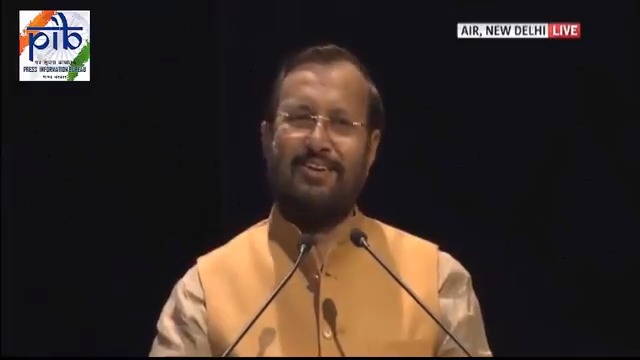
The Union Minister for Information and Broadcasting, Shri Prakash Javadekar inaugurated All India Radio’s new Broadcast Auditorium and launched a digital version of ‘Gurbani’ of archival value as preserved in PrasarBharati Archives at New Delhi today.  To mark the 550th Prakash Parv of Guru Nanak DevJi, ‘BaniUtsav’ – a Shabad-Kirtan Concert by eminent Raagis was also organized by the External Services Division of All India Radio.
Expressing his contentment over the successfully completed new Auditorium, the Minister for Information and Broadcasting stated that this multi-purpose auditorium will now act as a one stop-destination for artists which will help in promoting their creativity and talent while also catering to honing one’s own skills and thus simultaneously representing India in the global front, “An auditorium of its own would not only help in organizing the existing regular events but also organise more events to popularise various genres of music, dance, theatre etc. and have the potential of turning the place into a new cultural hub and destination in the capital”, said Shri Javadekar.
All Radio’s new Broadcast Auditorium is equipped with all the facilities like Multipurpose hall, Studios, Editing studios, Multimedia facility that would cater to the most of the requirements of an artist: Union Minister @PrakashJavdekar

35 people are talking about this

Lauding the joined efforts of both PrasarBharati and Ministry of Information and Broadcasting in completing the state-of-the-art modernAuditorium, Shri Javadekar stressed to make the adequate utilization of such a facility and promote work of art.
Accompanied by Union Minister of Food Processing Industries, Smt. Harsimrat Kaur Badal and Minister of State for Environment, Forest and Climate Change, Shri Babul Supriyo, a Plaque of the New Auditorium was also unveiled by Shri Javadekar.
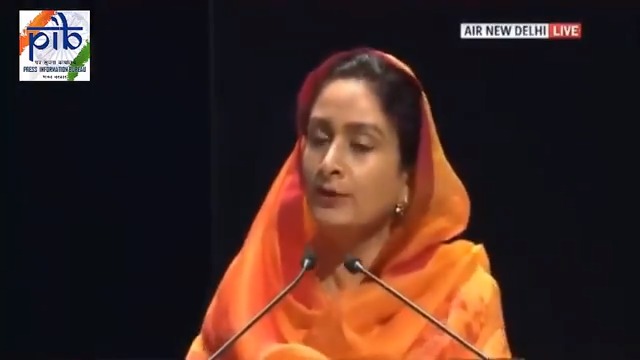
Recalling upon the teachings of Guru Nanak DevJiMaharaj, Smt. Harsimrat Kaur Badalspoke of the noble saint’s Prakash having spread far and wide not only today in the times of technology, but over 500 years ago when he walked on the surface of the earth and travelled from Asia to Middle-East, Caribbean shores to Central Asian meadows and was received as a prophet of succour and solaceneeded by humanity for worldly and eternal peace, with a message of universal brotherhood.
Walking for 26 years, covering a distance of more than 35,000 kilometers, through snow-covered mountains, deserts, and over rocks, traveled to every corner of the world with just one message, “Universal brotherhood”: Union Minister @HarsimratBadal_

49 people are talking about this

The need for a modern auditorium of its own was felt for long by the constituents of PrasarBharati – All India Radio and Doordarshan for organizing cultural events like music and dance concerts, talent hunt shows, memorial lectures etc.
The 465-seat Auditorium encompasses Broadcast Museum, SanskarGeet Corner, Rehearsal Hall, Library, Conference facility and Cafeteria under one roof with a gallery overlooking the floor and inbuilt devices for recording, online editing, uplinking and live streaming of audio and visual content. This facility will cater to the requirements of PrasarBharati’s aural and visual wings, i.e. All India Radio and Doordarshan. 
The auditorium complex which is situated inside the AIR premises in the Parliament Street overlooks a newly created sprawling Rock Garden as part of its front façade and a huge green lawn at the posterior. Facade of the auditorium complex has been planned in conformity with Broadcasting house which is a heritage building Grade-II as per the NDMC list of heritage building.
It is worth mentioning that the entire space where this modern auditorium has come up was in a dilapidated condition. Massive renovation and retrofitting was required to be done to suit as per the requirement of the auditorium complex. The project was completed within a record time of 15 months which included 6 months time for renovation and retrofitting.
Amongst those present at the event were Dr. A. Surya Prakash, Chairman, PrasarBharati; Shri ShashiShekharVempati, CEO, PrasarBharati; Shri Amit Khare, Secretary, Ministry of Information and Broadcasting and Shri FayyazSheheryar, Director General, All India Radio.

***

Union HRD Minister Shri Ramesh Pokhriyal ‘Nishank’ addresses education

Union HRD Minister Shri Ramesh Pokhriyal ‘Nishank’ addressed education ministers/representatives of of nearly 190 countries at the 40th UNESCO General Conference today in Paris. Speaking on the occasion he said that age-old immortal Indian culture has considered the whole world as family. Spreading the great idea of ​​VasudhaivaKutumbakam all over the world,  India has prayed for the welfare of the entire humanity by accepting the hypothesis of “SarveBhavantuSukhinah, Survey SantuNiramaya”, he added.By contemplating the idea of Integral Human Debate, we have pledged to reach out to the last person in the society.
The HRD Minister said that the motto of India is “Collective efforts, for growth of all, with everyone’s trust” as it was mentioned by thePrime Minister of India, Mr Narendra Modi, at the 74thConference of the United Nations General Assembly.
The Minister said that this session of UNESCO has another significance as it is being held at a time when the whole world is celebrating the 150th birth anniversary of Mahatma Gandhi. His message on truth and non-violence is even more important and relevant today.Through education, we are trying to pursue and spread the spirit of universal brotherhood, social harmony, cordiality, human values and love to each and every citizen of India, he added.
Shri Nishank said that being the third largest education system in the world, it is important for India to be committed in building a bright future of more than 33 crore students.There are more than 1000 universities andmore than 45000 degree colleges in India and is the country with the largest number of young population. India has been playing a positive and constructive role to carry forward the UNESCO’s mission and realize our common objectives.
He assured continuous support of India to UNESCO in its effort to pursue its core mandate of building peace through international cooperation in  Education,Science,Environment and Culture. He said that our philosophy, our thinking and our feeling everything remains focused for the welfare of humanity,”Asato Ma SadgamyaTamaso Ma Jyotirgamya”meansleadall creatures from  falsehood to truth and from  darkness to  light.
He appreciated the efforts of UNESCO to ensure that every child and citizen receives quality education. He said that according to our mandate, we were able to reach every child across India by implementing the Right to Education Act 2009. He said that India has one of the oldest centres of learning in the world, the Nalanda University. Nalanda, Vikramashila, Vallabhi University have been the centre of attraction for students and scholars from different parts of the world.
He informed the gathering that in a span of 33 years, some radical changes have been made  in the education sector of the country. Through our new education policy, we are committed to achieve the target fixed in the areas of quality, employability, creativity, inclusiveness, human values, science & innovation, skill, Social interest, practical research, and environmental education.
The HRD Minister further said that India is highly determined to make higher education qualitative and affordable.Through SWAYAM-portal, we are trying to provide free online education not only Indian students but also to foreign students. In India, already  12.3 million students are taking online education under the SWAYAM portal. We are also providing free online education through E-VidyaBharati and Arogyabharati, through SWAYAM PRABHA, DTH Channel. He also informed that we have already entered in to an agreement with African Countries for providing the same at free of cost.
He also informed the gathering that India has provided 1000 scholarships to all of the ASEAN countries for research, in our excellent IITs. He said that IMPRINT, SPARC, STRIDE, NIRF Ranking, IMPRESS and GIAN are some of our schemes by which students from other countries are getting education in India. He said that more than 100 excellent educational institutes of India are available as attractive destination for students all over the world under Study in India program.
While speaking about teachers’ training he said that we understand the importance of training programs for the teachers therefore we have started the world’s largest teacher training programme “Nishtha” under which more than 4.2 million teachers will be trained. In the same manner, more than 1 million higher education teachers will be trained under ARPIT programme, he added.
The HRD Minister conveyed his thanks to UNESCO for including the city of Jaipur in the World Heritage List. He also thanked UNESCO for including KumbhMela, the world’s largest human gathering, in the list of intangible heritage. Likewise he also welcomed the selection of Mumbai and Hyderabad in list of network of creative cities.The Minister said that we are in favour of strengthening the 1970’s conference which discussed the illegal import, export and transfer of ownership of cultural property.
He said that this year UNESCO has declared “International Year of Indigenous Languages”. Hesaid that there are more than 2000 indigenous languages in India and India is committed to preserving and strengthening Hindi, Sanskrit and all other Indian languages ​​and their script.
He said that India is committed to achieve UNESCO’s sustainable development goals with the help of science and technology. In this context, the Prime Minister of India, Shri Narendra Modi has unveiled ‘India Technology Vision 2035’ at the 103rd Indian Science Congress, which focuses on 12 subjects.
The Minister said that new schemes like clean energy, research, solar energy and water technology have been introduced to protect our environment. India Has led the “International Solar Alliance” to reduce the growing climate imbalance in the field of environment in India, he added.
The challenge before the world of climate change is to face it together.Climate change is a major challenge before all of us.India wants to take this kind of initiative with other countries in the fields of education, culture, science, technology, water and sanitation. He requested the entire world that together we can meet the Sustainable Development Goals of the UNESCO Environment Sector.
The Minister reiterated that India is in favor of integrating UNESCO into the broader framework of UN reform in the organization. We believe that the amendment to the UNESCO Constitution will have far-reaching effects and will encourage mutual cooperation and committee, he added.
He also reiteratedthat India needs to integrate into the broader framework of UN reform in UNESCO’s organization. We believe that amending the UNESCO Constitution will have far-reaching effects, he added.
*****