Rajya Sabha passed 3,817 Bills in the last 67 years; Held 5,466 sittings since 1952

The first ever effort by the Rajya Sabha secretariat to quantify and analyse the legislative work done by the Upper House since it came into being in 1952 has revealed that the House has passed 3,817 Bills till the end of the last and the 249th session. Of these, 60 Bills had lapsed due to the dissolution of Lok Sabha at various points of time while 63 Bills were deemed to have been passed by the Upper House while two Bills cleared by it are still to be taken up in Lok Sabha. In effect, a total of 3,818 Acts of Parliament have been made since the first general elections in 1952.
A wide range of such statistical summary and other details on various aspects of the functioning  of the House are contained in a publication “Rajya Sabha : The Journey since 1952” released by Chairman Shri M.Venkaiah  Naidu at a meeting of the leaders of various parties and groups here today. Shri Naidu convened the meeting to seek cooperation of the parties for smooth functioning of the landmark 250th session of Rajya Sabha beginning tomorrow.
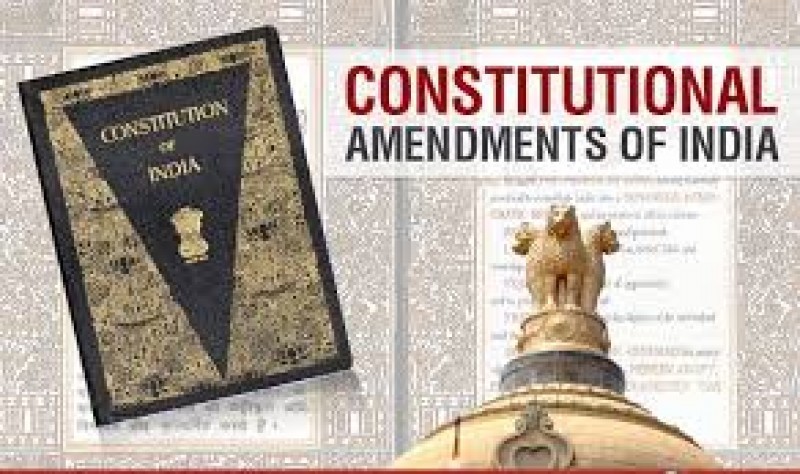
The 118 page publication with 29 chapters is a ready reckoner with interesting statistics, details of the first moves and some unique events besides details of major Bills passed by the Rajya Sabha in respect of social change, economic transformation, industrial development, health, education, agriculture, environment, national security and the objectives of 103 Constitution amendments so far made etc.
A glimpse of the content relating to the journey of Rajya Sabha during the last 67 years since it’s first sitting on 13.5.1952 is furnished below:
Members :
Total members of Rajya Sabha so far including those with more than one term is 2,282 including 208 women and 137 nominated members. Dr.Mahendra Prasad is serving the highest number of 7th term followed by Dr.Manmohan Singh serving 6th term. Dr.Najma Heptulla and late Shri Ram Jethmalani are the other two with six terms each.  Shri Ghulam Nabi Azad, Shri A.K.Anthony, Shri Ahmed Patel and Smt.Ambika Soni are into their fifth term while Shri Pranab  Mukherjee, late Shri Bhupesh Gupta, Shri Sitaram Kesri, Ms.Sajor Khaparde, Shri B.V.Abdulla Koya  were among the 11 members with five terms in the Upper House. Rajya Sabha Chairman Shri Naidu is among the 45 members with four terms each.
The representation of women in Rajya Sabha increased from 15 (6.94%) in 1952 increased to 31(12.76%) in 2014 and is now  26(10.83%) in 2019.
Some unique events relating to Rajya Sabha:
1.Casting vote by the Chair: The first and the only time when a Presiding Officer of Rajya Sabha cast his  vote was when the Panel Chairman Shri M.A.Baby did so on 5.8. 1991 when the voting was tied 39-39 on the Statutory Resolution moved by the opposition seeking disapproval of the Code of Criminal Procedure (Amendment) Ordinance resulting in the victory of the opposition in the House.
2.President Rule approved only by Rajya Sabha: It happened only twice in respect of extension of President Rule in Tamilnadu and Nagaland in 1977 and in case of Haryana in 1991 when Lok Sabha was dissolved.
3.Removal of a Judge: The only time Rajya Sabha adopted a motion for removal of a Judge was in respect of Justice Soumitra Sen of Calcutta High Court on 18.8.2011 but he resigned before the motion was taken up in Lok Sabha.
4.Expulsion of members: Rajya Sabha adopted a motion on 15.11.1976 for expulsion of Dr.Subramanian Swamy whose conduct and activities were found by a Committee to be derogatory to the dignity of the House and it’s members. Dr.Chatrapal Singh was expelled on 23.11.2005 after Ethics Committee found him guilty of accepting money for asking questions. Dr.Swami Sakhsi Ji Maharaj was expelled on 21.3.2006 for irregularities in recommending projects under MPLAD scheme.
5.Suspension of members for the remainder of the session:  7 members viz.,Shri Kamal Akhtar,Shri Veer  Pal  Singh Yadav, Dr.Ejaz Ali, Shri Sabir Ali, Shri Subhash Prasad Yadav, Shri Amil Alam Khan and Shri Nand Kishore Yadav were on 9.3.2010 suspended for the remainder of the 219th session for willfully obstructing the Business of the House during discussion on women’s reservation bill.
6. Reprimand: Former Member of Rajya Sabha Shri K.K.Tiwari was summoned to the Bar of the House and was reprimanded on 1.6.1990 for a statement published in newspapers the same day that brought the office of Chairman and the House to indignity and contempt.
7. Bill passed by Rajya Sabha but negative by Lok Sabha: The Constitution (Sixty-fourth Amendment) Bill, 1990 seeking to amend Article 356 relating to extension of President’s Rule in Punjab.
8. Bills passed by Lok Sabha but negatived by Rajya Sabha (5): The Constitution (Twenty-fourth Amendment) Bill, 1970 seeking to terminate privy purses and privileges of former Indian States, The Banking Service Commission (Repeal) Bill, 1977, The Constitution (Sixty-fourth Amendment) Bill, 1989 seeking to insert a new Part IX in the constitution relating to Panchayats, The Constitution (Sixty-fifth Amendment) Bill, 1989 relating to Nagar Panchayats and Municipalities and The Prevention of Terrorism Bill, 2002.
9.Bill reconsidered by Rajya Sabha: Rajya Sabha passed the Parliament (Prevention of Disqualification) Amendment Bill on 17.5.2006 as earlier passed by Lok Sabha but the President referred the same for reconsideration on 30.5.2006. Rajya Sabha reconsidered the same and passed as it was on 27.7.2006 and Lok Sabha passed it four later and was later assented to by the President on 18.8.2006.
10. Bills passed at the joint sittings of both the Houses of Parliament (3):
-The Dowry  Prohibition Bill, 1959 was first introduced in and passed by Lok Sabha. Rajya Sabha later insisted on some amendments to which Lok Sabha did not agree. The Bill was passed on 9.5.1961 at a joint sitting.
-The Banking Service Commission (Repeal) Bill, 1978 first introduced in and passed by Lok Sabha was later rejected by Rajya Sabha. It was passed on 16.5.2018 at a joint sitting.
-The Prevention of Terrorism Bill, 2002 passed by Lok Sabha was negatived by Rajya Sabha and was later passed at a joint sitting on 26.3.2002.
Some firsts relating to Rajya Sabha:
First sitting of the House was held on 13.5.1952
First Bill passed : The Indian Tariff (Second Amendment) Bill, 1952
First Bill concerning social change: The Special Marriages Bill, 1952
First Constitution Amendment Bill passed by Rajya Sabha: The Constitution (Second Amendment) Bill, 1953 for readjustment of  representation in Lok Sabha by increasing the size of population per constituency.
First Bill on Law and Order: The Preventive Detention (Second Amendment) Bill, 1952
First Bill on imports: The Live-stock Importation (Amendment) Bill, 1953
First media related Bill: The Press (Objectionable Matters) Amendment Bill, 1953
First on reorganization of States: The Andhra State Bill, 1953
First Bill on health education: The All India Institute of Medical Sciences Bill, 1955
First on urban development : The Faridabad Development Corporation Bill, 1955
First on agriculture: The Agriculture Produce (Development and Warehousing Corporations) Bill, 1956
First Bill on all-India services: The All India Services (Amendment) Bill, 1958
First security related Bill: The Armed Forces (Assam and Manipur) Special Powers Bill, 1958
First relating to animals: The Prevention of Cruelty to Animals Bill, 1959
First on corporate take over: The Jayanti Shipping Company (Taking Over of Management) Bill, 1966
First on pollution: The Prevention of Water Pollution Bill, 1969
First nationalization Bill: The Banking Companies (Acquisition and Transfer of Undertakings) Bill, 1970
First against economic offences: The Economic Offences (Incapability of Limitation) Bill, 1974
First Money Bill deemed to have been passed by Rajya Sabha: The Appropriation (Railways) No.4 Bill, 1978
First Bill referring to terrorism: The Terrorist Affected Areas (Special Courts) Bill, 1984
Bills passed by Lok Sabha and amended by Rajya Sabha : The 120 such  Bills include; The Companies Bill, 1953, The UGC Bill, 1954, The Constitution (Forty-fourth Amendment) Bill, 1978, The Chit Funds Bill, 1982, The Prevention of Corruption Bill, 1988, The Prevention of Money Laundering Bill, 2002, The Special Economic Zones Bill, 2005, The Right to Fair Compensation and Transparency in Land Acquisition Bill, 2013, The Lok Pal and Lok Ayuktas Bill, 2016, The National Medical Council Bill, 2019 and The Motor Vehicles (Amendment) Bill, 2019.
The most impactful Bills passed by Rajya Sabha sector-wise since 1952 include:
-The  Hindu Marriage and Divorce Bill, 1952, The Hindu Succession Bill, 1954, The Sexual Harassment of  Women at Workplace (Prevention, Prohibition and Redressal) Bill, 2012, The Muslim Women (Protection of Rights on Marriage) Bill, 2019 and the Constitution (One Hundred and Third) Amendment Act, 2019 providing for reservation for the economically weaker sections.
The Companies Bill, 1953 (and of 1956 and 2013), Banks Nationalisation Bill, 1970, Coal Mines Nationalisation Bill, 1973, the Prevention of Money Laundering Bill, 1999, the Fiscal Responsibility and Budget Management Bill, 2003, the Black Money (Undisclosed Foreign Income and Assets) and Imposition of Tax Bill, 2015, the Constitution Amendment Bill, 2016 introducing GST, The Fugitive Economic Offenders Bill, 2018 and the Insolvency and Bankruptcy Code, 2016.
The States Reorganisation Bill, 1956, The North-Eastern Council Bill, 1969, The National Capital Region Planning Board Bill, 1985, The Constitution 73rd and 74th Amendment Acts, 1992 providing for direct elections to Panchayats and Municipal bodies with one third reservation for women and The Jammu and Kashmir Reorganisation Bill, 2019.
The National Bank for Agriculture and Rural Development Bill, 1981, The Agricultural and Processed Food Products Export Development Authority Bill, 1985 and The National Dairy Development Board Bill, 1987.
The All India Institute of Medical Sciences Bill, 1955, The Pre-Natal Diagnostic Techniques (Regulation and Prevention of Misuse) Bill, 1991, The Transplantation of Human Organs (Amendment) Bill, 2011 and the National  Medical Commission Bill, 2019
The University Grants Commission Bill, 1954 and the Right of Children to Free and Compulsory Education Bill, 2009.
The Wild Life (Protection) Bill, 1972, The Forest (Conservation) Bill, 1980, The Environment (Protection) Bill, 1986, The Compensatory Afforestation Bill, 2016.
The Unlawful Activities (Prevention) Bill, 1967, The Maintenance of Internal Security Bill, 1971, The National Security Bill, 1980, The Terrorists and Disruptive Activities (Prevention) Bill, 1985, The Prevention of Terrorism Bill, 2002, The National Investigation Agency Bill, 2008 and The Unlawful Activities (Prevention) Amendment Bill, 2019.
Other impactful Bills passed by Rajya Sabha include; The Official Languages Bill, 1963, The Prevention of Black Marketing and Maintenance of Supplies of Essential Commodities Bill, 1980, The Consumer Protection Bill, 1986, The Prasar Bharati (Broadcasting Corporation of India) Bill, 1989, The Places of Worship (Special Provisions) Bill, 1991, The Acquisition of Certain Areas at Ayodhya Bill, 1993, The Cable Television Networks (Regulation) Bill, 1995, The Electricity Regulatory Commission Bill, 1998, The Information Technology Bill, 2000, The Right to Information Bill, 2005, The National Rural Employment Guarantee Bill, 2005, The Lok Pal and Lok Ayuktas Bill, 2013, The Aadhar (Targeted Delivery of Financial and Other Subsidies, Benefits and Services) Bill, 2016 and the Motor Vehicles (Amendment) Bill, 2019.
In his foreword to the publication, Chairman Shri Venkaiah Naidu said; “Indeed, Rajya Sabha has all through been a lively and sagacious institution. It should continue to function with even greater vigor and zeal towards fulfilling the aspirations of the people, especially, the younger ones. Still, some missed opportunities may not be ruled out. We need to learn from the experience of the last 67 years and strive to make our Parliament even more effective towards building a New India which compares favorably with the better placed in the comity of the nations. Time is the essence in doing so and for making up for the missed opportunities.”
**********
Check Insurance Premium Amount Online Instantly

  There used to be a time when people thought insurance was a luxury. However, with the times and people’s lifestyles changing, insurance is not a luxury anymore. Insurance policies help us in dealing with unforeseen circumstances and help us cover expenses in such cases. This is the reason that many of us already have one or another insurance policy.

Now, everyone who buys an insurance policy needs to pay their insurance premium online. If you are looking for a way to pay your insurance premiums or want to check the premium amount, you can do that easily online.

But how?

Let’s check the steps.

How to Check Insurance Premium Amount Online?

The process to check the insurance premium online is very simple, and you can do it by following a few simple steps. Visit Paytm, and follow these steps to check your insurance premiums online:

On Paytm Mobile Application:

  • Open Paytm application on your mobile phone
  • Click on ‘Recharge & Pay Bills’
  • Scroll down to the ‘Featured Services’ section and click on ‘LIC / Insurance’
  • Select your Insurer and enter the required details such as Policy Number, Date of Birth etc.
  • Click on ‘Get Premium’ to check your premium amount online

On Paytm’s Official Website

  • Go to the ‘Insurance Premium Payment’ page on Paytm
  • Select your Insurer
  • Enter the required details such as Policy Number, Date of Birth etc.
  • Click on ‘Get Premium’ to check your premium amount online

It is that simple to check your insurance premiums online on Paytm. You can also pay your insurance premium on Paytm after you have checked your insurance premium amount. 

Why should you have an Insurance Policy?

Insurance policies benefit us in many ways along with the coverage that they provide in the hour of uncertainty. Here are some of the most important perks for having an insurance policy:

  • Insurance Coverage: This is the primary benefit and reason for getting an insurance policy. If the uncertainty falls under the domain of the policy, then you can get coverage for the same as per the policy.
  • Cash Flow Management: This is rather an advantage that isn’t talked about a lot. In an hour of uncertainty, the burden of paying for the losses can put a lot of pressure on the individuals and the family. So, when the sum is being covered by the insurance policy then it takes the burden off their shoulders.
  • Tax Benefits: Apart from the coverage, having insurance policies tax benefits as well. You can get tax exemptions under sections 80C, 80D, and 10D.
Conclusion

Having an insurance policy is a must as it helps us in the hour of uncertainty as they provide coverage for such unforeseen situations. You can check your insurance premium amount online before you make payment on platforms like Paytm by following a few simple steps.


RTI Applicable To Office Of CJI: SC Upholds Delhi HC Judgment

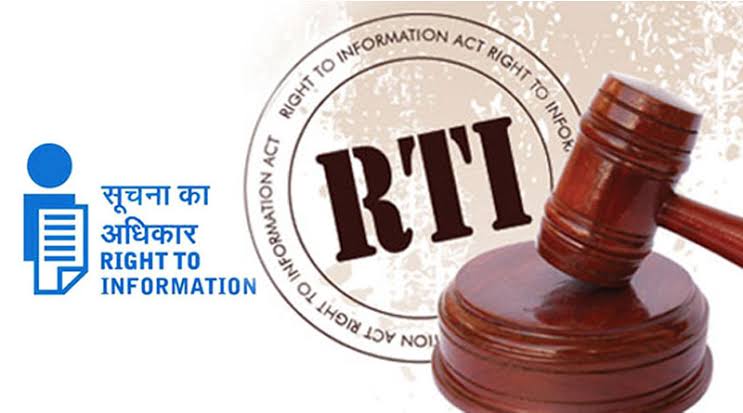
To start with, in a latest, landmark and extremely laudable judgment titled Central Public Information Officer, Supreme Court Of India vs Subhash Chandra Aggarwal in Civil Appeal No. 10044 of 2010 with Civil Appeal No. 10045 of 2010 and Civil Appeal No. 2683 of 2010, the Supreme Court on November 13 while exercising its civil appellate jurisdiction has clearly and categorically held that the office of Chief Justice of India is a public authority under the Right to Information Act. But it has also added a rider that “when the public interest demands the disclosure of information, judicial independence has to be kept in mind while deciding the question of exercise of discretion. The five Judge Constitution Bench comprising of the then Chief Justice of India – Ranjan Gogoi and Justices NV Ramana, DY Chandrachud, Deepak Gupta and Sanjiv Khanna heard this all-important case which will have immense significance as it directly concerns the top court and none other than the Chief Justice of India himself!

RTI Applicable To Office Of CJI: SC Upholds Delhi HC Judgment
To put things in perspective, a Constitution Bench of Chief Justice of India Ranjan Gogoi and all the Judges mentioned in the above para upheld the January 2010 Delhi High Court judgment delivered by the then Chief Justice AP Shah, Vikramjit Sen and S Murlidhar which said that the Apex Court and the office of the CJI would fall within the ambit of the 2005 RTI Act which in turn had upheld the then single Judge of Delhi High Court – Justice Ravindra Bhatt (later elevated as Supreme Court Judge) who had held on September 2, 2009 that, “The Office of the Chief Justice of India is a public authority under the RTI Act and is covered by its provisions”. The Apex Court dismissed three appeals filed by its Central Public Information Officer and Secretary General challenging the order. While on the one hand, the then CJI Ranjan Gogoi and Justices Deepak Gupta and Sanjiv Khanna rendered one judgment and it was Justice Sanjiv Khanna who wrote the majority opinion on behalf of the Bench, on the other hand, Justices NV Ramana and Justice DY Chandrachud delivered two separate concurring judgments. 
Needless to say, the introductory para first and foremost sets the tone and tenor of this landmark judgment by pointing out that, “This judgment would decide the afore-captioned appeals preferred by the Central Public Information Officer (‘CPIO’ for short), Supreme Court of India (appellant in Civil Appeal Nos. 10044 and 10045 of 2010) and Secretary General, Supreme Court of India (appellant in Civil Appeal No. 2683 of 2010), against the common respondent – Subhash Chandra Agarwal, and seeks to answer the question as to ‘how transparent is transparent enough’ under the Right to Information Act, 2005 (RTI Act’ for short) in the context of collegium system for appointment and elevation of judges to the Supreme Court and the High Courts; declaration of assets by judges, etc.” 
What follows next in para 2 is stated thus: “Civil Appeal No. 10045 of 2010 titled Central Public Information Officer, Supreme Court of India v. Subhash Chandra Agarwal arises from an application moved by Subhash Chandra Agarwal before the CPIO, Supreme Court of India on 6th July, 2009 to furnish a copy of the complete correspondence with the then Chief Justice of India as the Times of India had reported that a Union Minister had approached through a lawyer, Mr. Justice R. Reghupati of the High Court of Madras to influence his judicial decisions. The information was denied by the CPIO, Supreme Court of India on the ground that the information sought by the applicant-respondent was not handled and dealt with by the Registry of the Supreme Court of India and the information relating thereto was neither maintained nor available with the Registry. First appeal filed by Subhash Chandra Aggarwal was dismissed by the appellate authority vide order dated 05thSeptember, 2009. On further appeal, the Central Information Commission (‘CIC’ for short) vide order dated 24th November, 2009 has directed disclosure of information observing that disclosure would not infringe upon the constitutional status of the judges. Aggrieved, the CPIO, Supreme Court of India has preferred this appeal.”
Going forward, para 3 then further enunciates that, “Civil Appeal No. 10044 of 2010 arises from an application dated 23rd January, 2009 moved by Subhash Chandra Agarwal before the CPIO, Supreme Court of India to furnish a copy of complete file/papers as available with the Supreme Court of India inclusive of copies of complete correspondence exchanged between the concerned constitutional authorities with file notings relating to the appointment of Mr. Justice H.L. Dattu, Mr. Justice A.K. Ganguly and Mr. Justice R.M. Lodha superseding seniority of Mr. Justice A.P. Shah, Mr. Justice A.K. Patnaik and Mr. Justice V.K. Gupta, which was allegedly objected to by the Prime Minister. The CPIO vide order dated 25th February, 2009 had denied this information observing that the Registry did not deal with the matters pertaining to the appointment of the judges to the Supreme Court of India. Appointment of judges to the Supreme Court and the High Courts are made by the President of India as per the procedure prescribed by law and the matters relating thereto were not dealt with and handled by the Registry of the Supreme Court. The information was neither maintained nor available with the Registry. First appeal preferred by Subhash Chandra Agarwal was rejected vide order dated 25th March, 2009 by the appellate authority. On further appeal, the CIC has accepted the appeal and directed furnishing of information by relying on the judgment dated 02nd September, 2009 of the Delhi High Court in Writ Petition (Civil) No. 288 of 2009 titled Central Public Information Officer, Supreme Court of India v. Subhash Chandra Agarwal & Another. The CIC has also relied on the decision of this Court in S.P. Gupta v. Union of India & Others (1981) Supp SCC 87 to reach its conclusion. Aggrieved, the CPIO, Supreme Court of India has preferred the present appeal stating, inter alia, that the judgment in Writ Petition (Civil) No. 288 of 2009 was upheld by the Full Bench of the Delhi High Court in LPA No. 501 of 2009 vide judgment dated 12th January, 2010, which judgment is the subject matter of appeal before this Court in Civil Appeal No. 2683 of 2010.” 
To be sure, while writing the main judgment, Justice Sanjiv Khanna said the court while stressing the need for balancing transparency and accountability with judicial independence, “should not be understood to mean that the independence of the judiciary can be achieved only by denial of access to information.” He also added unequivocally that the “independence in a given case may well demand openness and transparency by furnishing the information.” It is certainly crucial as it will now open the door to RTI requests unlike earlier when the judicial system was rather opaque!
As it turned out, the historic order made it clear that, “Reference to the principle of judicial independence is not to undermine and avoid accountability which is an aspect we perceive and believe has to be taken into account while examining the public interest in favour of disclosure of information. Judicial independence and accountability go hand in hand as accountability ensures, and is a facet of judicial independence.”
Of course, the Bench said that the type and nature of the information is also a relevant factor to be considered. It also made it clear that, “Distinction must be drawn between the final opinion or resolutions passed by the collegiums with regard to appointment/elevation and transfer of judges with observations and indicative reasons and the inputs/data or details which the collegiums had examined. The rigour of public interest in divulging the input details, data and particulars of the candidate would be different from that of divulging and furnishing details of the output, that is the decision…Transparency and openness in judicial appointments juxtaposed with confidentiality of deliberations remain one of the most delicate and complex areas. Clearly, the position is progressive as well as evolving as steps have been taken to make the selection and appointment process more transparent and open”. 
To put it succinctly, it is stated in para 89 by Justice Sanjiv Khanna on behalf of five Judges of Constitution Bench that, “In view of the aforesaid discussion, we dismiss Civil Appeal No. 2683 of 2010 and uphold the judgment dated 12th January, 2010 of the Delhi High Court in LPA No. 501 of 2009 which had upheld the order passed by the CIC directing the CPIO, Supreme Court of India to furnish information on the judges of the Supreme Court who had declared their assets. Such disclosure would not in any way, impinge upon the personal information and right to privacy of the judges. The fiduciary relationship rule in terms of clause (e) to Section 8(1) of the RTI Act is inapplicable. It would not affect the right to confidentiality of the judges and their right to protect personal information and privacy, which would be the case where details and contents of personal assets in the declaration are called for and sought in which event the public interest test as applicable vide Section 8(1)(j) and proviso to Section 11(1) of the RTI Act would come into operation.” 
What’s more, para 90 then holds that, “As far as Civil Appeal Nos. 10045 of 2010 and 10044 of 2010 are concerned, they are to be partly allowed with an order of remit to the CPIO, Supreme Court of India to re-examine the matter after following the procedure under Section 11(1) of the RTI Act as the information relates to third parties. Before a final order is passed, the concerned third parties are required to be issued notice and heard as they are not a party before us. While deciding the question of disclosure on remit, the CPIO, Supreme Court of India would follow the observations made in the present judgment by keeping in view the objections raised, if any, by the third parties. We have refrained from making specific findings in the absence of third parties, who have rights under Section 11(1) and their views and opinions are unknown. The reference and the appeals are accordingly disposed of.” 
Simply put, the key findings in this landmark judgment authored by Justice Sanjiv Khanna for himself, CJI Ranjan Gogoi and Justice NV Ramana are as follows:-
1. The Supreme Court of India and the office of the CJI are two different public authorities. The Supreme Court would necessarily include the office of CJI and other Judges in view of Article 124 of the Constitution.
2. Ordinarily the relationship between the Chief Justice and Judges would not be that of a fiduciary and a beneficiary. However, it is not an absolute rule/code for in certain situations and acts, fiduciary relationship may arise.
3. The details of personal assets of Judges would not amount to personal information and disclosure of the same will not violate right to privacy of Judges.
4. Confidentiality has to be maintained in some aspects of judicial administration. It was held rightly that, “Confidentiality may have some bearing and importance in ensuring honest and fair appraisals, though it could work the other way around also and, therefore, what should be disclosed would depend on authentic enquiry relating to the public interest, that is, whether the right to access and the right to know outweighs the possible public interest in protecting privacy or outweighs the harm and injury to third parties when the information relates to such third parties or the information is confidential in nature.” 
While delivering a separate but concurring judgment, Justice NV Ramana first and foremost seeks to make it clear that, “In the domain of human rights, right to privacy and right to information have to be treated as co-equals and none can take precedence over the other, rather a balance needs to be struck”. 
On transparency, Justice Ramana very rightly elucidates in para 42 of his judgment that, “Coming to the aspect of transparency, judicial independence and the RTI Act, we need to note that there needs to be a balance between the three equally important concepts. The whole bulwark of preserving our Constitution, is trusted upon judiciary, when other branches have not been able to do so. As a shield, the judicial independence is the basis with which judiciary has maintained its trust reposed by the citizens. In light of the same, the judiciary needs to be protected from attempts to breach its independence. Such interference requires calibration of appropriate amount of transparency in consonance with judicial independence.”
While striking a note of caution, Justice Ramana then very rightly observed in para 43 that, “It must be kept in the mind that the transparency cannot be allowed to run to its absolute, considering the fact that efficiency is equally important principle to be taken into fold. We may note that right to information should not be allowed to be used as a tool of surveillance to scuttle effective functioning of judiciary. While applying the second step the concerned authority needs to balance these considerations as well.” 
While welcoming this noteworthy judgment, the 69-year-old RTI activist Subhash Chandra Agarwal who fought an arduous 12-yeart-long battle to ensure that the highest office in judiciary is answerable to people termed the Apex Court’s decision on it as “milestone” in the fight for transparency in public offices. He eloquently said that, “This is a landmark judgment and will prove to be a milestone in the era of transparency. The Apex Court has ruled against its own (office) and said that the CJI comes under the ambit of RTI. I wholeheartedly welcome the Supreme Court’s judgment.”
It cannot be denied that a new study by Vidhi Centre for Legal Policy has found that there is a “yawning gap” between the judiciary’s pronouncements on the Right to Information (RTI) Act and the manner in which the High Courts are implementing it. The report said that, “In particular, the lack of transparency in financial matters of the High Courts is very worrying. Most High Courts do not proactively publish details about their budgets and expenditure. Even fewer High Courts are willing to provide copies of their budgets and audit reports under the RTI Act.” The report has also found that several High Courts have included patently illegal clauses in their RTI Rules and despite Section 8 of the RTI Act restricting the number of grounds for denying information to citizens, the RTI rules of several High Courts have included additional grounds for rejecting requests for information! The report also said that it should be a matter of concern to see the judiciary lagging behind the Centre when it comes to abiding by the letter and spirit of the RTI Act! All this must change if this latest, landmark and extremely laudable judgment is to be taken to its logical conclusion!
Justice DY Chandrachud in his separate yet concurring judgment very rightly and remarkably points out while going the extra mile saying in para 117 that, “If the content of the right and the enforcement of the statute are to possess a meaningful dimension in their application to the judiciary – as it must, certain steps are necessary. Foremost among them is that the basis for the selection and appointment of judges to the higher judiciary must be defined and placed in the public realm. This is the procedure which is followed in making appointments but also in terms of the substantive norms which are adopted while making judicial appointments. There can be no denying the fact that there is a vital element of public interest in knowing about the norms which are taken into consideration in selecting candidates for higher judicial officer and making judicial appointments. Knowledge is a powerful instrument which secures consistency in application and generates the confidence that is essential to the sanctity of the process of judicial appointments. This is essentially because the collegiums system postulates that proposals for appointment of judges are initiated by the judges themselves.”
Needless to say, Justice Chandrachud also minces no words to make it clear by adding further after mentioning the essential substantial norms in regard to judicial appointments in this same para 117 that, “The present judgment does not seek to define what the standards for judicial appointments should be. However, what needs to be emphasised is that the substantive standards which are borne in mind must be formulated and placed in the public realm as a measure that would promote confidence in the appointments process. Due publicity to the norms which have been formulated and are applied would foster a degree of transparency and promote accountability in decision making at all levels within the judiciary and the government. The norms may also spell out the criteria followed for assessing the judges of the district judiciary for higher judicial office. There is a vital public interest in disclosing the basis on which those with judicial experience are evaluated to higher judicial office particularly having regard to merit, integrity and judicial performance. Placing the criteria followed in making judicial appointments in the public domain will fulfil the purpose and mandate of Section 4 of the RTI Act, engender public confidence in the process and provides a safeguard against extraneous considerations entering into the process.”
No doubt, this extremely landmark and laudable judgment has sent a very loud and clear message that even CJI is not exempted from the purview of RTI Act. This will clearly serve to increase transparency in the functioning of judiciary. This will also send a loud and clear message that the judiciary has to show more and hide less!
It has certainly set a great precedent for other institutions to follow and it won’t be asking too much if we say that Centre must work relentlessly to ensure that those who are left out of its purview are too brought under its ambit! Even political parties and politicians must be brought fully within RTI’s ambit! CBI which is still out of RTI must also be brought within RTI’s ambit! 
It must be mentioned here that when the RTI Act was enacted on October 12, 2005, the CBI came under its purview but the CBI later moved for exemption and this was endorsed by the then Union Law Minister M Veerappa Moily of the UPA government even though Moily himself as head earlier of the Administrative Reforms Commission had recommended that armed forces be exempted from RTI Act but no such recommendation was made for the CBI! Anyway, it has to be conceded that a good beginning has been made by the Apex Court by holding clearly that the office of the Chief Justice of India is a public authority under the RTI Act! But it should not stop just here only! This good tempo must be certainly maintained and all those left out should also be brought under its ambit! 
Sanjeev Sirohi, Advocate,
s/o Col BPS Sirohi,
A 82, Defence Enclave,
Sardhana Road, Kankerkhera,
Meerut – 250001, Uttar Pradesh.

The Seven Myths That Make Education Difficult To Improve

Have you ever had the experience of failing to open a lock till you discovered that you were using the wrong key? That\’s a little like discovering after years or decades of work that perhaps some of the things we\’ve been taking for granted all along don\’t necessarily hold true. There are probably many such notions, but here are what seem to be the seven most crucial ones. Each one of these is elaborated upon in a separate post, and followed by a note on what we can do – all over the next eight days.
The Seven Myths:
1. Children are homogenous

·      All must learn the same thing, in the same way, with the same material.
·      All must learn the same amount

If someone falls behind, something must be wrong with them – they don’t conform to the norm!
2. All children must attend school every day
3. There is one form of knowledge and it belongs to the ‘educated classes’.
4. Students learn mainly by listening to the teacher.
5. Teachers can improve by following instructions given to them by their seniors.
6. Stakeholders are concerned about education (as educationists understand it)
7. The education system exists to improve education.

Myth # 1 – Children are homogenous

·      All must learn the same thing, in the same way, with the same material.
·      All must learn the same amount

It’s quite amazing, isn’t it? What daily observation and commonsense (backed by vast, vast amounts of in-depth research) tells us is that children are very different from each other. That it is indeed difficult to expect all of them to learn the same amount in a year, that all ‘averages’ are mere guess work, certainly in terms of subject-related expectations after the early years. In fact, even the idea of putting children into classes or grades may not have sufficient basis – it is more management friendly than learning friendly. The question is not ‘How can the teacher teach if all children have to learn differently?’ but ‘How can naturally diverse children learn if the teacher teaches the same thing and in the same way to all?’
As a result of all this, if some children fall behind, it is assumed something must be wrong with them – they don’t conform to the norm! The ones falling behind are actually often those from under-resourced backgrounds – because the ‘norm’ and design of education is such that you are likely to do better if you are from an economically better background. Which is why it is actually news if a child from a poor family does well in a board exam!
And of course if you happen not to be able to learn the way in which you are being taught (you might be from a privileged family) even then something is wrong with you (though less wrong than if you were poor). You may not like school, but you can be sure the school does not like you too.
This myth is so common, so prevalent that it’s hard to imagine there might be other ways… what do you think?

President of India witnesses an exhibition of paintings set up by Artists-In-Residence; Exhibition open for public viewing from November 19 to 24

The President of India, Shri Ram Nath Kovind, witnessed an exhibition of paintings set up by the Artists-in-Residence at Rashtrapati Bhavan today (November 17, 2019). The President also felicitated the artists after witnessing the exhibition. 
The paintings, at display at the exhibition, were made by the Artists-in-Residence during their week-long stay at Rashtrapati Bhavan. Under the In-Residence programme, artists stayed within the Rashtrapati Bhavan premises from November 10 to 17, 2019.  They included eminent and internationally acclaimed artists – Krishen Khanna, Ganesh Haloi, Anjolie Ela Menon, Lalu Prasad Shaw, Sanat Kar, Arpita Singh, Paramjit Singh, Suhas Bahulkar, Chandra Bhattacharjee, Anwar Khan, Sanjay Bhattacharya, and Chinmay Roy – and young artists – Siddarth Shingade, Parnita Parveen Bora and Vimmi Indra. 
During the stay at Rashtrapati Bhavan, Artists-in-Residence put their creating thinking on canvas and also mentored around 65 school children. The art works created by these children were also in display at the exhibition.
The visitors to the Rashtrapati Bhavan Museum can also witness the exhibition of these paintings from November 19 to 24, 2019 between 0900 hrs and 1600 hrs.  Entry will be from Gate Number 30 (Mother Teresa Crescent) of Rashtrapati Bhavan. More information can be sought from Visitors’ Management Cell (011-23015321 Extn. 4751 and 011- 23017820). 
The aim of the ‘In-Residence’ programme is to provide artists an opportunity to stay in Rashtrapati Bhavan and be a part of the life of Rashtrapati Bhavan. It seeks to provide an environment which will inspire creative thinking and rejuvenate artistic impulses. It is also intended to honour and recognize eminent and established artists as well as encourage young upcoming talent from different parts of the country.
***

WCD Ministry to announce Bharatiya Poshan Krishi Kosh

The Union Minister of Women and Child Development (WCD) and Textiles, Smriti Zubin Irani, will announce Bharatiya Poshan Krishi Kosh (BPKK) on Monday, 18th November 2019 in New Delhi. The BPKK will be a repository of diverse crops across 128 agro-climatic zones in India for better nutritional outcomes.
Smriti Zubin Irani will deliver the keynote address during the function.  Mr. Bill Gates, Co-chair, Bill & Melinda Gates Foundation will deliver a special address. Eminent agricultural scientist Prof. M. S. Swaminathan will give a special message on this occasion.
The launch of POSHAN Abhiyaan in 2018, the Prime Minister’s Overarching Scheme for Holistic Nutrition to reduce malnutrition through a multi-sectoral results-based framework, offers India an opportunity to reduce malnutrition. The Mission aims at targeted reduction of stunting, undernutrition, anemia and low birth weight babies. A novel feature of the POSHAN Abhiyaan is its focus on social and behavioral change among parents and for improving linkages between communities and the health systems towards paving the way for a mass movement to promote a transformative change. 
The Government of India’s efforts towards better nutrition has revolved around providing nutritional supplement and other supply side schemes. However, two other approaches are required to complement the Government’s efforts to promote healthy dietary practices. One, addressing the challenge of malnutrition at such a vast scale requires a basic understanding of the social, behavioral and cultural practices that promote and reinforce healthy dietary behaviours both at the individual and community level including the variation in such practices across India. Two, creating the first ever data base that links relevant agro-food system data at the district, with an aim to map the diversity of native crop varieties that will be more cost-effective and sustainable over the long run.
At the request of the Ministry of WCD the Harvard Chan School of Public Health through its India Research Center and the Bill and Melinda Gates Foundation will document and evaluate promising regional dietary practices and the messaging around them and develop a food atlas on regional agro-food systems. Both efforts are aimed at mobilizing the diverse sectors of the society.
In consultation with Ministry of WCD and Bill & Melinda Gates Foundation, the project team will select around 12 high focus states which are representative of the geographical, social, economic, cultural and structural diversities of India. In each of the states or group of states the team will identify a local partner organization which has relevant work experience in Social and Behavior Change Communication (SBCC) and nutrition for developing the food atlas.
***

The Seven Myths of Highly Ineffective Education Systems – Myth # 2 of 7

Myth # 2 – All children must attend school every day
If you’re from a poor family, there’s a lot more to life than just attending school! Siblings and domestic animals have to be cared for, parents have to be helped, essentials such as water or firewood have to be fetched, birds and animals kept away from the farm, you may need to migrate with your parents…. It’s not necessary that all this is a waste – in fact, despite the shadow child labour, a lot of this is also learning for life.  Children who are in a position to attend daily too might learn a lot if they spent a day or two every week doing things other than school – such as tending to gardens, pursuing a passion, trying to earn something by putting their learning to use, solving a neigbhourhood problem, helping their siblings and parents, making things…. Or helping their underprivileged classmates so that they can spend more time in school.
The kind of focused (and therefore limited) scholastic learning our ‘advanced’ children end up doing has resulted in several luminaries pointing out that (even from institutions such as the IITs) our graduates are ‘unemployable’. One might add they haven’t developed many other aspects of their personality – including civic consciousness.
However, what this requirement of daily attendance does is to marginalize great numbers of children, since the teaching-learning process tends to be sequential (rather than re-iterative). If you miss out an earlier part, you can’t ‘keep up with the class’ and slowly head for being left out or pushed out or dropping out. Effectively, the school is saying: if you are poor and cannot attend regularly (as the we require), you shall not learn. Instead of: attend when you can, we’ll find a way to support you and make sure you learn (which is what the business of the school really is).
There are a few walk-in centres in the country (though of course only for poor and/or working children) and some of them do manage to attract and keep children for a long time even though there is no compulsion to attend. That kind of flexibility is perhaps too much to hope for in the school system. Enabling the school to be more responsive to children’s real living situations, though – that’s both possible and desirable. It needs a spiraling rather than linear flow, a variety and range of materials, and providing children engaging activities in many of which they will work on their own, and the use of a tracking system to keep record of progress. This gels with every provision of the RTE, with expectations put forward in our National Curriculum Framework, and much that contemporary understanding of pedagogy tells us. However, to make it happen what we need is not methods and materials but a way to get rid of this myth and the fear that everything will fall apart if the school seeks to respond (by adapting to children’s needs) rather than coerce (by making children adjust to its needs).

The Seven Myths of Highly Ineffective Education Systems – Myth # 3 of 7

Myth # 3 – There is one form of knowledge and it belongs to the ‘educated classes’
What do they know – after all, they’re only poor people. And real knowledge is that which is written in books and taught in universities, which of course they don’t have access to, isn’t it?
By now I’m sure you’re well aware of the vast variety and depth of knowledges that non-literate people bring – only it doesn’t get the recognition it deserves and is sentenced to remain marginalized and often die out.  By not respecting the knowledge heritage the vast majority of our students bring, we certainly deprive them of the one strength that can be used to learn ‘school’ knowledge – but we also lose out on the great contribution the diverse community knowledge heritage could make to the country. (I’ve written on this elsewhere in this blog hence not elaborating it further.)

Household Consumer Expenditure Survey

 The National Statistical Office (NSO), Ministry of Statistics and Programme Implementation carried out an all-India survey on household consumption expenditure in the 75th round during the period July 2017 to June 2018. The Consumer Expenditure Survey (CES) is usually conducted at quinquennial intervals andthe last survey on consumer expenditure was conducted in the 68th round (July 2011 to June 2012).The NSS Consumer Expenditure Survey generates estimates of household Monthly Per Capita Consumer Expenditure (MPCE) and the distribution of households and persons over the MPCE classes. It is designed to collect information regarding expenditure on consumption of goods and services (food and non-food) consumed by households. The results, after release, are also used for rebasing of the GDP and other macro-economic indicators.
2.  The Ministry has seen the media reports regarding consumer expenditure survey by the NSS stating that consumer spending is falling and the report has been withheld due to its ‘adverse’ findings. We would like to emphatically state that there is a rigorous procedure for vetting of data and reports which are produced through surveys. All such submissions which come to the Ministry are draft in nature and cannot be deemed to be the final report.

3.    Further, the results of the survey were examined and it was noted that there was a significant increase in the divergence in not only the levels in the consumption pattern but also the direction of the change when compared to the other administrative data sources like the actual production of goods and services. Concerns were also raised about the ability/sensitivity of the survey instrument to capture consumption of social services by households especially on health and education. The matter was thus referred to a Committee of experts which noted the discrepancies and came out with several recommendations including a refinement in the survey methodology and improving the data quality aspects on a concurrent basis. The recommendations of the Committee are being examined for implementation in future surveys.
4.      The Advisory Committee on National Accounts Statistics has also separately recommended that for rebasing of the GDP series, 2017-18 is not an appropriate year to be used as the new base year.
5.      In view of the data quality issues, the Ministry has decided not to release the Consumer Expenditure Survey results of 2017-2018. The Ministryis separately examining the feasibility of conducting the next Consumer Expenditure Survey in 2020-2021 and 2021-22 after incorporating all data quality refinementsin the survey process.

***

Dr. Harsh Vardhan calls for developing innovative cooling solutions

Union Minister for Science & Technology, Earth Sciences and Health & Family Welfare, Dr. Harsh Vardhan addressed an Award Ceremony here today to announce the finalists of the ‘Global Cooling Prize’. He called for developing innovative cooling solutions which are energy efficient.  During the ceremony, he said energy efficient and climate friendly cooling solutions are the Government’s priority.
“We recognise the power of innovation to catalyse climate friendly development and growth.  Accordingly, we have bolstered our research, development and innovation efforts to further global climate agenda and strengthened our commitment to accelerate clean energy innovation so that it plays a key role in Mission Innovation.
Dr. Harsh Vardhan said India has been leading from the front in the global campaign to tackle Global Warming and Climate Change. The Prime Minister Shri Narendra Modi had spelled out India’s agenda during the 2015 United Nations Climate Change Conference in Paris, He said. “In fact, the Mission Innovation programme was coined by Shri Narendra Modi,” he added.


Dr. Harsh Vardhan said the world today needs an extremely efficient cooling technology, a solution that can sustainably meet the comfort-cooling needs of our growing population without contributing to runaway climate change or costly stresses on already burdened electricity systems.
“It becomes even more relevant for a country like India which is on the path of economic growth and has relatively low penetration of air conditioning.  .  The Government recognises this need and is fully committed to provide “Thermal comfort for all” which has been articulated so well in the India Cooling Action Plan,” he said.
Dr. Harsh Vardhan hoped the finalists of the ‘Global Cooling Prize’ will deliver the prototypes having capability to deliver climate friendly solutions within the broad parameters of energy efficiency and costs.
Speaking on the occasion, Professor Ashutosh Sharma, Secretary Department of Science and Technology (DST), said our goal is to cut carbon footprint by as much as 80 percent and reduce energy consumption by half. The High Commissioner of the United Kingdom to India, Mr. Dominic Asquith also addressed the gathering.
During the ceremony, Dr. Harsh Vardhan presented Awards to the eight finalists of the GCP. The finalists are Daikin Air Conditioning India Pvt. Ltd., Godrej and Boyce Mfg. Co. Ltd., and S&S Design Startup Solution Pvt. Ltd. – all three from India; M2 (Square) Thermal Solutions, Transaera Inc. and Kraton Corporation (in collaboration with IIT Bombay, Infosys and Porus Labs)- all three from the US; Gree Electric Appliances Inc. of Zhuhai, China; and Barocal Ltd of UK.
The eight selected teams showcased a wide range of technology ideas, from smart, hybrid designs of vapour compression technology to smart, hybrid designs of evaporative cooling to solid-state cooling technologies with application of low or no global warming potential refrigerants.
A global coalition led by the Department of Science and Technology, Government of India; Rocky Mountain Institute (RMI)— a leading global research institute; and Mission Innovation — a global initiative of 24 countries and the European Union to accelerate global clean energy innovation — launched the Global Cooling Prize in November, 2018 with the aim of spurring the development of a radically more efficient, climate-friendly residential cooling solution.
Innovation and new technologies in the cooling industry are especially crucial for India, Studies suggest that the cost to the Indian economy due to lost productivity from extreme heat could exceed $450 billion by 2030. While the household ownership of ACs in India today is a mere 7%, the demand for comfort cooling is expected to drive the total stock of room ACs in India to over 1 billion by 2050 — a 40-fold growth from 2016. Growth in the demand for cooling will be dramatic, particularly in urban areas, due to the underlying need for a solution to the problem of heat stress. 
Since its launch, the Prize has received overwhelming international participation — over 2,100 participant registrations were received from innovators, start-ups, research institute, universities, and key Air Conditioning industry manufacturers in over 95 countries. Of these registered entities, 445 teams submitted their preliminary ideas and 139 teams from 31 countries around the globe followed through with their submission of the full Detailed Technical Application. The teams selected to go forth to the next round are being awarded US$ 200,000 each to develop their prototypes, which will then be tested in India in the summer of 2020.
The winner of the Global Cooling Prize will be announced in November, 2020 and awarded more than US$1 million in prize money.
*****

A tough ethical issue

Businesses are often considered as machines without a heart. But even businesses face some gut wrenching ethical issues , where the \”right\” course of action is by no means obvious.  Take the case of the compassionate care issue face by pharmaceutical companies.
Drugs produced by pharmaceutical companies are marketed after years, and sometimes, decades of clinical trials. They have to be approved by a regulating body – in the case of the US, the FDA – before they can be made available for use by doctors and patients. This is a justifiably stringent process.
It is therefore obvious that at any point in time, there are a number of experimental drugs which are at various stages of testing or approval. They may or may not finally make it to the market place. But the fact of their existence, their performance in the trials, the stage of FDA approval (relevant since most drugs are discovered in the US) are all fairly common knowledge and often in the public domain.
The ethical issue comes when there is say a terminally ill patient who does not have much time left and where conventional approved forms of treatment have failed. The patient, or his family, makes the appeal to a pharmaceutical company for an experimental drug that is not yet fully tested and has not been approved by the FDA. Is it ethical for the company to release an experimental drug for such a patient ? They may not even be making the drug outside of the lab as yet. Should they actually produce it in a pilot facility to make it available ?
I learnt from this news article that hundreds of such requests actually come to the FDA every year . The regulator examines each such request and apparently they are mostly approved. But for any serious evaluation of a request, they need time and that is probably what the patient does not have. Even if there was a little time, the patient and the family would be understandably anxious to try the treatment tomorrow if possible. So, even with an FDA approval of the case, how does a company respond to such a request.
On one hand, it is absolutely cruel to withhold a possibility of a chance, however slim, from somebody who will otherwise die. The case for release of experimental drugs is very strong. It doesn\’t need any further elaboration.
But consider the risks. Doctors will be the first to tell you that there are many grey cases where it is not easy to determine if the patient is terminally ill. What if there are are horrendous side effects which are not yet known – at what stage of experimentation of a drug is it OK for it to be released to a live patient. What about the risks of lawsuits – after all we are talking about the US a notoriously litigious society. What about the risks that companies may simply use terminal patients as clinical trials if compassionate care becomes widespread. What about non terminal cases (say Parkinson\’s or Alzheimer\’s, which are non fatal but horrible diseases) where an experimental treatment might drastically alter the quality of life.
Thorny ethical issues. I would hate to be in a position making the decision. Johnson & Johnson, a famously ethical company has moved to set up an independent panel to be organised by the New York University to decide on each case. That is probably the best course of action, but each decision would be extremely difficult to make.

What do you think – in which direction would you lean ?

Indian Railways rationalizes Catering Tariff and Menu for Rajdhani/Shatabdi/Duronto Trains & Standard Meals on Mail/Express trains being served through IRCTC

Taking note of the need to further improve variety, hygiene and quality of food for its passengers, Indian Railways has rationalized the Menus and revised the Tariff for catering services. The tariff of Rajdhani/Shatabdi/Duronto trains has been revised after 6 years since the last revision in 2013 while the tariff of standard meals for Mail/Express trains after 7 years since the last revision in 2012. With a view to arrive at realistic prices, a Committee was nominated by the Railway Board to examine & recommend the revision in menu and tariff of these services.  The Committee scientifically examined all aspects of costing keeping in mind the objective to provide good quality and hygienic food to the travelling passengers on Indian Railways. Based on the reports of the Committee, the revised menu & tariff have been notified. The quality of meals on trains is contingent on rational pricing and  factors like cost of raw material, WPI, CPI, etc. which have increased over the years.
Catering services in trains over Indian Railways are provided by IRCTC and have two categories i.e. pre-paid services like Rajdhani/Shatabdi/Duronto Trains where catering charges are included in the ticket fare (on opt-in basis) and post –paid catering services like on other Mail/Express where standard meals and other food items are made available on sale.  Affordability, ensuring availability of regional cuisine and variety in standard meals to passengers have been taken care of. Salient features for Mail/Express trains include :

· The rate of Janta Meal has been kept unchanged at Rs.20/-
· To prevent overcharging in the name of a-la-carte meals, it has now been decided that no a-la-carte meals shall be permitted for sale on Mail/Express trains. However a la carte snacks items like samosa, pakoda, etc. will be permitted for sale.
· Now more regional food variety will also be available for the passengers. ‘Snack Meal’ with regional items/cuisine/flavour’ is being introduced at the rate of Rs. 50/- as a meal variety. This would be of 350 grams portion and the menu will be decided by IRCTC.
· It has been decided to offer Biryani as a standard meal variety in view of its popularity.  IRCTC shall make available three types of Biryani (Veg., Egg and Chicken) at the rate of Rs. 80/-, 90/- & 110/- 
· It has also been decided to introduce Chicken Curry as an option in standard non-veg. meal in addition to the existing standard non-veg meal with egg curry and standard veg. meal. As such, there shall be three categories of standard meals viz., Standard Vegetarian Meal, Standard Non-Vegetarian Meal (with 2 Eggs curry) and Standard Non-Vegetarian Meal (with Chicken Curry) against the existing two.
Indian Railways is committed to serve good quality of food. With the above rationalization the quality and variety of services are expected to further improve. To ensure quality of service, IRCTC is already taking following steps:-
  • Production and supply of meals on trains shall be progressively done from IRCTC managed Kitchens.
  •  To maintain real time monitoring of food production and hygiene in kitchens, CCTVs have been installed in IRCTC kitchens with live streaming facility on Rail Drishti and the IRCTC website.
  • Stringent quality parameters including supply of branded products in hygienic condition and  of Food Safety & Standard Authority of India (FSSAI) standards.
  • Mandatory external audit (Third Party Audit) by reputed and independent agency to undertake audit of quality of services periodically.
  • IRCTC shall progressively introduce good quality biodegradable packaging material  and QR coding of its meals.
The impact on the total ticket fares of the pre-paid trains will be an increase in the range of 3% to 9% for passengers who opt for meals.
The revised catering tariff shall be effective from 29/03/2020 on Rajdhani/Shatabdi/Duronto trains and with immediate effect on other Mail/Express trains.
The detailed menu is available on IR’s website and can be accessed through the following link:-
*****

Dr Jitendra Singh inaugurates Regional Conference on ‘Replication of Good Governance Practices in UTs of J&K and Ladakh, in Jammu

The Union Minister of State (Independent Charge) Ministry of Development of North Eastern Region, MoS PMO, Personnel, Public Grievances and Pensions, Atomic Energy and Space, Dr Jitendra Singh said that this is a first of its kind of a conference being organised at the initiative of the Government of India, since the two UTs of J&K and Ladakh came into existence on 31st October. This is a curtain raiser for the upcoming initiatives which will be undertaken in these two UTs under the leadership of Prime Minister Shri Narendra Modi. The Government will have a series of such events in future, the Minister said. He was addressing at the inauguration of two-day Regional Conference on ‘Replication of Good Governance Practices in UTs of Jammu & Kashmir and Ladakh, in Jammu today. The conference is being organised by the Department of Administrative Reforms and Public Administration (DARPG), Ministry of Personnel, Public Grievances and Pensions, Government of India, in collaboration with Government of Jammu & Kashmir and Government of Ladakh.
The Minister said that PM’s focus has been to bring the peripheral states closer to the other parts of India in terms of development. He added that there cannot be holistic development of a nation if some parts are left behind in the development journey. He said that the camp secretariats are being organised at North eastern states every month on rotational basis, the initiative being called ‘DoNER at Doorsteps’. He added that the Government has taken various other initiatives for the development of North eastern states, such as setting up of Bamboo Park and Citrus fruit Park there. He said that the age old Indian Forest Act was amended to exempt bamboo grown in non-forest areas from the definition “Tree”, thereby dispensing with the requirement of obtaining a permit for felling of bamboo for economic use. He said that the venture funds have been provided by DoNER Ministry for the start-ups to curb youth exodus from the NE states. The Minister said that this development model needs to be replicated in the new UTs. He emphasised upon tapping the economic potential of J&K by setting up parks on the similar lines for saffron, bamboo and pashmina. He spoke about the possibility of setting up of a food processing park in Ladakh as well. We need to expose J&K to the similar opportunities as available to the other parts of the country, the Minister said. With the abrogation of Article 370, many such opportunities are now available here.  He said that the allowances available to the Government servants across India will now be available in these UTs also and many laws applicable to other parts of the country will now be applicable here also. He emphasised upon changing the work culture to meet the changing expectations. Speaking about the other opportunities available to the youth here, he said that the educational and employment opportunities are growing with the setting up of medical institutions, expressing his happiness over the fact that the UT of J&K has the distinction of having two AIIMS.
Dr Jitendra Singh further said that the role of civil servants has evolved over the years from being just revenue collectors to the development officers. He said that with the changing times, we need to replicate the good governance practices and learn good things that we have unlearnt over the years. The Minister said when PM Shri Narendra Modi took over in the  year 2014, he gave the mantra of ‘Minimum Government, Maximum Governance’ and said that Maximum Governance will essentially be bringing more transparency. He quoted various examples like doing away with interviews at lower level posts w.e.f. January, 2016, doing away with about 1500 obsolete rules and also attestation by the gazetted officers. He added that the Governance includes progressively increasing citizens’ participation at all levels. He said that RTI online portal has been launched which provides information to citizens from anywhere to anyone and anytime.
Dr Singh said that the Grievance redressal portal has become more active and responsive under the current Government. He said that the grievances lodged with the Government have increased 8 fold, from about 2 lakh in the beginning to about 16 lakhs at present. This is due to the trust of the citizens posed in the Government, the Minister said. He further added that there is a feedback system set up in the department where the senior officials and the minister himself telephonically calls to check the satisfaction levels of the citizens whose grievances have been disposed by the DARPG. The Minister said that the DARPG has been organising regional conferences outside Delhi, with conferences been organised in various parts including Shillong, Guwahati and Jammu among others.
The Minister said that the Government under the PM Shri Narendra Modi is dedicated to the poor. He said that various schemes and flagship programmes like Jan Dhan Yojana and Ayushman Bharat, have been launched to benefit the people at grass root levels.  He said that the Prime Minister has always stressed on the optimum utilisation of technology. He quoted example of EO app in this regard. Speaking about other initiatives, he said that the entire format of PM Excellence Awards has changed now and the civil servants are being awarded for implementation of the flagship programmes, with huge participation seen from peripheral districts in recent years. He also mentioned about the practice of posting the young IAS officers as Assistant Secretaries in the Central Ministries and Departments and the lateral entry to bureaucracy. Mentioning about the amendment to the Prevention of Corruption Act, the Minister said that there is zero tolerance for corruption, at the same time the Government aims to protect the honest officers.
The Minister said that the work culture needs to be changed to suit the changing demands of today. He said that serious thought has been given by Centre to take all decisions and things will unfold in an unimaginable manner. He asked the people not to be led by misconceptions. He said that this year has been the most peaceful festive season in many years in recent past. Youth aspirations are the litmus test for us, which will be facilitated by the Government, he added.
The Lt. Gov. of J&K, Shri G.C. Murmu said that the UTs of J&K and Ladakh have got new opportunities and we need to reinvent ourselves to meet these new challenges. He said that we are the largest democracy in the world and the Government is the agent to meet the expectations of the citizens. He added that there are many archaic laws & procedures and reengineering is required to meet the challenges of changing times. This seminar will give us a platform for exchange of ideas, he added. He further said that people’ participation, awareness and empowerment are a prerequisite for the sustainable governance. He further said that 73rd and 74th amendment must be implemented in letter and spirit.
In a video message, Shri R. K. Mathur, Lt. Gov., Ladakh said that it is very timely conference as the two UTs are embarking on a new path. He added that we can achieve the target of PM’s mantra of Minimum Government, Maximum Governance. He expressed happiness that 19 states and 4 UTs are participating in the conference. Their collective learning and collective wisdom will benefit both UTs, he added.
The Secretary DoPT and DARPG, Dr C. Chandramouli said that the mantra of the Government is to ‘reform, perform and transform’. He said that we need to transform by reforming the existing processes. The purpose of this transformation is to meet the expectations of the people of India. Now, our role is more of a facilitator with maximum governance, minimum Government. He emphasized upon two things i.e. ease of doing business and ease of living for the people. He added that this conference is a platform to learn from each other and will mutually benefit the participants.
The J&K Chief Secretary, Shri BVR Subrahmanyam said that J&K has a lot of potential and this workshop is the beginning of tapping that potential. He said that the scope and definition of good governance has changed with time and since the imposition of Governor’s rule in J&K, Good Governance has been the top priority. He added that 8-fold strategy has been adopted by the UT of J&K, which includes empowering of grass root institutions, accelerating the development programmes, building infrastructure, reinforcing good governance, nurturing entrepreneurship, generating employment, broadening social inclusion and promoting growth. He said that this kind of a conference is being organised in J&K after a long gap. He said that the scope of Good Governance has evolved over time as the expectations of citizens keep on changing. He added that it started from enforcing the rule of law, maintaining law & order and managing crisis situation, to providing basis services to citizens, to welfare and now the scope has broadened to empowering the citizens. He added that with changing scope of good governance, the skill sets required by the administrators also have to change. This can be achieved by constant learning and up-skilling to keep pace with the expectations of the citizens, he further said.  Shri Subrahmanyam emphasised that with technology, the response time has come down, so we need to respond fast to the citizens’ expectations.
Earlier in his welcome address, Shri. V. Srinivas, Additional Secretary, DARPG, said that the Department has been engaging extensively with the Government of Jammu and Kashmir. The DARPG has sent three delegations to J&K since August this year. He said that 2 major regional conferences are being organised in Jammu by DARPG; the first being today on the replication of Good Governance practices and the second being organised on 30th November and 1st December on ‘Ek Bharat, Shreshta Bharat’ with emphasis on Jal Shakti and disaster management. He added that the best practices prevalent in other parts of the country will be presented to J&K for replication.
Earlier the day, the Financial Commissioner Finance Department, J&K, Shri Arun Kumar Mehta, chaired the Pre-inaugural Session on the topic “Public Policy and Governance”. In the post lunch session, presentations including topics like ‘Digital Governance’, ‘Citizen centric Governance’ and ‘Aspirational Districts’. On Day 2, Presentations will be made on ‘Select Initiatives’ and ‘Capacity building & Personnel Administration’. The ‘Sushasan Sankalp: Jammu Ghoshana’ Resolution will be adopted in the Valedictory Session.
The main objective of the Conference is to bring national and state level organizations on the same platform to share experiences in Digital Governance, Citizen Centric Governance and Capacity Building and Personnel Administration etc. Delegates from 19 States and 4 Union Territories are participating in the Conference. The Department has organized 31 Regional Conferences till date. This Conference is an effort to create a common platform to share experiences in the formulation and implementation of best practices in citizen centric governance, improved public service delivery through e-Governance, transparent, accountable and citizen-friendly effective administration.
********

“Hunar Haat” has proved to be “Empowerment Exchange” for Master Artisans and Craftsmen, Over 2.5 Lakh provided Employment Opportunities in last 3 years: Shri Naqvi

Union Minority Affairs Minister Shri Mukhtar Abbas Naqvi said here today that the Ministry of Minority Affairs has been working on war-footing to establish “Hunar Hubs” in every state of the country in the next five years to train and encourage indigenous talent of master artisans, craftsmen according to the need of the markets.  The Ministry of Minority Affairs has sanctioned 100 “Hunar Hubs” in different parts of the country in the first 100 days of the Modi Government-2. Training will be provided to master artisans, craftsmen and traditional culinary experts according to modern needs in these “Hunar Hubs”.
https://i0.wp.com/164.100.117.97/WriteReadData/Gallery/PhotoGallery/2019/Nov/H2019111580973.JPG
Shri Naqvi was speaking while inaugurating the “Hunar Haat”, being organised by Ministry of Minority Affairs, from 14th to 27th Nov, 2019 at 39th India International Trade Fair, Pragati Maidan. Shri Naqvi said here that “Hunar Haat” has become “Hub to encourage and promote” traditional master artisans and craftsmen from across the country. Union Minister of State for Minority Affairs Shri Kiren Rijiju; Secretary Minority Affairs Ministry Shri Pramod Kumar Das and other senior officials were also present on the occasion.
The Minister said that while on one hand, lakhs of people visit “Hunar Haat”, being organised by Minority Affairs Ministry at different places of the country, and encourage the artisans, on the other hand business worth crores of rupees takes place for handmade rare exquisite products of master artisans and craftsmen in these “Hunar Haat”.
https://i0.wp.com/164.100.117.97/WriteReadData/Gallery/PhotoGallery/2019/Nov/H2019111580974.JPG
Shri Naqvi further said that all the “Hunar Haat”, to be organised in 2019 and 2020 will be based on the theme of “Ek Bharat Shresth Bharat”. Next “Hunar Haat” will be organised at Mumbai from 20th to 31st December, 2019. 
Shri Naqvi said that “Hunar Haat” has proved to be “Empowerment Exchange” for master artisans and craftsmen. More than 2 lakh 50 thousand master artisans, craftsmen and culinary experts have been provided employment and employment opportunities in the last 3 years. These include a large number of women artisans. The Modi Government will provide employment and employment opportunities to lakhs of artisans, craftsmen and traditional culinary experts through “Hunar Haat” in the next 5 years.
In this “Hunar Haat” at Pragati Maidan, the artisans are showcasing very exquisite pieces of Handicrafts & Handloom work like Batik, Bagh Print, Bandhej, Barmer Applique, Cane and Bamboo, Carpet, Chanderi, Chikankari, Copper Bell Products, Dhakai Silk, Golden Grass, Handloom & Home Furnishing from Andhra Pradesh, UP, J&K, Jharkhand, West Bengal, Bihar and other states. Added attraction is Wooden Dhokra Craft (Jharkhand), Shibori (Gujarat), Dhakai Silk (West Bengal) and Black Metal Art (Chhattisgarh). These Items have been brought for the first time to “Hunar Haat”. Besides, these master artisans, about 100 people associated with each of these artisans have also been receiving employment opportunities. This “Hunar Haat” is being organised in Hall No. 7C of Pragati Maidan, where master artisans and craftsmen including women artisans from all most all the states of the country are participating.
https://i0.wp.com/164.100.117.97/WriteReadData/Gallery/PhotoGallery/2019/Nov/H2019111580976.JPG
In the coming days, “Hunar Haat” will be organized in Gurugram, Bengaluru, Chennai, Kolkata, Lucknow, Ahmedabad, Dehradun, Patna, Indore, Bhopal, Nagpur, Raipur, Hyderabad, Puducherry, Chandigarh, Amritsar, Jammu, Shimla, Goa, Kochi, Guwahati, Ranchi, Bhubneshwar, Ajmer and other places.
***

All India Radio’s new state-of-the-art Broadcast Auditorium inaugurated

The Union Minister for Information and Broadcasting, Shri Prakash Javadekar inaugurated All India Radio’s new Broadcast Auditorium and launched a digital version of ‘Gurbani’ of archival value as preserved in PrasarBharati Archives at New Delhi today.  To mark the 550th Prakash Parv of Guru Nanak DevJi, ‘BaniUtsav’ – a Shabad-Kirtan Concert by eminent Raagis was also organized by the External Services Division of All India Radio.
Expressing his contentment over the successfully completed new Auditorium, the Minister for Information and Broadcasting stated that this multi-purpose auditorium will now act as a one stop-destination for artists which will help in promoting their creativity and talent while also catering to honing one’s own skills and thus simultaneously representing India in the global front, “An auditorium of its own would not only help in organizing the existing regular events but also organise more events to popularise various genres of music, dance, theatre etc. and have the potential of turning the place into a new cultural hub and destination in the capital”, said Shri Javadekar.
All Radio’s new Broadcast Auditorium is equipped with all the facilities like Multipurpose hall, Studios, Editing studios, Multimedia facility that would cater to the most of the requirements of an artist: Union Minister @PrakashJavdekar

35 people are talking about this

Lauding the joined efforts of both PrasarBharati and Ministry of Information and Broadcasting in completing the state-of-the-art modernAuditorium, Shri Javadekar stressed to make the adequate utilization of such a facility and promote work of art.
Accompanied by Union Minister of Food Processing Industries, Smt. Harsimrat Kaur Badal and Minister of State for Environment, Forest and Climate Change, Shri Babul Supriyo, a Plaque of the New Auditorium was also unveiled by Shri Javadekar.
Recalling upon the teachings of Guru Nanak DevJiMaharaj, Smt. Harsimrat Kaur Badalspoke of the noble saint’s Prakash having spread far and wide not only today in the times of technology, but over 500 years ago when he walked on the surface of the earth and travelled from Asia to Middle-East, Caribbean shores to Central Asian meadows and was received as a prophet of succour and solaceneeded by humanity for worldly and eternal peace, with a message of universal brotherhood.
Walking for 26 years, covering a distance of more than 35,000 kilometers, through snow-covered mountains, deserts, and over rocks, traveled to every corner of the world with just one message, “Universal brotherhood”: Union Minister @HarsimratBadal_

49 people are talking about this

The need for a modern auditorium of its own was felt for long by the constituents of PrasarBharati – All India Radio and Doordarshan for organizing cultural events like music and dance concerts, talent hunt shows, memorial lectures etc.
The 465-seat Auditorium encompasses Broadcast Museum, SanskarGeet Corner, Rehearsal Hall, Library, Conference facility and Cafeteria under one roof with a gallery overlooking the floor and inbuilt devices for recording, online editing, uplinking and live streaming of audio and visual content. This facility will cater to the requirements of PrasarBharati’s aural and visual wings, i.e. All India Radio and Doordarshan. 
The auditorium complex which is situated inside the AIR premises in the Parliament Street overlooks a newly created sprawling Rock Garden as part of its front façade and a huge green lawn at the posterior. Facade of the auditorium complex has been planned in conformity with Broadcasting house which is a heritage building Grade-II as per the NDMC list of heritage building.
It is worth mentioning that the entire space where this modern auditorium has come up was in a dilapidated condition. Massive renovation and retrofitting was required to be done to suit as per the requirement of the auditorium complex. The project was completed within a record time of 15 months which included 6 months time for renovation and retrofitting.
Amongst those present at the event were Dr. A. Surya Prakash, Chairman, PrasarBharati; Shri ShashiShekharVempati, CEO, PrasarBharati; Shri Amit Khare, Secretary, Ministry of Information and Broadcasting and Shri FayyazSheheryar, Director General, All India Radio.

***