
Three Reasons Why The Use Of I.T. In Schools Is NOT Leading to Improved Learning

Recent reports from different parts of the world show that computer / IT supported learning programmes are not yielding the learning improvements expected. 
So why is this happening?
After looking at a fair number of IT-based programmes, software, and reports from different sources, this appears to be because something critical is being ignored: that improved learning requires both improved relationships and processes, and a clearer focus on outcomes considered worthwhile. Let me explain this a little. 
1. IT Use Doesn\’t Seek to Impact Relationships 
Relationships among the key stakeholders – teachers, students, parents / community, school heads, supervisors and administrators, and academic support personnel – cannot be bypassed; without improving them, it is difficult to see learning outcomes improve. Living in the hope that IT usage will make a difference here, is to be unrealistic. For relationships to flourish, apart from changing the teacher\’s role (and several other aspects), activities that require real group thinking would make a difference. At present the IT material has not paid sufficient attention here, though it is uniquely placed to do so, especially in gaming software. 
In addition, of course, several governance changes are required (e.g. in how school \’inspection\’ takes place) as well as in management of learning (through better preparation for teaching, classroom organization and use of assessment). Again, a misplaced emphasis on IT will not see changes here.
2. IT Use Could – But Doesn\’t – Sufficiently Impact Processes:
Some parts of the curriculum require face time between teachers and students, and among students themselves. Some parts are better handled through IT – I believe such an analysis of curriculum has not been done, resulting in everything being dumped on to IT, much of which it is not really in a position to support. (Khan Academy does try to increase the face time by \’reversing\’ the class, but it still does not do this analysis sufficiently and could benefit from it).
3. IT Use Doesn\’t Always Focus On The Outcomes It Should
The tendency is to focus mainly on a limited number of scholastic outcomes. In fact, even within the subjects themselves, higher order learning objectives are often ignored, or under-represented. Believe it or not, this affects the learning of other aspects as well! E.g. children who have the opportunity to make creative use of language end up being better in grammar and spelling than children who get an overdose of grammar and spelling. A great deal of IT material is geared to towards getting children to answer tests / exams rather than help in real, long-term learning.
But other than the subjects, larger curricular goals – such as cooperation, respect for diversity, development of a scientific outlook and an ecological perspective, developing a questioning mind, democratic values – hardly figure in much of the IT based material / activities. Implying that it is, at best, supporting some parts of subject-oriented learning rather than  education as such.
So is all this emphasis on \’modern technology\’ wrong and misguided? No, not necessarily wrong, but our expectations are certainly misplaced. In our desire to find the one single magic solution we have ignored the many other actions that need to be taken before learning improves. Perhaps focusing on IT seems easier and more exciting than than the hard work that the other stuff requires.
At any rate, IT is clearly not the silver bullet that many desperately believe it to be. It needs to be treated as just one more tool to be used, rather than as a solution for problems that it can\’t solve. And even as a tool, it needs to be used much better than is the case at present. 
Thus spake Gates

Regular leaders of the blog know that this blogger is an unabashed admirer of Bill & Melinda Gates. He is of the opinion that they must be sainted – for they have have done more good in the world than many, if not most, religious leaders.
They publish an annual letter which is like a “State of the Union address” in their field. This time they have answered in their letter, the ten toughest questions they get. And yes, Donald Trump is one of them, but if you expect an incendiary answer, well, you don’t know the Gates.
I consider their Annual Letter as required reading for any human being with a heart. Here is this year’s letter.
Its a bit different as it addresses questions, some of which are not developmental in nature – like Trump, or what do they do when they disagree. But it is , as always, an interesting and often motivating read.
May I exhort you to read this one, and then every one of their previous 10 letters. It is a far more productive use of your time, than reading you know what !

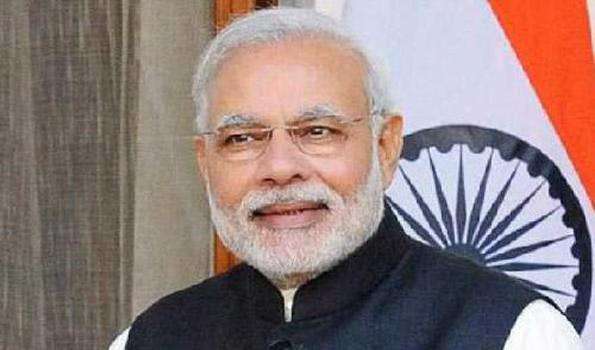
PM congratulates ISRO team on successful launch of PSLV-C47 carrying indigenous Cartosat-3 satellite

The Prime Minister, Shri Narendra Modi has congratulated the entire ISRO team on yet another successful launch of PSLV-C47 carrying indigenous Cartosat-3 satellite and over a dozen nano satellites of USA.

“I heartily congratulate the entire ISRO team on yet another successful launch of PSLV-C47 carrying indigenous Cartosat-3 satellite and over a dozen nano satellites of USA.

The advanced Cartosat-3 will augment our high resolution imaging capability. ISRO has once again made the nation proud”, the Prime Minister said.

Narendra Modi

@narendramodi

I heartily congratulate the entire @isro team on yet another successful launch of PSLV-C47 carrying indigenous Cartosat-3 satellite and over a dozen nano satellites of USA.

Narendra Modi

@narendramodi

The advanced Cartosat-3 will augment our high resolution imaging capability. ISRO has once again made the nation proud!

2,832 people are talking about this


***

What The Education System REALLY Exists For – Myth # 7

Systems tend to lead double lives – at a conceptual level they might be brilliant, with wonderfully competent and committed people leading them. Yet at the ground level, what is in operation may be entirely different. Thus despite terrific policy and capability at policy/decision-making levels in the health sector, what common people might be heard saying is: “It is better to pay through your nose at a private clinic, than to die for free at the government hospital.”
For the people, the ‘system’ comprises of those representatives they meet at the district, block, cluster and village level, and occasionally those at the state levels. To understand the situation, try asking a group of educational administrators about the finer aspects of TA-DA rules and how they apply them, and you will find they can animatedly discuss them for about two hours. But raise the issue of why children are not learning (which is actually their real responsibility) and you will get a different response… (It’s true, isn’t it?)
This is what tends to happen to any system  (or even organization) over time – ultimately it’s own nuances, requirements, procedures, structures and powers (or power) become its main concerns, with the reason for its very existence slowly dimming in the memory of its functionaries. Thus: 
  • teachers/CRC-BRC must spend more time collecting data even at the cost of teaching or improving learning, or 
  • every school must follow the given framework for its School Development Plan (because the need to compile the plans at the block level is more important than the need for it to be appropriate for that school), or 
  • every HT must maintain records for the officials \’above\’ even if it means she will not have time to support her teachers in improving the classroom process. 


It is as if children, teachers, HTs, SMCs all exist to feed the machinery ‘above’ which has to ‘control’ them, and ‘give’ them resources (from mid-day meals to teachers to textbooks to in-service training, from which often a ‘cut’ may be taken), ‘allow’ them to take decisions such as which would be the most convenient time for most children to attend school, ‘monitor’ the work of teachers, ‘test’ the learning of students, and ‘grant’ the privilege of education.
What the RTE implies is that it is those who get their salaries because of children who are the real ‘beneficiaries’ – which includes all the administrators, supervisors, inspectors, monitors, institutions, departments, ministries.  It is they who are accountable to children and teachers, or would be if they really existed for education.
As mentioned, give them enough time and systems end up existing more to perpetuate themselves – and the status quo within – rather than the purpose for which they are created. Try making a change in the way things are organised within a system and you might find it responds with a kind of ferocious energy it fails to display when similar urgency is required in its primary objective. For instance, if it were declared that an educationist rather than an IAS officer will head the Department of Education, you will get a lot more activity in the system (to prevent that) than if you declared (as is well known) that most children are failing to attain grade level learning across the country. 

Finally, systems exist to preserve the hold of the powerful. Issues that affect the middle classes or those more privileged get inordinate attention in the system. Thus nursery school admissions in private schools in Delhi are a big issue, or the allocation for poor children in elite private schools is endlessly discussed, or the class 10 board exam being needed (by children from better off families)… but the death of a 100+ children in a mid-day-meal from a poor section of society, or the low levels of  service in deprived areas or chronically low learning levels despite much money being invested – fail to receive that kind of attention.

For those seeking to make a dent in the system, it would be healthier to have a more \’aware\’ notion of what the education system really exists for. The puny strategies we use to make things better are unlikely to serve as even pinpricks to the system.

Did you brush your ideas today?

A few minutes spent watching TV or flipping through a magazine would convince anyone that looking good is one of the most important objectives in society! Ads for creams of all kinds, face washes, shampoos, razors, jewelery, clothes — all evidence that we are firmly in the the midst of a \’lookist\’ age. If you don\’t \’look\’ it, you aren\’t it!

But as we groom our bodies, it might be a good idea to groom our minds as well! Failure to do this seems to have brought about (or perpetuated) the many difficulties we find ourselves in. For instance, as our education system (with around 5.7 million teachers and close to three hundred thousand education officials) rumbles on, and we strive to bring about a major improvement, this is one barrier that keeps springing up again and again. Our thinking tools have become either so dull or limited that at every stage of the transition presents huge challenges:
  • How can each stakeholder envisage the improvement desired in their own way (i.e., have their own vision)?
  • How can all involved begin to understand / conceptualize the massive shift involved?
  • Since improvement is helped by planned rather than a random set of actions, how to help each person plan better – which implies the ability to identify what is desired, what the gaps are, conjuring up a repertoire of \’solutions\’, weighing the different options to identify the ones that fit the situation best, and knowing the difference between sequencing and prioritizing!
And we haven\’t even come to the actual implementation yet… which involves actions such as teaching, mentoring, communicating, supervising, organizing and managing, monitoring, counselling, developing, recording and analyzing, assessing and evaluating — all tasks that require a range of thinking skills. It comes almost as a shock to realize that different actions require different ways of thinking. That before you start thinking on something you need to ask yourself – which would the best way to think here? Much like a surgeon choosing the right tool at each stage of a complex operation. In fact, that is what our situation is tending to be – of a surgeon armed with only a kitchen knife and hence limited in terms of what she can do! In fact, if you don\’t \’think\’ it, you aren\’t it!

What can one do to begin overcoming this situation? A few suggestions to start with:

  • Make a list of all the key actions you perform
  • Identify the thinking skills or ways of thinking required (e.g. do you have to be more \’out of the box\’ and creative, or do you have to maintain a rigorous commitment to the given information and derive a logically valid inference).
  • Practice these skills
  • When undertaking new action, please choose the appropriate thinking tool you need to use
  • Finally, don\’t forget to brush your ideas! That is, do reflect on the ideas we use in the daily course of our work – have they become stale? or dusty or outdated? do we need to discard them and move on to different ideas?

So even as we become willing participants in the \’lookist\’ age, here\’s hoping that more and more of us will also  create our own \’thinkist\’ age!

Cure or Prevention: the Health Education Dilemma

There is no doubt that educating children on health issues is absolutely important. But the moment we begin this, a major problem crops up. What should the thrust of health education be in a context like ours? It\’s not as simple as it appears.

If we were to talk of prevention, we find ourselves making invalid assumptions. For instance, we start with \’washing hands with soap regularly prevents disease\’. But the problem is, say a huge proportion of children and the community, \’there is not enough water even to drink, how do we wash hands with soap?\’ Next we say, \’you must eat green leafy vegetables\’. However, the response: \’hey, there isn\’t enough food to eat in the first place, let alone leafy vegetables\’. The list is endless. The bottom-line: poverty is at least as important a health issue as lack of health education.

On the other hand, emphasizing prevention has its own limitations. For example, when discussing scabies it is common to find the use of neem being advocated. Though neem is commonly available, it is not exactly always useful in all cases of scabies. Medical advice should be sought rather than relying only on such suggestions. As they say, it can be dangerous to be armed with half-baked information.

So what do we do? Not talk about health at all?

No, we do need to educate our children on health. But the emphasis has to be on educate rather than merely plying them with information. In concrete terms this implies helping children perceive the causal links between different factors in their immediate environment and their health. How the body works, what it is affected by and how it responds to different factors, and how our own actions (individually and collectively) impact upon it — these are some of the components of what contemporary health education should be like.

This would naturally require scope for exploration, projects and activities. The pedagogy involved should help children arrive at their own conclusions, especially in terms of actions they could take. Here\’s an example of what might be a good health education activity (for grade 3 students, assisted by their teacher):

Take two small plates — put a little dal water in one, and a little sweet tea in the other. Set these plates in the sun and let the fluids dry. After a while, touch both of them with your fingers – one of them feels sticky and the other doesn\’t. Why do you think this is so?

Next, take a knife (let your teacher do this!). Cut a cucumber and feel the knife edge carefully. Now cut a piece of jaggery and feel the edge again (carefully!). Which item left a more sticky knife edge? Why?

So when we eat, which items are more likely to continue sticking to our teeth? And what will happen if they remain there (discuss with your teacher)? So what do we need to do? 

That\’s it. There\’s no need really to give a long lecture of oral hygiene, full of facts and figures and information on exactly how to hold the brush etc. etc. All that sounds so platitudinous that children instinctively \’switch off\’ (as do adults when lectured!). The intention is that by helping children arrive at their own conclusions, we increase their stake in taking appropriate health-related action. And hence the increased chance that the understanding will actually translate into behavior!

Is Education for Girls Different from Education for Boys?

If we were to educate only girls, would we develop an education different from the one that prevails now? And would it be different from an education created only for boys?

Before you lynch me for raising blasphemous ideas and restricting girls to things such as reproductive health and sewing/knitting, let me explain. If we were to look at education only from the boys\’ point of view, we would find that everything we wanted is probably already there. But that is not the case when it comes to girls. Surely, education for both boys and girls would be much better off if the girls\’ perspective, experience and world view were, in fact, included.

Think, for a moment, of recipes, and how they would be wonderful material for learning mathematics (interesting, isn\’t it?). Or the kind of abilities girls have with fine motor skills and patterns. Or multi-tasking. Or giving value to emotions and relationships. Or being able to share rather than dominate. Or how to make use of meager resources. Or a range of other things which I\’m sure you can list (endlessly). Are we not depriving ourselves in not exploring this? There is no doubt that, on the whole, education is much the poorer from having been defined by the male perspective. Which then applies to the world itself as well.

Using Performance Standards to Improve Teacher Effectiveness

Here are some of the key principles that emerged from the ADEPTS experience over the last few years. ADEPTS (or Advancement of Educational Performance through Teacher Support) is an approach or a way of working, based on the use of performance standards. [More details and the standards themselves can be shared with those interested! In the meantime, here are some of the insights that emerged – feedback and your views are welcome.]
  
  1. The most important way to generate teacher motivation is to enable them to experience success in the classroom. Hence a set of minimum enabling conditions being in place make a huge difference. 
  2. Teachers change when they experience the standards, rather than simply being told about them – towards this, the in-service courses themselves need to incorporate the standards expected of teachers. (A few of the states have begun this process of improving their own inputs to teachers.)
  3. There is a sequence in which teachers learn (and indeed institutions and systems learn). It is also better to avoid overcrowding expectations. It would therefore be best to plan improvement in terms of stages of teacher development, broken down into three-month phases, each of which has a very limited number of indicators to be attained (4-8). As teachers attain one set of indicators, this motivates them as well as prepares them for the next, higher order, set. The support institutions, too, learn along with the teachers and grow phase-wise in turn.
  4. Standards and indicators can tend to be vague! It is important to convert them into concrete steps that can actually be implemented by teachers. Thus, if an indicator agreed upon is ‘children ask questions freely, without fear’ there is a need to make clear exactly what the teacher needs to do for this to happen. Hence, as part of the roll out, all teams need to detail the concrete steps involved in converting the expectations into actionable steps.
  5. Implementer choice and partnering with teachers is more likely to yield results than passing on a set of instructions. In sub-district meetings, teachers should get to choose the indicators they want to attain (from a given list of potential indicators for that stage, though) and identify / develop the steps needed to attain these. Their performance will be assessed against the indicators chosen by them. If possible, peer assessment will be introduced.
  6. ‘Target setting’ in terms of the degree of improvement in performance can now be practiced. Teachers and their resource persons can use the standards document to fix the degree of change they seek to bring about over, say, a year or six months. They can then assess their progress against this. As this was not possible earlier, improvement efforts tended to lose their way very soon.
  7. Taking a ‘low-interference’ approach helps – that is, there is no pressure on the system to change curriculum or textbooks or introduce new model of teaching. It is more a case of ‘doing the same as before, but a little differently’; this reduces systemic stress and enables rapid implementation.

Missing the Aim(s) of Education!

It\’s a perennial struggle to define what we really want out of education. That is, it is a struggle for those who are vested with the responsibility of developing the curriculum, materials, evaluation and the like. For others, such as parents, things are reasonably clear. Which is where part of the problem lies.
The common man, or the consumer, or the parents of children who come to a majority of our schools, have no doubt at all that the purpose of education is to prepare children so that they can get a job (and be a worry off their heads). Many others – such as owners of private schools – boast that they get hundred percent results in the various examinations. Implying that the purpose of education is to get children to pass through examinations with flying colours (and what the purpose of the examinations is of course well known to all!)
And if you ask teachers in government schools, the ones who actually teach and are considered \’sincere\’, they will usually come out with statements such as: \’to develop a citizen, for all round development, someone with values, someone who can be called an educated person.\’
But when it comes to developing the curriculum we are somehow so reluctant to agree with these commonly held perceptions. We want something better, higher, more durable (our own approximation of the Olympics motto?) \’To produce someone who has a deep sense of values\’ is one of the most common aspirations. But what kind of values? And what to do about the fact that values are so relative (e.g. in certain situations, you actually get a medal for killing a man!). What is needed in order to be able to exercise values appropriately in a contextual and relative manner? And is that more a cognitive rather than ethical function (e.g. identifying options, weighing them against each other on various criteria, etc.)?
\’Education should develop the right kind of sanskars / culture in the student\’ is the next most popular choice. But whose culture are we talking about? A teacher trying to teach children how to use a handkerchief to blow their nose was left aghast when they reacted with amused horror as he put his handkerchief back into his pocket – they said they always threw things away after blowing their nose with rather than putting them back into their pocket! In a context as diverse as ours where the good manners of one group are easily the bad manners of others would we not end up simply extending the social control of dominant cultural group/s?
Unable to resolve this we move to discussing: what kind of society do we want to see? What would we consider a developed society? Where everyone has a job and the per capita income is high (back to jobs as the most important criterion?).  Slowly the discussion moves to recognizing the diversity in society and the need for each group / person to respect the \’other\’ and cherish, even celebrate this diversity. The need for a dynamic society that is able to overcome the divides of caste and class, race and gender is emphasized. A society where collaboration is valued and practiced, where resources are more equitably distributed and opportunity is available to each person to better his or her lot is portrayed as the desired one.
So what are the qualities needed in the children emerging from our schools in order that this vision come close to reality. Now a little more concrete set of indicators emerges – self-confidence, autonomy, decision-making ability, the ability to accept one\’s own shortcomings and confront / improve them, a more scientific attitude that helps them question given conclusions and arrive at their own inferences, and so on.
So how would this impact the subjects we are teaching? Here again we run into difficulties – since, despite our best efforts, we continue to be the prisoners of our past. The kind of ideas that come up are: include a lesson on self-confidence and one on self-dependence as well, have guidance and counselling, do scouts and guides\’ activities, and the like. As if a lesson in self-confidence or the description of a great person\’s life will help attain self-dependence!
When this is explored further, the true import of some of these \’small indicators\’ begins to sink in. To ensure that children develop self-confidence, for example, they need to experience challenges as well as successes, repeatedly.  This will generate the necessary self-belief. Clearly, then, instead of simply teaching in the regular way and appreciating the child\’s efforts, the teacher instead needs to challenge the child – by introducing tasks of which some part children can do, along with others that they would find difficult. Then it would be important to ask children to plan it by themselves, share and justify their plan to a larger set of friends and finally implementing it on their own. The experience of this implementation needs to be discussed so that lessons may be drawn for the next time. It is repeated experiences of this kind that lead to self-confidence.
For each of the changes / developments we want in our children, identifying its implications is a harrowing task. Not only is it difficult to know what to do so that the desired outcomes happen (e.g. how do you \’teach\’ to accept one\’s limitations and also go beyond them?), the emerging discussion tends to doubly challenge long-held notions and deep-rooted practice. (Such as supporting children as they learn on their own rather than teaching them as we are used to.) And if these are the qualities we desire in our children, we are really left wondering why it is that we should be teaching things such as physics or chemistry or past participle and geometric progression.
As we progress further in defining the aims of education, we seem to be moving further away from \’education\’ itself as we know it and into something that is still quite undefined and yet to be evolved. Somehow even as we define the aims, we seem to be missing them.

The Top Ten Confusions in Education

Trying to improve the quality of education – be it in a school or a cluster or an entire system – can be full of \’land-mines\’ exploding unexpectedly, leaving you with confusion all around you. Here are the top ten \’confusion\’ land-mines:

  • It is only when I teach that children will learn, isn\’t it?
  • Don\’t we have to guide children and show them the way?
  • I\’m not biased, am I?
  • Can all children really learn?
  • We can\’t teach different children different things in the same classroom, can we?
  • If only the teachers started working, wouldn\’t all problems of school education be solved?
  • If I turned out OK, how can there be much wrong with the education system?
  • If children start thinking by themselves and \’constructing\’ their own knowledge, what is the role of (and the need for) the teacher?
  • If we don\’t discipline children and correct their \’errors\’, won\’t they turn out bad?
  • Isn\’t the curriculum the same as the textbook that has to be \’covered\’?
  • In-service teacher training workshops can transform teachers, isn\’t it?
  • Testing is the best and the only way to find out if children have learnt anything, isn\’t it?
  • If one\’s education doesn\’t help one get a job, what good is it?
  • Researchers and academics know best about classroom processes, don\’t they?

Actually the list is longer than ten – pick out your own top ten! (You can include ones that are not here)

Also, who\’s the one confused? You, or the others? And is there anything that can be done?

Over-aged — and loving it! — Part 1

It\’s difficult, but imagine for a moment that you\’re an 11-year-old who wasn\’t able to attend school. When you were very young, you can remember, your parents moved from place to place, working on construction sites. A few years ago, they got work back in your village as a canal made agriculture more possible. And you yourself started off being an assistant cattle-herder. Now, though, you\’ve graduated to full cattle-herder, with knowledge of all the grazing areas, the watering places, the dangers to look out for (that unexpected ditch into which all the young cattle are always falling) and the idiosyncrasies of owners who don\’t always pay on time. As you saw children going to the nearby school carrying weird little bags or screaming insults at you, you wondered what they did holed up the whole day in that building. Even the cattle seemed to be more free than they.

Then one day, the newly appointed teacher organised a meeting with all community members and explained to them something called \’Right to Education\’. Basically, this meant that your parents decided you should go to school. No one asked you. Your father only said, \’Now work is more regular here, we can manage.\’ So off to school you were dispatched. Being alone with a hundred cattle in the nearby jungle (with the possibility of that nasty jackal) seemed so much less fearful than entering that stark building, all yellow and white with blue things written on it here and there.

What are the children in there going to say? Your mother made you have your bath and put on the other pair of clothes, so no one would say you smell — but the beloved odour of cows isn\’t going away from you and your clothes anytime soon. There are some green-painted metal play things on small play ground. The smell of food being cooked mingles with the smell of something else (it\’s paper and chalk and sweat, though you don\’t know it yet). Your heart is in your mouth as you step onto the ramp climbing up to the school. The teacher comes out and is looking at you — and you\’re doing your best not to run away. Away, back to the beloved forest, with the hundred cattle who know you so well.

The Poor Make an Educational Choice

Though it had been around for a long time, in 2003-04, a disturbing trend began to be dramatically visible in the government school system: a large number of districts began to report a decrease in the number of children enrolled. However, this decrease was not due to any slowing down in the growth rate of child population. Nor was it because accurate data was now available in place of the earlier inflated numbers. And since the number of children reported to be out of school was not increasing either, what accounted for the children missing from government schools? Yes, you guessed it – they were shifting to the ever-spreading network of the low-fee private schools.
The number of districts reporting such decreased enrolment stood at 180 or nearly one-third the number of districts in the country. Nor was this confined to the so-called ‘backward’ states – for Andhra Pradesh, Delhi, Gujarat, Himachal Pradesh, Karnataka, Maharashtra and Tamil Nadu also reported the phenomenon. In the year 2005-06, six new states reported districts with decreasing enrolment in government schools. And the situation hasn\’t really improved since.
The private schools that children migrate to come under the ‘unrecognized’ category, hence few government records are available on their numbers or growth. However, it is apparent that the increase in their numbers is astonishing. A World Bank study estimated that 28% of the rural population in the area studied had access to private schools in their own villages, and nearly half the private schools were established after 2000. Studies in Punjab showed that around 27% children studied in such schools and a similar picture obtained in Andhra Pradesh and Orissa. 
This large-scale exodus has been occurring at a time when the government is spending an unprecedented amount of money and effort on education. Since 2000, tens of thousands of new schools have been opened in underserved areas and the infrastructure of existing schools boosted. Around 8.5 lakh teachers have been appointed and around 87% teachers in place provided 20 days of in-service training every year over the last few years.
Despite such efforts, anybody with any means whatever is choosing to walk across to a (usually) nearby school and pay for what they consider good education. This is in a context where education is available free in government schools, along with other incentives such as free textbooks and mid-day meals.
Like mobile phones, private education is no more the preserve of the elite. Surveys have found that 20% students in such schools are first-generation school-goers, with another 14% having parents with four (or less) years of education. Visits to such schools in the poorer regions of a state like UP put all doubts to rest. Without fail, it is the poor who are sending their children to schools that charge fees in the range of Rs. 30-100 a month. Schools manage this by paying teachers Rs. 1000-1200 per month – well below the minimum wage for unskilled labour. It is usually the educated unemployed who take this up as a means to gain experience while being on the lookout for other jobs. Therefore, teacher turnover is high, but there is a continuous stream of cheap labour available. The result is a commercially viable venture that provides subsistence level education.
In the meantime, who remains in the government system? For those hovering around the poverty line or below, there is no other recourse. Over 80% of SC and ST children in school are in government schools, which also have a higher proportion of girls and children with disabilities. In a telling comment, it is common for families with meagre resources to educate their sons in private schools and daughters in government schools. Indeed children are often enrolled in the government schools (for entitlements such as mid-day meals or uniforms) but actually attend the nearby private schools (for education)!
Unfortunately, the exodus of the more powerful and influential families has led to a greatly reduced sense of accountability in government schools. Those who are ‘left behind’ are usually the more disadvantaged groups, already disempowered due to economic and social reasons. Teachers, school heads and education officials tend to feel that it is almost ‘pointless’ to serve ‘these people’. In fact, a common refrain across the country is to complain of the ‘poor stuff we get to teach’ (and by \’poor stuff\’ they mean children!). There is an increasing tendency to blame the poor for not being able to support their wards at home or provide educational resource and the like. What is forgotten in all this is that education is not a favour being done to the poor – it is their right!
This is perhaps one of the reasons why the dramatic increase in inputs into the education system has not led to outcomes in terms of children’s learning levels, which continue to remain abysmal. Surveys by the NCERT and the NGO sector have repeatedly brought out how only half the children seem to learn half of what they should! During field visits to government schools, it is very common to come across children sitting unattended in class, with the teacher either absent or simply not teaching. Often, of course, the teacher has more than one class to handle and is therefore unable to teach. However, it is the sheer lack of concern for children that strikes any observer the most.
Many take the view that the expanding number of private schools is contributing to universalisation of elementary education in the country. While that is certainly true to an extent, a greater impact seems to be that in leading to reduced accountability, private schools are also contributing to a reduction in the government’s ability to universalise education in its own schools.

Listening Workshops – Or the Simplest Step to Educational Reform

Is \’bottom up\’ change really possible?
If you are an educational functionary, by now you must be  fed up of hearing how planning and change have to be \’bottom up\’. By which is usually meant that those who are \’under\’ you must somehow begin to contribute, own and implement a range of actions. And you inwardly wonder if this is ever going to happen!

It was during a discussion on precisely such views that the idea of a listening workshop emerged. Colleagues in the Institute of Educational Development (IED) in BRAC University, Bangladesh felt that a \’listening workshop\’ might help them understand teachers and grassroots functionaries better.

Listening workshop – a straightforward structure
It was agreed that before forming any views, it is critical to simply listen to teachers and head teachers. Hence a straightforward meeting / interaction / workshop was designed around the following three questions that would be asked of teachers and head teachers:

  • What do you really do? Exactly what does your work involve?
  • What do you like doing?
  • What do you find difficult or dislike doing?

It was also agreed that IED colleagues initiating the discussion would only listen, and not prompt or provide leading questions or offer any comment from their side. In other words, they really had to listen rather than talk!

So why is all this worth writing about? Because around ten such listen workshops were actually conducted, and most turned out to have  a very interesting pattern, followed by an unexpected twist.

What teachers felt
The listening workshops, it transpired, tended to proceed in the following stages.

  • Teachers found it really difficult to believe that anyone could come down from the capital only to listen to them! There had to be a \’hidden conspiracy\’ or an \’agenda\’ they were not aware of… It would take anywhere from 40-60 minutes to convince the participants that the intention really was to listen to them. (What do you think this tells us about the functionaries that teachers usually deal with?)
  • Once teachers believed the above, their initial reaction was that of giving vent to all their frustration and anger at \’you people who sit up there and form all kinds of views about us without ever visiting the field and observing the realities for yourself.\’
  • Finally, teachers would pour their hearts out on the three questions given above.

The teachers\’ replies have of course begun to inform the work of the institute in many ways. However, it was the completely unanticipated outcome below that left everyone (cautiously) elated.

The unexpected \’reform\’
In the case of a large number of teachers who participated, a few days after the listening workshop it was found that they were implementing many new pedagogical actions in their classrooms! In the entire discussion, at no point had they been asked to make any improvement in their classrooms. So it was not as if teachers did not know improved methods – a large number of in-service interactions had ensured that they had had exposure. It\’s just that they were not using them. But for some reason the listening workshops triggered a change process in the classrooms!

What do you think this tells us about teachers, about their motivations, and about the kind of relationships they experience? If you can bear the initial first hour, isn\’t holding a listening workshop the simplest way to initiate educational reform at the local level?

Are You An \’Education Survivor\’?

If you\’re reading this you obviously went through the education system. And maybe you are among those who are grateful that your school days were lovely. And that what you learnt is being put to use every day.

Or maybe not.

Conduct a group discussion with people (friends, colleagues, family members), around their school days. You will find a mix of smiles, frowns and giggles — and the frowns will usually be about their experiences inside the classroom. Almost everyone has a story of how they were wrongly punished or discriminated against or didn\’t receive their just dues for something or the other. Around half the people will recall the oppression they felt at different times — examinations, punishment being handed out, the subject/s they could make neither head nor tail of, the quiet acceptance by their families that they would be mediocre and their own realization that they would not be \’good enough\’ in a number of things.

Cut to the present, and many of them (now quite successful in life) will also be saying : \”Why did we learn all those things? And even what I studied in college, what am I doing with it now?\”

These are the symptoms of the \’education survivor\’. Are you one of them? Are there really as many of them around as my dire prediction indicates? Is it only our tendency to wallow in self-pity? Or just the usual, superficial user-critique of education? Finally, is school education really something like a dreadful disease (or at least a dreadful experience) which leaves behind \’survivors\’?

Are You An \’Education Survivor\’?

If you\’re reading this you obviously went through the education system. And maybe you are among those who are grateful that your school days were lovely. And that what you learnt is being put to use every day.

Or maybe not.

Conduct a group discussion with people (friends, colleagues, family members), around their school days. You will find a mix of smiles, frowns and giggles — and the frowns will usually be about their experiences inside the classroom. Almost everyone has a story of how they were wrongly punished or discriminated against or didn\’t receive their just dues for something or the other. Around half the people will recall the oppression they felt at different times — examinations, punishment being handed out, the subject/s they could make neither head nor tail of, the quiet acceptance by their families that they would be mediocre and their own realization that they would not be \’good enough\’ in a number of things.

Cut to the present, and many of them (now quite successful in life) will also be saying : \”Why did we learn all those things? And even what I studied in college, what am I doing with it now?\”

These are the symptoms of the \’education survivor\’. Are you one of them? Are there really as many of them around as my dire prediction indicates? Is it only our tendency to wallow in self-pity? Or just the usual, superficial user-critique of education? Finally, is school education really something like a dreadful disease (or at least a dreadful experience) which leaves behind \’survivors\’?