The Tsunami We Don\’t Always See

Our hearts go out to the sufferings of people in Japan. The pictures of the tsunami rushing in and engulfing everything in sight, wreaking havoc – will stay with us. Our sympathies and support should – and will – be available to help our fellow human beings in whatever way we can.
Our horror – and the desire to do something – would obviously be even more if we saw something similar happening all around us. And in a way something similar is happening all around us, only it is not as dramatic as a physical tsunami, making it a little difficult to be noticed by most people. It is what I would call the tsunami of poor quality of education that is hitting a million schools and tens of millions of children, its impact likely to be visible over the years rather than right now, instantly, in front of our eyes.
The Tsunami Around Us
No this is not alarmist, but an effort to put across a real picture and the urgency with which it needs to be recognized and acted upon. Every day, in hundreds of thousands of locations across the country, children make their way to the school. Around a quarter of them may find their teacher not there. This number alone is staggering, ranging as it would between one and two million teachers. MILLION! And if each teacher has 30 children in his class, you can estimate the number but not really conceive how enormous it is. And it is huge not just in terms of numbers, but for each child who loses a day of learning, and does so for many days every month, it is incalculable.
Had the facilities or the teachers not been available we could have cried over our fate in terms of being an underdeveloped country. But having the infrastructure (over 98% children have a school within a kilometre, and most buildings are not bad) and teachers actually in place (though the number of vacancies is still very large) – it is horrifying to watch or at least it should be, for there doesn\’t seem to be a sense of horror, or as much of it as would shake the country into action.
However the story doesn\’t end there. It is when \’teaching\’ takes place that the impact on children is often at its greatest. Decades ago, the Yashpal Committee\’s report on The Burden of the School Bag had detailed the \’burden of incomprehension\’ a majority of children bear. And it is difficult to see if things have changed dramatically, despite changed curricula, textbooks, the use of TLM, evolving assessment patterns, new training programmes… The number of children attending school – and their diversity – too has grown in leaps and bounds, while the approach to handling their needs has remained fairly static. Hence, survey after survey shows that – despite a degree of improvement – we continue to be far from the levels of learning desired (and possible).
But it is when it comes to the process that the greatest deadening effect takes place. Rote memorization, \’explanation\’ ina language not necessarily understood by children, a disregard for the needs of children who are too poor to be able to attend regularly, (an often active) discrimination in the classroom, are the lot of a majority of our children. If you doubt this, all you have to do is visit any 10 government schools in different locations, especially those away from \’headquarters\’.
This is not to say that all government schools are bad and that the \’bad\’ is restricted to government schools. It is to point out that even if only a third of schools are like the ones described above (and the number is surely more than that), it adds up to literally hundreds of thousands of schools and tens of millions of children – a slow tsunami of poor quality education that is surely wreaking havoc on the potential of our children, our country.
Dealing With It
So after all this panic, what do we do?
As in any disaster, stay calm! First recognize that there is a problem and accept that something must be done about it.
Second, realize that you are the right person to do something about it. Anyone is, everyone is. Every small action counts. Even if you smile at a child, say an encouraging word to a teacher, raise this issue with friends, relatives and colleagues, you are doing something.
Third, if you are willing to be more proactive or are already active, please do look at the urgency of the situation. Children cannot wait for us to learn or get our act together slowly. We need to quickly:
  • Establish the minimum conditions that must obtain. These are well laid out in the RTE (Right to Education) and its rules. Raise this issue wherever you can, and directly with the school or education authorities.
  • Encourage and support the community and the school management committees (SMCs) drawn from among the community to become more active. You can help in setting them up, in record keeping, in setting the agenda, in follow up, in helping ensure that teachers take them seriously and that they in turn don\’t take an adversarial position vis-à-vis teachers. You can use your position to ensure that the educational agenda is not hijacked by the money-making or power-gaining agenda.

If you are a Head Teacher, supervisor, CRC-BRC / district level teacher educator or officer:
  • Model the kind of behaviour you want from teachers
  • Share practical steps they can take in their classes, especially in terms of activity-based teaching (see the many entries in this blog for support)
  • Encourage teachers to be innovative, support them. If they ask questions, don\’t be dismissive (pass on the questions here if you can answer them!)

If you are a planner / policy-maker / decision- maker, please start by not dismissing what you have just read here. It is real, and it is happening – and it\’s on a gargantuan scale. On any given day, the number of children who are in school and not learning is more than the population of many countries – and it is a shame. What kind of performance standards can you set in place? What kind of outcomes can you insist on? How can you prepare the institutions and the system to deliver this, monitor them effectively and enable an ongoing improvement? Once again, the many entries in this blog would be helpful – and you could always share issues you would like others to provide suggestions / inputs on.
As surely as Japan will recover from the huge earthquake and the devastating tsunami, we can deal with this too. But first we have to see it as an emergency and address it. With all our might.

The Tsunami We Don\’t Always See

Our hearts go out to the sufferings of people in Japan. The pictures of the tsunami rushing in and engulfing everything in sight, wreaking havoc – will stay with us. Our sympathies and support should – and will – be available to help our fellow human beings in whatever way we can.
Our horror – and the desire to do something – would obviously be even more if we saw something similar happening all around us. And in a way something similar is happening all around us, only it is not as dramatic as a physical tsunami, making it a little difficult to be noticed by most people. It is what I would call the tsunami of poor quality of education that is hitting a million schools and tens of millions of children, its impact likely to be visible over the years rather than right now, instantly, in front of our eyes.
The Tsunami Around Us
No this is not alarmist, but an effort to put across a real picture and the urgency with which it needs to be recognized and acted upon. Every day, in hundreds of thousands of locations across the country, children make their way to the school. Around a quarter of them may find their teacher not there. This number alone is staggering, ranging as it would between one and two million teachers. MILLION! And if each teacher has 30 children in his class, you can estimate the number but not really conceive how enormous it is. And it is huge not just in terms of numbers, but for each child who loses a day of learning, and does so for many days every month, it is incalculable.
Had the facilities or the teachers not been available we could have cried over our fate in terms of being an underdeveloped country. But having the infrastructure (over 98% children have a school within a kilometre, and most buildings are not bad) and teachers actually in place (though the number of vacancies is still very large) – it is horrifying to watch or at least it should be, for there doesn\’t seem to be a sense of horror, or as much of it as would shake the country into action.
However the story doesn\’t end there. It is when \’teaching\’ takes place that the impact on children is often at its greatest. Decades ago, the Yashpal Committee\’s report on The Burden of the School Bag had detailed the \’burden of incomprehension\’ a majority of children bear. And it is difficult to see if things have changed dramatically, despite changed curricula, textbooks, the use of TLM, evolving assessment patterns, new training programmes… The number of children attending school – and their diversity – too has grown in leaps and bounds, while the approach to handling their needs has remained fairly static. Hence, survey after survey shows that – despite a degree of improvement – we continue to be far from the levels of learning desired (and possible).
But it is when it comes to the process that the greatest deadening effect takes place. Rote memorization, \’explanation\’ ina language not necessarily understood by children, a disregard for the needs of children who are too poor to be able to attend regularly, (an often active) discrimination in the classroom, are the lot of a majority of our children. If you doubt this, all you have to do is visit any 10 government schools in different locations, especially those away from \’headquarters\’.
This is not to say that all government schools are bad and that the \’bad\’ is restricted to government schools. It is to point out that even if only a third of schools are like the ones described above (and the number is surely more than that), it adds up to literally hundreds of thousands of schools and tens of millions of children – a slow tsunami of poor quality education that is surely wreaking havoc on the potential of our children, our country.
Dealing With It
So after all this panic, what do we do?
As in any disaster, stay calm! First recognize that there is a problem and accept that something must be done about it.
Second, realize that you are the right person to do something about it. Anyone is, everyone is. Every small action counts. Even if you smile at a child, say an encouraging word to a teacher, raise this issue with friends, relatives and colleagues, you are doing something.
Third, if you are willing to be more proactive or are already active, please do look at the urgency of the situation. Children cannot wait for us to learn or get our act together slowly. We need to quickly:
  • Establish the minimum conditions that must obtain. These are well laid out in the RTE (Right to Education) and its rules. Raise this issue wherever you can, and directly with the school or education authorities.
  • Encourage and support the community and the school management committees (SMCs) drawn from among the community to become more active. You can help in setting them up, in record keeping, in setting the agenda, in follow up, in helping ensure that teachers take them seriously and that they in turn don\’t take an adversarial position vis-à-vis teachers. You can use your position to ensure that the educational agenda is not hijacked by the money-making or power-gaining agenda.

If you are a Head Teacher, supervisor, CRC-BRC / district level teacher educator or officer:
  • Model the kind of behaviour you want from teachers
  • Share practical steps they can take in their classes, especially in terms of activity-based teaching (see the many entries in this blog for support)
  • Encourage teachers to be innovative, support them. If they ask questions, don\’t be dismissive (pass on the questions here if you can answer them!)

If you are a planner / policy-maker / decision- maker, please start by not dismissing what you have just read here. It is real, and it is happening – and it\’s on a gargantuan scale. On any given day, the number of children who are in school and not learning is more than the population of many countries – and it is a shame. What kind of performance standards can you set in place? What kind of outcomes can you insist on? How can you prepare the institutions and the system to deliver this, monitor them effectively and enable an ongoing improvement? Once again, the many entries in this blog would be helpful – and you could always share issues you would like others to provide suggestions / inputs on.
As surely as Japan will recover from the huge earthquake and the devastating tsunami, we can deal with this too. But first we have to see it as an emergency and address it. With all our might.

The Tsunami We Don\’t Always See

Our hearts go out to the sufferings of people in Japan. The pictures of the tsunami rushing in and engulfing everything in sight, wreaking havoc – will stay with us. Our sympathies and support should – and will – be available to help our fellow human beings in whatever way we can.
Our horror – and the desire to do something – would obviously be even more if we saw something similar happening all around us. And in a way something similar is happening all around us, only it is not as dramatic as a physical tsunami, making it a little difficult to be noticed by most people. It is what I would call the tsunami of poor quality of education that is hitting a million schools and tens of millions of children, its impact likely to be visible over the years rather than right now, instantly, in front of our eyes.
The Tsunami Around Us
No this is not alarmist, but an effort to put across a real picture and the urgency with which it needs to be recognized and acted upon. Every day, in hundreds of thousands of locations across the country, children make their way to the school. Around a quarter of them may find their teacher not there. This number alone is staggering, ranging as it would between one and two million teachers. MILLION! And if each teacher has 30 children in his class, you can estimate the number but not really conceive how enormous it is. And it is huge not just in terms of numbers, but for each child who loses a day of learning, and does so for many days every month, it is incalculable.
Had the facilities or the teachers not been available we could have cried over our fate in terms of being an underdeveloped country. But having the infrastructure (over 98% children have a school within a kilometre, and most buildings are not bad) and teachers actually in place (though the number of vacancies is still very large) – it is horrifying to watch or at least it should be, for there doesn\’t seem to be a sense of horror, or as much of it as would shake the country into action.
However the story doesn\’t end there. It is when \’teaching\’ takes place that the impact on children is often at its greatest. Decades ago, the Yashpal Committee\’s report on The Burden of the School Bag had detailed the \’burden of incomprehension\’ a majority of children bear. And it is difficult to see if things have changed dramatically, despite changed curricula, textbooks, the use of TLM, evolving assessment patterns, new training programmes… The number of children attending school – and their diversity – too has grown in leaps and bounds, while the approach to handling their needs has remained fairly static. Hence, survey after survey shows that – despite a degree of improvement – we continue to be far from the levels of learning desired (and possible).
But it is when it comes to the process that the greatest deadening effect takes place. Rote memorization, \’explanation\’ ina language not necessarily understood by children, a disregard for the needs of children who are too poor to be able to attend regularly, (an often active) discrimination in the classroom, are the lot of a majority of our children. If you doubt this, all you have to do is visit any 10 government schools in different locations, especially those away from \’headquarters\’.
This is not to say that all government schools are bad and that the \’bad\’ is restricted to government schools. It is to point out that even if only a third of schools are like the ones described above (and the number is surely more than that), it adds up to literally hundreds of thousands of schools and tens of millions of children – a slow tsunami of poor quality education that is surely wreaking havoc on the potential of our children, our country.
Dealing With It
So after all this panic, what do we do?
As in any disaster, stay calm! First recognize that there is a problem and accept that something must be done about it.
Second, realize that you are the right person to do something about it. Anyone is, everyone is. Every small action counts. Even if you smile at a child, say an encouraging word to a teacher, raise this issue with friends, relatives and colleagues, you are doing something.
Third, if you are willing to be more proactive or are already active, please do look at the urgency of the situation. Children cannot wait for us to learn or get our act together slowly. We need to quickly:
  • Establish the minimum conditions that must obtain. These are well laid out in the RTE (Right to Education) and its rules. Raise this issue wherever you can, and directly with the school or education authorities.
  • Encourage and support the community and the school management committees (SMCs) drawn from among the community to become more active. You can help in setting them up, in record keeping, in setting the agenda, in follow up, in helping ensure that teachers take them seriously and that they in turn don\’t take an adversarial position vis-à-vis teachers. You can use your position to ensure that the educational agenda is not hijacked by the money-making or power-gaining agenda.

If you are a Head Teacher, supervisor, CRC-BRC / district level teacher educator or officer:
  • Model the kind of behaviour you want from teachers
  • Share practical steps they can take in their classes, especially in terms of activity-based teaching (see the many entries in this blog for support)
  • Encourage teachers to be innovative, support them. If they ask questions, don\’t be dismissive (pass on the questions here if you can answer them!)

If you are a planner / policy-maker / decision- maker, please start by not dismissing what you have just read here. It is real, and it is happening – and it\’s on a gargantuan scale. On any given day, the number of children who are in school and not learning is more than the population of many countries – and it is a shame. What kind of performance standards can you set in place? What kind of outcomes can you insist on? How can you prepare the institutions and the system to deliver this, monitor them effectively and enable an ongoing improvement? Once again, the many entries in this blog would be helpful – and you could always share issues you would like others to provide suggestions / inputs on.
As surely as Japan will recover from the huge earthquake and the devastating tsunami, we can deal with this too. But first we have to see it as an emergency and address it. With all our might.

Work Smart, Not Hard!

Whenever teachers are being trained, they are bombarded with the same tired old phrases. \’You are the future of the country,\’ they are told. \’There\’s a great responsibility on your shoulders; you must work very hard to fulfil this responsibility.\’ This is what we hear every time, isn\’t it? And aren\’t you fed up of listening to this over the years?

     The problem is that this is such a naive notion. As if working hard makes everything OK. No, you have to use your head! Even those whose work is seen as involving nothing but hard work, they too can do their work well only if they use their head. For instance, the labourers who unload a truck, the farmer working in the field, those who dig pits or carry head loads of debris… If they do their work without thinking and being alert, they can get hurt, face a loss, be shouted at or even fired. In the case of a teacher, therefore, this is bound to be even more crucial!

     A thinking teacher – i.e. a smart teacher – is one who greatly increases children\’s role in the classroom. And not just in keeping things clean and organized, but in the in the learning process itself. For instance, the class 4 teacher said to the children: \’You know, in this story, when the lion woke up one morning, he found that he had no hair on his head! His mane – totally gone! So guess what he did in order to get it back? Well, read the story and find out!\’

     When children started to read the story, the teacher went and sat with those who were in danger of falling behind others. After a little while she said: \’If there are any words you\’re not able to understand, circle them with your pencil. Then ask the children around you if they know.\’ When everyone had finished this, she asked groups of children to look at each other\’s circled words and see if they could find out the meaning. \’If there are still some words that you don\’t know, I\’ll tell you the meaning,\’ she said.

     You can guess what this smart teacher did next. For the entire duration that she was in her class, each child was engaged in work, was learning and helping others learn too. All this while she herself was totally relaxed!


So what are the ways in which we too can be a little more lazy, and a little smarter?

How would YOU implement the RTE?

If YOU were in charge of implementing RTE in a district / block, exactly WHAT would you do? Could I have step by step suggestions please. That\’s because all of us have by now said all that is wrong with RTE implementation, but this is not equal to knowing what to do. I come across many district and block functionaries who are seriously looking for suggestions (they also welcome critique, but find that it doesn\’t help them decide what to do – at best they only see they\’re doing something wrong).

It would be a great contribution. I promise I\’ll share the suggestions with at least 10 \’serious\’ functionaries who have asked for support and will try to impact 300 to 3000 schools each. As they start implementing, we\’ll create a facebook page where they can record their progress and impact. But could we have specific suggestions please, maybe even a framework or a detailed note?

One response I received was from Anjela Taneja:
Gave this some thought overnight. Basically, one immediate suggestion is to put this question onto a website (read you blog atleast) so you can get a larger pool of responses. Personally, I added the question onto the RTE India page I moderate as well. However, a more user friendly interface of responding would help instead of trying to type everything on FB. In response to the actual question, I see two sets of responses- universal recommendations (only a few), but a lot of questions related to specific geographies. The solutions need to emerge from the local problems, so it would help to know where the functionaries in question are actually stuck and atleast what states one is talking about.

In response, here are some details.
As for geographies… Specific ones include: the block of Fatehpur, near Kanpur; the training coordinator of Bareilly; an informal govt school teachers\’ collective (who want things to impove) in Varanasi; in terms of states, Bihar and Gujarat to start with.


Some of the comments received:

Naaz Khair
Where there is a will there is a way! Government is running the central schools par excellence. If it wants it can change things for its other set of schools as well. The RTE Act itself is very explicit in terms of who is supposed to do what i.e. the duties that need to be performed so that educational rights of children are upheld. The RTE Act almost reads like a program and contains step by step measures to taken at different levels to ensure its implementation. This forum, along-side raising its voice whenever RTE violations took place, has also been proposing possible solutions. It is more than time now for the people in the system to make decisions given the resources in hand.

Janmejoy Patel
Yes, it is basically a question of how serious the govts are regarding implementation of RTE. Do they have required amount of political will or commitment? Are they willing to allocate adequate funds & invest in education? Once these factors are settled, there is no private school good enough to rival our schools in quality. But will the politicos do so on their own? No hope since none of them has any stake involved. Unless forced to.

Anjela Taneja there are two levels of issues here- what should be done to improve the policy and practice, and another is what can a government official do immediately within the constraints of the system

Subir Shukla
‎@Janmejoy If you take a look at the amounts released, you will find that the country as a whole is not really able to use more than 70% of the funds made available… 

     There\’s a need to understand the nature of social \’filters\’ involved. Things such as buildings, textbooks – concrete things that can be touched, inaugurated or \’released\’ and credit taken for – tend to get done. But a child\’s right to learn is a lot more than that, and needs a new set of relationships and processes in order to be attained. It\’s common to have \’disco bhajans\’ (i.e. allowing a western \’pollution\’ of a cultural aspect) but more difficult to implement the notion that a child does not need to be beaten in order to learn (in fact, while teachers are responsible, many parents also insist that their children be kept in discipline through corporal punishment; similarly, look at the response to CCE…). It\’s like trying to ban spitting or dowry (for which a law exists…). 
     Similarly, the notion that you do not need to memorize or be given explanation – instead you should learn through activity, exploration and projects (which is what the RTE provides for) – is not the easiest to implement even for those who are seriously trying, including in the NGO sector, including in the organizations that are seen as the \’teerth sthal\’ of education. Another crisis – and this is a professional, considered opinion of a curriculum/textbook/materials developer after closely examining materials from all over the country for 20 years – is that the NGO \’products\’ in terms of curricula / materials / pedagogy / teacher development are also fairly weak when it comes to the kind of quality desired, the constructivism to be implemented, the kind of equity-oriented and diversity based classroom that is now needed. Indeed the textbooks of several states would rate much higher. 
     @Naaz, steps about how to make \’special training\’ or create a differential classroom which must necessarily result, are not really spelt out in RTE documents. (This is just an example, and there are several more such aspects, esp about how to help those in the system realize that post-RTE, it is THEY who are the \’beneficiaries\’ and children / parents / community are the REASON for the system to exist.) 
     I\’m afraid the real import of many of the RTE provisions have not really been understood and a whole lot of \”why aren\’t you doing your job\” kind of comments are being passed around. While these will help in situations such as getting children admitted, other aspects such as getting discrimination (subtle and overt) to reduce, community to be empowered, teachers to be enabled to create vibrant and equity-oriented classrooms, in 1500000+ schools, (including private schools), are something else altogether. \’Protesting\’ or \’raising\’ voice may curb something negative, but doesn\’t necessarily make something positive (e.g. teaching better) happen. I\’ve written about \’preventive power\’ vs \’generative power\’ elsewhere in this blog.
     The perspective changes when you\’re someone who has to actually deliver the RTE, and I haven\’t found much in the various fora that is dramatically helpful, or not known or not being tried out. A lot of the suggestions are very vague (ideas such as \’involve the community\’, \’empower the teacher\’ are outcomes of steps, which themselves are not always spelt out, or examples given of a very preliminary level..). Many of the issues (such as teacher attendance and accountability) are larger governance issues and need a larger strategy, some of which is indeed being thought about at different levels. I still believe that people thinking and working on these issues have a great deal to contribute – both within the government set up and outside. Hence my request for the kind of engagement that foregrounds concrete actions.

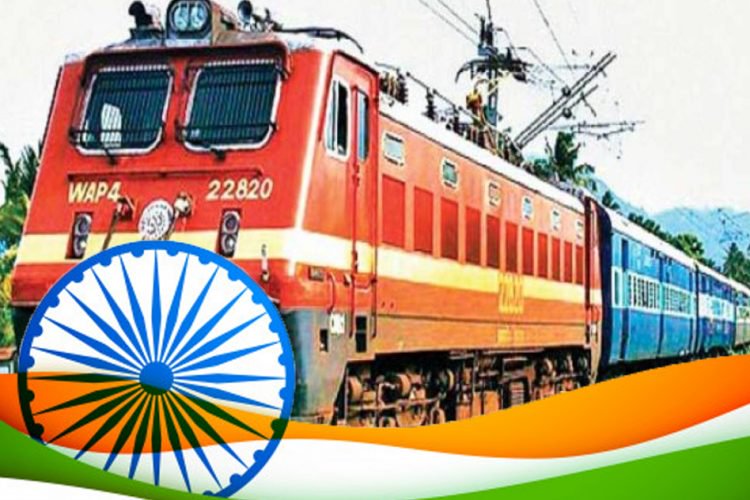
CLW Produces 300th Locomotive Of 2019-20 In Less Than 9 Months

Chittaranjan Locomotive Works (CLW) has turned out 300th locomotive of the FY 2019-20 on 21st December 2019 evening, in less than 9 months (in 216 working days) of current financial year.

The working days for production of 300th loco has reduced from 292 days in the year 2017-18 to 249 days in 2018-19 and further to 216 days in the current FY 2019-20. Therefore, a reduction of 28% since 2017-18.

Shri Praveen Kumar Mishra, General Manager flagged off the 300th loco, WAG-9 HC (32692) from CLW on 21st Dec 2019 evening amidst the presence of senior officers and staff. He appreciated the efforts of all the dedicated team of officers and staff in production of 300th electric locomotive from CLW.

Shri Praveen Kumar Mishra also expressed hope that with this trend in production, CLW will be able to even surpass the target of this FY 2019-20 and will be all set for creating a new record. CLW produced 402 locomotives in 2018-19 and thus became the world’s largest producer of locomotives.


Indian Railways to Procure 44 rakes of Vande Bharat Trains from ICF: Tender published for supply of electrical equipment and other items

Hon’ble Prime Minister Shri Narendra Modi had flagged off the maiden run of the Vande Bharat trainset on New Delhi -Varanasi route on 15th February 2019. The second such Train set service between New Delhi and Shri Mata Vaishnodevi Katra was flagged off by Hon’ble Home Minister Shri Amit Shah on 3rd October 2019.

As part of the continuing initiative of Make in India, the Integral Coach Factory at Chennai has published, today, the tender for supply of electrical equipment and other items for 44 Trainsets of 16 coaches each. The procurement process promotes transparency, accountability, speed of delivery. It ensures compliance with RDSO specifications and vendor neutrality to allow maximum potential bidders to ensure competitive rates.

This is an invitation for two packet Global Competitive bids to procure 3 Phase propulsion equipment (electrics) with passenger and operator related peripheral items suitable for maximum service speed 160 kmph speed with 50 % powering (8 Motor Coaches out of 16 cars in the formation as per clause no. 1.3.12 of RDSO Specification no. RDSO/PE/SPEC/EMU/0196–2019 (Rev.0).

Bids can be submitted till 1415 hrs on 24th  March 2020. A Pre-bid conference will be held on 23/01/2020 at 10.30 Hrs. in the meeting room at the Design & Development Building, Integral Coach Factory, Chennai. The procurement shall be done in accordance with extant  “Make in India” policy of DPIIT, Government of India.

In order to improve upon the passenger throughput by way of higher acceleration/ deceleration and reduction in turnaround time, Indian Railways have planned to introduce passenger train sets with distributed powering, working on 25000 V single phase 50 Hz OHE system. This project is driven by corporate mission of providing semi high speed trains with service speed of 160 KMPH having world class technology and passenger amenities.

All coaches in Train set will be Chair Car type for day travel.  All the Train sets will be provided with cab AC in DTCs , above roof HT equipment, 25 KV Roof through HT cable assembly with associated accessories like insulators, jumper cables etc, fully air-conditioned passenger compartment with vestibule arrangement, automatic plug doors with retractable footsteps, automatic intercommunication door, PAPIS consisting of in coach displays, speakers, side destination boards etc, luggage racks with reading lamps, direct lighting (for passengers) and diffused lighting (for luggage racks), continuous LED light fixtures, modular pantry equipments and GPS antenna in all coaches, Mobile/laptop charging sockets in the passenger seats, CCTVs and Emergency talk back units with networking system in all coaches.

The tender will be two packet single stage bid, where the bidder has to submit electronic bids for the technical and financial bid simultaneously. The technical bid will be opened first and the offers found eligible will be categorised as qualified. The offer not complying with the essential technical and commercial requirement of the tender will be declared as in- eligible for award of contract. After evaluation of the technical and commercial suitability of offers for placement of order, the Financial bid will be opened for these Technically suitable offers.

The revised specification takes care of the improvements pointed out by Chief Commissioner for Railway Safety in the prototype rake and will provide more reliable service along with ease of operations and improved passenger comfort. These light weight energy efficient trainsets will have a ride index of less than 3.5 against the earlier value of less than 4, which will improve passenger comfort even for longer journeys. These optimized trainsets will also be suitable for operations in Jammu and Kashmir and the electrics will be tested for continuous operations at 160 kmph.

A residual acceleration value of 0.1 ms2, which is double the earlier value of 0.05 ms2,  will enable the trainset to reach the top speed of 160 kmph in maximum 140 seconds. The new trainsets will provide an actual saving of 20% in journey time and all equipment are suitable for flooding conditions.

The trainset interiors will have improved fire safety as per EN 45545 HL2 and improved electrical protection and safety with a well-defined protection scheme for High Voltage roof cable, Automatic fire detection and alarm. The trainset is also provided with explosion proof, light weight lithium-iron-phosphate batteries specified to provide back up for duration of 3 hours, state of the art aluminium body roof mounted packaged unit (RMPU) type air-conditioning units with thermal comfort based Microprocessor controller. The peak efficiency of propulsion system of these trainsets will not be less than 87% which provides for a more robust, efficient and reliable system. These trainsets will be supplied in multiples of Basic Units of 4 coaches each which can be attached or detached from the train as per requirement. This will be a major improvement in reliability and operational efficiency as it will be possible to replace basic units in case of defects, or augment the train length upto 24 coaches in case of increased demand. The present trainsets do not have this feature because of which the entire trainset is rendered ineffective in case of any defect in a coach.


‘Nagpur Resolution: A Holistic approach for empowering citizens’ adopted during regional conference organised by DARPG in Nagpur

The ‘Nagpur Resolution- A holistic  approach for empowering citizens’ was adopted during the Valedictory session of the two-day Regional Conference on ‘Improving Public Service Delivery – Role of Governments’, in Nagpur, Maharashtra today. The Union Minister for Road Transport & Highways and Minister for Micro, Small & Medium Enterprises, Shri Nitin Jairam Gadkari and Minister of State (Independent charge) of the Ministry of DONER, Minister of State for PMO, Personnel, Public Grievances & Pensions, Atomic Energy and Space Dr Jitendra Singh were present during the adoption of the Resolution. The conference was organised by the Department of Administrative Reforms and Public Grievances (DARPG), Government of India, in collaboration with the Government of Maharashtra and the Maharashtra State Commission for Right to Public Services.

In his address, Shri Nitin Jairam Gadkari said that positive approach, transparency, corruption-free system, fast track decision making and social sensitivity are essential to good governance. He said that collective team spirit and humane approach towards the subordinates is the most important quality of the successful leaders. He said that at the same time we should understand the spirit behind the law. He emphasized upon the independent and impartial decision making within the domain of law. He added that development-orientated approach and sensitivity towards the last man in the queue are important for job satisfaction.

The Minister said that performance audit of public servants should be done at regular intervals. He said that social and national commitment are important for any civil servant. He said that administration is the strength of our country and they are important stakeholders. He added that they play the role of an engine, so their leadership role is very important. Shri Gadkari said that conversion of knowledge into wealth is the future of country. Speaking about the role of IT and e-governance in bringing transparency and efficiency in the system, Shri Gadkari said that Ministry of Road, Transport and Highways has started Fastag system at tolls. This has led to rise in per day toll collection by Rs 13 crore per day resulting into collection of Rs 81 crore per day now. This has been implemented upto 51 percent till date and will be implemented completely by next month.

Speaking about the Nagpur Resolution adopted today, Dr Jitendra Singh said that on earlier occasions also, Shillong Declaration and Jammu Resolution have been adopted for good governance. He added that soon after the formation of J&K and Ladakh as UTs, DARPG organised the conference in Jammu, which was the first major event organised by Centre Government in the UT. The conference was attended by delegates from 19 states and 7 UTs. The Minister said that Government under the leadership of Prime Minister Shri Narendra Modi is committed to the mantra of ‘Minimum Government, Maximum Governance’ since beginning. He said that the emphasis of the Government is on transparency, citizen centricity and participation. He mentioned about various initiatives taken by the Government: discontinuation of interviews for junior level posts, launching of portals, self-attestation and en-masse promotions, among others. He said that the Grievance redressal system has been made more responsive and prompt. The grievances lodged with the Government have gone up from about 1.5 lakh in the beginning to about 16 lakh now. This has been due to the prompt and time-bound response by the Government, he said. He added that telephonic feedback system has been introduced by the Department.

Dr Jitendra Singh said that the Government has started organising these conferences out of Delhi. Such conferences have been organised in Shillong, Jammu, Chandigarh and other places across the country. The Minister emphasised upon the maximum utilisation of technology in governance. He also said that the entire format of PM Excellence Awards has been changed in recent years and it is now based on implementation in priority programmes. He said the mantra of Government i.e. ‘Reform, Perform and Transform’. Mentioning about the Prevention of Corruption Act that was passed, Dr Jitendra Singh said that said that the Government is committed to zero tolerance towards corruption but shall protect the honest and sincere officers.

The Chief Commissioner, Right to Services, Maharashtra, Shri S. S. Kshatriya said that 20 states have passed the Right to Services Act. He briefed about the sessions held during the two-day conference. He said that awareness needs to be generated about the right to public services. He also emphasized upon electronic delivery and optimal utilisation of Information technology.

The conference was inaugurated yesterday and six technical sessions were held during the 2-day event.

‘Nagpur Resolution: A Holistic approach for empowering citizens’

The Conference unanimously adopted the ‘Nagpur Resolution: A Holistic Approach for Empowering Citizens’ outlined below after intensive deliberations during the sessions held over two days. The Conference resolved that Government of India, the Government of Maharashtra, the Maharashtra State Commission for Right to Public Services and the participating State Governments shall collaborate to:

  • To empower the citizens by policy interventions for better service delivery through timely updation of citizens charters, implementation of enactments and benchmarking standards for continuous improvement;
  • To empower citizens by adopting a bottom-up approach to bring massive improvements in quality of grievance redressal and reduction in timelines of grievance redressal;
  • To adopt a holistic approach of systemic public grievance reforms through improved mapping, formulation of monitoring matrix, data collection and evaluation in quality of grievance redressal;
  • To provide an enabling environment for States and Ministries/ Departments of the Government of India for creating web portals and to adopt a holistic approach for improved service delivery through digital platforms;
  • To focus on dynamic policy making and strategic decisions, monitoring of implementation, appointment of key personnel, coordination and evaluation;
  • To achieve a sense of common identity by exchange of technical expertise in the areas of Improved Service Delivery between the paired States under the Ek Bharat – Shresht Bharat Program;
  • To work towards long-term engagements in the areas of Improved Service Delivery for Empowering Citizens through greater cooperation between the DARPG and the participating States and,
  • To ensure timely publication of Good Governance Index to identify the quality of governance in 10 sectors especially those pertaining to welfare and infrastructure at the Union, State and District levels.


Arrangements for the dissemination of results of Election to the Jharkhand Legislative Assembly

The Election Commission of India has developed an integrated ICT counting application which will display the results on the website http://results.eci.gov.in and Voter Helpline (Android & iOS) Mobile App. The website will start displaying the results of the General Election to Jharkhand Legislative Assembly with effect from 8 AM onwards on 23rd December 2019. The data is entered by the Returning Officers directly in the centralised software ‘ENCORE’ developed by the Election Commission of India. This application allows the Returning Officers to enter table-wise data in the software, thereby considerably reducing the time and makes the results & trends data error-free.

  1. The counting software developed by the ICT team of ECI allows generation of various types of statutory reports during counting process which are mandatory for Returning Officers such as Form-20 Preparation / Compilation of Final Result Sheet, 21-C for Formal Declaration of Result and Return of Election in Form 21-E. The Returning Officers can download these system-generated reports after the counting is over and complete the statutory requirements in a hassle-free environment.

  2. The Election Commission of India also launched Election Trends TV, on which the graphically-rich micro-details of result trends are published in real-time. As and when the counting data of each round is entered after officially been declared by the Returning Officers, the data is displayed on the Election Trends TV, without any manual intervention using advanced secure technologies. These panels can be customized and configured, for display automatically in public places using large TV Panels by Returning Officers & Chief Electoral Officer.

MR

(Release ID: 1597172) Visitor Counter : 354

Read this release in: Urdu , Hindi

PM pays tributes to former PM Chaudhary Charan Singh on his Jayanti

The Prime Minister, Shri Narendra Modi has paid tributes to former Prime Minister, Shri Chaudhary Charan Singh, on his Jayanti.

“Remembering Chaudhary Charan Singh Ji on his Jayanti. Unwavering when it came to safeguarding the rights of hardworking farmers, Charan Singh Ji also worked tirelessly for the empowerment of the marginalised. He was at the forefront of strengthening India’s democratic fabric”, the Prime Minister said.


Narendra Modi

@narendramodi

Remembering Chaudhary Charan Singh Ji on his Jayanti. Unwavering when it came to safeguarding the rights of hardworking farmers, Charan Singh Ji also worked tirelessly for the empowerment of the marginalised. He was at the forefront of strengthening India’s democratic fabric.

1,758 people are talking about this

****

Over-aged — and loving it! — Part 1

It\’s difficult, but imagine for a moment that you\’re an 11-year-old who wasn\’t able to attend school. When you were very young, you can remember, your parents moved from place to place, working on construction sites. A few years ago, they got work back in your village as a canal made agriculture more possible. And you yourself started off being an assistant cattle-herder. Now, though, you\’ve graduated to full cattle-herder, with knowledge of all the grazing areas, the watering places, the dangers to look out for (that unexpected ditch into which all the young cattle are always falling) and the idiosyncrasies of owners who don\’t always pay on time. As you saw children going to the nearby school carrying weird little bags or screaming insults at you, you wondered what they did holed up the whole day in that building. Even the cattle seemed to be more free than they.

Then one day, the newly appointed teacher organised a meeting with all community members and explained to them something called \’Right to Education\’. Basically, this meant that your parents decided you should go to school. No one asked you. Your father only said, \’Now work is more regular here, we can manage.\’ So off to school you were dispatched. Being alone with a hundred cattle in the nearby jungle (with the possibility of that nasty jackal) seemed so much less fearful than entering that stark building, all yellow and white with blue things written on it here and there.

What are the children in there going to say? Your mother made you have your bath and put on the other pair of clothes, so no one would say you smell — but the beloved odour of cows isn\’t going away from you and your clothes anytime soon. There are some green-painted metal play things on small play ground. The smell of food being cooked mingles with the smell of something else (it\’s paper and chalk and sweat, though you don\’t know it yet). Your heart is in your mouth as you step onto the ramp climbing up to the school. The teacher comes out and is looking at you — and you\’re doing your best not to run away. Away, back to the beloved forest, with the hundred cattle who know you so well.

ROLE OF NAAC IN PROMOTING QUALITY ON HIGHER EDUCATION

The core mission of higher education is to educate, train, undertake, research and provide service to the community. The Higher Education in India is the Second largest system in the world. It has witnessed many fold increase in its institutional capacity since independence- from 1950 to 2012, the number of universities from 20 to about 431, colleges from 500 to 20,677 and teachers from 15, to 5.05 Lakhs with student enrollment from 1.00 lakh to over 116.12 Lakhs. Then to protect the quality of the higher education institutions, the National Policy Mission propose the Accreditation unit.  Based on this, University Grants Commission (UGC), under section 12 CCC of the UGC Act (Act 3 of 1956), established the National Assessment and Accreditation Council (NAAC) as an Autonomous Institution on 16 September 1994 with Registered Office at Bangalore.

The National Assessment and Accreditation Council is in its 18th year of operation now. Seventeen years may not mean a long time in the annals of Indian higher education, which may data back to the ancient period of ‘Nalanda’ and ‘Takshashila’, but it can certainly be a sufficiently long period for a National Quality Assurance Agency to take stock of its policies and practices. The decade-old history of NAAC is a story of many triumphs and tribulations. Addressing the quality concerns of world’s second largest higher education system has meant, adding several dimensions to the experiences of quality assurance initiatives of NAAC. Quality assurance models, as with higher education systems themselves, are designed to fulfill long- term collective needs. The quality assurance agencies are obliged to face enduring questions such as defining and maintaining standards of quality and equally important need to keep their methodologies up- to –date and responsive to shifting societal needs. The important actions and methodologies of NAAC are explained here.

QUALITY MOVEMENT IN INDIAN HIGHER EDUCATION
The British Standard Institution (BSI) defines quality as “the totality of features and characteristics of a product or service that bear on its ability to satisfy stated or implied needs” (BSI, 1991). As teachers, principals, heads of departments and planners and policy makers in education, you may be having this question in your mind – why worry about quality? This is because of the following reasons:
1. COMPETITION: – We are entering a new regime, where competition among educational institutions for students and funds will be highly significant. In order to survive in such a situation, educational institutions need to worry about their quality.
2. CUSTOMER SATISFACTION: – Students, parents or sponsoring agencies as customers of the educational institutions are now highly conscious of their rights or getting value for their money and time spent.
3. MAINTAINING STANDARDS: – As educational institutions, we are always concerned about setting our own standard and maintaining it continuously year after year. In order to maintain the standard, we should consciously make efforts to improve quality of the educational transactions as well as the educational provisions and facilities.
4ACCOUNTABILITY: Every institution is accountable to its stakeholders in terms of the funds (public or private) used on it.
5. IMPROVE EMPLOYEE MORALE AND MOTIVATION: Your concern for quality as an institution will improve the morale and motivation of the staff in performing their duties and responsibilities
6. CREDIBILITYPRESTIGE AND STATUS: If you are concerned about quality, continuously and not once in a while, it will bring in credibility to individuals and your institution because of consistency leading to prestige, status and brand value.
7. IMAGE AND VISIBILITY: Quality institutions have the capacity to attract better stakeholder support, like getting merited students from far and near, increased donations/ grants from philanthropists/ funding agencies and higher employer interest for easy placement of graduates.
The important quality movements in India are explained below:
The University Grants Commission (UGC) with its statutory powers is expected to maintain quality in Indian higher education institutions. Section 12 of the UGC Act of 1956 requires UGC to be responsible for “the determination and maintenance of standards of teaching, examinations and research in universities”. To fulfill this mandate, the UGC has been continuously developing mechanisms to monitor quality in colleges and universities directly or indirectly. In order to improve quality, it has established national research facilities, and Academic Staff Colleges to re-orient teachers and provide refresher courses in subject areas. The UGC also conducts the National Eligibility Test (NET) for setting high standards of teaching. Various committees and commissions on education over the years have emphasized directly or indirectly the need for improvement and recognition of quality in Indian higher education system. The concept of autonomous colleges as recommended by Kothari Commission (1964-66) has its roots in the concept of quality improvement. Since the adoption of the National Policy on Education (1968), there has been a tremendous expansion of educational opportunities at all levels, particularly in higher education. With the expansion of educational institutions, came the concern for quality. The constitutional amendment in 1976 brought education to the concurrent list making the central government more responsible for quality improvement. The New Education Policy (1986) emphasized on the recognition and reward of excellence in performance of institutions and checking of sub-standard institutions. Consequently, the Programme of Action (PoA) in 1986 stated, “As a part of its responsibility for the maintenance and promotion of standards of education, the UGC will, to begin with, take the initiative to establish an Accreditation and Assessment Council as an autonomous body”. After eight years of continuous and serious deliberations, the UGC established NAAC at Bangalore as a registered autonomous body on 16th September 1994 under the Societies Registration Act of 1860.
 HISTORY OF NAAC
The milestones in the emergence of NAAC can be identified as follows:
1986: UGC constituted a 15-member committee on Accreditation and Assessment Council under the chairmanship of Dr. Vasant Gowarikar.
1987-1990: Nine regional seminars and a national seminar organized to debate Gowarikar Committee report.
1990: Dr Sukumaran Nair’s project report submitted to UGC that reflected a consensus to have an accreditation agency accountable to UGC.
1992: The revised New Education Policy reiterated all round improvement of educational institutions.
1994: Prof. G. Ram Reddy committee appointed to finalize the memorandum of association and rules and regulation of the accreditation board (July 1994).
1994: National Assessment and Accreditation Council established at Bangalore (September 1994).
VISION AND MISSON
VISION: – To make quality the quality defining element of higher education in India through a combination of self and external quality evaluation, promotion and sustenance initiatives.

MISSION

v  To arrange for periodic assessment and accreditation of institutions of higher education or units thereof, or specific academic programmes or projects;
v  To stimulate the academic environment for promotion of quality of teaching-learning and research in higher education institutions;
v  To encourage self-evaluation, accountability, autonomy and innovations in higher education;
v  To undertake quality-related research studies, consultancy and training programmes, and
v  To collaborate with other stakeholders of higher education for quality evaluation, promotion and sustenance.  
Guided by its vision and striving to achieve its mission, the NAAC primarily assesses the quality of institutions of higher education that volunteer for the process, through an internationally accepted methodology.
 VALUE FRAMEWORK
To promote cognizance developments and the role of higher education in society, NAAC (2004) has developed five core values:
1. Contributing to national development
2. Fostering global competencies among students
3. Inculcating a value system in students
4. Promoting the use of technology
5. Quest for excellence
GOVERNANCE STRUCTURE
NAAC’s working is governed by the General Council (GC) and the Executive Committee (EC) on which University Grants Commission (UGC), All India Council for Technical Education (AICTE), Ministry of Human Resource Development (MHRD), Association of Indian Universities (AIU), Universities, Colleges and other professional institutions are represented. Senior academics and educational administrators are nominated as members on these two bodies.
President- General Council: – Prof. Ved Prakash has held eminent positions in a number of premier organizations dealing with Higher education, School education, and Personnel selection.
Chairman- Executive Committee: -Clause 19(b) of the Rules of NAAC- Every meeting of the executive committee shall be presided over by the Chairperson of the executive committee and in his/her absence by the Vice Chairman of UGC, and in the absence of both the senior most member of the Executive Committee.
COMMITTEES
NAAC functions through its General Council (GC) and Executive Committee (EC) and other academic, advisory and administrative sub committees. NAAC draws its expertise from senior academics of undoubted integrity from all over India.
Important committees under NAAC are as follows:
1. General Council
2. Executive Committee
3. Finance Committee
4. Building Committee
5. Appeals Committee
6. Purchase Committee
7. CRIEQA Committee
INSTRUMENTATION AND METHODOLOGY
A new methodology was introduced in April 2007, as per this methodology, the higher education institutions are assessed and accredited in a two step approach.
In the first step, the institution is required to seek Institutional Eligibility for Quality Assessment (IEQA) and the second step is the assessment and accreditation of the institution. NAAC has identified seven criteria-Curricular Aspects, Teaching, Learning and Education, Researches, Consultancy and Extension, Infrastructure and learning Resources, Student support and Progression, Governance and Leadership and  Innovative practices.
The methodology of NAAC is evolved over 15 years and has undergone several changes based on feedback from stakeholders to match pace with changing higher education scenario. In keeping with this tradition NAAC has initiated stakeholder consultation process of a long time also having contributed to the evolution of NAAC.
The Assessment and Accreditation is in three dimensions which are explained below:
1. ON-LINE SUBMISSION OF A LETTER
2. PREPARATION OF SELF STUDY REPORT” – The first and most important step in the process of assessment is the submission of the self study report to NAAC. NAAC believes that an institution that really understands itself- its strengths and weaknesses, its potentials and limitations. Self- study is thus envisaged as the backbone of the process of assessment. NAAC insists that the report contain two parts. Part I may contain data about the institution under the seven criteria for assessment for which NAAC has developed a format. Based on the data collected in part I, the institution is expected to analyze its functioning and performance, and self-analysis becomes part II of the self- study report.
3. PEER TEAM VISIT: -The selection of team members and their subsequent visit to the unit of accreditation are stages in a process that begins as soon as an institution submits its self- study report. The visit by the peer team gives the institution an opportunity to discuss and find ways of consolidating and improving the academic environment. As the first step to constitute the peer team, NAAC identifies a panel, from the extensive database of experts, with national- level representation and consults the institution about any justifiable reservations it may have regarding any member of the panel. During the on-site visit, keeping in mind philosophy of NAAC, the peer team does an objective assessment of the quality of education offered in the institution through three major activities- visiting departments and facilities, interacting with various constituencies of the institution and checking documentary evidences.
4. GRADING AND CERTIFICATION: – The major role of the peer team is to provide the institutional score and the detailed assessment report. The rest of the process is to be performed by NAAC as directed by the executive committee. If overall score is not less than 55%, the institution obtains the accredited status. Accredited institutions are graded on a five- point scale with the following scale values:
GRADE
INSTITUTIONAL SCORE
A++
95-100
A+
90-95
A
85-90
B++
80-85
B+
75-80
B
70-75
C++
65-70
C+
60-65
C
55-60
Institutions, which do not attain the minimum 55% points for accreditation, would also be intimated and notified indicating that the institution is “assessed and found not qualified for accreditation”. After EC’s decision, the institution is informed of the overall grade along with the criterion- wise scores and the information is included on the website.     `
QUALITY INITIATIVES BY NAAC
1. Quality Sustenance and Promotion by sensitizing institutions to the concepts such as credit transfer, student mobility and mutual   recognition
2. Establishment of State-Level Quality Assurance Co-ordination Committees (SLQACCs) in different States
3. Networking among accredited institutions in order to promote exchange of \”Best/Innovative Practices”
4. Dissemination of Best/Innovative Practices through seminar/workshops and NAAC publications
5. Financial support to accredited institutions for conducting seminars/conferences/ workshops etc. on quality issues in Higher Education
6. Establishment of Internal Quality Assurance Cells
7. State-wise analysis of Accreditation Reports for policy initiatives
8. Promoting the concept of Lead College and Cluster of Colleges for Quality initiatives
9. Research grants for faculty of accredited institutions to execute projects on different themes / case studies
10. Initiation of student involvement for quality enhancement
11. Developing international linkages for mutual recognition through accreditation
ROLE OF NAAC IN CHANGING SCENARIO
Role of NAAC in the changing scenario of higher education needs to be redefined with respect to recognition cum accreditation, programme accreditation, national level ranking of universities, preparation of national benchmarks, national and international database, research and development centre, developing reports and policy papers to Government of India (GOI), accreditation of multiple accreditation agencies, recognition of regional/state level accreditation bodies etc.
Assessment and Accreditation by NAAC may be made mandatory for all higher education institutions of the country.
·                     NAAC may start programme accreditation
·                     Ranking of institutions may not be very much relevant when compared to grading
·                     All accreditation agencies including NAAC are to be accredited once in three years.
·                     While NAAC could be accredited by recognized international accreditation bodies, NAAC could perform this function for all the multiple accreditation agencies getting recognized by Government of India (GOI).
·                     NAAC grading and duration of accreditation may be linked and longer period of accreditation may be considered for the third cycle of institutional accreditation.
·                     NAAC needs to continue to be an Apex Assessment and Accreditation body for higher education institution, in the country providing vision and leadership.
NAAC SUGGESTIONS
NAAC suggestions for overall development of the higher educational institutions, given below;
1. Since the state Govt. is deputing a large number of teachers for undergoing B.Ed programme, this is making the classes a bit crowded.
2.  Further, the Govt. colleges in the state are under the dual control of the University on one side and the Govt. on the other. Would it be possible for the Govt. & the University to make these colleges as constituent colleges of the University, thus paving the way for their better growth & development?
3. In view of the increased number of seats & diversification of courses, the college needs to have more number of teachers, especially in languages.
4. Laboratory facility needs to be enriched and expanded.
5. College should have a well equipped language lab, especially in view of the fact that every B.Ed Trainee opts for one language.
6. The college caters to the academic needs of the students who came from far off areas like Kargil and Ladakh; it needs to have hostels for boys and girls students.
7. As internship & practice of teaching are separately shown in the syllabus, internship needs to be streamlined & broad based.
8. Provision of some merit cum means scholarships need to be made for students from weaker section of society in view of the trend of increase in fee structure every year.
9. The suggestions put forth by the faculty to the University that the Project work should not be group work, needs immediate attention to avoid discrimination.
10. The Computer lab should be expanded, have more qualified Teachers; Faculty improvement programme should be strengthened.
CHALLENGES AHEAD IN HIGHER EDUCATION
The recent developments mainly globalization of education and the extensive use of educational technology have made the issue of quality measurement even more complex. The quality assurance systems have to constantly modify their procedure to address a growing variety of open and distance learning opportunities, which is stimulated by the use of information technologies. The review procedures developed for conventional system are hardly sufficient for electronic delivery methods, which has a wider reach.
A large number of institutions are offering distance education programmes. They use multimedia strategies, enroll higher number of students of heterogeneous backgrounds and differ considerably in their capacities to use electronic media and delivery infrastructure. The development has serious implications for quality assurance agencies.
A similar concern arises in the context of international students’ mobility due to globalization of education. When student enroll in other countries of foreign universities offering programmes in the students home country, the study plans must be evaluated to establish equivalence of their degree programmes.
The emergence of private higher education institution is also a greater concern to maintain quality and standard. Privatization creates little problem but the commercialization of self financing institutions create lot of problems for maintaining quality as making profit is their main concern. They run the institution without well qualified staff, needed infrastructure, student facilities, research etc. In such type of institutions, the relationship between the capacity to offer quality programmes and the scale of delivery of services is hard to establish. Because of the internationalization of education, the solution to the major issues and problems concerning quality assurance should be sought through co-operation among institutions and countries. Therefore, global effort is needed to deal with the challenge to quality assurance.
CONCLUSION
            An Internal Quality Assurance Cell has to play crucial role in protecting the quality of education service in India. The establishment of this cell is a mandatory task before every higher education institution that is planning to go for NAAC accreditation. Educational Institution, NAAC, AICTE, UGC and state and central governments has to impose certain kind of restrictions on every higher education institution in quality aspects of the service delivery which will place them in certain pressure in different quality dimensions. Now everybody has realized the importance of quality deliverables in this sector to protect the local institutions from the foreign institutions which has already entered into the country and received prominent response from the prospective students’. If our higher education institutions and regulatory bodies failed to maintain quality aspects in delivering the quality education service; those institutions definitely will disappear from the education map of India. Therefore sustaining quality in this crucial sector which will mould the future of our upcoming generations is a prime responsibility of our education system which will be possible only through continuous monitoring with the support of Internal Quality Assurance Cell of every Higher Education Institution.


Suggested reading

Yesterday’s article on the growth of Islamism in Germany was originally published in the Middle East Quarterly. The same issue also has an expose of Tablighi Jamaat, a Islamist sect that promotes violent jihad against the West. This movement originated in India and Pakistan, but with Saudi financing, it has spread worldwide including America. Indeed you’ll notice names of familiar Islamic terrorists and jihadists.

Dale C. Eikmeier’s article, “How to Beat the Global Islamist Insurgency,” has much to recommend. Here’s a few quotes:

“From a military perspective, … planners have not based their strategy on a detailed threat analysis of the enemy, its objectives, and its strategies. A coherent approach is not only necessary to achieve military goals but also to rally the public support needed for a sustainable long-term struggle in the defense of freedom.”

“Any effort that lacks an ideological component will fall short.” … “In the military struggle against Islamism, winning the war of ideas is crucial. This is nothing new. The Cold War was a struggle of ideologies. The United States did not rely on military action alone to counter the Soviet threat.”

Borrow at negative interest rates ? What has the world come to


Sometimes the world of finance is utterly incomprehensible to , well, even finance guys. Take for instance what has been happening in Europe.
A few governments in Europe have been issuing short term bonds carrying negative interest rates. That means you pay for the privilege of lending to the government ! Even Spain (the country tottering on a default a couple of years ago) has done this. But these worthies, which include Germany, Austria and Finland as well,  issued only short term debt like this. 
Switzerland has this week taken it to a different level.  It has issued 10 years bonds at negative interest rates. TEN YEAR BONDS. The first country in the world to do so.  And it was handsomely oversubscribed.
So what is happening ? Why would any idiot pay to lend money.  Doesn\’t it turn everything we know about finance upside down ?
We are in completely uncharted territory and nobody knows what the implications are. Borrowing binges are likely. Will banks now start to charge you for depositing money into your account ?
Part of the  \”logic\”  of the people buying these negative interest bonds is as follows
  • When interest rates fall, bond prices go up (Its too technical to explain in layman terms, but take this for a fact)
  • They are expecting interest rates in Europe to fall further
  • When that happens the prices of these bonds will rise. They will sell and make a profit !
Of course, in the long run some idiot will be left holding a pile of worthless shit. But finance is all about the short term (alas, becoming extremely short term). Who cares for the sucker in the long run.
Very clever. If only all the fantastic brains who are thinking up incomprehensible ideas in finance were to turn their minds to solving some of the world\’s more real problems ………..
By the way, if you are in IT, here\’s a golden opportunity, not unlike Y2K. Bank\’s IT systems are not tailored to deal with a minus sign in the interest column.  Have to rewrite millions of lines of code ……..

Right problem ; Wrong solution

The extreme left , as this blogger is wont to repeat ad nauseam, is as bad as the extreme right. The champions of the hard left – Bernie Sanders in the US and  Jeremy Corbyn in the UK have one policy in common that is a good example of this. Free college for everybody. 
They also have another thing in common which is often the case with the left\’s policies. Right problem. Wrong solution.
First the right problem. Its a complete disgrace that in a developed country, a young person starts working life under a mountain of debt.  Outstanding student debt is now £100bn  in the UK,  and a ridiculous $1.3 trillion in the US. And just to give you a perspective on the latter statistic, its $ 600 m higher than the total credit card debt in the US. You start life with a mountain of debt, and not a ready prospect of a good job. Great. If I was to be born again and had a choice of where to be born, I wouldn\’t choose either the US or the UK on that statistic alone.
The left deserves great credit for highlighting this problem. Successive governments of all stripes and colours (pun intended) deserve censure for ignoring the problem and allowing it to build to these  levels. A society, and a nation, that spurns its young does not deserve  to be called \”civilised\”.
But, as is often the case, the left\’s solution is dead wrong. Their prescription is for college to be made free and the costs to be picked up by the government.  Fantastic. Will they never learn that tax tax tax and spend spend spend does not work – for free advice apply to Hugo Chavez, Fidel Castro, et al. 
This blogger suggests three solutions instead.
First cut costs. Why is college education so expensive ? In the US, a ridiculous amount of cost is spent on college sports, fancy living quarters and everything that has nothing to do with education. My good friend Sriram has blogged extensively and is far more knowledgeable on this subject.  In the UK, the average Vice Chancellor earns £300,000.  And gets payoffs for leaving the job, which would make any corporate fat cat proud.  Wield an axe on any cost that does not strictly have to do with education. Get the professional cost cutters from industry and let them loose on the education sector and within 3 years they\’ll cut costs down.
Secondly, what about parental responsibility. I am not at all clear why parents in these countries do not pick up a large portion of these costs. In Asia, education costs are largely picked up by parents. That\’s their legacy and gift to their offspring. If you are not prepared to start your child off well in life, you don\’t deserve to have a child. Period. And anyway what sort of an argument is it that you will not pay for your offspring\’s education, but somebody else (the tax payer) should. And don\’t tell me the parents cannot afford it – they have 15 odd years from the child\’s birth to plan savings. Save $ 5 every day and you won\’t have to worry about student debt.
Thirdly make college education truly global. Allow students from anywhere in the world to study anywhere else – allow free movement of students. There are superb universities in China and India for example, where you can get high quality education at a fraction of the cost in the US or the UK. Just like industry has truly globalised with activity automatically moving to the lowest cost location, so be it with education. Yes, I know this is an utopian dream and will never happen, but at least I can articulate it in my own blog (and no doubt face a volley of criticism in the comments !). Just to make it very clear, I am only advocating free movement for education; not permanent immigration.
The hard left may not ascend in the US, despite how many ever have felt the Bern. But there is a real chance that Jeremy Corbyn might become the Prime Minister of the UK. In that case their national anthem of \”God save the queen\” could perhaps be amended to God save the UK !