D for Discipline, D for Democracy!

The moment the word \’discipline\’ is mentioned in a gathering of teachers or educational functionaries (or even parents or community members), it acquires a special meaning, as in \’children have to be kept in discipline\’. Here, the quintessential role of the teacher is that of the \’shepherd\’ (with stick and all), and children are seen as unruly sheep that have no mind of their own and need \’order\’ in their lives. I hope this sounds as dated in the reading as it does in the writing!

Perhaps this is more the case in Asian societies. Apart from most Indian states, I\’ve found myself caught in this discussion  in Bangladesh, Afghanistan, China, Nepal, Sri Lanka, Cambodia, Laos… and there\’s an amazing unity of thought across these varying geographies and cultures! Children need to be guided and taught — if their errors are not corrected as soon as the occur, it will be too late to correct them later on! (All this is said in a deep, sonorous tone to emphasize its seriousness.)

Interestingly, these are also cultures that teach you to respect your elders (whether they have any quality other than age or not!). In short, in societies where control has a role to play, \’discipline\’ comes to mean doing the will of the powerful (because they are adult, or older or richer or occupy a \’position\’). These are also the same places where the guru or the master or the preceptor is venerated (i.e. given a status next to God herself).

This sits a little uneasily with the clamor for greater democracy in the classroom. Active / joyful learning is now advocated in most of the countries mentioned. In India, the recently enacted Right to Education actually mandates activity-based classrooms where children will construct their own knowledge. The National Curriculum Framework 2005 makes an eloquent plea for \’democracy in the classroom\’, where collaboration and partnership with children (rather than their \’sincerity and obedience\’) will be the hallmark of quality.

As you can guess, change is a long way coming. Despite the fact that democratic classrooms are \’Official Policy\’ backed by law, and nearly a decade and a half of yearly rounds of in-service teacher training emphasizing the virtue of active learning,  classroom teaching tends to remain teacher-directed, instruction-based, with asking questions and offering one\’s opinions being considered almost a sin on the part of children.

When reports last came in, thus, D for Discipline was clearly winning over D for Democracy!

How to Get ISBN for Conference Proceedings

Benefits of ISBN number

By obtaining an ISBN you will be able to take the necessary steps to ensure that your book is widely known and to maximize its sales potential.

The benefits of ISBN include: 

  • The ISBN is a unique international identifier for monographic publications; assigning a number replaces the handling of long bibliographic descriptive records, thereby saving time and staff costs and reducing copying errors. 
  • Correct use of the ISBN allows different product forms and editions of a book, whether printed or digital, to be clearly differentiated, ensuring that customers receive the version that they require. 
  • The ISBN facilitates compilation and updating of book-trade directories and bibliographic databases, such as catalogues of books-in-print. Information on available books can be found easily. 
  • Ordering and distribution of books is mainly executed by ISBN; this is a fast and efficient method. 
  • The ISBN is machine-readable in the form of a 13-digit EAN-13 bar code. This is fast and avoids mistakes. 
  • The ISBN is required for the running of electronic point-of-sale systems in bookshops. 
  • Many publishing and supply chain systems are based on ISBN. 
  • The accumulation of sales data is done by the ISBN. This enables the varying successes of different product forms and editions of publications to be monitored, as well as enabling comparisons between different subject areas and even different publishing houses. 
  • The national lending right in some countries is based on the ISBN. Such schemes enable authors and illustrators to receive payments proportionate to the number of times that their books are lent out by public libraries. 

How to get an ISBN 

You can easily get an ISBN no. for your upcoming book or conference proceedings through us

Write a mail to editor@eduindex.org 

Eduindex 
(Imprint and Trademark of Edupedia Publications Pvt Ltd, New Delhi, India)

Corporate Fluff

Lucy Kellaway of the Financial Times is one of my favourite columnists. One of her specialities is to roast companies that spew out meaningless bullshit in their communications and press releases. She even hands out annual Golden Flannel Awards for the worst corporate gobbledygook.

She’s at her best today canning Mondelez (The Oreos to Cadbury company). The company’s marketing head quit and this is what they had to say about finding a successor

” Our search for a successor will focus on finding a digital-first, disruptive and innovative leader who can build on Dana’s legacy and mobilise breakthrough marketing in a rapidly changing global consumer landscape”

Every word is a cliché and the sentence says absolutely nothing other than mouth inanities. Does it make you any wiser who they are going to hire ?

She has , over the years, mocked at meaningless drivel, quoting such outstanding examples as these

From Burberry – “In the wholesale channel, Burberry exited doors not aligned with brand status and invested in presentation through both enhanced assortments and dedicated, customised real estate in key doors”

Or this from E Bay – “We are passionate about harnessing our platform to empower millions of people by levelling the playing field for them”

Have you stopped to think about the nonsense that is shovelled each day. Infosys is doing an “orderly ramp down of about 3000 people”, ie sacking them.  Citibank was “optimising the customer footprint across geographies ” ie, er firing people. What about grandiose words for mundane things .  Speedo’s swimming cap is a “hair management solution”, another’s aluminium doors are “entrance solutions” and Siemen’s healthcare business is “Healthineers”.

We ourselves mouth such fluff often – We want to touch base . We are moving forward. We are solutioning for a client. We are mitigating risks by risk management. We are at a “workshop” where somebody is droning through 200 slides and the rest are supposedly paying attention. We are tele commuting.

How about some good old plain English for a change. Something the Queen would approve of. Declare the next week as a fluff free week. Speak in simple English. If you cannot, try Gurmukhi ! A language where fundamentally jargon and flowery language is impossible.

A passing note to American readers. I know the English language is strange to you, but you may want to try and learn it !!

    Have You Been Un-Hindu Today?

    Once in a while I recall that I am born a Hindu. This is usually around times when a whole lot of people are suddenly finding the need to defend Hinduism.
    1. This is a little ironic. Why do you need to protect that which cannot be destroyed? Can the words or images of another person kill or harm your religion? To those who believe in God/s: even if all the people who believe in God should cease to exist will God/s cease to exist? Similarly, does Hinduism need the acceptance and support of all those being fought against in order to exist and flourish? It seems very reductionist and belittles Hinduism for anyone to say that the religion needs protection.
    2. This business of religious sentiments being hurt is even more ridiculous. Why are Hindu religious sentiments hurt only by words and images but not by un-Hindu actions such as rape, murder and the racism being practiced against people from the NE in Delhi, or the displacement of Muslims in Muzaffarnagar or a thousand such atrocious acts? We are a religion that believes in the whole universe being a family, isn’t it? Why are we not religiously wounded by such major offences that hurt millions of the universal family but hugely traumatized by minor pinpricks such as a book that will be read by a few thousand people?
    3. Being the transcendent religion that believes animals and trees and various forms, animate and inanimate, have the element of the Divine running through them and are therefore nothing but mere manifestations of the Unified One, how can we even distinguish between ‘ourselves’ and ‘others’? Surely the distinction is impossible and the very idea of ‘not tolerating’ someone or some view would be inadmissible – for even the so-called offender is nothing but another manifestation of the same ONE divine. So the idea of ‘getting upset’ so militantly at someone’s view is, in my view, very un-Hindu.
    4. In an ecological worldview that goes well beyond the physical world, the notion is that every component have a just and fair place, the justness and fairness of which is determined by the degree to which it links with others and desists from eating into others’ space and resources. Which is the idea behind being ‘content’ – to occupy that which fulfills your need without competing with another’s, thus maintaining the ecosystem.  Wanting more than this justifiable space and resource takes you into the realm of that which does not (because it should not) exist – maya. And we are taught not to want more than our remit for this reason. This is a key principle by which the universe maintains its balance, and disturbances take place when this balance is upset. Every time we seek to dominate or attribute to ourselves the right to determine others’ activities in their spheres (such as what they may think or write), we are guilty of going beyond that which is justly ours – and again, being very un-Hindu!
    5. And finally, like all great religions, Hinduism too believes that real victory is one that is over oneself. No matter how much you ‘defeat’ your enemies, if you are unable to overcome yourself, that is, your own limitations and the un-divine aspects of yourself, you cannot be considered a victor. So if anyone is claiming victory at having ‘vanquished’ something offensive, do desist, for you have not won.

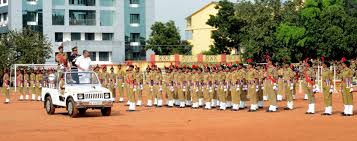
    NCC celebrates its 71st Raising Day

    The National Cadet Corps (NCC), the largest uniformed youth organisation in the world, is celebrating its 71stRaising Day today.  The celebrations began yesterdaywith Defence Secretary Dr Ajay Kumar and DG NCC Lt Gen Rajeev Choprapaying homage to the martyrs, who made the supreme sacrifice in the service of the nation, at the National War Memorial in New Delhi. They laid wreaths on behalf of the entire NCC fraternity.The NCC Raising Day was also celebrated all over the country with the cadets participating in marches, cultural activities and social development programmes.

    During the current year, the NCC cadets have contributed immensely in relief operations carried out during floods in Maharashtra, Bihar and Kerala.The cadets also participated wholeheartedly in the Swachhta Abhiyan, Swachhta Cycle Rally, Mega Pollution Pakhwada and played a pivotal role in spreading awareness about various government initiatives like Digital Literacy, International Day of Yoga, Blood Donation Camps, Tree Plantation and immunisation programs etc.NCC girl cadets successfully summited the Mount Tenchenkhang (6,010 metres) in Sikkim and Boy cadets successfully summited MountHanumarTibba (5,982 metres) in Himachal Pradesh.

    The multifaceted activities and varied curriculum of NCC provides unique opportunities to the youth for their development.Many cadets have done the nation and the organisation proud by their remarkable achievements in the fields of sports and adventure.NCC continues its relentless efforts towards moulding theyouth into responsible citizens of the country.

    \’What We Learn Cannot Be Burnt – \’An Afghan Neo-Literate Woman

    As we work in education, it often tends to get too \’sanitized\’ – as if it is not about real people in real situations, where education has a meaning that\’s almost impossible to comprehend. Here\’s a story from Afghanistan, from a programme called Learning for Life that sought to provide initial literacy and health awareness to enable women to become CHWs (community health workers, sorely needed in the country). This story was documented in June 2005, by Judie Schiffbauer, and shared by Katy Anis.


    Each morning, six days a week, 40 year old Zeba Gul wraps a light gray shawl around her head and shoulders and leaves her family’s mud-walled compound in the Afghan village of BegToot.  She follows a path that winds through dusty alleyways and then along green fields to arrive at a two-story building constructed of unbaked brick made from mud and straw.  Inside, a set of narrow stairs leads to the Learning for Life classroom, where other women are already gathered.  Removing her shoes at the doorway, she enters and lowers herself to the mat-covered floor, tucking her long legs beneath her.  
    In December 2004, when the LfL health-based literacy program began in BegToot, wind whipped snow against the classroom windows, but on this fine summer day, the windows are open to admit a pleasant breeze.  The room looks out over groves of mulberry trees, for which the village is named.  Tall, creviced mountains rise high in the distance, still bearing traces of winter snow.
    But the 26 women in the class are not admiring the view.  Instead, each attends to Qotsia, their 21-year-old teacher, who stands beside a small blackboard at the front of the room.  One of millions of Afghans who fled the war-torn country, Qotsia grew up as a refugee in Iran, where she received 12 years of formal education.  Now she has returned to BegToot, and the women are grateful.
     Dressed and coifed in black, Qotsia begins to write with a piece of chalk.  Carefully demonstrating each stroke, she writes a word in Dari composed of several letters from the alphabet displayed on a poster on the wall.  The dark black letters on the poster are easy to see, but six months ago, no woman in the class could have named or written a single one.  Today, hands shoot up when Qotsea asks someone to spell out and then read what she has written.  One woman rises and comes forward:  k a r u m (worm).  “Very good, Pashtoon Jan!” says Qotsia.  Pashtoon Jan smiles as her fellow learners sound out the word, repeat it in unison, and write it in their notebooks:   k a r u m.  Worms are the topic of today’s lesson.  
    To the left of the blackboard, a series of drawings depicts women busy with women’s chores:  one is cleaning vegetables; one is boiling water to be stored in an earthenware jar; another is feeding a sick baby; and one is washing a child’s dirty hands.  Now the women in this Level One literacy class are going to learn how worms and a child’s dirty hands are related. 
    As one of six Community Health Workers enrolled in the class, Zeba Gul already knows a lot about worms.  Their life cycle and method of transmission were explained to her when BRAC, a REACH NGO-grantee, trained her as a CHW.  But until now, Zeba Gul has never known how to spell, read or write the names of the parasites– roundworm, tapeworm, and pinworm—that sicken so many children and adults in the village. 
    As Qotsia begins the lesson, Zeba Gul leans forward and points to a young woman sitting nearby: “That’s my daughter,” she whispers. “Because of this class, she is learning to read and write before her hair turns gray.”
    Later, the class at an end and women lingering to talk, Zeba Gul told her story.  She was born in Paghman, but she has not always lived there.  When she was sixteen, she married and moved to Kabul with her husband to live with his family. Her daughter and several other children were born in the city.
    “It was good,” says Zeba Gul.  “My husband had a small shop.  He worked hard.  In the morning, he opened the shop.  In the afternoon, he had a second job in a government building.”
    Even during the dark days of war, the family chose not to leave Afghanistan for sanctuary in Pakistan or Iran.  “We stayed,” she says, remembering their struggles with a hint of pride in her voice.  “We were hard workers, and we stayed.” 
    For a time after the Russians left, Zeba Gul thought the worst was behind them.  But peace did not last long.  “After that,” she said, “I wasn’t sure what the fighting was about; I know only that it did not stop.  So much fighting.”
    When Zeba Gul explains that both the family’s shop and home were near Damazang in Karte Seh, the room grows very quiet.  Everyone knows that Karte Seh was virtually destroyed during the civil war.  “Ay, Khoda!” the women whisper, as Zeba Gul continues her story:
    “One night, our shop was ablaze. How it burned!  And our house burned too.  Everything we had was swallowed in fire.  Oh, God.  What could we do?  We had nothing left!  So we returned to Paghman.  It was more than ten years ago.  Here, my husband is a farmer.  Thanks to Allah, he is alive.” 
    Many of her listeners have been less fortunate, and the widows nod in agreement as Zeba Gul utters her prayer of gratitude.  The women in the room have known great sorrows, but it is resilience that binds them. 
    “Now,” continues Zeba Gul, “I am a CHW.  And I am learning to read and write in this class.  See there: my daughter is also here! Faz l’Khoda–Give thanks to God.  What we learn cannot be burned.”  

    \’What We Learn Cannot Be Burnt – \’An Afghan Neo-Literate Woman

    As we work in education, it often tends to get too \’sanitized\’ – as if it is not about real people in real situations, where education has a meaning that\’s almost impossible to comprehend. Here\’s a story from Afghanistan, from a programme called Learning for Life that sought to provide initial literacy and health awareness to enable women to become CHWs (community health workers, sorely needed in the country). This story was documented in June 2005, by Judie Schiffbauer, and shared by Katy Anis.


    Each morning, six days a week, 40 year old Zeba Gul wraps a light gray shawl around her head and shoulders and leaves her family’s mud-walled compound in the Afghan village of BegToot.  She follows a path that winds through dusty alleyways and then along green fields to arrive at a two-story building constructed of unbaked brick made from mud and straw.  Inside, a set of narrow stairs leads to the Learning for Life classroom, where other women are already gathered.  Removing her shoes at the doorway, she enters and lowers herself to the mat-covered floor, tucking her long legs beneath her.  
    In December 2004, when the LfL health-based literacy program began in BegToot, wind whipped snow against the classroom windows, but on this fine summer day, the windows are open to admit a pleasant breeze.  The room looks out over groves of mulberry trees, for which the village is named.  Tall, creviced mountains rise high in the distance, still bearing traces of winter snow.
    But the 26 women in the class are not admiring the view.  Instead, each attends to Qotsia, their 21-year-old teacher, who stands beside a small blackboard at the front of the room.  One of millions of Afghans who fled the war-torn country, Qotsia grew up as a refugee in Iran, where she received 12 years of formal education.  Now she has returned to BegToot, and the women are grateful.
     Dressed and coifed in black, Qotsia begins to write with a piece of chalk.  Carefully demonstrating each stroke, she writes a word in Dari composed of several letters from the alphabet displayed on a poster on the wall.  The dark black letters on the poster are easy to see, but six months ago, no woman in the class could have named or written a single one.  Today, hands shoot up when Qotsea asks someone to spell out and then read what she has written.  One woman rises and comes forward:  k a r u m (worm).  “Very good, Pashtoon Jan!” says Qotsia.  Pashtoon Jan smiles as her fellow learners sound out the word, repeat it in unison, and write it in their notebooks:   k a r u m.  Worms are the topic of today’s lesson.  
    To the left of the blackboard, a series of drawings depicts women busy with women’s chores:  one is cleaning vegetables; one is boiling water to be stored in an earthenware jar; another is feeding a sick baby; and one is washing a child’s dirty hands.  Now the women in this Level One literacy class are going to learn how worms and a child’s dirty hands are related. 
    As one of six Community Health Workers enrolled in the class, Zeba Gul already knows a lot about worms.  Their life cycle and method of transmission were explained to her when BRAC, a REACH NGO-grantee, trained her as a CHW.  But until now, Zeba Gul has never known how to spell, read or write the names of the parasites– roundworm, tapeworm, and pinworm—that sicken so many children and adults in the village. 
    As Qotsia begins the lesson, Zeba Gul leans forward and points to a young woman sitting nearby: “That’s my daughter,” she whispers. “Because of this class, she is learning to read and write before her hair turns gray.”
    Later, the class at an end and women lingering to talk, Zeba Gul told her story.  She was born in Paghman, but she has not always lived there.  When she was sixteen, she married and moved to Kabul with her husband to live with his family. Her daughter and several other children were born in the city.
    “It was good,” says Zeba Gul.  “My husband had a small shop.  He worked hard.  In the morning, he opened the shop.  In the afternoon, he had a second job in a government building.”
    Even during the dark days of war, the family chose not to leave Afghanistan for sanctuary in Pakistan or Iran.  “We stayed,” she says, remembering their struggles with a hint of pride in her voice.  “We were hard workers, and we stayed.” 
    For a time after the Russians left, Zeba Gul thought the worst was behind them.  But peace did not last long.  “After that,” she said, “I wasn’t sure what the fighting was about; I know only that it did not stop.  So much fighting.”
    When Zeba Gul explains that both the family’s shop and home were near Damazang in Karte Seh, the room grows very quiet.  Everyone knows that Karte Seh was virtually destroyed during the civil war.  “Ay, Khoda!” the women whisper, as Zeba Gul continues her story:
    “One night, our shop was ablaze. How it burned!  And our house burned too.  Everything we had was swallowed in fire.  Oh, God.  What could we do?  We had nothing left!  So we returned to Paghman.  It was more than ten years ago.  Here, my husband is a farmer.  Thanks to Allah, he is alive.” 
    Many of her listeners have been less fortunate, and the widows nod in agreement as Zeba Gul utters her prayer of gratitude.  The women in the room have known great sorrows, but it is resilience that binds them. 
    “Now,” continues Zeba Gul, “I am a CHW.  And I am learning to read and write in this class.  See there: my daughter is also here! Faz l’Khoda–Give thanks to God.  What we learn cannot be burned.”  

    \’What We Learn Cannot Be Burnt – \’An Afghan Neo-Literate Woman

    As we work in education, it often tends to get too \’sanitized\’ – as if it is not about real people in real situations, where education has a meaning that\’s almost impossible to comprehend. Here\’s a story from Afghanistan, from a programme called Learning for Life that sought to provide initial literacy and health awareness to enable women to become CHWs (community health workers, sorely needed in the country). This story was documented in June 2005, by Judie Schiffbauer, and shared by Katy Anis.


    Each morning, six days a week, 40 year old Zeba Gul wraps a light gray shawl around her head and shoulders and leaves her family’s mud-walled compound in the Afghan village of BegToot.  She follows a path that winds through dusty alleyways and then along green fields to arrive at a two-story building constructed of unbaked brick made from mud and straw.  Inside, a set of narrow stairs leads to the Learning for Life classroom, where other women are already gathered.  Removing her shoes at the doorway, she enters and lowers herself to the mat-covered floor, tucking her long legs beneath her.  
    In December 2004, when the LfL health-based literacy program began in BegToot, wind whipped snow against the classroom windows, but on this fine summer day, the windows are open to admit a pleasant breeze.  The room looks out over groves of mulberry trees, for which the village is named.  Tall, creviced mountains rise high in the distance, still bearing traces of winter snow.
    But the 26 women in the class are not admiring the view.  Instead, each attends to Qotsia, their 21-year-old teacher, who stands beside a small blackboard at the front of the room.  One of millions of Afghans who fled the war-torn country, Qotsia grew up as a refugee in Iran, where she received 12 years of formal education.  Now she has returned to BegToot, and the women are grateful.
     Dressed and coifed in black, Qotsia begins to write with a piece of chalk.  Carefully demonstrating each stroke, she writes a word in Dari composed of several letters from the alphabet displayed on a poster on the wall.  The dark black letters on the poster are easy to see, but six months ago, no woman in the class could have named or written a single one.  Today, hands shoot up when Qotsea asks someone to spell out and then read what she has written.  One woman rises and comes forward:  k a r u m (worm).  “Very good, Pashtoon Jan!” says Qotsia.  Pashtoon Jan smiles as her fellow learners sound out the word, repeat it in unison, and write it in their notebooks:   k a r u m.  Worms are the topic of today’s lesson.  
    To the left of the blackboard, a series of drawings depicts women busy with women’s chores:  one is cleaning vegetables; one is boiling water to be stored in an earthenware jar; another is feeding a sick baby; and one is washing a child’s dirty hands.  Now the women in this Level One literacy class are going to learn how worms and a child’s dirty hands are related. 
    As one of six Community Health Workers enrolled in the class, Zeba Gul already knows a lot about worms.  Their life cycle and method of transmission were explained to her when BRAC, a REACH NGO-grantee, trained her as a CHW.  But until now, Zeba Gul has never known how to spell, read or write the names of the parasites– roundworm, tapeworm, and pinworm—that sicken so many children and adults in the village. 
    As Qotsia begins the lesson, Zeba Gul leans forward and points to a young woman sitting nearby: “That’s my daughter,” she whispers. “Because of this class, she is learning to read and write before her hair turns gray.”
    Later, the class at an end and women lingering to talk, Zeba Gul told her story.  She was born in Paghman, but she has not always lived there.  When she was sixteen, she married and moved to Kabul with her husband to live with his family. Her daughter and several other children were born in the city.
    “It was good,” says Zeba Gul.  “My husband had a small shop.  He worked hard.  In the morning, he opened the shop.  In the afternoon, he had a second job in a government building.”
    Even during the dark days of war, the family chose not to leave Afghanistan for sanctuary in Pakistan or Iran.  “We stayed,” she says, remembering their struggles with a hint of pride in her voice.  “We were hard workers, and we stayed.” 
    For a time after the Russians left, Zeba Gul thought the worst was behind them.  But peace did not last long.  “After that,” she said, “I wasn’t sure what the fighting was about; I know only that it did not stop.  So much fighting.”
    When Zeba Gul explains that both the family’s shop and home were near Damazang in Karte Seh, the room grows very quiet.  Everyone knows that Karte Seh was virtually destroyed during the civil war.  “Ay, Khoda!” the women whisper, as Zeba Gul continues her story:
    “One night, our shop was ablaze. How it burned!  And our house burned too.  Everything we had was swallowed in fire.  Oh, God.  What could we do?  We had nothing left!  So we returned to Paghman.  It was more than ten years ago.  Here, my husband is a farmer.  Thanks to Allah, he is alive.” 
    Many of her listeners have been less fortunate, and the widows nod in agreement as Zeba Gul utters her prayer of gratitude.  The women in the room have known great sorrows, but it is resilience that binds them. 
    “Now,” continues Zeba Gul, “I am a CHW.  And I am learning to read and write in this class.  See there: my daughter is also here! Faz l’Khoda–Give thanks to God.  What we learn cannot be burned.”  

    \’What We Learn Cannot Be Burnt – \’An Afghan Neo-Literate Woman

    As we work in education, it often tends to get too \’sanitized\’ – as if it is not about real people in real situations, where education has a meaning that\’s almost impossible to comprehend. Here\’s a story from Afghanistan, from a programme called Learning for Life that sought to provide initial literacy and health awareness to enable women to become CHWs (community health workers, sorely needed in the country). This story was documented in June 2005, by Judie Schiffbauer, and shared by Katy Anis.


    Each morning, six days a week, 40 year old Zeba Gul wraps a light gray shawl around her head and shoulders and leaves her family’s mud-walled compound in the Afghan village of BegToot.  She follows a path that winds through dusty alleyways and then along green fields to arrive at a two-story building constructed of unbaked brick made from mud and straw.  Inside, a set of narrow stairs leads to the Learning for Life classroom, where other women are already gathered.  Removing her shoes at the doorway, she enters and lowers herself to the mat-covered floor, tucking her long legs beneath her.  
    In December 2004, when the LfL health-based literacy program began in BegToot, wind whipped snow against the classroom windows, but on this fine summer day, the windows are open to admit a pleasant breeze.  The room looks out over groves of mulberry trees, for which the village is named.  Tall, creviced mountains rise high in the distance, still bearing traces of winter snow.
    But the 26 women in the class are not admiring the view.  Instead, each attends to Qotsia, their 21-year-old teacher, who stands beside a small blackboard at the front of the room.  One of millions of Afghans who fled the war-torn country, Qotsia grew up as a refugee in Iran, where she received 12 years of formal education.  Now she has returned to BegToot, and the women are grateful.
     Dressed and coifed in black, Qotsia begins to write with a piece of chalk.  Carefully demonstrating each stroke, she writes a word in Dari composed of several letters from the alphabet displayed on a poster on the wall.  The dark black letters on the poster are easy to see, but six months ago, no woman in the class could have named or written a single one.  Today, hands shoot up when Qotsea asks someone to spell out and then read what she has written.  One woman rises and comes forward:  k a r u m (worm).  “Very good, Pashtoon Jan!” says Qotsia.  Pashtoon Jan smiles as her fellow learners sound out the word, repeat it in unison, and write it in their notebooks:   k a r u m.  Worms are the topic of today’s lesson.  
    To the left of the blackboard, a series of drawings depicts women busy with women’s chores:  one is cleaning vegetables; one is boiling water to be stored in an earthenware jar; another is feeding a sick baby; and one is washing a child’s dirty hands.  Now the women in this Level One literacy class are going to learn how worms and a child’s dirty hands are related. 
    As one of six Community Health Workers enrolled in the class, Zeba Gul already knows a lot about worms.  Their life cycle and method of transmission were explained to her when BRAC, a REACH NGO-grantee, trained her as a CHW.  But until now, Zeba Gul has never known how to spell, read or write the names of the parasites– roundworm, tapeworm, and pinworm—that sicken so many children and adults in the village. 
    As Qotsia begins the lesson, Zeba Gul leans forward and points to a young woman sitting nearby: “That’s my daughter,” she whispers. “Because of this class, she is learning to read and write before her hair turns gray.”
    Later, the class at an end and women lingering to talk, Zeba Gul told her story.  She was born in Paghman, but she has not always lived there.  When she was sixteen, she married and moved to Kabul with her husband to live with his family. Her daughter and several other children were born in the city.
    “It was good,” says Zeba Gul.  “My husband had a small shop.  He worked hard.  In the morning, he opened the shop.  In the afternoon, he had a second job in a government building.”
    Even during the dark days of war, the family chose not to leave Afghanistan for sanctuary in Pakistan or Iran.  “We stayed,” she says, remembering their struggles with a hint of pride in her voice.  “We were hard workers, and we stayed.” 
    For a time after the Russians left, Zeba Gul thought the worst was behind them.  But peace did not last long.  “After that,” she said, “I wasn’t sure what the fighting was about; I know only that it did not stop.  So much fighting.”
    When Zeba Gul explains that both the family’s shop and home were near Damazang in Karte Seh, the room grows very quiet.  Everyone knows that Karte Seh was virtually destroyed during the civil war.  “Ay, Khoda!” the women whisper, as Zeba Gul continues her story:
    “One night, our shop was ablaze. How it burned!  And our house burned too.  Everything we had was swallowed in fire.  Oh, God.  What could we do?  We had nothing left!  So we returned to Paghman.  It was more than ten years ago.  Here, my husband is a farmer.  Thanks to Allah, he is alive.” 
    Many of her listeners have been less fortunate, and the widows nod in agreement as Zeba Gul utters her prayer of gratitude.  The women in the room have known great sorrows, but it is resilience that binds them. 
    “Now,” continues Zeba Gul, “I am a CHW.  And I am learning to read and write in this class.  See there: my daughter is also here! Faz l’Khoda–Give thanks to God.  What we learn cannot be burned.”  

    \’What We Learn Cannot Be Burnt – \’An Afghan Neo-Literate Woman

    As we work in education, it often tends to get too \’sanitized\’ – as if it is not about real people in real situations, where education has a meaning that\’s almost impossible to comprehend. Here\’s a story from Afghanistan, from a programme called Learning for Life that sought to provide initial literacy and health awareness to enable women to become CHWs (community health workers, sorely needed in the country). This story was documented in June 2005, by Judie Schiffbauer, and shared by Katy Anis.


    Each morning, six days a week, 40 year old Zeba Gul wraps a light gray shawl around her head and shoulders and leaves her family’s mud-walled compound in the Afghan village of BegToot.  She follows a path that winds through dusty alleyways and then along green fields to arrive at a two-story building constructed of unbaked brick made from mud and straw.  Inside, a set of narrow stairs leads to the Learning for Life classroom, where other women are already gathered.  Removing her shoes at the doorway, she enters and lowers herself to the mat-covered floor, tucking her long legs beneath her.  
    In December 2004, when the LfL health-based literacy program began in BegToot, wind whipped snow against the classroom windows, but on this fine summer day, the windows are open to admit a pleasant breeze.  The room looks out over groves of mulberry trees, for which the village is named.  Tall, creviced mountains rise high in the distance, still bearing traces of winter snow.
    But the 26 women in the class are not admiring the view.  Instead, each attends to Qotsia, their 21-year-old teacher, who stands beside a small blackboard at the front of the room.  One of millions of Afghans who fled the war-torn country, Qotsia grew up as a refugee in Iran, where she received 12 years of formal education.  Now she has returned to BegToot, and the women are grateful.
     Dressed and coifed in black, Qotsia begins to write with a piece of chalk.  Carefully demonstrating each stroke, she writes a word in Dari composed of several letters from the alphabet displayed on a poster on the wall.  The dark black letters on the poster are easy to see, but six months ago, no woman in the class could have named or written a single one.  Today, hands shoot up when Qotsea asks someone to spell out and then read what she has written.  One woman rises and comes forward:  k a r u m (worm).  “Very good, Pashtoon Jan!” says Qotsia.  Pashtoon Jan smiles as her fellow learners sound out the word, repeat it in unison, and write it in their notebooks:   k a r u m.  Worms are the topic of today’s lesson.  
    To the left of the blackboard, a series of drawings depicts women busy with women’s chores:  one is cleaning vegetables; one is boiling water to be stored in an earthenware jar; another is feeding a sick baby; and one is washing a child’s dirty hands.  Now the women in this Level One literacy class are going to learn how worms and a child’s dirty hands are related. 
    As one of six Community Health Workers enrolled in the class, Zeba Gul already knows a lot about worms.  Their life cycle and method of transmission were explained to her when BRAC, a REACH NGO-grantee, trained her as a CHW.  But until now, Zeba Gul has never known how to spell, read or write the names of the parasites– roundworm, tapeworm, and pinworm—that sicken so many children and adults in the village. 
    As Qotsia begins the lesson, Zeba Gul leans forward and points to a young woman sitting nearby: “That’s my daughter,” she whispers. “Because of this class, she is learning to read and write before her hair turns gray.”
    Later, the class at an end and women lingering to talk, Zeba Gul told her story.  She was born in Paghman, but she has not always lived there.  When she was sixteen, she married and moved to Kabul with her husband to live with his family. Her daughter and several other children were born in the city.
    “It was good,” says Zeba Gul.  “My husband had a small shop.  He worked hard.  In the morning, he opened the shop.  In the afternoon, he had a second job in a government building.”
    Even during the dark days of war, the family chose not to leave Afghanistan for sanctuary in Pakistan or Iran.  “We stayed,” she says, remembering their struggles with a hint of pride in her voice.  “We were hard workers, and we stayed.” 
    For a time after the Russians left, Zeba Gul thought the worst was behind them.  But peace did not last long.  “After that,” she said, “I wasn’t sure what the fighting was about; I know only that it did not stop.  So much fighting.”
    When Zeba Gul explains that both the family’s shop and home were near Damazang in Karte Seh, the room grows very quiet.  Everyone knows that Karte Seh was virtually destroyed during the civil war.  “Ay, Khoda!” the women whisper, as Zeba Gul continues her story:
    “One night, our shop was ablaze. How it burned!  And our house burned too.  Everything we had was swallowed in fire.  Oh, God.  What could we do?  We had nothing left!  So we returned to Paghman.  It was more than ten years ago.  Here, my husband is a farmer.  Thanks to Allah, he is alive.” 
    Many of her listeners have been less fortunate, and the widows nod in agreement as Zeba Gul utters her prayer of gratitude.  The women in the room have known great sorrows, but it is resilience that binds them. 
    “Now,” continues Zeba Gul, “I am a CHW.  And I am learning to read and write in this class.  See there: my daughter is also here! Faz l’Khoda–Give thanks to God.  What we learn cannot be burned.”  

    \’What We Learn Cannot Be Burnt – \’An Afghan Neo-Literate Woman

    As we work in education, it often tends to get too \’sanitized\’ – as if it is not about real people in real situations, where education has a meaning that\’s almost impossible to comprehend. Here\’s a story from Afghanistan, from a programme called Learning for Life that sought to provide initial literacy and health awareness to enable women to become CHWs (community health workers, sorely needed in the country). This story was documented in June 2005, by Judie Schiffbauer, and shared by Katy Anis.


    Each morning, six days a week, 40 year old Zeba Gul wraps a light gray shawl around her head and shoulders and leaves her family’s mud-walled compound in the Afghan village of BegToot.  She follows a path that winds through dusty alleyways and then along green fields to arrive at a two-story building constructed of unbaked brick made from mud and straw.  Inside, a set of narrow stairs leads to the Learning for Life classroom, where other women are already gathered.  Removing her shoes at the doorway, she enters and lowers herself to the mat-covered floor, tucking her long legs beneath her.  
    In December 2004, when the LfL health-based literacy program began in BegToot, wind whipped snow against the classroom windows, but on this fine summer day, the windows are open to admit a pleasant breeze.  The room looks out over groves of mulberry trees, for which the village is named.  Tall, creviced mountains rise high in the distance, still bearing traces of winter snow.
    But the 26 women in the class are not admiring the view.  Instead, each attends to Qotsia, their 21-year-old teacher, who stands beside a small blackboard at the front of the room.  One of millions of Afghans who fled the war-torn country, Qotsia grew up as a refugee in Iran, where she received 12 years of formal education.  Now she has returned to BegToot, and the women are grateful.
     Dressed and coifed in black, Qotsia begins to write with a piece of chalk.  Carefully demonstrating each stroke, she writes a word in Dari composed of several letters from the alphabet displayed on a poster on the wall.  The dark black letters on the poster are easy to see, but six months ago, no woman in the class could have named or written a single one.  Today, hands shoot up when Qotsea asks someone to spell out and then read what she has written.  One woman rises and comes forward:  k a r u m (worm).  “Very good, Pashtoon Jan!” says Qotsia.  Pashtoon Jan smiles as her fellow learners sound out the word, repeat it in unison, and write it in their notebooks:   k a r u m.  Worms are the topic of today’s lesson.  
    To the left of the blackboard, a series of drawings depicts women busy with women’s chores:  one is cleaning vegetables; one is boiling water to be stored in an earthenware jar; another is feeding a sick baby; and one is washing a child’s dirty hands.  Now the women in this Level One literacy class are going to learn how worms and a child’s dirty hands are related. 
    As one of six Community Health Workers enrolled in the class, Zeba Gul already knows a lot about worms.  Their life cycle and method of transmission were explained to her when BRAC, a REACH NGO-grantee, trained her as a CHW.  But until now, Zeba Gul has never known how to spell, read or write the names of the parasites– roundworm, tapeworm, and pinworm—that sicken so many children and adults in the village. 
    As Qotsia begins the lesson, Zeba Gul leans forward and points to a young woman sitting nearby: “That’s my daughter,” she whispers. “Because of this class, she is learning to read and write before her hair turns gray.”
    Later, the class at an end and women lingering to talk, Zeba Gul told her story.  She was born in Paghman, but she has not always lived there.  When she was sixteen, she married and moved to Kabul with her husband to live with his family. Her daughter and several other children were born in the city.
    “It was good,” says Zeba Gul.  “My husband had a small shop.  He worked hard.  In the morning, he opened the shop.  In the afternoon, he had a second job in a government building.”
    Even during the dark days of war, the family chose not to leave Afghanistan for sanctuary in Pakistan or Iran.  “We stayed,” she says, remembering their struggles with a hint of pride in her voice.  “We were hard workers, and we stayed.” 
    For a time after the Russians left, Zeba Gul thought the worst was behind them.  But peace did not last long.  “After that,” she said, “I wasn’t sure what the fighting was about; I know only that it did not stop.  So much fighting.”
    When Zeba Gul explains that both the family’s shop and home were near Damazang in Karte Seh, the room grows very quiet.  Everyone knows that Karte Seh was virtually destroyed during the civil war.  “Ay, Khoda!” the women whisper, as Zeba Gul continues her story:
    “One night, our shop was ablaze. How it burned!  And our house burned too.  Everything we had was swallowed in fire.  Oh, God.  What could we do?  We had nothing left!  So we returned to Paghman.  It was more than ten years ago.  Here, my husband is a farmer.  Thanks to Allah, he is alive.” 
    Many of her listeners have been less fortunate, and the widows nod in agreement as Zeba Gul utters her prayer of gratitude.  The women in the room have known great sorrows, but it is resilience that binds them. 
    “Now,” continues Zeba Gul, “I am a CHW.  And I am learning to read and write in this class.  See there: my daughter is also here! Faz l’Khoda–Give thanks to God.  What we learn cannot be burned.”  

    Work Smart, Not Hard!

    Whenever teachers are being trained, they are bombarded with the same tired old phrases. \’You are the future of the country,\’ they are told. \’There\’s a great responsibility on your shoulders; you must work very hard to fulfil this responsibility.\’ This is what we hear every time, isn\’t it? And aren\’t you fed up of listening to this over the years?
         The problem is that this is such a naive notion. As if working hard makes everything OK. No, you have to use your head! Even those whose work is seen as involving nothing but hard work, they too can do their work well only if they use their head. For instance, the labourers who unload a truck, the farmer working in the field, those who dig pits or carry head loads of debris… If they do their work without thinking and being alert, they can get hurt, face a loss, be shouted at or even fired. In the case of a teacher, therefore, this is bound to be even more crucial!
         A thinking teacher – i.e. a smart teacher – is one who greatly increases children\’s role in the classroom. And not just in keeping things clean and organized, but in the in the learning process itself. For instance, the class 4 teacher said to the children: \’You know, in this story, when the lion woke up one morning, he found that he had no hair on his head! His mane – totally gone! So guess what he did in order to get it back? Well, read the story and find out!\’
         When children started to read the story, the teacher went and sat with those who were in danger of falling behind others. After a little while she said: \’If there are any words you\’re not able to understand, circle them with your pencil. Then ask the children around you if they know.\’ When everyone had finished this, she asked groups of children to look at each other\’s circled words and see if they could find out the meaning. \’If there are still some words that you don\’t know, I\’ll tell you the meaning,\’ she said.
         You can guess what this smart teacher did next. For the entire duration that she was in her class, each child was engaged in work, was learning and helping others learn too. All this while she herself was totally relaxed!

    Did you brush your ideas today?

    A few minutes spent watching TV or flipping through a magazine would convince anyone that looking good is one of the most important objectives in society! Ads for creams of all kinds, face washes, shampoos, razors, jewelery, clothes — all evidence that we are firmly in the the midst of a \’lookist\’ age. If you don\’t \’look\’ it, you aren\’t it!

    But as we groom our bodies, it might be a good idea to groom our minds as well! Failure to do this seems to have brought about (or perpetuated) the many difficulties we find ourselves in. For instance, as our education system (with around 5.7 million teachers and close to three hundred thousand education officials) rumbles on, and we strive to bring about a major improvement, this is one barrier that keeps springing up again and again. Our thinking tools have become either so dull or limited that at every stage of the transition presents huge challenges:
    • How can each stakeholder envisage the improvement desired in their own way (i.e., have their own vision)?
    • How can all involved begin to understand / conceptualize the massive shift involved?
    • Since improvement is helped by planned rather than a random set of actions, how to help each person plan better – which implies the ability to identify what is desired, what the gaps are, conjuring up a repertoire of \’solutions\’, weighing the different options to identify the ones that fit the situation best, and knowing the difference between sequencing and prioritizing!
    And we haven\’t even come to the actual implementation yet… which involves actions such as teaching, mentoring, communicating, supervising, organizing and managing, monitoring, counselling, developing, recording and analyzing, assessing and evaluating — all tasks that require a range of thinking skills. It comes almost as a shock to realize that different actions require different ways of thinking. That before you start thinking on something you need to ask yourself – which would the best way to think here? Much like a surgeon choosing the right tool at each stage of a complex operation. In fact, that is what our situation is tending to be – of a surgeon armed with only a kitchen knife and hence limited in terms of what she can do! In fact, if you don\’t \’think\’ it, you aren\’t it!

    What can one do to begin overcoming this situation? A few suggestions to start with:

    • Make a list of all the key actions you perform
    • Identify the thinking skills or ways of thinking required (e.g. do you have to be more \’out of the box\’ and creative, or do you have to maintain a rigorous commitment to the given information and derive a logically valid inference).
    • Practice these skills
    • When undertaking new action, please choose the appropriate thinking tool you need to use
    • Finally, don\’t forget to brush your ideas! That is, do reflect on the ideas we use in the daily course of our work – have they become stale? or dusty or outdated? do we need to discard them and move on to different ideas?

    So even as we become willing participants in the \’lookist\’ age, here\’s hoping that more and more of us will also  create our own \’thinkist\’ age!

    INFORMAL EDUCATION ROLE OF DIFFERENT AGENCIES

      Education is a thought full process by which the inner powers of the individual are developed. Education is verb broad in it true sense and is not confined to school experiences. But in a narrow sense education is a well-planned process. Education may be defined as a purposive conscious or unconscious psychological, sociological, scientific and philosophical process which brings about the development of the individual to the fullest extent and also the maximum development of society in such a way that both enjoy maximum happiness and prosperity. T. Reymont has rightly remarked –“Education is that process of development in which consists the passage of human being from infancy to maturity, the process whereby he adapts himself gradually in various ways to his physical, social and spiritual environment.”
    There are three important types of education,
    EDUCATION
                                                    
    Formal      Non-formal    Informal
    Formal education is that education where according to predetermined aims and methods of teaching, definite dozes of knowledge are thrust into the mind of a child at a specific place during a set duration of time by a particular individual.
    E.g.  Schools, universities etc.
     Informal education is natural and incidental. There are no predetermined aims, curricula, methods, teachers and places where   children receive informal education:
    E.g.: Family, community, peer groups, etc.                       
    Non-formal education is in-between the formal and informal types of education. It is midway because it is partly formal and partly informal it is both intentional and incidental.
    E.g. Open school, open universities, correspondence course etc.
    Sir Godfrey Thomas has written, “The whole of environment is the instrument of man’s education in the wildest sense. But in that environment certain factors are distinguishable as more particularly concerned, the home, the school, the church, press, the vacation, public life, amusement and hobbies”. Generally, of course, the process of education continues from birth to death, but some specific institution play more important part in it. All of these institutions are the agencies of education, and they include all these factors, bases, places or institutions, which have an educative influence upon the Child. Hence, the institutions, agencies and bases of education mean the same thing, and should be interpreted as such. Here are discussing about informal education and its agencies only.

    INFOMAL EDUCATION
    Education for no formalities are observed is known as informal type of education. In this type of education there is modification of the behavior of the learner but no conscious efforts are made for it. Whatever it is learnt here is not preplanned. It is natural and incidental. Here neither the teacher nor the learner is conscious of the process of teaching learning. In this type of education there are no pre-determined aims, no definite curriculum no well thought methods of teaching, no qualified and trained teachers and no definite place of education. Here education is received by the company of friends, relatives, community etc. whatever as education is received plays a very important and significant role in the life of educate. Informal education complements the formal education which has a particular pattern. Education of this kind has no specific time or place at which it is provided. Even the educator is not fixed. All fixed syllabi, rules, formalities are absent from it. Education of this kind in the education one receives while playing in field, talking to family members in the house, roaming around somewhere, in fact everywhere. This kind of education never comes to an end. And it teaches the individual more than he ever learns through his formal education. A child learns many things when he comes in contact with new people. He discovers many new words when he goes to new places. This education that he receives cannot be evaluated as formal education can. Format education can be evaluated by some specific techniques and the quality and quantity of education imbibed by the educate can be known. But this is not true of informal education for there is no standard or measure in its case. It also does not provide the recipient with a certificate or a degree. Informal education is gradual process, for people learn a few things after years of experience. But the things learnt in this manner prove to be more valuable than all the degrees accumulated through formal education. Informal education is more general in nature.
    CHARACTERISTICS OF INFORMAL TYPE OF EDUCATION
    1. This type of education is informal because formalities are observed here.
    2. No conscious efforts are made either by the teacher or the taught.
    3. It is in no way pre-planned activity.
    4. It is incidental.
    5. No formal goals are fixed up.
    6. No formal means are used to attain the goals.
    7. There are no fixed or appointed teachers.
    8. Here a situation might crop up where student may teach a teacher something.
    9. There is no prescribed curriculum and no time table is observed.
    10. There is none who organize this type of education.
    11. There is no fixed place for it.
    12. This type of education is never completed as there is no fixed syllabus.
    13. There are no examinations of any type.
    14. It is all a natural way of teaching –leaving.
    Example: 1. A person goes to the play ground for physical exercise and there comes across someone who tells him very good ways of utilizing leisure time.
    Example: 2. Courteous manners, gentleness etc learnt even in a marketplace in a hotel or in ones sitting room talking with others constitute informal education.
    AGENCIES OF INFORMAL EDUCATION
    The major agencies of informal education are the following.
    A) HOME OR FAMILY
    This is most true of the family, for the family makes a sizeable contribution to the child’s education, irrespective of the quality of this education. As a agency of education family should perform the following duties.
    1. PLACES OF AFFECTIONS:
    Every home fundamentally is a piece of affections especially for the younger ones. The head of the family or the elderly person in the home is a source of affection for others. They have their lovers for the younger. It is a different story that now due to disintegration of families, some youngsters have stated showing hatred for the elders. Naturally in such circumstances, there is to be decrease of affections. Through the system of education, there is need of receiving good old tradition like adoring the elders.
    2. MAKES SOCIAL:
    Every home makes the child more and more social in nature. In the home, there is interaction between the different members of the family. In the street, there is interaction with the children coming from neighboring homes. It develops the qualities of mixing with others.
    One is also able to modify one’s behavior in accordance with others in whose contact one comes. It is but natural   that children learn more from other children. So it is the peer-group that helps the child in becoming more and more social.
    3MAKES MORALLY SOUND:
    The home teaches the child many things of morality. The child, is able to understand the importance of truth, honesty etc. All this is able to learn from the parents or the grand-parents. Besides, the company of good children also helps in this regard. Moral training is the basic function of the family.
    4. IMPARTS EDUCATION:
    The home educates the child directly or indirectly. The educated parents and other members of family who are educated are able to educate the younger’s directly. But in the case of uneducated parents, the home helps indirectly in educating them. Here education means all round developed of the child.
    5. STATISTICS ECONOMICS NEEDS:
    The home creates statistics economic needs of the child. Money is needed by the child for various activities. It is also needed for giving him right type of diet. All these facilities are provided by the parents. A good home makes earn money rightly and utilize it properly.
    “Family is a well-knit economic unit”. In a good home, the child enjoys economic security. He finds himself free from any type of economic worries. All this helps the child have a balanced personality.
    6. RECREATES:
    Recreation is also important for the proper growth and development of the child. At home, there is provision of recreation. Radio, T.V or other instruments of recreation are used in the homes. They provide the required type of recreation to the child.
    7. HELPS IN PHYSICAL DEVELOPMENT:
    Parents are always careful about the health of their children. They try to provide the required type of diet. They inculcate among them the habits of cleanliness and sense of healthful living. They make the children work at the time of work and then allow them to play. Thus the home or the parents help in the proper physical growth and development of their children.
    8. HELPS IN MENTAL DEVELOPMENT:
    Full care is also taken at home for mental development of the children. Here mental development means development of mental power such as thinking, language development etc. The parents make efforts so that their children are able to use the mother tongue rightly in their expression. Intellectual development of this stage helps the children later on because their education largely depends upon it.
    9. HELPS EMOTIONAL DEVELOPMENT:
    Emotional development is very important for the proper growth and development of the child. The parents at home help a good dual in this regard. The child learns at home about emotional stability. The home develops in the child healthy and positive emotions like sympathy, affection, courage etc. Only well adjusted home environment helps in this direction.
    10. HELPS RELIGIOUS DEVELOPMENT:
    Religion and religious beliefs refine the personality of a child. The basic foundation of religion and spiritual faith are laid down at home. In fact, family is the only institution where religious development of the child can be ensured. From home child learns the basic fundamentals of spirituality. From home he gets a concrete form of religion.
    India being a secular country, the duty of parents to impart religious education to the children becomes too important. Only religious environment of the family develops the duty of every home to create peaceful atmospheres in order to enable the boys and girls to drive pleasure by staying at home.
    B) SOCIETY OR COMMUNITY
    Society performs a number of educational functions which are briefly explained below;
    1. ESTABLISHES SCHOOLS:
    The society establishes the schools, maintains them and glorifies them .It educates the children and enables them to stand on their own feet. Besides, it also helps in bringing all round development of the children.
    2. MAINTAINS STANDARD OF THE SCHOOLS:
    The society helps the schools in maintaining good standards. It fixes up standards with the help of higher controlling authorities and then it verifies with the help of school, board or university whether the students have attained the desired goals or not.
    3. HELPS IN ALL ROUND DEVELOPMENT OF INDIVIDUAL:
    The society creates proper environment in the school so as to bring about different types of development of the learner-physical, moral, social, cultural, academic etc. Thus it makes the individual a fit person for the society.
    4. SETS UP AIMS AND OBJECTIVES OF EDUCATION:
    It is needed at different levels of education. Then it checks their appropriateness. It also corrects them, reflexes them and redefines them if need arises there to. 
    5. PLANS NATIONAL SYSTEM OF EDUCATION:
    The society prepare national scheme of education keeping in view the needs and requirement of the people. It also tries to find out whether the system is according to the aspiration of the people.
    6. MAKE PROVISION OF SUITABLE CURRICULUM:
    The society takes the opinions of experts and makes provision of suitable curriculum where the learner should be able to grow and develop fully so as to achieve the target fixed up by the society.
    7SUPERVISION:
    The society supervises the school and its various components with the purpose of bringing improvement in the school, teachers, students etc. Through regular supervision, it ensures proper and smooth functioning of the school. Thus it is also able to root out the ills and draw-backs of the school.
    8APPOINT COMMISSIONS AND COMMITTEES:
    The society sets up commission and committees as per needs of the situations. The main purpose behind is overall improvement of the school.
    9PRESERVES TRADITIONS AND CONVENTIONS:
    The society has its rich heritage, healthy traditions and conventions and it wants to preserve them. It does so by stabling museums art galleries. It does propagate good values through T.V, radio, News-papers, Magazines etc.
    10. ENCOURAGES RESEARCH:
    The society encourages research in various fields by supporting the financially so as to improve the teaching-learning environment of the school.
    11. CO-ORDINATE DIFFERENT AGENCIES:
    Society inters links school and home. It helps in making them realize that they can server many useful purposes. Schools exist but society makes them better and better. Home exists society tries to improve it. It provides them with guidance and thereby helps them do wonderful job for the betterment of the individuals. Surely this approach improves the home, improves the school and improves the society itself.
    12. INCULCATES MORAL AND SPIRITUAL VALUES:
    Society has in its store the cultural heritage of humanity. Moral and spiritual values are maintained by it. It tries to inculcate those values in the individuals. Honesty, sincerity, truth, simplicity of life and high thinking behaviors, hard working, fellow-feelings etc. are noble values. The society advocates and propagates these values among the masses.
    C) STATE
    State is also informal agency of education. The proper management of education is an important task of the state. Apart from school, family and society, state also educates as on as informal agency of education. People always learn something or other from the state without any definite rule, place or time. Briefly, the main duties of the state as an educational agency are given below.
    ·         Instead of taking the place of the individual or the family, the state should help in the development of both.
    ·         It is the duty of the state to establish its own schools and provide assistance to private schools.
    ·         State is responsible for the change in the form of schools according to needs.
    ·         State is to establish inter relationship among various agencies of education.
    ·         It has to establish relationship among various schools in order to avoid wastage so that higher standard of education may established.
    ·         It should prepare a list of minimum achievements for school and lay down broad guide-lines for them.
    ·         State should keep education free from local cries by allowing some local elements to participate in the process of education but subordinating them to the national system of education.
    ·         It should provide sound attitude to parents towards education.
    ·         Arrangement of free and universal education for a definite period is an important task of the state.
    ·         State is to take the responsibility of educational expenditure and   persuade other institutions for this task.
    ·         Proper arrangement of training for teachers is to be made by the       state so that the standard of education many not full.
    ·         State should give proper advice to educational institutions. State in expected to organize suitable committees and commissions for this purpose.
    ·         State should pay special attention to the security of nation’s culture.
    ·         State is expected to help inculcate feeling of duty to the nation in the minds of its citizens and it should contribute in the development of normal idea for social efficiency.
    D) PEER GROUP
    Peer in one who is equal in rank older boys and girls form groups of their peers called peer groups. As an agency, peer group seems insignificant but the hard fact in that it is a very significant one and it plays a very important role in education. In peer groups, there is better learning. Generally it is seen that what the student cannot learn from the teacher, the same thing he/she can learn easily and in a much better way in the peer group.
    CHARACTERISTICS OF PEER GROUP
    §  There is no difference between the rank and profile of the students who are in one group.
    §  They are free to take in any one of their colleagues and also vice-versa.
    §  There in element of freedom and there is no fear of any soft.
    §  They are able to give an outlet to their pent up feelings
    §  When there is no suppression of feelings, mind works without any type of compulsion.
    There is inborn type of motivation which ensures good LEARNING BY ALL IN THE GROUP.
    FUNCTIONS OF THE PEER GROUP
    1.      SOCIALIZES:
    In the peer group, everybody learns how to behave with each other and how to live well in the group and how to make their group strong. Good interaction takes place there.
    2.       MODIFICATION OF BEHAVIOR:
    Peer group helps in modifying the behavior of the individuals of the group. The simple reason being that there is free and frank. In the self created environment, everybody comes out as better individual with modified behavior.
    3.      WE- FEELING:
    We-feelings are inculcated in the individual of the peer groups. The individuals feel that they belong to one group. The feel more secured. Fellow feelings are born in them. With their togetherness, they find themselves stronger.
    4.      HELP IN ALL ROUND DEVELOPMENT:
    Unlike class room learning the peer group provides the individuals full freedom and more opportunities of mixing each other. They are able to learn together, they are able to play together. They are able to have better instruction with one another. All this helps in all round growth and development of the individuals.
    5.      TEACH THEM TO WORK INDEPENDENTLY:
    Peer groups instill in the individuals as way of life where they become self dependent.
    E) MASS MEDIA
    Media used for the masses to communicate something is known as mass media. Radio TV, Film News papers etc; serve the purpose of mass media. In our country, the chief faction of these media is informal education.
    a) FILM
    Although films have some other purpose to achieve, we can also learn something from them. Children learn many things from the films. People also listen to the message of the actors. Film can promote social welfare if they screen good stories and adopt techniques suiting the needs of society. Scientific and informative documentary films shown by other institutions are also very educative.
    b) RADIO
    In our daily life we learn something from radio programmer. We receive sufficient education from the speeches on different subjects delivered by the great scholar. Now radio program organizers sometime arrange for well planned education to be impacted to different age groups of people. Some programmers’ are especially meant for school children some for women-folk, some for teachers and so on. Sometimes, some education talk of some great person is relayed from all radio station. Radio does educate us informally.
    c) TELEVISION
    Children can use visual as well as auditory sense organs in enjoying TV programs which are not only source of recreation but also of education. TV educates us informally and sometimes TV education is more effective then school education.
    d) PRESS
    We get some new experience by reading daily news papers, weekly papers, fortnightly and monthly margarines, annual or half yearly journals and various bulletins.
    F). OTHER AGENCIES
    SPORTS:
    Children are naturally interested in games. Adults are also interested in play. By means of games and sports feelings of co-operation honesty and love are developed in children. This is also an important informal agency of education.
    LIBRARY AND READING ROOM:
    Libraries and reading rooms provide education by making available various papers, journals, magazines, great reference books and books on many subjects for reference study.
    SOCIAL EDUCATION CENTRE:
    Under community development project social education centre have been established at village and mahallas of cities we informally receive education from these centers.
    SCOUTING AND GIRL-GUIDING:
    Scouting and girl-guiding programs provide education to boys and girls respectively. Both are informal agencies of education.
    MUSEUMS:
    Only a brief reference needs to be made to museums as an informal agency of education.
    MERIT AND DEMERIT OF INFORMAL EDUCATION:
    MERITS:
    a)     There are no strains of any type on the mind of the learner.
    b)     It is a natural way of teaching learning
    c)      The learner is self-motivated in process of learning.
    d)     Most of the learnt things are situational as they are learnt in one situation o the other. So they are remembered for a long time.
    e)     In this type of education there is dependence on rote learning.
    DE-MERITS
    a)     It does not give much confidence to the learner. In spite of good knowledge, the learner may feel inferiority complete in a group of highly educated person.
    b)     Here education is received in the absence of a so called ‘guru’- the teacher. One may not learn the right things.
    c)      Whatever is expected to be learnt in the company of equal age group that is missed here? Class fellow feeling, discipline, good habits, attitudes etc. May not be acquired properly and rightly.
    CONCLUSION
    The truth is that none of the above discussed agencies is complete in itself. Each gives a certain type of education which is only a part of the whole. In reality both formal and informal agencies of education are mutually complementary and supplementary for the complete and whole some development of personality. Thus, both the agencies should co-operate in educating the child. There must be a balance of working by both the agencies for the total development of the child. No one is to be neglected as both complete the desired development.


    Three Card Mohammad

    During the last decade Muslims have been involved in violence in virtually every corner of the world: Manhattan, Madrid, Israel, India, Russia, Holland, Nigeria, Sudan, Cyprus, Kosovo, Turkey, Saudi Arabia, East Timor, and the Philippines – just to name a few off the top of my head. Islam plays a role in this violence in almost all cases. Yet, the level of discourse remains on the superficial level with an absurd banality that makes it more than obscene. “You can’t blame that on Islam because it’s only a few bad apples.” “Not all Muslims are terrorists.” “What about the violent people who aren’t Muslims?”

    These kinds of remarks roll off people’s tongue as if they were profound self-evident truths known by even the simplest-minded everyday Joe. But what if someone said the following: “Sixty years ago, not all Nazis killed Jews, don’t over generalize.” “A hundred years ago, not all southern racists lynched blacks – it’s only a few bad applies.” That’s different, you say? “Nazism preaches such things. Racists harbor vicious hate that makes possible the atmosphere of lynching.” And, of course, it would be right to point that out.

    But to point to Islam’s nature – its doctrines and history – leaves most people uncomfortable. Most would rather recede to the level of superficial blather. You’ll hear that Islam is just like Christianity, by people who’ve never read a book on Islam. You’ll be told that poverty, psychology, imperialism, male dominance, arid climate and a host of other standard factors are the real or “root causes” – religion being only a cover. Religious ideas – or any ideas – don’t really matter; this principle we are assured is the right … idea on the matter.

    One tires of explaining the obvious. However, there is one subtle trick that traps many who try to discuss Islam’s inherent problems. This is a bait-and-switch game. One that moves the focus from the ideology of Islam to the demographic group: Muslims. Islam is understood by analyzing the belief system and asking what would that mean in practice? Muslims, as a nominal demographic group, includes those who practice the religion but it also includes those who merely label themselves “Muslim” out of tradition, respect for family, or fear of being killed as an apostate. Those who are lax or lapsed don’t embody the jihadist practice. And that’s good, of course.

    Thus, when you point out that the life of Mohammad – a man who slaughtered, plundered, terrorized, conquered and oppressed – is a harmful example that inspires some Muslims to violence and viciousness, beware of the bait-and-switch: “But not all Muslims are like that.” Now we are focused on the nominal group – not the ideology and its effect when practiced.

    If you read about the irrational hate taught in Saudi schools, spewed by religious authorities in Egypt’s mosques, or shouted by religious fanatics in Iran, be ready for the bait-and-switch: “I had an Arab taxi driver the other day who was very helpful.” Don’t laugh. I get this all the time. People mention individual Muslims, who they’ve met, and of course they find they’re normal everyday human beings. By the way, the majority of Arab-Americans are Christian.

    The bait-and-switch is an attempt to make you look silly by turning your attention from vicious ideologies to innocuous members of a nominal demographic group. If you remain in the attack mode, you’ll just look stupid. And that’s the hope! By singling out harmless people unfairly, you’ll discredit your analysis. “You can’t say that about 1.2 billion people,” you’ll be told. Of course, there’s virtually nothing you can say about a billion people that goes beyond the superficial.

    This game is not new. It was done with communism. “Oh, don’t judge by Stalin; he’s just one bad apple that’s hijacked communism.” After Mao, Brezhnev, Pol Pot, and others, this line wore thin. Over 100 million people died because of communism and a billion more enslaved. It wasn’t an accident. It goes to the very core of the collectivist philosophy that individuals can be disposed of for the greater good of the whole; the ends justify the means.

    During the days when intellectuals were in denial about communism you could read the apologetics in magazines like The New Republic (Jan 1940) that denied that Stalin was a reflection of communism. It was “absurd to identify 170,000,000 people with one man,” referring to the people within Russia living under communism and the vicious dictator who ruled over them. But such a demographic observation doesn’t address the failures of communism. Indeed, the editors remained respectful of what they believed were economic progress and positive changes under communism’s first 23 years.

    During the 1950s, it was the communists and their fellow travelers who wanted the focus to turn from the ideology and its practice to the individuals – some who were naïve. The idea was to make accusations of “communist” look stupid. Thus, when it turned out that Lucy Ball, as a young woman, enrolled in the Communist Party to please her grandmother (or aunt), the notion that this beloved women could be harmful made it seem silly to even raise questions about communism. Hollywood still uses this tactic to this very day.

    However, communism has turned out to be the most destructive social movement in human history. Looking at individuals who may not embody the evil doesn’t change the nature of the horrors of the twentieth century under communist rule.

    We need to do two things. We must face the threat of Islam but we must not allow ourselves to demonize a nominal demographic group. Justice requires that we give what is due: to expose what is vicious and praise what is benevolent. Moral integrity requires that we speak out to warn of the dangers that are and respect those who are harmless.

    If we fail to face evil, we will suffer. If we exceed our mark and attack the innocent, we become fools and discredit our cause. Don’t fall for the bait-and-switch. Focus on the ideology and its meaning and those that actually put evil idea in practice. There’s much to discuss and learn and we must prepare ourselves to fight this war effectively.