Heavenly treasures

“Do not lay up for yourselves treasures on earth, where moth and rust destroy and where thieves break in and steal, but lay up for yourselves treasures in heaven, where neither moth nor rust destroys and where thieves do not break in and steal. For where your treasure is, there your heart will be also” (Matthew 6:19-21).

Jesus has been discussing “practicing righteousness.” With these words, he appears to change the subject. Jesus has described how to give to others, how to pray, and how to fast. Now he addresses worldly concerns, such as worry, and loving money more than we love God.

Even if Jesus is making a transition to a new subject, this transition should not be viewed as a sudden change. His new thought remains connected to the previous thought. Jesus taught us to pursue our relationship with God while keeping God in mind. He tells us not to be religious (or “spiritual”) to impress other people. When people admire our holiness, their admiration is also a worldly treasure. If the admiration of other people for our holiness is the only reward we receive for our efforts, then all those good works are wasted efforts.

All the religions of the world agree that worldly riches are inferior to eternal riches. All religions agree that being wealthy in this lifetime is a paltry goal compared to the good that is possible for us in the future. Better teachers in the nonChristian world agree with Jesus that admiration from others is not sufficient reason to pursue a life of holiness and goodness. If we are going to be holy—if we are going to do what is right—we do good things for the sake of what is holy and what is right. We do not display our goodness to impress the neighbors who are less holy than we are.

Good deeds, prayers, and fasting, even when performed with God in mind, still are not heavenly treasures. These good deeds are done on earth, not in heaven. No matter how good we become, our good deeds can never equal the value of what God has stored in heaven for us, the good things that God has done for us.

Jesus lived a perfect life for us. He now gives us credit for the good things he accomplished. He freely gives us the rewards that he alone earned. Jesus fought the forces of evil, including death. He single-handedly won a victory; now he shares that victory with us. We will rise to eternal life in a new, perfect world; the power of that resurrection gives us strength even today. None of the things we do for God—not our gifts to the poor, not our prayers and fasting, not even forgiving those who sin against us—measures up to the value of what Jesus has done for us.

Jesus expects us to do good things. He expects us to strive to imitate his perfection. Whatever good we accomplish is not our treasure. Like money and other worldly wealth, our goodness in this sin-polluted world is easily corrupted or stolen. Our treasure is in heaven. Our treasure contains the gifts of Jesus, the blessings he bestows upon us. No power can corrupt those treasures or steal them away from us. Nothing in all creation can separate us from the love of God that is in Christ Jesus our Lord. J.

Remembering my uncle

He was my uncle. When I was a boy, he was also my neighbor, my keyboard teacher, and my mentor. He passed away December 23, 2019, at the age of 97.

During the Great Depression, my grandfather went to a famous food company and offered to work at any job they had available. They had him loading trucks for a few weeks, until one company official discovered that the new man was very talented mathematically. They hired him as a bookkeeper, a position he held for many years. By the end of the 1930s, my grandparents had purchased a farm house and three acres of land in a western suburb. They intended that their son and their daughter, after each of them married, could have a quarter of the property on which to build a house. My uncle and my mother accepted this gift, and so the family remained in close contact. Traveling east to west, or west to east, one would encounter a street, a front yard, a house, a back yard, a garden (two adjacent cultivated gardens, one belonging to each household), another back yard, another house, another front yard, and another street. Both households had a small orchard at the north end of the garden, and journeys through the orchards from one household to another were common. There were also paths from each household to my grandparents’ house to the south.

My uncle was hired as a chemist by the same company that had hired my grandfather. He also served in the U.S. Army during World War II. His company was among the waves of soldiers that continued the invasion and occupation of German-held France in Normandy after D-Day; he and his fellow soldiers landed on June 8, 1944, the third day of the landing, and he saw action in France during the war.

He had two sons and two daughters. One daughter preceded him in death (due to cancer), and one son became estranged from the family. His four children were all older than me; in fact, during family gatherings I frequently joined the two sons of my cousin, playing in the basement while the adults visited upstairs. The family came together to celebrate birthdays and wedding anniversaries, as well as Thanksgiving, Christmas, and Easter. Even children’s birthdays were marked by multi-generational gatherings that featured cake, ice cream, and (for the adults) coffee.

When he was working outside, my uncle would frequently have a young boy following him. That boy was me. My uncle teased with riddles. (Can you identify the longest day of the year? It’s the day each fall when we turn back our clocks to end Daylight Saving Time, because that day lasts twenty-five hours.) I learned a great deal from my father and from my mother, but my grandparents and my uncle were also part of my life nearly every day.

My uncle played the piano. I am sure he taught his children how to play. My sister also took lessons from him. When she wanted to quit, I was ready to start. Since I was only in the first grade, my parents doubted that I was ready for lessons, but my uncle was willing to give it a try. I still remember the triumph of mastering the piece that had frustrated my sister, leading to her quitting and my starting the lessons. But I did not practice on a piano. My grandparents had an electric organ on which I would practice my assignment every weekday afternoon. When I thought I was ready, I would make an appointment with my uncle and play the piece for him. He would either suggest improvements or pass me and assign a new piece. We completed all three books of the Thompson Method, and then he suggested various classical pieces for me to learn. His favorite was Schubert’s “March Militaire.” Because I practiced on an electric organ, I did not learn the fine points of piano technique until I was in high school, where I finally had regular access to pianos.

Eventually I grew up, took on a full-time job, was married, had children, and only occasionally visited my parents. When I stopped by the old place for a visit, I usually took time to cross through the orchards and visit my uncle as well. In his later years he battled failing sight, hearing, and strength. Despite these limitations, his mind remained strong, and provided I didn’t mind shouting and repeating myself, I was able to converse with him.

The death of my uncle produces a mild melancholy, not a deep grief. He had a long and meaningful life, and I have many fond memories of our time together. I know that I will still think of him from time to time. I am thankful to the Lord for my uncle’s place in my life and in my memories. J.

Élection présidentielle 2017

France goes to the polls on Sunday to elect a new President. If you haven’t been following this election, then you are missing something. It’s a very crucial election and is much more fun for an outsider to follow than the US Presidential elections.

This blog largely tries to steer clear of political issues and focuses on the economic ones. So, although this blogger has strong views on the candidates and knows who he would vote for if he had a vote, he will avoid discussing that here. Instead, the focus is strictly on economic policies, which is of course, only one dimension of evaluating any candidate.

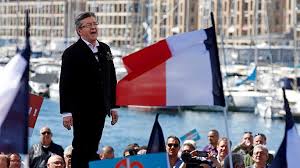
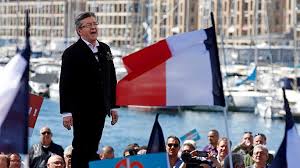
Who’s the most dangerous of them all economically ? If the pat answer is Marine Le Pen, a more polished version of Trump, think again. Introducing Jean-Luc Mélenchon, the far left candidate who is currently surging in the polls . Nearly 20% of France want him as President .


Here are his economic policies, without comment

  • 90% tax rate for those earning more than Euro 400,000 a year
  • 273 billion Euros higher spending over 5 years
  • 16% rise in minimum wage to Euros 1326 a month (Rs 90,000 a month)
  • 35 hour work week.
  • Exit the Euro
  • Abolish the treaties prescribing a target of deficit to GDP . In other words, simply print money
  • Exit EU, a la Britain, if necessary
  • Join Alba the economic pact between Cuba and Venezuela. Honourable observers of this pact are Iran and Syria
  • Right to housing to become a constitutional right
  • Nationalise utility companies

There is more, but this is enough for the time being.

The system of French elections is such that that he is unlikely to get through even in the first round. But it should give a pause for thought that a full 20% of the French electorate is willing to subscribe to such lunacy.

The right to vote is a heavy responsibility. Concepts like protest vote, angry voter, etc are deadly pitfalls. You are supposed to consider the options carefully and vote according to what you think is best for your country. You can have differing views, but irresponsible exercise of the franchise is catastrophic.

If you are of the view that this is all fear mongering, capitalism has failed, and we should give such a philosophy a try (yes, I am talking to you , if you have felt the Bern), then all I will say is that this has been tried before and the example is there for all to see. Venezuela.
The loony left is even more dangerous than the rabid right.

Unexpected and Unintended – Consequences of Curriculum and Material Development Processes

What started in Nagaland…
It was in the fourth workshop in Nagaland, in 2000, that participants stopped me and said they had something to share. All the education stuff they were learning was certainly very useful but what they valued far more was this: People from all the 16 tribes of the state were present in one room and, for the first time, they said, were not fighting! The process had somehow led all of them to feel like a family and they cherished this even more than the curriculum that was emerging from it.
How did this happen, I wondered. It was not being attempted (and in fact there was not even the awareness that something like this was required in the first place). So what went right? A little probing led to the realization that not being aware of who was from which tribe or occupied what social / professional position, the facilitation process could not distinguish between participants – no one was treated as being more ‘important’ or ‘different’.
A second feature was that much of the process revolved around generating a common set of experiences such as activities, school observations, classroom trialling, and intensive group discussions around key questions that had a larger canvas while also affecting state-specific decisions and implementation. The opportunity to evolve a common vision, agree upon the aims and objectives around which the curriculum would be built and developing consensus around the practical means to be adopted – all this led to ‘feeling like a family.’
Could this effect – that had happened ‘by mistake’ – actually be deliberately implemented? That is, could disparate groups who believed they had conflicting interests be brought together to ‘feel like a family’ through a consciously implemented version of this process?
It was not long before an opportunity to test this presented itself – in Afghanistan.
…Continued in Afghanistan
‘My brother from India,’ said a fearsome-looking senior member of the National Resource Group in Kabul, part of the Teacher Empowerment Programme, in 2003-04. It was the first effort to implement a country-wide in-service teacher training programme after the war. ‘My brother from India, do you know that we have in our group some people who are bandits! And we have to develop training with them!’
Before I could respond, another equally fierce gentleman thumped his desk, stood up and bellowed, ‘Our professor from India, when we were fighting the Russians in the mountains, some people were sitting in luxury in the USA!’ No one else seemed discomfited by this except me. How do you work with a group where members seemed intent on settling long-standing personal scores through you?
Once again it was really useful not to know who was exactly what. During the security briefing, I had been given a small chart depicting the various factions that had been at war with each other and now comprised the post-war nation. I had carefully put the chart away without looking at it. And had then thought about the kind of questions would work with this gathering of conflicting factions.
Therefore, as in many other places, the first question the participants got to work on was: ‘What games did you play as a child? And can you name at least 40 of them?’ In just a few moments the mood in the group had changed dramatically. People were gesturing, doing actions of the games they were describing, prodding each other to remember the names of the games they could recall, smiling more and more as their childhood seeped up and transported them into another time when they didn’t have this animosity. From then on, over the next several months, the process continued, with the fearsome gentlemen becoming less and less ferocious till they were actually good friends, and contributed greatly to the outcomes. Along with them, whatever factions that might have been there within the group also shed such reservations as they might have had about the ‘others’. By the end, in fact, it really was difficult to make out the groups that might have been there earlier….
And in a very different setting
Could there be a more difficult situation than Afghanistan? Actually, there could. During the thick of the LTTE-Sri Lankan Army war, I found myself in a workshop for writers, about half of whom were Tamil with the other half being Sinhala. Tamil writers arrived late to the venue, a few hours away from Colombo, as they had been held up again and again along the way by police and other security authorities – on the ground that they were Tamils moving around. One of the writers had just learnt that his brother had been arrested by the Sri Lankan police, on suspicion. Tamil and Sinhala writers were clearly unwilling to mix; in fact, there were many who did not know the other group’s language or English. It was the sensitivity displayed by the organizers and all others present that enabled the workshop to be held at all. However, a sense of awkwardness and whispered conversations pervaded the atmosphere and made it difficult to start.
Working through interpreters, one for each language, the challenge was to have a group that achieved some degree of comfort with each other and would relax sufficiently to enable a creative process to flow. Listening to lectures from the facilitator, however wonderful, was unlikely to achieve this. In this case the strategy of not knowing who was who was obviously not going to work…
What did work, however, was the use of ‘idea triggers’, which are ways to get people to think of things they otherwise would not. For example, take two completely unrelated words (such as ‘rocket’ and ‘goat’) and see if you can make a long and interesting sentence (at least 10 words long) that contains both the words. (Try this out a few times with the same two words and see what happens). Or, take an ordinary object – such as a spoon – and think of a place where it will usually never be found (e.g. on a branch high up on a tree) – and think of how it got there, what happened afterwards – and you will soon begin to get a story in your head.
As these ‘triggers’ began to be used, the ‘writer’ in the participants began to come to the fore. They bounced ideas off each other, laughing at the ridiculous and funny juxtapositions that were cropping up, teasing them into ideas for stories, applauding each others\’ creativity and slowly forgetting that that they were two peoples affected by being on the opposite sides of an ongoing war…

Listening Workshops – Or the Simplest Step to Educational Reform

Is \’bottom up\’ change really possible?
If you are an educational functionary, by now you must be  fed up of hearing how planning and change have to be \’bottom up\’. By which is usually meant that those who are \’under\’ you must somehow begin to contribute, own and implement a range of actions. And you inwardly wonder if this is ever going to happen!

It was during a discussion on precisely such views that the idea of a listening workshop emerged. Colleagues in the Institute of Educational Development (IED) in BRAC University, Bangladesh felt that a \’listening workshop\’ might help them understand teachers and grassroots functionaries better.

Listening workshop – a straightforward structure
It was agreed that before forming any views, it is critical to simply listen to teachers and head teachers. Hence a straightforward meeting / interaction / workshop was designed around the following three questions that would be asked of teachers and head teachers:

  • What do you really do? Exactly what does your work involve?
  • What do you like doing?
  • What do you find difficult or dislike doing?

It was also agreed that IED colleagues initiating the discussion would only listen, and not prompt or provide leading questions or offer any comment from their side. In other words, they really had to listen rather than talk!

So why is all this worth writing about? Because around ten such listen workshops were actually conducted, and most turned out to have  a very interesting pattern, followed by an unexpected twist.

What teachers felt
The listening workshops, it transpired, tended to proceed in the following stages.

  • Teachers found it really difficult to believe that anyone could come down from the capital only to listen to them! There had to be a \’hidden conspiracy\’ or an \’agenda\’ they were not aware of… It would take anywhere from 40-60 minutes to convince the participants that the intention really was to listen to them. (What do you think this tells us about the functionaries that teachers usually deal with?)
  • Once teachers believed the above, their initial reaction was that of giving vent to all their frustration and anger at \’you people who sit up there and form all kinds of views about us without ever visiting the field and observing the realities for yourself.\’
  • Finally, teachers would pour their hearts out on the three questions given above.

The teachers\’ replies have of course begun to inform the work of the institute in many ways. However, it was the completely unanticipated outcome below that left everyone (cautiously) elated.

The unexpected \’reform\’
In the case of a large number of teachers who participated, a few days after the listening workshop it was found that they were implementing many new pedagogical actions in their classrooms! In the entire discussion, at no point had they been asked to make any improvement in their classrooms. So it was not as if teachers did not know improved methods – a large number of in-service interactions had ensured that they had had exposure. It\’s just that they were not using them. But for some reason the listening workshops triggered a change process in the classrooms!

What do you think this tells us about teachers, about their motivations, and about the kind of relationships they experience? If you can bear the initial first hour, isn\’t holding a listening workshop the simplest way to initiate educational reform at the local level?

Contesting Cribbing

If you\’re a person working to improve the educational system in a country like ours, here\’s something you\’ll recognize: whether it\’s journalists or academics, colleagues from NGOs or \’well-wishers\’ of children, everyone is pretty good at \’problem pointing\’. They\’re really good at telling us exactly how BAD things are. Numerous articles, speeches, social media entries, research pieces, presentations, and even protests, copiously crib about a range of ills affecting education : how the system is dysfunctional, teachers are absent, accountability is missing, children aren\’t learning, process is dated, children are oppressed, administration is rigid, policies are rich but unimplemented, how the disadvantaged continue to get a raw deal right through… Recognize it? I do, for some of this is what I do as well!

But here\’s the rub – all this elaboration on what is wrong (some of it is serious research that is credible as well), how far has it helped find exactly what to do. That is, what to do which would help us get rid of the problems being pointed out. Don\’t get me wrong, I\’m all for the growing numbers of those who are able to detail their dissatisfaction at the continued limitations of our education system. It\’s just that I\’m unable to learn enough from it to know what needs to be done.

Because when one gets down to the doing, a whole lot of other things unfold that you were not quite prepared for. Turns out dealing with diversity is not exactly easy, and most of the pat suggestions don\’t really hold in face of the actual ground realities. Turns out that poor (or even exploitative) governance is such an all-pervading reality that what we can do in / through education just pales in front of it (try sitting in a district education office for a day if you don\’t believe me). Turns out that our \’log frames\’, strategies, plans and spreadsheets capture something in our mind but all of it simply crumbles when the actual implementation takes place. It\’s often noticed that some of the best experts, especially those from the universities, are usually eager to help in the planning and the evaluation – but not the part that comes in between, i.e. the implementation!

So I\’ve come to the unfortunate conclusion that a great proportion of those involved tend to complain mainly because it is the easiest thing to do. Just like many newspaper sections talk of potholes on the roads, delayed or poor services, or lack of facilities (usually in a self-righteous tone that includes phrases such as \’even 60 years after independence\’ – you get the picture). All this in the hope that saying what is wrong will somehow make it go away. As if it really does! 

Where does all this leave us? To my mind, it leaves us with a lot of cribbing all around us. Every day we continue to read, hear, powerpoint and wordprocess an overdose of shortcomings. Such solutions as are offered are usually: 

  • trite (\’there should be accountability\’ – which is easy to say, of course) or 
  • platitudinous  (\’teachers should be dedicated to their vocation\’) or 
  • superficial (\’implement play way method!\’ – makes one\’s skin crawl) or 
  • autocratic (\’strictly monitor these damned teachers, don\’t let them get away\’ ) or 
  • misguided (\’pay teachers more / less if their students learn more / less\’ – you can see how this will favour the already advantaged, isn\’t it) or 
  • even desperate and daft (\’put a web cam in every class\’).


I\’m doing the same, of course, cribbing. But let me try to redeem myself by making a few (hopefully) concrete suggestions:

  • The first thing is to recognize the huge potential of all this cribbing. It represents an enormous and growing \’cognitive surplus\’ that can be put to better use to further what the \’cribber\’ is interested in – actual improvement.
  • Along the lines of wikipedia, bring out a collective, well-organised and evolving situational analysis to which people can keep contributing. This will help generate a more structured, well-rounded understanding that might increase the likelihood of finding effective strategies.This should include a critique of the kind of superficial solutions mentioned earlier, with case studies of the difficulties they landed in or the actual improvement they brought about. An analysis of serious efforts and the difficulties faced would help bring about a nuanced problematization.
  • Those involved in change efforts could find ways of identifying any \’cribber\’ who shows potential, and involve her/him in actual improvement processes – either the process would improve or the cribbing would be contained.
  • Publicize and set standards for the kind of writing that is deemed as being helpful. This is not easy at all – but the degree to which the social discourse on education is getting overwhelmed by this collective bemoaning (and the resultant diversion from / inability to actually address the issues) is now making it imperative that we find a way out. Any news channel / newspaper could initiate this by developing a policy paper on how to cover the social sector and then actually following it. Once an example is set, others would follow suit (simply because the initiating body would come out looking better, and therefore be likely to grab a bigger share of sensible eyeballs). 

You might feel that I\’ve totally mis-read the situation, that we need more people to actually be pointing out what is going wrong. Well, point away – but that\’s no guarantee it will make the problem go away!

Unexpected and Unintended – Consequences of Curriculum and Material Development Processes

What started in Nagaland…
It was in the fourth workshop in Nagaland, in 2000, that participants stopped me and said they had something to share. All the education stuff they were learning was certainly very useful but what they valued far more was this: People from all the 16 tribes of the state were present in one room and, for the first time, they said, were not fighting! The process had somehow led all of them to feel like a family and they cherished this even more than the curriculum that was emerging from it.
How did this happen, I wondered. It was not being attempted (and in fact there was not even the awareness that something like this was required in the first place). So what went right? A little probing led to the realization that not being aware of who was from which tribe or occupied what social / professional position, the facilitation process could not distinguish between participants – no one was treated as being more ‘important’ or ‘different’.
A second feature was that much of the process revolved around generating a common set of experiences such as activities, school observations, classroom trialling, and intensive group discussions around key questions that had a larger canvas while also affecting state-specific decisions and implementation. The opportunity to evolve a common vision, agree upon the aims and objectives around which the curriculum would be built and developing consensus around the practical means to be adopted – all this led to ‘feeling like a family.’
Could this effect – that had happened ‘by mistake’ – actually be deliberately implemented? That is, could disparate groups who believed they had conflicting interests be brought together to ‘feel like a family’ through a consciously implemented version of this process?
It was not long before an opportunity to test this presented itself – in Afghanistan.
…Continued in Afghanistan
‘My brother from India,’ said a fearsome-looking senior member of the National Resource Group in Kabul, part of the Teacher Empowerment Programme, in 2003-04. It was the first effort to implement a country-wide in-service teacher training programme after the war. ‘My brother from India, do you know that we have in our group some people who are bandits! And we have to develop training with them!’
Before I could respond, another equally fierce gentleman thumped his desk, stood up and bellowed, ‘Our professor from India, when we were fighting the Russians in the mountains, some people were sitting in luxury in the USA!’ No one else seemed discomfited by this except me. How do you work with a group where members seemed intent on settling long-standing personal scores through you?
Once again it was really useful not to know who was exactly what. During the security briefing, I had been given a small chart depicting the various factions that had been at war with each other and now comprised the post-war nation. I had carefully put the chart away without looking at it. And had then thought about the kind of questions would work with this gathering of conflicting factions.
Therefore, as in many other places, the first question the participants got to work on was: ‘What games did you play as a child? And can you name at least 40 of them?’ In just a few moments the mood in the group had changed dramatically. People were gesturing, doing actions of the games they were describing, prodding each other to remember the names of the games they could recall, smiling more and more as their childhood seeped up and transported them into another time when they didn’t have this animosity. From then on, over the next several months, the process continued, with the fearsome gentlemen becoming less and less ferocious till they were actually good friends, and contributed greatly to the outcomes. Along with them, whatever factions that might have been there within the group also shed such reservations as they might have had about the ‘others’. By the end, in fact, it really was difficult to make out the groups that might have been there earlier….
And in a very different setting
Could there be a more difficult situation than Afghanistan? Actually, there could. During the thick of the LTTE-Sri Lankan Army war, I found myself in a workshop for writers, about half of whom were Tamil with the other half being Sinhala. Tamil writers arrived late to the venue, a few hours away from Colombo, as they had been held up again and again along the way by police and other security authorities – on the ground that they were Tamils moving around. One of the writers had just learnt that his brother had been arrested by the Sri Lankan police, on suspicion. Tamil and Sinhala writers were clearly unwilling to mix; in fact, there were many who did not know the other group’s language or English. It was the sensitivity displayed by the organizers and all others present that enabled the workshop to be held at all. However, a sense of awkwardness and whispered conversations pervaded the atmosphere and made it difficult to start.
Working through interpreters, one for each language, the challenge was to have a group that achieved some degree of comfort with each other and would relax sufficiently to enable a creative process to flow. Listening to lectures from the facilitator, however wonderful, was unlikely to achieve this. In this case the strategy of not knowing who was who was obviously not going to work…
What did work, however, was the use of ‘idea triggers’, which are ways to get people to think of things they otherwise would not. For example, take two completely unrelated words (such as ‘rocket’ and ‘goat’) and see if you can make a long and interesting sentence (at least 10 words long) that contains both the words. (Try this out a few times with the same two words and see what happens). Or, take an ordinary object – such as a spoon – and think of a place where it will usually never be found (e.g. on a branch high up on a tree) – and think of how it got there, what happened afterwards – and you will soon begin to get a story in your head.
As these ‘triggers’ began to be used, the ‘writer’ in the participants began to come to the fore. They bounced ideas off each other, laughing at the ridiculous and funny juxtapositions that were cropping up, teasing them into ideas for stories, applauding each others\’ creativity and slowly forgetting that that they were two peoples affected by being on the opposite sides of an ongoing war…

ROLE OF NCERT IN INDIAN EDUCATION

There was a time not many years ago when the ends and means of education did not present a problem of much complexity.  Good teachers, willing students where the ingredients of education, and with rapport between them, one might look forward to an educated population of some merit.
Today this is not so.  For knowledge has brought with it some understanding of the complexity involved in the ingredients of the educational process.  The concreted pattern of education still involve a teacher certainly, who is still the heart of matter.  But to make possible the growth and development of the teacher, to enable him or her to deal with the growth of knowledge, one has to think of a variety of other sources and materials of education.  One has to think of a curriculum or general frame works with in which he works and with in which the subject – fields are defined in progressive step for progressive age group of students.  One has to think of text book that cannot be equated with the teacher, but that can make better teachers of good teachers, and less bad teachers of bad teachers.  One has to think of experimental instructional materials, teacher’s handbook and student’s work book to accompany textbooks, and inordrer to develop these, one has to plan for workshop in which the teacher shall be an active participant and carry out organized research in the total process of education.  One has to think of how to enlarge the subject content of teaching at school level and not merely to make a fetish of methodology, though methods do matter. 
Due to knowledge explosion, there is a spread of education not only in India, but all over the world. Due to this change social needs have changed accordingly.  A teacher is expected to face the new changes by undergoing trough training for new trends in education. Such training needs are satisfied by NCERT – National Council of Educational Research and Training.
We are long past seeing education in national pigeonholes. As there are no barriers in health, art, idealism. So there can today be no barriers in knowledge or education.  It is the business and the accepted obligation of NCERT to see the total dimension of the education, international or national, to study the advances made elsewhere, to adopt, where possible, and to adopt its own slender resources to these changes.  In doing this NCERT must be aware of the distinctive features of India’s own policies and economy.  Numbers are for India an obsessive problem.  She is a poor country.  She has to acute shortage of teachers and an even more acute shortage of trained teachers.  Upon all these NCERT must base its attack. 
The National Council of Educational Research and Training was established in New Delhi, on 1st September, 1961 for providing academic support in improving the quality of school education in India.  It is the academic adviser to Ministry of Human Resources development (HRD) of the government of India.  The ministry draws upon NCERT’s expertise while formulating and implementing policies and programs in the areas of school and teacher education.  Funded by the government of India, this autonomous organization is registered under the Societies Registration Act (1860). 
 STRUCTURE
The General Body is the policy making body of the NCERT with the Union Minister for Human Resource Development as its President. All the ministers of education in the State and Union Territories are its members.  Beside experts in the field of education are also nominated as members.  Its membership patters helps in taking policy decision at the highest level.
The governing body of the NCERT is the executive committee, again with the Union Minister for Human Resource Development as its ex-officio President.  The Union Minster for State is its ex-officio vice president assisting the Executive committee dealing with finance, establishment matters and programs. 
Management of all the affairs and funds of the council vests in the Governing Body or Executive Committee which is composed of officers of the Faculties of council , representatives of Ministries of education and finance, and eminent educationists.  Its programs are carefully considered by program Advisory committee on which are represented several Faculty members, representatives of state Institute of education and University Department of education.  It has several advisory committees for dealing with specific problems in different fields like publications, science etc., with men of repute and standing drawn from all over the county. 
ROLE OF NCERT
·         To monitor the administration of NIE / Regional colleges of Education.
·         To undertake aid, promote and co-ordinate research in all branches of education for improving school – education
·         To organize pre-service and in-service education programmes for teachers.
·         To prepare and publish study material for students and related teacher’s handbooks. /
·         To search talented students for the award of scholarship in science, Technology and social sciences.
·         To undertake functions assigned by the Ministry of education (Now HRD) for improving school –education.
·         To promote, organize and foster research in all fields of education.
·         To disseminate knowledge of improved educational techniques and practices; and
·         To conduct special studies, surveys and investigations.
It is quite interesting to know how following constituent institutes works. 
CONSTITUENT UNITS:
            The National Council of Educational Research and Training (NCERT) with six constituents has been serving
NATIONAL INSTITUTE OF EDUCATION:
            The NIE’s activities are mainly confined to (a) research and development (b) in service training and (c) publishing and dissemination programmes.  Important among these programmes are developed and evaluation of curriculum, instructional materials, learning resources and instructional strategies.  These programmes cover the entire range or preprimary to higher secondary stage of education and all school subjects including the vocational stream at the higher secondary stage.  Its other programmes include    examination reform and test development, nutrition and health education, education of scheduled caste and scheduled tribe students, girls, education, population education, value education and physical education.  The NIE also develops prototypes of science kits which are in fact mini-laboratories for schools.  Other important areas of its works are the non-formal education for out-school children, early childhood education, education of the disabled and programmes for the educationally backward minorities.  The NIE has computer facilities for storage and retrieval of data.  It periodically conducts educational surveys which throw light on the educational facilities and needs.  The NIE has also a library and documentation unit specializing in education.
            The special reference library for the use of researches I then filed of applied psychology called the National Library of Educational and Physiological Test’s is also located in the NIE.
            Considering the importance of improving the quality of teacher education in India, the government had established the National Council for teacher Education (NCTE) and functioning as its academic secretarial is the Department of Teacher Education, Special Education and Extension Service (DTESEES).  Tough the NIE primarily confines its activities to in-service training; it nevertheless conducts a regular nine month Diploma Course in Educational and Vocational Guidance.  This is basically a pre-service course meant for training a band of counselors for the school system.
CENTRAL INSTITUTE OF EDUCATIONAL TECHNOLOGY (CIET)
            The CIET is the sixth constituent unit of the NCERT.  It was set up in 1984s by merging the Centre for Educational Technology and Department of Teaching Aids.  It aims at promoting the use of educational technology, particularly mass media, for improving and spreading education in the country, and for developing an alternate system of education.
            The CIET develops (a) software in mind the educational needs, (b) trains personnel wording in the field of educational technology, (c) conducts and disseminates information concerning educational media and technology.
            The CIET is headed by a Joint Director, appointed by the Government of India.  It has helped in setting up six States institutes of educational Technology (SIETs), one each in Andhra Pradesh, Bihar, Gujarat, Maharashtra, Orissa and Uttar Pradesh.  The SIET and the CIET produce educational television programmes for children in the age group 5-8 and 9-11 years and teachers.  These proigrammes are telecast for three hours and forty minutes a day by using the satellite and ground transmission network.
            The CIET is equipped to take up programmes covering most of the areas of educational technology, viz, distance education, educational television, radio, films and low cost material.  We shall discuss a bit detail about CIET separately because of its importance.
REGIONAL INSTITUTES OF EDUCATION (RIES)
            The Council has four Regional Colleges of Education (RIEs) one each at Ajmer, Bhopal, Bhubaneswar and Mysore.  These campus colleges with the Demonstration Multipurpose Schools attached to them.  Such schools help the faculty to develop methodologies and test them in the actual classroom situation.  Each college has modern laboratories, well-equipped library and residential quarters.
            The college offered for integrated teacher education courses leading to B.Sc, Ed. Degree.  Except RCE Ajmer the other college also offered a similar programme leading to B.A., B.Ed programmes.
            The Bhubaneswar and Mysore RCEs also offered M.Sc Education programmes.
            Facilities for doing doctoral work for the pursuing one year B.Ed and M.Ed courses were also available in the RCEs.
            All the RCEs conduct in-service training programs both for school teachers and teacher educations.  Besides teaching and extension work, the colleges also take up research and development programmes.  Now they are converted in Regional Institutes of Education.
CO-OPERATIVE EFFORT
            The States play a pivotal role in the area of school education in India.  The NCERT works in close co-operation with the state education departments.  It has a network of 17 filed Advisers (FAS) offices covering at state and union territories.  The council associates the representatives of states with its programmes and with the comities constituted by it.
            The NCERT has close ties with universities and other organizations that have a stake in the quality of school education. Prominent among them are the Kendriya Vidyalays Sangathan (KVS), the Central Board of Secondary Education (CBSE), the Central Tibetan Schools Administration (CTSA), and the Navodaya Vidyalays Samiti (NVS).
FUNCTIONS
            The functions of the NCERT broadly relate to
(a) Research and development
(b) In –service and pre-service training
 (c) Extension and dissemination work –all these lauded to achieve the main objective of improving the quality of education. 
The NCERT, therefore (i) develop curriculum, instructional and exemplar materials, methods of teaching, techniques of evaluation, teaching aids, kits equipments, learning resources etc.  (ii)  Organize pre-service and in-service training of teachers, teacher educators and other educational personnel; (iii) conducts and promotes educational research; (iv) disseminates improved educational techniques and practices and research findings, and (v) acts as a cleaning house for ideas and information on all matters relating to school education and teacher education.
            Realizing the importance of textbooks, the government, after independence, increasingly acquired more control over preparation, production and distribution of textbooks in addition to the concern for production of quality textbooks in large quantity, one of the significant argument for adoption of the policy of nationalization was the state produced textbooks would check anti-democratic and would help meeting the challenges of casteism, communalism, regionalism, linguism, religious intolerance, untouchability and some other national and global concerns.
PUBLICATIONS
            The publishing programme of the NCERT is a part of its total effort to improve the quality of school education.  The NCERT textbooks published in English, Hindi, and Urdu languages have the unique distinction of being once attractive and inexpensive.  These textbooks are freely adopted by states under their nationalized textbooks programme.  They are also used widely in schools affiliated to the Central Board of Secondary Education, Kendriya Vidyalays, Jawaharlal Navodaya Vidyalays, Tibetan Schools and several public Schools.  The NCERT brings out a wide variety of publications such as (a) research literature, (b) School textbooks including workbooks and teachers’ guides, (c) General books for children of different age groups, and (d) educational journals viz., Indian Educational Review (quarterly), Journal of Indian Education and Bharatiya Adhunik Shiksha (bi-monthlies), School Science (quarterly).  The Primary Teacher and Primary Shishak (both quarlies), and NCERT Newsletter and Shaikshik Darpan (both news magazines primarily meant for in –house circulation)
            The NCERT also brings out supplementary readers under the Reading to Learn and National integration Series.  These books are specially written keeping in view the needs of school children, to promote a healthy reading habit in them
            The setting up of the NCERT in 1961 was a landmark in the history of school education in India.  Since its inception, the NCERT undertook in a phased manner, a major programme of preparation of model curricula, syllabi and textbooks for the entire school stage.  The NCERT faculty also collaborated with the State Education Departments and specialized agencies like, Textbook Bureau, Textbook Corporations etc., in formulation of their curricula and instructional materials.
            Among other things, the NCERT acted as a academic secretariat of the National Board of School Textbooks (NBST) which was set up by Government of India in 1968 in order to co-ordinate and guide the activities of the national level and the State level organizations for production and several suggestions regarding preparation, evaluation, production and distribution of school textbooks and emphasized the societal concerns like national integration, secularism, and democratic living should find adequate reflection in the school textbooks.  AT the instance of the Government of India, the NCERT, since 1969, has inter alia, been working on a programme of evaluation of the textbooks of the states and Union Territories from the standpoint of national integration.  It has also remained associated, more or less, with the matters related to policy formulation and implementation in respect of school education.  Keeping in view the emphasis on societal concerns like equality of sexes and population education, separates/Units have been created in the NCERT for ensuring their suitable reflection in the School curriculum.
ENCOURAGING TALENT
            The NCERT has progrmmes for encouraging talented school, children, innovative teachers, teacher educators and promising scholars wanting to pursue research studies.
            Every year the NCERT awards 750 National Talent Search (NTS) scholarships-including 70 for students belonging to SC/ST communities.  The purpose of this scholarship scheme is to identify talented students at the class X stage and give them financial assistance for pursuing higher studies.  Students bagging these scholarships may pursue, or take up professional courses up to the second degree level in such areas as engineering or medicine.
            In order to encourage experimentation and innovations, the NCERT organizes separate programmes for primary and secondary school teachers and elementary and secondary teacher educators.  Called Seminar Readings Programmes these schemes envisage giving awards for significant innovative work by teachers and teacher educators.
            The NCERT also awards research fellowships leading to Ph.D. degree of for doing post doctoral  work,  Only those scholars who clear the test administered  by the University Grants Commission (UGC) are eligible for Ph.D. fellowships.
            The NCERT sponsors and encourages out of school activities for popularizing science.  The organization of science exhibitions at the district state and national levels is a part of his effort.
RESEARCH AND PROFESSIONAL GROWTH
            The educational Research and innovations Committee (ERIC) of the NCERT funds research programmes taken up by scholars both within and outside the Council.  The projects, however, are to have a direct bearing on either school education or teacher education.  The ERIC also holds periodic conferences of educational research workers.  Having funded publication of surveys of educational researches in India earlier it has now taken upon itself the task of compiling such research volumes as well.
The NCERT offers financial assistances to professional associations in the field of education for holding annual conferences and publishing journals.
INTERNATIONAL RECOGNITION
            The NCERTs international ranges from working with the united Nation’s institutions like UNESCO, UNISEF, UNDP, UNFPA etc., to assisting Third World Countries.  It serves as the academic secretarial of the National Development Group (NDG) or the Asia and NCERT has been providing technical support to the states in the planning and implementation of various programmes to promote vocationalisation at the plus two stage.  It has also been engaged in development of competency-based curricula for different vocational courses, development of guidelines for implementing different vocational courses, development of guidelines for implementing different aspects of vocationalisation of education, development of syllabi and instructional materials, training of vocational teacher educators, teachers and other personnel.
            For orientation in favor of values, the common core components viz., (i) History of India’s freedom movement, (ii) Constitutional obligations, (iii) Contents essential to nurture national identity (iv) India’s common cultural heritage (v) egalitarianism, democracy and socialism, (vi) equality of sexes, (vii) removal of social barriers, (viii) observance of small family norms, and  (ix) inculcation of scientific temper, emphasized in the National Policy on Education, are suitably reflected in the curricula and instructional materials of all subjects and at all stages of school education developed by NCERT.
            With the view to meet the challenges in realm of teacher education, “Teachers Education Curriculum-A Framework” (1978) developed by the National Council for Teacher Education (NCTE) had been revised in 1990.  This framework provided for transformation of the preservice teacher education structures and processes related to elementary and secondary teacher course.  NCTE now granted a statutory status by the Government of India is in a position to persuade the states for acceptance of these recommendations.  Programmes and activities related to the training of the personnel of the centrally-sponsored institutions DIETs, CTEs and IASEs are being implemented by the NCERT.  A few examples of the self-instructional materials and multi-media packages are (i) the “In-service Teacher Education Packages” for primary school teachers and secondary school teachers, and (iii) the multi-media packages developed for operationalizing the operation blackboard scheme.
            A major component of examination reform has been linked with the recommendation regarding introduction of semesterisation of the senior secondary stage.  The NCERT has developed a framework for semesterisation in collaboration with Boards of Secondary and Senior Secondary Education.  In this context, scheme of continuous and comprehensive evaluation has been evolved and circulated among the SCERT and Boards of Secondary Education.  NCERT has also developed conceptual materials related to educational evaluation, preparation of criterion-referenced texts and the training of test item writers in different subjects’ areas.  It has also developed a sample cumulative card along with procedures for maintaining records of pupils, achievement and guidelines for introduction of grading and grading and scaling in examinations.  A project titled “Learning Attainment of Children in Language and Mathematics at Primary Stage” has been completed.  A similar study on scholastic attainments at class X and XII level has also been completed.
            A national talent search scheme is in operation for identification and nurturing of talent of class X.  NCERT has also undertaken a programme to identify talented children in rural areas as per requirement of admission to Navodaya Vidyalays.  
CONCLUSION
            The NCERT works as the academic wing of the Ministry of Education and Social Welfare and assists the Ministry in the formulation and implementation of its policies and programmes in the field of school education.  The functions of the Council are discharged on the following broad lines:
(a)To undertake studies, investigations and surveys relating to school education;
(b)To organize pre-service and in-service training mainly at an advanced level;
(c)To organize extension services;
(d)To disseminate improved educational techniques and good practices;
(e)To act as a clearing-house for ideas and information on all matters related to school education.
With a view to carrying out such functions effectively, the council works in close co-operation with the Education Department in the States and the Universities and generally with all organizations in the country for furthering the objectives of school education.  Besides, the council maintains close relations with similar national and international agencies maintains close relations with similar national and international agencies throughout the world.  In order to implements its programmes efficiently it has not only a large number of advisory bodies, but also it has an array of executive as well as academic institutions, departments and organizations throughout the country.  It also maintains a liaison with all the state Government through the network of offices of Field Advisers. 
REFERENCES
Dr. Ram Shahal Pandey (2007), Education in Emerging Indian Society: Agarwal Publications, Agra 7.
Edutrack. Vol. III, Page No. 11, July 2004: Texbooks in Free India Policies, Practices and Problems.
Jagannath Mohanthy (1990), Educational Administration, Supervision and School Management, New Delhi: Deep or Deep Publications.
Luther E Bradfield (1964), Teaching in Modern Element: Charls E. Merlin Books.
H.C. Barnard (1952), an Introduction to Teaching, London: University of London Press Ltd.
ROLE OF NAAC IN PROMOTING QUALITY IN HIGHER EDUCATION


INTRODUCTION
         India is a developing country. Different types of religious people are living in the country. We have thousand years of tradition and culture. We are living in the technological and modern world Education is the primary need for all in the society. It is the duty of government to provide free education to all up to fourteen years. Universal higher education is our new aim. Now majority of professional educational institutions are in private sector. There are some benefits and losses due to privatization of professional education.
           The Indian higher education system is in a constant state of change and flux due to increasing needs of expanding needs to higher education, impact of technology on the delivery of education, increasing private participation and the impact of globalization. Taking cognizance of these developments and the role of higher education in society, NAAC has developed.
 GLOBAL CULTURE IN HIGHER EDUCATION INSTITUTIONS OF INDIA
        Nations are struggling to cope with the demands of quality education and a phenomenal increase in the number of students wanting to go in for higher education. Both the quality and quantity of education requires better academic and physical infrastructure a greater financial resources.
       For the first time India is  recognized internationally as a nation , which is providing value added trained human power at a premier level Indian experts are now persons who generate wealth and also are the backbone in many global science and technology revolutions. It is interesting to note that the employment opportunity pattern is also undergoing a change. The world will be looking for trained persons in all basic fields with a sound knowledge base in their core discipline and with the ability to adapt to new demands
         The universalization of the job market and the acceptance of Indian skills at a global level have opened up opportunities for the creation of new jobs internally. Today India has one of the world’s largest stocks of technology & professionally trained manpower Professionals and technologists educated in India in various colleges /universities (not just IIT/IIM alone) are respected and in demand all over the world. Universities in developed nations are aggressive in attracting students from other countries. India should encourage the same policy. Attracting non-resident Indians and foreign students would bring invaluable income to the universities. Indian institutions should be given special provisions to enable foreign students to be admitted outside the present system of quotas.
             India needs to become innovative in its higher education. Twinning programs with foreign universities will result on foreign exchange saving earnings for the university and country. Indian universities and institutions should be enabled to open campuses abroad, especially in neighboring friendly countries of Asia and Africa. Also we should focus on Teacher’s training; the teachers should be paid well. Here again more flexibility should be given to institutions to function with accountability, but at the same time they should maintain quality. India with a large and growing youth population can benefit socially and economically, if it can create opportunities for a lagged percentage-(30 %to 40%) of the youth to acquire relevant, good quality higher education with an inclusive and flexible approach.
ROLE OF HIGHER EDUCATION IN THE SOCIETY
         Higher education is the backbone of all the societies. Quality of higher education decides the quality of human resources in the country. Higher education is the source in all walks of life and therefore supplies much needed human resources in management, planning, design, teaching, and research. Scientific and technological advancement and economic growth of a country depends on higher education system. Higher education also provides opportunities for lifelong learning, allowing people to upgrade their knowledge and skills from time to time based on social needs.
             The Kothari commission (1966) listed the following roles of higher education institutions in the modern society.
1. To seek and cultivate new knowledge, to engage vigorously and fearlessly in the pursuit of truth, and to interpret old knowledge and benefits in the light of new needs and discoveries.
2. To provide right kind of leadership in all walks of life, to identify gifted youth and help them.
3. To provide the society with competent men and women trained in agriculture, arts, medicine, science, and technology and various other professions.
4. To promote quality and social justice, and to reduce social and cultural differences.
    The report of UNESCO International commission on Education in the 21st Century titled “Learning: The Treasure Within” emphasized four pillars of education. Learning to know, Learning to Do, Learning to live together and learning to be. Higher education intends to include all these four in individuals and the society.
STRATEGIES FOR QUALITY IMPROVEMENT IN HIGHER EDUCATION
       Quality in systems improvement is an unending journey. Quality doesn’t come by a chance. It is a continuous process. It comes through strategies of better human resources development. It comes when everyone works in a right way. To maintain quality in higher education three factors are equally important. These are
1. Infrastructure
2. Instructional facilities
3. Human resources
Required facilities regarding them are following
 INFRASTRUCTURE
·         Adequate furniture
·         Well equipped science laboratory & computer lab
·         Outdoor & indoor games facilitates with physical education laboratory ,technology lab with instructional material &music room with musical instruments
·         Fully ventilated and lighted classrooms
·         Plantation and greenery inside & outside campus
·         Separate administration wing & teaching wing and separate department for each subject
·         Separate common room for boys and girls
·         Language lab & work experience lab with all equipments
·         Suitable transport for pupil and staff
·         Library full of reference books, textbooks, magazines, national& international journals periodicals, up-to-date researches  and reading room facility
·         Internet facility & art gallery to develop aesthetic sense among students
·         Proper notice board with relevant information
INSTRUCTIONAL   FACILITIES
·         Fair admission policy
·         Time to time revised and reformulated syllabus
·         Use of educational technology by teacher
·         Innovative teaching method’s application
·         Syllabus based on practicability of daily life situation
·         Flexibility in stream choice
·         Regular workshops, conferences, seminars etc. on emerging problem
·         Continuous process of evaluation system
·         Co-curricular activities as a part of syllabus
·         Celebration of important days, events, festivals etc.
HUMAN   RESOURCES
·         Well qualified ,dynamic, sincere teaching staff
·         Adequate number of teaching & non teaching members
·         Regular organization of conducting educational researches and application of its conducting educational researches and application of its findings.
·         Action researches for the betterment  of the institution
·         Workshops, seminars, debates, conferences, guest lecturers etc.
·         project work for new discoveries and setup of new system
·         incentives for hard work, sincerity, innovation, punctuality etc. for staff development
·         awareness program as aids, polio, blood donation etc. in the institution
·         time to time promotion of staff as per rule
·         pension facility for staff after retirement
·         sanction of leave for researches, higher education, for staff development
·         alumni association for the improvement in the system of institution
·         cooperation of local people for discipline and maintenance of the institution
·         abolition of commercialization in the institution
NAAC’S PERSPECTIVES FOR QUALITY ASSURANCE IN HIGHER   EDUCATION
             THE NATIONAL ASSESSMENT AND ACCREDITATION COUNCIL (NAAC) is an autonomous body established by the University Grants Commission (UGC) of India to assess and accredit institutions of higher education in the country. It is an outcome of the recommendations of the National Policy on Education (1986) that laid special emphasis on upholding the quality of higher education in India that aim to ensure satisfactory levels of quality in the functioning of higher education institutions. To address the issue of deterioration in quality, the National Policy on Education (1986) and the Plan of Action (POA-1992) that spelt out the strategic plans for the policies, advocated the establishment of an independent national accreditation body. The NAAC was established in 1994 with its headquarters at Bangalore.
GOVERNANCE
             The NAAC functions through its General Council (GC) and Executive Committee (EC) where educational administrators, policy makers and senior academicians from a cross section of the system of higher education are represented. The Chairperson of the EC is an eminent academician in the area of relevance to the NAAC. The Director of the NAAC is its academic and administrative head, and is the member-secretary of both the GC and EC. The NAAC also has many advisory and consultative committees to guide its practices, in addition to the statutory bodies that steer its policies. The NAAC has a core staff and consultants to support its activities. It also receives assistance from a large number of external resource persons from across the country that is not full time staff of the NAAC.

VISION

    To make quality, the defining element of higher education in India through a combination of self and external quality evaluation, promotion and sustenance initiatives.

 MISSION

·         To arrange for periodic assessment and accreditation of institutions of higher education or units thereof, or specific academic programmes or projects;
·         To stimulate the academic environment for promotion of quality of teaching-learning and research in higher education institutions;
·         To encourage self-evaluation, accountability, autonomy and innovations in higher education;
·         To undertake quality-related research studies, consultancy and training programmes, and
·         To collaborate with other stakeholders of higher education for quality evaluation, promotion and sustenance. 
 VALUE FRAMEWORK
To promote the following core values among the higher education institutions of the country.
·         Contributing to National Development
·         Fostering Global Competencies among Students
·         Inculcating a Value System in Students
·         Promoting the Use of Technology
·         Quest for Excellence 
 THE METHODOLOGY
For the assessment of a unit that is eligible to be assessed, the NAAC follows a three stage process 
1. The preparation and submission of a self-study report by the unit of assessment.
2. The on-site visit of the peer team for validation of the self-study report and for recommending the Assessment outcome to the NAAC.
3. Grading, certification and accreditation based on the evaluation report by the peer team. The final decision is  by the Executive Committee of the NAAC.
CRITERIA FOR ASSESSMENT
The NAAC has identified the following seven criteria to serve as the basis for its assessment procedures:
1. Curricular Aspects
2. Teaching-Learning and Evaluation
3. Research, Consultancy and Extension
4. Infrastructure and Learning Resources
5. Student Support and Progression
6. Organization and Management Healthy
7. Practices
Different criteria have been allotted differential weight ages. The weight ages given below are used for calculating the institutional score. The self-study report is expected to highlight the functioning of the institution with reference to these criteria
QUALITY PROMOTION AND SUSTENANCE ACTIVITIES
            Quality assurance is a continuous process; the NAAC takes up many post accreditation activities to facilitate quality promotion and sustenance among all institutions of higher education, in general, and among the accredited institutions, in particular. Seminars and workshops on quality enhancement are being supported by the NAAC. To ensure that quality assurance becomes an integral part of the functioning of the institutions, the NAAC promotes the establishment of Internal Quality Assurance Cells (IQAC) in accredited institutions.
 INTERNAL QUALITY ASSURANCE CELL (IQAC)
             The IQAC is expected to become a part of an institution\’s system and work towards realizing the goals of quality enhancement and sustenance. The prime task of the IQAC is to develop a system for conscious, consistent and catalytic improvement in the performance of institutions. It has to be a facilitative and participative voluntary part of the institution. To help institutions establish the IQACs, guidelines have been developed by the NAAC. The IQAC is expected to make a significant and meaningful contribution in the reaccreditation of institutions.
 RE-ACCREDITATION
             The methodology for re-accreditation has been finalized incorporating post-accreditation reviews, feedback from the accredited institutions and the outcome of national consultations. Accordingly, the next two years will be the period of institutional preparations and implementation of re-assessment, for higher education institutions that volunteer for re-accreditation. The institutions that record their intent to volunteer for reaccreditation and begin institutional preparations will continue to use the outcome of the first accreditation
Till the end of the two-year institutional preparation period or till the re-accreditation outcome is declared.
THE METHODOLOGY FOR RE-ACCREDITATION
a) Process of assessmentThe process of re-assessment and accreditation will be a combination of self-assessment that results in a report to be submitted by the institution, and peer validation of the report. Through Information and Communication Technology (lCT) enabled data management, a part of the quantitative data to be submitted to NAAC will be in the electronic format.
b)Minimuminstitutionalrequirements: The establishment of the IQACs and the use of ICT for data management, with institutional websites will be the minimum institutional requirements for reaccreditation.
c) Re-accreditation frameworkThe existing seven criteria will be followed for reaccreditation with revision and re-organization in key aspects. The framework for re- accreditation will be built on five cores
They are:
1. Relating to National Development
2. Fostering Global Competencies among
3. Students Inculcating the Value System
4. Promoting the use of Technology
5. Quest for Excellence
The specific focus of the framework will be the impact of first accreditation in three major areas namely quality sustenance efforts of the institution, quality enhancement activities and action taken on the first assessment report.
d) OutcomeThe current nine-point scale will be followed.
e) Period of re-accreditationThe validity period of the re-accredited status will be for seven years from the date of approval of the status by the Executive Committee. There accredited institution has to record its intent for the next accreditation by the end of the fifth year and initiate institutional preparations during the sixth year; reports should be submitted to the NAAC by the end of the sixth year and the NAAC will conduct the assessment and declare the accreditation outcome before the end of the- seventh year. Institutions that do not follow these deadlines will lose the accreditation status.
f) The fee structure and other financial implications for re-accreditation will be the same as that being followed for first-time assessment and accreditation.
 APPEALS MECHANISM
     NAAC has also prescribed appeals mechanism after due consideration by the Academic Advisory Committee. An aggrieved institution can make a written representation to the Director, NAAC with payment of non-refundable fee of Rs. 20,000/- within one month from the date of notification of grade by the NAAC. The five-member committee constituted for the purpose will consider the appeal.
PROVISION FOR GRADE IMPROVEMENT
Institutions that would like to make an improvement in the institutional grade may volunteer for reassessment after completing at least one year of accredited status.
STUDENT PARTICIPATION IN QUALITY ENHANCEMENT
             Students are the prime stakeholders in any system of higher education. Pedagogy, research and support systems are learner centered and learner building for the benefit of other stakeholders. Quality is the end product of responsiveness to their educational and professional needs and also to the need of personal development which has been the primary concerns the traditional systems of education in the country. These needs aren’t definable by a monolithic legislative body, be it the academic council, or such other arrangements with its impersonal codes and procedures.
Student aspirations and goals change in a fast changing world. That system in higher education, which is ready to honor them and shape its curricular and administrative performance, accordingly, is alone relevant. It can make student stakeholders partners in planning and governance rather than as a docile recipients of that which is imposed on them without sensitivity to their changing needs and aspirations.
           The NAAC has emphasized the importance of making institutional assessment of quality depend substantially on student interests forming an essential part of the assessment the criteria of assessment for curricular planning and development insist on providing adequate course options, strategies for meeting different needs of mixed ability groups and on student feedback, student progression and the support systems which enable it. Student participation is engaged in all internal arrangements for quality assurance including IQAC.
       A large number of institutions in this country have their own success stories to share concerning student participation in Quality assurance. Some have actively involved them in academic planning through representation of academic decision-making bodies. Others have made them effective partners with the institution in extension work; most personality development programs are student planned, funded and monitored. A few have involved them in the highest administrative bodies. While these are sporadic and need closer structuring and coordination, newer initiatives are necessary to make student active partners in responsible functional roles so that they can set their agenda within the policy of governance of this institution.
FUTURE OF ACCREDITATION SYSTEM FOR EDUCATION SECTOR
        The primary purpose of the accreditation system for the education sector is to provide assurance to the beneficiaries about the quality of education. There are continuous improvements to the definition of quality of education. What constitutes a high quality education is a matter not left to be defined by the educationists alone but also various other stake holders of the society.
          There is other secondary purpose to the accreditation system. These include the relative ranking of accredited institutions facilitating recognition of the accredited institutions by employers and immigration authorities; attracting better students & facilities, increasing the capacity to obtain projects &financial supports and so on. The need for accreditation systems assumes a high priority in the context of the proposed large scale expansion of the accreditation sector, including the possibility of entry of foreign institutions and programmers in India. However the nature of the criteria and process associated with different categories of institutions and programmers will not be same. The programmes offered through the distance mode offer very special challenges accreditation.
Criteria: The accreditation system for higher education sector in India is relatively new. Essentially there are two programmes. The national board of accreditation (NBA) meant for specific disciples of programs in Engineering/Technology/Management etc. coming under AICTE. And the accreditation by NAAC (National assessment &accreditation council) which covers all types of higher education institutions. There are some overlaps between the two. There is a high degree of national consensus that the exciting type of accreditation are not able to cope with the present and the growing demand.
CONCLUSION
            We discussed about the role of NAAC in promoting quality assurance in higher education. Higher education is at the cross roads. At one end there is high demand for access to higher education, and at the other the quality is questioned. NAAC has taken a number of steps to promote the quality of Indian higher education. This also intends to prepare better trained individuals on quality in higher education. Quality assurance is not the destination, but a journey to continuously improve and exhibit excellence.


A Conservative Explains the Virtue of America

During the 20th century, as we faced the ravages of totalitarianism – wars, concentration camps, enslavement and death on a vast scale – we re-examined the principles and practices that kept our country from a similar fate. For many, this led to a reaffirmation of the tradition of individual rights. The concept of individual liberty, born in the soil of Hellenic rationalism and Roman law, reached its maturation in the rigorous and clear exposition of the Anglo-American Enlightenment – and climaxed with the founding of the United States of America. We, or at least many of our fellow citizens, came to appreciate these principles at work in stable civilized countries, primarily English speaking, where reason and rhetoric were the main tools of social discourse; and we saw the diametrically opposite principles leading vast parts of the world down “the road to serfdom” where coercion led to an impoverished existence on every level.

The confrontation with Islam should lead to similar soul-searching. What makes the West superior? What distinguishing principle underlies our successes – particularly in the Anglosphere where we find a long uninterrupted tradition of civility? What makes life flourish in abundance for ourselves and our families while Islamic societies wallow in poverty, irrational hatred, and cynicism? The old Cold War conservative paradigm – religion vs. secular materialist atheism – fails miserably in the current context. Indeed, the revival of Islam, like the revival of Christianity in America, is also a reaction to the failures of socialism. Conservatives, having adopted an easy but incorrect analysis of what they called Godless-communism, were caught unprepared as God-filled Islam reared its ugly head. How will traditionalist conservatives handle this challenge? Let’s consider one of the more reasonable conservative writers.

Dinesh D’Souza is a moderate sounding conservative who has written many respectable commentaries on politics and culture. They tend to be level-headed, calm, and comforting. Overall, he favors individualism and the liberal economy. His conservatism is selective but he generally favors the more libertarian parts of our country’s history. While he isn’t strict about the restoration of rights he can be friendly towards attempts to preserve and revive the core of our tradition. You can get a sense of his worldview from his book, “Letters to a Young Conservative.” Recently D’Souza has written a letter giving advice to young Muslims. Its importance lies in what it says about traditionalist conservatives and their view of America.

D’Souza begins by considering the complaints of devout Muslims starting with bin Laden’s spiritual father, Sayyid Qutb. Among the charges against America are “materialism,” “sexual promiscuity,” “rejection of divine authority,” man-made laws, a lack of prohibitions against vice, etc. Summing up Qutb’s critique, D’Souza says, “In his view, this is because Western society is based on freedom whereas Islamic society is based on virtue.” If all this sounds familiar, it is because these complaints are also standard on the religious right. Not too surprisingly, D’Souza addresses the Muslim critic as a kindred spirit. “Given the warped timber of humanity, freedom becomes the forum for the expression of human flaws and weaknesses. On this point Qutb and his fundamentalist followers are quite correct.”

What, then, does D’Souza have to offer the young devout Muslim? “Even amid the temptations that a rich and free society offers, they [most Americans] have remained on the straight path. Their virtue has special luster because it is freely chosen.” Of course, we all want our virtue to have that extra special shine. However, let’s pause for a moment and think how often conservatives talk about temptations in just this manner.

How often do conservatives respond to something of an objectionable sexual nature with “that’s great, resistance to temptation enhances my virtue?” It wasn’t conservatives who championed the repeal of laws against homosexuality, welcomed the legalization of abortion, or readily accepted the freedom to publish sexually explicit material. And when such changes did occur, I don’t remember their response being “great, now my choice is more meaningful because it isn’t the only allowed.” Look at the special luster heterosexual marriages will acquire when gay marriages are possible! That’s not exactly an argument we hear very often.

Fortunately, as D’Souza continues, he provides a more compelling argument well worth our attention. “Compulsion cannot produce virtue; it can only produce the outward semblance of virtue.” It’s unusual today to come across this Classical argument – that the cultivation of a virtuous disposition and a virtuous character requires freedom. He continues, “the theocratic and authoritarian society that Islamic fundamentalists advocate undermines the possibility of virtue. … [O]nce the reins of coercion are released … the worst impulses of human nature break loose.”

To appreciate D’Souza’s point consider the weaker argument, common among conservative commentators, that moral acts must be chosen for the individual to receive credit. While valid, this argument has never been a force for the advancement of liberty; avoiding immortal sin and eternal damnation were often seen as too important to allow failure. Thus, earthly freedom seemed so besides the point in the history of religion. George H. Nash summarizes the viewpoint of L. Brent Bozell, Jr., a prominent conservative writer for National Reivew, as follows: “What, after all, was virtue? If as Bozell argued, it meant conformity with human nature and the divine pattern of order, then Freedom was not necessary to virtue per se. An act could be virtuous even if it were instinctive or coerced. The quest was less important than the achievement.” Of course, the left feels that way about altruism.

Can D’Souza convince fundamentalist Muslims to seek their religious virtue in a free society? It’s doubtful that he can even convince his fellow conservatives. When he turns Pat Robertson and Jerry Falwell into crusaders to abolish laws against victimless crimes, we might, at that point, consider sending D’Souza to Al Azhar University in Cairo, the oldest and most authoritative school in the Islamic world, and let his powerful critique reform Islam.

Not only is this absurd, but Mr. D’Souza is addressing the wrong Muslims. The promise for change in the Islamic world is not with the devout, but with the everyday Muslim who only pays lip-service to Islam; he looks to the West for the hope of living well and enjoying life. One does not win them over by holding out the prospect of a voluntary life of self-denial, suffering, and devout submission. Nor does one ask them to return to their religion – essentially an imperialist warrior religion that is collectivist in nature. One wished conservatives would actually read about this religion and not assume it is similar to Christianity.

Now for the main problem with the conservative approach! Virtue, for D’Souza, is not tied to a vital function of human life. One continuously gets the impression that virtue is an extracurricular activity of living – unrelated to the central focus of survival. Why does one cultivate virtue? What is virtue for? One wonders if these questions are even intelligible to D’Souza. His sympathy with the devout life-hating materialist-bashing paradise-seeking Muslims doesn’t give one hope that conservatives understand what is at stake.

What does D’Souza fail to understand about the virtuous life? The most important part: acquiring virtue is attaining the capacity and power to live, prosper, and be justifiably proud. It’s not about getting Brownie points or approaching the Pearly Gates with a high score card. It’s about living this life to the fullest. The central virtue, rationality, is man’s essential power to know and conquer nature. Cultivating virtue creates a character appropriate to the challenges of a flourishing life – to be lived among civilized people in a just and prosperous society. The moral is practical – it is powerful!

Muslims see the power of the freedom in the West. What they don’t hear is the moral case for our success. Conservatives give short shrift to the virtues of rationality, productiveness, sexual fulfillment, and the rest that attracts immigrants to our shores from around the world. You can avoid practicing vices of promiscuity, gluttonous indulgence, lying, and blasphemy in any hellhole on earth. What you can’t do is be free to actualize your potential and live well.

This, ladies and gentlemen, is why conservatism is floundering today. They just don’t understand that America is a moral achievement – one that goes to the core of the needs and rights of a rational being – i.e. individual liberty. This is a prerequisite to the cultivation of the character and skills that enable one to tackle the challenges of life. And the result of a dedication to this ethos has been the development of industry, commerce, medicine, and knowledge on a vast scale unparalleled in history.

Our best conservative writers have so little to offer as an explanation of our greatness. Our achievement is trivialized as materialistic in the face of intellectual attacks from savage tribal mystics. They concede the moral aspirations of the most backwards, violent, and unreformed religion with superficial slogans that amount to “things go better with freedom.”

We need new intellectual leadership. We are treading water, neither going down that old road to serfdom nor reviving the culture of liberty our founders desired. It is often in times of war that one often takes stock of one’s assets. This can be an opportunity to address the important question: what makes us great?

Originally published hereDuring the 20th century, as we faced the ravages of totalitarianism – wars, concentration camps, enslavement and death on a vast scale – we re-examined the principles and practices that kept our country from a similar fate. For many, this led to a reaffirmation of the tradition of individual rights. The concept of individual liberty, born in the soil of Hellenic rationalism and Roman law, reached its maturation in the rigorous and clear exposition of the Anglo-American Enlightenment – and climaxed with the founding of the United States of America. We, or at least many of our fellow citizens, came to appreciate these principles at work in stable civilized countries, primarily English speaking, where reason and rhetoric were the main tools of social discourse; and we saw the diametrically opposite principles leading vast parts of the world down “the road to serfdom” where coercion led to an impoverished existence on every level.

The confrontation with Islam should lead to similar soul-searching. What makes the West superior? What distinguishing principle underlies our successes – particularly in the Anglosphere where we find a long uninterrupted tradition of civility? What makes life flourish in abundance for ourselves and our families while Islamic societies wallow in poverty, irrational hatred, and cynicism? The old Cold War conservative paradigm – religion vs. secular materialist atheism – fails miserably in the current context. Indeed, the revival of Islam, like the revival of Christianity in America, is also a reaction to the failures of socialism. Conservatives, having adopted an easy but incorrect analysis of what they called Godless-communism, were caught unprepared as God-filled Islam reared its ugly head. How will traditionalist conservatives handle this challenge? Let’s consider one of the more reasonable conservative writers.

Dinesh D’Souza is a moderate sounding conservative who has written many respectable commentaries on politics and culture. They tend to be level-headed, calm, and comforting. Overall, he favors individualism and the liberal economy. His conservatism is selective but he generally favors the more libertarian parts of our country’s history. While he isn’t strict about the restoration of rights he can be friendly towards attempts to preserve and revive the core of our tradition. You can get a sense of his worldview from his book, “Letters to a Young Conservative.” Recently D’Souza has written a letter giving advice to young Muslims. Its importance lies in what it says about traditionalist conservatives and their view of America.

D’Souza begins by considering the complaints of devout Muslims starting with bin Laden’s spiritual father, Sayyid Qutb. Among the charges against America are “materialism,” “sexual promiscuity,” “rejection of divine authority,” man-made laws, a lack of prohibitions against vice, etc. Summing up Qutb’s critique, D’Souza says, “In his view, this is because Western society is based on freedom whereas Islamic society is based on virtue.” If all this sounds familiar, it is because these complaints are also standard on the religious right. Not too surprisingly, D’Souza addresses the Muslim critic as a kindred spirit. “Given the warped timber of humanity, freedom becomes the forum for the expression of human flaws and weaknesses. On this point Qutb and his fundamentalist followers are quite correct.”

What, then, does D’Souza have to offer the young devout Muslim? “Even amid the temptations that a rich and free society offers, they [most Americans] have remained on the straight path. Their virtue has special luster because it is freely chosen.” Of course, we all want our virtue to have that extra special shine. However, let’s pause for a moment and think how often conservatives talk about temptations in just this manner.

How often do conservatives respond to something of an objectionable sexual nature with “that’s great, resistance to temptation enhances my virtue?” It wasn’t conservatives who championed the repeal of laws against homosexuality, welcomed the legalization of abortion, or readily accepted the freedom to publish sexually explicit material. And when such changes did occur, I don’t remember their response being “great, now my choice is more meaningful because it isn’t the only allowed.” Look at the special luster heterosexual marriages will acquire when gay marriages are possible! That’s not exactly an argument we hear very often.

Fortunately, as D’Souza continues, he provides a more compelling argument well worth our attention. “Compulsion cannot produce virtue; it can only produce the outward semblance of virtue.” It’s unusual today to come across this Classical argument – that the cultivation of a virtuous disposition and a virtuous character requires freedom. He continues, “the theocratic and authoritarian society that Islamic fundamentalists advocate undermines the possibility of virtue. … [O]nce the reins of coercion are released … the worst impulses of human nature break loose.”

To appreciate D’Souza’s point consider the weaker argument, common among conservative commentators, that moral acts must be chosen for the individual to receive credit. While valid, this argument has never been a force for the advancement of liberty; avoiding immortal sin and eternal damnation were often seen as too important to allow failure. Thus, earthly freedom seemed so besides the point in the history of religion. George H. Nash summarizes the viewpoint of L. Brent Bozell, Jr., a prominent conservative writer for National Reivew, as follows: “What, after all, was virtue? If as Bozell argued, it meant conformity with human nature and the divine pattern of order, then Freedom was not necessary to virtue per se. An act could be virtuous even if it were instinctive or coerced. The quest was less important than the achievement.” Of course, the left feels that way about altruism.

Can D’Souza convince fundamentalist Muslims to seek their religious virtue in a free society? It’s doubtful that he can even convince his fellow conservatives. When he turns Pat Robertson and Jerry Falwell into crusaders to abolish laws against victimless crimes, we might, at that point, consider sending D’Souza to Al Azhar University in Cairo, the oldest and most authoritative school in the Islamic world, and let his powerful critique reform Islam.

Not only is this absurd, but Mr. D’Souza is addressing the wrong Muslims. The promise for change in the Islamic world is not with the devout, but with the everyday Muslim who only pays lip-service to Islam; he looks to the West for the hope of living well and enjoying life. One does not win them over by holding out the prospect of a voluntary life of self-denial, suffering, and devout submission. Nor does one ask them to return to their religion – essentially an imperialist warrior religion that is collectivist in nature. One wished conservatives would actually read about this religion and not assume it is similar to Christianity.

Now for the main problem with the conservative approach! Virtue, for D’Souza, is not tied to a vital function of human life. One continuously gets the impression that virtue is an extracurricular activity of living – unrelated to the central focus of survival. Why does one cultivate virtue? What is virtue for? One wonders if these questions are even intelligible to D’Souza. His sympathy with the devout life-hating materialist-bashing paradise-seeking Muslims doesn’t give one hope that conservatives understand what is at stake.

What does D’Souza fail to understand about the virtuous life? The most important part: acquiring virtue is attaining the capacity and power to live, prosper, and be justifiably proud. It’s not about getting Brownie points or approaching the Pearly Gates with a high score card. It’s about living this life to the fullest. The central virtue, rationality, is man’s essential power to know and conquer nature. Cultivating virtue creates a character appropriate to the challenges of a flourishing life – to be lived among civilized people in a just and prosperous society. The moral is practical – it is powerful!

Muslims see the power of the freedom in the West. What they don’t hear is the moral case for our success. Conservatives give short shrift to the virtues of rationality, productiveness, sexual fulfillment, and the rest that attracts immigrants to our shores from around the world. You can avoid practicing vices of promiscuity, gluttonous indulgence, lying, and blasphemy in any hellhole on earth. What you can’t do is be free to actualize your potential and live well.

This, ladies and gentlemen, is why conservatism is floundering today. They just don’t understand that America is a moral achievement – one that goes to the core of the needs and rights of a rational being – i.e. individual liberty. This is a prerequisite to the cultivation of the character and skills that enable one to tackle the challenges of life. And the result of a dedication to this ethos has been the development of industry, commerce, medicine, and knowledge on a vast scale unparalleled in history.

Our best conservative writers have so little to offer as an explanation of our greatness. Our achievement is trivialized as materialistic in the face of intellectual attacks from savage tribal mystics. They concede the moral aspirations of the most backwards, violent, and unreformed religion with superficial slogans that amount to “things go better with freedom.”

We need new intellectual leadership. We are treading water, neither going down that old road to serfdom nor reviving the culture of liberty our founders desired. It is often in times of war that one often takes stock of one’s assets. This can be an opportunity to address the important question: what makes us great?

Originally published here

Make in India


India is an outlier in terms of economic development. Traditional economic theory suggests that in the beginning all economies are dominated by agriculture. As the economy develops, manufacturing becomes the predominant sector. Further up in the stage of development comes services. The linear development is the model for all countries, including China. The one exception is India.
India has never been a manufacturing economy and has leapfrogged to becoming a service economy. A full 55% of India\’s economy is the service sector. This is all fine, but for one problem. Where are the jobs for the teeming millions of Indians going to come from ? You need a big manufacturing base to absorb the youth coming into the job market every year. India has to create 12 m new jobs every year. Hence the Make in India need.
India actually has a huge competitive advantage now – it is actually cheaper as a manufacturing destination than China. China has become expensive, but retains its predominant position simply because there is no real alternative at that scale. Countries like Vietnam or Bangladesh are small. The only big competitor is India. 
Achieving real manufacturing scale and , thereby jobs, will need concerted action over 20 years. Mere slogans will, of course, achieve nothing. This has to be backed up by proper policy action.
What is needed to be done ?  Quite a lot actually, but let us begin with three things that do not need to be done
– Tax incentives to manufacturing. This is the soft option, but must not be done. Neither is it necessary nor is it equitable to do so.
– Lowering interest rates. All the pressure on the RBI governor is self serving bullshit. No serious company makes investment decisions based on short term interest rate
– Diluting labour laws. Actually this is hardly needed. Labour laws, other than when factories are closed, are actually sensible, fair and progressive in India today. It is better than, say, in France. We should not dilute labour laws and allow the Rambo manufacturing that  happened in China.
The key elements that need to be tackled are
– Amending the Land Acquisition Act. The last Act completely swung the other way and as it stands now it is almost impossible to acquire land to set up a factory. The government, realising this, is acting through an ordinance
– Infrastructure – Ports, Roads, Railways and Power. This will take time, but must be done largely by the government, although partnership with the private sector will also be key.
– Single window clearance from the government. All clearances within 3 months for setting up a factory.  Doesn\’t matter if a mistake or two is made.
– Remove all caps on foreign investment in manufacturing. Who cares where the money is coming from as long as jobs are created. 
– Rein in Ramamritham. If possible chop him into bits and throw him into the sea. You just have to drive through Sriperumbudur, on the outskirts of Madras to see the havoc Income Tax Ramamritham has caused. Shut factories – Nokia, Foxconn …… Any industrialist who now starts a factory without a cast iron defence against Ramamritham is an idiot.
– Enforce contacts and the rule of law speedily. Perhaps even a separate judicial process for business matters. One of the sad facts in India is that despite the rule of law, contracts, especially with the government, are practically unenforceable.
– Make India, one India. Each state competes with others to create bottlenecks and roadblocks, because of the preponderance of local Ramamrithams. National laws, such as the GST are an imperative. The Centre cannot dictate this, but should simply go ahead with the willing states and leave the outliers either to join the bandwagon or suffer.
– Stay the course. Create the framework and then don\’t change it for a decade at least. Let a thousand flowers bloom !
None of this is even politically contentious in a major way. Start and build  momentum. Investments will come. Money will be found. A juggernaut, once started, cannot be stopped – there is already the example of the IT industry.
Motor ahead, India.

Élection présidentielle 2017

France goes to the polls on Sunday to elect a new President. If you haven\’t been following this election, then you are missing something. It\’s a very crucial election and is much more fun for an outsider to follow than the US Presidential elections.

This blog largely tries to steer clear of political issues and focuses on the economic ones. So, although this blogger has strong views on the candidates and knows who he would vote for if he had a vote, he will avoid discussing that here. Instead, the focus is strictly on economic policies, which is of course, only one dimension of evaluating any candidate.

Who\’s the most dangerous of them all economically ? If the pat answer is Marine Le Pen, a more polished version of Trump, think again. Introducing Jean-Luc Mélenchon, the far left candidate who is currently surging in the polls . Nearly 20% of France want him as President .


Here are his economic policies, without comment

  • 90% tax rate for those earning more than Euro 400,000 a year
  • 273 billion Euros higher spending over 5 years
  • 16% rise in minimum wage to Euros 1326 a month (Rs 90,000 a month)
  • 35 hour work week.
  • Exit the Euro
  • Abolish the treaties prescribing a target of deficit to GDP . In other words, simply print money
  • Exit EU, a la Britain, if necessary
  • Join Alba the economic pact between Cuba and Venezuela. Honourable observers of this pact are Iran and Syria
  • Right to housing to become a constitutional right
  • Nationalise utility companies

There is more, but this is enough for the time being.

The system of French elections is such that that he is unlikely to get through even in the first round. But it should give a pause for thought that a full 20% of the French electorate is willing to subscribe to such lunacy.

The right to vote is a heavy responsibility. Concepts like protest vote, angry voter, etc are deadly pitfalls. You are supposed to consider the options carefully and vote according to what you think is best for your country. You can have differing views, but irresponsible exercise of the franchise is catastrophic.

If you are of the view that this is all fear mongering, capitalism has failed, and we should give such a philosophy a try (yes, I am talking to you , if you have felt the Bern), then all I will say is that this has been tried before and the example is there for all to see. Venezuela.
The loony left is even more dangerous than the rabid right.