Month: December 2019
Have You Been Un-Hindu Today?
These teachers really need to learn how to teach – HELP!
Conservatives and Reason
“Without God, there is no virtue because there is no prompting of the conscience. Without God we are mired in the material, that flat world that tells us only what the senses perceive. Without God there is a coarsening of the society. Without God democracy will not and cannot long endure. And that, simply, is the heart of my message: if we ever forget that we are One Nation Under God, then we will be a nation gone under.”
The conflation of naturalism with Hobbesian materialism is so common place in conservative circles that few conservatives can even imagine any other type of secular or naturalistic ethics. In Ancient Hellenic thought, the naturalism of Aristotle was teleological to a fault. He wrote the first treatise on ethics in human history; constructed on naturalistic grounds, it is a major pillar in the foundation of Western Civilization. But conservative intellectuals, when I try to remind them of this, look at me and say with a straight face that Aristotle must have believed in transcendent values (actually, guys that was Plato) and not the mere expedient nor in arbitrary convention (correct boys and girls, that was the Sophists).
Two recent authors who comment on this mistaken notion of naturalism are Tibor Machan and Robert Tracinski. I’ve written about this as part of my assessment of the conservative response to the Islamic threat.
I respect that many of my conservative friends cherish religion and turn to their religion for solace to deal with stressful issues of human mortality, etc. However, we’ll have common ground if we share a commitment to deal with the challenges of living this life by the use of our rational faculty. Since Aquinas, some Christians have found a way to accept reason as a potent tool to understand secular matters. I cheer my conservative friends when they find that liberty is in harmony with their religious beliefs. However, when religion is used to push aside reason and claim for religion what only reason can support, I must protest this dishonest turf grab. There is a growing hostility among conservatives against the core values of Western Civilization (as I discuss in my link above).
It’s time for our conservative friends to accept the heroic achievement of our secular/rational/scientific humanist tradition. If they can do that we have common ground. In the face of the theocratic Islamic threat, we need to take stock in the contributions of our tradition – on which rests our cultural achievements
ROLE AND NEED OF DIFFERENT TYPES OF PLANNING IN EDUCATION
The most valuable activity of the human race
I have long had a dilemma on this matter of the value society places on different occupations. Ask anybody what are the professions which they consider most valuable to society and you are likely to get answers like teachers, nurses, etc. Ask them the professions that they detest and you would probably get bankers as the answer. And yet, look at the where we place monetary value.
Doesn\’t it say something about us all.
Letting go
When you pray
“And when you pray, you must not be like the hypocrites. For they love to stand and pray in the synagogues and at the street corners, that they may be seen by others. Truly, I say to you, they have received their reward. But when you pray, go into your room and shut the door and pray to your Father who is in secret. And your Father who sees in secret will reward you” (Matthew 6:5-6).
The help we give to others is a matter between ourselves and God. How much more, then, are the words we speak to God a matter between ourselves and God. When we talk to him, our reason is not to try to impress anyone else. Imagine a man who spoke to his wife in public to send a message to others rather than to communicate with her! If he was only showing off, if he did not really think of her while he spoke to her, what sad things that would tell us about their marriage!
For that reason, I am a little uncomfortable when people ask me to pray at an event. Jesus does not forbid us ever to pray in front of other people—he prayed aloud in the presence of others on several occasions—but he reminds us that every prayer is communication with God, not having the purpose of impressing other people. Prayers said in church services are said to God. Prayers said before a Bible class or a church meeting are said to God. Prayers said at any public occasion, such as a high school graduation or a session of Congress, are said to God. The person asked to pray at these occasions should remember that he or she is talking to God, even though that conversation is happening aloud in the presence of other people. A prayer must not be turned into a sermon, an effort to persuade people about something while they are forced to listen in silence. When a prayer is spoken as an attempt to preach or to persuade, God does not regard those words as prayer at all.
We have a wonderful privilege. We are invited to speak with our Maker, with the One in control of the universe, with the One who loves us so much that he came into this world to live for us and to die for us. How dare we take this opportunity to speak with God and use it instead for worldly purposes? Such manipulation is sinful. Like all sins, this sin is forgiven through the suffering and death of Jesus on the cross. His forgiveness is one more reason for us to talk with him in prayer. Whether we say our prayers hidden in our rooms or aloud in front of other people, we remember that we are speaking to a God who loves us and who cares—more than anyone else in our lives—about what we have to say. J.
The Myths of Tests – Or Going Around In a Circle
This blog turns to politics
- The General Secretary and the Premier usually serve for two terms – 10 years – and then stand down. The current incumbents are finishing their first term and can therefore continue for one more term.
-
An all powerful single power centre , a la Mao, was never allowed to happen post his death. Even Deng was not all powerful – he had an equivalent power centre in Chen Yun. Factions abound ; the Shanghai faction, the Youth League, etc. These factions and their powerful overlords jockey for power behind closed doors. Retired leaders don’t keep quiet – they exercise power by placing their underlings on these bodies.
-
The norm in China is for leadership changes to happen with great turmoil, purges and the like. Only two peaceful transitions have ever happened – the handover from Jiang Zemin to Hu Jintao and from Hu Jintao to Xi Jinping. Even the transition from Hu Jintao saw the dramatic fall and subsequent imprisonment of Bo Xilai.
-
There are three powerful positions in China – The President of China (a mere titular position), the Secretary of the Communist Party (the real powerful position) and the chairmanship of the Central Military Commission that governs the armed forces. Currently all these three positions are held by Xi Jinping. That was the case with Jiang Zemin and Hu Jintao as well, but in the Deng era, he was simply the Chairman of the CMC and the other positions were held by his chosen people. A fourth, and less powerful position is that of the Premier – currently held by Li Keqiang and is the No 2 position in China.
-
Every year in the summer, the power brokers in China retire to a coastal town called Beidaihe , where all the skullduggery, bargaining and negotiations happen. Each faction tries to get its people on to the Politburo and the Standing Committee. Usually most of the big decisions are made here on the beach behind thick closed doors. This is the real “election” in China. The Beidaihe meeting happened last month and this blogger is mystified that not only have there been very little leaks, there has been scant reporting in the press as well. Next to the US elections, this is the most important political activity in the world. And we don’t hear even a squeak.
-
In the last two peaceful transitions, at the end of the first of the two terms of the incumbent leaders, the top of the subsequent generation is usually nominated to the Standing Committee. This gives the clue as to who would subsequently take over as leaders. If the past 20 years is a guide, then this should happen in the current change and the successor to Xi Jinping who would take over 5 years from now, would at least be indicated. But as we would see in subsequent posts, there is a good chance that this won’t happen.
The Seven Myths That Make Education Difficult To Improve
Why Corruption Is An Easy Issue To Raise
- to go to high fee private schools (we have \’earned\’ it),
- to sit in AC coaches in the train (we paid for it after all, never mind that the others\’ capacity to pay for the same is hampered by systemic and systematic obstacles),
- to feel that we belong to \’big\’ or \’important\’ families…
MCA initiatives to reduce cost of compliance by various small private limited companies
The Ministry of Corporate Affairs (MCA) has been taking various initiatives on continuous basis to provide less stringent regulations, including measures with respect to filing requirements for small companies, One Person Companies (OPCs) and start-ups. This was stated by Shri Anurag Thakur, Union Minister of State for Finance & Corporate Affairs, in a written reply to a question in Lok Sabha today.
The changes in this regard are made in the Companies Act, 2013 as well as various Rules and Forms thereunder from time to time. The Companies (Auditor’s Report) Order, 2016 (CARO, 2016) has not been extended to private schools and hospitals built on concession land.
The Minister further stated that the opinion of the Government regarding inclusion of Institute of Chartered Accountants of India (ICAI) members on the NFRA (National Financial Reporting Authority) Board is that it would not create conflict of interest situation.
As per the National Financial Reporting Authority (Manner of Appointment and other Terms and Conditions of Service of Chairperson and Members) Rules, 2018, NFRA board has 13 members out of which 3 members represent ICAI as per clause (v), (vi) and (vii) of Rule 4(6). The main functions under section 132(2) and (4) will be performed by the executive body of NFRA and as such, no conflict of interest will be there.
The Securities and Exchange Board of India (SEBI) under the Department of Economic Affairs (Ministry of Finance) has stated on 20.11.2019 that the following recent measures have been taken by SEBI to improve governance standard in rating agencies:-
- Credit Rating Agencies (CRA) to segregate the activity other than the rating of financial instruments under the respective guidelines of a financial sector regulator or any authority as may be specified by SEBI.
- MD/CEO of a CRA shall not be a member of rating committees of the CRA.
- Rating committees of a CRA shall report to a Chief Ratings Officer (CRO).
- One third of the board of a CRA shall comprise of independent directors, if the board is chaired by a non-executive director. In case the board of the CRA is chaired by an executive director, half of the board shall comprise of independent directors.
- The board of a CRA shall constitute the following committees:
-
- Ratings Sub-Committee
- Nomination and Remuneration Committee
-
- The Chief Ratings Officer (CRO) shall directly report to the Ratings Sub-Committee of the board of the CRA.
- The Nomination and Remuneration Committee shall be chaired by an independent director.
- CRAs shall meet the audit committee of the rated entity, at least once in a year, to discuss issues including related party transactions, internal financial control and other material disclosures made by the management, which have a bearing on rating of the listed Non-Convertible Debentures (NCDs).
- Minimum net worth requirement of CRA increased from existing Rs. 5 Crore to Rs. 25 Crore.
- The promoter of a CRA to maintain a minimum shareholding of 26% in the CRA for a minimum period of 3 years from the date of grant of registration by the Board.
- A CRA shall not, directly or indirectly, have 10% or more shareholding and/ or voting rights in another CRA and a CRA shall not have representation on the Board of any other CRA.
The Minister further stated that in addition, SEBI has stated that the following steps have been taken by SEBI to improve corporate governance of listed entities:-
- Corporate governance norms were introduced through introduction of Clause 49 in the Listing Agreement on February 21, 2000 based on the recommendations of the Kumaramangalam Birla Committee. Subsequently, the clause 49 was revised and strengthened in 2004 based on the recommendations of the Narayana Murthy Committee. In 2015, the listing norms in the entire listing agreement including clause 49 was subsequently streamlined by SEBI in the form of SEBI (Listing Obligations and Disclosure Requirements) Regulations, 2015.
- SEBI formed a committee on corporate governance in June 2017 under the Chairmanship of Mr. Uday Kotak with a view to enhancing the standards of corporate governance of listed entities in India. The committee submitted its report to SEBI in October 2017.
- Based on the public comments and discussions with various stakeholders, various actions on the recommendations of Kotak Committee were approved by SEBI Board and accordingly amendments to the SEBI (Listing Obligations and Disclosure Requirements) Regulations, 2015 were notified on May 09, 2018.
- Major reforms arising out of the recommendations of Kotak Committee have been implemented in a phased manner. Some of these reforms are as follows:-
- At least one woman independent director in the top 500 listed entities by market capitalization by April 1, 2019 and in the top 1000 listed entities, by April 1, 2020,
- Separation of CEO/MD and Chairperson (to be initially made applicable to the top 500 listed entities by market capitalization w. e. f. April 1, 2020).
- Enhanced disclosure of related party transactions (RPTs) and related parties to be permitted to vote against RPTs.
- Reduction in the maximum number of listed entity directorships from 10 to 8 by April 01, 2019 and to 7 by April 1, 2020.
- Enhanced role of the Audit Committee, Nomination and Remuneration Committee (NRC) and Risk Management Committee.
- Disclosures of auditor credentials, audit fee, reasons for resignation of auditors, etc.,
- Disclosure of expertise/ skills of directors.
- Mandatory disclosure of consolidated quarterly results with effect from FY 2019-20.
- Secretarial Audit to be mandatory for listed entities and their material unlisted subsidiaries.
- Minimum six directors in the top 1,000 listed entities by market capitalization by April 1, 2019 and in the top 2000 listed entities, by April 1, 2020.
- Quorum for Board meetings (1/3rd of the size of the Board or 3 members, whichever is higher) in the top 1000 listed entities by market capitalization by April 1, 2019 and in the top 2000 listed entities, by April 1, 2020.
- Top 100 entities to hold AGMs within 5 months from the end of FY 2018-19 i.e. by August 31, 2019.
- Webcast of AGMs will be compulsory for top 100 entities by market capitalisation.
****
6090 MT of Onions arriving from Egypt in early December, Union Government assesses demand of States via video conferencing; Offers ex-Mumbai rate of Rs. 52-55 for procuring Onions from the imported stock
The Secretary, Department of Consumer Affairs Shri Avinash K Srivastava today held video conferencing with State Governments to analyse their demand. The Secretary has also written a letter to Chief Secretaries of all States on 23rd November, 2019 in this regard. MMTC has placed order for the first consignment of 6090 MT of Onions from Egypt which will be arriving at Nhava Sheva (JNPT), Mumbai. The Onions are being offered to State Governments for distribution at the rate of Rs. 52-55 per kilogram ex-Mumbai and will also be made available at the rate of Rs. 60 per kilogram ex-Delhi. State Governments may take the stock from the location on their own and also have the option of getting transportation facilitated through NAFED, if required. The supply of imported onions will begin from early December onwards.
For Delhi, while the demand from the State government is yet to be provided, NAFED has informed that it will retail onions through its own outlets and those of Mother Dairy, Kendriya Bhandar and NCCF. The total demand received so far from various State Governments for the 1st week is 2265 MT which includes demand from the State of Andhra Pradesh, West Bengal, Odisha, Kerala and Sikkim and also includes the demand of NAFED for supplies in Delhi. Other States have been requested to indicate their demand at the earliest so that the same can be facilitated by the Union Government.
*****
D for Discipline, D for Democracy!
Perhaps this is more the case in Asian societies. Apart from most Indian states, I\’ve found myself caught in this discussion in Bangladesh, Afghanistan, China, Nepal, Sri Lanka, Cambodia, Laos… and there\’s an amazing unity of thought across these varying geographies and cultures! Children need to be guided and taught — if their errors are not corrected as soon as the occur, it will be too late to correct them later on! (All this is said in a deep, sonorous tone to emphasize its seriousness.)
Interestingly, these are also cultures that teach you to respect your elders (whether they have any quality other than age or not!). In short, in societies where control has a role to play, \’discipline\’ comes to mean doing the will of the powerful (because they are adult, or older or richer or occupy a \’position\’). These are also the same places where the guru or the master or the preceptor is venerated (i.e. given a status next to God herself).
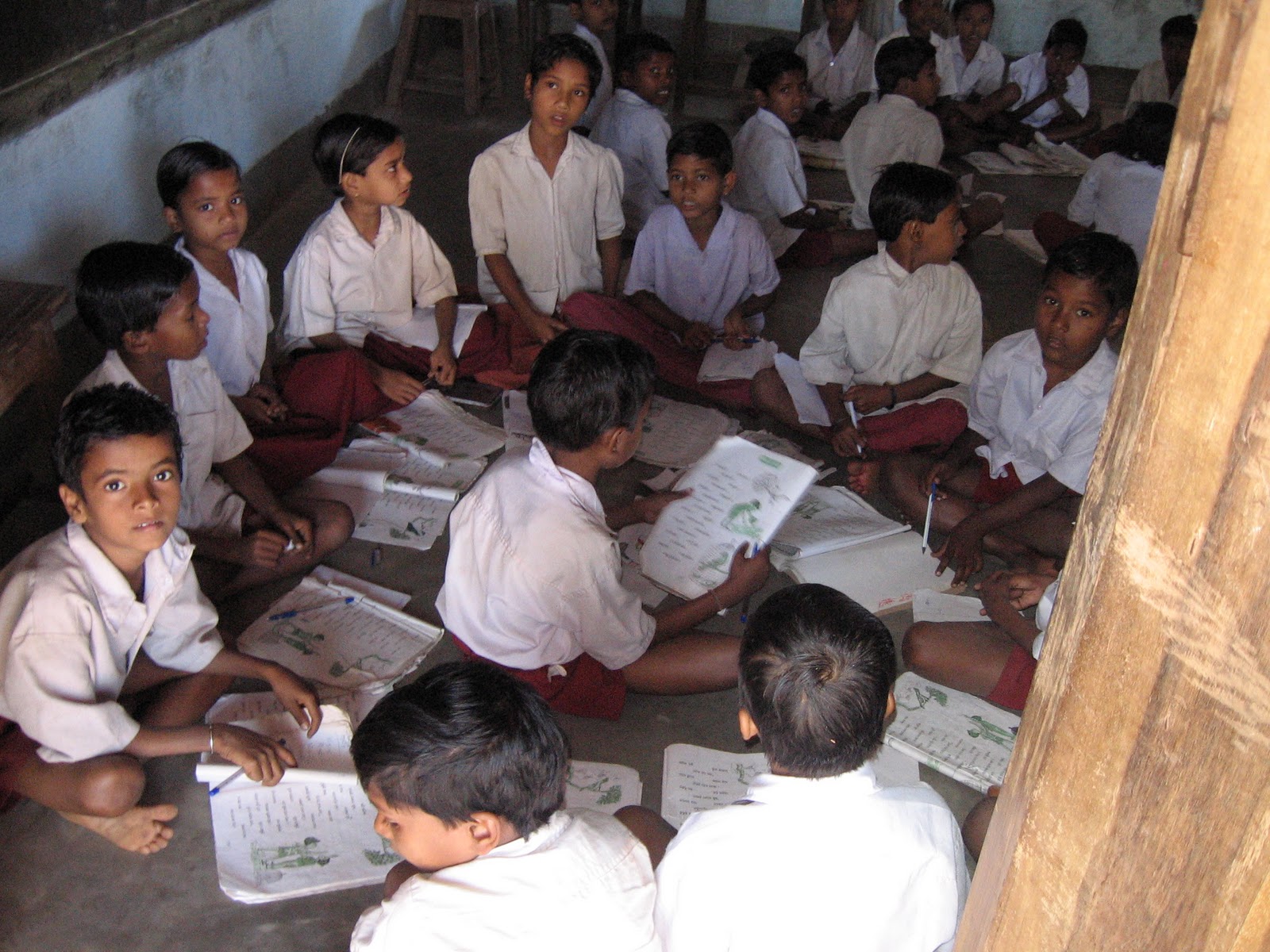
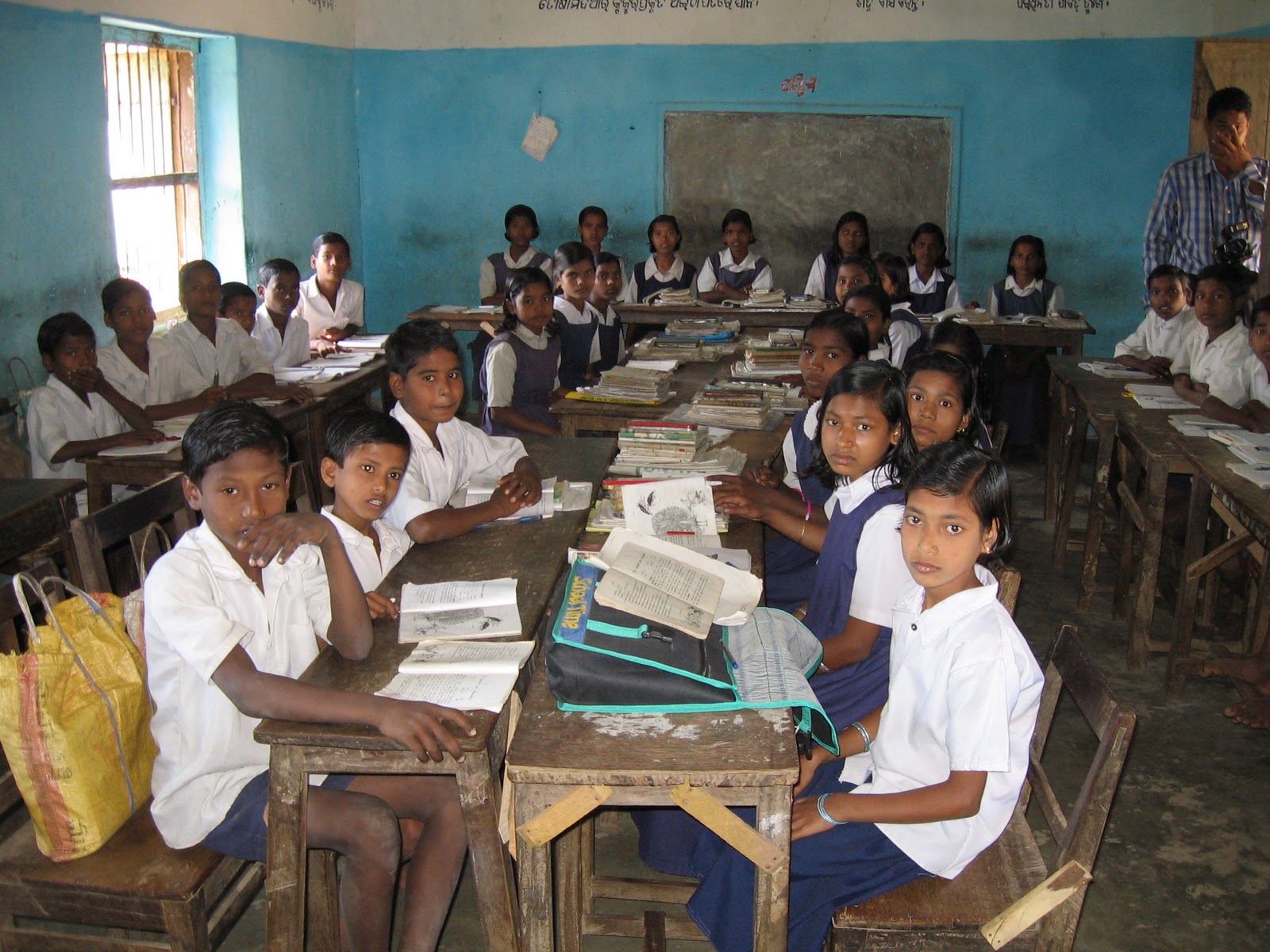
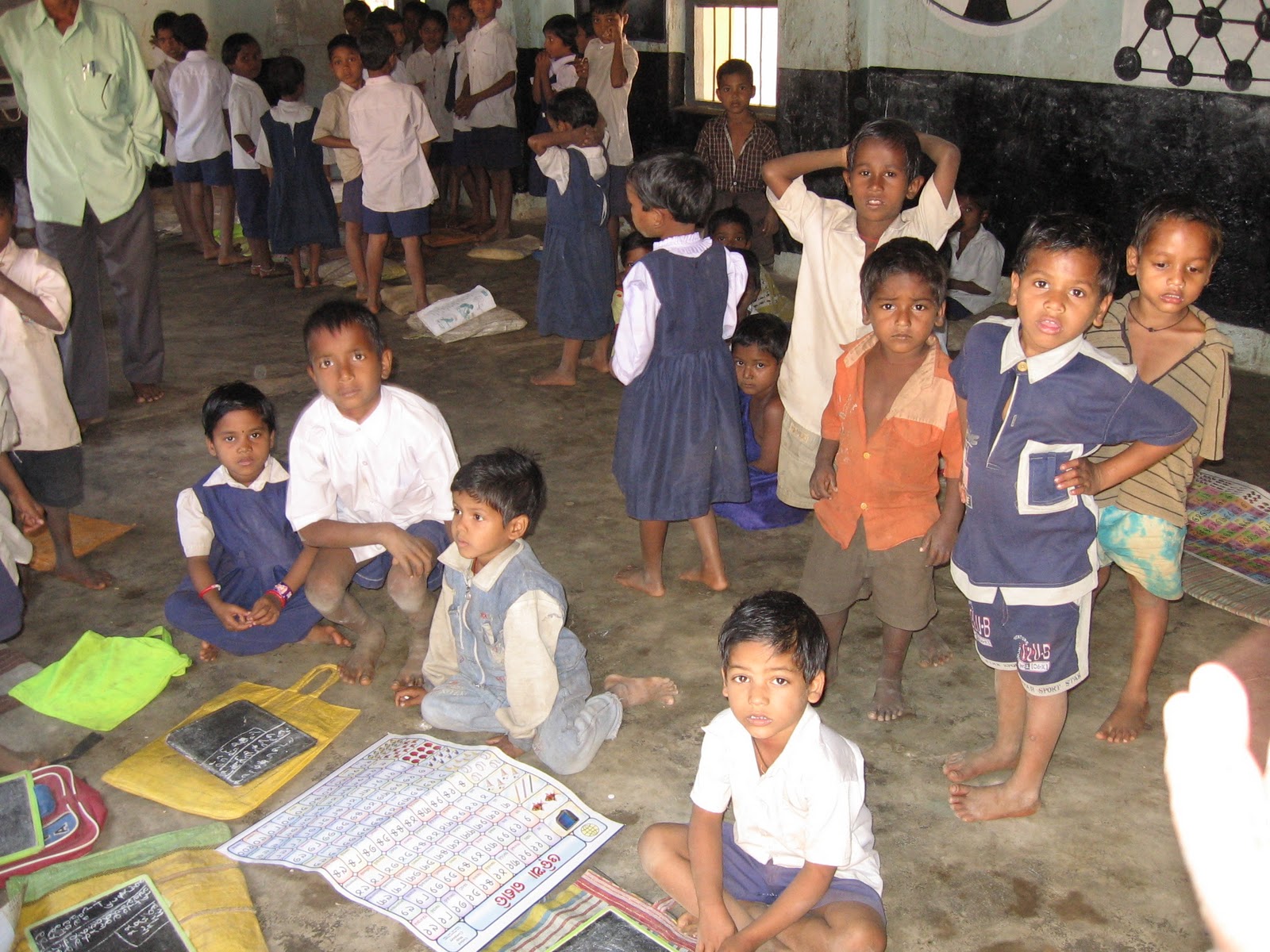
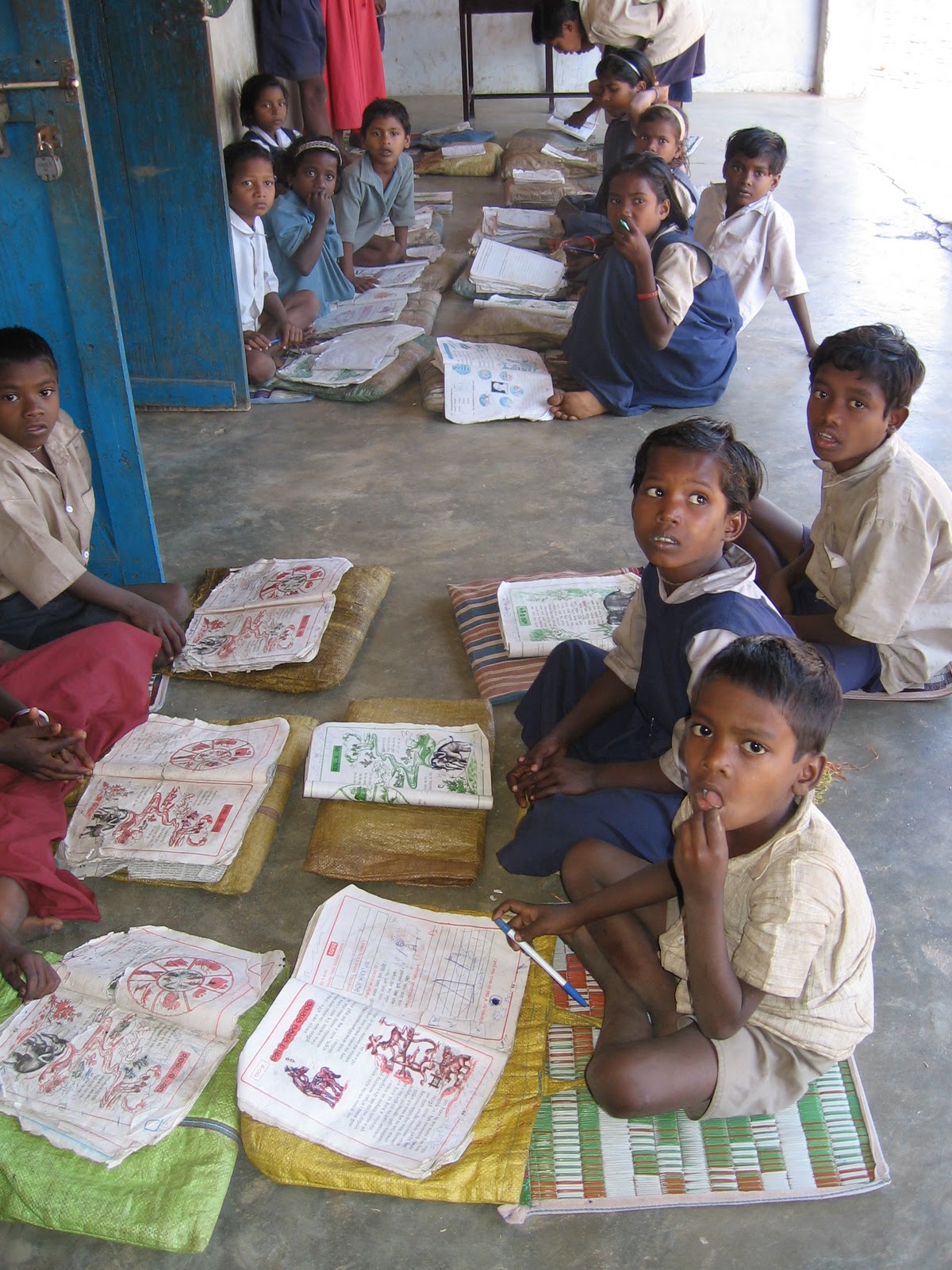
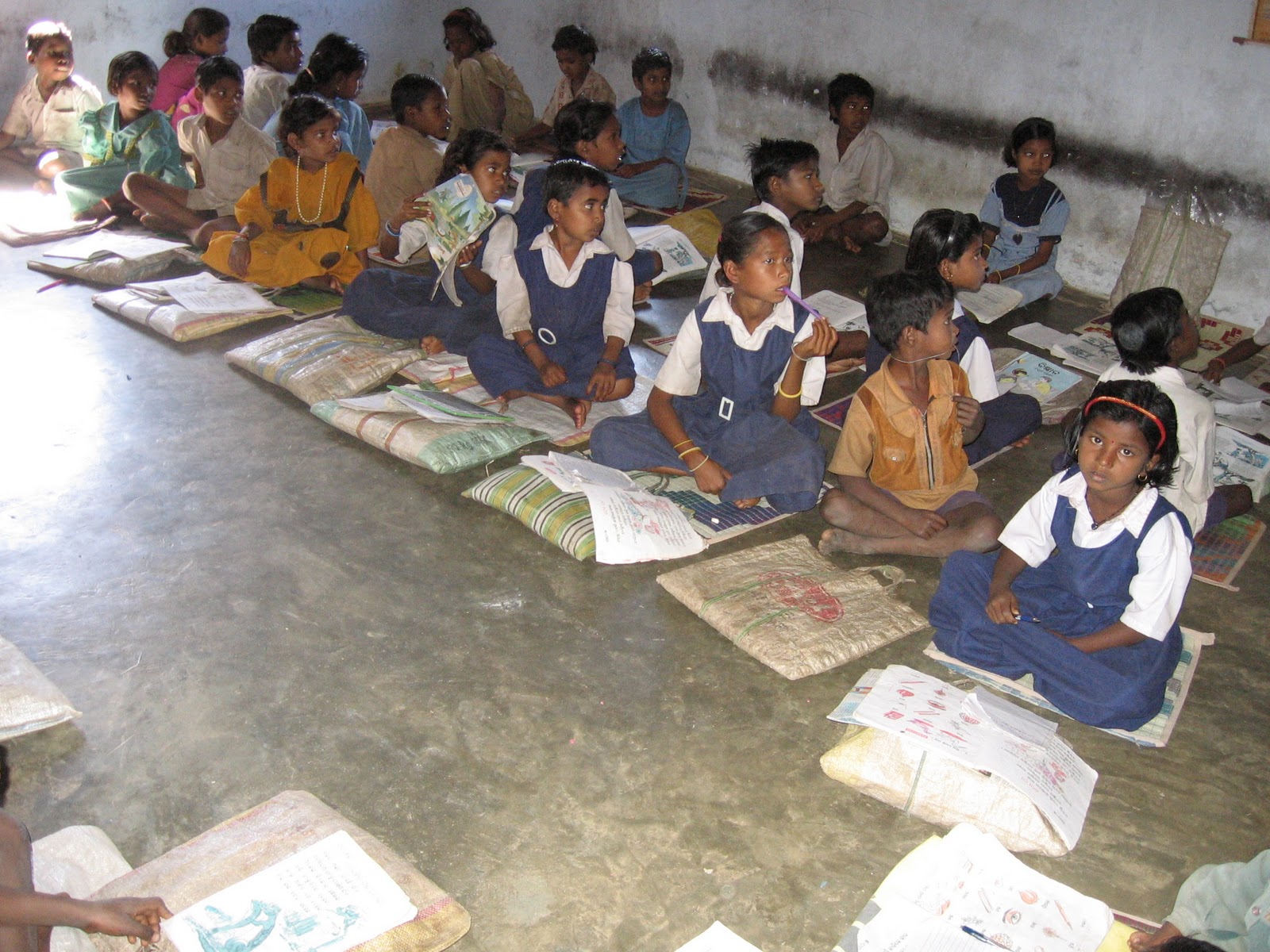
This sits a little uneasily with the clamor for greater democracy in the classroom. Active / joyful learning is now advocated in most of the countries mentioned. In India, the recently enacted Right to Education actually mandates activity-based classrooms where children will construct their own knowledge. The National Curriculum Framework 2005 makes an eloquent plea for \’democracy in the classroom\’, where collaboration and partnership with children (rather than their \’sincerity and obedience\’) will be the hallmark of quality.
As you can guess, change is a long way coming. Despite the fact that democratic classrooms are \’Official Policy\’ backed by law, and nearly a decade and a half of yearly rounds of in-service teacher training emphasizing the virtue of active learning, classroom teaching tends to remain teacher-directed, instruction-based, with asking questions and offering one\’s opinions being considered almost a sin on the part of children.
When reports last came in, thus, D for Discipline was clearly winning over D for Democracy!


You must be logged in to post a comment.