Day: January 26, 2020
“A sportsperson with a positive attitude always thinks of winning, not defeating others.” —Professor M.S. Rao
Quality education and learning
Field trip – stone walls and landscape construction
Short Essay on \’Rajendra Prasad Jayanti: 03 December\’ (230 Words)
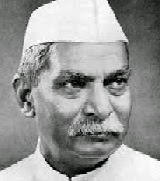
Rajendra Prasad was a good political leader, lawyer, statesman and social worker. He took active part in the freedom movements of India. He joined the Indian National Congress in 1911. He was elected as the President of the Indian National Congress during the Bombay session in October 1934. He was sent to Jail many times. He was elected the President of Constituent Assembly on 11 December 1946. Dr. Rajendra Prasad was elected the first President of the Republic of India.
Dr. Rajendra Prasad was subsequently awarded the Bharat Ratna, the India\’s highest civilian award. He authored many books. He was a great educationist and a man of world fame. High principles and ideals of Dr. Rajendra Prasad will always alive to show the right path. His birth anniversary is celebrated on 3rd December every year through out the country in a big way. Rich tributes are paid to him on this day. On this occasion several functions are organized at various places. Floral tributes are offered at his samadhi sthal.
Short Essay on \’Rajendra Prasad Jayanti: 03 December\’ (230 Words)
Rajendra Prasad was a good political leader, lawyer, statesman and social worker. He took active part in the freedom movements of India. He joined the Indian National Congress in 1911. He was elected as the President of the Indian National Congress during the Bombay session in October 1934. He was sent to Jail many times. He was elected the President of Constituent Assembly on 11 December 1946. Dr. Rajendra Prasad was elected the first President of the Republic of India.
Dr. Rajendra Prasad was subsequently awarded the Bharat Ratna, the India\’s highest civilian award. He authored many books. He was a great educationist and a man of world fame. High principles and ideals of Dr. Rajendra Prasad will always alive to show the right path. His birth anniversary is celebrated on 3rd December every year through out the country in a big way. Rich tributes are paid to him on this day. On this occasion several functions are organized at various places. Floral tributes are offered at his samadhi sthal.
Short Essay on \’Rajendra Prasad Jayanti: 03 December\’ (230 Words)
Rajendra Prasad was a good political leader, lawyer, statesman and social worker. He took active part in the freedom movements of India. He joined the Indian National Congress in 1911. He was elected as the President of the Indian National Congress during the Bombay session in October 1934. He was sent to Jail many times. He was elected the President of Constituent Assembly on 11 December 1946. Dr. Rajendra Prasad was elected the first President of the Republic of India.
Dr. Rajendra Prasad was subsequently awarded the Bharat Ratna, the India\’s highest civilian award. He authored many books. He was a great educationist and a man of world fame. High principles and ideals of Dr. Rajendra Prasad will always alive to show the right path. His birth anniversary is celebrated on 3rd December every year through out the country in a big way. Rich tributes are paid to him on this day. On this occasion several functions are organized at various places. Floral tributes are offered at his samadhi sthal.
\’Safer Internet Day\’ (110 Words)
On International Safer Internet Day, information are provided to people through Radio about avoiding online fraud in use of ATM and Debit Cards. Cyber crime cell to make this day special programs for children and young people about the precautions to be taken during work in internet. Safer Internet Day make a personal promise to `Do One Thing\’ to stay safer online.
\’Safer Internet Day\’ (110 Words)
On International Safer Internet Day, information are provided to people through Radio about avoiding online fraud in use of ATM and Debit Cards. Cyber crime cell to make this day special programs for children and young people about the precautions to be taken during work in internet. Safer Internet Day make a personal promise to `Do One Thing\’ to stay safer online.
\’Safer Internet Day\’ (110 Words)
On International Safer Internet Day, information are provided to people through Radio about avoiding online fraud in use of ATM and Debit Cards. Cyber crime cell to make this day special programs for children and young people about the precautions to be taken during work in internet. Safer Internet Day make a personal promise to `Do One Thing\’ to stay safer online.
The Classroom Sleeper – Are We Paying Attention?
![]() |
| Source: Michael Wesch |
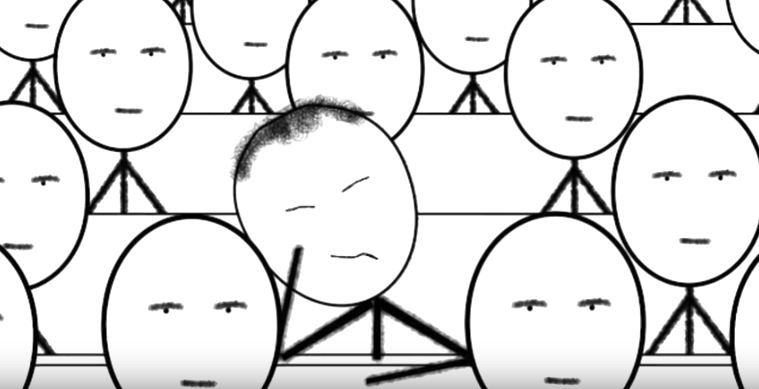
We’ve all had students in our classes over the years who sat in the back to put their heads down to sleep. This is not the student we’ve referred to as the “understudent,” who waits in the wings or quietly sits in the shadows of the room doing the required work. We’re not talking about the quiet ones, the introverts, or the “low verbals” either. The “sleeper” is different.
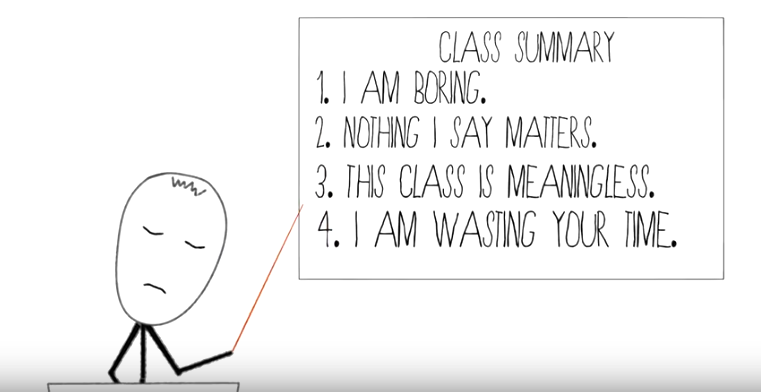
We recently showed a group of students preparing public service announcements one of our favorite videos called the \”Vision of Students Today,\” produced in 2007 by Michael Wesch, for its effective way to deliver a powerful message. That’s when we discovered his recent animated video titled “The Sleeper.”
The message hit home. We’re positive that educators experienced the same frustration as the teacher in the animation, and perhaps even thought that the sleeper deliberately set out to annoy us. Some may have wondered if the student disengaged because of boredom, or questioned whether it was the material or their teaching style. For others, it’s personal and exasperating.
![]() |
| Source: Michael Wesch |
Why are sleepers so unsettling?
Are they not paying attention, or are we?
How sensitive are we to students who disengage?
This becomes our challenge!
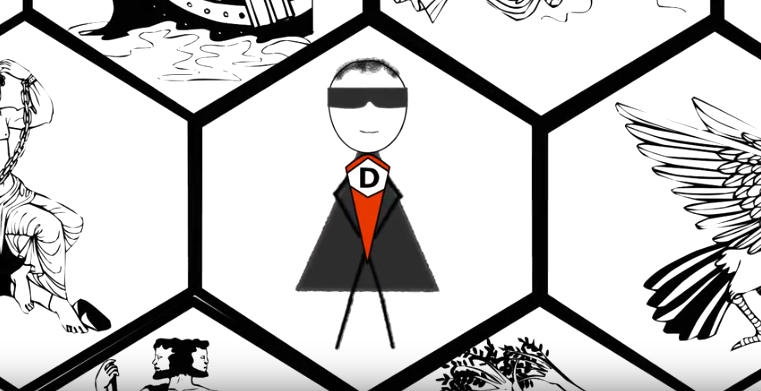
We should not be so quick to judge, or make assumptions about why they\’re tired. If we never stop to ask, we may never know the hidden talents that push students to stay up late to create something they are passionate about through sheer desire.
In an education system too focused on narrow pursuits, it misses the strengths, the interests, and the opportunities for not only the sleeper, but also for every other student as well.
![]() |
| Source: Michael Wesch |
We need to stop and ask, make it personal, and tap curiosity. When we do, we just might find out something that surprises us.
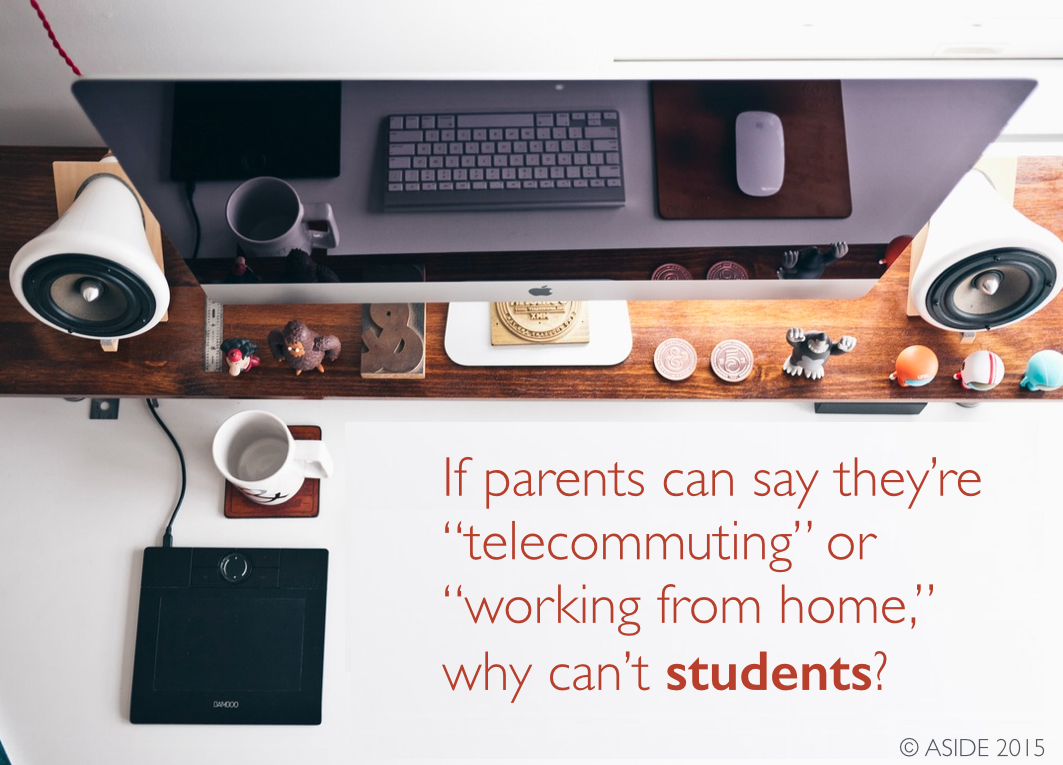
If Parents Can Work From Home, Why Can't Students? A Snow Day Doesn't Have To Be A "No" Day
![]() |
| Source: ASIDE 2015 |
Students frequently get sick and miss school. Consider, too, how many times you’ve seen a kid in your classroom who really shouldn’t be there. He has his head down, or has bags under his eyes, or has his mind clearly elsewhere. How many times have you noticed a student who truly needs a break? She’s been burning the candle at both ends, or has been bearing the weight of a bully, or has been negotiating a tough family situation.
![]() |
| Source: ASIDE 2015 |
Video conferencing and social media and collaborative documents all offer easy avenues to engage a class of home-bound learners. Many teachers use these resources daily inside of the classroom. Why can’t these tools also be tapped to coordinate a corps of kids, either in real-time or at the students’ own paces?
Tools for remote learning:
- TodaysMeet – The leading real-time channel, TodaysMeet creates discussion groups for instant message communication.
- Twitter – The ultimate social media tool for education, Twitter mimics the classroom environment with chats, text, links, images, and videos.
- Croak.it – Both teachers and students can create a 30-second audio file with a url that can be embedded in a backchannel, website, or tweet.
- Remind – This free way for teachers to text students protects everyone’s privacy and instantly reaches kids on their phones.
- Cel.ly – Cel.ly creates individual social networks via its texting feature that can be moderated directly from a smartphone.
![]() |
| Sources: Company Logos |
- Verso – Flipped learning with Verso can include videos, images, or links in self-contained classes with rich commenting features.
- eduCanon – This site collects videos from across the web and allows teachers to add flipped learning elements.
- EDpuzzle – Teachers can crop videos and add questions and explanations to fit any age group.
- Zaption – Zaption makes videos interactive by adding assessments.
- audioBoom – Teachers can record podcasts to pass lessons on to students, and kids can capture their own answers, readings, or projects.
![]() |
| Sources: Company Logos |
- Nearpod – The teacher guides the presentation, and students on their own devices see the slides progress as they interact from anywhere with polls and assessments.
- Issuu – Intended to publish webzines, Issuu turns any .pdf into a scrolling web document for students to read and save at their leisure.
- iBooks Author – The ability to publish customized content on iBooks is becoming easier and easier.
- Wikispaces – Still one of the most flexible platforms for a class website, Wikispaces accepts any media and any embedded content.
![]() |
| Sources: Company Logos |
- Skype – Teachers can broadcast themselves in full video and audio to reach students in their homes.
- Facetime – As more and more schools opt for iPads and Apple TVs, Facetime provides an easy way to videoconference.
- Google+ Hangouts – Multiple participants from any device can come together in a live-streaming video chat.
![]() |
| Sources: Company Logos |
- Google Docs – Google Drive keeps getting better and better, and the real-time collaboration is still the industry standard for essays, presentations, and spreadsheets.
- Padlet – Padlet is an infinitely customizable public space with customized urls to post text, links, images, videos, and student projects.
- Dropbox – The larger storage capacity of Dropbox makes it ideal for file-sharing.
- Email – When in doubt, simple email can allow students and teachers to swap instructions, questions, and assignments.
If Parents Can Work From Home, Why Can't Students? A Snow Day Doesn't Have To Be A "No" Day
![]() |
| Source: ASIDE 2015 |
Students frequently get sick and miss school. Consider, too, how many times you’ve seen a kid in your classroom who really shouldn’t be there. He has his head down, or has bags under his eyes, or has his mind clearly elsewhere. How many times have you noticed a student who truly needs a break? She’s been burning the candle at both ends, or has been bearing the weight of a bully, or has been negotiating a tough family situation.
![]() |
| Source: ASIDE 2015 |
Video conferencing and social media and collaborative documents all offer easy avenues to engage a class of home-bound learners. Many teachers use these resources daily inside of the classroom. Why can’t these tools also be tapped to coordinate a corps of kids, either in real-time or at the students’ own paces?
Tools for remote learning:
- TodaysMeet – The leading real-time channel, TodaysMeet creates discussion groups for instant message communication.
- Twitter – The ultimate social media tool for education, Twitter mimics the classroom environment with chats, text, links, images, and videos.
- Croak.it – Both teachers and students can create a 30-second audio file with a url that can be embedded in a backchannel, website, or tweet.
- Remind – This free way for teachers to text students protects everyone’s privacy and instantly reaches kids on their phones.
- Cel.ly – Cel.ly creates individual social networks via its texting feature that can be moderated directly from a smartphone.
![]() |
| Sources: Company Logos |
- Verso – Flipped learning with Verso can include videos, images, or links in self-contained classes with rich commenting features.
- eduCanon – This site collects videos from across the web and allows teachers to add flipped learning elements.
- EDpuzzle – Teachers can crop videos and add questions and explanations to fit any age group.
- Zaption – Zaption makes videos interactive by adding assessments.
- audioBoom – Teachers can record podcasts to pass lessons on to students, and kids can capture their own answers, readings, or projects.
![]() |
| Sources: Company Logos |
- Nearpod – The teacher guides the presentation, and students on their own devices see the slides progress as they interact from anywhere with polls and assessments.
- Issuu – Intended to publish webzines, Issuu turns any .pdf into a scrolling web document for students to read and save at their leisure.
- iBooks Author – The ability to publish customized content on iBooks is becoming easier and easier.
- Wikispaces – Still one of the most flexible platforms for a class website, Wikispaces accepts any media and any embedded content.
![]() |
| Sources: Company Logos |
- Skype – Teachers can broadcast themselves in full video and audio to reach students in their homes.
- Facetime – As more and more schools opt for iPads and Apple TVs, Facetime provides an easy way to videoconference.
- Google+ Hangouts – Multiple participants from any device can come together in a live-streaming video chat.
![]() |
| Sources: Company Logos |
- Google Docs – Google Drive keeps getting better and better, and the real-time collaboration is still the industry standard for essays, presentations, and spreadsheets.
- Padlet – Padlet is an infinitely customizable public space with customized urls to post text, links, images, videos, and student projects.
- Dropbox – The larger storage capacity of Dropbox makes it ideal for file-sharing.
- Email – When in doubt, simple email can allow students and teachers to swap instructions, questions, and assignments.
If Parents Can Work From Home, Why Can't Students? A Snow Day Doesn't Have To Be A "No" Day
![]() |
| Source: ASIDE 2015 |
Students frequently get sick and miss school. Consider, too, how many times you’ve seen a kid in your classroom who really shouldn’t be there. He has his head down, or has bags under his eyes, or has his mind clearly elsewhere. How many times have you noticed a student who truly needs a break? She’s been burning the candle at both ends, or has been bearing the weight of a bully, or has been negotiating a tough family situation.
![]() |
| Source: ASIDE 2015 |
Video conferencing and social media and collaborative documents all offer easy avenues to engage a class of home-bound learners. Many teachers use these resources daily inside of the classroom. Why can’t these tools also be tapped to coordinate a corps of kids, either in real-time or at the students’ own paces?
Tools for remote learning:
- TodaysMeet – The leading real-time channel, TodaysMeet creates discussion groups for instant message communication.
- Twitter – The ultimate social media tool for education, Twitter mimics the classroom environment with chats, text, links, images, and videos.
- Croak.it – Both teachers and students can create a 30-second audio file with a url that can be embedded in a backchannel, website, or tweet.
- Remind – This free way for teachers to text students protects everyone’s privacy and instantly reaches kids on their phones.
- Cel.ly – Cel.ly creates individual social networks via its texting feature that can be moderated directly from a smartphone.
![]() |
| Sources: Company Logos |
- Verso – Flipped learning with Verso can include videos, images, or links in self-contained classes with rich commenting features.
- eduCanon – This site collects videos from across the web and allows teachers to add flipped learning elements.
- EDpuzzle – Teachers can crop videos and add questions and explanations to fit any age group.
- Zaption – Zaption makes videos interactive by adding assessments.
- audioBoom – Teachers can record podcasts to pass lessons on to students, and kids can capture their own answers, readings, or projects.
![]() |
| Sources: Company Logos |
- Nearpod – The teacher guides the presentation, and students on their own devices see the slides progress as they interact from anywhere with polls and assessments.
- Issuu – Intended to publish webzines, Issuu turns any .pdf into a scrolling web document for students to read and save at their leisure.
- iBooks Author – The ability to publish customized content on iBooks is becoming easier and easier.
- Wikispaces – Still one of the most flexible platforms for a class website, Wikispaces accepts any media and any embedded content.
![]() |
| Sources: Company Logos |
- Skype – Teachers can broadcast themselves in full video and audio to reach students in their homes.
- Facetime – As more and more schools opt for iPads and Apple TVs, Facetime provides an easy way to videoconference.
- Google+ Hangouts – Multiple participants from any device can come together in a live-streaming video chat.
![]() |
| Sources: Company Logos |
- Google Docs – Google Drive keeps getting better and better, and the real-time collaboration is still the industry standard for essays, presentations, and spreadsheets.
- Padlet – Padlet is an infinitely customizable public space with customized urls to post text, links, images, videos, and student projects.
- Dropbox – The larger storage capacity of Dropbox makes it ideal for file-sharing.
- Email – When in doubt, simple email can allow students and teachers to swap instructions, questions, and assignments.
Short Biography of ‘Madhu Limaye’ (100 Words)
Madhu Limaye was an Indian Socialist essayist and activist. He was the follower of Ram Manohar Lohia. He played an active part in the JP movement. Madhu Limaye was a freedom fighter. In 1955, Portugese put him in jail from where he wrote letters to his little son, Aniruddha, also called Popat. In retirement, through the 1980s, he continued to write. He was especially caustic on Constitutional issues.


You must be logged in to post a comment.