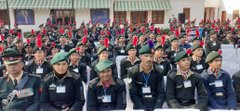
New Delhi Resolution Unanimously Adopted by FEMBoSA Members

Chief Election Commissioner of India, Shri Sunil Arora today assumed Chairmanship of The Forum of the Election Management Bodies (EMBs) of South Asia (FEMBoSA) for the year 2020. The Outgoing Chair of FEMBoSA, Mr. K.M.Nurul Huda,  CEC of Bangladesh handed over the Logo of FEMBoSA to the Incoming Chair, Mr. Sunil Arora at the 10th Annual Meeting of  FEMBoSA  held in New Delhi today.

In his address, Mr. Nurul Huda stated that in keeping with the objectives of the Forum, members have been sharing experiences and skills and taking steps to enhance cooperation with other EMBs.   EMB Bangladesh presented the Stewardship Report on the activities of FEMBoSA members during the last year.

Accepting the responsibility as Chairperson of the Forum, Sh Arora thanked the delegates for the trust and confidence reposed in the Election Commission of India. Sh. Arora said “The democratic scaffold and superstructure can be enacted and strengthened on the principle that the political power is validated by the will of the people. In democracy, power is won and legitimized only by regular elections, based on the universal, equal, direct and freely expressed suffrage”. Strong participatory and inclusive democracies are better able to ensure good governance and empowerment of all the citizens, he said. Sh. Arora added that for Capacity Building, Election Commission of India has established the India International Institute of Democracy and Election Management (IIIDEM) in June 2011.

FEMBoSA was established at the 3rd Conference of Heads of Election Management Bodies (EMBs) of SAARC Countries held at New Delhi in May, 2012. With its eight members, FEMBoSA represents a very large part of the democratic world and is an active regional association of EMBs.  Annual FEMBoSA meeting is held by rotation among the members.  The last (9th) annual meeting of FEMBoSA was held in Dhaka in September 2018.

A New Delhi Resolution was unanimously adopted at the 10th FEMBoSA Annual Meeting today by the seven FEMBoSA members present at the meeting. The Members resolved to : Implement the Work Plan for 2020 as approved by the member EMBs in the 10th Meeting of FEMBoSA; Cooperate in capacity building of the member countries; Host election visitor programmes in the respective countries as feasible; Provide technical assistance to the members as requested and as feasible; Actively share best practices and knowledge in ICT tools and modules being used by the member EMBs and to develop standards for sustainable use of ICT in elections; Take steps to curb use of money power and muscle power; Enhance and ease participation of Persons with Disabilities and Senior Citizens in the election process; Maintain the permanent content management based web portal of FEMBoSA to share information among the EMBs through the www.fembosa.org web portal; Design and implement regional research projects.

The Work Plan for 2020 on ‘Use of Technology in Elections’ calls for Members to undertake projects and initiatives on various aspects of use of technology in elections and present a report on their experiences and challenges faced in this regard at the next FEMBoSA Meeting.

On the sidelines of the Conference, ECI renewed Memorandum of Understanding (MOU) for cooperation in the field of election management with the Independent Election Commission of Afghanistan. The MOU was signed by H.E. Mrs. Hawa Alam Nooristani, Chairwoman, IEC Afghanistan and by Shri Sunil Arora, CEC on behalf of ECI. An MoU for cooperation in the field of election management was also signed with the Independent High Authority for Elections (ISIE) of Tunisia.  The MOU was signed by H.E. Mr. Nabil Baffoun, President, ISIE of Tunisia and by Shri Arora.

An International Conference was also organised today on the theme “Strengthening Institutional Capacity”, where nearly 30 delegates gathered to attend the International Conference. The day long International Conference included delegates from participating FEMBoSA members as also participants from EMBs of Kazakhstan, Kenya, Kyrgystan, Mauritius, Tunisia and three International Organisations viz. the A-WEB, International Foundation of Electoral Systems and International IDEA. Presentations were made by delegates from ECs of Afghanistan, Bangladesh, Bhutan, India, Kyrgyz Republic, Maldives, Mauritius, Nepal, Sri Lanka, Tunisia, IFES and Intl. IDEA. The representatives shared their experiences, best practices and initiatives. Experts also analysed barriers, policy interventions, strategies, programmes, good practices and technological innovation for strengthening Institutional capacity of EMBs.

On this occasion, CEC Sh Sunil Arora along with the two Election Commissioners of India Sh. Ashok Lavasa and Sh. Sushil Chandra and Secretary General, ECI Sh Umesh Sinha also launched the 10th issue of ECI’s magazine – ‘VOICE International’ which carries articles on the theme of “Innovative Methods of Voter Registration”. The 4th Issue of magazine “My Vote Matters” was also released on the occasion. A webportal on Association of World Election Bodies (A-WEB) was also unveiled. IIIDEM will host A-WEB Centre for documentation, research and training for sharing the best practices and capacity building of officials of A-WEB members. The Commission also released “ICT 2020; a compendium of 20 Apps for Election”.

Election Commission of India has endeavoured to play a pioneering role in organizing free, fair and credible elections in a participative manner in the largest democracy in the world.  It enjoys impeccable reputation in imparting knowledge and sharing skills and best practices with other EMBs through its robust international cooperation programme.  In September 2019, ECI took over as Chair of the 115 member Association of World Election Bodies for 2019-21 term.  Earlier today, ECI assumed Chairmanship of FEMBoSA for 2020.  ECI remains committed to the ideals and objectives of these Associations and looks forward to further strengthen its cooperation and interaction with fellow EMBs to spread the march of democracy globally.

****

Short Essay on \’Flower I Like Most\’ (130 Words)

Among the flowers I like Lotus the most. The Lotus is scientifically known as \’Nelumbo Nucifera\’. It is a sacred flower and occupies a unique position in the art and mythology of ancient India and has been an auspicious symbol of Indian culture since time immemorial. It is also the national flower of India.

Lotus flower is found only in two colours that are pink and white. The flower grows in murky waters and rises on a long stalk above the surface to bloom glorious. It is a beautiful flower which symbolises divinity, fertility, wealth, knowledge and not to forget enlightenment. Untouched by the impurity, lotus symbolises the purity of heart and mind. According to Hindu mythology Lotus is m

Short Essay on \’Flower I Like Most\’ (130 Words)

Among the flowers I like Lotus the most. The Lotus is scientifically known as \’Nelumbo Nucifera\’. It is a sacred flower and occupies a unique position in the art and mythology of ancient India and has been an auspicious symbol of Indian culture since time immemorial. It is also the national flower of India.

Lotus flower is found only in two colours that are pink and white. The flower grows in murky waters and rises on a long stalk above the surface to bloom glorious. It is a beautiful flower which symbolises divinity, fertility, wealth, knowledge and not to forget enlightenment. Untouched by the impurity, lotus symbolises the purity of heart and mind. According to Hindu mythology Lotus is m

Short Essay on \’Flower I Like Most\’ (130 Words)

Among the flowers I like Lotus the most. The Lotus is scientifically known as \’Nelumbo Nucifera\’. It is a sacred flower and occupies a unique position in the art and mythology of ancient India and has been an auspicious symbol of Indian culture since time immemorial. It is also the national flower of India.

Lotus flower is found only in two colours that are pink and white. The flower grows in murky waters and rises on a long stalk above the surface to bloom glorious. It is a beautiful flower which symbolises divinity, fertility, wealth, knowledge and not to forget enlightenment. Untouched by the impurity, lotus symbolises the purity of heart and mind. According to Hindu mythology Lotus is m

DRDO to showcase indigenously-developed military systems and technologies at DefExpo 2020

The display of various indigenously-developed military systems and technologies by Defence Research and Development Organisation (DRDO) will bring alive the spirit of self-reliance and national pride at the forthcoming DefExpo 2020. The 11th edition of the biennial expo will be held at Uttar Pradesh capital Lucknow from February 5-9, 2020.

The participation of DRDO at the expo is marked with the live demonstration of Advanced Towed Artillery Gun System (ATAGS), Main Battle Tank (MBT) Arjun MK IA, Wheeled Armoured Platform (WhAP), Counter Mine Flail, 15m Advanced Composite Modular Bridging System (ACMBS) and modular bridge.

The DRDO will exhibit more than 500 products from all technology clusters in the five-day mega expo in line with the theme of the event “Digital Transformation of Defence”. DRDO will showcase over 23 products in the India Pavilion at DefExpo, which has been set up to showcase the combined strength of DRDO, public and private sector in defence manufacturing.


The Fifteenth Finance Commission holds meeting with the Government of Goa

The 15th Finance Commission headed by Chairman, Shri N.K. Singh alongwith its Members and senior officials met today with  Chief Minister of Goa, Shri Pramod Sawant alongwith his Cabinet colleagues and senior State Government officials.

The Commission observed that:

  • Goa has a population of 1.459 million, making it India’s fourth smallest State in terms of Population (after SikkimMizoram and Arunachal Pradesh). The population has a growth rate of 8.23% per decade.
  • There are 394 people for each square kilometer of land which is higher than national average 382 per km2. Goa is the state with highest proportion of urban population with 62.17% of the population living in urban areas.
  • Estimates put the migrant, or non-Goan, population at 20% of the population, with a State Government study projecting that by 2021 the migrant community will outnumber the native population.
  • Goa has the highest GDP per capita among all Indian states, two and a half times that of the country. In 2018-19, per capita NSDP of the State was Rs. 4,67,998 against per capita income of Rs. 1,26,406 for India.
  • It was ranked the best-placed state by the Eleventh Finance Commission for its infrastructure and ranked on top for the best quality of life in India by the National Commission on Population based on the 12 Indicators.
  •  Goa is also one of the few states in India to achieve 100 percent rural electrification.
  • In 2018-19, the share of primary, secondary and tertiary sector in GSVA (current prices 2011) of the State was 9.6, 46.3 and 34.3%, respectively.
  • The State’s share in inter-se devolution had risen from 0.26 during 2010-15 (as recommended by FC-XIII) to 0.37 during 2015-20 (as recommended by FC-XIV).


The Commission was appreciative of the fact that:

  • In 2017-18, the Own Tax Revenue to GSDP of the State was 6.7%, which is sixth highest among all States. Also, the NTR as the percent to GSDP is 4.3 and ORR as a percent to GSDP is 11 which is highest among all the States.
  • The annual growth rate as a percent to GSDP has been on the higher side when compared to GDP growth rate from 2014-15 onwards.
  • State Government has witnessed revenue surplus to GSDP in all the years since 2011-12 till 2018-19 except for the years 2012-13 and 2013 -14.
  • The Per Capita Tax Revenue is 7.34 as a % to the PCI for 2017-18.
  • The social indicators including literacy rate, decennial growth rate, Total Fertility Rate (TFR), IMR, Birth Rate, Death Rate are well above the national average.
  • The debt-GSDP ratio of the State was 26.32% in 2017-18, which is well above the average of the all States i.e 25.51 %. The State is ranked at 12th among all the States for the year 2017-18.
  • Solid waste management and sewage treatment related issues.
  • Tourism development.


The Finance Commission was concerned about:

  • In the recent past, Goa has been facing the problem of slower own tax revenue growth. The slowdown in the economy is affecting the revenue potential of the State.  The nominal GSDP growth in Goa has fallen to 8.5 percent in 2015-16 from an average of 12 percent in the last decade.


  •  The State Government may need to make progress towards increasing capital expenditure, eliminating AT&D losses in the power sector, and improving the quality of such expenditure in generating future income streams.


  • The State Government has been irregular in constitution of State Finance Commission and not implemented recommendations of any two SFCs so far constituted in spite of having 190 Village Panchayats and 14 ULBs.


  • All the functions mentioned under Eleventh and Twelfth Schedule of the Constitution have not yet been fully devolved to the local bodies.


The Commission desired to know about the natural disaster preparedness of the State.  The Commission also sought information on how the State dealt with the huge tourist arrival (both domestic & international) in Goa each year.

Earlier the Commission had held a meeting with the representatives of the Political Parties of the State of Goa including BJP, INC, AAP, MGP, GFP and CPI.  Cutting across party lines, all parties had put forth issues and problems facing Goa currently.

The State Government gave a detailed presentation of the current fiscal situation of Goa and its requirements for funds.  The State has submitted a demand for grant of Rs.6333.32 crores in addition to the overall tax devolution.

The Commission has assured to look into all matters and issues, specifically solid waste management, tourism development, etc. before making its recommendations to the Union Government.


********

10th National Voters’ Day to be celebrated on 25th January 2020

Hon’ble President of India Sh. Ram Nath Kovind will be the Chief Guest at the 10th National Voters’ Day being organized by Election Commission of India on 25th January 2020 at Manekshaw Centre, Delhi Cantt. Shri Ravi Shankar Prasad, Union Minister for Law and Justice, Communications and Electronics and Information Technology shall also grace the national function. This year marks an important milestone in the history of Indian democracy as Election Commission of India (ECI) completes 70 years of its journey.

The National Voters’ Day (NVD) has been celebrated on January 25 every year since 2011, all across the country at over ten lakh locations across the nation, that include polling stations areas, sub divisions, divisions, district and state headquarters, to mark the Foundation day of Election Commission of India, which was established on 25th January 1950.The main purpose of the NVD celebration is to encourage, facilitate and maximize the enrolment, especially for the new voters. Dedicated to the voters of the country, the Day is utilized to spread awareness among voters for promoting informed participation in the electoral process. New Voters are felicitated and handed over their Elector Photo Identity Card in the NVD function.

Belief in the Ballot-2, an anthology of 101 human stories from across the nation about Indian elections, developed in collaboration with the Publication Division will be launched on the occasion and the first copy shall be presented by the Commission to the Hon’ble President.

‘The Centenarian Voters: Sentinels of Democracy’ with 51 stories of veteran voters across the nation who braved difficult terrain, poor health and other challenges to come out and vote will be launched on the occasion by the Hon’ble President.

The National Awards for the Best Electoral Practices shall be conferred on District and State level Officers for their outstanding performance in the conduct of elections in different spheres such as IT initiatives, Security Management, Election Management and contribution in the field of voter awareness and outreach.

Chief Election Commissioners and delegates from Afghanistan, Bangladesh, Bhutan, Kazakhstan, Kyrgyz Republic, Maldives, Mauritius, Nepal, Srilanka and Tunisia, who are coming to New Delhi to attend the 10th Annual Meeting of the  Forum of the Election Management Bodies of South Asia (FEMBoSA), shall grace the occasion.  Reputed international organisations working in elections such as A-WEB, IFES and International IDEA will also be a part of the occasion. Members of Political Parties, Members of Parliament besides Diplomats from various countries and representatives from national and international organizations working in the area of democracy and elections are expected to attend the national function.

The theme for NVD 2020 is ‘Electoral Literacy for Stronger Democracy’. The theme sets the tone for year-long activities which focus on voter education and renewal of citizens’ faith in the electoral process.


10th Annual Meeting of (FEMBoSA) & International Conference on ‘Strengthening Institutional Capacity’ concludes at New Delhi

Chief Election Commissioner of India, Shri Sunil Arora today assumed Chairmanship of The Forum of the Election Management Bodies (EMBs) of South Asia (FEMBoSA) for the year 2020. The Outgoing Chair of FEMBoSA, Mr. K.M.Nurul Huda,  CEC of Bangladesh handed over the Logo of FEMBoSA to the Incoming Chair, Mr. Sunil Arora at the 10th Annual Meeting of  FEMBoSA  held in New Delhi today.

In his address, Mr. Nurul Huda stated that in keeping with the objectives of the Forum, members have been sharing experiences and skills and taking steps to enhance cooperation with other EMBs.   EMB Bangladesh presented the Stewardship Report on the activities of FEMBoSA members during the last year.

Accepting the responsibility as Chairperson of the Forum, Sh Arora thanked the delegates for the trust and confidence reposed in the Election Commission of India. Sh. Arora said “The democratic scaffold and superstructure can be enacted and strengthened on the principle that the political power is validated by the will of the people. In democracy, power is won and legitimized only by regular elections, based on the universal, equal, direct and freely expressed suffrage”. Strong participatory and inclusive democracies are better able to ensure good governance and empowerment of all the citizens, he said. Sh. Arora added that for Capacity Building, Election Commission of India has established the India International Institute of Democracy and Election Management (IIIDEM) in June 2011.

FEMBoSA was established at the 3rd Conference of Heads of Election Management Bodies (EMBs) of SAARC Countries held at New Delhi in May, 2012. With its eight members, FEMBoSA represents a very large part of the democratic world and is an active regional association of EMBs.  Annual FEMBoSA meeting is held by rotation among the members.  The last (9th) annual meeting of FEMBoSA was held in Dhaka in September 2018.

A New Delhi Resolution was unanimously adopted at the 10th FEMBoSA Annual Meeting today by the seven FEMBoSA members present at the meeting. The Members resolved to : Implement the Work Plan for 2020 as approved by the member EMBs in the 10th Meeting of FEMBoSA; Cooperate in capacity building of the member countries; Host election visitor programmes in the respective countries as feasible; Provide technical assistance to the members as requested and as feasible; Actively share best practices and knowledge in ICT tools and modules being used by the member EMBs and to develop standards for sustainable use of ICT in elections; Take steps to curb use of money power and muscle power; Enhance and ease participation of Persons with Disabilities and Senior Citizens in the election process; Maintain the permanent content management based web portal of FEMBoSA to share information among the EMBs through the www.fembosa.org web portal; Design and implement regional research projects.

The Work Plan for 2020 on ‘Use of Technology in Elections’ calls for Members to undertake projects and initiatives on various aspects of use of technology in elections and present a report on their experiences and challenges faced in this regard at the next FEMBoSA Meeting.

On the sidelines of the Conference, ECI renewed Memorandum of Understanding (MOU) for cooperation in the field of election management with the Independent Election Commission of Afghanistan. The MOU was signed by H.E. Mrs. Hawa Alam Nooristani, Chairwoman, IEC Afghanistan and by Shri Sunil Arora, CEC on behalf of ECI. An MoU for cooperation in the field of election management was also signed with the Independent High Authority for Elections (ISIE) of Tunisia.  The MOU was signed by H.E. Mr. Nabil Baffoun, President, ISIE of Tunisia and by Shri Arora.

An International Conference was also organised today on the theme “Strengthening Institutional Capacity”, where nearly 30 delegates gathered to attend the International Conference. The day long International Conference included delegates from participating FEMBoSA members as also participants from EMBs of Kazakhstan, Kenya, Kyrgystan, Mauritius, Tunisia and three International Organisations viz. the A-WEB, International Foundation of Electoral Systems and International IDEA. Presentations were made by delegates from ECs of Afghanistan, Bangladesh, Bhutan, India, Kyrgyz Republic, Maldives, Mauritius, Nepal, Sri Lanka, Tunisia, IFES and Intl. IDEA. The representatives shared their experiences, best practices and initiatives. Experts also analysed barriers, policy interventions, strategies, programmes, good practices and technological innovation for strengthening Institutional capacity of EMBs.

On this occasion, CEC Sh Sunil Arora along with the two Election Commissioners of India Sh. Ashok Lavasa and Sh. Sushil Chandra and Secretary General, ECI Sh Umesh Sinha also launched the 10th issue of ECI’s magazine – ‘VOICE International’ which carries articles on the theme of “Innovative Methods of Voter Registration”. The 4th Issue of magazine “My Vote Matters” was also released on the occasion. A webportal on Association of World Election Bodies (A-WEB) was also unveiled. IIIDEM will host A-WEB Centre for documentation, research and training for sharing the best practices and capacity building of officials of A-WEB members. The Commission also released “ICT 2020; a compendium of 20 Apps for Election”.

Election Commission of India has endeavoured to play a pioneering role in organizing free, fair and credible elections in a participative manner in the largest democracy in the world.  It enjoys impeccable reputation in imparting knowledge and sharing skills and best practices with other EMBs through its robust international cooperation programme.  In September 2019, ECI took over as Chair of the 115 member Association of World Election Bodies for 2019-21 term.  Earlier today, ECI assumed Chairmanship of FEMBoSA for 2020.  ECI remains committed to the ideals and objectives of these Associations and looks forward to further strengthen its cooperation and interaction with fellow EMBs to spread the march of democracy globally.

****

SBS/MR/AC

CEC Sh Sunil Arora Assumes Chairmanship of The Forum of the Election Management Bodies of South Asia (FEMBoSA) for 2020

Chief Election Commissioner of India, Shri Sunil Arora today assumed Chairmanship of The Forum of the Election Management Bodies (EMBs) of South Asia (FEMBoSA) for the year 2020. The Outgoing Chair of FEMBoSA, Mr. K.M.Nurul Huda,  CEC of Bangladesh handed over the Logo of FEMBoSA to the Incoming Chair, Mr. Sunil Arora at the 10th Annual Meeting of  FEMBoSA  held in New Delhi today.

In his address, Mr. Nurul Huda stated that in keeping with the objectives of the Forum, members have been sharing experiences and skills and taking steps to enhance cooperation with other EMBs.   EMB Bangladesh presented the Stewardship Report on the activities of FEMBoSA members during the last year.

Accepting the responsibility as Chairperson of the Forum, Sh Arora thanked the delegates for the trust and confidence reposed in the Election Commission of India. Sh. Arora said “The democratic scaffold and superstructure can be enacted and strengthened on the principle that the political power is validated by the will of the people. In democracy, power is won and legitimized only by regular elections, based on the universal, equal, direct and freely expressed suffrage”. Strong participatory and inclusive democracies are better able to ensure good governance and empowerment of all the citizens, he said. Sh. Arora added that for Capacity Building, Election Commission of India has established the India International Institute of Democracy and Election Management (IIIDEM) in June 2011.

FEMBoSA was established at the 3rd Conference of Heads of Election Management Bodies (EMBs) of SAARC Countries held at New Delhi in May, 2012. With its eight members, FEMBoSA represents a very large part of the democratic world and is an active regional association of EMBs.  Annual FEMBoSA meeting is held by rotation among the members.  The last (9th) annual meeting of FEMBoSA was held in Dhaka in September 2018.

A New Delhi Resolution was unanimously adopted at the 10th FEMBoSA Annual Meeting today by the seven FEMBoSA members present at the meeting. The Members resolved to : Implement the Work Plan for 2020 as approved by the member EMBs in the 10th Meeting of FEMBoSA; Cooperate in capacity building of the member countries; Host election visitor programmes in the respective countries as feasible; Provide technical assistance to the members as requested and as feasible; Actively share best practices and knowledge in ICT tools and modules being used by the member EMBs and to develop standards for sustainable use of ICT in elections; Take steps to curb use of money power and muscle power; Enhance and ease participation of Persons with Disabilities and Senior Citizens in the election process; Maintain the permanent content management based web portal of FEMBoSA to share information among the EMBs through the www.fembosa.org web portal; Design and implement regional research projects.

The Work Plan for 2020 on ‘Use of Technology in Elections’ calls for Members to undertake projects and initiatives on various aspects of use of technology in elections and present a report on their experiences and challenges faced in this regard at the next FEMBoSA Meeting.

On the sidelines of the Conference, ECI renewed Memorandum of Understanding (MOU) for cooperation in the field of election management with the Independent Election Commission of Afghanistan. The MOU was signed by H.E. Mrs. Hawa Alam Nooristani, Chairwoman, IEC Afghanistan and by Shri Sunil Arora, CEC on behalf of ECI. An MoU for cooperation in the field of election management was also signed with the Independent High Authority for Elections (ISIE) of Tunisia.  The MOU was signed by H.E. Mr. Nabil Baffoun, President, ISIE of Tunisia and by Shri Arora.

An International Conference was also organised today on the theme “Strengthening Institutional Capacity”, where nearly 30 delegates gathered to attend the International Conference. The day long International Conference included delegates from participating FEMBoSA members as also participants from EMBs of Kazakhstan, Kenya, Kyrgystan, Mauritius, Tunisia and three International Organisations viz. the A-WEB, International Foundation of Electoral Systems and International IDEA. Presentations were made by delegates from ECs of Afghanistan, Bangladesh, Bhutan, India, Kyrgyz Republic, Maldives, Mauritius, Nepal, Sri Lanka, Tunisia, IFES and Intl. IDEA. The representatives shared their experiences, best practices and initiatives. Experts also analysed barriers, policy interventions, strategies, programmes, good practices and technological innovation for strengthening Institutional capacity of EMBs.

On this occasion, CEC Sh Sunil Arora along with the two Election Commissioners of India Sh. Ashok Lavasa and Sh. Sushil Chandra and Secretary General, ECI Sh Umesh Sinha also launched the 10th issue of ECI’s magazine – ‘VOICE International’ which carries articles on the theme of “Innovative Methods of Voter Registration”. The 4th Issue of magazine “My Vote Matters” was also released on the occasion. A webportal on Association of World Election Bodies (A-WEB) was also unveiled. IIIDEM will host A-WEB Centre for documentation, research and training for sharing the best practices and capacity building of officials of A-WEB members. The Commission also released “ICT 2020; a compendium of 20 Apps for Election”.

Election Commission of India has endeavoured to play a pioneering role in organizing free, fair and credible elections in a participative manner in the largest democracy in the world.  It enjoys impeccable reputation in imparting knowledge and sharing skills and best practices with other EMBs through its robust international cooperation programme.  In September 2019, ECI took over as Chair of the 115 member Association of World Election Bodies for 2019-21 term.  Earlier today, ECI assumed Chairmanship of FEMBoSA for 2020.  ECI remains committed to the ideals and objectives of these Associations and looks forward to further strengthen its cooperation and interaction with fellow EMBs to spread the march of democracy globally.

****

SBS/MR/AC

Prime Minister Shri Narendra Modi interacted with recipients of Rashtriya Bal Puraskar, here today. The awards were conferred by the President of India on 22 Jan 2020. The awardees will also participate in the Republic Day Parade. The 49 awardees are from various states of India including one each from Jammu & Kashmir, Manipur and Arunachal Pradesh. The children are winners in the fields of art & culture, Innovation, Scholastic, Social Service, Sports and Bravery. The Government of India acknowledges children as one of the most important partners in nation-building. Towards this end the Government gives these awards every year to recognize exceptional achievements of our children in the fields of innovation, scholastic achievements, social service, arts & culture, sports and bravery PMO India ✔ @PMOIndia थोड़ी देर पहले आप सभी का परिचय जब हो रहा था, तो मैं सच में हैरान था। इतनी कम आयु में जिस प्रकार आप सभी ने अलग-अलग क्षेत्रों में जो प्रयास किए, जो काम किया है, वो अदभुत है: PM @narendramodi View image on TwitterView image on Twitter 4,682 11:23 – 24 Jan 2020 Twitter Ads information and privacy 885 people are talking about this Admiring the outstanding achievements of the children in different fields, the Prime Minister termed the work done by them at such a young age as amazing. He said, “I am proud to see the way in which you are fulfilling your duties towards society and the nation. It gives me that extra energy and the push to work harder when I hear the stories of bravery and achievements of our young comrades” PMO India ✔ @PMOIndia आप अपने समाज के प्रति, राष्ट्र के प्रति अपनी ड्यूटी के लिए जिस प्रकार से जागरूक हैं, ये देखकर गर्व होता है: PM @narendramodi View image on Twitter 7,473 11:24 – 24 Jan 2020 Twitter Ads information and privacy 1,330 people are talking about this The Prime Minister asked the awardee children to work harder while being strongly rooted to the ground realities. “This recognition should be a beginning to achieve more and you should realise this is not an end in itself. And such awards will inspire your peers and other children to become achievers.” PMO India ✔ @PMOIndia मैं आप सभी युवा साथियों के ऐसे साहसिक काम के बारे में जब भी सुनता हूं, आपसे बातचीत करता हूं, तो मुझे भी प्रेरणा मिलती है, ऊर्जा मिलती है: PM @narendramodi 16.3K 11:27 – 24 Jan 2020 Twitter Ads information and privacy 2,860 people are talking about this ***

A group of students from Veer Surendra Sai Space Innovation Centre (VSSSIC), Odisha called on Union Minister of State (I/C) Ministry of Development of North Eastern Region, MoS PMO, Personnel, Public Grievances and Pensions, Atomic Energy and Space, Dr Jitendra Singh, here today. These students informed that their team has developed Satellite Launch Vehicle.


Dr Jitendra Singh said that India is a frontline nation in the field of space technology and these students will also contribute to it. The efforts of these students reflect their talent, curiosity and capabilities. He said that first time a Space Launch Vehicle (SLV) has been developed by the students, adding that nano-satellites have been developed earlier by the students. He said that this will inspire other students to excel in science and technology. The Minister said that Prime Minister Shri Narendra Modi has natural temper for science and under his leadership Government has taken various steps for development of science and technology. The Minister further said that these students are in touch with ISRO. He further said that ISRO is providing Rs 50 lakh financial and technical assistance to these students for their endeavours. They will also utilise facilities of ISRO based upon requirement and feasibility.


ISRO has been the pioneer for encouraging space-related innovations. The team of students interacted with ISRO Chairman, Dr K Sivan as a part of “Samvad with Students”. They were registered as the first and only student body to indigenously developed and successfully launched Sounding rockets, in Limca Book of Records, 2019.


*******

PM interacts with recipients of Rashtriya Bal Puraskar, 2020

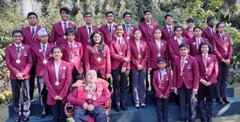
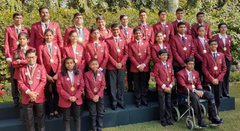
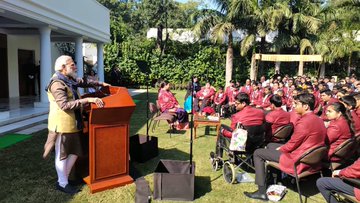
Prime Minister Shri Narendra Modi interacted with recipients of Rashtriya Bal Puraskar, here today. The awards were conferred by the President of India on 22 Jan 2020. The awardees will also participate in the Republic Day Parade.


The 49 awardees are from various states of India including one each from Jammu & Kashmir, Manipur and Arunachal Pradesh. The children are winners in the fields of art & culture, Innovation, Scholastic, Social Service, Sports and Bravery. The Government of India acknowledges children as one of the most important partners in nation-building. Towards this end the Government gives these awards every year to recognize exceptional achievements of our children in the fields of innovation, scholastic achievements, social service, arts & culture, sports and bravery


PMO India

@PMOIndia

थोड़ी देर पहले आप सभी का परिचय जब हो रहा था, तो मैं सच में हैरान था। इतनी कम आयु में जिस प्रकार आप सभी ने अलग-अलग क्षेत्रों में जो प्रयास किए, जो काम किया है, वो अदभुत है: PM @narendramodi

View image on TwitterView image on Twitter
885 people are talking about this


Admiring the outstanding achievements of the children in different fields, the Prime Minister termed the work done by them at such a young age as amazing. He said, “I am proud to see the way in which you are fulfilling your duties towards society and the nation. It gives me that extra energy and the push to work harder when I hear the stories of bravery and achievements of our young comrades”


PMO India

@PMOIndia

आप अपने समाज के प्रति, राष्ट्र के प्रति अपनी ड्यूटी के लिए जिस प्रकार से जागरूक हैं, ये देखकर गर्व होता है: PM @narendramodi

View image on Twitter
1,330 people are talking about this


The Prime Minister asked the awardee children to work harder while being strongly rooted to the ground realities. “This recognition should be a beginning to achieve more and you should realise this is not an end in itself. And such awards will inspire your peers and other children to become achievers.”


PMO India

@PMOIndia

मैं आप सभी युवा साथियों के ऐसे साहसिक काम के बारे में जब भी सुनता हूं, आपसे बातचीत करता हूं, तो मुझे भी प्रेरणा मिलती है, ऊर्जा मिलती है: PM @narendramodi

2,860 people are talking about this


***

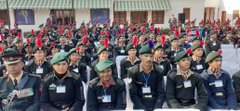
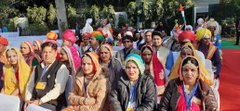
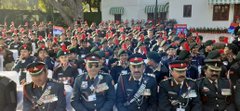
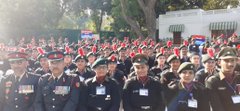
Prime Minister Interacts with Tribal Guests, NCC cadets, NSS Volunteers and Tableaux Artists who would be showcasing India at 71st Republic Day Parade

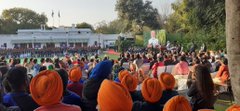
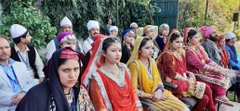
The Prime Minister Shri Narendra Modi today interacted in an At Home event with over 1730 Tribal Guests,, NCC Cadets, NSS Volunteers and Tableaux Artists who would be a part of the 71st Republic Day parade in the National Capital.


Referring to the large enthusiastic gathering, the Prime Minister said they would be showcasing a Mini India at the Republic Day Parade. Saying that the world would see the essence of India during their performance in the Parade, the Prime Minister said India is not a mere geographic or demographic entity.

PMO India

@PMOIndia

यहां आप जितने भी साथी एकत्र हुए हैं, आप एक प्रकार से Mini India- New India को showcase करने वाले लोग हैं। भारत असल में क्या है, ये हमारा देश और पूरी दुनिया आपके माध्यम से समझती है: PM @narendramodi

View image on TwitterView image on TwitterView image on TwitterView image on Twitter
423 people are talking about this

India is a Way of Life On Ek Bharat, Shrestha Bharat, Prime Minister said that it should be remembered that India is not only home to 130 crore people but also a nation with a vibrant tradition.

PMO India

@PMOIndia

जब हम एक भारत, श्रेष्ठ भारत की बात करते हैं, तो हमें ये भी याद रखना है कि भारत असल में है क्या। भारत क्या सिर्फ सरहदों के भीतर 130 करोड़ लोगों का घर भर ही है? नहीं, भारत एक राष्ट्र के साथ-साथ एक जीवंत परंपरा है, एक विचार है, एक संस्कार है, एक विस्तार है: PM @narendramodi

View image on TwitterView image on TwitterView image on TwitterView image on Twitter
787 people are talking about this

He said India is a way of life, an idea, a confluence of several philosophies and a metaphor for a rich global & universal perspective. He said, “India means one Global Family, India means Equanimity for all Religions, India means Triumph of Truth, India means an idea that permits understanding of the One Truth in different ways, India means the one that loves and protects Flora and Fauna, India Means Self Reliance, India believes that only those who sacrifice can remain blissful, India means the one which believes in welfare of everyone, India means one which worships women, India means one which believes that motherland is more virtuous than Gold” Belief in Unity and not Uniformity The Prime Minister said India’s strength is its diversity in geological and social fabric. He compared India to a floral garland where different flowers stitched together through a common thread of Indianness. He said, “India believes in Unity and not Uniformity. “ Shri Modi said, “Strengthening that thread of unity and preserving it is our continuous effort and toil” He said as a New India progresses, the effort is to see that no one is left behind and no region is left behind. Striving for Fundamental Duties The Prime Minister said that it is time now to give importance to our fundamental duties. “If we deliver our duties sincerely, then there would be no necessity for fighting for our rights” he said.

PMO India

@PMOIndia

यहां जितने भी युवा साथी आए हैं, मेरा आपसे आग्रह रहेगा कि राष्ट्र के प्रति अपने कर्तव्यों की ज्यादा से ज्यादा चर्चा करें। चर्चा ही नहीं, बल्कि खुद अमल करके, उदाहरण पेश करें। हमारे ऐसे ही प्रयास न्यू इंडिया का निर्माण करेंगे: PM @narendramodi

View image on TwitterView image on TwitterView image on TwitterView image on Twitter
524 people are talking about this

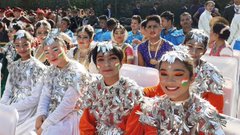
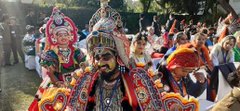
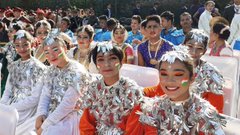
Prime Minister Shri Modi also witnessed a cultural programme showcased by the Tribal Guests, NCC Cadets, NSS Volunteers and Tableaux Artists

***

Text of PM’s interaction with winners of Pradhan Mantri Rashtriya Bal Puraskar 2020

राष्‍ट्रीय बाल पुरस्‍कार के आप सभी विजेताओं को मेरी तरफ से बहुत-बहुत बधाई। अब आप बधाई लेते-लेते थक गए लगते हो। बधाई ज्‍यादा हो गई ना? कम है कि ज्‍यादा हो गई; ऐसा तो नहीं हुआ ना? अच्‍छा, यहां आते समय मास्‍टरजी ने कहा होगा वहां बिल्‍कुल discipline में रहना है, हाथ-पैर नहीं हिलाने, ऐसा बोला होगा। हां….ये गड़बड़ है। यहां आ करके कैसा लग रहा है आप लोगों को? मतलब क्‍या – मौसम अच्‍छा लग रहा है? राष्‍ट्रपति भवन देखा…पूरा..और आज क्‍या देख रहे हैं? पेड़-पौधे ?

आप में से कितने लोग हैं जो पहली बार दिल्‍ली आए हैं? अच्‍छा…बाकी सब बार-बार आ चुके हैं.. सब परिचित हैं। ये जो पीछे लोग हैं उनके लिए सवाल नहीं हैं मेरे…ये सब बच्‍चों के लिए हैं। वरना prompting पीछे से हो रहा है।

वैसे दिल्‍ली आने का अपना ही एक उत्‍साह होता है, फिर भी मुझे पता है कि आपको जरा जल्‍दी जाने का मूड करता होगा, घर जाने का। देखिए, आपको पक्‍का मन करता होगा जल्‍दी घर जाएं, क्‍या-क्‍या हुआ दोस्‍तों को बताएं, फोटो दिखाएं, अपना अवॉर्ड दिखाएं, दिल्‍ली के अनुभव सुनाएं, दिल्‍ली की ठंड कैसी है, वो बताएं, ऐसा मन करता है ना? किसी का भी करता है जी, अपने सा‍थियों को अपनी अच्‍छी-अच्‍छी बातें बताने का मन हर किसी को करता है। आपको नहीं करता है?

देखिए, पूरी यात्रा की ढेर सारी कहानियां होंगी, जो आप सुनाना चाहते होंगे। आप भले ही न कहते हों, लेकिन आपका मन करता होगा, पहले जा करके दादीजी को तो ये कहना ही कहना है, ऐसा मन करता होगा। और कुछ लोग होंगे जो घर जा करके कहेंगे, देखो आप मुझे मना कर रहे थे, अब पता चला ना मैं अच्‍छा-अच्‍छा काम कर रहा हूं। तो अब आप लोग घर में जा करके मम्‍मी-पापा को डांटोगे? बताओगे- हां-हां देखो हमारे पास फोटो है राष्‍ट्रपति जी के साथ, हम अवॉर्ड लेकर आए हैं, ऐसा करोगे ना? नहीं करोगे? ऐसा हो सकता है क्‍या? अच्‍छा छुपा करके करना, चोरी-छिपे से करना। करेंगे, नहीं करेंगे?

ये क्‍या बचपन खो दिया है आपने? अरे बचपन तो बचा रहना चाहिए। आपका बचपन खो गया है। जिसको ये मन न करे कि मम्‍मी–पापा को भी जा करके बताऊंगा,  ये कहूंगा, उनको ये सुनाऊंगा, तो फिर तो आपने बचपन खो दिया है आपका। तो आपको अलग खुला नहीं छोड़ते हैं मम्‍मी-पापा, पीछे लगे रहते हैं? उनको भरोसा नहीं है, छोटे बच्‍चे हैं क्‍या करेंगे, ऐसा लग रहा है ना? अगली बार बताइए उनको कि मुझे अकेले कहीं जाने दो।

देखिए, थोड़ी देर पहले आप सभी का जब परिचय हो रहा था, तो मैं सचमुच में बहुत हैरान था। इतनी कम आयु में जिस प्रकार से आप सभी ने अलग-अलग क्षेत्रों में कुछ न कुछ करके दिखाया है, कोई प्रयास किए, कोई काम किया है, आपको तो समाधान होगा ही होगा लेकिन आज के बाद आपको कुछ और करने का मन कर जाएगा। और अधिक अच्‍छा करने का इरादा हो जाएगा।

और मैं समझता हूं कि ये सारे जो awards वगैरह होते हैं ना, वो आखिरी मुकाम नहीं होता है। एक प्रकार से ये beginning होता है। जब कोई recognize करता है तो मन को अच्‍छा लगता है। एक प्रकार से ये जिंदगी की शुरूआत है। और आपने मुश्किल परिस्थितियों से लड़ने का साहस दिखाया। आप में से कुछ वीर बालक हैं, कुछ ऐसे भी हैं जिन्‍होंने गंभीर बीमारियों से लोगों को बाहर निकालने के लिए, ease of living के लिए कई नए-नए innovation किए हैं। किसी ने आर्ट एंड कल्‍चर में, किसी ने स्‍पोर्ट्स में, तो किसी ने शिक्षा साहित्‍य में, तो किसी ने समाज सेवा में; विविधताओं से भरा हुआ आपका योगदान रहा है।

आप अपने समाज के प्रति, राष्ट्र के प्रति अपनी ड्यूटी… आपने देखा होगा मैंने लालकिले से एक बात कही थी, याद है किसी को…लाल किले से कुछ कहा था?  याद है ? बहुत कुछ कहा था, कुछ भी कहोगे तो सच निकलेगा। एक बात मैंने कही थी- ‘कर्त्तव्‍य पर बल’। ज्‍यादातर हम अधिकार पर बल देते हैं। अब देश की आजादी को 75 साल होने वाले हैं, तो कब तक अधिकार पर बल देते रहेंगे? अब कर्त्तव्‍य पर बल देना चाहिए कि नहीं देना चाहिए? Duty को प्राथमिकता कि rights को प्राथमिकता? पक्‍का, सब सहमत हैं, चलिए हमने आज एक कानून पास कर दिया।

देखिए, आप अपने समाज के प्रति, राष्‍ट्र के प्रति अपनी ड्यूटी से और उसके लिए जिस प्रकार से जागरूक हैं, ये सिर्फ आपके माता-पिता को नहीं, आपके परिवारजनों के लिए, जो भी आपके बारे में जानेगा उन सबको गर्व होगा,  उनको पक्‍का गर्व होगा।

देखिए, मैं एक काम करूंगा, आप सबकी फोटो के साथ मैं आज आपकी जो स्‍टोरी है, उसको मैं सोशल मीडिया में दुनिया से शेयर करूंगा। हर individual, कैसे आपने किया है, कहां से आए हैं, कैसा रहा है; मैं लिखूंगा उसमें। लेकिन कुछ गलती हो जाए तो फिर आप नाराज मत हो जाना, क्‍योंकि कभी-कभी जानकारियों में गलती हो जाती है।

देखिए दोस्‍तो, आप सब कहने को तो बहुत छोटी आयु के हैं, कम आयु के हैं, लेकिन आपको पता है आपने जो काम किया है, उसको करने की बात छोड़ दीजिए, सोचने में भी बड़े-बड़े लोगों को पसीने छूट जाते हैं। आप में से जिन्‍होंने innovation किया होगा, जब अपने टीचर को बताओगे तो टीचर भी कहेगा, तुम मुझे परेशान मत करो, तुम जाओ। उनको दिमाग खपाते होंगे, टीचर भी नाराज हो जाते होंगे। उनको लगता होगा ये बच्‍चा इतना bright है, ये मेरे पल्‍ले कैसे पड़ गया, ये मुझे पढ़ाता है। ऐसा होता है ना? देखिए, मैं एक बात बताऊं आपको, आप अपने सभी friends और teachers को जरूर बताइएगा। मैं आप सभी युवा साथियों के ऐसे साहसिक काम के बारे में जब भी सुनता हूं, आपसे बातचीत करता हूं, तो मुझे भी प्रेरणा मिलती है, आपसे मैं भी कुछ सीखता हूं। अभी एक बच्‍चे ने मुझे पूछा कि आप इतना काम करते हैं तो मां की याद नहीं आती है; याद करता हूं तो सब थकान उतर जाती है।

सा‍थियो, आप जैसे बच्‍चों के भीतर छुपी इस प्रतिभा को प्रोत्‍साहित करने के लिए ही ये राष्‍ट्रीय पुरस्‍कारों का दायरा बढ़ाया गया है। और ये सिर्फ आपको पुरस्‍कार मिल रहा है, ऐसा नहीं है, इस अवसर के कारण देशभर के बच्‍चों का इन चीजों पर ध्‍यान जाता है। एक प्रकार से आप उनके लिए हीरो बन जाते हैं, आप उनके लिए inspiration बन जाते हैं। जम्‍मू-कश्‍मीर में बैठा हुआ कोई बच्‍चा होगा, लद्दाख में बैठा हुआ बच्‍चा होगा, नागालैंड में बैठा हुआ बच्‍चा होगा; वो केरल के किसी बच्‍चे की कथा सुनेगा तो उसको लगेगा अच्‍छा! हमारे देश के बालक ऐसा कर रहे हैं? ये अपने आप में- कई गुना इसका प्रभाव पैदा होता है, इसकी तरंगें चलती रहती हैं। Waves लगातार नीचे प्रभावित करते रहते हैं और इसलिए इन चीजों की तरफ, इन घटनाओं को कभी कम नहीं आंकना चाहिए, उसका अपना एक महत्‍व है। लेकिन कभी-कभी क्‍या होता है, जब नाम हो जाए, अखबार में तस्‍वीर छप जाए तो फिर हम भी जमीन से दो-तीन फीट ऊपर चलते हैं ना, फिर पैर जमीन पर नहीं पड़ते हैं,  ऐसा हो जाता है ना? फिर घर में भी- देखिए, मुझे कोई काम मत बताइए, मैं National award लेकर आया हूं, ऐसा होता है ना? तो क्‍या ऐसा करोगे आप लोग? पैर जमीन पर रखोगे?

अधिकतम लोगों के जीवन में दो पड़ाव आते हैं- एक सहज भाव से अच्छा करता चला जाता है और जब कहीं recognized हो जाता है, फिर जाने-अनजाने में हवा भर जाती है और फिर वो उसी धुन में रहता है आगे कुछ नया नहीं कर पाता है। उसको लगता है बस हो गया, फोटो छप गई, दिल्‍ली हो आया, राष्‍ट्रपति भवन हो आया, अब क्‍या है। ज़िन्दगी में सब हो गया है। ज़िन्दगी इतनी छोटी नहीं है।

दूसरे वो लोग होते हैं- अगर कुछ किया, कहीं recognized हुआ तो उसी को वो अपनी प्रेरणा बना लेते हैं, उसी को अपनी प्रतिज्ञा बना लेते हैं, उसी में से पुरुषार्थ करने के रास्‍ते खोजते रहते हैं और वे नई-नई चीजों को हासिल करने के लिए रुकते नहीं हैं, थकते नहीं हैं।

मैं चाहूंगा कि आप कभी भी अपने जीवन में उन दूसरे प्रकार की आदतों को घुसने ही मत देना। अभी जो हुआ है वो कुछ नहीं, ऐसा ही मानकर जाइए। ठीक है, अभी तो मुझे बहुत कुछ करना है, देश को बहुत कुछ देना है, खुद को हर प्रकार से तैयार करना है। ये अगर जज्‍बा ले करके जाते हैं तो आप देखिए, आपको इस अवसर का बहुत बड़ा आनंद मिलेगा, उसमें से कुछ नया सीखने को मिलेगा। तो आप बताइए पहले रास्‍ते पर जाएंगे कि दूसरे? अपने हाथ ऊपर कीजिए, कितने लोग हैं जो पहले रास्‍ते पर जाएंगे? अच्‍छा ये बताइए, जो दूसरे रास्‍ते पर जाएंगे, वो कौन हैं? इसका मतलब आप मेरी बात समझे नहीं? मैं ये कह रहा था कि एक रास्‍ता वो होता है जो पहला रास्‍ता, कि जिसमें इसको आप अंतिम नहीं मानते हैं, इसको आप शुरूआत मानते हैं। आपके पैर जमीन से उखड़ नहीं जाते हैं, आप हवा में उड़ने नहीं लगते और कुछ और अधिक करने का संकल्‍प करते हैं, ये पहला रास्‍ता है। दूसरा- यार बहुत हो चुका, अब फोटो छप गई, टीवी में आ गए, अब क्‍या करना है, सो जाओ। तो बताइए कि पहला रास्‍ता है कि दूसरा? पक्‍का, देखिए, पहले गलती की थी ना?

अच्छा, मैं आपसे कुछ सवाल पूछता हूं। आप में से कौन इतने लोग हैं जिनको दिन में चार बार पसीना आता है, भरपूर पसीना आता है, पूरा पसीना-पसीना शरीर हो जाता है, जैसे कोई भी सीजन हो, ठंडी हो, गरमी हो। जिसको चार बार दिन में पूरा पसीना निकलता है, कैसे निकलता है, धूप में खड़े रहते हैं? Morning exercise में? और कोई ? देखिए एक भी बालक ऐसा नहीं होना चाहिए, अपने दोस्‍तों को भी बताइए कि जिसको दिन में चार बार पसीना नहीं आए, ऐसा एक भी बालक नहीं होना चाहिए। मुझे एक बार किसी ने बहुत साल पहले किसी ने पूछा था कि आपके चेहरे पर इतना तेज क्‍यों है तो मैंने बड़ा आसान जवाब दिया था- मैंने कहा मेरे शरीर में इतना पसीना निकलता है, मेहनत करता हूं और मैं उसी पसीने से मालिश करता हूं, इसलिए चमक जाता है। अच्‍छा आप में से कितने लोग हैं जो पानी पीते हैं तो खड़े-खड़े पीते हैं, बैठ करके नहीं पीते? ऐसे कितने लोग हैं? देखिए, पानी जब पीते हैं तो बैठ करके पीजिए। छोटी चीज है लेकिन आपको जा करके उसका शास्‍त्र कोई समझाएगा, मैं उस चक्‍कर में नहीं पड़ता हूं। करेंगे ये?

अच्‍छा आपमें से कितने हैं जो पानी दवाई की तरह पीते हैं? कुछ लोग होंगे जो पानी जूस की तरह पीते होंगे, पानी का भी आनंद लेते होंगे। कुछ लोग होते होंगे दवाई की तरह…आप कितने हैं जो पानी को पानी का मजा लेते हैं, पानी का टेस्‍ट करते हैं? Enjoy करते हैं। आप कोशिश कीजिए पानी का टेस्‍ट होता है, वो शरीर को बहुत फायदा करता है, आप उसको enjoy कीजिए। दवाई की तरह ऐसे पानी लगा दिया, ऐसे मत कीजिए। करेंगे? आप कहेंगे- ऐसे क्‍या फायदा, मां तो कहती है पढ़ाई करो, मैं पांच मिनट तक पानी पी रहा हूं, तो झगड़ा हो जाएगा ना। कभी-कभी मां दूध ले करके आती है, मां को काम है, टीवी सीरियल चल रहा है तो मां कहती है, चल जल्‍दी दूध पी ले और आप वो दूध भी दवाई की तरह पी जाते हो, क्‍योंकि मां को सीरियल देखना है। ऐसा होता है ना? कौन सा- सास भी कभी बहू थी?

छोटी-छोटी चीजें होती हैं, हमने बचपन में शरीर को जो आदतें डाली होती हैं वो जीवनभर काम आती हैं और मन में वो एकदम से फिट बैठ जाती हैं। आपको मालूम है देश में एक अभियान चल रहा है, ‘फिट इंडिया’, पता है? कितनों को मालूम है? तो फिट इंडिया के लिए किस दर्जी के पास जाते हो, किस tailor के पास जाते हो? कौन, फिट इंडिया के लिए tailor के पास कौन जाता है, तो क्‍या करते हैं फिट इंडिया के लिए कोई बताएगा? नहीं, क्‍या करते हैं? exercise कहने से थोड़ा ही होता है, कोई कहेगा मैं सूर्य नमस्‍कार करता हूं, कोई कहता है मैं साइकलिंग करता हूं, कोई कहता है मैं स्‍वीमिंग करता हूं…क्‍या करते हैं? अच्‍छा आप में से कितने लोग हैं फटाफट पेड़ पर चढ़ जाते हैं, फिर उतर जाते हैं? घरवालों को चिल्‍लाना पड़ता है, अरे नीचे उतरो, नीचे उतरो- ऐसे कितने लोग हैं?

देखिए साहस- ये हमारे स्‍वभाव में होना चाहिए। यहां पैर रखूंगा तो गिर जाऊंगा, तो ये करूंगा तो- ऐसे जिंदगी नहीं जीते। साहस के बिना जीवन संभव नहीं है। आप छोटी-छोटी चीजों का साहस करने की आदत बनाओगे तो आगे चलकर वो भी बहुत काम आएगा। और आप जैसे लोग जब करेंगा ना,  तो बाकी 50 लोग देखेंगे- अरे देखो,  ये भी करता है। इतना अवॉर्ड लेकर आया, फिर भी इतनी मेहनत करता है। इतना मान-सम्‍मान ले करके आया, लेकिन देखिए ये काम कर रहा है। तो क्‍या होगा- बहुतों को प्रेरणा मिलेगी। करोगे? पक्‍का करोगे? तो परसों 26 जनवरी की तैयारी? तो सिखाया गया होगा, ऐसे-ऐसे करो? दाहिने हाथ से करना है कि बाएं हाथ से? ये नहीं बताया। जिस तरफ लोग होंगे, उस तरफ करना है। अरे हम होंगे तो पांच मीटर, दस मीटर तक ही होंगे, बाकी तो बहुत भीड़ होती है।

चलिए, मुझे बहुत अच्‍छा लगा आप लोग enjoy कीजिए और दिल्‍ली में बहुत कुछ देखिए। अलग-अलग जगह पर जाइए। लालकिले में आपको मालूम होगा, नेताजी सुभाष बाबू को ले करके, क्रांतिकारियों को ले करके बहुत अच्‍छा म्‍यूजियम बना है। देखेंगे आप लोग? देखकर आए, ले जाने वाले हैं? अच्‍छा वॉर मेमोरियल देखा? हैं, नहीं देखा। देखिए, वॉर मेमोरियल भी देखने जाना चाहिए। और अपने राज्‍य का कोई एकाध भी जो वीर शहीद हुआ होगा, उसका नाम पढ़ करके, लिख करके ले जाना, अपने घर पर। अगर मोबाईल फोन है तो उसकी फोटो निकाल करके ले जाना। देखिए, कर्नाटक के ये वीर शहीद का नाम है, उसका फोटो लेकर जाना चाहिए। किसी को दिखाना चाहिए- देखिए, हमारे कर्नाटक के वीर शहीद का नाम वहां वॉर मेमोरियल में है। हरेक को अपने-अपने राज्‍य का ढूंढना चाहिए। ऐसे ही देखकर नहीं आना चाहिए वो जो नाम लिखे हैं ना उन पर तुम्‍हें गर्व होना चाहिए। यहां एक पुलिस मेमोरियल भी बना है, देखने जाओगे? आपको मालूम है ये देश में 33 हजार से ज्‍यादा पुलिस, कभी-कभी लोग पुलिस से नफरत करते हैं ना? पुलिसवाले कहते हैं, चलो इधर चलो,  साइकिल यहां मत रखो,  बहुत गुस्‍सा होता है ना? 33 हजार पुलिस देश के नागरिकों की रक्षा के लिए शहीद हुए हैं आजादी के बाद। आंकड़ा बहुत बड़ा है, 33 हजार। उस पुलिस के प्रति आदर का, गौरव का भाव बनना चाहिए, देखिए समाज जीवन में एक बदलाव शुरू हो जाएगा। पुलिस मेमोरियल देखोगे ना तो आपको लगेगा कि ये इतना काम होता रहा, ये ऐसे करते रहे। करोगे? पक्‍का करोगे?

चलिए, बहुत-बहुत धन्‍यवाद आपको। बहुत-बहुत शुभकामनाएं।


***


A movement of ethics must be initiated at all levels in governance of the country: VP;

The Vice President of India, Shri M Venkaiah Naidu today called for a total war on corruption and described corruption as a major canker which skews growth and development, deepens poverty and increases inequality.

Delivering the ‘IC Centre for Governance Sardar Patel Lecture on Governance’ at Upa Rashtrapati Niwas, Shri Naidu said that various transformative policies and programmes like Beti Bachao, Beti Padao, Ayushman Bharat, Goods and Services Tax and ‘Swachh Bharat’ are aimed at accelerating the progress and empowering people. “We can accomplish the desired goals only if we have a robust governance system and there is an unflinching commitment to excellence at every level”, he added.

He asked the bureaucracy to be more proactive and ensure that there was no gap in the intent, execution and delivery of various services to the people.

Observing that it was critical for the state institutions to be agile, adaptable and resilient in the rapidly changing 21st century, he called for strengthening program implementation, improving competence and credibility of institutional structures and adopting a work ethic that keeps national interest at the top and public welfare at its core.

Wondering whether degeneration in moral and social values in the society has led to a general decline in the functioning of public services at every level, Shri Naidu called for an introspection and said that it was imperative to initiate a movement of ethics at all levels in governance of the country.

The Vice President said that there was a need to foster public trust in institutions and the integrity of public officials, while injecting greater accountability into decision-making. “I feel that it is imperative that a movement of ethics is initiated at all levels in governance of the country”, he added.

Asserting that people must be at the center of an effective and just governance system, Shri Naidu called for efforts to ensure that the poorest of the poor and most deserving gets the benefits of government schemes. “Perhaps, we need Process Reengineering in governance. We don’t have to change the system, as is being suggested in some quarters, but we have to make the system work better”, he added.

Paying glowing tributes to Sardar Patel, he described him as the unifier and Iron Man of modern India.

Observing that India owed a huge debt of gratitude to Sardar Patel for unifying the nation into a single territorial entity, the Vice President said that nothing mattered more to Sardar Patel than the interests of the nation.

The Vice President said that Sardar Patel wanted the All India Services, which he conceived as a ‘steel-frame’ of the nation, to provide people-centric governance. “With a clear vision for an efficient administrative system, Sardar Patel wanted the civil servants to maintain the highest standards of probity and efficiency and strive to uplift the conditions of the poor without any fear or favour”, he added.

In this context he recalled that the accession of Jammu and Kashmir to Indian Union was total, final and irrevocable. He also pointed out that Article 370 was only a temporary provision and said that it had outlived its purpose long back.

The Vice President said that unity and consensus on larger issues facing the country was the need of the hour. He advised people to develop a positive outlook and not become cynical. He urged the youngsters in particular to adopt a constructive approach towards nation building.

The Vice President said that all Indians must work together, a collective endeavour, for ushering in Gandhi Ji’s Ram Rajya, where there is all-round inclusive growth without poverty, discrimination, inequality, illiteracy and hunger. ‘Every citizen must strive to protect the unity, safety, security and sovereignty of the country’, he added.

Shri Prabhat Kumar, Former Cabinet Secretary & Former Governor of Jharkhand and President, IC Centre for Governance, Shri Harivansh, Hon’ble Deputy Chairman, Rajya Sabha and others were present on the occasion.

The following is the full text of the speech:

I am delighted that the ‘IC Center for Governance Sardar Patel Lecture on Governance’ is being held here at the Sardar Vallabhbhai Patel Conference Hall at Uparashtrapati Bhavan today.

I welcome you all to the official residence of the Vice President of India. It gives me immense pleasure to deliver this lecture at this conference hall named after the great son of the soil, the unifier and the Iron Man of modern India – Shri Sardar Vallabhbhai Patel.

Firstly, let me remind every Indian that each one of us owes a huge debt of gratitude to Shri Sardar Patel for unifying India into a single territorial entity by spectacularly bringing about the merger of more than 560 princely States with the Union of India at its most critical point in the country’s history.

Had he not displayed vision, firmness, pragmatism and tact in nipping in the bud even the remotest thought of a few princely States to remain independent or join Pakistan, India’s geographical contours would have been totally different.

In this context, it is pertinent to recall that the accession of Jammu and Kashmir to the Indian Union by Raja Hari Singh was without conditions. As such it is irrevocable and final. Another aspect is that Article 370 was only a temporary provision and had outlived its purpose long back. With the abrogation of the Article 370, the Union Territories of Jammu, Kashmir and Ladakh will witness all-round and faster development.

It was our good fortune that Shri Patel was entrusted with the most challenging assignment during India’s turbulent time and the country found the man of the moment in him. It undoubtedly was one of the greatest accomplishments of the 20th century.

Patel knew that India was under foreign rule because of a lack of unity. Pointing out that our mutual conflicts and internecine quarrels and jealousies in the past had been the cause of our downfall and falling victims to foreign domination several times, he had cautioned “We cannot afford to fall into those errors or traps again.”

Nothing mattered more than the interests of the nation for Shri Sardar Patel.

Apart from ensuring the territorial integrity of the country, he had conceived and created the administrative steel-frame, All India Services, to provide people-centric governance.

Dear sisters and brothers,

Shri Patel wanted post-independent India to stay united without any narrow considerations and divisions based on caste, creed, religion or language. With a clear vision for an efficient administrative system, he wanted the civil servants to maintain the highest standards of probity and efficiency and strive to uplift the conditions of the poor without any fear or favour.

Addressing the Probationers of the first batch of Indian Administrative Service, Sardar Patel said, “The service will now have to adopt its true role of national service, without being trammeled by traditions and habits of the past”.

He was equally keen to ensure that the governance system empowers the rural India and protects farmers’ interests.

As you all are aware, governance has been an enduring subject of discussion among practitioners and laymen alike for many years now.

As I see it, governance is an overarching concept with many dimensions and institutional and political manifestations. Conventionally understood, governance is the way the state and its various institutions negotiate and mediate with people, markets and civil society, through laws, policies, regulation and finance.

The concept of governance has grown beyond the conventional definition. The process of governance is increasingly influenced by market forces as well as civil-society processes and citizen initiatives.

The discourse on governance has grown as a parallel discourse to that of civil society, human rights and globalization. It also provides institutional and legal interfaces through which citizens mediate and interact with the state and seek accountability.

A just, people-centred and inclusive growth approach seeks to transform political and governance processes. Its purpose is social transformation through the realization of rights to all people, and political transformation to challenge unjust power relationships within and among institutions at the national and local level.

Has the degeneration in moral and social values in the society led to a general decline in the functioning of our public services at every level? There needs to be an honest introspection at every level to arrest the declining standards.

It should be always remembered that people have to be at the centre of an effective and just governance system. It must necessarily aim at empowerment of all people in an inclusive manner by providing a transparent and efficient institutional framework and the rule of law.

The right to information is likewise an essential prerequisite for a robust, informed public debate through which decision-makers become answerable to their people, and rights-holders are enabled to assess public and private sector conduct.

Just governance is about ensuring that those vested with authority are not allowed to become corrupted by their power.

Just governance holds decision-makers accountable for actions or omissions. It, therefore, can help foster public trust in institutions and the integrity of public officials, while injecting greater accountability into decision-making.

I feel that it is imperative that a movement of ethics is initiated at all levels in governance of the country.

Corruption is a major canker and has to be relentlessly fought at every level. It is said that corruption skews growth and development, affects the economy, deepens poverty and increases inequalities. It sustains informal power structures.

In this era of Information Technology, corruption can be best compared to a computer virus. The hardware looks the same; the software generally works, but some part of it gets “corrupted” and you find yourself in danger of losing the whole system. Like the virus, corruption may be invisible, small, contained to a few people, but like the virus, its mere existence in an organization puts everything at risk.

We have to declare a total war on corruption which has to become a people’s movement.

I think the system of governance adopted by our constitution makers and national leaders after independence has substantially stood the test of time. It is reflected in the national and political stability and has also, to an extent, aided in the development and economic progress. One can reasonably conclude that the system is capable of managing change from time to time, as observed in managing the economic reforms in the last two decades, and in making progress in many key development sectors.

That is not to say that the system is perfect or that its functioning has been without any defects. I am only saying that the system, if followed honestly and efficiently, is capable of taking care of the problems of the people. Also, in my view, there is no other system of governance more suited to the plurality of our country.

The same, however, cannot be said at the level of institutions and the processes in government. Perhaps, we need Process Reengineering in governance. We don’t have to change the system, as is being suggested in some quarters, but we have to make the system work better.

In the last few years, several administrative and legal reforms were initiated to bring in transparency and accountability. They include measures to curb corruption, unearth black money, and promote ease of doing business and speedy delivery of services to the beneficiary in a hassle-free manner.

In view of increasing globalization, there is a need to take  action against economic fugitives who should not find any safe havens anywhere in the world.  There should be greater cooperation at the international level. Various countries must not only exchange information but also enter into extradition treaties. The United Nations must take the lead in this regard.

The implementation of Insolvency and Bankruptcy Code was another important reform undertaken by the government.

Promoting the use of IT for the delivery of services is equally important to control corruption and ensure transparency. Everything should be online so that people need not stand in line. Direct Benefit Transfer through JAM (Janadhan-Aadhar-Mobile) is a fine example of the use of technology to eliminate bogus beneficiaries and check corruption.

The Prime Minister, Shri Narendra Modi’s three-word mantra of ‘Reform, Perform and Transform’ seeks to bring in total transformation in all walks of life. A responsible citizenry, honest political class, ethical bureaucracy and a vibrant judiciary will help India to become a role model for others.

Public institutions are at the heart of governance. Good governance thrives on good institutions.

To deliver public services, we have a number of public institutions. The overall performance of the government can be judged by an aggregation of performances of these public institutions.

It should be remembered that in a rapidly changing world, public institutions cannot remain rigid. They need to suitably change their ways of functioning to meet the mounting aspirations of the people. We have to do away with lot of outdated and time-consuming procedures and increasingly use IT to promote transparency and provide efficient delivery of services.

What we need today is effective implementation of laws and policies. The bureaucracy must take the lead in the transformation of institutions. These institutions must be instruments of effective and efficient delivery of public services and socio-economic development.

They should have credibility and competence.

The integrity of the governance institutions is very essential. They should be transparent and accountable in respect of everything they do.

In the rapidly changing 21st century, it is critical that state institutions are agile, adaptable and resilient. The bureaucracy must become more pro-active and ensure that there is no gap in the intent, execution and delivery of various services to the people.

Various transformative policies and programmes like Beti Bachao, Beti Padao, Ayushman Bharat, Goods and Services Tax,  ‘Swachh Bharat’, ‘Make-in-India’, ‘Digital India’, ‘Start-up India’, and ‘Skill India’  are aimed at accelerating the progress and empowering people. We can accomplish the desired goals only if we have a robust governance system and there is an unflinching commitment to excellence at every level.

Taking a leaf out of Sardar Patel’s life and the extraordinary mission accomplished by him, I would suggest that we focus on strengthening programme implementation; on building up the competence and credibility of institutional structures and adopting a work ethic that keeps the national interest at the top and public welfare at its core.

People need to develop a positive outlook and not become cynical. Everybody, particularly the youngsters, should adopt a constructive approach towards nation building. Through a collective endeavour, all Indians must work together for ushering in Gandhi Ji’s Ram Rajya , where there is all-round inclusive growth without poverty, fear, corruption, discrimination, inequality, illiteracy and hunger.

Every citizen must strive to protect the unity, safety, security and sovereignty of the country.

I am sure that all those involved in delivering public services will rise to the occasion and strive to make India one of the best countries in the world in providing citizen-centric governance.

JAI HIND

********