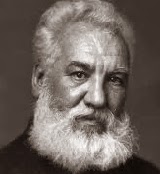
The inventor of the telephone, \’Alexander Graham Bell\’, was born on 3rd March 1847 in Edinburgh, Scotland. His father was Professor Alexander Melville Bell and his mother was Eliza Grace. He later settled in the United States of America.
Alexander Graham Bell was an eminent scientist, inventor, engineer and innovator. Throughout his life, Bell had been interested in the education of deaf people, as both his mother and his wife were deaf. This interest led to invent the microphone and in 1876, his \’Electrical Speech Machine\’, which we now call a telephone.
What followed after that is history. Bell Telephone Company (later AT&T) was set up in 1877, which grew to be one of the largest telephone companies in the world
The inventor of the telephone, \’Alexander Graham Bell\’, was born on 3rd March 1847 in Edinburgh, Scotland. His father was Professor Alexander Melville Bell and his mother was Eliza Grace. He later settled in the United States of America.
Alexander Graham Bell was an eminent scientist, inventor, engineer and innovator. Throughout his life, Bell had been interested in the education of deaf people, as both his mother and his wife were deaf. This interest led to invent the microphone and in 1876, his \’Electrical Speech Machine\’, which we now call a telephone.
What followed after that is history. Bell Telephone Company (later AT&T) was set up in 1877, which grew to be one of the largest telephone companies in the world
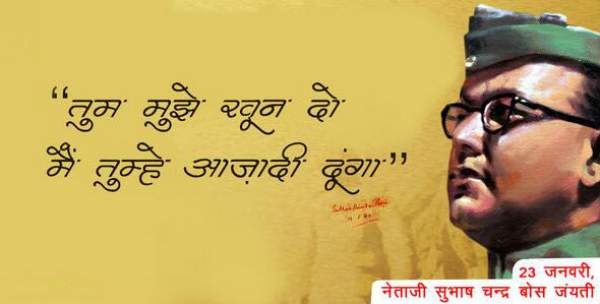
On 23 January 1897, a legendary figure, a great patriot and a selfless leader of undivided India was born in Cuttack of present Odisha who is popularly known as Netaji with full name Subhas Chandra Bose. Netaji Subhas Chandra Bose is still respected not only in India but also in Bangladesh and Pakistan for his immense contribution in freedom movement. While I was in abroad as faculty many Pakistani and Bangladeshi academicians told me in this regard.
netaji-subhas-chandra-bose-jayanti
Netaji’s patriotic feelings can be understood by this quotation, ‘You give me your blood and I will give you Independence!’ He stated if ‘you are willing to die for a cause without regard to your own wants or desires that is as close as you can get to invincibility. Even if your physical body is killed, your efforts and ideas will live on’. He had the opinion that ‘Independence is rarely obtained through peaceful means. Conflict is often the only way to gain freedom or revolution’.
Netaji Subhas with heart and soul was Indian and never tolerated any foreigner talking against Indians. In this context, an incident may be cited. He thrashed a British Professor E.F. Otten in the Presidency College of Calcutta in 1916 for Prof Otten’s racist remark against Indians and for this Subhas Chandra had to suffer also, however with the intervention of Indian scholars and other stalwarts the matter was resolved.
During freedom struggle many persons participated –some were in the forefronts and some were in behind, many lost their lives and many were crippled, many were mentally disturbed and finally we became independent nation so we are grateful to all of them. Also Indian National Army/Azad Hind Fouz’s contribution under the leadership of NetajiSubhas was massive. The Congress Government after independence always highlighted few leaders’ contribution towards freedom movement but not much about Netaji’s contribution. On the other hand, the British acknowledged Subhas Bose’s contribution. Clement Richard Attlee, who was the Prime Minister of the United Kingdom from 1945 to 1951 and the Leader of the Labour Party from 1935 to 1955 agreed Netaji was the toughest challenge to the British Empire faced. In 1956, Clement Attlee came to India and stayed in Calcutta (now Kolkata) as a guest of then Governor, P.B. Chakraborty who was at that time Chief Justice of Calcutta High court and acting Governor of West Bengal. He asked Sir Attlee “… since Gandhi’s Quit India movement had tapered off quite some time ago and in 1947 no such new compelling situation had arisen that would necessitate a hasty British departure, why did they had to leave?” As stated by Chakraborty “In his reply Attlee cited several reasons, the main among them being the erosion of loyalty to the British crown among the Indian Army and Navy personnel as a result of the military activities of Subhas Chandra Bose”.
Lt General S.K. Sinha, former Governor of Assam and J & K, one of the only three Indian officers posted in the Directorate of Military Operations in New Delhi in 1946, made his observation in 1976. “There was considerable sympathy for the INA within the Army… It is true that fears of another 1857 had begun to haunt the British in 1946.” In this regard Dr. Ambedkar-saheb may also be referred “two things led the Labour party to take this decision” (to free India). According to Dr Ambedkarsaheb, “The national army that was raised by Subhas Chandra Bose. The British had been ruling the country in the firm belief that whatever may happen in the country or whatever the politicians do, they will never be able to change the loyalty of soldiers. That was one prop on which they were carrying on the administration. And that was completely dashed to pieces. They found that soldiers could be seduced to form a party- a battalion to blow off the British.”
Subhas Chandra Bose was a great human being also and had never had ill feelings towards any leader of then Congress party. In this context, Ashis Ray’s article published on 12 November 2019 may be quoted. “Jawaharlal Nehru and Subhas Chandra Bose, charismatic stalwarts of the Congress and the Indian struggle for Independence, were comrades, not adversaries. In June 1935, when the former (Nehru) was imprisoned in India, his wife Kamala needed to go to Europe for treatment of tuberculosis. Bose, who had been exiled to Europe by the British, unsurprisingly took charge by accompanying her from Vienna to Prague where she was to receive initial medical care. With Kamala’s condition deteriorating, the British permitted Nehru to join her. She was moved to Badenweiler, a Black Forest resort in Germany. Bose messaged Nehru: “If I can be of any service in your present trouble, I hope you will not hesitate to send for me.” Eventually Kamala was shifted to Lausanne in Switzerland, where she prematurely passed away in 1936 in the presence of her husband, daughter Indira and Bose” (www.nationalheraldindia.com/opinion/jawaharlal-nehru-and-subhas-chandra-bose-politics-never-affected-their-personal-ties).
On the auspicious occasion of Netaji Subhas Chandra Bose’s birthday, Pronam to this great soul.
Our planning session for the Flexible Learning leaders in New Zealand planning meeting all the 1st and 2nd round FLLinNZers gathered at Wiapuna Hotel at Mt Wellington, Auckland. We started with a warmup and a discussion of what we are expecting from the third round of funding and any issues. The facilitator presented on the situation in Australia.
Main points were:
competency-based apprenticeships
qualifications recognised across Aus
maximum flexibility in system – impacts on quality
grow private training orgs with effective competition
school-based apprenticeships
RPL – want to improve uptake
industry wants to control knowledge base – web 2 does not fit
training providers not keeping pace with rapid technological change – important
costs, flexibility and access
need training to meet needs of lifelong learners – skills shortages, shiftworkers, contractors, mature learners, just-in-time and to suit learners
need to build capability – respond to physical and online environment changing role of education and training
key activity: who can we connect with to make the most influence? often fail to equip people with skills to be able to problem solve and think forthemselves.
Pedagogical shifts
more of the following:
distributed networks
social networking
blended and flexible models
facilitation driving pedagogy not instruction
innovation
market changes e.g. full employment
Less occurrence of the teacher teaching many.
Examples: Motor Traders Association – mp3 audio files used in training to capture their interest
Caryl Oliver – mlearning – there is a recording of an interview with Caryl. Manager of 2020: multigenerations, longer later, more teams, flexible working, performance emphasised, innovation
Overview of pressures on the NZ tertiary education sector can be seen on the concept map (to be loaded).
Is this a new year\’s resolution or just a considered way forward for 2012. I lost my way with blogging last year what with the Doctorate and one thing and another. So I have decided to post a blog about something at least once per week or whenever a item of interest – even if vaguely connected to education – comes up. So here is my response to the discussion facilitated by Hazel Owen about Wikipedia blacked out protest. She has lit my blogging fire so to speak after I discovered her blog at Ascilite 2011.
I have also signed the petition for a free and open Internet , and reject the ratification of the Anti-Counterfeiting Trade Agreement (ACTA), which would destroy it. This is open to anyone to sign via Avaaz.org
My response re an open Internet and freedom of expression The idea of removing information because it is offensive for whatever reason is a tricky one. Well we already do it in society all the time – offensive human beings are removed to prison. This happens when the authorities get involved. When people act without involving the authorities people who offend also get removed, in one way or another. Vigilante behaviour is not favoured when it is against the law. Freedom of expression is important but offensive material and bullying behaviour via the Internet is not. I also don\’t agree with one group controlling the masses.
To be effective people can learn to be assertive, ethical and responsible – and also may need to \’harden up\’ if others don\’t agree with them or challenge them. I believe that we learn appropriate behaviour best from our peers and by observing others. I believe that the Wikipedia model has shown us the power of networks in keeping things open and \’safe\’, and has done a great job in showing us how to \’share our toys\’ without throwing them out of the cot when things get sticky. Copyright does nothing in reality, but line the pockets of those who are probably already rich (in majority world terms) or have the money to sue – in contrast copyleft opens up a whole world of possibilities for anyone….if everyone plays fair and gives attribution where it is due. The question is how can we make enough money to live if we share our creativity freely with the world – or does this actually more likely our creative works will be seen, and we will make money anyway?
This is certainly a concern for educational institutions. Surprisingly enough sharing content and ideas can actually attract money. If an organisation is open and willing tio share, more people are given the opportunity to hear about what they offer. This can lead to more enrolments and opportunities for research and collaborative projects. My teaching materials are open on WikiEducator because it is important for me to model this to other teaching staff. Occasionally, someone comes along and contributes and adds to my work, and for me this adds richness to my work. I would love people to contribute to the Flexible Learning Guidebook, and this year I am going to use a student-generated model with the staff who take my course – this will be an interesting year.
Motion graphics are some of the most effective learning tools today. Sometimes called explainer videos or animated infographics, these multi-sensory clips deliver information in a high-octane fashion that appeals to all of the learning modalities.
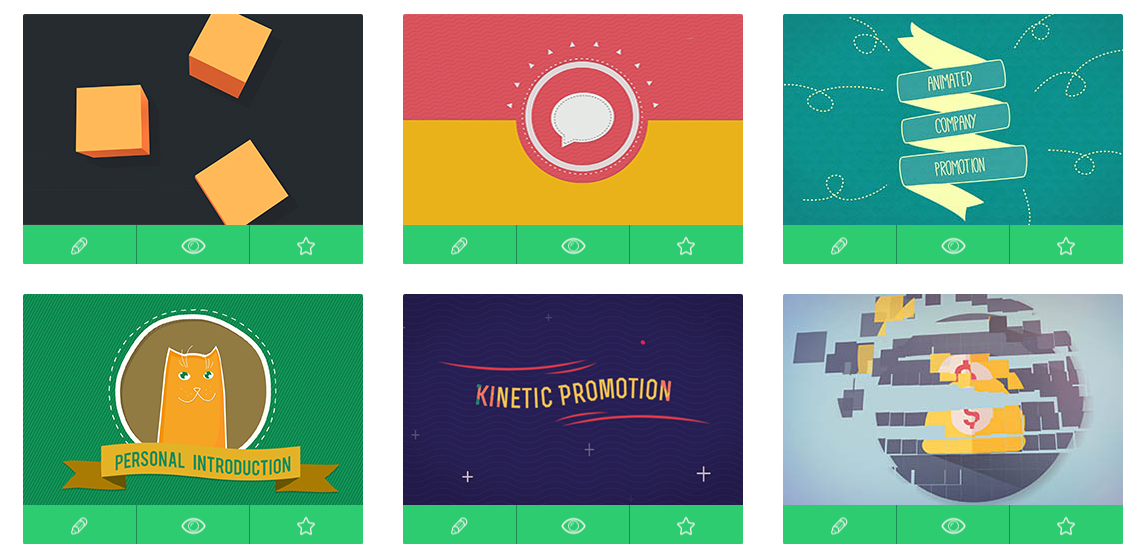
These colorful, spirited videos combine voice, images, and kinetic typography to employ all of the brain’s receptors in internalizing ideas. They elevate static infographics to a whole other plane. Here are some of the best motion graphics for classroom and individual learning:
Even more powerful than watching an explainer video is creating one’s own animation. We recently produced our first, professional-quality motion graphic, called “What Is Graphicacy?” These types of films can teach a lesson or bring a project to life or demonstrate mastery of a concept. Until recently, complex videos like these were the sole purview of trained graphic artists. Now, teachers and students alike can design and publish their own motion infographics with simple, elegant, free interfaces. Adobe Voice has long been one of our favorite apps for making videos, but Renderforest kicks the options and energy up to a higher level.
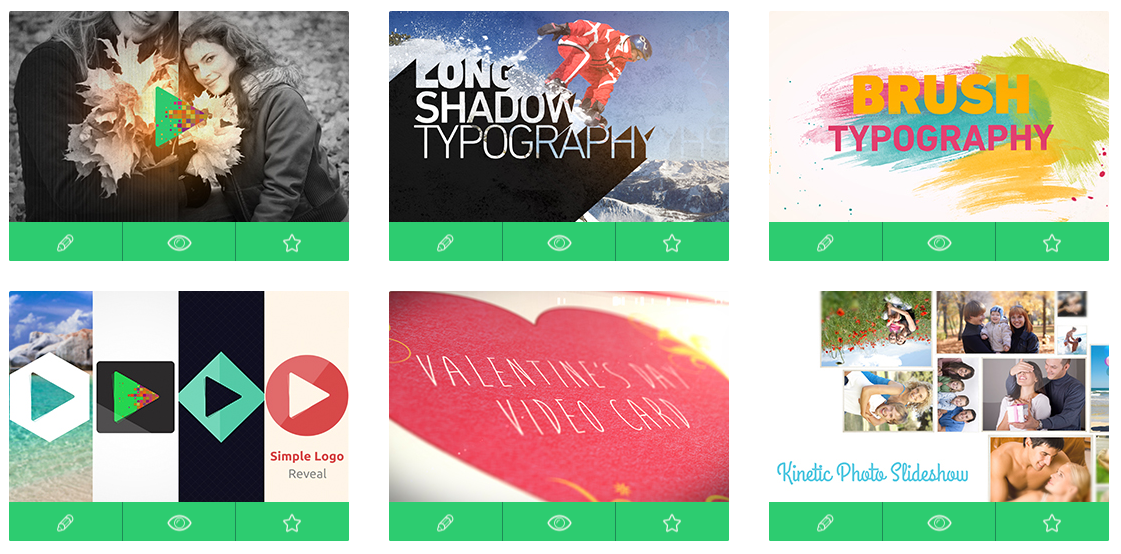
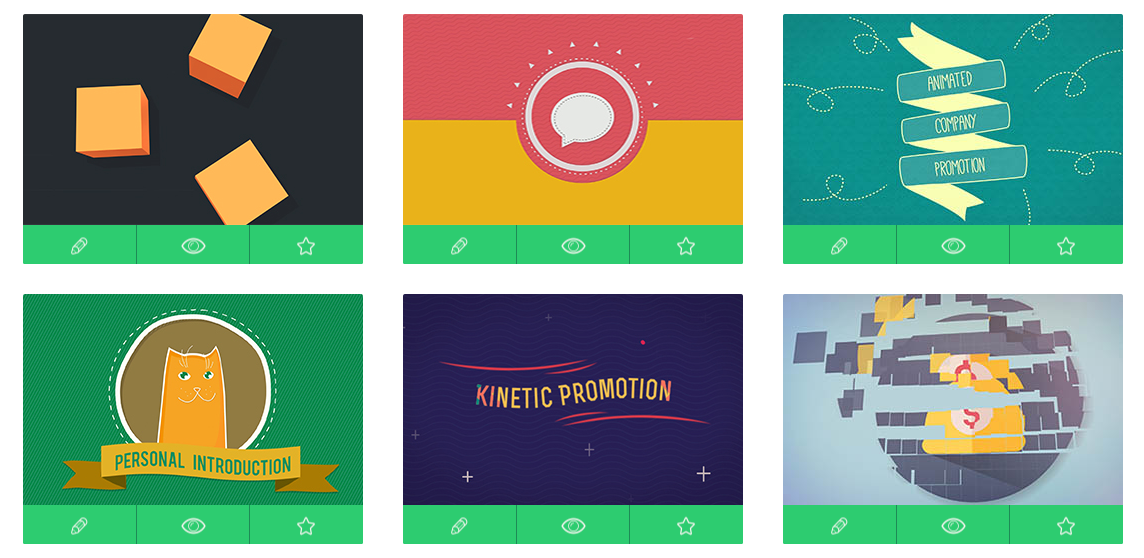
Renderforest is a web tool that offers a range of easy yet powerful templates for producing videos. Signing up for an account is free. Within minutes, you can be publishing your own content. The templates walk a perfect balance between customized choice and preset parameters. You have a range of selections in style and length of video, and you can then select a color theme to unite the presentation. Each slide has text elements that you can personalize, and the magic of Renderforest turns everything into a lively animation.
Originally intended for business users, Renderforest has enormous potential for education. Its subtle options in are its best. You can pick from its list of background musical tracks, all of which are nice. Or you can upload your own tunes and voiceover. In other words, any recording you have produced can be added to their frames. You can invite students to record podcasts or narrations, or use Garageband to layer original music with audio tracks. The app-smashing potential is tremendous.
When you export your finished product, you can easily go back and edit any element. The free option features a basic video quality with a company watermark in the corner. You can, therefore, show student or teacher videos in class for no charge. If you would like to choose from the HD playbacks, or download your film, there are modest pricing options available.
We had no trouble designing our video, recording the audio in one take, converting it to HD, downloading it, and then uploading it to Vimeo in a surprisingly brief period of time.
This act of creating motion graphics nudges both students and teachers to blend a host of proficiencies. It involves visual design in colors and templates, just as it requires language skills of narration and storytelling. It supports key technological skills in manipulating online media, and it reinforces the importance of publishing in sharing child creations with peers and parents. Kids teaching kids is the purest model of learning. Renderforest allows them to produce permanent instructional videos that can reach global audiences and live on after their own school years have ended.
Motion graphics are some of the most effective learning tools today. Sometimes called explainer videos or animated infographics, these multi-sensory clips deliver information in a high-octane fashion that appeals to all of the learning modalities.
These colorful, spirited videos combine voice, images, and kinetic typography to employ all of the brain’s receptors in internalizing ideas. They elevate static infographics to a whole other plane. Here are some of the best motion graphics for classroom and individual learning:
Even more powerful than watching an explainer video is creating one’s own animation. We recently produced our first, professional-quality motion graphic, called “What Is Graphicacy?” These types of films can teach a lesson or bring a project to life or demonstrate mastery of a concept. Until recently, complex videos like these were the sole purview of trained graphic artists. Now, teachers and students alike can design and publish their own motion infographics with simple, elegant, free interfaces. Adobe Voice has long been one of our favorite apps for making videos, but Renderforest kicks the options and energy up to a higher level.
Renderforest is a web tool that offers a range of easy yet powerful templates for producing videos. Signing up for an account is free. Within minutes, you can be publishing your own content. The templates walk a perfect balance between customized choice and preset parameters. You have a range of selections in style and length of video, and you can then select a color theme to unite the presentation. Each slide has text elements that you can personalize, and the magic of Renderforest turns everything into a lively animation.
Originally intended for business users, Renderforest has enormous potential for education. Its subtle options in are its best. You can pick from its list of background musical tracks, all of which are nice. Or you can upload your own tunes and voiceover. In other words, any recording you have produced can be added to their frames. You can invite students to record podcasts or narrations, or use Garageband to layer original music with audio tracks. The app-smashing potential is tremendous.
When you export your finished product, you can easily go back and edit any element. The free option features a basic video quality with a company watermark in the corner. You can, therefore, show student or teacher videos in class for no charge. If you would like to choose from the HD playbacks, or download your film, there are modest pricing options available.
We had no trouble designing our video, recording the audio in one take, converting it to HD, downloading it, and then uploading it to Vimeo in a surprisingly brief period of time.
This act of creating motion graphics nudges both students and teachers to blend a host of proficiencies. It involves visual design in colors and templates, just as it requires language skills of narration and storytelling. It supports key technological skills in manipulating online media, and it reinforces the importance of publishing in sharing child creations with peers and parents. Kids teaching kids is the purest model of learning. Renderforest allows them to produce permanent instructional videos that can reach global audiences and live on after their own school years have ended.
Motion graphics are some of the most effective learning tools today. Sometimes called explainer videos or animated infographics, these multi-sensory clips deliver information in a high-octane fashion that appeals to all of the learning modalities.
These colorful, spirited videos combine voice, images, and kinetic typography to employ all of the brain’s receptors in internalizing ideas. They elevate static infographics to a whole other plane. Here are some of the best motion graphics for classroom and individual learning:
Even more powerful than watching an explainer video is creating one’s own animation. We recently produced our first, professional-quality motion graphic, called “What Is Graphicacy?” These types of films can teach a lesson or bring a project to life or demonstrate mastery of a concept. Until recently, complex videos like these were the sole purview of trained graphic artists. Now, teachers and students alike can design and publish their own motion infographics with simple, elegant, free interfaces. Adobe Voice has long been one of our favorite apps for making videos, but Renderforest kicks the options and energy up to a higher level.
Renderforest is a web tool that offers a range of easy yet powerful templates for producing videos. Signing up for an account is free. Within minutes, you can be publishing your own content. The templates walk a perfect balance between customized choice and preset parameters. You have a range of selections in style and length of video, and you can then select a color theme to unite the presentation. Each slide has text elements that you can personalize, and the magic of Renderforest turns everything into a lively animation.
Originally intended for business users, Renderforest has enormous potential for education. Its subtle options in are its best. You can pick from its list of background musical tracks, all of which are nice. Or you can upload your own tunes and voiceover. In other words, any recording you have produced can be added to their frames. You can invite students to record podcasts or narrations, or use Garageband to layer original music with audio tracks. The app-smashing potential is tremendous.
When you export your finished product, you can easily go back and edit any element. The free option features a basic video quality with a company watermark in the corner. You can, therefore, show student or teacher videos in class for no charge. If you would like to choose from the HD playbacks, or download your film, there are modest pricing options available.
We had no trouble designing our video, recording the audio in one take, converting it to HD, downloading it, and then uploading it to Vimeo in a surprisingly brief period of time.
This act of creating motion graphics nudges both students and teachers to blend a host of proficiencies. It involves visual design in colors and templates, just as it requires language skills of narration and storytelling. It supports key technological skills in manipulating online media, and it reinforces the importance of publishing in sharing child creations with peers and parents. Kids teaching kids is the purest model of learning. Renderforest allows them to produce permanent instructional videos that can reach global audiences and live on after their own school years have ended.
\’Life Insurance\’ is a contract between the insurer and the insured. It pledges payment of certain amount to the person who is insured on happening of any event against him. The contract fulfils on the death, maturity or specified periodic intervals.
Life insurance or life assurance is a contract between the policy owner and the insurer, where the insurer agrees to pay a sum of money upon the occurrence of the insured individual\’s or individuals\’ death or other event, such as terminal illness or critical illness. In return, the policy owner agrees to pay a stipulated amount called a premium at regular intervals or in lump sums.
Life Insurance- Insurance that guarantees a specific sum of money to a designated beneficiary upon the death of the insured or to the insured if he or she lives beyond a certain age.
Life Insurance- Insurance in which a stipulated sum is paid to the beneficiary or beneficiaries at the death of the insured, or, if specified, to the insured at a certain age.
I am going to begin my real life out of the shell of security of my parents. What I know and understand about being a teenager is happiness, parties, friendship and attraction. But, what I am being told is that it is a period of life of rage and serenity. It is the delicate period of my life where I will be shutting between being a pampered child to being an adult of whom a lot is expected.
It will be difficult for me to understand the emotional and physical changes. I don\’t know how I will be able to handle the peer pressure but I will try to face all this with the support of my parents.
I hope that it will be a period which I will cherish and enjoy but within the limits, which if crossed then no Rama would come to save me from the clutches of Ravana.
I am going to begin my real life out of the shell of security of my parents. What I know and understand about being a teenager is happiness, parties, friendship and attraction. But, what I am being told is that it is a period of life of rage and serenity. It is the delicate period of my life where I will be shutting between being a pampered child to being an adult of whom a lot is expected.
It will be difficult for me to understand the emotional and physical changes. I don\’t know how I will be able to handle the peer pressure but I will try to face all this with the support of my parents.
I hope that it will be a period which I will cherish and enjoy but within the limits, which if crossed then no Rama would come to save me from the clutches of Ravana.
I am going to begin my real life out of the shell of security of my parents. What I know and understand about being a teenager is happiness, parties, friendship and attraction. But, what I am being told is that it is a period of life of rage and serenity. It is the delicate period of my life where I will be shutting between being a pampered child to being an adult of whom a lot is expected.
It will be difficult for me to understand the emotional and physical changes. I don\’t know how I will be able to handle the peer pressure but I will try to face all this with the support of my parents.
I hope that it will be a period which I will cherish and enjoy but within the limits, which if crossed then no Rama would come to save me from the clutches of Ravana.
I am going to begin my real life out of the shell of security of my parents. What I know and understand about being a teenager is happiness, parties, friendship and attraction. But, what I am being told is that it is a period of life of rage and serenity. It is the delicate period of my life where I will be shutting between being a pampered child to being an adult of whom a lot is expected.
It will be difficult for me to understand the emotional and physical changes. I don\’t know how I will be able to handle the peer pressure but I will try to face all this with the support of my parents.
I hope that it will be a period which I will cherish and enjoy but within the limits, which if crossed then no Rama would come to save me from the clutches of Ravana.
I am going to begin my real life out of the shell of security of my parents. What I know and understand about being a teenager is happiness, parties, friendship and attraction. But, what I am being told is that it is a period of life of rage and serenity. It is the delicate period of my life where I will be shutting between being a pampered child to being an adult of whom a lot is expected.
It will be difficult for me to understand the emotional and physical changes. I don\’t know how I will be able to handle the peer pressure but I will try to face all this with the support of my parents.
I hope that it will be a period which I will cherish and enjoy but within the limits, which if crossed then no Rama would come to save me from the clutches of Ravana.
I am going to begin my real life out of the shell of security of my parents. What I know and understand about being a teenager is happiness, parties, friendship and attraction. But, what I am being told is that it is a period of life of rage and serenity. It is the delicate period of my life where I will be shutting between being a pampered child to being an adult of whom a lot is expected.
It will be difficult for me to understand the emotional and physical changes. I don\’t know how I will be able to handle the peer pressure but I will try to face all this with the support of my parents.
I hope that it will be a period which I will cherish and enjoy but within the limits, which if crossed then no Rama would come to save me from the clutches of Ravana.







 Eduindex
You must be logged in to post a comment.