Over 100 Employers Registered for the Career and Internship Fair–Prepare to Impress

Over 100 are employers registered for the upcoming Career and Internship Fair.  Log into your Pioneer Careers account to research employers, who they are recruiting (grads, undergrads, alumni or international students), what positions they are filling and which academic programs they are targeting.
6 STEPS TO GET READY
  1. Develop a Plan:  Check the list of companies attending in Pioneer Careers to see the employers attending the Career Fair. Prioritize and do your research by reviewing the company’s website. Employers expect you to be prepared with questions.
  2. Get Your Resume Ready:  Not sure if it’s ready? Attend Resume Review Day on Tuesday, February 20th from 12:00-4:00 PM on the Driscoll Bridge.
  3. Dress:  Dress like you would for an interview. There will be a lot of employers, students and alumni. You can stand out with a well-chosen outfit.
  4. Prepare to talk about yourself:  Employers expect you to state your name, degree, a couple of your strengths or skills as well as why you are interested in their company and the positions they are hiring. Think about this interaction as one of many you will make while you develop a relationship that hopefully leads to a job or internship.
  5. Be Enthusiastic:  Show your interest with a smile, firm handshake and good eye contact. Practice all of these with a friend, boss, mentor or colleague before going.
  6. Follow-Up:  Within 24 hours send a brief thank you email and connect on LinkedIn.
See you this Wednesday at the Career and Internship Fair!

7 Daily Affirmations for Frustrated Job Seekers

Once upon a time . . .

I was invited into a final round of interviews for my next dream job. Like a good lil’ candidate, I went straight to LinkedIn to research my interviewers and prepare for who I would be speaking with. For no good reason, my subconscious began eliminating me from the candidate pool based on a cursory comparison of my education and experience to theirs. Suddenly, I felt less qualified for the job because my interviewers were my approximately my age with masters degrees or 20 years my senior with 30 years of experience. I knew I was qualified when I applied, so why was I doubting it now?

In conversations with my colleague, an enthusiastically compassionate Certified Career Counselor, she warned me to beware of “perceived shortcomings”. In a tone dripping with logic and reason, she asked “If they called you back, they clearly don’t see it as a weakness, so why should you?”

“If they called you back, they clearly don’t see it as a weakness, so why should you?”

I repeated that phrase and question to myself for a week straight.

Perceived shortcomings.

Perceived shortcomings.

PERCEIVED shortcomings.

Mind. Blown.

We all need that mirror sometimes, don’t we? That coach in our corner of the ring telling us that fear is all in our head and all those other motivational clichés. My “professional dysmorphia” was making me see an image of my qualifications that wasn’t as good as what everyone else was seeing. I know I have a stockpile of practical experience to offer that does not (yet) include a degree. As it turned out, I was right. I had extensive tactical and strategic experience in a field which this particular position would be almost single-mindedly be responsible for revolutionizing. All along, this subject matter expertise that I gained as part of my current position would be the deal-maker in moving me along my dream career path.

As a career guidance professional, I often find myself acting as a cheerleader for job-seekers. The job search is an emotional roller coaster, filled with rejection, mistakes, doubt, and anxiety. It’s one of the few scenarios, I imagine, that can make a military general with 35 years of experience question his employability as much as a high school dropout. We all love to compare ourselves to others, especially those of us with more (cough, cough) “competitive” natures. For better or worse, competition can help us constantly push us to improve and be a better version of ourselves OR it can make us feel inadequate.

I played these 7 phrases on a mental loop throughout my career transition:

1.     If they called me, they are interested. Walk in with confidence – Employers will not waste their time on someone they don’t think is a good fit at all.

2.     If they don’t think I’m a good fit, I’m not a good fit. Regardless of how perfect this position is for me, they obviously know something I don’t.

3.     This “No” gets me one more “No” closer to a “Yes”. I didn’t get this job, so I will take this opportunity to reflect, refine, and move on.

4.     I only need to hear “Yes” once. I don’t need every job I apply for – just the one I want, that also wants me.

5.     Things happen as they should. This opportunity was more perfect for someone else, so I’ll keep looking for one better-suited for me.

6.     I can only be me. I’m the best version of me in the interview, so I will BE ME and gosh darn it, I’m going to do it better than anyone else!

7.     I AM enough. I am enough. I am enough. I. AM. ENOUGH.

Someone wise once told me (over and over again) that “repetition is the Mother of learning”. So, friends . . . lather, rinse, repeat, and I hope these will allow you to compete against only yourself in the marathon that is your career.

Grammar-Translation Method

Grammar – Translation Method
Grammar Translation Method or Classical Method is the oldest method of teaching English in India. “Under the translation method, the meaning of English words, phrases, and sentences is taught by means of word – to –word translation into the mother tongue” says H. Champion. This method is known as Grammar Translation Method because the grammar of the new language is taught with the help of the grammar of the mother tongue. The major characteristics of this method are;
Ñ The unit of teaching is word
Ñ Mother tongue dominates
Ñ It lays emphasis on written language
Ñ It advocates the formal teaching of grammar
Principles
According to Thompson and Wyatt, this method is based on three sound principles.
X Translation interprets foreign methodology best
X In the process of interpretation the foreign phraseology is best assimilated
X The structure of a foreign language is best learnt when compared and contrasted with that of the mother tongue.
Arguments in favour of Translation Method
J   Easy Method:  This method is based on the maxim of learning from know to unknown. It is accordance with Apperceptive Theory which states, “Learning is to connect old and new ideas”. This method tries to establish a strong bond between foreign phraseology (new ideas) and mother tongue (old ideas).
J   Saves teacher’s labour:  It is economical as it saves time. Foreign phraseology can be quickly explained. Abstract words and phrases can be easily explained through mother tongue.
J   Grammar is easily taught:   The pupils can have a perfect mastery of written English, the spellings of English words and the formal grammar. It supports the notion of Faculty Psychologists who think that grammar disciplines the mind.
J   Easy testing of Comprehension:   Students can be asked to narrate what they learnt in mother – tongue. Thus it helps in testing comprehension. The pupils acquires the art of translation.
J   Average level students and teachers:   This method is highly useful for the students of average and below average level. Teachers with reasonable language proficiency can cope up with this method.
J   Helps in Building Vocabulary:   this method helps in the rapid expansion of vocabulary as it avoids difficult definitions and lengthy explanations. The vocabulary is economically and effectively acquired.
Criticisms
L  Unnatural Method:  The order of language skills is not properly followed as listening, speaking, reading and writing.
L  Neglects Speech and Pattern practice:  Since mother tongue is enormously used, it never leads to practice in English. Unless an English atmosphere is created, the student is tempted to speak in first language.
L  Lack of Pronunciation skill:  This method fails to teach correct articulation, intonation and pronunciation since there is no emphasis on listening, speaking and reading.
L  Strong Emphasis on Writing:   The strong emphasis on writing is without foundation. Because spoken language is the living, dynamic and evolving language. Written language cannot be the sole basis of language study.
L  Exact Translation is Impossible:  The words, idioms and phrases in English, which reflects the culture, tradition and customs of English people. They cannot be translated without losing their correct effect. Sometimes literal translation becomes ridiculous. As Champion points out, “The fundamental weakness of translation is that it prevents or retards the pupil from thinking in English”.
L  Strong Emphasis on Formal Grammar:   This method tries to teach English by rules and not by use. Dr. Bullard says, “To speak any language entirely by rule is quite impossible”.
Suggestions for Improvement:
Ø While speaking English, teachers should speak it with correct pronunciation and use grammatically correct sentences.
Ø Teachers should put more emphasis on those points in which Indian vernaculars differ from English.
Ø Reading practice should be made compulsory for all students. That should be properly monitored properly by the teacher.

A Small Habit That’ll Ensure You and Your Boss Are Always on the Same Page

A Small Habit That’ll Ensure You and Your Boss Are Always on the Same Page was originally published on The Muse, a great place to research companies and careers. Click here to search for great jobs and companies near you.
The perfect boss is a mind reader. They know how you’re feeling and what you’re thinking at any given time, and so they adjust how they treat you and what they assign you accordingly.
You’d probably agree with that statement, right?
But the reality is that managers don’t have this superpower—no one does.
However, communicating more clearly—the real-life fix to not working with mind readers—is something you can do in your office. This is what we call “managing up.”
And if that term scares you or seems impossible in your situation, we’ve discovered the best method to try it out.
In a recent article Quartz writer Khe Hy talks about how his boss’ vague communication stressed him out on a daily basis. So, he decided to take matters into his own hands—with one simple email:
Every Friday afternoon, I’d send my boss a short email with three categories:
· The work I had completed that week
· What I was working on, including any deadlines that may have shifted or obstacles I’d encountered
· What I was waiting on—that is, tasks that I’d completed, but require sign-off from my boss or contributions from someone else
Rather than wait for his manager to guess what he needed from them, he proactively put all that information in front of them so they could easily get back to him with a response, sign-off, or edit. It also ensured his boss was well aware of where he stood in meeting deadlines.
But most importantly, this short email inadvertently tells his boss how he’s getting along mentally and emotionally—for example, if he communicates the same obstacles every week, it opens the door for a deeper discussion about shifting strategies or extending deadlines that’ll relieve some of that stress.
The real kicker? Writing it up only takes Hy 15 minutes (and probably takes his manager less time to read).
Sending this kind of message may seem redundant, but it’s a great way to keep your boss up-to-speed on what you’re working on so that they can manage you effectively—and encourages them to be open with you on what they’re working on, too. Even better, highlighting your accomplishments is the first step toward proving you’re worthy of a raise or promotion down the road.
Even if an email isn’t the right strategy for your team, one thing you can take away from this is the importance of communicating with the people you work with. So often our frustrations stem from assuming someone knows something they don’t—which is why it never hurts to reach out to a team member when you could use a hand (rather than hope they’ll notice you’re struggling and offer to help out), or update them if you’re running behind (so they know when to expect a final product), or simply ask if communicating different (such as emailing weekly progress reports rather than meeting every Monday) might be more effective.
If you make communicating (like really communicating) a part of your routine, you’ll find that hoping your co-workers become mind readers won’t be so high on your wish list.

4 Small Changes That’ll Give You More Confidence When You Talk to Important People

4 Small Changes That’ll Give You More Confidence When You Talk to Important People was originally published on The Muse, a great place to research companies and careers. Click here to search for great jobs and companies near you.
You wouldn’t be human if you didn’t feel at least a twinge of nerves when interacting with important people. We’re social beings, designed to influence and be influenced, so of course you’re going to notice and react to another person’s success, status, or power. There’s no need to tie yourself up in knots, however. A few small changes in your mindset and approach can help you decrease your anxiety and increase your chances of having a conversation you’re proud of.

1. Name the Problem

Whether you call it anxiety, discomfort, intimidation, or something else, what’s eating at you is fear. This feeling hijacks your rational thought processes, and it’s crucial to ask yourself what, exactly, you’re afraid of if you want to get over it.
The underlying cause of your fear will be unique to you and may vary from one situation to another. General anxiety at the thought of interacting with highly successful people may be due to your perceived inadequacy. Or maybe you were embarrassed years ago by someone powerful, so now you’re afraid that situation will replay itself in your professional life. Those fears have nothing to do with the people you’re afraid of—they’re about you. On the other hand, you may periodically have to interact with a powerful person who really is a jerk, and that can certainly ratchet your fear closer to “zombie-attack” level.  But even then, it’s important to be realistic, which brings me to my next point.

2. Replace Hyperbole With Fact

Few people operate from a purely rational and factual mindset day in and day out. Instead, we allow our imaginations to run wild. It looks like this: I once had a new supervisor who physically resembled a previous, difficult boss. I avoided my new manager for a while because of this. Had I not been acting irrationally though, I’d have realized physical similarity doesn’t equate to matching personalities. I wouldn’t have made any assumptions about the new supervisor and instead would’ve given her a fair chance. When you catch your imagination running away, stop, and simply state what’s factual. Let’s say you’ve got a big luncheon that will include some bigwigs and you feel your heart start to pound. Take note of this, inhale deeply, and say to yourself, “Danny Jones is successful and socially savvy. I feel awkward next to him, and I’m afraid I’ll look dumb.”

3. Prepare and Practice

Once you’ve been honest with yourself about what’s driving your fear, you can take action to reduce it, starting with being prepared. Granted, you won’t always have the chance to prep for a meeting with a VIP, but often you will. The more ready you are before the interaction, the more confident you’ll be. This may not completely fix your nerves, but that’s OK—a touch of anxiety can help you perform under pressure. The idea is to reduce or prevent crippling fear. Think back to the example above. Now that you’ve identified what drives your fear, you might think to yourself, “I’ll think ahead about some small talk I can engage in if we bump into each other. I’ll even practice it out loud a few times. Then I’ll feel more comfortable if we should happen to run into each other.” (For your reference: 48 small talk starters you can use in these situations.) Now instead of worrying about what to say if you bump into Mr. Jones, you’re armed with some ideas you can adapt and pull from as needed. And like everything in life, the more you interact with successful people, the more comfortable you’ll be.

4. Mind Your Body Language

Most communication is non-verbal, and that includes the way we communicate with ourselves. If you walk around with slightly hunched shoulders and downcast eyes, not only do you appear unsure of yourself to the rest of the world, but you also communicate that uncertainty to yourself. If you want to feel better when interacting with others, you need to project calm confidence. Stand up straight. Make eye contact. Use a firm handshake. Hold your body still—not stiff, but not fidgety, either—maintaining calm, restrained hand and arm movements while speaking. Think consciously about projecting confidence as you go about your day. (And if you’re looking for a quick tip on how to make that easier, read this.) It’s far easier to practice in the relatively non-threatening environment of your family, peers, local coffee shop baristas, and so on, than to automatically make these adjustments during the interactions with someone you find intimidating. In time, though, the idea is that you’ll generally demonstrate poise—no matter who you’re speaking with. So, let go of your misconceptions, own your own worth, and treat powerful people like people. As Muse writer Lily Herman puts it, “Important or famous people shouldn’t be treated any differently.” Embracing this way of thinking will allow you to talk as two equals, and that’s when the conversation can really take off.

CONTACT & LOCATION

Phone
303.871.2150
Address
Suite 30
2050 E. Evans Avenue
Denver, CO 80208

CAREER & PROFESSIONAL DEVELOPMENT HOURS

 
OFFICE HOURS
PEER ADVISOR QUICK QUESTIONS FOR UNDERGRADUATES
M
8:00am-4:30pm
9:00 AM-11:00 AM @ Driscoll South
T
8:00am-4:30pm
1 PM-3 PM @ Beans Hospitality
W
8:00am-4:30pm
9:00 AM-11:00 AM @ Driscoll South
TH
8:00am-4:30pm
1 PM-3 PM @ Beans Hospitality
F
8:00am-4:30pm
9:00 AM-11:00 AM @ Driscoll South
Quick questions will resume in the fall. Please make an appointment with your advisor through Pioneer Careers.
Swing by to get help with your resume and/or cover letter. Learn about resources to get started with your internship or job search and find out about upcoming events. Peer Advisors are extensively trained by professional Career Advisors and are ready to take your questions! No appointment necessary. Each Quick Question runs approximately 15 minutes.
During university-wide breaks, please log in to Pioneer Careers or contact the office to make an appointment.

The Role of a Master Resume in Your Job Application Process

Post-its and a paper crane on a desk.What do you do when you start working on a new resume? Let me guess—you look up a template and start filling in the blanks, maybe copy/pasting from a resume you’ve used before. It’s a common strategy, but one with many pitfalls. So to avoid the frustrations of working with a template and on a quick deadline, I suggest a radically different way to write your resumes using a tool I call the “master resume.”
Whether you’re just out of high school and haven’t had a job, or if you’re entering a doctoral program after 20 years in the workforce, this method is a way to prepare for any resume needs you could have for the rest of your career.
A master resume is a document that includes everything you’ve ever done, and it’s written just for you. There’s no page limit and no style to follow—just your own notes saved in one place. The purpose of the master resume is simply to store all of the information that you might put on an individual application’s resume.
You can start the process of writing a master resume in any way you’d like—from jotting down notes in a journal, to creating a fresh Word document, to organizing everything in a digital notebook or database. The goal isn’t to have a finished product, but to have all of the information you will need to write a resume in one place and ready for when you need it.
Why would you need all these notes? Let’s back up a bit. When you’re writing a resume for a job application, it’s important to tailor that resume to the job you’re applying for. This means highlighting relevant experiences over the ones that perhaps are not so relevant, and focusing on some skills and accomplishments over others. Done right, it’ll be very rare to have two resumes you’ve written be identical.

How to Get Started

So, what should be included in the master resume? While there is no template, there are certain things you definitely want to include when taking notes. For each job, internship, volunteer opportunity, fellowship, student group, or any other activity you might ever include on a resume, make a note of as much of the following information as you can:
  • The organization’s name
  • The organization’s city and stateA person taking notes outside.
  • Your role (whether an official title or a short description of what role you had)
  • The month and year that you started, and the month and year that you finished
  • Your duties – what are you expected to do? What does your average day entail?
  • Your accomplishments – where have you gone above and beyond? What have you been recognized for?
  • Any starting metrics – for example, if you’re managing a Twitter account for a student group, make a note of how many followers you had on your first day managing the account, so that you can calculate a percent increase during the time you manage it
  • Anything you can quantify – make a note of what you do weekly, or how many board members you pitched a marketing strategy to, or what ages you tutor as an after-school volunteer
  • Any other information that helps tell the story of this experience
You can also make a note of your supervisor’s name and contact information. Though that shouldn’t be included on any of your tailored resumes, keeping this reference information handy in your master resume will be helpful when it comes time to create a reference list.

What’s Next?

Once you have all of this information collected into one document, you can start formatting it to look more like a resume by creating section headers and writing your bullet pointsUnlike your tailored resume, don’t worry about page length. You’ll be copy/pasting from this document into your tailored resume where you can then focus on page length and the detailed aspects of design and appearance.
For the master resume to really work its magic, it’s important to start one now. Don’t wait until you’re already applying to internships or ready to start your post-grad job search. If you start now, it’ll be easier to remember details from past jobs than if you start a year from now. And once those details are written down, there’s no need to strain your memory as you think back to recall details about an experience from five years ago.
Also remember to keep your master resume updated. Did you just start a new internship, or move into a new leadership role in a student organization? Write it down right away. Did you plan a philanthropy fundraiser with your sorority, volunteer with a local nonprofit’s phone bank, or hit a new milestone on your robotics project? Write it down as soon afterwards as you can. This is all to make it easier for yourself later on, and keep the important, relevant details as fresh and accurate as possible.
Have you used a master resume in your job search? Let us know! We would love to share the tips and tricks that have worked for you with fellow Pioneers.

How to Set Up Your Online Store With WooCommerce (In 3 Simple Steps)

When it comes to e-commerce, WordPress users have a wide range of options at their disposal. While the platform doesn’t enable you to set up an online store out of the box, you can use a top-notch plugin to do so with ease. For example, WooCommerce enables you to sell both digital and physical products.
The following advice is aimed at students who are looking to create their own online store to earn extra income. There are multiple benefits to running an e-commerce store, but the main plus point owning an almost passive income stream that operates even when you’re busy with your studies. Plus, if you’re using the right theme and extensions, you’ll be able to add advanced functionality to your site with ease.
This article will discuss why you should consider using WooCommerce, and explain what it can offer you. Then it will demonstrate how to set up the platform in three simple steps, and talk about how using the right e-commerce theme – such as Shoppe – can help you easily implement new features in your store!

Why You Should Consider Using WooCommerce

woocommerce
WooCommerce is by far the most popular e-commerce solution for WordPress, although there are certainly other options. Its ease of use and high level of polish make it the best choice for many stores, both big and small.
shoppe theme
However, if you’re still on the fence, check out the ways WooCommerce can help you build a successful online store:
  • It’s easy to use: Getting started is simple, and you can find plenty of guides (such as this one!) to help you along the way.
  • The feature set is impressive: WooCommerce has almost all the features you’ll need for your store, including the ability to add, organize, and manage products and inventory.
  • There are plenty of extensions: If WooCommerce doesn’t offer a feature you need by default, chances are there’s an extension that can help you set it up.
  • You get access to regular updates: This plugin enjoys a healthy development cycle and has an active community, so it’s always up-to-date.
Now that the case has been made for WooCommerce, it’s time to check out how to set up your first online store using the plugin.

How to Set Up Your Online Store With WooCommerce (In 3 Simple Steps)

Before you can start using WooCommerce, you will, of course, need to set up a WordPress website. Then, you’ll need to install and activate the plugin.
When you’re ready on both counts, proceed to the first step.

Step : Customize Your Store’s Settings and Add Your First Products

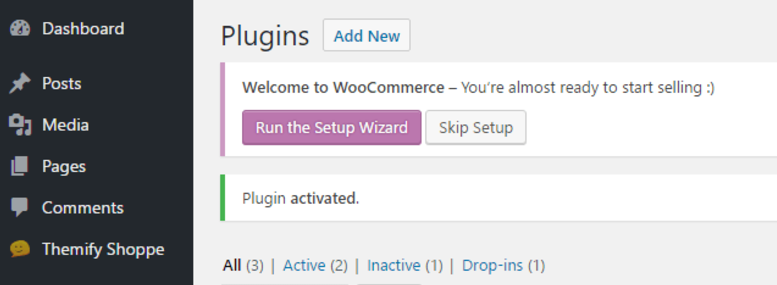
After activating WooCommerce, you’ll be prompted to run its setup wizard. This is not a strictly necessary step, but it’s recommended to do so, since the wizard will enable you to customize your store’s main settings quickly:
WooCommerce plugin
The Setup Wizard will take you through a few simple steps, such as creating the pages you’ll need, choosing your currency, picking your shipping settings, and selecting which payment processors to use.
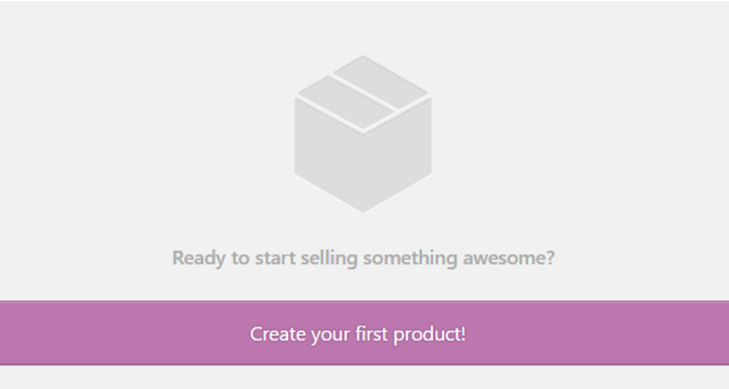
After you’ve made your way through the Setup Wizard, all that’s left before your grand opening is to add a few products to your store, which you can do from the new Products tab on your dashboard:
create product
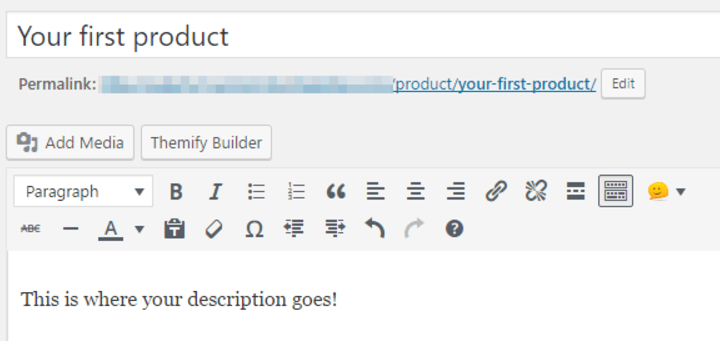
You’ll find yourself in the WordPress editor, where you can set a name and a description for your product:
create product - second version
Aside from providing a marketing boost, descriptions are also the perfect place to include any important notes customers should pay attention to. For example, if your product is digital, will they receive it via email? Will it expire, and if so, when? That’s the kind of information a good description should look to include.
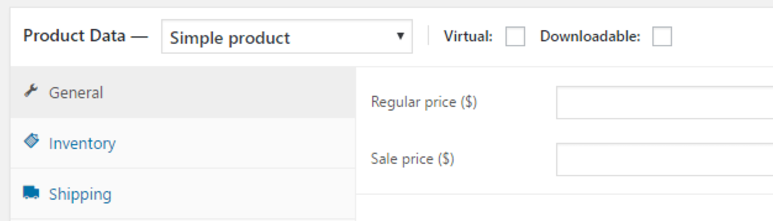
This page also enables you to choose between physical and virtual items. In most cases, your store will probably focus on one or the other:
insert product data
Don’t forget to set a featured image for your item, since that’s going to be one of the first things your customers will see! You can also upload more product images via the Product Gallery widget next to the editor:
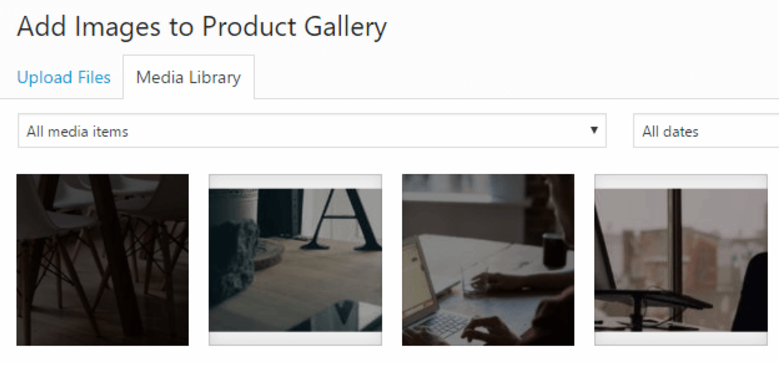
product galleryWhen you’re done, remember to preview your product to see how it looks live, then hit Publish when you’re ready. Here’s an example of a product that has been fully set up:
product placement
Remember – when it comes to product images, you want to make them as attractive as possible. That means taking high-resolution pictures of your physical items and compelling screenshots for any digital products. One of the main mistakes online stores selling digital goods make is not including screenshots of their products, which can turn potential clients away.
When you’re done perfecting the look of your product pages, move to the next step to learn more about how the right theme can level up your WooCommerce store.

Step : Set Up a WooCommerce-Friendly Theme

If you have some experience with WordPress, you probably know how much of a difference using the right theme can make. Fortunately, there are plenty of WooCommerce-friendly themes out there. Picking the right one can make your online store look much more professional.
Your best best is to go with an e-commerce theme designed specifically for WooCommerce. These often provide you with a drag-and-drop page builder you can use to customize your pages quickly and implement designs that are proven to convert visitors. This is critical for any budding online store, since the right design may help you start making a profit earlier than you expected.
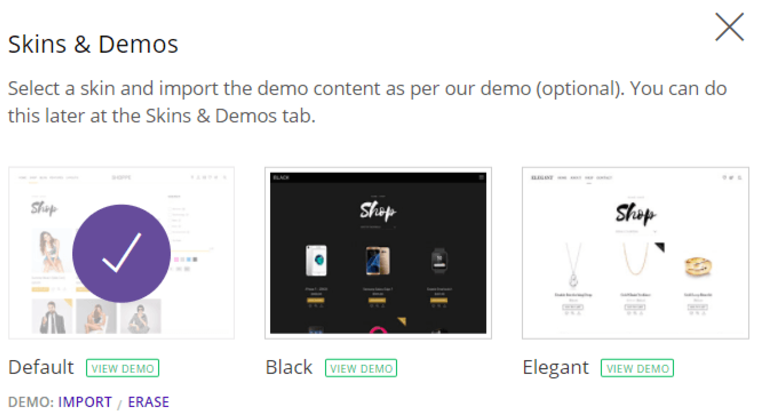
On the other hand, if you’re not familiar with the process of designing a website on your own, most e-commerce themes include plenty of pre-designed layouts and demo content to help you kick things off:
skins and demos
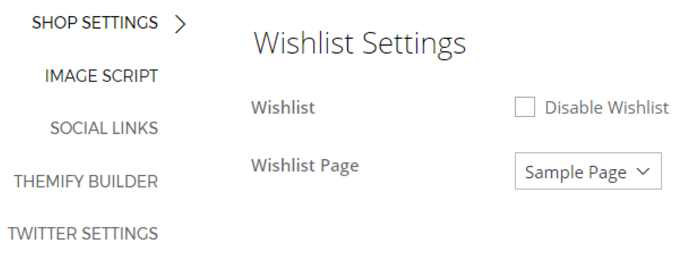
There are a lot of features you’ll want to implement as soon as possible to make your online store more user-friendly, and an e-commerce theme can help you get there faster. For example, wishlists are a mainstay of most online stores:
wishlist settings
Finally, there’s one feature in particular that you want any good e-commerce theme to pay attention to: product images. As mentioned earlier, the right images can make or break a sale, and advanced functionality, such as an AJAX slider, can help make sure yours pop:
animated product image
Now that you understand the importance of picking the right theme, there’s only one subject left to discuss that will round-off your new online store nicely – WooCommerce extensions.

Step : Consider Installing Extensions

To put it simply, WooCommerce extensions are similar to WordPress plugins. Although WooCommerce itself is a plugin, it has plenty of add-ons that you can use to extend its functionality even further.
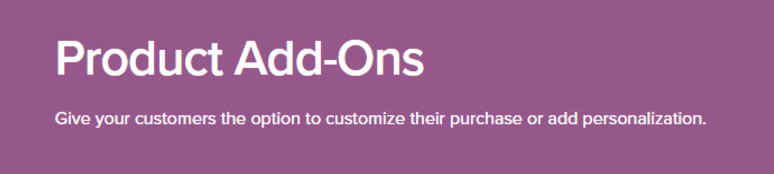
Setting up extensions works just the same way as installing a regular plugin, and they come in all shapes and sizes. Take Product Add-Ons, for example:
product add-ons
This straightforward extension enables you to add custom fields and drop-down menus to your products, giving you more control over your items (which is something any store could benefit from).
Product Add-Ons isn’t the only extension worth your time. In fact, there are hundreds of them on WooCommerce’s official repository – some free and others premium. If you want help sorting the good from the bad, an online roundup is a great place to start.

Conclusion

As a student, an online store could be key for topping up your income during your studies. If you’re planning to set up an online store using WordPress, WooCommerce should be the first option you consider. Not only is it one of the most polished and reliable e-commerce plugins available, it’s also easy to set up and benefits from a vibrant (and helpful) community.
Here’s a recap of the three steps you need to take to get your first e-commerce store up and running after installing WooCommerce:
  1. Customize your store’s settings and add your first products.
  2. Set up a WooCommerce-friendly theme.
  3. Consider installing extensions.
Once you’ve done this, an almost passive income stream is at your fingertips! Good luck!


5 Cover Letter Lines That Make You Sound Like a Robot

Cover letters are a crucial part of any resume. It is there that you can say things that didn’t fit in your CV. It will also be there that you will be allowed to show a bit of personality and prove how excited you are by the possibility of joining the company.
Unfortunately, many people neglect their cover letters. They just copy and paste whatever they found on the internet. Or they just ask someone else to write it for them. And while it is understandable that not everybody has a talent for writing, this type of behavior might cost you a job.  So, let’s see them which lines should never be in your cover letter so you can take it from there
– A generic greeting
You are writing a letter to someone. While large enterprises usually applicant tracking systems to scan resumes and make sure they meet the minimal requirements, your cover letter will be read by a real person, not to a computer. And this person has a name and can be of any gender.
So forget the “Dear Sir” and “To Whom it May Concern”. Prove that you are eager to get that job by calling the company or recruitment agency and asking to whom you should address your cover letter. If it is not possible, or you don’t get an answer, at least use “Dear Sir or Madam”.
# 2 – [Your name] is a highly qualified
Please, never write in the third person. It is one of the worst things that you can do in your cover letter. You are not a king or a company to be addressed like this. Plus, reading your name over and over will make the recruiter remember it, but not in the way that you would like. So always stick with the first person.
# 3 – “I am really excited”
One of the rules followed by the best writers is “show, don’t tell”. And while you are not trying to create anything worthy of the Nobel Prize, you can learn from them. That is to say that, instead of saying that you are really excited, you should prove it.
If you do some research about the company and add some interesting facts and ideas you got, it will tell them that you are interested in the job, for instance. This is one of the secrets to writing a create resume, and you should follow it to the dot.
# 4 – “I will provide references available upon request”
You know that your cover letter should be only one page long, and it includes addresses, greetings, and so. Meaning that each word must count. And writing something obvious can also make your recruiter think that you don’t have anything better to say.
So, saying that you will provide references upon request is useless. Of course, you will do it if they ask you to. You better off using those seven words to say something that will add value to your application.
# 5 – Any line misspelt or with grammatical errors
Here is something could certainly kill your chances to be hired. You got just one page to write. So, if you can’t proofread it, chances are that your recruiter will think that you aren’t attentive to detail or that you can’t write a decent e-mail – something usually required in many jobs.
Of course, nobody is expecting that you will write a fantastic copy, except if you are looking for a job as a cover letter writer. But you should at least ask someone to double check your writing for you.
Final thoughts
As you might have noticed, writing a cover letter is a big deal. I won’t lie to you about it. You must plan what you are going to write carefully considering to whom you will talk and the style of company you are applying.
Rules can sometimes be broken, but, generally speaking, stick with has brought results to other people so far. And it passes through avoiding silly mistakes such as these five lines above. Sometimes, it is all that take to impress a recruiter and get hired.

he Unexamined Life is Not Worth Living: Tools for Self-Knowledge

If this proclamation is indeed true, then where does one begin to excavate these multiple dimensions of their life? And, more than that, what is the point?
Well, from the perspective of career and educational planning, the more information we have about who we are and how those factors correlate with job fit and satisfaction, the better equipped we are to make informed decisions. Furthermore, the deeper our self-awareness and understanding of differences in personality, the better able we are to navigate the world of work.
Tools that help facilitate this self-examination include a variety of assessments, such as StrengthsFinder, Strong Interest Inventory and the Enneagram. Each of these assessments help to clarify one’s interests, strengths, and values, in addition to personality traits.
One of the best-known and widely used personality assessments is the Myers-Briggs Type Indicator (MBTI). With its basis in Jungian psychology, the MBTI looks at four different dimensions of personality in which individuals tend to gravitate towards one side. The questions posed by the MBTI illuminate preferences on how and where you get your energy (extroversion vs. introversion), how you take in and process information (sensing vs. perceiving), how you make decisions (thinking vs. feeling), and how you orient yourself to and structure your day-to-day life (judging vs. perceiving). There are 16 possible personality types based on the Myers-Briggs and each one of them has distinct traits that describe differences in styles of communication, leadership and group dynamics.
Considering most of us don’t live totally alone, in the remote mountains, interfacing with other humans on a regular basis, is virtually inescapable. To that end, the more we understand about each other, particularly ourselves, the more likely we are to have relationships that are more harmonious and effective. Familiarizing ourselves with the Myers-Briggs framework is immensely valuable, particularly in the context of work; knowing our preferences within each dimension of personality, allows us to find occupations that are better aligned.
For example, as an ENFP, the Intuitive (N) trait will manifest in seeing the big picture; easily identifying patterns and relationships between people, ideas and things; and in an ability to ideate. These parts that are driven by imagination, innovation and forward thinking, will likely need to find outlet through brainstorming and ideating on possibilities for the future, or when solving problems. If you’re in a role that does not support this dimension of your personality, it is possible you won’t be as satisfied, or engaged, on the job. While this only describes one of the MBTI traits, it serves to highlight the value in exploring the connection between who you are and how those unique dimensions impact your experience in life and work. The Myers-Briggs then becomes an ideal springboard from which to uncover the many layers of your personality that can support you in making better aligned career decisions and when navigating differences in communication and group dynamics.

5 Negative Thoughts After College Graduation and How to Deal With Them

An ancient Chinese curse says: ‘May you live in interesting times’, where interesting times are the times of changes. So, your last year in college is over, you received your diploma and went through the cap throwing. What’s next? Interesting times, indeed. You are staying at the edge of a completely new life.
It might seem scary or terrifying. But don’t let the depressing thoughts take over you. We have listed some of the worries you might be going through right now and how to deal with them.

. I’ll never manage to pay out my student’s loan

It might happen, that you never took student loans seriously until now. They just didn’t seem to be the real money, but it only lasts until you do the calculations. The numbers may put you down.
What to do?
Try to stay calm. You are not the only person to go through this all. There have been thousands of young people before you, and many more will come after. Speaking of people before you… Why won’t you ask for a piece of advice?

. Without experience I won’t find a decent job

The time has come and the first thing you need to do is to write your first CV and Cover Letter. And here you are, sitting in front of a blank page struggling, with no idea where to start. And yeah, it is hard to do something you have never done before.
Just do it.
Imagine your perfect workplace and the ideal position you want to get. Answer the question: what kind of employee this company will look for? With that image in mind writing your CV and Cover Letter won’t be that challenging. Also, check for resume samples, they are not hard to find. Filter your search request with a position. After you complete writing, don’t forget to proofread your resume. Not a single employer would like grammar mistakes, especially when your CV says “detail oriented”.

. No recruiter will say that I’m a good candidate

You have sent your CV to a number of companies, and one (or few) of them got interested in you. Great! But after a short moment of excitement, fear comes. Will you be able to handle your nerves? Won’t you screw it all up? Won’t you be embarrassed? Will you get a job? All these thoughts are chasing every young person on the way to their first job.
How to handle it?
The secret of a successful job interview is based on honesty, confidence and positive attitude. Small secret – set up your interview in morning hours. So the worries won’t follow you all day long. Be well-prepared: search for the information about the company, its clients, and the interviewer. Have a good sleep and breakfast. If it is your very first job interview, look for some tips on how to improve your personality traits or how to go through the job interview successfully.

. Moving back to parents? Great. Exactly what I’ve studied for

After living on your own in college, it might be frustrating to go back home and feel yourself like a teenager again. Especially when you go through all these debts calculations and job interviews. It may feel not quite right. You are supposed to be an adult after graduation, so why do you have to tell your mom when are you about to come back home?
Take advantage of it!
If for some reason you have to move back with your parents, don’t get desperate. It may serve you well. Your parents are always on your side and will support you, no matter what happens. So, while you are having ‘interesting times’, why won’t you benefit from their help? Still, do not make it your routine. Plan your future. How long will you stay with them? Create a deadline for yourself, for you definitely don’t want to find yourself living with your parents at your 30.

#5. My friends are far more successful and happier then me. Hate them.

Caught yourself being envy to your friend’s success? Their Instagrams and Facebook pages are filled with #lovemyjob and #whataparty hashtags? It makes you feel yourself a complete looser?
You are not!
Life is something that happens while you upload a new picture to Social Media. Young people nowadays are masters in creating a great image of themselves all over the Internet. Don’t be jealous. Their life may be as boring as yours seems to you. Compare yourself only to yourself and get better every day. This is the only way to be happy.

Summing up

Negative thoughts are chasing everybody in this crazy world. People are getting new worries and concerns every day. No wonder you have them too, especially when going through the period of major changes.
But remember the old Chinese proverb? “If your problem has a solution then…why worry about it? If your problem doesn’t have a solution then…why worry about it?”

Translating Your Classroom Experience to the Job Search

Image courtesy of George Redgrave, Flickr Creative Commons
What does a typical day look like for you?
It’s a question that comes up quite often in student appointments, particularly as they begin researching career opportunities and start assessing whether or not they envision themselves in a particular role. But, are students asking themselves this question?
I find that the students I work with are concerned about their work history, and fear that they lack a marketable skill set for the internship or job market because they don’t have a robust, multi-page snapshot of their professional experiences. While I understand their concerns, I find in a lot of cases, our students sell their skill sets a little bit short in the search. It takes some brainstorming for them to start reflecting on what they’re learning inside of the classroom and how it applies to the “real world.”
Students truly learn so much from the classroom experience. As they acquire relevant content knowledge and grow within their programs of study, they are quickly building a concrete skill set that is easily transferable to the job market.
One key to successfully articulating these skills involves translation. I led a workshop with Dr. Steve Iona, from the Physics & Astronomy Department, last quarter and he challenged our group to think creatively about this very topic. How can a student, who has completed a number of projects and assignments in the classroom, relate those activities back to a typical day on the job?
In my appointments with students who express concern about their work experience, I will often challenge them to tell me more about what they’re doing this quarter. I’ll often ask:
What courses are you taking this quarter, and what do the assignments look like?
What are some projects that you’ve completed that you’re particularly proud of, and why?
Are you taking a class with lab this term, and if so, what has your experience been like in the lab? Have you been working with a lab group? If so, how have you navigated the different working and learning styles of your team members? How have you taken their diverse perspectives and allowed them to influence (or not influence) your work?
Have you worked on a research project or paper? Did you present quantitative or qualitative data in written and visual formats? Did you have the chance to describe your research project to a lay audience (your peers, the community in a poster session)?
Are you solving sophisticated, multi-step problems in your courses?
As students start to tackle these questions, a lucrative and exciting skill set emerges that includes the ability to manage multiple projects, work effectively in a group setting, solve technical and complex problems, and navigate difficult conversations.
These skills are all great, but it can be difficult for students to decide where classroom examples might fit on a resume. After all, isn’t a resume designed to highlight professional experiences? What I often suggest to students is to first generate a working list of transferable skills and related classroom experiences, and then creatively relate aspects of these activities back to the resume. Listing relevant projects and coursework is a great place to start.
Some of these experiences might be better conveyed in the interview, and that is also great! The resume, cover letter, and application stage is not the final step; the ability to weave classroom skills into interview answers is another key to success in the internship and job hunt. Be sure to reflect on how to aid your students in capitalizing on the skills they use in lecture halls and labs in every step of the internship or job search.
So, what does a typical day look like for you?

6 Interview Tips for Graduates

Ready to interview for your first job? First interviews are exciting and also intimidating at the same time. If you put in the right level of preparation beforehand, then this can help you land your first job. Find a list of six interview tips below for interview success.
  1. Remember that first impressions are very important
Many interviews are often failed within a few minutes of entering the room. This may be due to interviewers being put off by a lack of eye contact, a weak handshake, poor body language, poor posture or even a bad attitude. Keep in mind that interviewers will make judgments about your likability, trustworthiness, professionalism and competitiveness from the beginning and then spend the rest of the interview confirming these opinions.
To make the best first impression consider doing the following:
  • Make a firm and warm handshake and wait to be invited to sit down
  • Smile and make good eye contact at the start of the interview
  • Try to relax without perching on the edge of your chair (and definitely no slouching)
  • Speak in a clear voice and take your time
  • Take time before responding to questions and avoid fidgeting or using filler phrases (“you know” and “I mean”)
  1.  Be prepared to answer competency-based interview questions
Depending on what role you are going for, employers will be looking for you to demonstrate a specific set of skills and competencies. These will be what they think are essential to the job role. For example, you may need to demonstrate how you can work as part of a team, communicate effectively, solve problems and manager your time. Have a few specific examples prepared before about times when you have demonstrated these competencies.
  1. Be prepared
Do some research and preparation before your interview. For example, you will be expected to show an interest in the organisation. Read up about the business by looking at their website and prepare questions to ask them about the employer and also the role you are going for. It’s ok to write these down and take them with you to the interview.
You can also arrange to do a mock interview with a friend and practice questions beforehand. This will give you a lot more confidence when answering similar questions during the real interview. Also, dropping into your university career center is a great way to prepare.
  1. Make the right amount of eye contact
This can make the difference in your interview since most messages processed by the brain are in fact based on a person’s body language. Your facial and eye movements in an interview are being registered more than what is listed on your resume. Your eyes reflect your level of confidence, interest and professionalism while interviewing.
To display confidence, avoid looking down at your shoes or looking at the table – these actions might convey a lack of confidence or nervousness. To reinforce honesty, make eye contact and avoid any sudden change in eye contact. When talking about something particularly interesting or even something you are proud of, let your eyes light up to show interest and intent.
  1. Make the employer feel special
You don’t want to make them feel like they are one of many you are applying to. Make your questions stand out by giving them unique and focused responses. Do this by taking into consideration what they do as a business when answering questions. Make it clear to them that you like the company and explain how you could contribute to helping to meet their goals as a business. This will add a personal edge to your interview and make you stand out.
  1. Go above and beyond to standout from the crowd
Thinks about what you can do to make yourself memorable. For example, perhaps you can do something creative like creating a short video to introduce yourself, your experience and passions. Or perhaps you can add more to your resume by adding case studies and accomplishments from your university studies. Any successes that match up to the position you are going for will help you standout and make you more memorable.
Go for it!
At the end of your interview make it clear that you are interested in the position and ask what their next steps are. Thanks the interviewer for his/her time and follow up with an email or letter expressing your enthusiasm. Soon you will find yourself starting your career and an incredible journey.
This article was submitted by Amy Pritchett, Outreach Manager for Vision Direct, the UK’s online leading retailer for contact lenses. Amy is passionate about offering career advice to graduates and helping them shape their professional vision.

Five tracker apps for increased productivity

This blog recently ran a piece on self-knowledge that began with a famous Socrates quote: “the unexamined life is not worth living”. The post referenced some useful self-examination tools – including the well-known Myers-Briggs Type Indicator assessment – that can help reveal some potentially illuminating aspects of our own hard-wired psychologies, behaviors and habits when trying to make longer-term plans around career and life goals.
When it comes to much shorter-term planning, though, there’s an entirely different sort of self-knowledge toolkit available to us today: the kind that buzzes at us regularly from our pocket or wrist. In 2017, our near-universal embracing of always-on connectivity and wearable technologies has made so-called tracker apps one of the busiest download markets for mobile platforms.
Many of us use multiple tracker apps every day without really thinking twice about it, leaning on their simple tap-and-log functionality to power activities as diverse as monitoring our calorie intake, getting directions, managing personal finances and even tweaking our sleep-wake cycles.
Our ability to rely increasingly on digital app-based support for previously ‘analogue’ tasks is, of course, both a blessing and a curse. A 2016 report on Forbes.com noted, for example, that many smartphone users were starting to turn to their apps for medical advice before contacting their doctor; a scenario in which various pros and cons are immediately clear.
Quite apart from the inherent potential for faulty apps to lead us astray, it’s also important that we retain the ability to break free from their technological hand-holding every once in a while – both in terms of preserving a useful offline skillset, and moreover to give us respite from all those constant bleeping reminders. The unexamined life may not be worth living according to Socrates, but we can all afford to treat ourselves to a little less intense scrutiny from time to time.
That said, some of the more reliable, well-used and community-supported tracker apps out there do in fact offer a genuine boost towards hitting the ground running in a new venture or career. Here are five suggestions for especially handy little downloads – all well reviewed by sizeable user groups – that might prove useful in a variety of everyday organisational tasks, especially when starting a new job or working to an upcoming deadline.
  1. Rescue Time (Apple, Android, desktop)
If you’re among those of us who are always wondering where the heck all our time disappeared to as a deadline hurtles closer, then this app might have an answer for you. Unlike many time management assistants, it doesn’t work by constantly nagging you to stop what you’re doing and focus on something else – instead, it builds you a more general workday profile based on your goal-based accomplishments logged against the percentage of your time spent on specific programs, sites and apps. This gives you the power to adjust your own habits, limiting areas that are proving a disproportionate drain on real productivity by setting your own schedule of reminders and alerts that you can turn on and off whenever you need an efficiency boost.
  1. Addapt (Apple and Android)
Like many of the best ideas, this one’s almost infuriatingly simple: an ‘always updated’ address book that’s automatically amended whenever your important contacts switch their details. In theory, this means you’ll never again be stuck without a working phone number or email to reach bosses, colleagues or clients, even if you haven’t spoken to them in a while – other users can edit their personal details remotely, and the changes will show on your device next time you look them up. The app also automatically prioritizes phone, email or text message when you navigate to a name, based on your usual method of reaching that individual. From a privacy standpoint, it’s also reassuring to know that user address books aren’t stored on Addapt’s servers.
  1. Who’s Off (Apple, Android, desktop)
If you’re working with a group – be it as part of an office workforce, or as an independent team pulling together a one-off project – then it often pays to know exactly which of your colleagues are available or not at any given moment. This app enables precisely that: by logging into a central hub, all members can quickly update the whole group with news of last-minute absences, or to arrange cover for planned away days, without having to consult a separate shift rota or holiday calendar and without sending a whole load of crossover emails back and forth. The app requires one paid account for the company or organisation, and then all the individuals in it can set up their own user accounts for free.
  1. Bananatag (Desktop)
Speaking of emails, how often have you wanted to know exactly what happens to them when they reach their destination? Bananatag sheds some light on this by essentially giving you a souped-up version of a receipt report after you hit send. As well as confirming successful delivery, it also gives you a time stamped read report showing if/when it was opened, whether attachments were clicked on, and which links were followed. Crucially, it’s still respectful of privacy – it doesn’t track individual users, but instead gives a chart-based readout of group email performance which can then be exported to an Excel sheet for reference. It’s primarily aimed at sales teams, but it also has useful applications for devising more effective internal group comms, offering a handy degree of flexibility to tailor your approach to multi-recipient engagement strategies with a range of neat email templates. A free account lets you track up to five emails a day.
  1. Flare (Apple, Android)
For the entrepreneurs and ideas people amongst you, Flare might offer a decent interactive sounding board that’s less expensive and more direct than having to pitch to a private business consultant. It works by allowing registered users to float up to one idea per day on the community forums and gather feedback from other users. If your idea earns enough positive votes, you can then follow up with some more detailed questions about specific implementation issues (or any other aspect of one day making it a reality). The app is managed by a team of expert investors and business strategists at GoDaddy, a cloud-based platform geared towards startup support, and it’s partly designed around attracting potential investors – they can also track the development of an idea they’re interested in, and offer advice or even financial backing for a specific venture once it gets past the initial community approval stages.

Preparing the Perfect Pitch: Strategies for answering “tell me about yourself”

Happy business people talking on meeting at office
“Tell me a little bit about yourself.”
It’s something we have all been asked at one time or another, and we have all responded to this question with varying levels of success. It’s a tough question to tackle, at first glance, because the question itself is as open-ended as we want it to be.
I find that this fact can make the question an overwhelming one for students to respond to. They aren’t always sure where to begin, and students have told me that they felt as if they were rambling through a response. Since this is one of the first questions we are often asked in an interview setting, it is absolutely crucial to have a strategy in place to set ourselves up for success from the start. Here are some tips to get your wheels turning about what the question is asking, and how you can quickly and effectively respond to it.
1. “Tell me about yourself” is a great way for employers to get to know your skill set, experience, and goals in mere seconds.
When I work on interviewing skills with students, we often begin by dissecting common interview questions. We analyze what we believe each question is asking, and make our best judgment about how to respond accordingly. While different professionals have their own insight on this question, I find that employers or admissions staff often ask this question to get a sense of the applicant’s skills and abilities. What accomplishments, experiences, projects, and skills is the applicant most proud of? What are their short- and long-term goals and which did they choose to prioritize for this question?
As you begin working on your own responses to this question, I suggest drafting a three-column table on a sheet of paper and listing:
  • Three skills that you’re proud of, and that relate to the job description;
  • One experience or quick example that exemplifies these skills;
  • One goal (short- or long-term) that this position might help you to achieve.
You can then weave these skills, and your story, into your response without taking a lot of time to respond.
2. Decide how you will start.
Once you have a list of skills, a short story or example, and a goal, you have the basic structure of your response! Next, I suggest taking some time to think about the first line of your answer. If we are thinking about this response as something that could be used for an interview or elevator pitch, you could try some opening lines that reflect your current professional status. Some starters include:
  • I’m a student at the University of Denver, studying Biological Sciences with minors in Chemistry and Medical Physics.
  • I’m a recent graduate of the University of Denver, where I studied Environmental Chemistry.
  • I currently serve as Career Advisor at the University of Denver, working specifically with students in the Division of Natural Science and Mathematics.
Try out a few opening lines, and reflect on which ones seem to fit in best with the skills and goals you chose for item . It is never a bad idea to have a few to choose from, either!
3. Be sure to practice!
While cliché, practice truly does make perfect. Take some time to practice your new response with one of our Career Advisors, record your answers using InterviewStream, or share them with a friend. As you practice, think critically about which aspects of your response seem to captivate your audience, and where you stumble. The more you work on your pitch, the more confident you’ll feel in an interview setting.
What are some strategies that you have used to answer “tell me about yourself”?

Top Benefits to Look for in Your Job Hunt

If you are looking for a job while you are in college, you don’t necessarily have to take any old crappy job just to make extra money. Today, there are many opportunities available to students, and many jobs even come with benefits. You just have to know what you want, and then find the companies that offer the benefits you want. Don’t expect too much, since you are likely going to be a part-time employee. But, there are some benefits you should be looking for when you are hunting for a part-time job. Let’s take a look at the most important benefits for working students.
  1. Paid Time Off – Whether it is vacation time or sick time, you should look for a position that offers paid time off. This may not be possible if you are strictly a summer employee, but if you continue to work once you are back in school, you will be on the payroll long enough to qualify for vacation and sick time, as well as other paid days off.
  2. Retirement Investments – It is never too early to start planning your retirement. In fact, the sooner you start saving, the earlier you may be able to retire. Look for companies that offer a 401K or other type of retirement savings plan. You contribute a certain amount, and your employer will match your contribution (to a certain amount).
  3. Health Benefits – One of the most important benefits for many people is to have a health plan. This pays for a portion of medical expenses, including prescriptions, which can often be unaffordable for college students who have no access to medical insurance. But, not all employers offer the same plans. Look for companies that have good plans with lower deductibles.
  4. Outplacement Services – Look for a company that provides outplacement services. These are services that are hired by companies when they have lay-offs, to help laid-off employees transition and find new jobs. If you have been a good employee, but the company no longer has need of your services, they will often go out of their way to help you find a new position.
  5. Disability Insurance – This goes along with the health benefits, and it is a very important benefit to look for when applying for work. If anything happens that you are injured or sick and unable to work, this type of insurance can come in pretty handy. Some companies pay the full premiums, while others pay a portion and you pay the rest.
  6. Medical and Family Leave – We never plan to have medical or family emergencies, but they happen, and we have no control when they do happen. Look for companies that understand this, and that offer both medical and family leave. This can include leave for serious health issues, caring for an ailing parent or child, childbirth and childcare, etc.
  7. Tuition Reimbursement – If you are looking for ways to pay for your education that won’t leave you with thousands of dollars’ worth of debt after graduation, look for employers that offer tuition reimbursement programs. Often, this is given if you are taking courses that are specific to your job, or that can help you to move up within the company.
  8. Expense Plan – Some companies offer an expense plan if you are going to be doing things for your job that you have to spend money on. For instance, if you are required to travel, your travel costs, meals, accommodations, etc. could be paid for. If you are working on the road, you will be able to claim mileage for your vehicle. Don’t take any job that expects you to pay for company-related expenses.