Why Should Alumni Use a Career Coach?

Are you a DU alum looking for a new job? Thinking about changing careers? Looking for that perfect pre-retirement gig? Then perhaps a career coach is the right option for you. You wouldn’t ask the local dry cleaner to fix your car. Don’t rely on acquaintances and well-intentioned friends to help with your career.
The University of Denver takes your professional success seriously. You paid a lot for your education and we’re here to help you maximize that investment. Alumni Career and Professional Development offers a variety of free and low cost options including live workshops, online webinars, resume reviews, career fairs and networking tools. We also offer five hours per week of call-in Quick Questions – an opportunity for you to ask a DU expert your 15 minute career related question. Explore your resources and opportunities at du.edu/alumnicareers.
Sometimes, this isn’t enough. With 140,000 DU alumni, we can’t provide the in-depth coaching some of our alumni need to move their careers forward. But don’t worry, we’ve got you covered for that as well. In January, DU launched a relationship with Turning the Corner, LLC, a Boulder-based company that provides career coaching to individuals and works with employers to solve their staffing needs. This combination is unique in the industry.
Because Turning the Corner recruits and coaches, they bring a common-sense, real-world approach to their individual clients. They help you see yourself through the eyes of employers and can help get you unstuck. Have you sent hundreds of resumes to online job boards without receiving a single interview? Are you getting the interviews, only to watch someone else get your dream job? Are you having trouble upgrading your LinkedIn profile so your customers find you? These are just some of the areas where Turning the Corner excels. And as a DU alum, you receive a deeply discounted rate for their services. If you’re ready to find personal, tailored professional help, check out Turning the Corner.
It’s time to take your career to the next level. Let DU Alumni Career and Professional Development help or visit Turning the

Who’s Asking All the Questions? What You Might Be Missing in Your Interviews

Why is it that preparing for an interview is so difficult? There are likely many answers to this question, but one obvious reason is that you don’t know what questions the interviewer(s) will ask. You can research the company, memorize the job description, but you still don’t really know what’s coming. Of course, this is certainly intentional. The employer doesn’t want you perfecting rehearsed answers to questions ahead of time—they want to get to know who you really are.
On top of that, what questions should you be asking? You’ve probably heard the old saying, “They’re not just interviewing you, you are interviewing them too.” Part of being an effective interviewer is asking thoughtful questions in your interview. Determining the questions to ask your interviewer(s) can be difficult, but there are numerous types of questions to ask. Some should be very specific to the job and the company, and others are questions you can ask in any interview.
Below are 3 common interview questions to prepare for and 3 thoughtful questions you can ask!
QUESTIONS TO PREPARE FOR:
What do you know about our company? As a former recruiter, this was always the question I started with. It should be simple, a gimme, a layup, yet you might be surprised how many people struggle with this. Either the candidate has done so much research that it’s difficult to know where to start or how to craft his/her answer, or they have not done any research and don’t know how to respond. The best thing you can do, in addition to spending lots of time on the company website, is read news articles and press releases. Find out what is happening with the company right now and mention that in your response. The employer is likely used to hearing candidates recite the company’s mission statement, but when you mention a new product or leadership change, they will be impressed.
How would your boss and co-workers describe you? Certainly the interviewer is looking for any potential red flags, but also this question centers upon the candidate’s self-awareness. One easy way to approach this question is to draw from a recent performance review. “Referencing specifically where you’re getting your information from makes it easier to describe yourself as “trustworthy, dedicated, and creative” without cringing” according to Lily Zhang of The Muse.
What are your strengths and weaknesses? Well, strengths should be easy, or eat least easier… Think about the qualities you have or what you have accomplished that directly relate to the role. Weaknesses, obviously, are a bit harder. Think about how you can be honest and show self-awareness, while also providing some insight into how you are as a worker. Are you a perfectionist? Do you sometimes spend a lot of time on the details and lose sight of the bigger picture? Do you struggle with ambiguity and find yourself asking a lot of questions? These are some examples of weaknesses you could share in a response to this question, but the most important part is to show that you are aware they are weaknesses and that you are working on it. So think about this: how are you going to overcome those obstacles or how have you already overcome them? Take a look at what Kimberly Lucas, President/Chief People Connector at Goldstone Partners had to say about these interview questions!
QUESTIONS TO ASK:
What are the biggest challenges for someone in this role? This is a great opportunity to get information from the employer on what is going to be difficult. As the interviewers are evaluating talent they want to know how you are going to handle those difficult tasks, so this is one way to get it all out in the open.
What are some things that you like about working here? What are some things you would change if you could? The fun part about this is you get to put them on the spot and force them to be a bit critical of the company or department they work in. It can also be illuminating to hear what their frustrations are, or at least what they are willing to share in an interview setting. Measure their response(s) against your own values—this could be a great way to determine if their culture would be a match for you.
What are the strategic initiatives of the company? How do you see the organization evolving in the next 5,10 years? Hopefully, you will have done your research ahead of time, so this could be a way to get an insider’s perspective on the direction of the organization. It also shows that you are thinking “big-picture” and invested in a long-term commitment with this company. As organizations change, you want to make it clear that you are interested in evolving and growing with the company.
This is just a taste of how to prepare for certain interview questions (and prepare questions of your own). You might want to schedule an appointment with your Career Advisor to go over additional preparation activities. Please also create an account in InterviewStream to practice interviews virtually!

Interested in Interning at Arrow Electronics? Meet Alejandra Martinez, Graduate Arrow Fellow!

Alejandra Martinez is a 2nd year graduate student in the Morgridge College of Education, and was recently hired as the Graduate Arrow Fellow in Career & Professional Development.  She is passionate about creating pathways for all students, but especially students of color, into large professional organizations. She has a wealth of experience working with students in higher education environments, event planning, and personal & professional development here at DU and Johns Hopkins University.
In her remaining time here at DU, Alejandra is going to be helping students pursue and prepare for internships at Arrow Electronics, one of the school’s strongest corporate partners. Last year Arrow hired 35 student interns from DU and they remain interested in our students!
If you have interest in Arrow Electronics and are actively pursuing internships for the summer, please know that Alejandra will be available on Tuesdays & Thursdays in AAC 212 from 9am-12pm. If you have already secured an internship with Arrow, you’ll also want to meet with her to ensure you’re adequately prepared to be successful in that internship. There’s no need to make an appointment with her, you can just drop by! That being said, please review posted internships for Arrow in Pioneer Careers ahead of visiting with Alejandra.

B.Ed. I semester – General English – Functions of language


Do visit the following site for a video lesson

https://study.com/academy/lesson/the-uses-of-language.html


Informative, expressive, and directive forms of communication are the primary uses of language.
Language Background
Written and spoken language is used for many different reasons. The primary uses of language are informative, expressive, and directive in nature. Language is used to reason, to express ideas, argue a point, provide directions, and much more. Let’s learn about the three main uses of language and how they are represented in written and spoken language.
Five functions of language:
Actually, Geoffery Leech( 1974 ). Mentioned that language has five functions. They are:
1.      Informational 
2.      Expressive 
3.      Directive 
4.      Aesthetic
5.      Phatic
I am going to discuss every function. “Informational function which every one tends to assume is most important” Geoffery Leech( 1974 ). In fact, this function concentrates on the message. It is used to give new information. It depends on truth and value. Let us look at this example, the car is big, the bus is crowded.
The informative use of language applies to written and spoken language that can be determined as true or false. Informative language is often seen in analytical reports, descriptions, arguments, and everyday speech. Most informative uses of language are declarative statements. For example, a person uses informative language when they are making a statement that provides information or that adds emphasis onto known information.
A person who says, ‘The sky is blue’ is using language to inform others about a known fact.
On the other hand, a person would be emphasizing information if they said, ‘Isn’t it raining outside?’ to a child who wants to play outside. This informative use of language is rhetorical because the person knows that it is raining, but is forming it as a question to remind the child that the weather is keeping them indoors.
” language can have an expressive function: that is, it can be used to express its originator’s feelings and attitudes – swear words and exclamations are the most obvious instance of this”. Geoffery Leech( 1974 ). The speaker or writer of this function tries to express his feelings. He or she reflexes his or her impression. This function could give a clear image for the personality of the speaker or writer. The best example of this kind is Poetry and literature . In fact, this function evoke certain feelings and express feelings. Examples of this kind are, I am very happy or I spent a wonderful vacation. We can see from the previous examples that they reflex the feelings of the speaker or the writer.
Language that is used to express a mood or feeling is considered an expressive use of language. Expressive language can reveal a person’s happiness, sadness, anger, or other state of emotion.
Expressive language doesn’t deliver information, but it is critical to human communication because humans thrive on the fostered social connection that language can create. Swearing, cheering, and sounds that represent emotions are examples of expressive language. Here are a few examples of expressive language:
  • Wow!
  • The blue bedroom is depressing.
  • Movies are boring.
“The third function of language is the directive function whereby we aim to influence the behavior or attitudes of others. The most straightforward instances of the directive function are commands and requests. This function of social control places emphasis on the receiver’s end, rather than the originator’s end of the message: but it resembles the expressive function in giving less importance, on the whole, to conceptual meaning than to other types of meaning, particularly affective and connotative meaning” Geoffery Leech( 1974 ).
Examples of this kind are, I want a cup of tea or close the door. It is clear hear that, we use the language in a direct way. We ask someone to do something. Some times we can use a sentence to express two functions. For example, I am thirsty. The previous example could be used to show the condition of the speaker or writer or to express the feeling. In a way that a person asks someone to give him water.
The fourth function is the aesthetic function, which is ” the use of language for the sake of the linguistic artifact itself, and for no purpose. This aesthetic function can have at least as much to do with conceptual as with affective meaning” Geoffery Leech( 1974 ). ” The function associated with the message-the vehicle-is the poetic or aesthetic function: the sign taken as an end in itself. All art understood as art is taken to embody this function, and any object valued for its beauty rather than for its ideological value or usefulness-whether a gorgeous car, an elegant teapot, or some acreage of untouched real estate-takes on this function. Although Jakobson, perhaps more precisely than anyone who preceded him, showed how the aesthetic function could hinge on structure, he argues that cultural norms ultimately determine the dominance of this function. As a striking demonstration, he notes that the aesthetic status that one generation accorded only to the poems of Karel Mácha, a subsequent generation accords only to his diaries. Jakobson, R. (1933)”.
According to Leech, the fifth function is the phatic function. ” the function of keeping communication lines open, and keeping social relationships in good repair ( in Britain culture, talking about the weather is a well-known example of this)”. Geoffery Leech( 1974 ). We can say about this function that it is used for normal talks. An example of this, when two people meet each other accidently in a place. They start talking about something unimportant for the sake of communication like, how are you? How is your children? And so on. We can say that it is a kind of daily talking. It is not meaning but is good.

5 Modern Day Rules for the Workplace

Whether you have been in the workforce since before email ruled your life or you are starting your professional career, the workplace is an ever-changing dynamic. It doesn’t matter if you are rule-follower or a rule-breaker, here are some rules to consider.
1. Know what is in your employee handbook. You may find a little known policy like the ability to participate in a day of service at your favorite organization that doesn’t count against your Paid Time Off.
2. Be action-oriented and ambitious.
Let the others around you whittle away the day on office drama and social media. Show your supervisor you are dedicated to your job, your goals and your organization.
3. Use Reply-All sparingly!
It is likely that not everyone needs to see your response and no one needs an inbox full of ‘thanks!, I agree!, good point!’.
4. Be positive and confident. People are more likely to respond and respond favorably when you have an upbeat and confident attitude. This is especially true during times of stress and pressure when you’re put to the test.
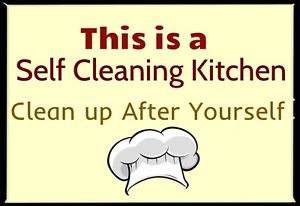
5. Clean up after yourself! If you make a mistake, admit it and clean it up. Headed to the communal kitchen?
Remember:

Job Search Got You Down?

For many soon to be graduates this is the most exciting and stressful time of their college career. NO MORE SCHOOL! However the job search isn’t going as planned. To take your mind off the stress of classes and job search, here are some fun job search memes we can all agree on.
Forgets-to-attach      oh-get-a-job-charlie-day       Instagram-Job-Interview-Goals-738220
However funny memes won’t get you that perfect job. How can the Career Center help?
Come to the Job Search Strategy workshops this week May 10th at 11:00 AM in the Career Center (under the bookstore) and May 5th at 2:00 PM in Driscoll 145.
SAVE THE DATE for Get Hired Now! 
Get Hired Now! is a program developed by the University of Denver Career Center and Alumni Professional Development to provide recent graduates with the skills they need to embark upon or continue their post-graduation job search. The program consists of four parts. The first three parts occur June 13-15. June 16 is the HireDenver Alumni Career Fair that participants will be encouraged to attend.
  • Workshops – Career Center staff will present afternoon workshops on many topics including: Resumes, Cover Letters, LinkedIn and Job Search Strategy.
  • Staffing agencies – From 5:00-6:00 pm each day, local staffing agencies will be present during a light dinner to discuss how they can help recent grads gain experience in different industries and companies or find temporary work to help with expenses.
  • Young alumni panels – Young alumni will speak on three topics, one each evening: Tips for your First Job Search, What I’ve Learned about Networking and How to Succeed in your First Job.

Competition is Good

By Chemeketa SBDC

Do you sometimes wish your competition would just go away?  That you could be the only business in town that does what you do so you don’t have to worry about gaining or keeping customers? What if I told you that having competition can actually make your business stronger?
Whether it’s directly or indirectly, business owners almost always have to compete for their customers and then to retain those customers. And in an age of online shopping, the competition is both local and global. But, believe it or not, competition can be a good thing. It can help you understand your niche, it can show you where you are weak, it can motivate you to improve, and it can lead to unexpected partnerships. The key is to see your competition as an ally (of sorts) rather than an enemy.
In other words, competition doesn’t always have to be about winning and losing.  It can be about growth and learning, building and partnering. How would it feel to see your competition as there to help build your business? How would you do business differently if you believed that both you and your competitors can be profitable, that no one has to lose?
Here are a few things to think about the next time you look down the street, across town, or on the web to see what your competition is up to:
  • What do you know about your competitors? What are their strengths and weaknesses?  How long have they been in business?  What are they particularly known for? How might you support them? Be open to discovering you have immense respect and admiration for those you have been competing “against.”
  • Do you know what sets your business, product or service apart from theirs? Use this information to get clear about your target market and how it differs from your competitors’.  Perhaps a potential customer is really a better fit for your competition: are you willing to refer them so your customer gets what they are really looking for?
  • Make a list of five reasons customers should choose your product over your competitions’ without putting your competitions’ product down. If you have to spend energy making another business look bad, you don’t have that energy available to tell your potential customers why your business, product, or service is the best possible choice for them (assuming it is). Besides, it’s not very becoming either.
  • Be honest with yourself about how your competition is better than you.  Is their product superior?  Do they have better customer service? How can you learn from and emulate what they do well? Are you willing to ask them for help?
  • How can you collaborate with your competition to create win-win situations that lead to greater profits for you both? Be willing to make referrals to your competition as appropriate and don’t be afraid to play nice in the sandbox; you never know where a positive relationship with your competitor might lead.

4 Lies You Tell Yourself to Avoid Setting Up Informational Interviews

4 Lies You Tell Yourself to Avoid Setting Up Informational Interviews was originally published on The Muse, a great place to research companies and careers. Click here to search for great jobs and companies near you.
If you’re looking for a job, odds are you’ve heard you should set up some informational interviews. (Refresher: They’re the coffee meetings you go on with networking contacts to get an insider perspective on their industry or role.)
You know these conversations are a great way to get your foot in the door. They can lead to someone passing your name (or resume) on, and they’re also a place to hear about unadvertised positions.
But despite knowing they can be a game changer, you haven’t set any up. In fact, you’re avoiding them. Sound familiar? Here are four common things people overthink when it comes to informational interviews, plus how to get past each one:

1. “I’m Not Ready Yet”

You’ve heard that you should treat every professional meeting like an interview when you’re job hunting. And so, before you reach out to any of your contacts, you plan to be as prepared as you would be when meeting with a hiring manager.
However, if you connect with others simply to impress them after you’ve applied for a role, you’re missing out on the “informational” part of the process. This is your chance to hear firsthand about everything from company culture to what traits helped someone be successful.
By setting the meeting earlier in the process, you’ll get additional information on what to highlight in your application, and you could get much more. Your perspective on the position or company may shift. You may find that the other person offers to pass your resume along. And to boot, having genuine questions will lead to a more interesting conversation.
So, instead of delaying these meetings because you know everything, start seeing them as a chance to learn along the way.

2. “I’m Not Connected Enough”

Ironically, those who’d benefit most from informational interviews often feel like they don’t know anyone worth setting them up with. (I’m looking at you, new grads and career changers.)
You may think these meetings only make sense for people whose network already includes those in their dream role or industry. After all, they can shoot that person an email and ask them to meet for coffee. But if everyone you know is in your old sector, or you haven’t really started building out your list of contacts yet, who will you ask?
In fact, informational interviews are the perfect way to connect with these people for the first time. Look on LinkedIn for fellow alumni who have your dream job. See if you share any mutual contacts with someone in your new field of interest. Then ask if they can answer a couple of your questions. (Here’s a template to do that.)
Presto: You’ll be setting up meetings that’ll give you the insights you’ve been looking for, and growing your network at the same time.

FINDING A NEW JOB CAN BE REALLY OVERWHELMING…

…and stressful, and hard, and ugh. We make it easier.
Amazing jobs right this way
\'companies\'

3. “I’m Not a Good at Networking”

A common fear people who dread networking have is that an informational interview will be too awkward to be worthwhile. They imagine lots of uncomfortable pauses and decide it’s better not reach out in the first place.
And I’ll be honest, if you’re uncomfortable talking with new people, the initial small talk may very well be a little strained.
But, here’s the thing: These aren’t “friend dates.” They’re conversations with a purpose. You asked a specific person to meet with you so you can ask them questions about their work.
So, don’t feel like you have to spend the whole time chatting. Yes, it’s always nice to start with “How are you?” or “How’s your day going?” but then you can jump into your (prepared!) list of questions. You can even say, “I want to be respectful of your time, so I’d love to dive right into a few questions I have about…”
By keeping the conversation focused, you’ll be able to combat nerves and get the information you’re seeking.
 4. “I’m Going to Regret It”
Some people fear saying the wrong thing. But others fear hearing the wrong thing.
Maybe changing careers was a tough decision, but you’re really excited about this new step. Or maybe you had to give yourself multiple pep talks before applying to your dream company.
And you know that, as with anything else, people can get into a rut and complain about the topic at hand (in this case their work). So, you’ve put off setting up informational interviews, because you don’t want to be talked out of something you’re really hopeful about.
Keep this in mind: If someone really disliked their job, I doubt they’d say yes to meeting up and answering every question you had about it. While I can’t promise that nothing you hear will give you second thoughts (maybe they’ll sing the merits of a competitive environment, but that’s not what you’re looking for), I can say that most often people who make time to discuss their work find it energizing.
Looking for a new job takes courage. Setting up an informational interview isn’t going to be the first (or last) thing you feel nervous about. But, every time you work to overcome your fears, you’ll get that much closer to your dream job—and that’s worth it.


5 Habits That’ll Ensure You’ll End Every Day Feeling Successful

5 Habits That’ll Ensure You’ll End Every Day Feeling Successful was originally published on The Muse, a great place to research companies and careers. Click here to search for great jobs and companies near you.
You know those days when you leave work feeling amazing, pumped that you were highly productive? On the flipside, I’m sure you have days that are just the opposite. Ones that leave you feeling frustrated, wondering whether you got anything done. What if there was a way to end every day knowing that it was successful?
Unfortunately, there’s no bulletproof formula to guarantee this, but there are certain practices you can follow that’ll help.
Here are five habits that, if practiced daily, can boost your success at work:

1. Keep a Gratitude Journal

Gratitude journals have grown wildly popular and I can understand why. Earlier this year, I started a journal and committed to writing down one thing I’m grateful for every day. At 159 days in, I’m still going strong. I found that expressing gratitude every morning before work gets me in the right mindset and helps me prepare for the day’s challenges.
But don’t take my word for it. A study by UCLA found that people who regularly wrote down what they were grateful for were more optimistic and cheerful than those who didn’t. Interestingly, they also had fewer doctor visits and fewer work absences. Expressing gratitude daily is a simple, quick practice that has a massive impact, and there’s even an app for it in case you’re not a fan of physical journaling like I am.

2. Reduce Context Switching

Context switching is when you jump between various, unrelated tasks. You’re heads down on a project but get interrupted by an urgent message. A few minutes later, a conversation between co-workers distracts you, and, after you finally refocus, you remember an email you should have responded to earlier in the day. Does this sound like your day?
While rapid context switching may seem like the norm of the modern worker, Jessica Harris from Trello explains how it comes at a high cost:
We spend an average of just one minute and 15 seconds on a task before being interrupted.
It takes an average of 25 minutes to resume a task after being interrupted.
Heavily multitasking can temporarily lower your IQ by up to 15 points.
You probably can’t eliminate context switching altogether, but being mindful of the productivity damage it causes will allow you to create rules to avoid distraction (more on that in a second).

3. Create “If/When-Then” Plans

I learned about this habit from Robert Cialdini’s book, Pre-Suasion: A Revolutionary Way to Influence and Persuade. Here’s how it works. You pick a cue, then pick a desirable action that you can link to that cue. Here are a few “if/when-then” rules I follow:
  • If/when I need to work without interruption, then I leave my desk and find a drop-by room.
  • If/when it’s time to eat lunch, then I order a salad. Boring, I know.
  • If/when I get a calendar invite for Thursday (when my company has a no-meeting policy), then I move the meeting to a different day.
Research suggests that people who use “if/when-then” planning are between two and three times more likely to achieve their goals. This type of planning is effective because you’re proactively creating automatic responses. When situations arise that might prevent you from reaching your long-term goals, you’ve already decided how you’ll act.

4. Exercise—Even if Only for a Few Minutes

You know you should exercise—the benefits are significant. But knowing isn’t the tough part—it’s finding time in your busy schedule to make it happen.
Running, cycling, or going to the gym may be ideal, but all you really need is a few minutes. One option is the 7-Minute Workout. It’s an intense workout you can do almost anywhere and is proven to deliver results.
Taking a short break to go on a walk is a great way to reduce stress. A few years back I committed to going on one walk in the middle of the workday.
These quick strolls elevated my heart rate, for just a few minutes, and it enabled me to go back to my work with renewed focus. So, even if you don’t have time to hit the gym, exercising for only a few minutes each day is still worth it.

5. Have a Shutdown Ritual

Eric Barker, a best-selling author who wrote an entire book on success, teaches the importance of having a “shutdown ritual” in which you take the time to close out the day’s business and prepare for tomorrow. His research found that the simple act of writing down the things you need to take care of the next day can settle your brain and help you relax.
My shutdown ritual includes making a concise list (no more than three) of the most important things I need to do the next day. Since committing to this practice I’ve found that I think less about work when I’m out of the office. My ritual also includes cleaning my desk and shutting down my laptop, practices signaling that my work day has come to an end.
It turns out that implementing this has been found to relieve anxiety and help you enjoy your evening.
One final thought. While each of these five habits is intended to help you be more successful, it’s important to also pause and take a moment to define what success means to you.
These are guidelines, and, ultimately, you’ve got to create your own standard of excellence and measure progress accordingly. Because real, lasting success comes by aligning your actions with what’s most important to you.
\'\'

Running a Profitable Business Using QuickBooks 2016

By Chemeketa SBDC

A profitable business with improper cash flow can mean the death of a business.  Join us to review important topics you need to know for cash flow management and analysis.
Each class is on a Thursday morning from 8:30 to 11:30 am in the Computer Lab at Chemeketa’s Small Business Development Center. Each sessions costs $149. Join us for a hands-on, practical class using QuickBooks 2016.
Thursday, April 20
QuickBooks – Understanding Cash Flow
Why am I profitable but have no cash? This session will cover:
 Understand Financial Statements
 Analyzing the Cash Flow Statement
 Choosing Profitable Tactics for Cash Flow
Thursday, April 27
QuickBooks – Estimating and Invoicing
How can estimating improve cash flow in your business? This session will cover:
 Estimating Job Revenue & Expenses
 Invoicing & Collecting for Work Done
 Tracking Jobs for Better Decisions
Thursday, May 11
QuickBooks – Receivables & Payables
How can I manage receivables and payables profitably? This session will cover:
 Setting Up Customer & Vendor Records
 Tracking Receivables & Payables Effectively
 Collecting Receivables
Thursday, May 25
QuickBooks – Tracking Time & Payroll
How do I pay employees and payroll taxes on time and legally? This session will cover:
 Setting Up Payroll & Employee Records
 Paying Employees & Payroll Taxes Accurately and on Time
 Tracking and Billing Time Worked
Thursday, June 8
QuickBooks – Inventory Management
How can I manage inventory and not let it manage me? This session will cover:
 Setting Up Items for Detailed Information
 Purchasing & Selling Items Effectively
 Tracking & Adjusting Inventory without Overwork
Thursday, June 15
QuickBooks – Reports
How can I get accurate and timely feedback on results? This session will cover:
 Using Standing Reports for Management, Investors, and Lenders
 Creating Customized Reports for Management
Thursday June 22
QuickBooks – Budgeting
How can I plan for the future and track my results? This session will cover:
 Using QuickBooks only
 Using Spreadsheets & QuickBooks
 Tracking Results Compared to Budget
Date: Thursdays, April 20 – June 22
Time: 8:30 to 11:30 am
Location: Chemeketa Center for Business & Industry, 626 High Street NE, Downtown Salem
Cost: $149 each session
Registration and Information: 503.399.5088

B.Ed. I semester – General English – Functions of language


Do visit the following site for a video lesson

https://study.com/academy/lesson/the-uses-of-language.html


Informative, expressive, and directive forms of communication are the primary uses of language.
Language Background
Written and spoken language is used for many different reasons. The primary uses of language are informative, expressive, and directive in nature. Language is used to reason, to express ideas, argue a point, provide directions, and much more. Let\’s learn about the three main uses of language and how they are represented in written and spoken language.
Five functions of language:
Actually, Geoffery Leech( 1974 ). Mentioned that language has five functions. They are:
1.      Informational 
2.      Expressive 
3.      Directive 
4.      Aesthetic
5.      Phatic
I am going to discuss every function. “Informational function which every one tends to assume is most important” Geoffery Leech( 1974 ). In fact, this function concentrates on the message. It is used to give new information. It depends on truth and value. Let us look at this example, the car is big, the bus is crowded.
The informative use of language applies to written and spoken language that can be determined as true or false. Informative language is often seen in analytical reports, descriptions, arguments, and everyday speech. Most informative uses of language are declarative statements. For example, a person uses informative language when they are making a statement that provides information or that adds emphasis onto known information.
A person who says, \’The sky is blue\’ is using language to inform others about a known fact.
On the other hand, a person would be emphasizing information if they said, \’Isn\’t it raining outside?\’ to a child who wants to play outside. This informative use of language is rhetorical because the person knows that it is raining, but is forming it as a question to remind the child that the weather is keeping them indoors.
” language can have an expressive function: that is, it can be used to express its originator’s feelings and attitudes – swear words and exclamations are the most obvious instance of this”. Geoffery Leech( 1974 ). The speaker or writer of this function tries to express his feelings. He or she reflexes his or her impression. This function could give a clear image for the personality of the speaker or writer. The best example of this kind is Poetry and literature . In fact, this function evoke certain feelings and express feelings. Examples of this kind are, I am very happy or I spent a wonderful vacation. We can see from the previous examples that they reflex the feelings of the speaker or the writer.
Language that is used to express a mood or feeling is considered an expressive use of language. Expressive language can reveal a person\’s happiness, sadness, anger, or other state of emotion.
Expressive language doesn\’t deliver information, but it is critical to human communication because humans thrive on the fostered social connection that language can create. Swearing, cheering, and sounds that represent emotions are examples of expressive language. Here are a few examples of expressive language:
  • Wow!
  • The blue bedroom is depressing.
  • Movies are boring.
“The third function of language is the directive function whereby we aim to influence the behavior or attitudes of others. The most straightforward instances of the directive function are commands and requests. This function of social control places emphasis on the receiver’s end, rather than the originator’s end of the message: but it resembles the expressive function in giving less importance, on the whole, to conceptual meaning than to other types of meaning, particularly affective and connotative meaning” Geoffery Leech( 1974 ).
Examples of this kind are, I want a cup of tea or close the door. It is clear hear that, we use the language in a direct way. We ask someone to do something. Some times we can use a sentence to express two functions. For example, I am thirsty. The previous example could be used to show the condition of the speaker or writer or to express the feeling. In a way that a person asks someone to give him water.
The fourth function is the aesthetic function, which is ” the use of language for the sake of the linguistic artifact itself, and for no purpose. This aesthetic function can have at least as much to do with conceptual as with affective meaning” Geoffery Leech( 1974 ). ” The function associated with the message-the vehicle-is the poetic or aesthetic function: the sign taken as an end in itself. All art understood as art is taken to embody this function, and any object valued for its beauty rather than for its ideological value or usefulness-whether a gorgeous car, an elegant teapot, or some acreage of untouched real estate-takes on this function. Although Jakobson, perhaps more precisely than anyone who preceded him, showed how the aesthetic function could hinge on structure, he argues that cultural norms ultimately determine the dominance of this function. As a striking demonstration, he notes that the aesthetic status that one generation accorded only to the poems of Karel Mácha, a subsequent generation accords only to his diaries. Jakobson, R. (1933)”.
According to Leech, the fifth function is the phatic function. ” the function of keeping communication lines open, and keeping social relationships in good repair ( in Britain culture, talking about the weather is a well-known example of this)”. Geoffery Leech( 1974 ). We can say about this function that it is used for normal talks. An example of this, when two people meet each other accidently in a place. They start talking about something unimportant for the sake of communication like, how are you? How is your children? And so on. We can say that it is a kind of daily talking. It is not meaning but is good.

The Best Employee Benefits and Perks

If you are an employer who is looking to attract the best talent, you need to be willing to offer a variety of benefits and perks. If you are not willing to do this, that talent is likely going to work for other employers who do. It is a well-known fact that the companies that offer the best employee benefits and perks tend to have the happiest and most productive employees. This is because those employees actually feel appreciated by their employers, and this encourages them to work to the best of their capabilities. Let’s take a look at some of the best employee benefits and perks you can offer. 
  • Personal Time – Some companies offer unlimited personal time for their employees. There are always going to be emergencies that pop up from time to time, and they are going to need time to deal with these emergencies. Sometimes, they just need some time off to avoid burning themselves out. Personal time doesn’t need to be paid time off, but it is nice for employees to know that they can take time off without getting into any trouble for it.
  • Profit Sharing – One way that you can show your employees how much you appreciate them is to offer profit sharing. This can be in the form of a quarterly bonus, a year-end bonus, etc. When employees are directly sharing in the profits, it gives them more of an incentive to work even harder, because they know that the harder the work, the better the profits are going to be in the long run. You will start seeing even greater profits when you give your employees a cut.
  • Health Checks – On top of regular medical benefits, you may also want to consider offering health checks, including regular eye examinations and vision tests, hearing tests, etc. “The health of your employees is important, and the more you can do to help them stay in good health, the better off they are going to be, and the better off your company will be because your employees are healthy and happy. These services can be offered right at the workplace, so employees don’t have to go anywhere,” says Saba Khodadadian.
  • Gym Memberships – There are many reasons to offer gym memberships to your employees. For one thing, it is a freebie that they will really appreciate. Also, it is going to help to keep your employees healthy and in good physical condition, which is going to show in their performance on the job. Encourage the use of gym memberships, as well as employees working out together in order to create better bonds with each other.
  • Encourage Volunteering – Not only should volunteer work be encouraged, it should also be rewarded. If you have employees who volunteer, or you would like your employees to do more volunteer work, a good way to encourage it is to offer them paid time off for their volunteer work. Some employers also offer a cash bonus that employees can use to donate to the charities of their choice, or the employers will make donations on behalf of their employees.
  • Intern Housing – If you take on college students as interns, you might want to consider offering them free housing. Since internships are unpaid positions, your interns may not have a lot of money, and may not be able to easily afford accommodations, especially if they have to go out of town to work with you. They will really appreciate it when you are able to offer them a place to live during the internship, free of charge, and then they can concentrate on the job at hand, and not worry about how they are going to live.