
Classroom Activities About Hibernation

Are you stumped about finding some perfect, wintertime classroom activities that will keep your kids stimulated through the cold winter months?

It’s a January-February conundrum for most educators, but with a little creativity, some classroom activities lend themselves perfectly to those cold, recess-less days. To point you in the right direction (NOT toward the North or South Poles), today on TeachHUB.com, our regular Monday-Wednesday-Friday contributor Janelle Cox, herself a veteran teacher in Upstate New York, looks at some of the ways that the animal activity of hibernation can lend itself naturally toward classroom activities.

Janelle’s mammal-inspired classroom activities include:  

  • Bear-ing the Cold
  • Freezing Food
  • And More!


Janelle sums up her article by recommending you hold a hibernation day in your class: “To end your unit on hibernation, have a class hibernation day! Tell students just as the animals reserve time in the winter to slow down and rest, they too will have a special day of hibernation. On this day encourage students to bring in their sleeping bags and pillows. Assign each student to bring in a special snack as well as a favorite “quiet” game, book, or puzzle. Then, on this day, allow students to find a space in the classroom to build their “nest” and quietly hibernate with their games, books, and puzzles. Younger students can put their heads down for a winter nap.

What classroom activities do you teach your students about hibernation? Do you have any fun, new ideas that you would like to share?


Classroom Games: Winter Brain Breaks
It’s been universally proven that brain breaks, or brief intermissions from coursework often involving physical activity, are great ways to split up a day and are beneficial on the mental front too.
During the winter, like now, in many parts of the world, when freezing conditions make activities like recess impossible, brain breaks are even more crucial to the academic process.
Today on TeachHUB.com, frequent contributing writer Janelle Cox, also a licensed educator, sings the praises of brain breaks this time of year, and outlines some great ideas for classroom games that can serve as brain breaks, including:
    Snowball Fight
    Winter-Themed Yoga Poses
    And More!
All in all, Janelle notes that, “The best way to deal with the student wiggles in the wintertime is to just get your kids up and moving. As soon as you do that you will find that extra pent up energy that they all have will just melt away.”
Do you have any fun winter brain break ideas that students love in your classroom?
Try Out TeachHUB magazine – for FREE!
TeachHUB magazine is the perfect, award-winning companion to our website, TeachHUB.com, and it offers up useful content that is helpful for all educators.
You’ll get cutting-edge articles, brain-enriching classroom ideas, and reviews of the hottest apps – all updated once a month. Best of all, it’s free!
You’ll also get a monthly dose of classroom humor, easy-tom-make recipes, and more!
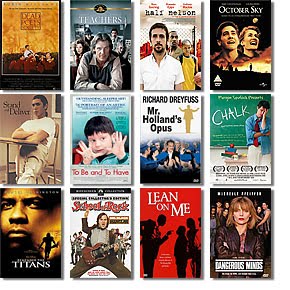
Top 12 Must-See Teacher Movies

After polling teachers, checking box office numbers, critical reviews and teacher forums, we\’ve compiled a list of the Top 12 must see teacher movies.

They appear in no particular order.

1. Dead Poets Society (1989)
Robin Williams gives a shockingly understated, touching portrayal of a teacher who brings inspiration to the lives of his straight-laced prep school students. A little saccharine but mostly sincere, Dead Poets Society is guaranteed to infuse poetry into the most prosaic days.

2. Teachers (1984)
Teachers taps into the realities of teaching with over-the-top satire, including disappearing desks, a brawl over the copy machine and a star substitute who is actually an escaped mental patient. Nick Nolte stars as the slacker hero who brings heart to this spoof.

3 WAYS MAN AND MACHINES CAN WORK IN HARMONY

Artificial Intelligence, machine learning and cognitive computing are slinking into every nook, cranny and call center of the workplace. But this is not a dystopian future where man is pitted against the evil machine. Instead, the future is much more likely to look like man and machine working in harmony—combining complementary strengths to transform business for the better.
Yes, it would make a lousy sci-fi movie. But if done right, it will make for a great work environment.
In some ways, the future is already here. From Siri and Alexa to self-driving cars, there is technology already capable of mimicking human behavior. Businesses have received the message loud and clear that it’s time to integrate with technology: The Deloitte Human Capital Trends 2017 report revealed that 38 percent of companies will fully implement robotics and automation in the next five years.
What can HR do to prepare their workforce for the imminent arrival of tomorrow’s technology?

Create a Liquid Workforce

There are no jobs for life in the digital age, so workers constantly need to reinvent their skills to keep up with business needs. With the pace of change ever quickening, companies need what Accenture calls a “liquid workforce” of employees—agile enough to perform a range of tasks, who can grow and adapt with the company rather than perform one fixed task.
Josh Bersin, principal and founder of Bersin by Deloitte, talks about the rise of the Hollywood model or a network of teams approach, where people band together for a specific project and then move on when it’s complete (similar to a film crew and actors work on a movie and then move to a new production).
This should be a good thing for employees, offering them the chance to grow and learn and ultimately do more interesting and varied jobs. It should also keep boredom at bay, which is great for engagement.
If that’s the future, the role of HR and the rest of the senior team is to identify key areas where AI will have the biggest impact and start putting programs in place to help people learn new skills or widen their learning. It also means HR must hit home the importance of life-long learning, and provide opportunities for employees to constantly upgrade their skills and experiences.

Foster Soft Skills

The ironic consequence of more automation is that our unique human qualities are becoming more important. Soft skills are more in demand than ever: A 2015 LinkedIn survey found that 59 percent of hiring managers found it difficult to hire staff with the soft skills they required.
While machines are better than humans at repetitive tasks, people are good with uncertainty. For the most part, we excel at empathy and dealing productively with other people. HR needs to both recognize and nurture talented employees in these areas, while helping others improve the soft skills they lack.
These people skills will be particularly important in the Bersin work model, where people are continually being asked to join new teams and work with different people across departments.

Prioritize Right-Brain Thinking

HR needs to hire and inspire their workers to do more strategic thinking, aided by technology. Alongside soft skills, creativity is becoming a prized quality in the age of AI and automation. Lateral thinking and the ability to analyze and interpret the cold, hard data that machines provide and turn that into useful insight is a key skill. It’s the perfect melding of machine and human intelligence.
That means that HR needs to think about hiring people who have creative flair, rather than just a checklist of qualifications. There are many ways HR can identify these people, but a simple way at interview stage is to ask them competency-based questions about how they used creative thinking in previous roles.
The robots are coming, but it isn’t a threat. It’s an opportunity for humans to be more creative and productive at work.

The Secret to Classroom Management is Fun Friday

Managing the day-to-day challenges, curriculum, and discipline of today’s classroom can be a monumental task. Simply put, it’s hard to get your kids to do what you want them to do.
But there is one almost sure-fire way for teachers to institute discipline, get kids to turn in homework, and get kids to listen: Start up Fun Friday!
Todau on TeachHUB.com, frequent contributing writer Janelle Cox discusses instituting Fun Friday, which is “a day that is designated for fun, playing fair, and having a good time. It can last the whole day, a few hours, or as little as 20 minutes. It’s a time for students to take a break from all of the academia and learn through play. It can be done with a few teachers or only one teacher.”
Janelle also looks at how Fun Friday works, why it works, and how you can convince your school administrators to approve of a Fun Friday sceme.
In summation, Janelle says: “After a few weeks of implementing Fun Friday into your weekly schedule, you will be amazed how many students will their tails off in order to participate in it. It is such a great motivator for children, and all of those missing homework assignments and wasted time disciplining students will soon be few and far between.”
Do you implement a Fun Friday into your weekly schedule? If not, what do you do to help your classroom management?
Educational Apps: 4 for Keeping Parents in the Loop
Parent-teacher communication has never been as vital – or as easy to maintain – as it is today.
E-mail, blogs, cell phones and the like have all made it that much easier to stay on top of getting the message out to moms and dads – and now a round of apps has made it even more of a snap to keep them in the loop.
Today we review four new apps designed to help you maintain an information pipeline going home to your kids’ parents.

Use our educational apps to ensure that your kids’ parents are up-to-date on everything that’s going on in your classroom >>

How to Motivate Students Through Choice

Discovering just how to motivate students is a tricky yet necessary challenge for most teachers. Many of today’s educators are learning how to motivate students through giving them a choice.

But some teachers will struggle with how to motivate students by giving them choices. Therefore, today on TeachHUB.com, frequent contributing writer Janelle Cox, herself a veteran educator based on the East Coast, enlightens us on ways that teachers can give their students choices in the classroom.

Janelle’s ideas include:

Giving students control
Giving students purpose
And more!

She also backs up her ideas with a healthy dose of research.

Janelle sums up her article thusly: “The evidence to support student choice goes on and on. In short, choices that promote student control, and that give students a sense purpose and competence, are more likely to be motivating to them. While teachers have the option to draw from a multitude of teaching strategies to help cultivate more student interest and motivation, student choice seems to have a powerful impact on student motivation. However, giving students a “Choice” means that teachers have to learn to give up some control. But, this may ultimately lead to a successful lesson where students are engaged and more motivated to learn.”

Do you use student choice in your classroom? What kinds of choices do you offer your students? We would love to hear your thoughts and ideas on this topic.


4th of July Jokes, Fun Facts & Classroom Games
To set off a little holiday fireworks of our own, today in TeachHUB.com we introduced some 4th of July jokes, fun facts, and classroom games for all ages!
Here’s a sample:
What would you get if you crossed a patriot with a small curly-haired dog?
Yankee Poodle
Make Room for the Hot Dogs!
More than 150 million hot dogs are consumed on the July 4. That’s roughly 1 dog for every two people in the U.S.
Share you favorite Independence Day jokes, fun facts, games or anything enjoyable for the season!

Fun, Effective End of the Year Activities

Ah, the end of the year. Everyone’s tired and losing focus. Some tests are behind you (state tests, AP exams), some may be ahead of you, and probably no one – you or your students – is really at their best. So what’s a teacher to do?

Choose a goal to make the last month of school an effective one.

Goal: Review What We’ve Learned
You’ve got one last chance to review your material before exams (or the great mind-eraser of summer vacation). Why not…

Use Classroom Games to Build Math Skills

Getting kids excited about math is no easy task. Indeed, for a variety of reasons, many younger students just don’t seem to want to learn it.

Luckily, there are a bunch of new games on the market now that are intended to get kids interested in and excited about math. Today’s centerpiece article on TeachHUB.com does just that. Penned by frequent contributor Janelle Cox, herself a seasoned educator based on the East Coast, the article loos at the following math board-style games:

  • Sum Swamp
  • Connect Four
  • Money Bags
  • And More!

Janelle sums up her article thusly: “Mathematical thinking requires students to self-reflect and collaborate with their peers. Challenge students while in the midst of a game to explain why they made the particular move that they did. Encourage them to talk and discuss what they are thinking while they are playing. Children benefit enormously from any activity that requires them to think critically.”

What are your favorite board games to build math skills? Do you have any favorites that you use in your classroom? Please share your ideas!


Engaging Classroom Games for All Grades
One of our most popular stories in the history of TeachHUB.com has been one in which we lay out some popular classroom games. These games are time-tested, and work at just about every grade level.
Classroom games add flair and student engagement to more tedious, yet necessary tasks like teaching math facts, grammar rules and vocabulary, reviewing for tests or even completing lab experiments. Adding an element of competition motivates and energizes students.
Our list of great classroom games includes:
   Educational Bingo
   Memory
   Around the World
   And More!
We also encourage educators to implement student-created games whenever possible – after all, what student doesn’t like to show off his or her creative talents?
What educational games do you use in your classroom?

Help Moving Up the Pay Scale

At TeachHUB, we do our best to help teachers wherever we can, even helping you stay certified, get a raise or find your next role in the Education community.

Search for Recommended Local Masters Programs
Get your PhD or EdD Online
Make the Most of Professional Development in Your School

To stay up-to-date on the latest education trends and tools, we also recommend visiting TeachHUB’s K-12 Education News page for daily articles:
http://www.teachhub.com/news/

How to Teach Math to English Language Learners

Teachers across the country have increasing numbers of English language learners (ELLs) in their classrooms. As a result, teachers need strategies that will help them reach all of their students and ensure that students learn what they need to know.

Many lessons in existing curricula are designed for native speakers of English and do not support second language acquisition. This is particularly true for math instruction. Students need specific vocabulary to talk about and do math.

ELLs are still learning the language in which the problems and directions are written; they are learning new math skills and a new language at the same time.

Student Athletes: How Much is Too Much?

For the 30 million student athletes in America, sports can be an excellent way for high school students to build relationships, stay in shape and learn valuable skills about teamwork. But high school sports aren’t always fun and games.

With scholarship hopes, parental pressures and an ultra-competitive atmosphere, some student athletes may begin to crumble under the pressure.

3 WAYS MAN AND MACHINES CAN WORK IN HARMONY

Artificial Intelligence, machine learning and cognitive computing are slinking into every nook, cranny and call center of the workplace. But this is not a dystopian future where man is pitted against the evil machine. Instead, the future is much more likely to look like man and machine working in harmony—combining complementary strengths to transform business for the better.
Yes, it would make a lousy sci-fi movie. But if done right, it will make for a great work environment.
In some ways, the future is already here. From Siri and Alexa to self-driving cars, there is technology already capable of mimicking human behavior. Businesses have received the message loud and clear that it\’s time to integrate with technology: The Deloitte Human Capital Trends 2017 report revealed that 38 percent of companies will fully implement robotics and automation in the next five years.
What can HR do to prepare their workforce for the imminent arrival of tomorrow\’s technology?

Create a Liquid Workforce

There are no jobs for life in the digital age, so workers constantly need to reinvent their skills to keep up with business needs. With the pace of change ever quickening, companies need what Accenture calls a “liquid workforce\” of employees—agile enough to perform a range of tasks, who can grow and adapt with the company rather than perform one fixed task.
Josh Bersin, principal and founder of Bersin by Deloitte, talks about the rise of the Hollywood model or a network of teams approach, where people band together for a specific project and then move on when it\’s complete (similar to a film crew and actors work on a movie and then move to a new production).
This should be a good thing for employees, offering them the chance to grow and learn and ultimately do more interesting and varied jobs. It should also keep boredom at bay, which is great for engagement.
If that\’s the future, the role of HR and the rest of the senior team is to identify key areas where AI will have the biggest impact and start putting programs in place to help people learn new skills or widen their learning. It also means HR must hit home the importance of life-long learning, and provide opportunities for employees to constantly upgrade their skills and experiences.

Foster Soft Skills

The ironic consequence of more automation is that our unique human qualities are becoming more important. Soft skills are more in demand than ever: A 2015 LinkedIn survey found that 59 percent of hiring managers found it difficult to hire staff with the soft skills they required.
While machines are better than humans at repetitive tasks, people are good with uncertainty. For the most part, we excel at empathy and dealing productively with other people. HR needs to both recognize and nurture talented employees in these areas, while helping others improve the soft skills they lack.
These people skills will be particularly important in the Bersin work model, where people are continually being asked to join new teams and work with different people across departments.

Prioritize Right-Brain Thinking

HR needs to hire and inspire their workers to do more strategic thinking, aided by technology. Alongside soft skills, creativity is becoming a prized quality in the age of AI and automation. Lateral thinking and the ability to analyze and interpret the cold, hard data that machines provide and turn that into useful insight is a key skill. It\’s the perfect melding of machine and human intelligence.
That means that HR needs to think about hiring people who have creative flair, rather than just a checklist of qualifications. There are many ways HR can identify these people, but a simple way at interview stage is to ask them competency-based questions about how they used creative thinking in previous roles.
The robots are coming, but it isn\’t a threat. It\’s an opportunity for humans to be more creative and productive at work.

Teaching Strategies to Build Student Confidence

Some confident learners know how to speak their minds and, therefore, know how to get their point across.
But other students who aren’t as confident can feel isolated with their lack of self-confidence, and they might find themselves plagued by thoughts of academic insufficiency.
Today on TeachHUB.com, writer Janelle Cox informs us on different tactics we can use to help those students feel more confident and proud of themselves and their accomplishments.

Some strategies Janelle outlines:
  • Try not to correct every single thing the student says wrong.
  • Give students the opportunity to choose what they learn.
  • Encourage students to do better than they did before.

What do you do to help build your students’ self-confidence?
Classroom Activities to Honor Veterans Day
Many students are mystified as to the true meaning of Veterans Day. Indeed, many only recognize the day as being a holiday – they don’t acknowledge the sacrifice our American servicemen and servicewomen made nor the valor they displayed in combat.
Today we offer up a couple quick activities and websites teachers can use to pay respect to our soldiers. After all, on Veterans Day, all Americans should reflect on the service and sacrifice of our veterans. Their bravery, their resourcefulness, and their patriotism mark them as our nation’s finest citizens.
The Pros & Cons of Common Core State Standards
Designed to give educators in the U.S. a clear and consistent understanding of what students are expected the learn, the Common Core State Standards have instead stirred up a hornet’s nest of controversy within academic circles nationwide.
Some states remain steadfastly in lockstep with the tenets the Common Core State Standards espouses, while others vigorously disagree with them. Indeed, many state educational jurisdictions are abandoning the Common Core State Standards.
Recently on TeachHUB.com, we took a glance at both sides of the Common Core debate, with two seasoned educators examining the for-and-against arguments that the standards have brought about

Curriculum Compacting Teaching Strategies

Although as teachers we often spend our time making sure that everyone can grasp what we’re teaching about, oftentimes we have kids in our classes who have already mastered the curriculum. So what teaching strategies do we use to reach those that already know what we’re instructing?
Today on TeachHUB.com, we examine those teaching strategies we can use to hopefully challenge the gifted kids who are at risk of becoming bored in our classes. Our centerpiece article, penned by frequent contributing writer Janelle Cox, looks at curriculum compacting, or a pace-based method that can engage kids who have already mastered what we’re teaching.
Janelle suggests we first identify kids who are already familiar with our upcoming subject matter. How do we do that? A potential student:
·       Finishes tasks quickly.
·       Appears bored during instruction.
·       Finishes assignments first.
·       Is performing high academically in more than one area.
Janelle offers up seven steps that you can use to compact a curriculum, including:
·       Identify students who should take the pre-assessment. Use your academic records and class performance to help you determine what student would benefit from this pre-test.
·       Use the pre-assessment test to determine mastery of the topic or subject.
Janelle sums up her article like this: “Teachers like using curriculum compacting because it’s an effective teaching strategy that can be used in any grade and in any school district. It’s also flexible enough that teachers find it easy to implement. Just remember that meeting the needs of all learners takes time and patience, so go at a slow pace.”
Have you used curriculum compacting as a means to differentiate instruction with your gifted learners? If so, do you find this an effective form of teaching strategies? Please share your thoughts in the comment section, we would love to hear what you have to day on this topic. 

Plan a Memorable Back to School Night

We’ve been covering all you teachers need to know for your inevitable return to the classroom, and today is no different. A staple of the back to school  schedule is now Back to school night, in which teachers and parents meet, with or without kids, to discuss and preview the school year. On the discussion docket are generally methodology, grading schemes and tactics, connecting parents, and more.
Today on TeachHUB.com, frequent contributing writer Jacqui Murray, who is a seasoned tech teacher based in Northern California, looks at how you can make back to school night memorable, informative, and fun.
Jacqui’s ideas include:
Make the Invite Engaging
Ask a Volunteer to Take Notes
Introduce the Class Page
And More!
Here’s how Jacqui suggests you create a class webpage, blog, or other electronic method of communication: “At some point during the evening (or in a form you display on one of the class computers), ask what parents would like to find here. Practice accessing it if there\’s time.  Have the page available on one of the class computers so parents can try it out before leaving for the evening.”

Jacqui sums up her article like this, in a paragraph entitled Provide a Parent-Child Questionnaire: Before you wrap up for the evening, have parents fill out a form (with Google Forms) that includes what motivates their child, his/her strengths, parent concerns, and anything else you should know about the child. This too can be available on one of the class computers. It should take only a few minutes to complete. You can also email the link to everyone on the class roster to be completed at their leisure.”
**
You never have a second chance to make a good first impression. This is as true today as when Will Rogers (was reputed to have) said it. Make parents your partner this school year. Their participation will make a huge difference in the child\’s success. Take advantage of that.

Classroom Games: Winter Brain Breaks

It’s been universally proven that brain breaks, or brief intermissions from coursework often involving physical activity, are great ways to split up a day and are beneficial on the mental front too.
During the winter, like now, in many parts of the world, when freezing conditions make activities like recess impossible, brain breaks are even more crucial to the academic process.
Today on TeachHUB.com, frequent contributing writer Janelle Cox, also a licensed educator, sings the praises of brain breaks this time of year, and outlines some great ideas for classroom games that can serve as brain breaks, including:
  • Snowball Fight
  • Winter-Themed Yoga Poses
  • And More!

All in all, Janelle notes that, “The best way to deal with the student wiggles in the wintertime is to just get your kids up and moving. As soon as you do that you will find that extra pent up energy that they all have will just melt away.”
Do you have any fun winter brain break ideas that students love in your classroom?
Try Out TeachHUB magazine – for FREE!
TeachHUB magazine is the perfect, award-winning companion to our website, TeachHUB.com, and it offers up useful content that is helpful for all educators.
You’ll get cutting-edge articles, brain-enriching classroom ideas, and reviews of the hottest apps – all updated once a month. Best of all, it’s free!
You’ll also get a monthly dose of classroom humor, easy-tom-make recipes, and more!
99 Reasons Teachers Rock
Recently we posted an article designed to give educators a pat on the back: We listed out 99 reasons why educators are so cool.
A sampling:
  • Teachers can eat their lunch in 4 minutes flat at 10:30 a.m. while keeping order in the hallway without thinking twice.
  • Teachers can make you feel special, no matter what your age.
  • In teaching you cannot see the fruit of a day\’s work. It is invisible and remains so, maybe for twenty years.