HR ANALYTICS IS ABOUT ASKING THE RIGHT QUESTIONS

In Douglas Adams’ The Hitchhiker’s Guide to the Galaxy, the world’s greatest computer was asked for an answer to the ultimate question of “Life, the universe and everything.”
After millions of years of number crunching, the computer majestically proclaimed the answer to be… 42. It was not the edifying conclusion the audience had been waiting millennia for, but, as the great computer pointed out, that was because they had asked the wrong question: “Life, the Universe and Everything” just wasn’t specific enough.
It’s a fitting lesson for HR people beginning their workforce analytics journey: ask the right questions. The accuracy of the data, the quality of the analytics, the figures you come up with — everything is irrelevant if you’re not asking the right questions.

Think About the Bigger Picture

One of the problems with the type of questions HR professionals typically ask is the narrow focus — the question will address an HR concern, without considering how it impacts the business as a whole.
So, while it may be useful to keep an eye on absence, diversity or engagement metrics, this transactional information will likely not get your CEO’s pulse racing.
What executives want to know is how these metrics affect productivity or profitability; they want to know whether there are particular areas of the business where these rates are higher, and why. Above all, they want information and insight into what changes they need to make to change future outcomes, not data about what happened in the past.

But Get Specific

While you need the put your questions in the context of larger business goals, you also need to be detailed about the question itself. If your analytics questions are as vague as “Life, the universe and everything,” then the answers will be vague too. It will simply be a fishing trip – you might be lucky and catch something tasty or you might come up with nothing.
So what is the right question? Clearly, that will vary between companies, but the key is for the question to be plugged directly into the matrix of the business. HR can’t work in a vacuum, it needs to understand where the business pain points are, to appreciate both the outside market pressures and the inside forces impacting its line managers and leaders.
HR is not short on data — though some areas may fall short on quality — so, you should be able to dig up some interesting revelations with this sweeping approach.

Make a Group Effort

HR doesn’t need to work alone on developing the right questions. By working directly with other business leaders, you can work out the answers together in order to make a real difference in business performance.
For example, if you have an issue with high staff turnover, then look beyond the figures to find out why people are leaving. Is there a particular division or location where churn rates are higher? Can you talk to those managers? Or perhaps churn rates are higher among women than men? Look through the exit interview data, and take stock of the gender ratio in management. Is there a high churn rate in an area of business that requires highly prized, in-depth knowledge of the business? It’s possible that the people in this department don’t understand how much they are valued at the company.
Asking the right question is a great start on the quest for business insight. But whatever the outcome of the analysis, it’s also vital that HR maintains and presents the information in a business-friendly and business-relevant manner.

Teaching Strategies: Mindfulness in the Classroom

Mindfulness, the intentional, accepting, and non-judgmental focus of one’s attention on the emotions, thoughts and sensations occurring in the present moment, can be part of effective teaching strategies to center kids, keep them calm, and even improve their academic prowess.
Today on TeachHUB.com, contributing writer Janelle Cox takes a look and mindfulness and meditation and outlines their benefits in classroom. Her findings include that mindfulness and meditation can:
  •  Teach children to control their negative thoughts and emotions.
  • Improve one’s mental health, physical health, and emotional and social health.
  • Improve brain quality of your thoughts and feelings.

Janelle explains the psychology of mindfulness today and also explains how to employ it successfully. She sums up her article today like this: “Mindfulness is a practice which varies from student to student. While you may find that one student is benefiting immediately, another may take some time. Just remember, you are giving them the tools that they can carry with them forever. Whether they use them is up to them.”
Do you practice mindfulness in your classroom or do you think it’s just a new age mumbo jumbo?
Websites, Classroom Games to Gamify Your Math Class
Also today on TeachHUB.com, we tackle two of our perennially popular topics: Technology in the classroom and classroom games.
Frequent contributing writer Jacqui Murray, also a seasoned technology teacher based in Northern California, outlines three exciting websites that teachers can use to gamify their math classroom:
  • Dimension U
  • Land of Venn
  • Prodigygame.com

Jacqui notes that all three are fabulous classroom games to employ, and that all are excellent ways to inject some much-needed levity and fun to your exisiting and future math lessons.

Classroom Management Tips for a Year–End Survey

Surveys have become an integral part of virtually any type of consumer interaction. From apps to cars to Amazon purchases, just about any type of vendor is seeking feedback on their work these days.
So it’s our recommendation that teachers conduct feedback-generating surveys as well, particularly in the waning days of the school year. With that in mind, today on TeachHUB.com, frequent contributing writer Jordan Catapano, himself a veteran high school English teacher based in the Chicago suburbs, takes a look at some classroom management tips as to how educators can carry out and learn from a survey.

Jordan’s recommendations include:
  • Four Key Elements of a Good Survey
  • Ask Good Questions
  • Giving Your Survey and Reviewing Results
  • And More!

Here are two last tips that Jordan includes, in a segment called “Other interesting survey feedback methods”: Post signs around the room each listing different elements of class throughout the year. Then give students several green, yellow, and red stickers. Ask students to put green stickers on their favorite or most helpful elements, yellows on the mediocre elements, and reds on the things that need to change.
“Include parents on the process by designing a survey or other feedback tool just for them!”
How do you solicit feedback from students? Share your ideas and feedback with our TeachHUB community in the comments below!
Classroom Management: Guest Speakers Support Learning
To enhance the real-world aspects of your class, you should think about bringing in guest speaker to provide a glimpse into the lives of an interesting local person.
Yesterday on TeachHUB.com, writer Janelle Cox examined how guest speakers can make an impact on a class and how to set one up. Her ways included:
  • Choosing a Guest Speaker
  • How to Get the Most from Your Speaker
  • How to Host a Guest Speaker

 Janelle also detailed ideas on how to carry out each idea.
In summation, Janelle noted: “Inviting guest speakers to your classroom is a not only a wonderful way for students to learn about a specific topic, but it also introduces them to other professions and career opportunities. Whether you invite a veteran, policeman, author, professor, nurse, veterinarian, dentist, musician, or lawyer, your students will leave the experience with more knowledge then they came into with.
Do you invite guest speakers to your classroom? Which speakers did you find had the most impact on your students and why?

Fighting Childhood Hunger in Schools

Schools Fight Hunger is on a mission to bring America’s schools and school families together in the effort to end childhood hunger.

Learn about the Schools Fight Hunger organization and find out how your school can participate in this exclusive TeachHUB interview.

Teaching Strategies: The 4 Essential Writing Steps

All too often, when writing a paper, students merely sit down and start composing, without employing any prior though as to steps that might assist them in the writing process.
This is a flawed method of composition. Today’s centerpiece article on TeachHUB.com, penned by frequent contributor Jordan Catapano (who is a veteran English teacher in the Chicago suburbs, so you can bet he know his stuff), names and explains the four essential steps to writing a paper.
These steps (and accompanying explanations) include:
  • Brainstorm
  • Outline
  • Draft
  • Edit

Jordan sums up his article in this manner: “So as you’re thinking through how you’re helping your students write, make sure that in addition to the other elements of great instruction you include, there’s a focus on the writing process as well.”
What other details about the writing process would you include? How do you help students own this process? Share your thoughts with our community!
Subscribe to the TeachHUB.com newsletter
A great way for interested teachers and educators to stay connected with the great ideas, lesson plans, and inspirational articles we post every week is by subscribing to the TeachHUB.com e-newsletter. Every Friday, you’ll get a concise snapshot of what we’ve posted each week, as well as a look at trending articles and evergreen-type stories. Best of all, it’s absolutely FREE!

    Tapping into Students’ Talents

    Are essays really the only way?

    It hits me about once a year that writing literary analysis essays about whether or not Piggy in The Lord of the Flies is a round or flat character, may not be an essential skill to get a young person through life.

    What am I doing? Why must I torture Marquis who fell out of his desk last week when I announced the latest writing assignment?

    How to Engage ALL Kids in Reading

    One of the greatest challenges facing educators is getting students to be proficient, passionate readers. Surprisingly, the solution to conquering the reading challenge is surprisingly simple…

    About two years ago, I was working with a school district with a poverty rate of over 70% in a semi-rural area. The teachers and I were transitioning the middle school literacy curriculum from a more teacher-directed, traditional paradigm to a student-directed, literature circle, and writing workshop paradigm.

    As I worked with my teacher colleagues, I was fortunate enough to get to know them and their students. One teacher (I’ll call her Ms. Smith) taught the lowest level readers in the 6th grade. As she and I prepared some team lessons, I was eager to meet her kids and I was immediately struck by the differences I witnessed in her class and their attitudes toward reading.

    More than 20 years of literacy teaching experience has taught me was to be ready to deal with reluctant and disinterested readers, as this is usually the case with the lowest level readers. Yet this was not the case on the first day and every day that I co-taught with Ms. Smith.

    Last Week to Get Pop Culture Lesson Plans

    The holiday season may be behind us, but TeachHUB would like to extend a gift to all K-12 teachers for their hard work in 2009:
    Through January 18, ALL TeachHUB MEMBERS will have access to an archived database of 500+ Printable Pop Culture Lesson Plans.

    Use Pop Culture Lesson Plans to enhance your existing curriculum and spark student interest.

    Pop Culture Lesson Plans are:
    -Valued at $29.95 for a one-year subscription
    -Aligned to national teaching standards
    -Available for K-12 grade levels and core subjects
    -Inspired by pop culture and news headlines
    -Ready to print, copy & assign in your classroom today!

    Sign Up as a TeachHUB member to get your FREE Printable Pop Culture Lesson Plans today!

    To redeem your members-only gift, visit: http://www.teachhub.com/holiday-giveaway

    TeachHUB appreciates all you do and wishes you a new year filled with raised hands, completed assignments and “I get it” looks on students’ faces.

    Charlie and the Chocolate Factory Classroom Ideas

    More than just a time-honored book and movie, “Charlie and the Chocolate Factory” is a great tool that teachers can use for some outside-the-box classroom ideas.

    Today on TeachHUB.com, frequent contributing writer Janelle Cox illuminates some of ways that educators can use that theme to work in some unique lesson plans. Janelle’s ideas include:

    Explore math themes of probability
    Discuss getting what you wish for
    And more!

    Janelle concludes her article thusly, instructing educators on how to “Have a “Wonka-licious Day”: “The day before your “Wonka-licious” day, give each student a Golden Ticket and invite them to come to a day filled with fun. As students enter the classroom, they must hand you their ticket and proceed on to the activities that you have planned for them. Here are a few teaching ideas. A lot of these activities can be in the form of a learning center.”

    Do you have any fun teaching ideas to contribute for Charlie and the Chocolate Factory? Please share your ideas!


    Classroom Management: The Modern “C’s” of Learning

    Collaboration, communication, critical thinking, and creativity – these four “C’s” of learning have guided and directed the curriculum trajectories of several generations of educators.
    But as the teaching profession has evolved — especially with regards to technology and all the elements it brings to the classroom – it’s time to recognize a new set of “C’s” and how your classroom toolkit can morph with them.
    Today, frequent TeachHUB.com contributor Jordan Catapano adds five more “C’s” to the table, including competition and character.
    The Anti-Bullying Classroom: Advice for Educators
    Elsewhere on TeachHUB.com today, anti-bullying advocate Jodee Blanco offers up 10 top anti-bullying tips that teachers can enact today to put an end to this perpetual problem.
    Blanco, the noted author of “Please Stop Laughing at Us,” says a few words that teachers should NEVER say to a bullied student: “Ignore the bully and walk away; they’re just jealous; twenty years from now those bullies will probably be in jail and you’ll be successful; I know how you feel; or be patient.”
    With that, Blanco dives into her 10 tips, which include:
    • Contact the parents
    • Be a friend
    • Use compassionate punishment

    Teacher Interview Questions, Answers
    TeachHUB.com is your go-to site if you are seeking a teaching job.

    HR ANALYTICS IS ABOUT ASKING THE RIGHT QUESTIONS

    In Douglas Adams\’ The Hitchhiker\’s Guide to the Galaxy, the world\’s greatest computer was asked for an answer to the ultimate question of “Life, the universe and everything.\”
    After millions of years of number crunching, the computer majestically proclaimed the answer to be… 42. It was not the edifying conclusion the audience had been waiting millennia for, but, as the great computer pointed out, that was because they had asked the wrong question: “Life, the Universe and Everything\” just wasn\’t specific enough.
    It\’s a fitting lesson for HR people beginning their workforce analytics journey: ask the right questions. The accuracy of the data, the quality of the analytics, the figures you come up with — everything is irrelevant if you\’re not asking the right questions.

    Think About the Bigger Picture

    One of the problems with the type of questions HR professionals typically ask is the narrow focus — the question will address an HR concern, without considering how it impacts the business as a whole.
    So, while it may be useful to keep an eye on absence, diversity or engagement metrics, this transactional information will likely not get your CEO\’s pulse racing.
    What executives want to know is how these metrics affect productivity or profitability; they want to know whether there are particular areas of the business where these rates are higher, and why. Above all, they want information and insight into what changes they need to make to change future outcomes, not data about what happened in the past.

    But Get Specific

    While you need the put your questions in the context of larger business goals, you also need to be detailed about the question itself. If your analytics questions are as vague as “Life, the universe and everything,\” then the answers will be vague too. It will simply be a fishing trip – you might be lucky and catch something tasty or you might come up with nothing.
    So what is the right question? Clearly, that will vary between companies, but the key is for the question to be plugged directly into the matrix of the business. HR can\’t work in a vacuum, it needs to understand where the business pain points are, to appreciate both the outside market pressures and the inside forces impacting its line managers and leaders.
    HR is not short on data — though some areas may fall short on quality — so, you should be able to dig up some interesting revelations with this sweeping approach.

    Make a Group Effort

    HR doesn\’t need to work alone on developing the right questions. By working directly with other business leaders, you can work out the answers together in order to make a real difference in business performance.
    For example, if you have an issue with high staff turnover, then look beyond the figures to find out why people are leaving. Is there a particular division or location where churn rates are higher? Can you talk to those managers? Or perhaps churn rates are higher among women than men? Look through the exit interview data, and take stock of the gender ratio in management. Is there a high churn rate in an area of business that requires highly prized, in-depth knowledge of the business? It\’s possible that the people in this department don\’t understand how much they are valued at the company.
    Asking the right question is a great start on the quest for business insight. But whatever the outcome of the analysis, it\’s also vital that HR maintains and presents the information in a business-friendly and business-relevant manner.

    Classroom Management: How to Regain Control of a Class

    If you’re a brand-new teacher just starting out or you’re a seasoned veteran with years under your belt, you’ve certainly run into situations where you’ve lost control of your classroom.
    It’s certainly a frightening situation, and it can come about via a variety of ways: Kids get distracted, they’re ready for the next period, or they are bored.

    But don’t let them defeat you! Today on TeachHUB.com, frequent contributor Janelle Cox lists several different methods by which an educator can regain control of a lost class, including:
    • Rearrange the seating chart
    • Share your frustration
    • Be confident
    • Lead by example


    Above all, Janelle suggests that teachers be confident in their abilities to reign in an out-of-control class.

    Subscribe to the TeachHUB.com newsletter
    The TeachHUB.com weekly e-newsletter is the best way for you to learn about what’s new on TeachHUB.com any given week. It’s a top-to-bottom rundown of the best articles we’ve published every week, and it’s delivered straight to your inbox every Friday – for FREE!
    By subscribing, you’ll receive the latest, cutting-edge educational news, free lesson plans, and more!
    Just go to TeachHUB.com, view the righthand side of the page, and enter your email address!
    Teacher Interview Questions and Answers
    TeachHUB.com has become a go-to resource for candidates seeking a teaching job. One of our consistently popular articles, 6 Common Interview Questions for Teachers and How to Answer Them, offers up the most popular teacher interview questions according to our educational experts, and gives suggestions on well-thought-out answers.
    Other helpful employment-related articles we’ve published include How to Survive a Group Interview3 Proven Ways to Get a Teaching Job, and Interview Disasters and How to Avoid Them. Study these articles and ace your way through the hiring process!

    Use Classroom Management to Let Students Ask Questions

    Questions, questions, questions! In our everyday lives as educators, we are constantly inundated with a barrage of questions: “When is this due?” “Where do I sit?” “What time is lunch?”
    But often, in particular with older kids, authentic, curiosity-driven questions about  assignments, reading lists, and the cosmos in general are pushed under the rug. After all, we have a barrage of curriculums, grades, administrative tasks, and more to contend with on a daily basis.
    However, we must learn to thrive on student curiosity and, whenever possible, use classroom management to welcome a questioning spirit into our class.
    Today on TeachHUB.com, we learn how to use classroom management to bring about a healthy spirit of questioning. Jordan Catapano, who is a seasoned high school English teacher based in the Chicago suburbs, penned today’s centerpiece article, which takes a look at inviting a questioning atmosphere into your class.
    Jordan’s ideas include:
    Make Asking Questions a Priority
    Make Asking Questions a Skill
    Make Asking Questions Necessary
    And More!
    In one memorable section, Jordan explains how to welcome questions with a few questions of his own: “How can you challenge your students to include their own personal questions as an indispensable component of their learning? What questions will guide student learning and growth? What questions will help students reflect? What questions lead to metacognitive processing? What questions spur internal motivation for learning? What questions will students challenge one another with? What questions will lead to interdisciplinary pursuits?”
    Jordan sums up his article like this: “Questions serve as our guides, yet so often we relegate them to the end of learning or exclude them altogether. But now’s the time to ask yourself, “How can I better include question-asking as part of student learning?””
    How do you use classroom management to help to make student questions an essential part of your class? What do you like from above and what would you add? Share your thoughts with us in the comments section!

    How to Motivate Students: Tips for Middle Schoolers

    Learning how to motivate students is of paramount importance for educators today. A bored and listless class is a reflection of a dull teaching style, and a bored and listless class is one that doesn’t learn.
    Today, Janelle Cox, a frequent TeachHUB.com contributing writer, takes a look at the things that motivate children, including technology, friends and peers, and interesting topics.
    She outlines several ways to motivate junior high-aged children, including:
    • Giving students a choice
    • Showcasing student work
    • Rewarding Respect
    • And More

    Above all, Janelle intones that showing a genuine interest in your students and their lives can go a long way toward creating an atmosphere of motivation.
    How do you motivate your middle school students? Do you have any ideas that you would like to share?
    Free Interactive Whiteboard Resources
    Interactive whiteboard resources are another tremendous way that teachers can engage their classes. Although teachers can spend an inordinate amount of time designing their own whiteboard activities, very few of them are aware of the sheer amount of existing whiteboard resources available for FREE online today.
    We compiled a big list of resources for teachers to use; check them out and save yourself some time!
    What are your favorite online whiteboard resources?
    Our In-Service Program Can Address Anti-Bullying Efforts
    Did you know that TeachHUB’s in-service professional development program can include an anti-bullying focus?
    During a TeachHUB in-service day, teachers will participate in various anti-bullying activities and learn strategies they can use to help prevent and intervene with bullying behavior and participate in modeled exercises to create self-awareness within a child.
    Teachers will learn how other educators are encouraging anti-bullying behavior in and outside of the classroom across the country.
    Why book an in-service day through TeachHUB.com? 
    TeachHUB.com professional educators can help you design original seminars to fit your school, district and teachers\’ needs.
      Established seminars can be brought to your school or district
      Wide variety of speakers and topics
      We work within your budget and schedule
      Superior customer service and accessibility
    But our expertise isn’t limited to just anti-bullying seminars. We’re also prepared to address differentiated instruction strategies, tiered activities, inclusive education and more!

    Video: The Myth of the Super Teacher

    Roxanna Elden, author of See Me After Class: Advice for Teachers by Teachers, reveals how the myth of the super teacher creates unreal expectations for struggling young teachers.

    This clever, practical presentation will hit close to home for every educator and will help set realistic expectations for new teachers.

    Tuesday Teacher Picks

    This week\’s teacher recommended website, books and school supplies are….

    Website: Big Huge Labs
    See recommendation & details

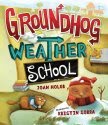
    Kids book: Groundhog Weather School by Joan Holub
    See recommendation & details or Get Book (scroll down)
    Classroom Management Tool: Kagan Selector Tools Software
    Instructional Tool: Place Value Decimal Cubes
    See recommendation & details or Get Place Value Decimal Cubes (scroll down)
    Find more of this week\’s Teacher Picks