BENEFITS OF READING NEWS ONLINE

               Now-a- days everything is available in online and we are so much dependant on internet, we cant think of our future without internet. We are now entering into a digital future where newspaper may be going to be replaced by online news.

                Online news is very convenient as we get news in real time and we don’t have to wait for news till the next day to read from the newspaper.Even newspaper cannot cover every insight or content about any topic,whereas in online we can go deep inside a topic ,get update and deep insights and everything about our topic of interest.Online news is updated every second ,ever minute in real time.The good thing about online news is that it is free of cost provided we should have a internet facility to access the information.Most importantly online news saves trees in result saves the environment whereas newspaper is the reason for cutting of millions and millions of trees and mass destruction of forests and ecosystem.This leads to global warming and far reaching consequences in present as well as in future.Its obvious that newspaper cannot cover every news going on in the world for which they have to selective in publishing content but in online news there is no such boundaries,every big and small news across the world is right within our fingertips.Even we have a lots of news apps for both android and ios in which we get notifications of news happenings across the globe which is a cool benefit of online news.Morever the newspaper printing companies also publish their newspaper online so that people can access them more easily and conveniently.
               Traders can incredibly get benefit from the online news about the stock market details ,rise and fall of shares whenever they want.We can also use the newspaper buying cost in a more productive and constructive way.Online news is also a big opportunitiy for the advertisers.They can publish their offers and advertisements in the breaking news or any popular news where they can reach a bigger number of  audience.As the era of internet ,digital marketing has a rich future  as it helps small businesses to grow and develop when it comes online.They can advertise their products and services in the page of news headlines. Newspapers fail to give us details about any topic but in online we can get each and every details,clarity and update about any topic.People now are slowly ,gradually abandoning traditional newspaper and coming to the online platform for news and magazines,posts etc.
              Also, reading newspaper is also hectic for some people as they don’t have the patience to read long boring paragraphs. So it becomes impossible for people to cover or read everything in newspaper whereas in online news its precise ,contains gist headlines summary which is  easier to read and grasp more information in less time.Another good thing about online news is that it contains additional links and related information ,so that we can access and get more information about the concerned topic.Morever , in newspaper we can access to only few articles published that day but in online news there is no such limitations regarding how many number of articles  we can read.

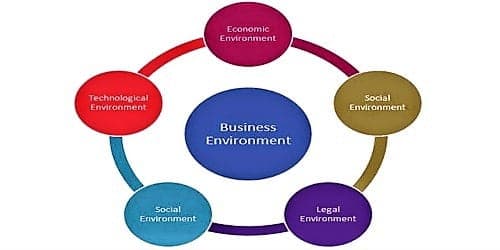
Business Environment

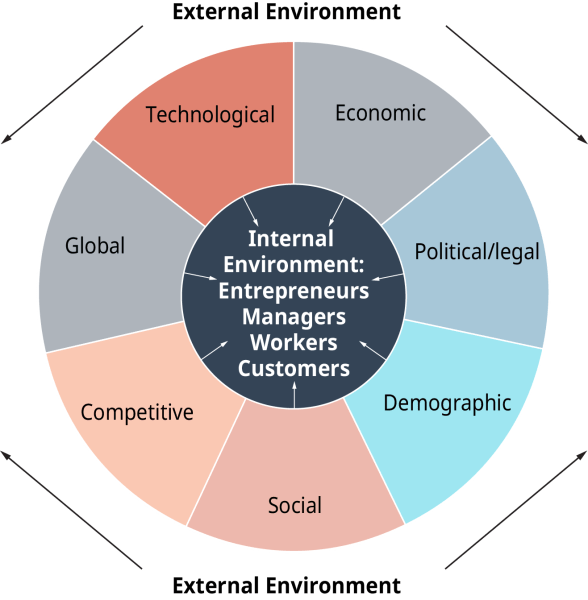
Business is a very economic activity of buying, selling, manufacturing, and rendering auxiliary services to trade and generating income through this activity. Modern Business is the economic and social organ of the society and also of the country and in today’s world modern business is not independent and it cannot work in isolation and business environment constitute- Government, public and economic, political and social situations constitute the business environment. Business environment may be defined as those conditions and forces external to a business unit under which it operates and these forces include government, suppliers, customers, creditors, political parties, socio-cultural organizations, and internal organizations, etc. Some of these may be direct influence over the business firm while others may operate indirectly. “Business environment encompasses the ‘climate’ or set of conditions, economic, social, political or institutional in which business operations are conducted”- Arthur M. Weimer.

– From opentextbc

The broad national economic environment is set by the nature of the economic system embodying the nature of property rights, ownership means of production, the role of planning, the functioning of the price mechanism, etc. Judged from these angles, the economic system of a country may be characterized as capitalist, socialist, communist, or mixed. The business environment consists of all those conditions and forces in the surroundings of a business enterprise under which the business operations are to be carried out efficiently and effectively and without any mistake. The management of the environment forces is an important task before every businessman of today and suitable decisions are required to be made in respect of various developments that are expected to take place for shaping the survival and growth of the business.

Characteristics of the business environment

1. The totality of external forces: The business environment is the total of all those factors/forces which are available outside the business and over which the business has no control. It is the group of many such forces, that is why the nature of it is totality.

2. Specific and General forces: The forces that exist outside the business are (a) Specific forces: These are the forces which affect the firms of an industry separately like customers, suppliers, etc. (b) General forces: These are the forces that affect all the firms of an industry equally, e.g., social, legal, political and technical situations.

3. The Business environment is dynamic: It is obvious that the environment is a mixture of so many factors and there are constant changes in some of them, due to these changes the business environment is dynamic.

4. The Business environment is complex: The nature of an environment in any field is the combination of so many factors and all these factors are related to one another. So the influence that they exercise on business cannot be recognized independently. That is why it is difficult for a business to face them.

5. The Business environment has a long-term impact: Any change in the environment has a long-term effect and impact on any kind of business because the changing environment affects the profitability, productivity, and development of the business.

6. The Business environment affects different firms differently: A change in the environment doesn’t need to affect all businesses in the same manner. One business may welcome the change in the environment while the other may not. Therefore, it is a special o environment that affects different businesses differently.

Benefits of Digital Learning.

Digital Learning.

Digital learning is the future platform for the students to learn and grow effectively having access to the digital world. It is an opportunity for every student to learn at his own pace and path and cover all the required information according to his/her need. It gives access to a lot of learning opportunities at just one click. There are many educational platforms which can guide one thoughtful student to become a Genius and climb the stepping stones to success. There are alot of ED tech companies which provide educational products for the students both online and offline. The study material is prepared by the experts in their fields so the students are in safe pair of hands. They also have their own applications to bring both the teachers and students on the same platform. eLearning has all sorts of quality education products which can very well provide the best digital learning experience for the students and make them excel in their fields. Digital learning will help the students to enable self learning skills,they will identify what they need to learn and which topic they need to more focus on. Digital learning platform will provide all the essential products for a student to excel In his field and strengthen his weakness. With eLearning along with the will to learn and succeed helps the student to reach greater heights. Also to maintain social distance, review the students performance and provide feedback the digital learning platform is the perfect place to learn. This is how Digital learning has a great impact on majority of students.

TOD in India

 Indian cities face a multitude of issues such as severe congestion; deteriorating air quality; increasing greenhouse gas (GHG) emissions from the transport sector; increasing road accidents; and an exploding growth in the number of private vehicles (largely motorcycles). With the urban population projected to more than double in the next generation, the situation could easily get out of control and thwart India’s economic development efforts unless remedial measures are soon taken. 

The state of public transport in the majority of Indian cities has degraded over the years. Rising population and underdeveloped mass transport has led to a rapid rise of personal vehicles, traffic congestion and an increase in pollution levels. Moreover, the majority of people do not use public transport simply because of the lack of it and inaccessibility to the transit. Therefore, while augmenting public transport, planning for accessibility is the need of the hour. Increased density and improved connectivity through TOD can help achieve that. But one of the most important reasons for thinking about TOD for Indian cities is the recent emphasis on public transport at all levels of government. Scholars have argued that transport sector in India is extremely energy intensive and needs massive investments in mass transit to quell the rise of private motorized mobility. 

Post the announcement of mission based programs like Jawaharlal Nehru National Urban Renewal Mission (JNNURM) in 2005, Atal Mission for Rejuvenation, and Urban Transformation (AMRUT) and Smart Cities in 2015, there has been huge emphasis on investments in public transport. Transit systems like metro rail and Bus Rapid Transit (BRT) have found their way into many cities including Delhi, Mumbai, Kolkata, Chennai. Bengaluru, Hyderabad, Ahmedabad, Rajkot, Surat, Pune, Pimpri-Chinchwad, Hubli Dharwad, Lucknow, Kochi, Jaipur, Bhopal and Indore among many others. 

Some of these cities have gone on to leverage the huge potential accorded by the massive investments in public transit and prepared TOD plans for their cities. In western countries, TOD was used for densifying certain areas but in India the cities already have higher densities. Hence TOD in Indian cities should be looked at as a tool for improving quality of life and financial means to provide infrastructure facilities. India is taking steps towards achieving the TOD guidelines and designing a well-planned city for its people, making itself sustained and pedestrian friendly.

No Automatic Conviction U/s 306 IPC For Abetment Of Suicide Merely Because Accused Was Found Guilty U/s 498A IPC: SC

Coming straight to the nub of the matter, it has to be said that the Supreme Court just recently on November 26, 2019 in a latest, landmark and extremely laudable judgment titled Gurjit Singh vs State of Punjab in Criminal Appeal Nos. 1492-1493 of 2010 has remarkably ruled that merely because an accused is found guilty of an offence punishable under Section 498-A of the Indian Penal Code and the death of the wife has occurred within a period of seven years of marriage, the accused cannot be automatically held guilty for the offence punishable under Section 306 of the IPC by employing the presumption under Section 113-A of the Indian Evidence Act. To sustain a conviction under Section 306 IPC, the Apex Court made it clear that the prosecution has to establish that some act or illegal omission by the accused has driven the deceased to commit the suicide. Very rightly so!

                                          To start with, this commendable judgment authored by Justice BR Gavai for himself and Justice Navin Sinha sets the ball rolling by first and foremost observing in para 1 that, “These appeals by special leave challenge the judgment and order dated 20.2.2009 passed by the Division Bench of the Punjab and Haryana High Court in Criminal Appeal No. 544-DBA of 2001 and Criminal Appeal No. 959-SB of 2000. All the four accused, including the appellant herein (accused No. 3), who is husband of the deceased, were charged and tried by the learned trial Court for the offence punishable under Section 304-B and Section 498-A of the Indian Penal Code, 1860 (hereinafter referred to as “IPC”). The other accused were the father (accused No. 1), the mother (accused No. 2) and the sister-in-law (wife of brother) (accused No. 4) of the appellant. The Additional Sessions Judge, Hoshiarpur, held that the prosecution had succeeded in proving the case against accused Nos. 1 to 3 for the offence punishable under Section 498-A of the IPC but has failed to prove the case against the said accused (Nos. 1, 2 and 3) for the offence punishable under Section 304-B of the IPC. Insofar as accused No. 4 is concerned, it was held that the prosecution has failed to prove the case against her for both the offences and she was accordingly acquitted of the offence charged. The trial Judge, therefore, convicted the appellant and his father and mother for the offence punishable under Section 498-A of the IPC and sentenced them to undergo rigorous imprisonment for a period of three years and to pay a fine of Rs. 4000/- each and, in default of payment of fine, to further undergo rigorous imprisonment for a period of three months.”

                                     As a consequence what ensued then is stated in para 2 that, “Being aggrieved by the conviction and sentence under Section 498-A of the IPC, the appellant along with his parents preferred an appeal (being Criminal Appeal No. 959-SB of 2000) before the High Court. So also, the State preferred an appeal (being Criminal Appeal No. 544-DBA of 2001), being aggrieved by that part of the order by which the trial Court acquitted accused No. 4 and also acquitted accused Nos. 1, 2 and 3 for the offence punishable under Section 304-B of the IPC. The High Court upheld the conviction of accused Nos. 1, 2 and 3 for the offence punishable under Section 498-A of the IPC. It also upheld the acquittal of accused No. 4 and further held that, though the prosecution could not bring the case under Section 304-B of the IPC, the appellant herein was liable to be punished for the offence punishable under Section 306 of the IPC. The High Court maintained the order of the sentence and fine as recorded by the trial Judge for the offence punishable under Section 498-A of the IPC. For the offence under Section 306 of the IPC, the High Court sentenced the appellant herein to undergo rigorous imprisonment for a period of five years and to pay a fine of Rs. 5000/- and in default of payment of fine, to further undergo rigorous imprisonment for a period of five months. Being aggrieved thereby, the present appeals are preferred by the appellant.”

                                    To be sure, it is then elegantly observed in para 5 that, “The perusal of the record would reveal that though the appellant has disputed the date of marriage to be 04.02.1989, both the courts have disbelieved him and rightly so. The deceased died an unnatural death on 28.09.1994 by consuming poison. As such, the unnatural death occurred within a period of seven years of the marriage. The learned trial Judge has acquitted the appellant for the offence punishable under Section 304-B of the IPC since the prosecution has failed to prove the demand for dowry, while convicting him along with the parents for the offence punishable under Section 498-A of the IPC. The High Court maintained the conviction under Section 498-A of the IPC, however, it also convicted the appellant for the offence punishable under Section 306 of the IPC with the aid of Section 113-A of the Indian Evidence Act, 1872.”

                                                   More importantly, it is then rightly envisaged in para 33 that, “Applying the aforesaid principles to the present case, we find that though the prosecution is successful in proving the case under Section 498-A of the IPC, we are of the view that the prosecution has failed to prove that the cruelty was of such a nature which left no choice to the deceased than to commit suicide. The prosecution has not been in a position to place on record any evidence to establish beyond reasonable doubt that any act or omission of the accused instigated the deceased to commit suicide. There is no material on record to show that immediately prior to the deceased committing suicide there was a cruelty meted out to the deceased by the accused due to which the deceased had no other option than to commit the suicide. We are of the view, that there is no material placed on record to reach a cause and effect relationship between the cruelty and the suicide for the purpose of raising presumption.”

                                     What’s more, it is then elaborated in para 34 stating that, “It could further be seen from the evidence on record that the time gap between the last visit of the deceased to her parents with regard to the illegal demand and the date of commission of suicide is about two months. As such, there is nothing on record to show that there was a proximate nexus between the commission of suicide and the illegal demand made by the appellant. In the case of Sanju Alias Sanjay Singh Sengar vs. State of M.P. [(2002) 5 SCC 371] this Court found that there was time gap of 48 hours between the accused telling the deceased ‘to go and die’ and the deceased ‘committing suicide’. As such, this Court held that there was no material to establish that the accused had abetted the suicide committed by the deceased.”

                                        It cannot be lost on us that it is then pointed out in para 35 that, “Another aspect that needs consideration is that the cases wherein this Court has held that the conviction under Section 306 of the IPC was tenable though charge was only under Section 304-B of the IPC, it was found the charge specifically stated that the deceased was driven to commit suicide on account of cruelty meted out to the deceased. However, in the present case, the charge reads thus:

“That you all on 28.9.94 in the area of Village Bohan, the death of Jaswinder Kaur wife of you, Gurjit Singh and daughter-in-law of you, Gurdial Singh and Mohinder Kaur and sister-in-law of Ranjit Kaur, was caused otherwise than under normal circumstances, you all being her relatives, within a period of seven years of her marriage subjected her to cruelty and harassment for all in connection with demand for dowry and thereby committed an offence of dowry death punishable under section 304-B of the Indian Penal Code and within my cognizance.””

                                   Needless to say, a bare perusal of para 35 would make it clear what is then mentioned in para 36 stating that, “It would thus be seen, that the charge does not state that the deceased was driven to commit suicide on account of the harassment meted out to the deceased. It also does not mention that the accused had abetted in commission of suicide by the deceased. In that view of the matter, we are of the considered view that the cases wherein conversion is held to be permissible are clearly distinguishable.”

                                          No wonder, the Apex Court Bench then rightly held in para 37 that, “In the foregoing circumstances, the appeals are partly allowed. Conviction under Section 498-A of the IPC is maintained and the conviction under Section 306 of the IPC is set aside. The appellant is acquitted of the charge under Section 306 of the IPC.” Finally, it is then held in the last para 38 that, “The appellant is stated to be on bail, his bail bonds shall stand discharged and he is directed to surrender within four weeks for serving the remaining period of his sentence, if not already undergone.”

                                             It is quite discernible from the above foregoing discussion that the Supreme Court while citing leading case laws like Ramesh Kumar vs State of Chhattisgarh (2001) 9 SCC 618 minced no words to conclude unambiguously that there shall be no automatic conviction U/s 306 IPC for abetment of suicide merely because accused was found guilty U/s 498A IPC by employing the presumption U/s 113-A of the Indian Evidence Act. It is imperative that to sustain conviction under Section 306 IPC, the prosecution has to establish that some act or illegal omission by the accused has driven the deceased to commit suicide. As nothing of any act or illegal omission by the accused could be proved that could be considered as having driven the deceased to commit suicide, therefore the accused conviction under Section 306 IPC is set aside even while he is held guilty under Section 498A of the IPC! Very rightly so!

Sanjeev Sirohi, Advocate,

s/o Col BPS Sirohi,

A 82, Defence Enclave,

Sardhana Road, Kankerkhera,

Meerut – 250001, Uttar Pradesh.